
45% of RV owners spend less than $50 a month on internet — but is that actually enough? A fresh poll asked the RV community one simple question: What’s your RV internet budget monthly? The results are eye-opening. Whether you’re a weekend warrior or a full-time road warrior, knowing where you stand — and where others stand — can help you make smarter choices on the road.
The RV lifestyle is booming. The RVIA reported 29,206 RV units shipped in February 2026 alone [4]. More people are living and working from their rigs than ever before. That makes a solid internet connection less of a luxury and more of a lifeline.
Key Takeaways 📌
- 45% of RV owners budget under $50/month for internet — the largest group by far
- 35% spend between $50–$100/month, covering most casual to moderate needs
- Only 20% spend $100 or more, typically full-timers, families, or remote workers
- Your ideal budget depends heavily on how you use the internet, not just where you travel
- Equipment costs ($300–$700+) are a one-time expense separate from monthly service fees [1]
The Poll Results: What’s Your RV Internet Budget Monthly?
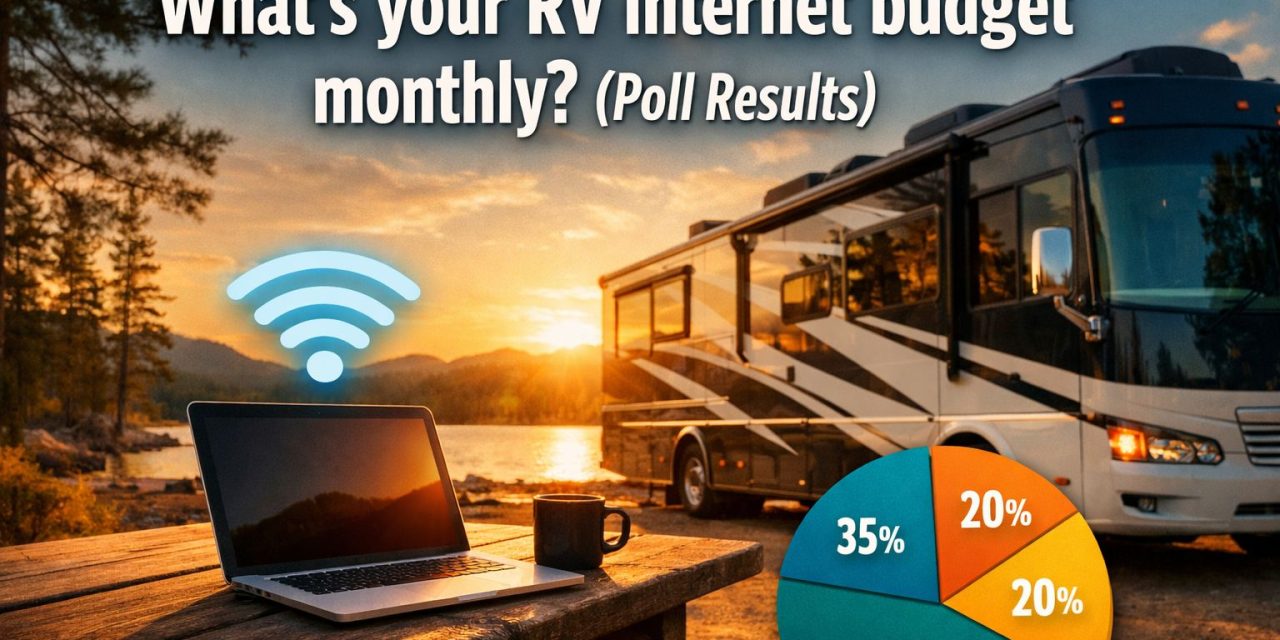
Here’s a clean look at what the community said:
| Budget Range | % of Respondents |
|---|---|
| 🟢 Under $50 | 45% |
| 🔵 $50–$100 | 35% |
| 🟡 $100–$150 | 10% |
| 🔴 Over $150 | 10% |
The majority — a full 80% — keep their monthly internet costs at or below $100. That tells a clear story: most RVers are budget-conscious when it comes to staying connected.
But here’s the thing — budget doesn’t always equal satisfaction. Let’s break down what each tier actually gets you on the road.
What Each Budget Tier Really Gets You
🟢 Under $50/Month — The Bare Minimum
This is the most popular answer, chosen by 45% of respondents. At this level, you’re looking at basic connectivity:
- ✅ Email and web browsing
- ✅ Google Maps and navigation
- ✅ Occasional light streaming (think one show, not a Netflix binge)
- ❌ Video calls can be choppy
- ❌ Multiple devices will struggle
This tier works great for weekend campers or retirees who mostly use campground WiFi as a backup. If staying connected is a “nice to have,” this budget can work [1].
💬 “Under $50 is fine if you’re not working remotely and you don’t mind using campground WiFi for the heavy stuff.”
🔵 $50–$100/Month — The Sweet Spot
35% of RVers land here, and it’s easy to see why. This range covers:
- ✅ Regular streaming (Netflix, YouTube, Hulu)
- ✅ Video calls (Zoom, FaceTime)
- ✅ 1–2 remote workers doing light tasks
- ✅ Social media and cloud storage sync
- ⚠️ May struggle with HD video or large file uploads [1]
Retired couples often find this range perfect — enough data for email, browsing, and catching their favorite shows without overpaying [1].
🟡 $100–$150/Month — The Power User Zone
Only 10% of respondents fall here, but this group gets serious performance:
- ✅ HD streaming on multiple devices
- ✅ Full-time remote work for 1–2 people
- ✅ Video conferencing without interruptions
- ✅ Better coverage in rural areas
- ✅ Often includes a backup data plan [1]
Solo digital nomads typically land in this range. They need reliable, fast internet every day — not just when the campground WiFi cooperates [1].
🔴 Over $150/Month — Full-Timer Power
The final 10% of respondents spend $150 or more. This is the territory of:
- ✅ Full-time families with kids doing school online
- ✅ Multiple remote workers in one rig
- ✅ Satellite service (like Starlink) added on top of cellular plans
- ✅ Heavy data use — HD video, large uploads, gaming
- ✅ Coverage in truly remote locations [1]
Full-time families often spend $150–$245+ per month when you add satellite service to a cellular plan [1]. It sounds like a lot — but for a household running everything through one internet connection, it’s comparable to a home internet bill.

Would you like to save this article?
Why These Numbers Make Sense in 2026
The RV market in 2026 is described as “quiet and conservative” — the market has been shrinking month over month [5]. That means buyers are being careful with every dollar. It makes sense that most RVers are keeping internet costs lean.
At the same time, the infrastructure is improving. Love’s Travel Stops announced a $700 million investment in 2026, including 23 new RV Stops and around 150 new RV hookups — expanding their network to 140+ locations with 2,000+ hookups [2]. More hookup options mean more places to rely on campground amenities, which can reduce the pressure on your personal data plan.
What’s Your RV Internet Budget Monthly? Matching It to Your Lifestyle
Here’s a simple guide to help match a budget to a lifestyle:
| RV Lifestyle | Recommended Monthly Budget | Key Needs |
|---|---|---|
| 🏕️ Weekend Camper | Under $50 | Maps, email, light browsing |
| 👴 Retired Couple | $50–$100 | Streaming, video calls, browsing |
| 💻 Solo Digital Nomad | $80–$150+ | Remote work, video calls, backup coverage |
| 👨👩👧 Full-Time Family | $150–$245+ | Multiple devices, school, work, satellite |
Source: [1]
Don’t Forget the Equipment Costs
Monthly fees are only part of the picture. Getting set up with reliable RV internet often means buying hardware upfront:
- 📡 Equipment cost range: $300–$700+ depending on the provider and hardware type [1]
- 🛰️ Monthly satellite service (like Starlink): $100–$200+ per month [1]
This one-time cost can feel steep, but it pays off fast if you rely on internet for work or school. Think of it like buying a good mattress for your rig — worth it for the long haul.
Tips to Stretch Your RV Internet Budget 💡
No matter which budget tier you’re in, these tips can help you get more for your money:
- Use campground WiFi for heavy downloads — save your data plan for when you’re off-grid
- Download shows and maps before you leave — Netflix and Google Maps both allow offline use
- Compare cellular carriers by coverage maps for the regions you travel most
- Consider a mobile hotspot as a backup rather than a primary plan
- Bundle plans — some providers offer discounts for combining phone and data plans
- Monitor your data use with a free app to avoid surprise overages
What’s Your RV Internet Budget Monthly? The Bottom Line on Spending Smart
The poll results show that most RVers are practical spenders. The majority keep costs under $100/month, and that works perfectly well for casual and moderate use. The key is being honest about how you actually use the internet on the road.
Ask these questions:
- Do you work remotely from your RV? 👉 Budget $80–$150+
- Are you retired and just browsing? 👉 $50–$100 is likely plenty
- Traveling with a family? 👉 Plan for $150–$245+
- Just weekending? 👉 Under $50 may be all you need
Conclusion: Make Your Budget Work for Your Road Life
The poll results are clear — most RVers are keeping internet costs low and smart. But the “right” budget is personal. It depends on your lifestyle, your work situation, and how far off the beaten path you like to roam.
Here are your actionable next steps:
- 🗺️ Map your travel routes and check carrier coverage before choosing a plan
- 💰 Set a realistic monthly budget based on your actual usage habits
- 🛒 Factor in equipment costs as a one-time investment, not a monthly expense
- 🔄 Reassess every 6 months — your needs may change as your travels evolve
- 📊 Compare plans annually — the RV internet market changes fast, and better deals pop up regularly
Staying connected on the road doesn’t have to break the bank. With the right plan and a clear budget, great internet is totally within reach — no matter where the road takes you. 🚐📶
References
[1] Best Budget Rv Internet Plans – https://info.hookhub.co/blog/best-budget-rv-internet-plans/ [2] March 2026 Rv Market Update Rates Fuel Costs New Rv Stops And Industry News – https://www.bishs.com/blog/march-2026-rv-market-update-rates-fuel-costs-new-rv-stops-and-industry-news/ [4] Reports Trends – https://www.rvia.org/reports-trends [5] Watch – https://www.youtube.com/watch?v=IITTFgxAXS0