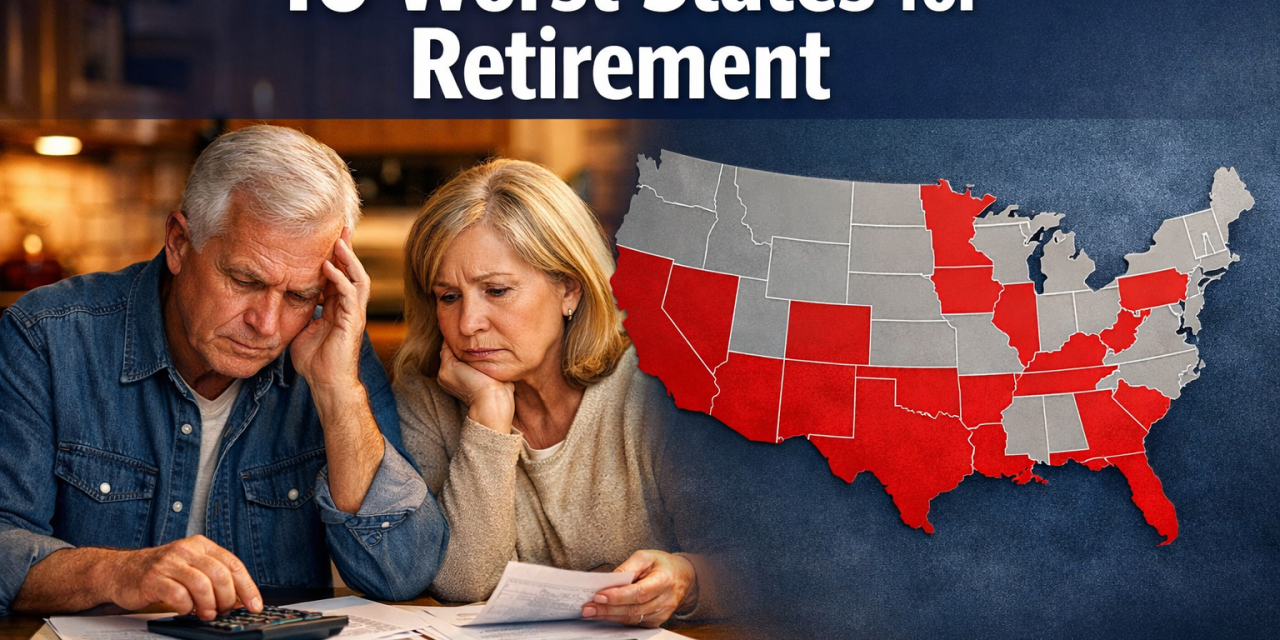
Planning your golden years on the road? The 10 worst states for retirement in 2026 present serious challenges that could derail even the most carefully planned retirement dreams. From sky-high taxes to healthcare deserts, these states consistently rank at the bottom across multiple authoritative studies, and RV retirees need to know which destinations to approach with caution or avoid altogether.
Key Takeaways
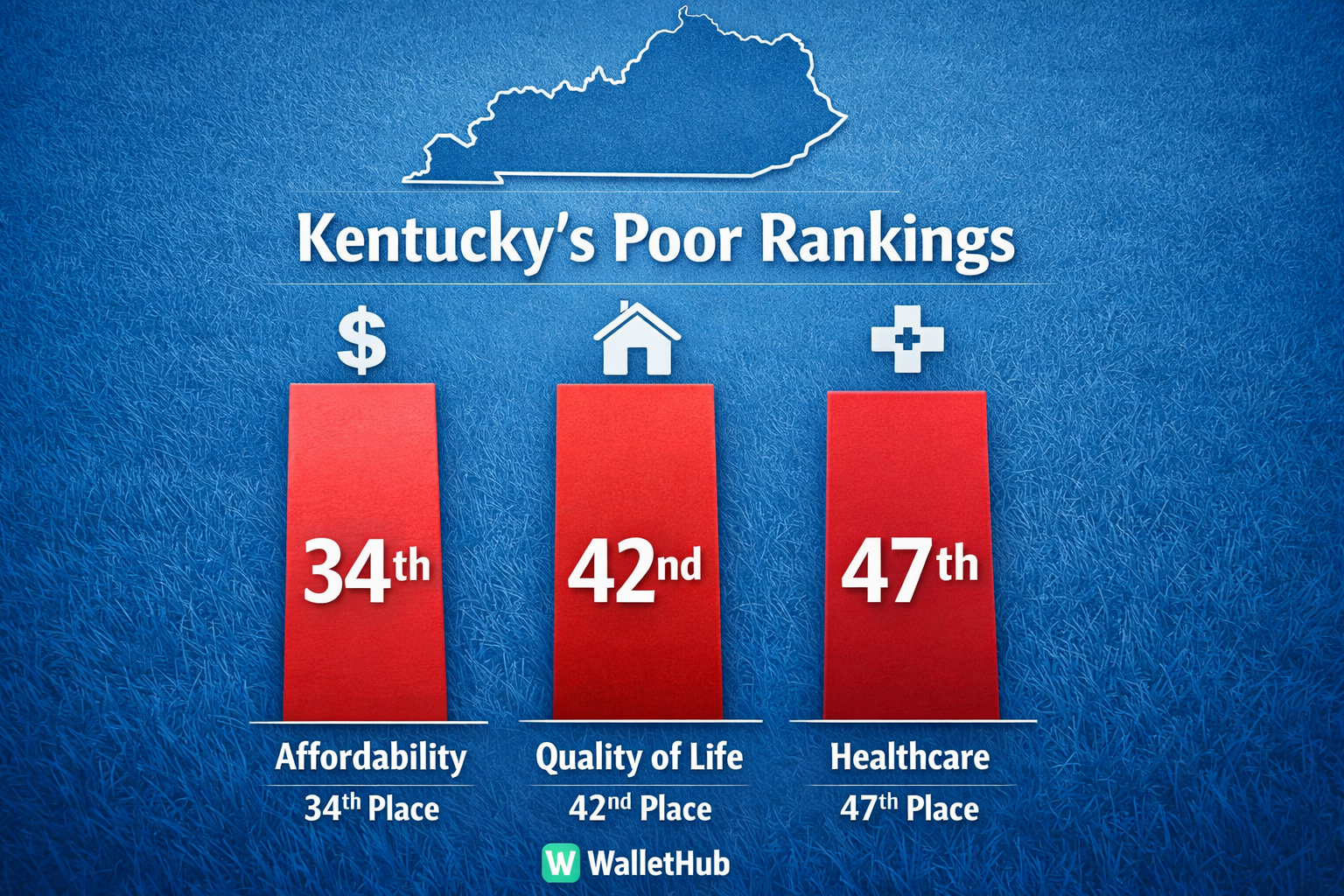
- Kentucky ranks as the worst state overall for retirement despite low taxes, scoring poorly in healthcare (47th) and quality of life (42nd)
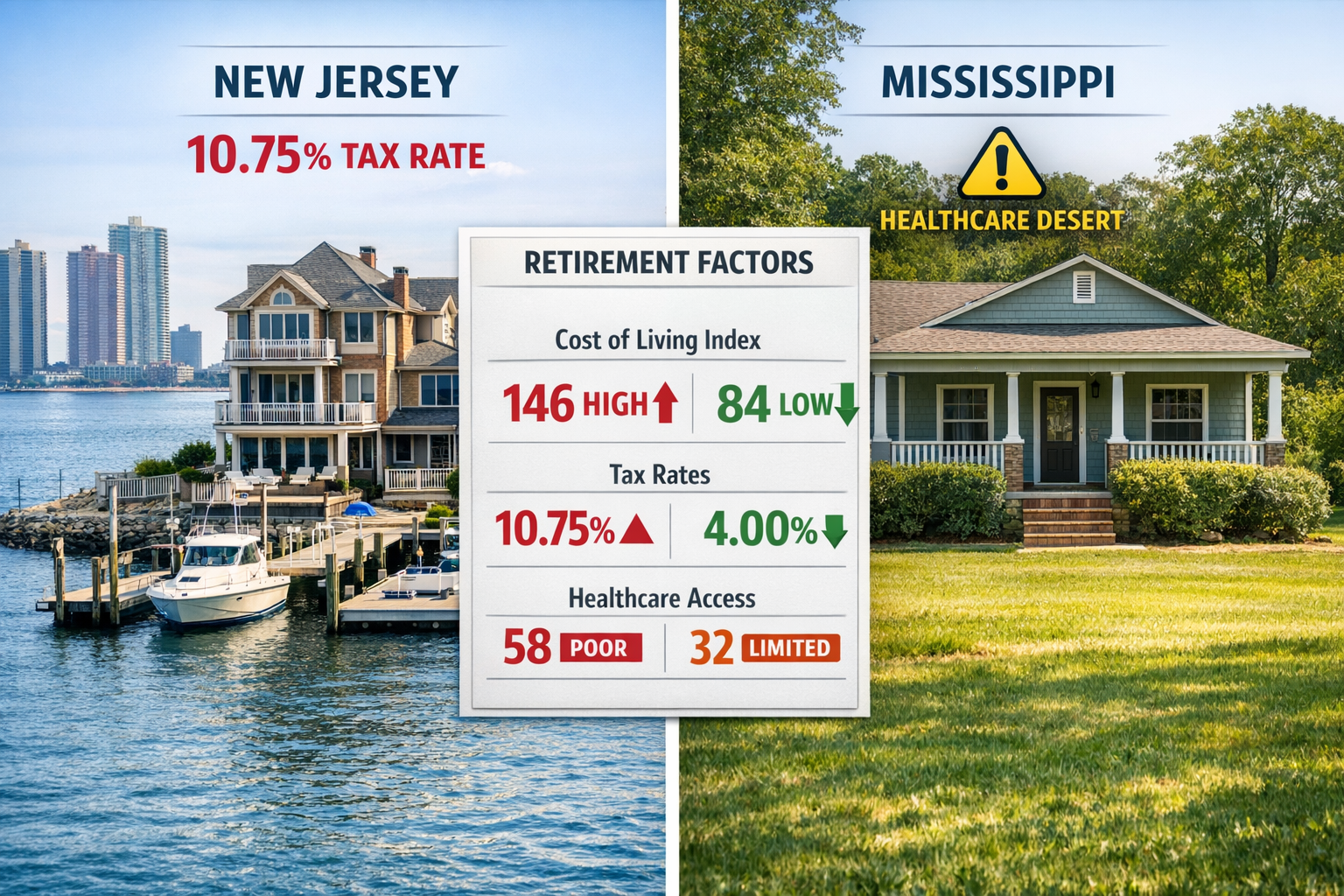
- New Jersey tops the list for highest costs, with a 10.75% personal income tax rate that eats into fixed retirement incomes
- Mississippi offers the lowest living costs but ranks dead last (51st) for senior healthcare quality, with 24% of residents in healthcare deserts
- High-tax coastal states and low-quality Southern states dominate the bottom rankings for different but equally problematic reasons
- RV retirees can strategically avoid these states or use them only for brief visits while establishing residency elsewhere
Quick Answer
Would you like to save this article?
The 10 worst states for retirement in 2026 include Kentucky, New Jersey, Mississippi, West Virginia, Arkansas, Oklahoma, New York, Hawaii, Alabama, and New Mexico. These states fail retirees through combinations of high taxes, poor healthcare access, elevated living costs, or severely compromised quality of life. Kentucky takes the bottom spot overall, while New Jersey leads for unaffordability and Mississippi ranks last for healthcare quality.[2][4][5]
What Makes the 10 Worst States for Retirement So Problematic?
The worst retirement states fail on three critical dimensions: affordability, healthcare access, and quality of life. These factors matter even more for RV enthusiasts who need reliable healthcare networks, reasonable costs for supplies and maintenance, and safe, enjoyable places to park and explore.
Affordability challenges hit hardest in states like New Jersey, New York, and Hawaii, where retirees face:
- Personal income tax rates exceeding 10% that reduce Social Security and pension income
- Property taxes that make even part-time residency expensive
- High costs for groceries, fuel, and RV maintenance that strain fixed budgets
- Expensive campground fees in popular but costly areas
Healthcare deserts plague Southern and rural states, creating dangerous gaps for retirees managing chronic conditions:
- Mississippi has only 30 doctors per 100,000 seniors, compared to national averages above 50[3]
- 67-71% of Medicare beneficiaries in Mississippi and Alabama manage three or more chronic conditions with inadequate local care[4]
- 24% of Mississippi’s population lives in designated healthcare deserts where emergency care is 30+ minutes away[2]
Quality of life failures include high crime rates, limited recreational opportunities, and poor infrastructure:
- Arkansas ranks 50th for quality of life despite reasonable costs[2]
- New Mexico has the highest property crime rate in the nation, making RV security a constant concern[2]
- West Virginia shows the highest senior poverty rate in Appalachia at 11.2%[3]
“The bottom-ranked states remained largely consistent year-over-year, with Kentucky, Mississippi, and West Virginia appearing in every major 2026 study’s bottom ten.”
The Complete List of 10 Worst States for Retirement in 2026
1. Kentucky – The Deceptive Tax Haven
Kentucky claims the worst overall retirement ranking despite offering a seemingly attractive 3.5% flat income tax.[3][5] The state’s failures in other areas completely overwhelm this single advantage.
Why Kentucky fails retirees:
- 47th place for healthcare quality and access across all states
- 42nd for quality of life, including recreation and cultural opportunities
- 34th for affordability when all factors beyond income tax are considered
- Limited RV-friendly infrastructure outside major tourist areas like Mammoth Cave
For RV retirees: Kentucky works fine for short visits to bourbon country or natural attractions, but establishing residency here means accepting substandard healthcare and limited amenities. Choose South Dakota or Florida for RV-friendly domicile instead.
2. New Jersey – The Tax Trap
New Jersey earns its spot as the worst state in CareScout’s 2026 analysis, driven by the nation’s highest personal income tax rate and crushing overall costs.[4][6]
The numbers tell the story:
- 10.75% personal income tax on higher income brackets
- Highest average Social Security income at $29,562, but taxes eat much of it
- Property taxes that make even small homes expensive to maintain
- Campground costs that can exceed $80-100 per night in peak season
For RV retirees: New Jersey’s proximity to family might tempt some retirees, but the financial penalty is severe. Visit for summers but claim residency in a tax-friendly state. The state does offer excellent healthcare, but costs make it prohibitive for most retirees.
3. Mississippi – The Healthcare Desert
Mississippi presents a dangerous paradox: the lowest cost of living index at 83.3 paired with the worst healthcare ranking (51st) in the nation.[2][3][4]
Critical healthcare gaps include:
- Only 30 doctors per 100,000 seniors, creating dangerous wait times
- 24% of residents live in healthcare deserts with limited emergency access
- Dead last for senior healthcare quality across all measurement categories
- Highest rates of chronic conditions with fewest resources to manage them
For RV retirees: Mississippi’s affordable RV parks and low costs tempt budget-conscious travelers, but healthcare risks are real. If you have serious health conditions, limit stays to brief visits and maintain access to quality care in neighboring states.
4. West Virginia – Poverty and Isolation
West Virginia combines economic hardship with geographic isolation, creating compounding problems for retirees.[1][2][5]
Key challenges:
- 11.2% senior poverty rate, highest in Appalachia[3]
- Limited RV infrastructure outside a few tourist corridors
- Poor road conditions that stress RV systems and tow vehicles
- Bottom-tier rankings for both healthcare and quality of life
For RV retirees: The Mountain State’s beauty attracts visitors, but infrastructure and services lag badly. Plan carefully for fuel stops, maintenance needs, and medical access. Don’t establish residency here unless you have strong family ties that outweigh the disadvantages.
5. Arkansas – Quality of Life Crisis
Arkansas ranks 11th for affordability but dead last (50th) for quality of life, plus 45th for healthcare—a combination that makes cheap living feel expensive.[2]
What drags Arkansas down:
- Worst quality of life ranking across all 50 states
- Limited cultural and recreational opportunities outside Little Rock and Bentonville
- 45th for healthcare access and quality
- High rates of chronic health conditions among seniors
For RV retirees: Arkansas offers affordable camping and some beautiful natural areas like Hot Springs and the Ozarks, but plan these as short-term visits. The state lacks the amenities and healthcare infrastructure needed for comfortable long-term retirement.
6. Oklahoma – The Forgotten Middle
Oklahoma consistently appears in bottom-ten rankings across multiple studies, failing on multiple fronts without excelling in any category.[1][5]
Oklahoma’s retirement problems:
- Mediocre to poor rankings across all three major categories
- High property crime rates in urban areas
- Limited healthcare access in rural counties
- Extreme weather including tornadoes that threaten RV safety
For RV retirees: Oklahoma works as a pass-through state or for visiting specific attractions, but offers no compelling reason to establish residency or extended stays. Weather alone makes it risky for RV living during spring tornado season.
7. New York – Unaffordable Excellence
New York ranks as the least affordable state overall for retirement, despite offering world-class healthcare and cultural opportunities.[1][2][5]
The affordability crisis includes:
- Extremely high state and local income taxes
- Expensive property taxes even in rural areas
- High costs for everything from fuel to groceries
- Prohibitively expensive RV parks and campgrounds near popular areas
For RV retirees: New York’s beauty and attractions make it worth visiting, but the costs are brutal. Establish residency in a neighboring state like Pennsylvania (though it has dropped in rankings recently) or travel through New York without staying long enough to trigger tax residency.
8. Hawaii – Paradise at a Price
Hawaii ranks as the second-least affordable state for retirement, with costs that shock even prepared visitors.[1][2][5]
Why Hawaii breaks budgets:
- Extremely high costs for everything due to island isolation
- Limited RV infrastructure and expensive inter-island shipping
- High state income taxes on top of federal taxes
- Expensive healthcare despite good quality
For RV retirees: Hawaii presents unique challenges since RVs must be shipped at enormous cost. Most RV retirees visit Hawaii by other means or skip it entirely. If you must go, rent accommodations rather than shipping your rig.
9. Alabama – Healthcare and Quality Gaps
Alabama shares Mississippi’s healthcare crisis while offering slightly better affordability—but not enough to compensate for serious quality-of-life issues.[2][4]
Alabama’s retirement challenges:
- 67-71% of Medicare beneficiaries manage three or more chronic conditions
- Poor access to specialists and advanced medical care
- Limited cultural and recreational amenities
- High humidity and heat that stress RV cooling systems
For RV retirees: Alabama’s Gulf Coast attracts winter visitors, but healthcare limitations make it risky for extended stays. Use it for short-term winter escapes while maintaining residency and healthcare access elsewhere.
10. New Mexico – The Crime Problem
New Mexico ranks 41st overall despite reasonable affordability (30th place), dragged down by the highest property crime rate in the nation.[2]
Security concerns include:
- Highest property crime rate nationally, threatening RV and vehicle security
- Limited law enforcement in rural areas where RV parks often locate
- Healthcare access problems outside Albuquerque and Santa Fe
- Economic challenges that contribute to crime rates
For RV retirees: New Mexico’s beauty and culture attract many RVers, but security requires constant vigilance. Never leave your RV unattended for extended periods, invest in quality security systems, and choose campgrounds carefully based on reviews and security features.
How Do the 10 Worst States for Retirement Compare to the Best?
The gap between worst and best retirement states is dramatic and measurable across every category that matters to retirees.
| Category | Worst States (Average) | Best States (Average) | Gap |
|---|---|---|---|
| Healthcare Ranking | 45th-51st | 1st-10th | 40+ positions |
| Affordability | High taxes OR low quality | Balanced costs | Major difference |
| Quality of Life | 40th-50th | 1st-15th | 30+ positions |
| Tax Burden | 8-10.75% (high-tax) OR poor services (low-tax) | 0-5% with good services | Significant |
Top-performing states like Virginia, Florida, and Colorado offer combinations of reasonable costs, excellent healthcare, and high quality of life that make retirement genuinely enjoyable.[4][5]
Bottom-performing states force retirees to choose between affordability and quality, or offer neither. Kentucky exemplifies this problem: low taxes can’t compensate for poor healthcare and limited amenities.
For RV retirees specifically:
- Best states (South Dakota, Florida, Texas) offer no income tax, RV-friendly laws, and good healthcare networks
- Worst states either tax you heavily (New Jersey, New York) or provide inadequate services (Mississippi, West Virginia)
- The difference amounts to thousands of dollars annually plus significantly better health outcomes
What Should RV Retirees Know About State Rankings?
State retirement rankings shift slightly year-over-year, but the worst performers show remarkable consistency. Understanding these patterns helps RV retirees make smarter decisions about where to establish domicile and which states to avoid or visit only briefly.
2026 ranking stability shows:
- Bottom ten states remained largely unchanged from 2025 to 2026[4]
- Kentucky, Mississippi, and West Virginia appear in every major study’s bottom tier
- Some states showed dramatic movement: Utah jumped from 39th to 15th, while Pennsylvania dropped from 5th to 27th[4]
Rankings use different methodologies:
- WalletHub weighs affordability, healthcare, and quality of life equally[2]
- CareScout emphasizes tax burden and healthcare access[4]
- Wealth Management focuses on financial factors[5]
Choose your ranking based on priorities:
- If healthcare is critical, focus on healthcare-specific rankings
- If taxes matter most, emphasize affordability and tax-burden studies
- For overall retirement satisfaction, use composite rankings
RV-specific considerations that general rankings miss:
- Domicile-friendly laws (mail forwarding, driver’s license retention)
- RV insurance costs by state of registration
- Vehicle registration fees and requirements
- Sales tax on RV purchases and major repairs
“RV retirees have a unique advantage: you can visit the worst states without suffering the consequences of residency. Establish domicile in a top-tier state and travel everywhere else.”
Why Do High-Cost and Low-Cost States Both Rank Poorly?
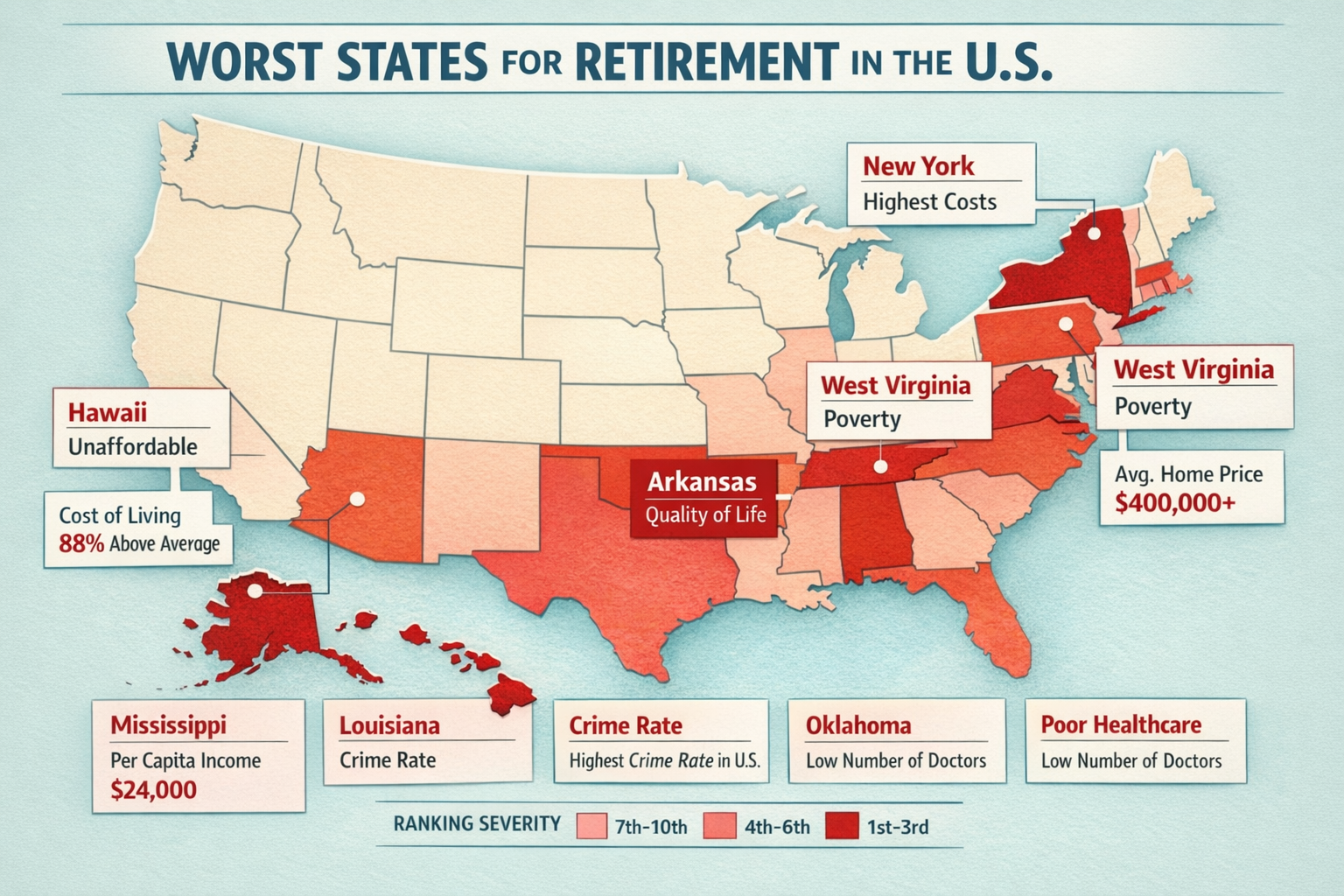
The worst retirement states fail from opposite directions: some charge too much for what they deliver, while others deliver too little despite low costs.
High-cost failures (New Jersey, New York, Hawaii):
- Tax burden exceeds benefits for most retirees
- Excellent services exist but at prices that strain fixed incomes
- RV lifestyle offers no cost advantages in these states
- Better options exist with similar quality at lower prices
Low-cost failures (Mississippi, West Virginia, Arkansas):
- Cheap living comes with serious quality compromises
- Healthcare gaps create life-threatening risks
- Poor infrastructure stresses RV systems and safety
- Economic distress creates higher crime and fewer amenities
The sweet spot for RV retirees combines:
- No or low state income tax (Florida, South Dakota, Texas, Nevada)
- Adequate to excellent healthcare networks
- Reasonable costs for daily living and RV maintenance
- RV-friendly regulations and good campground infrastructure
Common mistakes to avoid:
- Choosing a state solely because of low taxes without checking healthcare
- Assuming high costs guarantee high quality (they don’t in worst-ranked states)
- Ignoring RV-specific factors like registration costs and insurance rates
- Establishing domicile based on where you currently are rather than strategic planning
What Are the Alternatives to the Worst Retirement States?
RV retirees enjoy unique flexibility to avoid problem states entirely while accessing better options. Strategic domicile selection combined with smart travel planning maximizes retirement quality and minimizes costs.
Top domicile alternatives for RV retirees:
South Dakota – The RV retiree favorite:
- No state income tax on any income source
- Simple domicile establishment through mail forwarding services
- Low vehicle registration costs
- Excellent RV infrastructure and services
- One-day visit establishes residency
Florida – The traditional choice:
- No state income tax with excellent healthcare networks
- Strong RV culture and infrastructure
- Good weather for winter stays
- More complex domicile requirements than South Dakota
Texas – The big state option:
- No state income tax with diverse geography
- Excellent medical facilities in major cities
- Large RV community and support network
- Higher property taxes if you own land
Nevada – The Western choice:
- No state income tax with good healthcare in urban areas
- Strong RV presence and services
- Proximity to Western travel destinations
- Simple domicile establishment
Travel strategies for RV retirees:
- Establish domicile in a top-tier state regardless of where you travel
- Visit worst-ranked states for attractions without staying long enough to trigger tax residency
- Time your visits to avoid extreme weather and peak-cost seasons
- Maintain healthcare relationships in quality-care states even while traveling
Financial planning considerations:
- Changing domicile can save $3,000-$8,000 annually for typical retirees
- Healthcare access in quality states prevents expensive emergency situations
- RV registration and insurance costs vary by hundreds to thousands annually by state
Frequently Asked Questions
Which state is actually the worst for retirement in 2026?
Kentucky ranks as the worst overall retirement state in 2026 according to WalletHub and Wealth Management studies, scoring 47th for healthcare, 42nd for quality of life, and 34th for affordability despite low income taxes.[2][5] New Jersey tops CareScout’s worst list due to the nation’s highest tax burden.[4]
Can RV retirees avoid the problems of worst-ranked states?
Yes, RV retirees can establish legal domicile in top-tier states like South Dakota or Florida while traveling through any state, including the worst-ranked ones. This strategy provides tax benefits and healthcare access while allowing you to visit anywhere briefly without residency consequences.
Is Mississippi really that bad despite low costs?
Mississippi ranks dead last (51st) for senior healthcare quality with only 30 doctors per 100,000 seniors and 24% of residents in healthcare deserts.[2][3] The low cost of living (83.3 index) doesn’t compensate for life-threatening healthcare gaps if you have serious medical needs.
Why does Kentucky rank worse than Mississippi in some studies?
Kentucky’s overall rankings incorporate poor performance across all three categories—healthcare (47th), quality of life (42nd), and affordability (34th)—while Mississippi excels in affordability even as it fails catastrophically in healthcare.[2][5] Composite rankings penalize consistent mediocrity.
Should I avoid these states completely when RV traveling?
No, brief visits to worst-ranked states for specific attractions pose no problems. Avoid establishing legal residency or staying long enough to trigger tax obligations. Many worst-ranked states offer beautiful scenery and attractions worth visiting—just don’t make them your legal home.
What’s the biggest mistake retirees make with state selection?
The most common mistake is choosing retirement states based solely on where family lives or where you’ve always lived, without analyzing taxes, healthcare, and quality of life. This oversight costs thousands annually and can compromise health outcomes.
Do state rankings matter if I’m healthy and wealthy?
Rankings matter less for wealthy retirees who can afford private healthcare and absorb high taxes, but they still matter. Even wealthy retirees benefit from choosing low-tax states, and healthcare quality affects everyone eventually as aging progresses.
How much money can I save by avoiding worst-ranked states?
Typical retirees save $3,000-$8,000 annually in state income taxes alone by choosing no-tax states over high-tax worst performers like New Jersey. Additional savings come from lower registration fees, insurance costs, and living expenses.
Are the worst retirement states also bad for RV travel infrastructure?
Not necessarily. Some worst-ranked states like New York offer excellent RV infrastructure despite high costs. Others like Mississippi and West Virginia have limited RV facilities. Check RV-specific resources beyond general retirement rankings.
Can I change my domicile state after retiring?
Yes, retirees can change legal domicile relatively easily, especially RV retirees without permanent homes. The process involves establishing presence in the new state, getting a driver’s license, registering to vote, and documenting your intent to make it your permanent home.
What happens if I split time between multiple states?
Spending significant time (typically 183+ days) in a state can trigger tax residency regardless of your legal domicile. Track your days carefully and maintain clear domicile in your chosen state while limiting time in high-tax states.
Do worst-ranked states ever improve significantly?
State rankings show remarkable stability year-over-year for bottom performers, though some states make dramatic jumps. Utah improved from 39th to 15th in recent years, but Kentucky, Mississippi, and West Virginia remain consistently in the bottom tier.[4]
Key Takeaways
- Kentucky ranks as the worst overall retirement state despite low income taxes, failing badly in healthcare (47th) and quality of life (42nd)
- New Jersey imposes the nation’s highest tax burden at 10.75% personal income tax, making it the worst for affordability
- Mississippi offers the lowest living costs but ranks dead last for healthcare quality with only 30 doctors per 100,000 seniors
- RV retirees can strategically avoid these problems by establishing domicile in top-tier states like South Dakota or Florida
- High-tax coastal states and low-quality Southern states dominate the worst rankings for different but equally serious reasons
- Healthcare access separates worst from best states more than any other single factor, with gaps of 40+ ranking positions
- State rankings remain remarkably stable year-over-year, with the same states consistently appearing in bottom-ten lists
- Changing domicile saves $3,000-$8,000 annually for typical retirees while improving healthcare access and quality of life
- Brief visits to worst-ranked states pose no problems, allowing RV retirees to see attractions without residency consequences
- The worst retirement states force impossible choices between affordability and quality, while best states offer both
Conclusion

The 10 worst states for retirement in 2026 present serious challenges that RV retirees are uniquely positioned to avoid. While traditional retirees might feel trapped by family ties or existing property, RV enthusiasts enjoy the freedom to establish legal domicile in top-performing states while traveling anywhere their adventures lead them.
Kentucky’s position as the worst overall state, New Jersey’s crushing tax burden, and Mississippi’s healthcare crisis represent three different paths to retirement failure. Some states charge too much for what they deliver, others deliver too little despite low costs, and a few manage to fail on multiple fronts simultaneously. Understanding these patterns helps you make smarter decisions about where to claim residency and which states to visit only briefly.
Take action now to optimize your retirement:
- Evaluate your current domicile against top-performing alternatives like South Dakota, Florida, or Texas
- Calculate potential tax savings by comparing your current state’s income tax to zero-tax alternatives
- Research healthcare networks in states you’re considering for extended stays or domicile
- Plan your travel routes to experience worst-ranked states’ attractions without establishing residency
- Consult with a tax professional familiar with RV retiree domicile issues before making changes
- Join RV retirement communities online to learn from others’ experiences with different states
- Document your domicile carefully to avoid disputes with high-tax states you visit
The beauty of RV retirement is that you’re not stuck with the hand geography dealt you. You can legally establish residency in the best states while experiencing the entire country, including brief visits to the worst-ranked states for specific attractions. This flexibility transforms retirement from a series of compromises into a strategic advantage.
Don’t let poor state selection undermine your retirement dreams. The difference between worst and best states amounts to thousands of dollars annually, significantly better healthcare outcomes, and measurably higher quality of life. Make the smart choice, establish domicile strategically, and enjoy the freedom of the open road without the burden of a poorly chosen home state.
References
[1] Best Worst States Retire – https://www.myfederalretirement.com/best-worst-states-retire/
[2] Best And Worst States To Retire 2026 2 – https://www.businessinsider.com/best-and-worst-states-to-retire-2026-2
[3] Watch – https://www.youtube.com/watch?v=66aAiW3q9ro
[4] Best And Worst States To Retire In 2026 – https://www.carescout.com/resources/best-and-worst-states-to-retire-in-2026
[5] The 10 Best And 10 Worst States For Retirement In 2026 – https://www.wealthmanagement.com/retirement/the-10-best-and-10-worst-states-for-retirement-in-2026
[6] Best Worst States Retire 2026 Based Affordability Quality Life – https://www.foxnews.com/travel/best-worst-states-retire-2026-based-affordability-quality-life