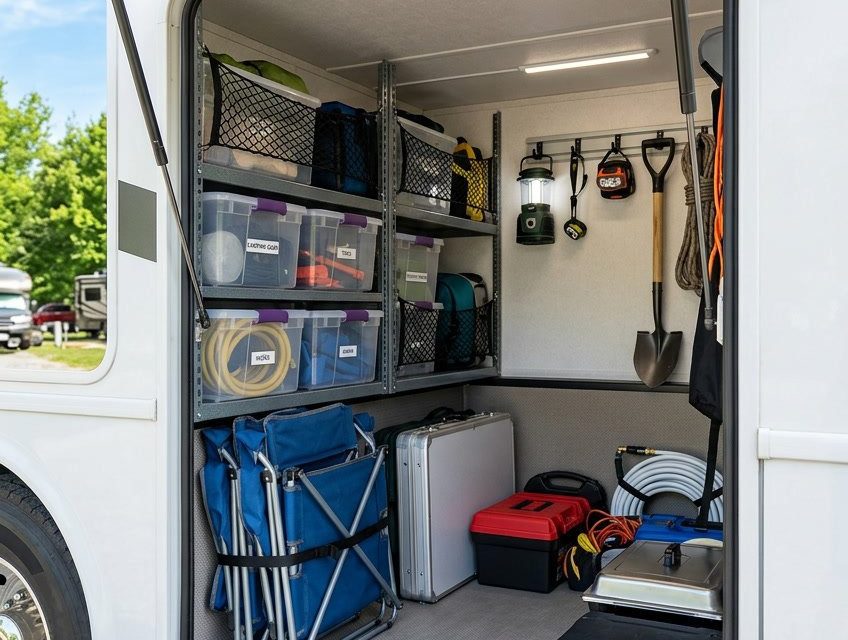
You want to make the most of your RV’s pass-through basement without wasting space or time. This article shows practical ways to organize gear, protect fragile items, and keep essentials easy to grab so your trips feel smoother and less stressful.
You’ll learn simple, low-cost storage ideas that fit a variety of items and make your basement compartments easier to use.
1) Magnetic knife strip for tool organization
Would you like to save this article?
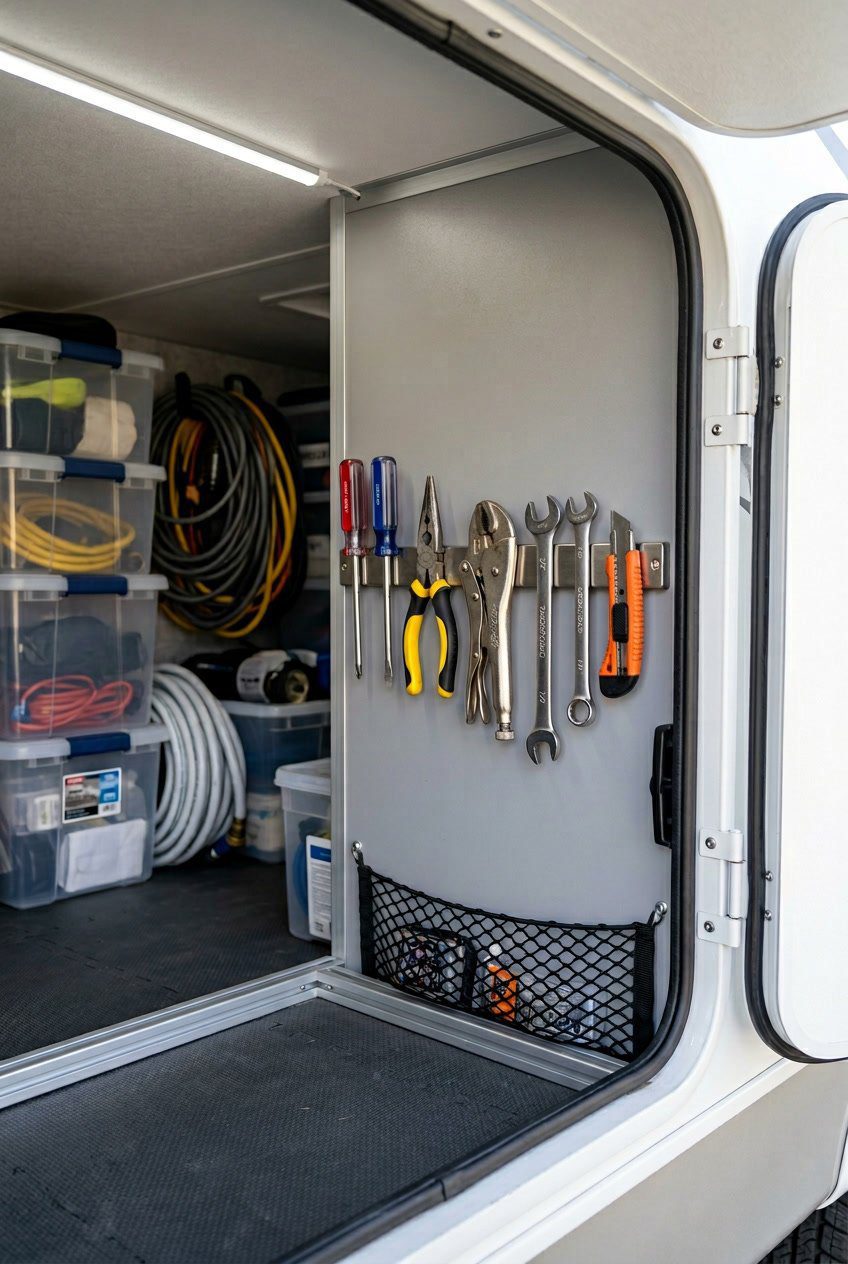
A magnetic knife strip turns a narrow pass-through into an easy tool rack. You can mount it along the wall to hold screwdrivers, pliers, and small wrenches within sight and reach.
The strip saves floor space and stops tools from rattling during travel. It keeps things visible so you grab the right tool fast.
PRO TIP
Choose a strip rated for outdoor or damp conditions if your compartment sees moisture. Use screws and anchors so the strip stays secure on bumpy roads.
2) Clear stackable plastic bins (Sterilite)
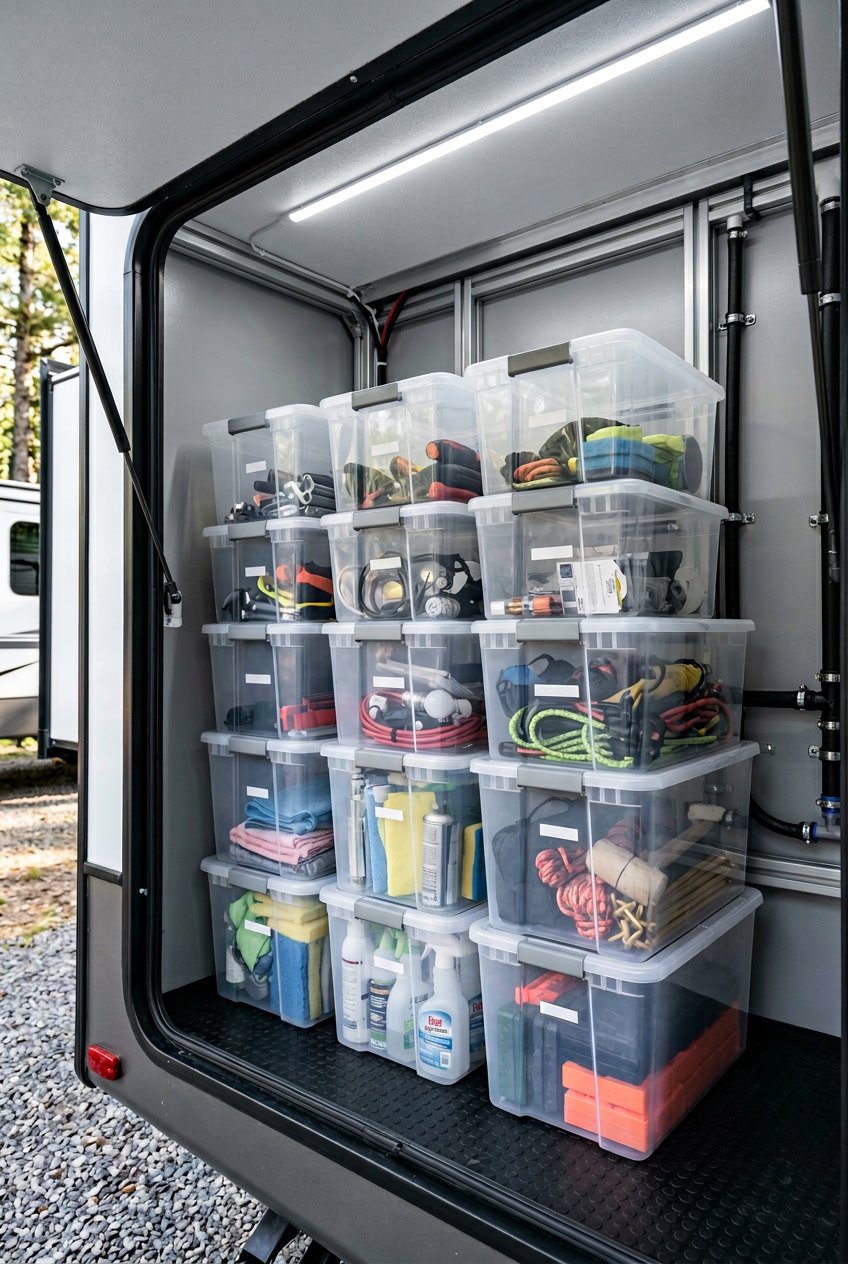
Clear stackable bins help you see contents at a glance, so you spend less time digging. They fit well in basement compartments and make use of vertical space.
Choose sizes that match your compartment height and depth. Use larger bins for bulky items and smaller ones for tools, cords, or first-aid supplies.
Label the short side of each bin so you can read labels when bins are stacked. Keep frequently used items near the front for quick access.
PRO TIP
Place a thin shelf liner or non-slip mat under stacks to prevent shifting while driving. Leave a small gap at the front for airflow to avoid trapped moisture.
3) Custom-cut foam inserts for fragile gear
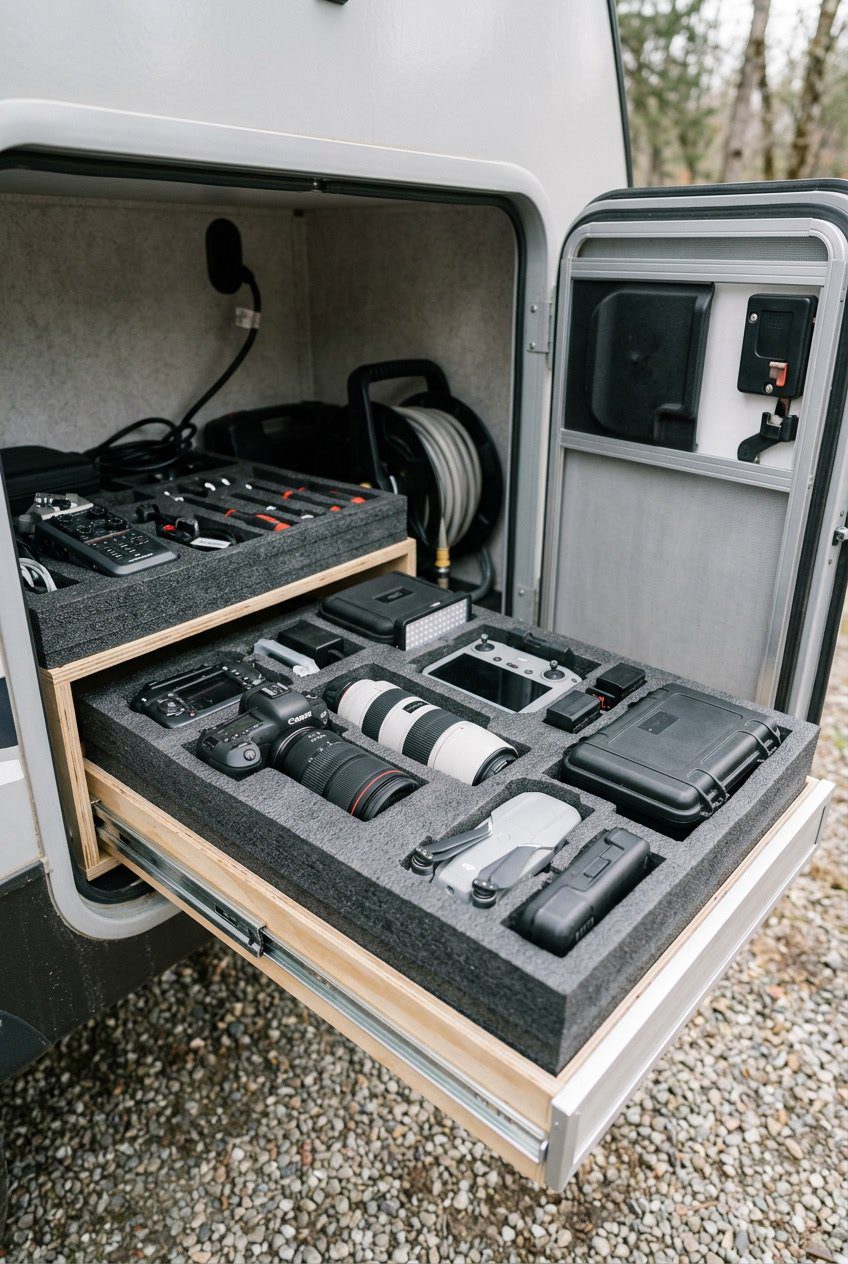
You can protect fragile gear by adding foam inserts cut to fit each item. Foam stops movement, absorbs shock, and keeps things from banging against walls or each other.
Measure your gear and trace shapes on the foam before cutting. Use a utility knife or hot-wire cutter for clean edges. Layer thin sheets to build up depth where needed.
Place heavier items low and lighter ones on top to keep the center of gravity stable. Label each cutout so you can return items to their exact spot quickly.
PRO TIP
Keep spare foam sheets and a small cutter in the RV. That way you can make quick adjustments when you add new gear.
4) Under-bed shoe organizers repurposed for boots
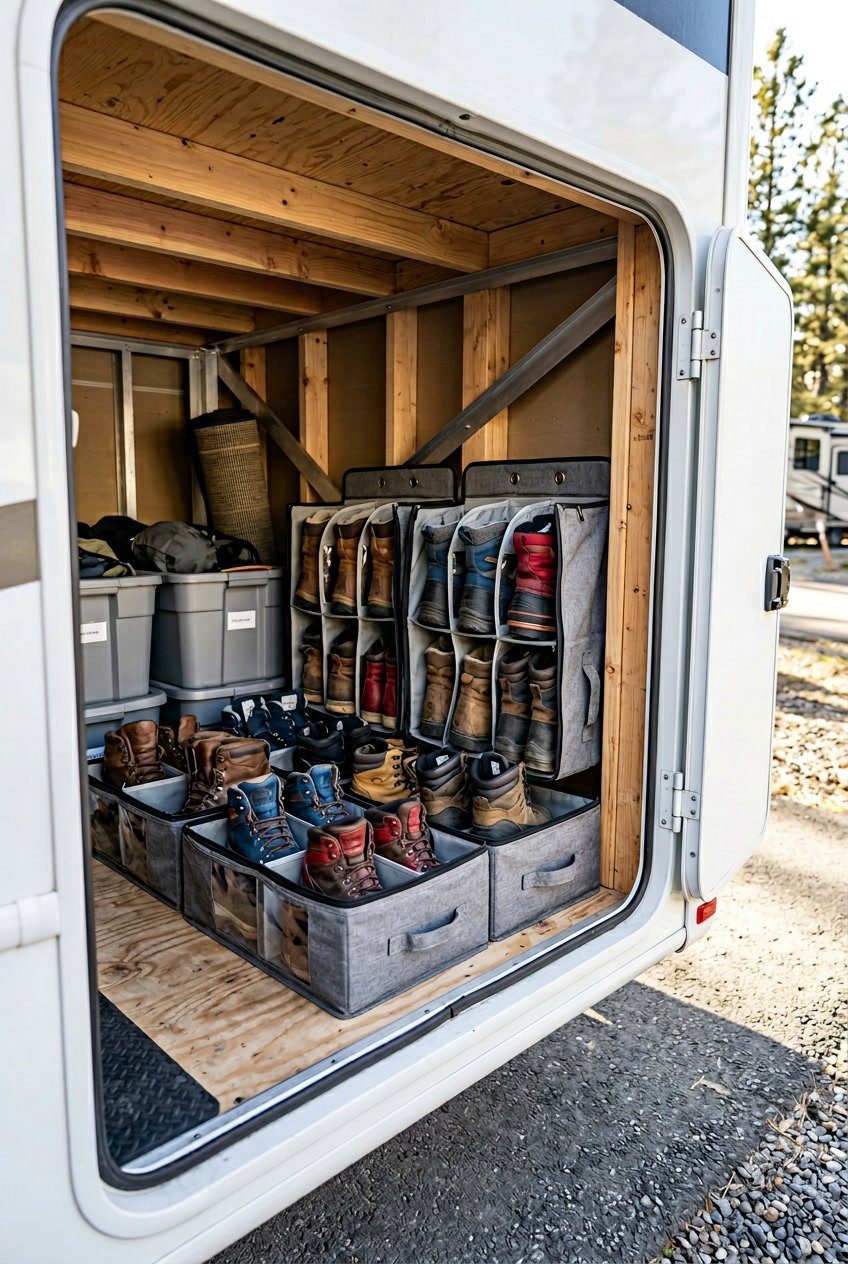
You can slide long, flat shoe organizers into pass-through compartments to hold boots upright and protected. They keep pairs together, make boots easy to grab, and stop dirt from spreading inside the compartment.
Choose organizers with deep pockets and sturdy fabric so taller boots don’t bend or flop. If pockets are too shallow, fold a boot guard or cardboard insert to give each pocket more shape.
Attach a small label to each pocket so you know which boots are inside at a glance. This saves time when you’re packing or leaving camp.
PRO TIP
Secure the organizer with velcro straps or low-stretch bungee cords so it won’t shift while you drive.
5) Velcro-sealed cargo nets for loose items
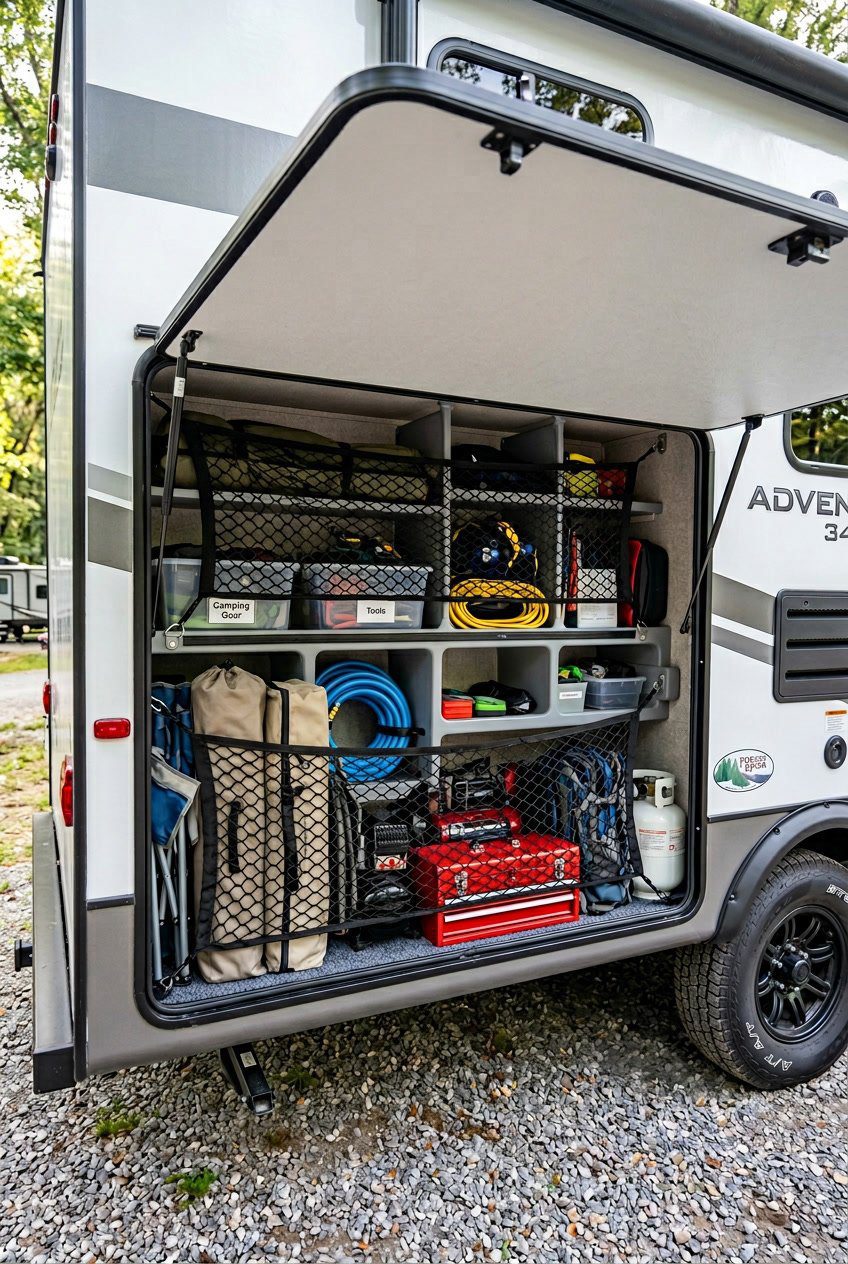
Velcro-sealed cargo nets keep loose items from sliding around in your basement compartment. You can stretch them over gear like shoes, small coolers, or bags to stop movement on bumpy roads.
These nets attach with simple Velcro tabs so you can open and close them fast. They work well in odd-shaped spaces where rigid dividers don’t fit.
Install a few nets in different sizes to match what you carry. Swap nets between trips to make packing quicker and to keep your items visible and easy to grab.
PRO TIP
Choose nets with reinforced edges and strong Velcro strips to last longer. Place heavier items on the floor and use nets for lighter, loose stuff only.
6) Padded kayak blade holders
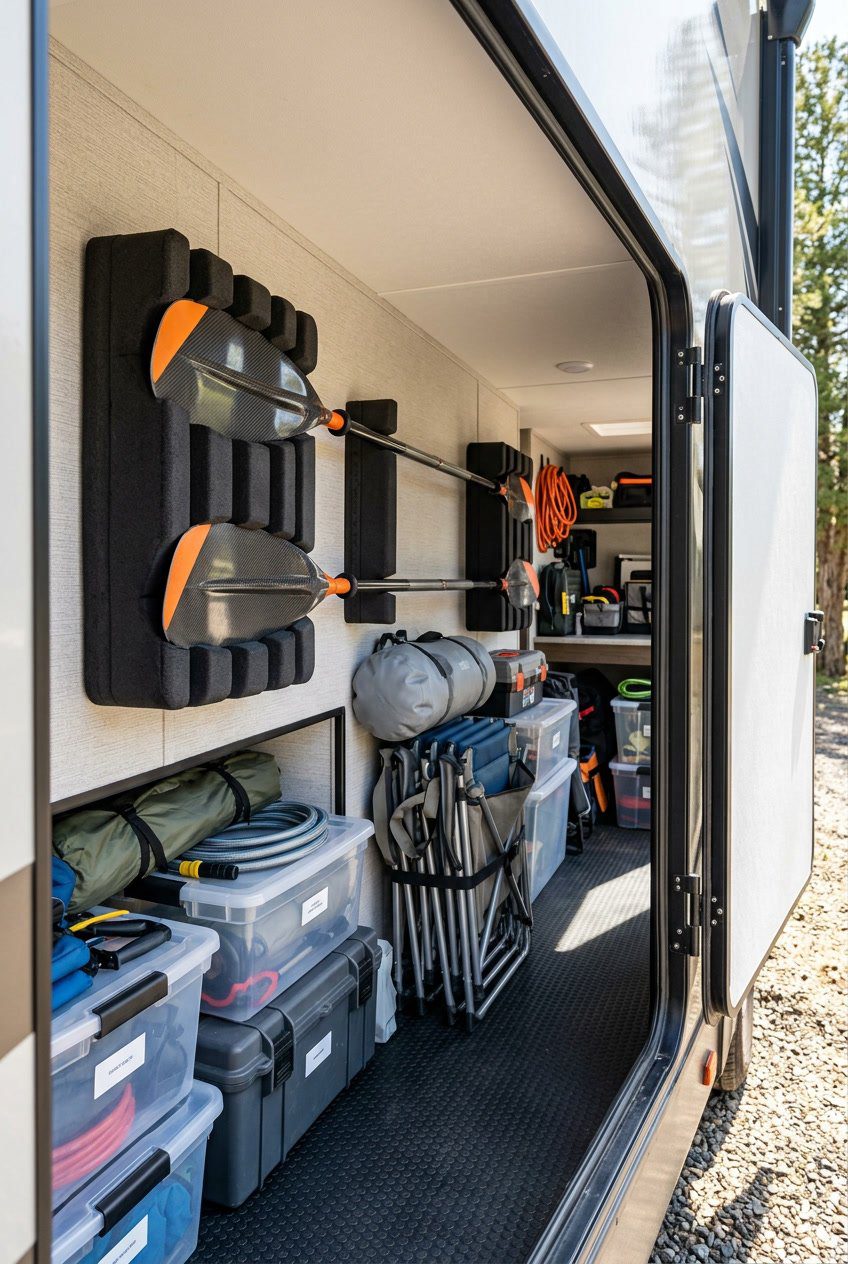
You can keep kayak paddles safe and tidy in basement compartments with padded blade holders. They cushion blades and stop dings during travel. This saves space by stacking paddles neatly along the compartment wall.
Choose holders that fit your paddle shaft and have soft lining to protect edges. Secure them with straps or Velcro so paddles don’t shift on bumpy roads. Padded pockets also cut down on noise from loose gear.
Install holders low and centered to keep weight balanced. You can mount several sets to hold extra paddles or fishing oars. PRO TIP
Use foam or neoprene sleeves if you need a quick, low-cost padding solution.
7) Roof-rack style telescoping gear hangers
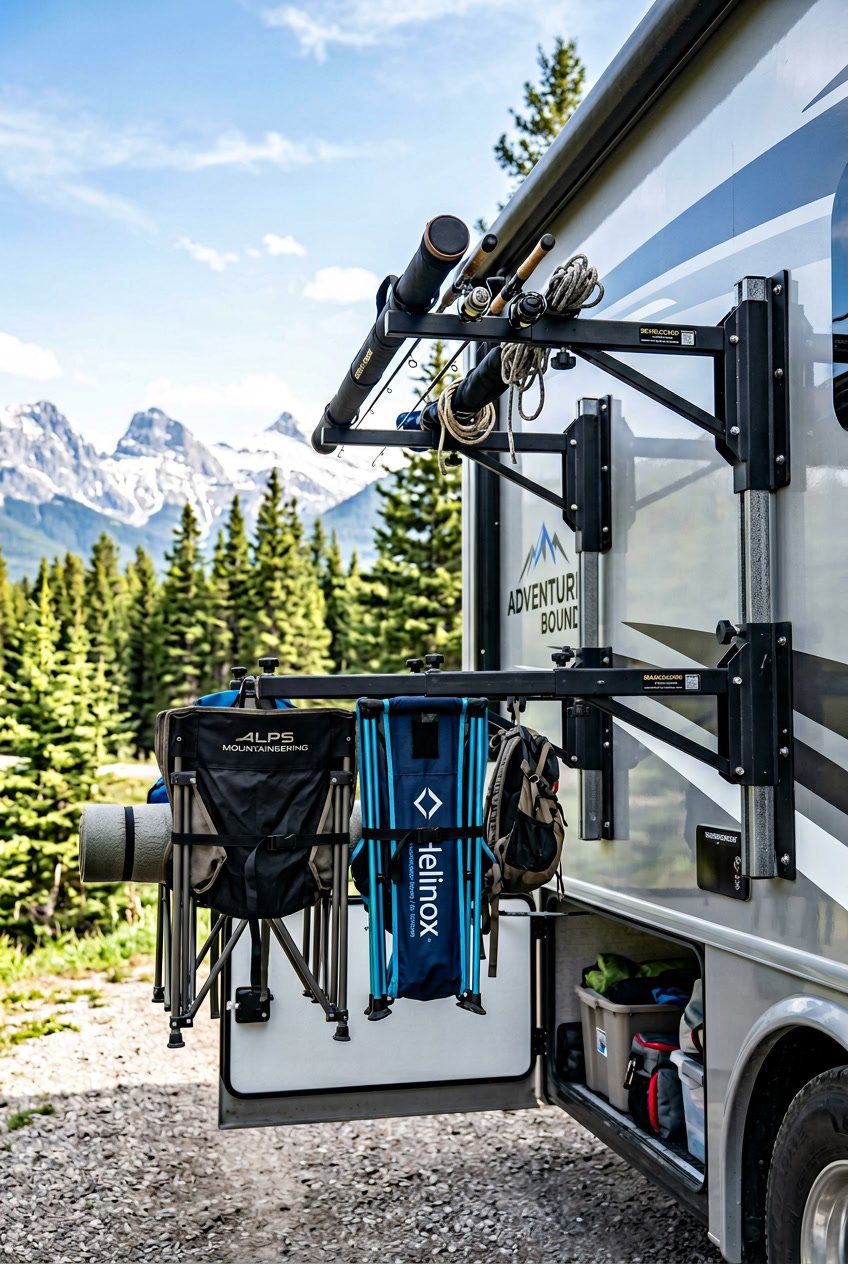
You can install telescoping hangers that slide out like a roof rack to hold long items in your basement compartment. They let you store fishing rods, folding ladders, and ski poles vertically without wasting floor space.
These hangers collapse when not in use, so you keep a clear path for other gear. The telescoping arms lock at different lengths, giving you a secure fit for odd-sized items.
PRO TIP
Mount the hangers near the compartment ceiling to free up floor area and make loading easier. Use rubber-coated hooks or straps to protect delicate gear from scratches and reduce rattling when you drive.
8) Labelled hanging storage pockets (Over-The-Door)
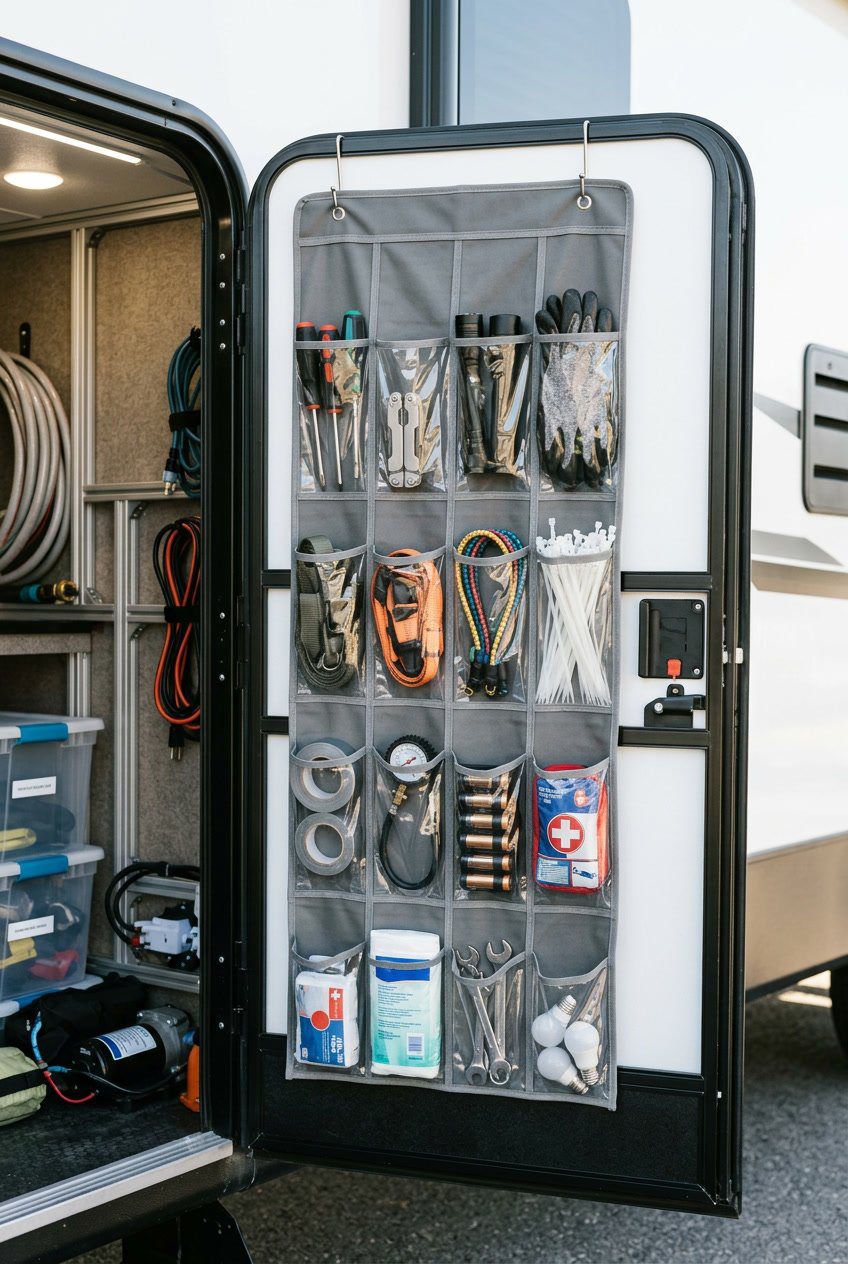
You can hang a pocket organizer on a basement compartment door to keep small items neat and visible. Label each pocket so you find things fast, like flashlights, batteries, cleaning supplies, or maps.
Choose clear or mesh pockets so you can see contents without opening every pocket. Use waterproof labels or laminated tags to avoid smearing when things get damp.
Position heavier items low and light items high to prevent sagging and keep doors balanced. If doors swing a lot, secure the bottom with a strap or a small hook to stop shifting while you drive.
PRO TIP
Color-code labels by item type — tools, safety, kitchen — to speed up searches and help others pack and unpack quickly.
9) Vacuum-seal bags for off-season clothing
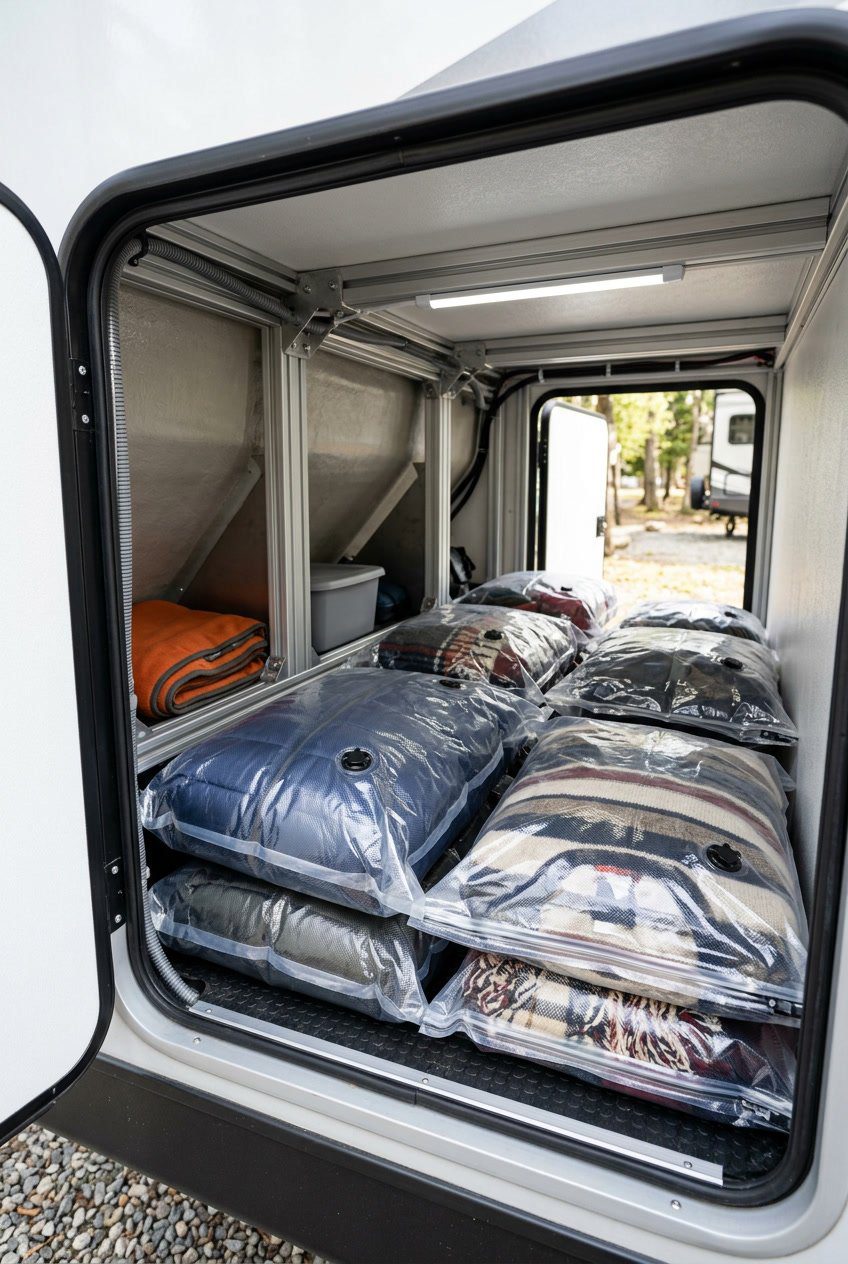
You can shrink bulky coats and sweaters into flat, stackable packs that fit neatly in the pass-through. Vacuum-seal bags reduce air and space, letting you carry more without extra weight.
Store seasonal items like winter jackets, hats, and extra bedding in clear bags so you can see contents at a glance. The flat packs slide into narrow or deep compartments and stay tidy for long trips.
PRO TIP
Choose heavy-duty bags and avoid over-compressing delicate fabrics. Label each bag with a permanent marker so you find what you need fast.
10) Fold-flat camping chair storage sleeves
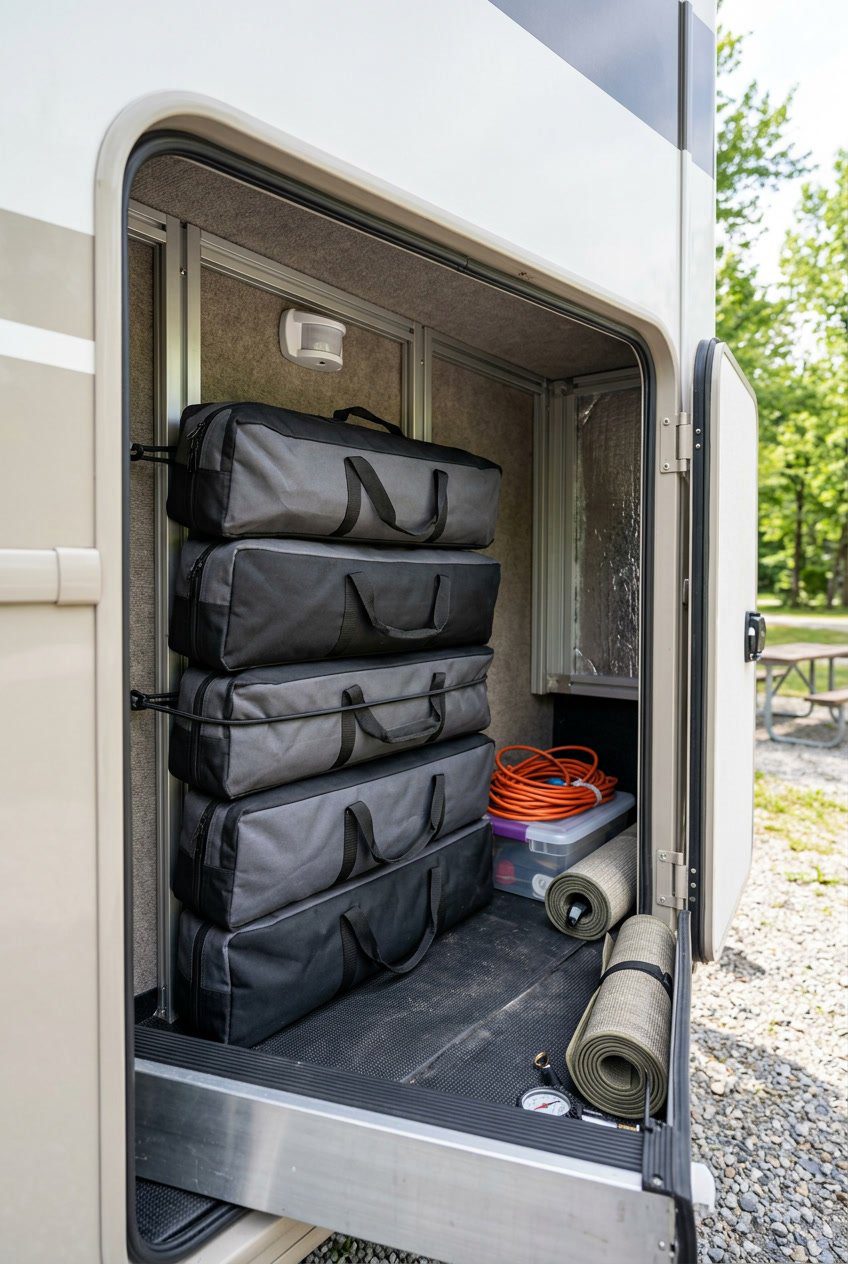
You can store fold-flat camping chairs in slim sleeves that keep them neat and easy to grab. Slide each chair into a sleeve to protect fabric and keep straps from tangling.
Sleeves use little space and stack well in a basement compartment. They let you fit more chairs without wasting room between items.
Choose sleeves with handles so you can pull them out quickly. Clear or labeled sleeves help you spot the right chair at a glance.
PRO TIP
Place the sleeves on their side to save height and line them by size. That keeps heavier items below and makes loading smoother.
11) Bolt-on aluminum slide-out drawer system
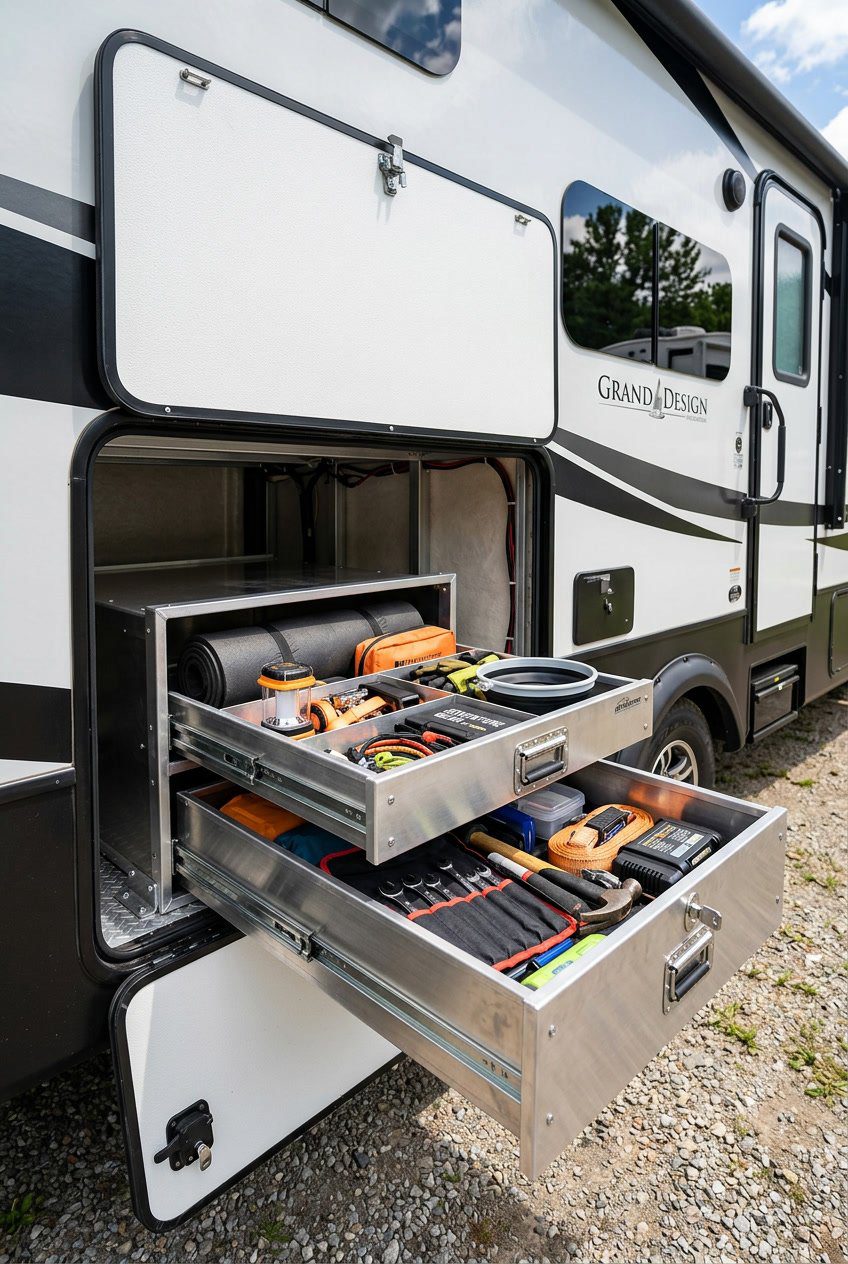
A bolt-on aluminum slide-out drawer fastens to your RV’s floor or compartment walls. It gives you strong, low-weight storage that slides out for easy access to gear and tools.
You can mount different drawer sizes to fit odd-shaped spaces. The material resists rust and holds up in damp basements.
Slides lock in place to keep things from shifting while you drive. You can add foam dividers or bins to keep small items tidy and stop noise.
PRO TIP
Measure twice before drilling so the drawer clears doors and pipes. Use grade-appropriate fasteners and check torque after a few trips.
12) Tool roll organizer for mechanic tools
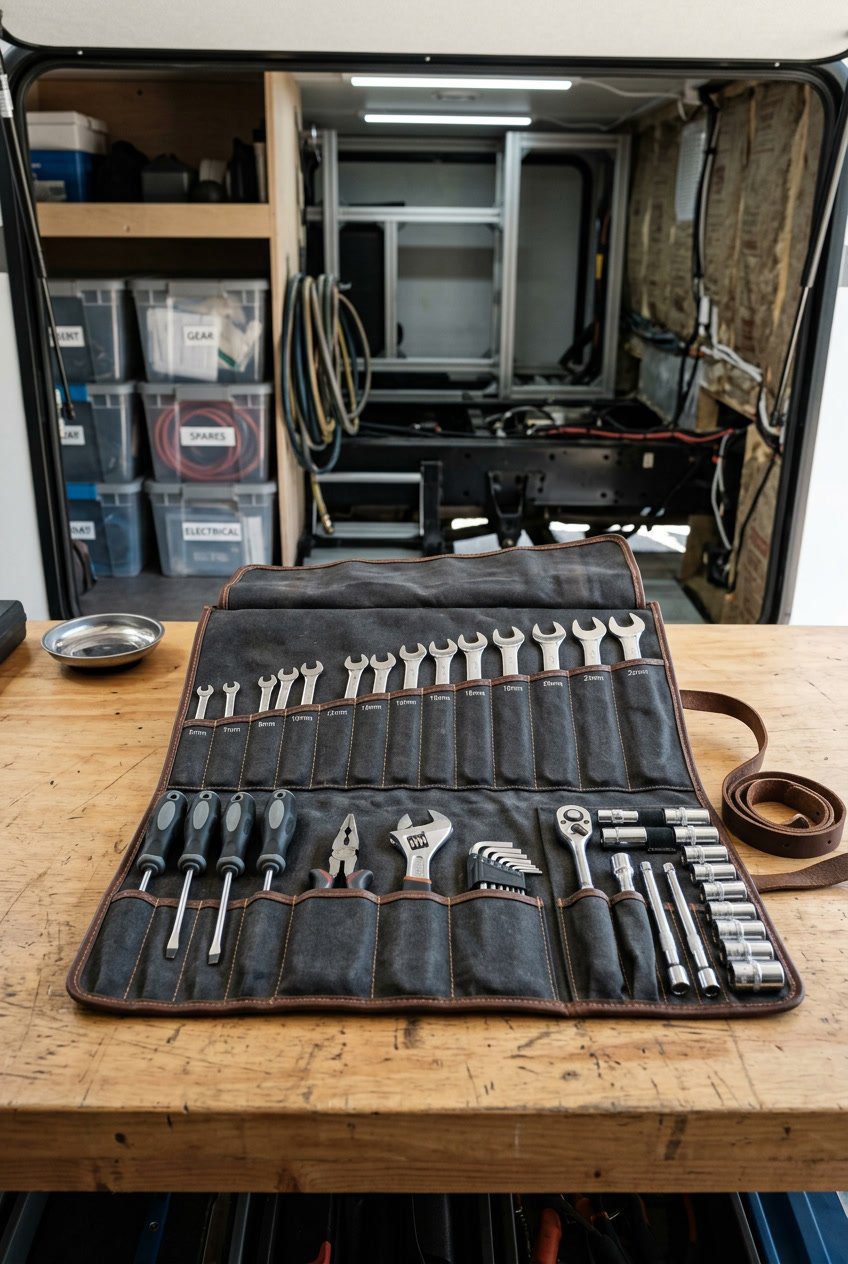
A tool roll keeps your wrenches, sockets, and pliers in neat rows. You can stash it flat in the pass-through and still pull it out quickly when you need to fix something.
Choose a heavy fabric or weatherproof material so tools stay dry and clean. Pockets and straps stop items from shifting while you drive.
Roll it up tight and secure it with the built-in strap to save space. Label pockets with simple tape so you grab the right tool fast.
PRO TIP
Lay tools in size order before rolling to spot missing pieces at a glance. Store a small flashlight and gloves in one pocket for fast roadside repairs.
13) Adjustable bungee cord grid for odd shapes
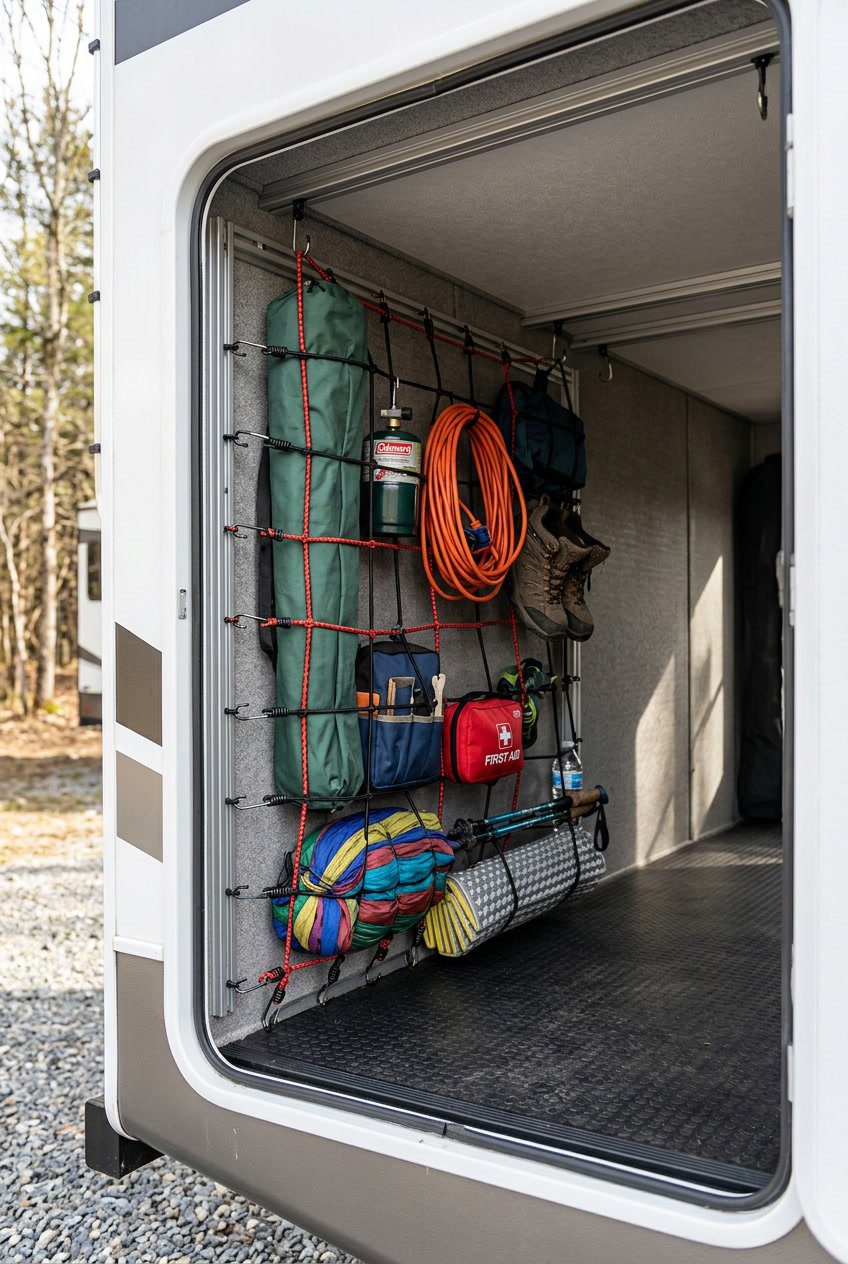
An adjustable bungee cord grid turns awkward items into tidy cargo you can access fast. Stretch cords across the pass-through to make a flexible net that holds odd shapes like folding chairs, coolers, or tool cases.
Use hooks or small anchors to create a grid pattern. Change spacing and tension to match each load, so small items won’t slip through and large pieces stay put.
This setup is light and easy to remove when you need full space. It also cushions items against bumps, reducing rattles while driving.
PRO TIP
Attach a few elastic loops at front corners for quick-release items you use often. Check cords before each trip for wear and replace any that look frayed.
14) Insulated cooler box with tie-downs
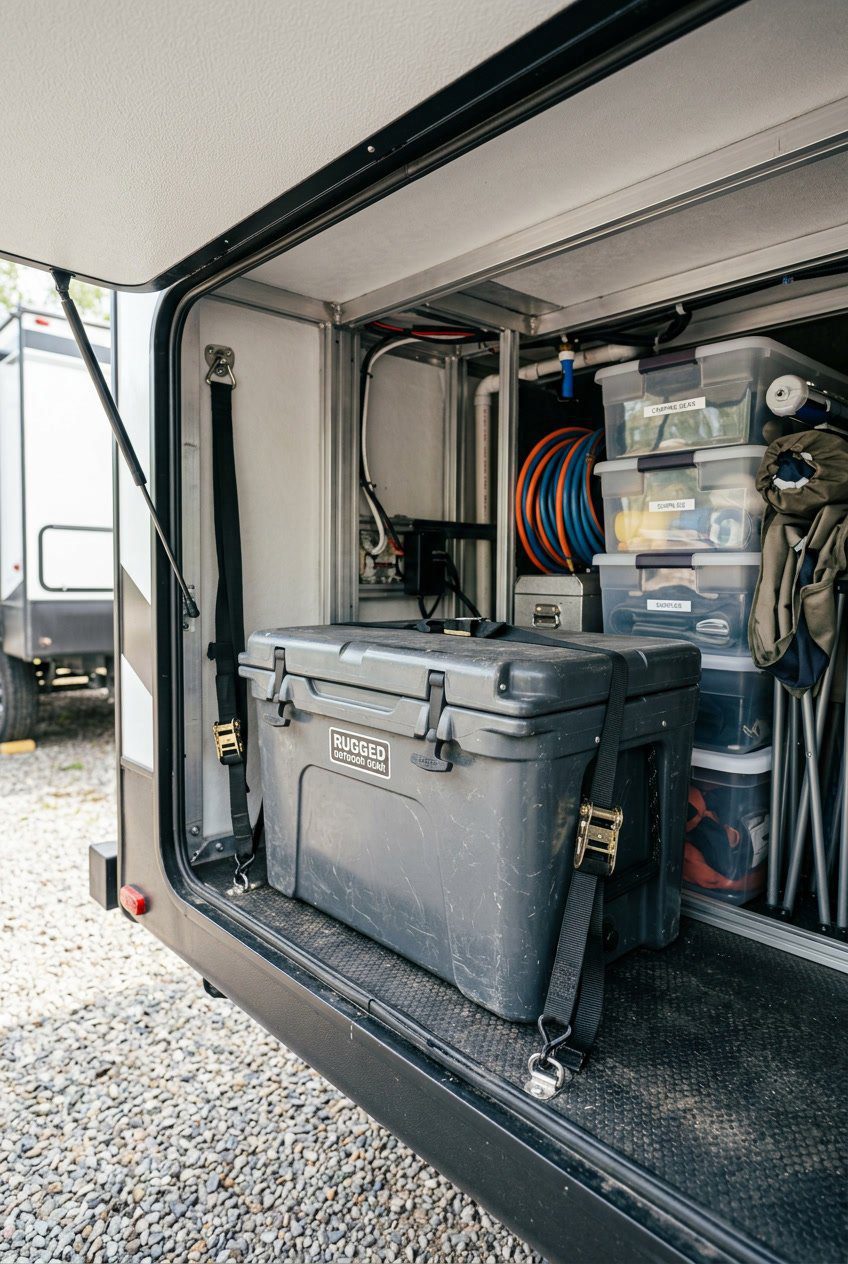
An insulated cooler box keeps food and drinks cold without taking up fridge space. Place a sturdy box in the pass-through and use tie-downs to hold it steady while you drive.
Choose a size that fits the compartment and still leaves room for other items. Use foam or rubber padding under the cooler to stop it from shifting and to protect the compartment floor.
Secure the cooler with adjustable straps or cam-buckle tie-downs attached to built-in anchor points. Strap it low and tight so it can’t slide forward or tip during sudden stops.
PRO TIP
Line the cooler with a removable waterproof bag for easy cleaning. Store a battery-powered thermometer inside to monitor temps on long trips.
15) Suspended mesh hammock for soft toys/linens
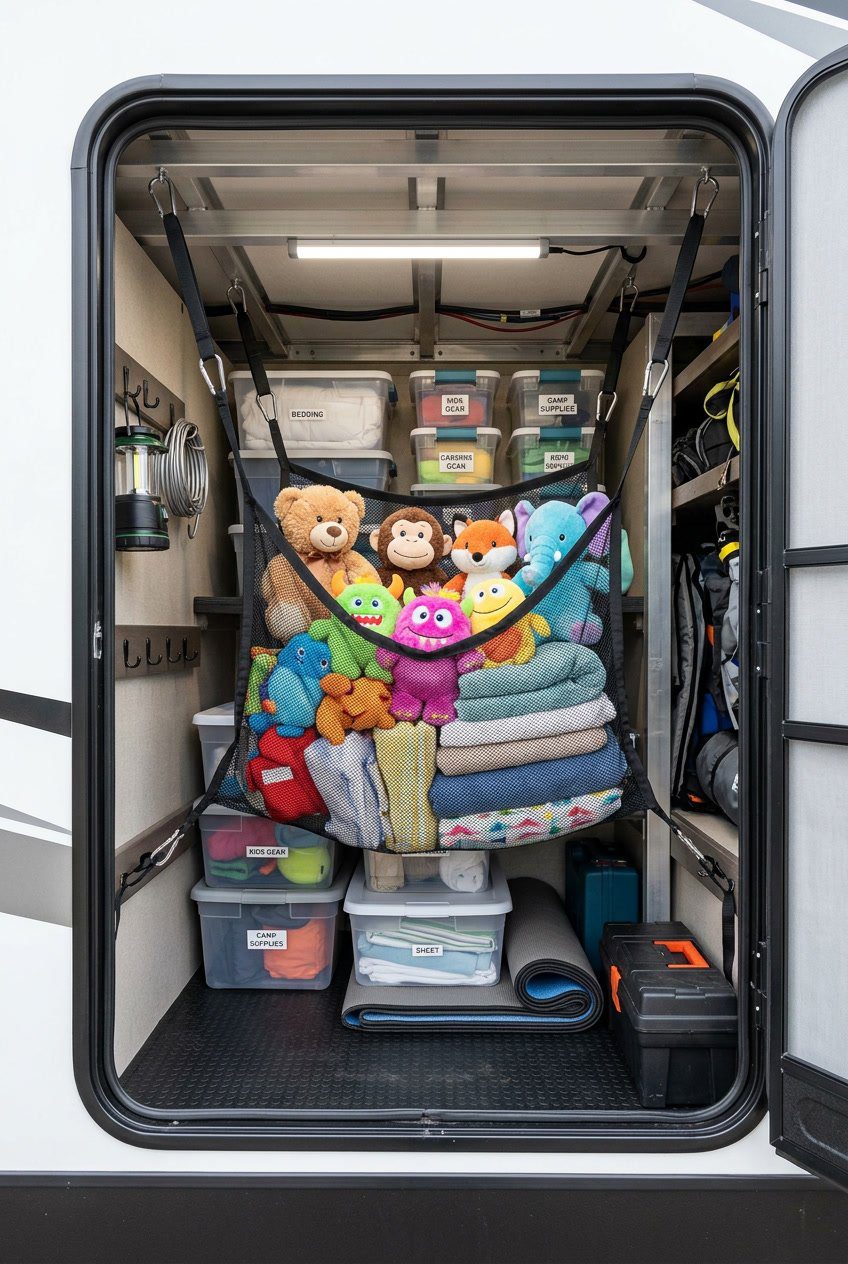
A suspended mesh hammock makes use of vertical space in your basement compartment. You can hang it from tie-down points or hooks to keep soft items off the floor and dry.
Use lightweight mesh to let air flow and stop mildew. Fold blankets and store extra pillows in the hammock so they stay accessible but out of the way.
Attach the hammock with carabiner-style clips or quick-release buckles for fast removal. This keeps laundry or toys handy when you need them, and makes cleaning simple.
PRO TIP
Place the hammock near vents or where air circulates to reduce dampness. Check the anchors regularly so the hammock stays secure during travel.