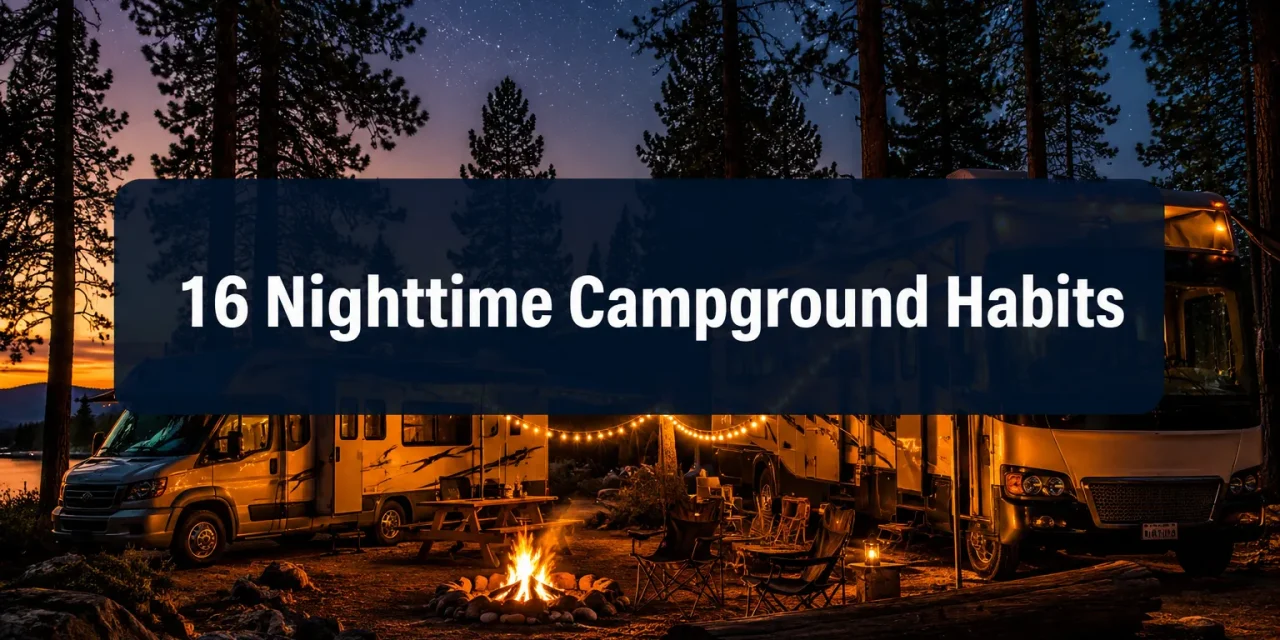
Nearly 72% of RV campers say that inconsiderate neighbors have ruined at least one camping trip, according to campground survey data compiled by RV industry groups. That number is staggering, and entirely preventable. The difference between a magical night under the stars and a sleepless, frustrating ordeal almost always comes down to a handful of choices made after the sun goes down.
Understanding the 16 nighttime campground habits that separate great neighbors from awful ones is the key to protecting everyone’s experience, including your own. Whether someone has been RVing for 20 years or just pulled out of the dealership last week, these after-dark behaviors define how the whole campground feels. The good news? Every single one of these habits is easy to adopt.
Why Nighttime Behavior Defines Your Reputation as a Camper
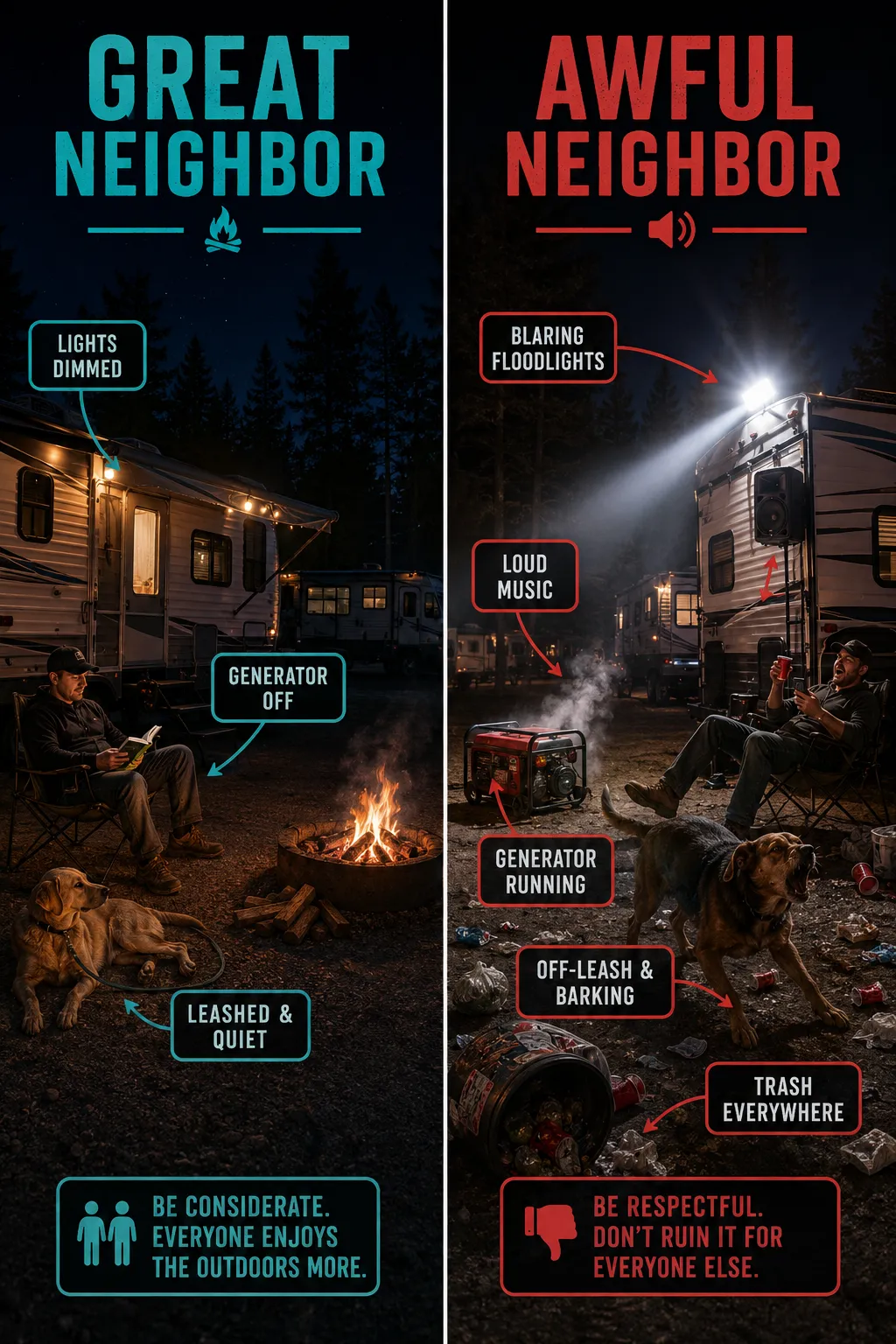
Most campground drama doesn’t happen at noon, it happens after 9 PM. Daytime activities are forgiving. Noise fades into the ambient sounds of nature, kids playing, and engines starting. But once the sun sets and families settle in, every sound travels farther, every light shines brighter, and every inconsiderate choice feels magnified.
The 16 nighttime campground habits that separate great neighbors from awful ones aren’t about being perfect, they’re about being aware. Great RV neighbors understand that a campground is a shared space, and the hours between dusk and dawn demand a different level of consideration.
💬 “The best campground neighbors you’ll ever have are the ones you barely notice after dark.”
Here’s what separates the campers everyone loves from the ones everyone dreads.
The 16 Nighttime Campground Habits: A Complete Breakdown
1. 🔇 Respecting Quiet Hours Without Being Reminded
Most campgrounds post quiet hours between 10 PM and 6 AM. Great neighbors don’t need a ranger to knock on their door. They wind down conversations, lower music, and move inside before the clock strikes. Awful neighbors treat quiet hours as a suggestion, or worse, don’t know they exist.
Pro tip: Check the campground’s specific quiet hours at check-in. They vary by location.
2. 💡 Directing Exterior Lights Away From Neighboring Sites
RV exterior lights, especially bright LED awning lights, can shine directly into a neighbor’s bedroom window. Great neighbors angle their lights downward toward their own site or turn them off entirely after a certain hour.
A simple rule: if the light is illuminating someone else’s rig, it’s too bright or pointed wrong.
3. 🔌 Following Generator Etiquette to the Letter
Generators are one of the top sources of campground conflict. The noise and exhaust can travel across multiple sites. Here’s a quick guide to generator etiquette:
| Behavior | Great Neighbor | Awful Neighbor |
|---|---|---|
| Generator hours | Follows posted rules | Runs it past quiet hours |
| Exhaust direction | Pointed away from neighbors | Aimed toward adjacent sites |
| Notice given | Warns neighbors before starting | Starts without warning |
| Duration | Only as long as needed | Runs all night |
4. 🐕 Keeping Pets Quiet and Leashed After Dark
Dogs that bark at every sound after dark are a campground nightmare. Great RV neighbors bring their pets inside at night, or at minimum, keep them calm and leashed. An unsupervised dog roaming a campground after 10 PM is both a safety issue and a serious courtesy violation.
The golden rule: If the dog is barking and it’s past quiet hours, bring them inside immediately.
5. 🚶 Using Flashlights Mindfully When Walking at Night
Swinging a powerful flashlight beam across neighboring sites while walking to the bathroom at 2 AM is surprisingly disruptive. Great neighbors use red-light headlamps or keep their flashlight aimed at the ground directly ahead. Red light preserves night vision and doesn’t blast through RV windows.
6. 🔥 Managing Campfire Smoke Direction
Campfire smoke doesn’t just smell, it can fill a neighbor’s RV through open windows and vents. While wind direction isn’t always controllable, great neighbors:
- Keep fires at a reasonable size after dark
- Avoid adding wet wood that creates heavy smoke
- Extinguish fires completely before going to sleep
7. 🚗 Avoiding Late-Night Vehicle Movement Through the Campground
Pulling in or out of a campsite after 10 PM, headlights blazing, engine rumbling, disrupts the entire loop. If a late arrival is unavoidable, great neighbors call ahead to the campground, use parking lights only when safe, and move slowly and quietly. Slamming car doors at midnight is the hallmark of an awful neighbor.
8. 📺 Keeping Indoor TV and Audio at Low Volumes
Sound travels through RV walls more than most people expect. A TV at a “comfortable” indoor volume can be clearly heard two sites away on a still night. Great neighbors use headphones after 9 PM or keep volume low enough that it can’t be heard outside their rig.
9. 🗑️ Securing Trash Before Bed
Unsecured trash at night does two things: it attracts wildlife (raccoons, bears, and other animals depending on location) and it creates a mess that blows into neighboring sites. Great neighbors:
- Use campground bear boxes or dumpsters before dark
- Secure any remaining trash inside their rig or a locked compartment
- Never leave food scraps near the fire pit overnight
10. 💧 Being Thoughtful About Water Usage Timing
Running water pumps, filling tanks, or using outdoor showers after quiet hours creates noise that carries. Great neighbors handle water-intensive tasks during daylight hours. The hum of a water pump at midnight is one of those sounds that seems minor until it’s waking someone up repeatedly.
11. 🛝 Supervising Children After Dark
Kids get excited at campgrounds, that’s part of the magic. But unsupervised children running between sites, using playgrounds after posted hours, or playing loudly after dark is a real problem. Great RV parents bring kids inside at a reasonable hour and make sure they understand campground quiet rules.
12. 🪟 Managing Slide-Out Timing Considerately
Extending or retracting RV slide-outs makes a significant amount of noise, motors whirring, panels grinding. Doing this at 11 PM because someone forgot to extend a slide is inconsiderate. Great neighbors handle all slide-out adjustments before quiet hours begin.
13. 🎵 Turning Off Outdoor Speakers at the Right Time
Bluetooth speakers at a campsite are great for an afternoon cookout. After dark, they become a source of conflict fast. The rule is simple: outdoor speakers go off at quiet hours, no exceptions. Even low-volume background music outdoors carries farther than it seems on a calm night.
14. 🌿 Respecting Site Boundaries in the Dark
In the dark, it’s easy to accidentally cut through a neighboring campsite to reach the bathhouse or a trail. Great neighbors stick to marked paths and roads, even if it takes longer. Walking through someone’s campsite at night (especially near their bedroom windows) is startling and invasive.
15. 🤝 Giving a Friendly Heads-Up About Unusual Situations
Sometimes things happen, a medical alert goes off, a child has a nightmare, a generator needs to run briefly. Great neighbors take 30 seconds to knock on a neighboring rig and give a heads-up before doing something that might disturb others. A quick “Hey, sorry, I need to run my generator for 20 minutes” goes a long way.
16. 🌅 Preparing for an Early Departure the Night Before
Early departures are a campground reality. But packing up at 5 AM, slamming compartments, running the engine to warm up, disconnecting hookups loudly, is brutal for neighbors who planned to sleep in. Great neighbors do as much prep as possible the night before: pack non-essentials, organize hookup disconnections, and plan a quiet exit.
How to Build These Habits Into Every Camping Trip
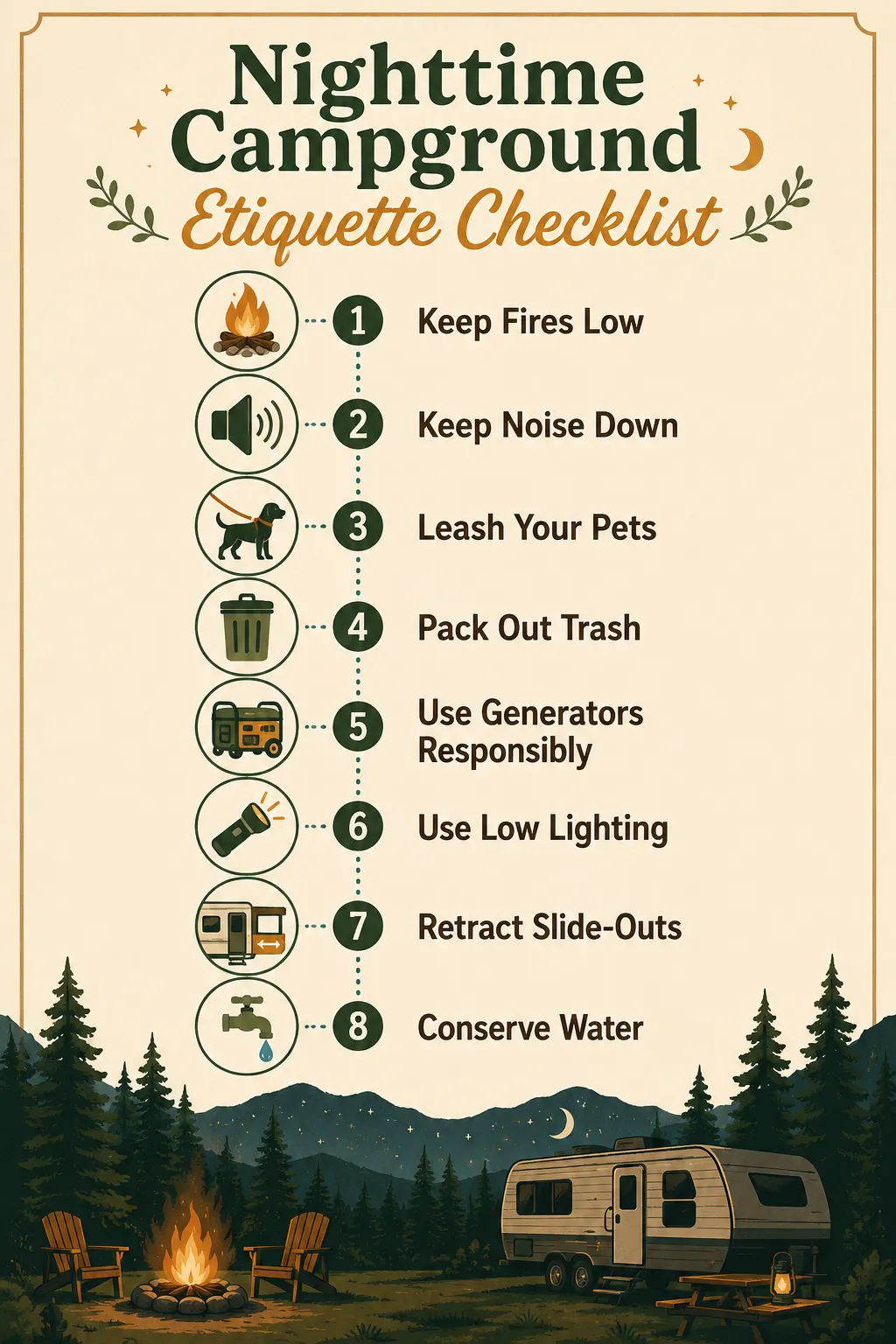
Knowing the habits is one thing. Making them automatic is another. Here’s a simple Nighttime Campground Checklist to run through every evening before settling in:
Before Sunset:
- ✅ Check posted quiet hours at the campground entrance
- ✅ Extend all slide-outs and complete major setup tasks
- ✅ Handle water filling, tank management, and generator charging
- ✅ Secure trash and food items
At Dusk:
- ✅ Redirect or dim exterior lights
- ✅ Switch outdoor speakers off or bring them inside
- ✅ Bring pets inside or prepare their nighttime setup
- ✅ Brief kids on quiet hours expectations
At Quiet Hours:
- ✅ Move all conversations and entertainment indoors
- ✅ Switch to headphones for TV and audio
- ✅ Extinguish campfire completely
- ✅ Do a final check, is anything making noise that shouldn’t be?
If Leaving Early:
- ✅ Pack non-essentials the night before
- ✅ Plan hookup disconnection sequence for minimal noise
- ✅ Set a quiet alarm and avoid slamming doors or compartments
What the Best Campground Communities Have in Common
The campgrounds that earn five-star reviews year after year aren’t just the ones with the best amenities. They’re the ones where campers look out for each other after dark. When RVers collectively practice the 16 nighttime campground habits that separate great neighbors from awful ones, something remarkable happens, the whole community relaxes.
Strangers share firewood. People wave good morning with genuine warmth. Kids make friends. Dogs get petted. That’s the RV lifestyle at its best.
💬 “A campground is only as good as the people in it, and after dark, the people who matter most are the ones who choose to be considerate.”
The habits that make someone a great campground neighbor aren’t difficult. They don’t require expensive gear or special training. They just require awareness and a little intentionality about how personal choices affect the people parked 20 feet away.
Common Mistakes Even Experienced RVers Make at Night
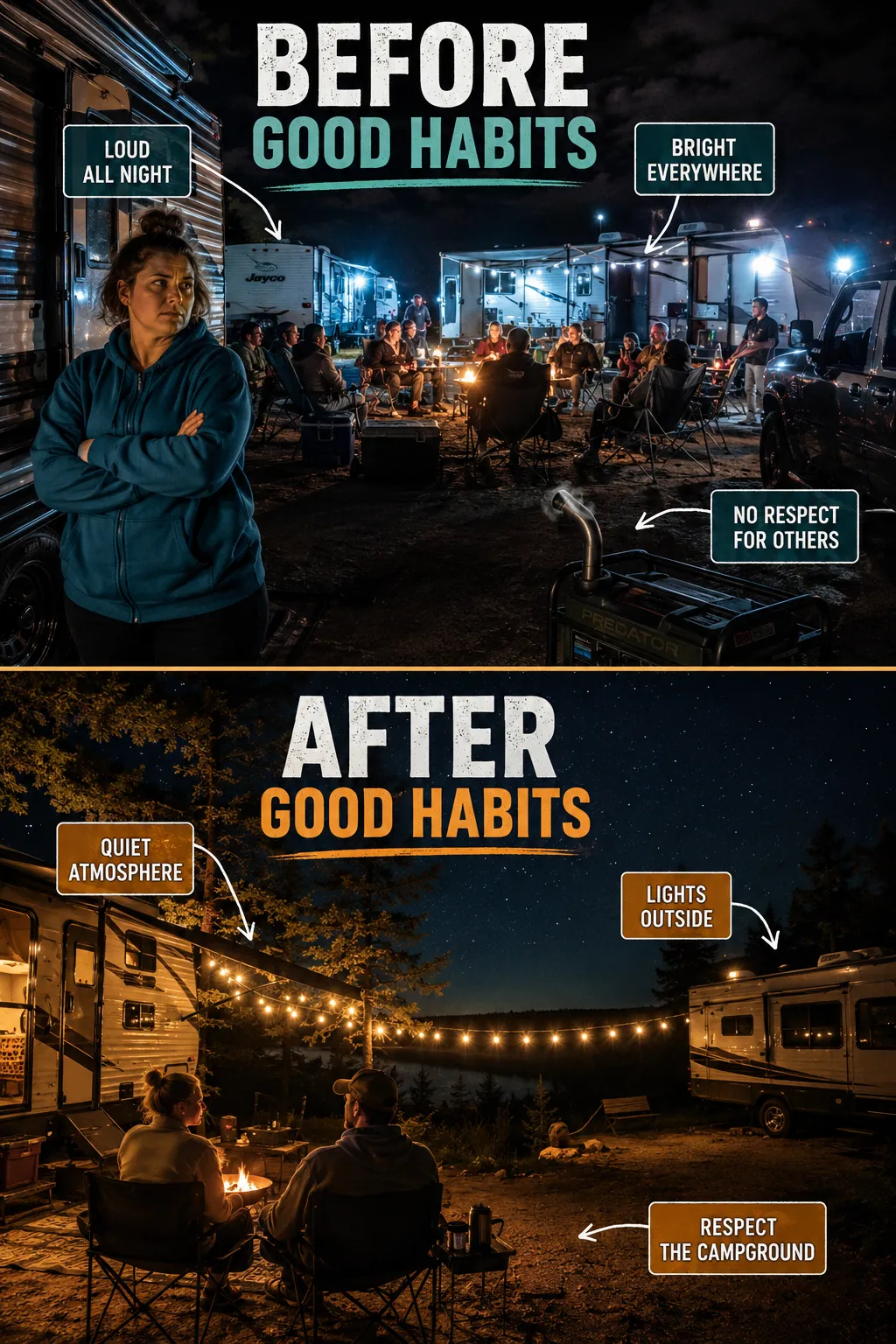
Even seasoned RVers slip up. Here are the most common nighttime mistakes that experienced campers make, often without realizing it:
🔦 The “Just a Quick Trip” Flashlight Blast
Running to the bathroom with a full-power flashlight and sweeping it across three sites without thinking. Solution: always use a red-light or low-power setting after dark.
🔌 The Forgotten Generator
Falling asleep with the generator still running. Solution: set a timer or use a generator with an auto-shutoff feature.
🐾 The “He’s Friendly” Dog Assumption
Letting a dog roam off-leash at night because “he never goes far.” Solution: leash rules apply 24/7, and after dark they matter even more.
🚪 The Midnight Compartment Slam
Grabbing something from a storage compartment after quiet hours without thinking about the noise. Solution: get everything needed before quiet hours begin.
💬 The “Quiet Voices” That Aren’t
Thinking a conversation is quiet because voices are lowered, but the sound still carries on a still night. Solution: move all conversations inside after quiet hours.
Conclusion: Be the Neighbor Everyone Hopes to Park Next To
The 16 nighttime campground habits that separate great neighbors from awful ones aren’t about following rules for the sake of rules. They’re about recognizing that every person in that campground came there to recharge, reconnect, and enjoy something special. Protecting that experience, for everyone, is what makes the RV community worth being part of.
Actionable next steps:
- Print or save the Nighttime Campground Checklist above and run through it every evening on the road.
- Share these habits with newer RVers in your travel group, great etiquette is contagious.
- Talk to campground hosts at check-in about specific quiet hours and any local rules that differ from standard expectations.
- Lead by example, when neighbors see a well-run, considerate campsite, they often follow suit.
- Give grace, if a neighbor makes a mistake, a friendly word goes further than a complaint to the ranger.
The best nights in an RV aren’t just about the stars overhead or the sound of a creek nearby. They’re about the quiet, comfortable feeling of knowing everyone around is looking out for each other. That starts with one rig, yours.