You want more sleeping space in your RV without giving up comfort or storage. This article shows easy, practical ways to stretch sleeping room so your family can sleep soundly and stay organized on the road.
Would you like to save this article?
You’ll find simple ideas that fit different RV sizes and budgets so you can add safe, cozy bunks and keep gear tidy.
PRO TIP
1) Bunk Conversion with Twin XL Foam Mattresses
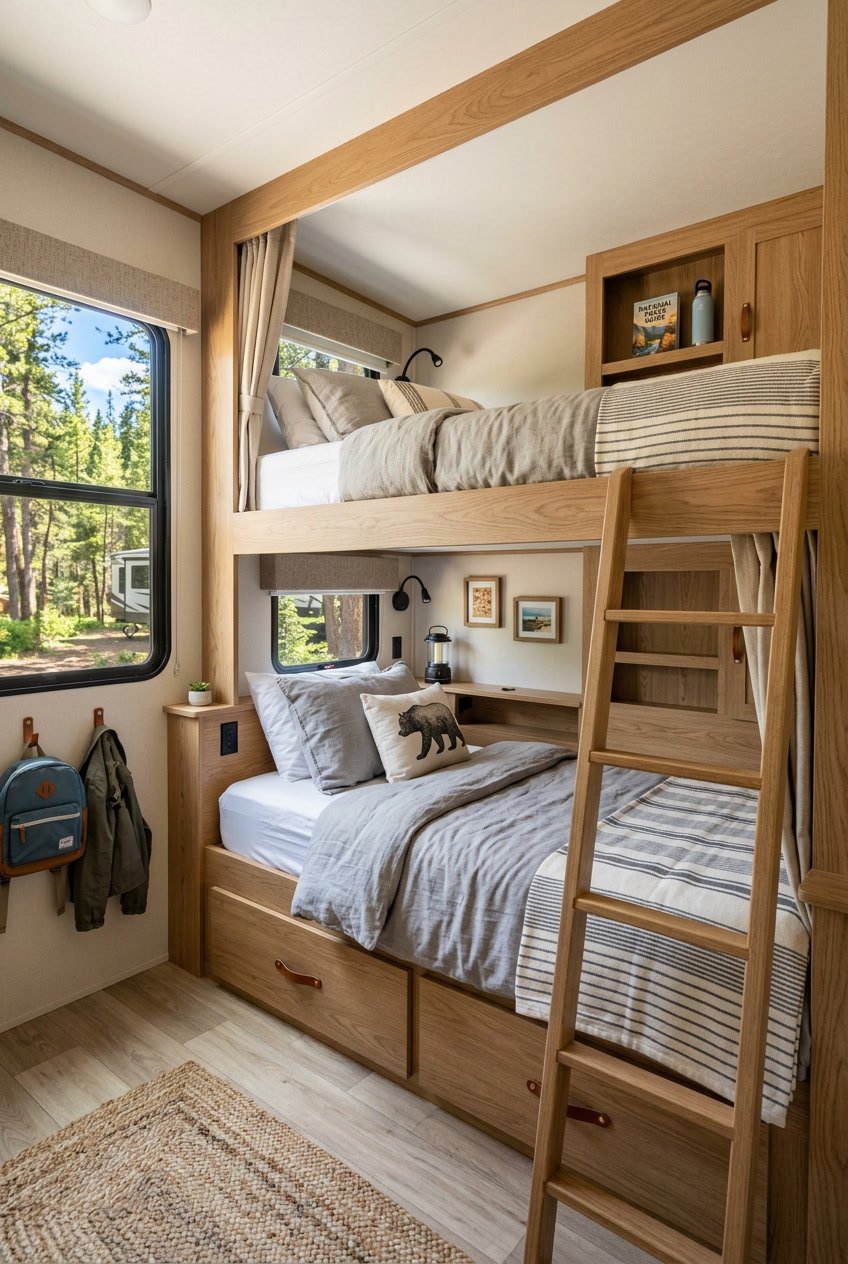
You can convert a cramped bunk space by swapping standard cushions for Twin XL foam mattresses. These mattresses fit lengthwise and give kids or adults more legroom without changing the RV layout.
Foam mattresses bend slightly for storage and ride comfort. They also come in thin profiles that fit tight spaces while still offering better support than sofa cushions.
Add simple covers that unzip for washing. You can use straps or Velcro to keep mattresses from shifting while you drive.
PRO TIP
Measure the bunk area twice before ordering foam. Small size differences matter a lot in RVs, and a perfect fit makes sleep much more comfortable.
2) Pull-Out Trundle Bed Under Dinette
A pull-out trundle under the dinette gives your family extra sleeping space without losing daytime seating. You slide it out at night and tuck it away in the morning, so the area stays useful for meals and games.
Many trundles fit a twin mattress and work well for kids or guests. They often use simple latches or casters, so you can pull them out easily and push them back in when done.
PRO TIP
Choose a thin, supportive mattress and low-profile bedding to save headroom. Measure the under-dinette space before buying a mattress to make sure it fits.
3) Lofted Kids’ Play-and-Sleep Platform
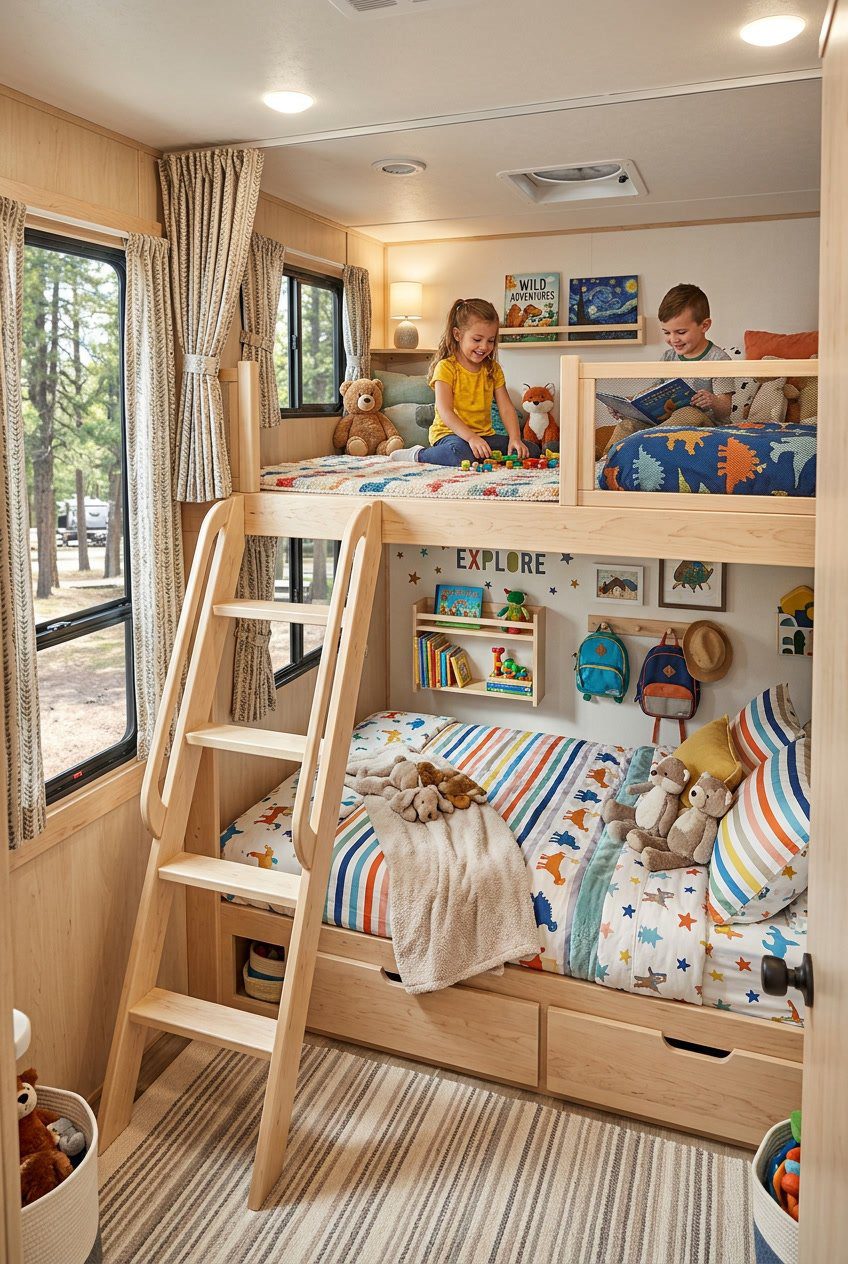
A lofted platform gives your kids a fun space to play and a cozy spot to sleep. Build the platform above a storage area or seating to save floor space and keep toys tucked away.
Install a low railing and a short ladder so children can climb safely. Use soft padding and low-height guardrails to reduce injury risk while keeping the area comfy.
Place lighting and small shelves within reach for books and night items. Keep ventilation and headroom in mind so the loft stays comfortable for sleeping.
PRO TIP
Anchor the platform to the RV wall and floor to prevent movement. Add removable cushions and washable covers for easy cleaning.
4) Murphy-Style Fold-Down Bunk
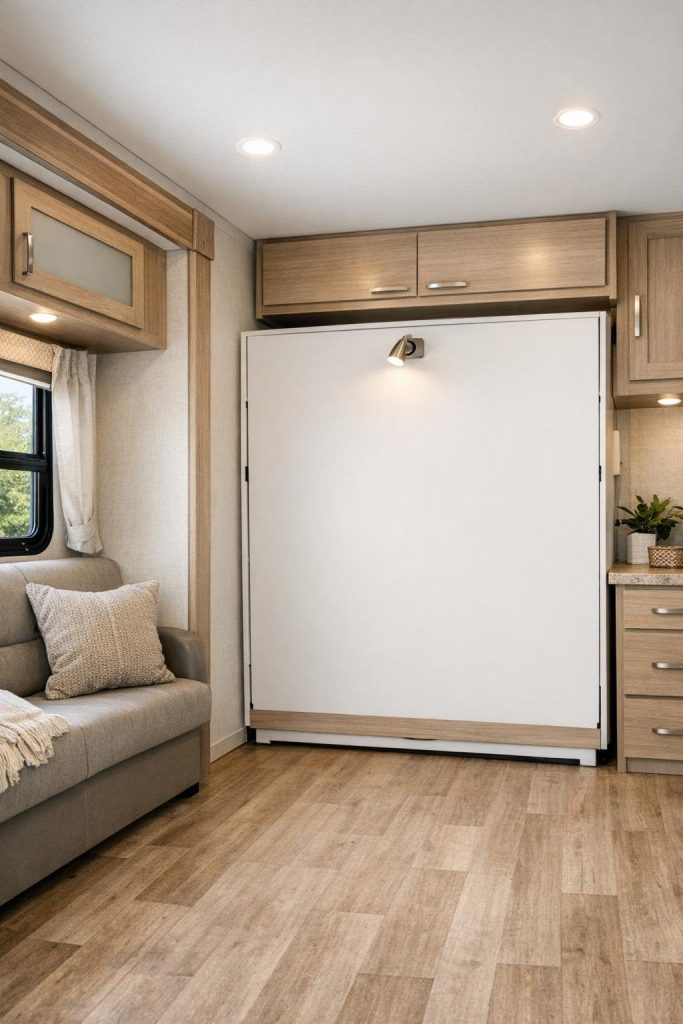
A Murphy-style fold-down bunk saves floor space by folding flat against the wall when not in use. You get more room for daytime activities and still sleep extra people at night.
These bunks usually latch securely and lift easily so you can set them up fast. They work well in narrow RVs and in families that need flexible sleeping arrangements.
You can add a thin mattress or foam topper for comfort without making the bunk heavy. Simple straps or locks keep the bed stable while you drive.
PRO TIP
Install a safety rail and easy-grip handle to help kids climb up and down safely. Keep bedding in a nearby bin to make setup quicker.
5) Upper Bunk Safety Rail with Mesh Netting
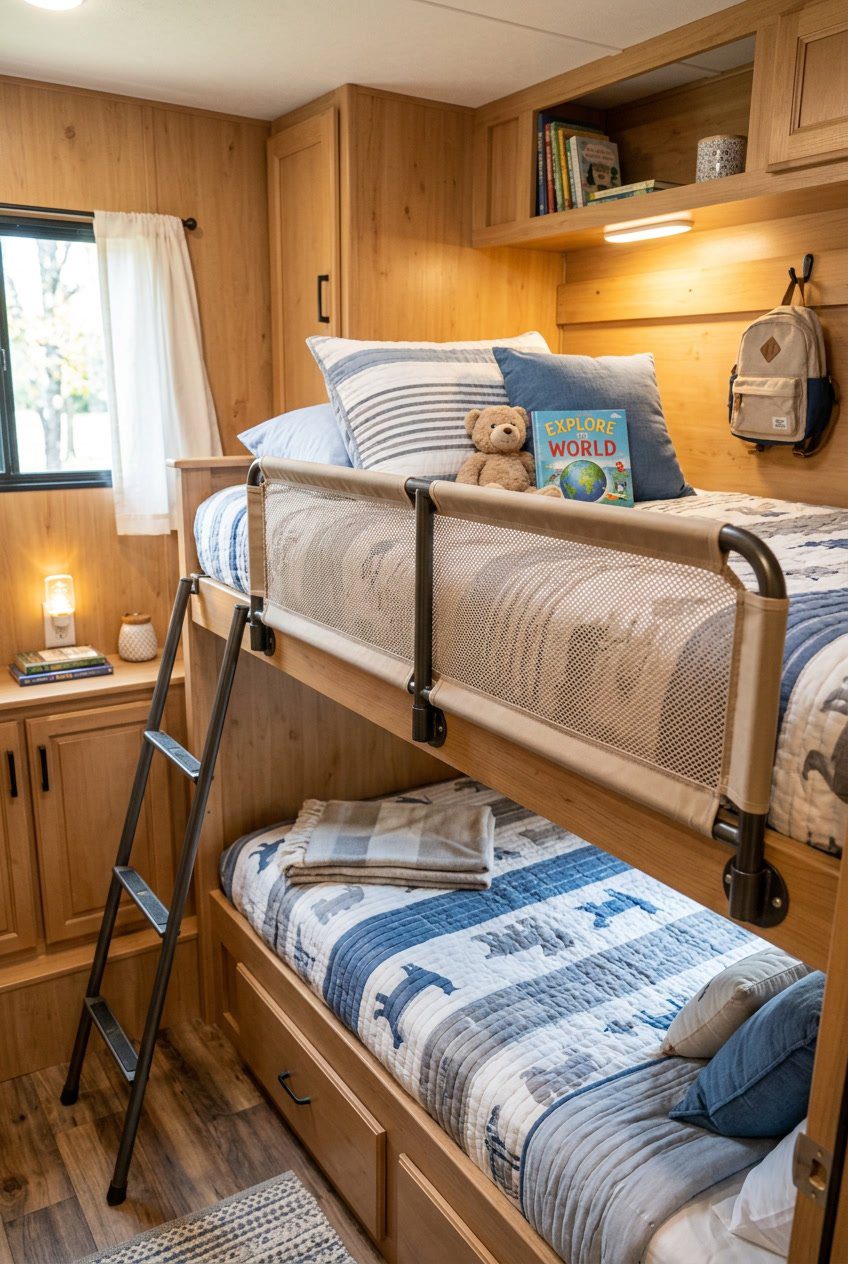
You can add a safety rail to upper bunks to keep kids from rolling out while they sleep. Mesh netting lets air flow and keeps light out, so your child stays more comfortable.
Choose a rail that mounts firmly to the bunk frame or wall. It should be easy for you to install and remove for cleaning or when the bunk is not in use.
Make sure the mesh is tightly woven and has no large gaps where fingers could get stuck. Check fastenings often and tighten them if anything feels loose.
PRO TIP
Measure the bunk height and mattress thickness before buying a rail. That helps you get the right fit and avoid gaps that could let a child slip under the netting.
6) Convertible Sofa-to-Bunk Mechanism
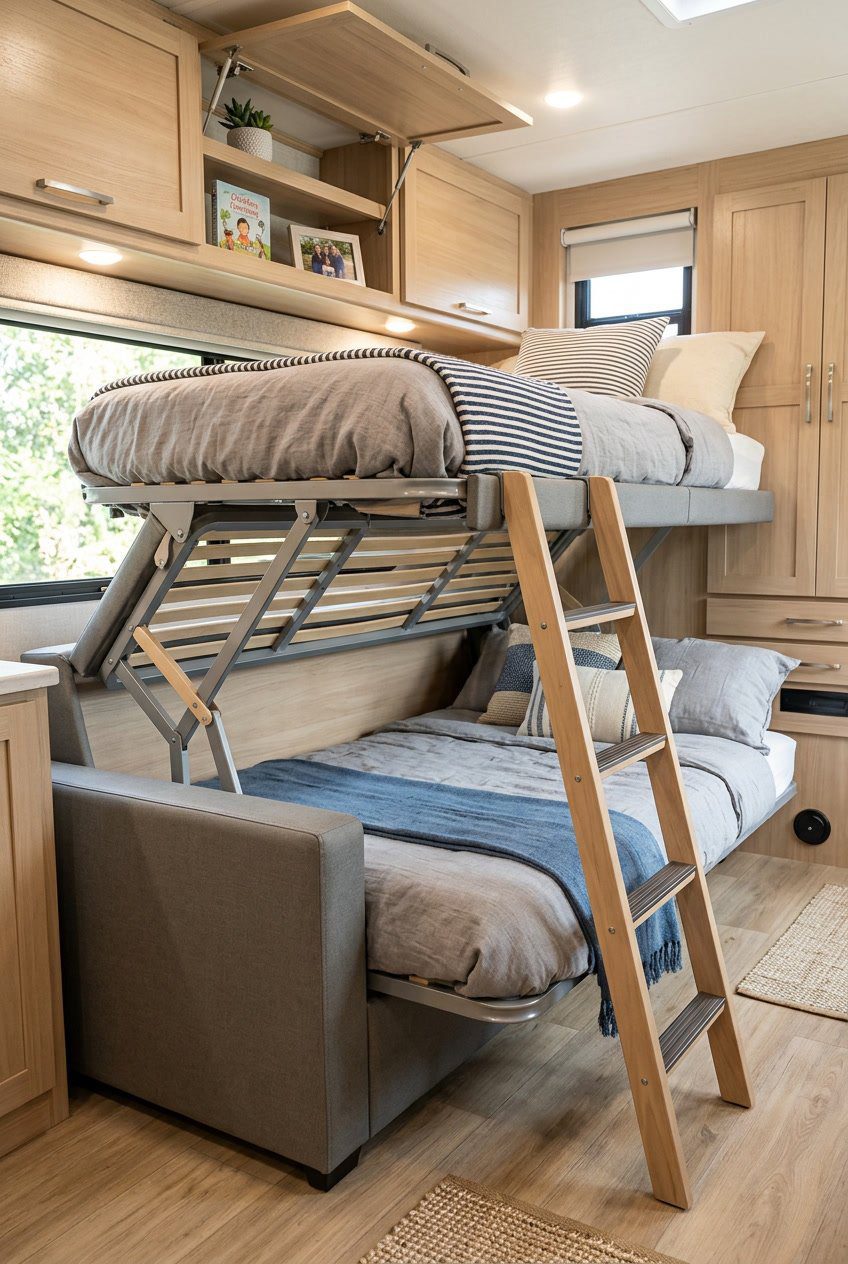
A convertible sofa-to-bunk gives you flexible sleeping without taking up floor space. By day you get seating; by night you pull down a bed that locks into place above or below the sofa.
These systems often use simple latches and folding frames so you can change layouts fast. Look for smooth hinges and easy-to-reach handles that let one person operate the conversion.
Think about mattress thickness and support. A thinner mattress saves room but should still be comfortable for kids or guests.
PRO TIP
Measure ceiling height and clearance before you buy or install a mechanism. That prevents surprises and keeps your setup safe.
7) Stacked Twin Bunks with Built-In Storage
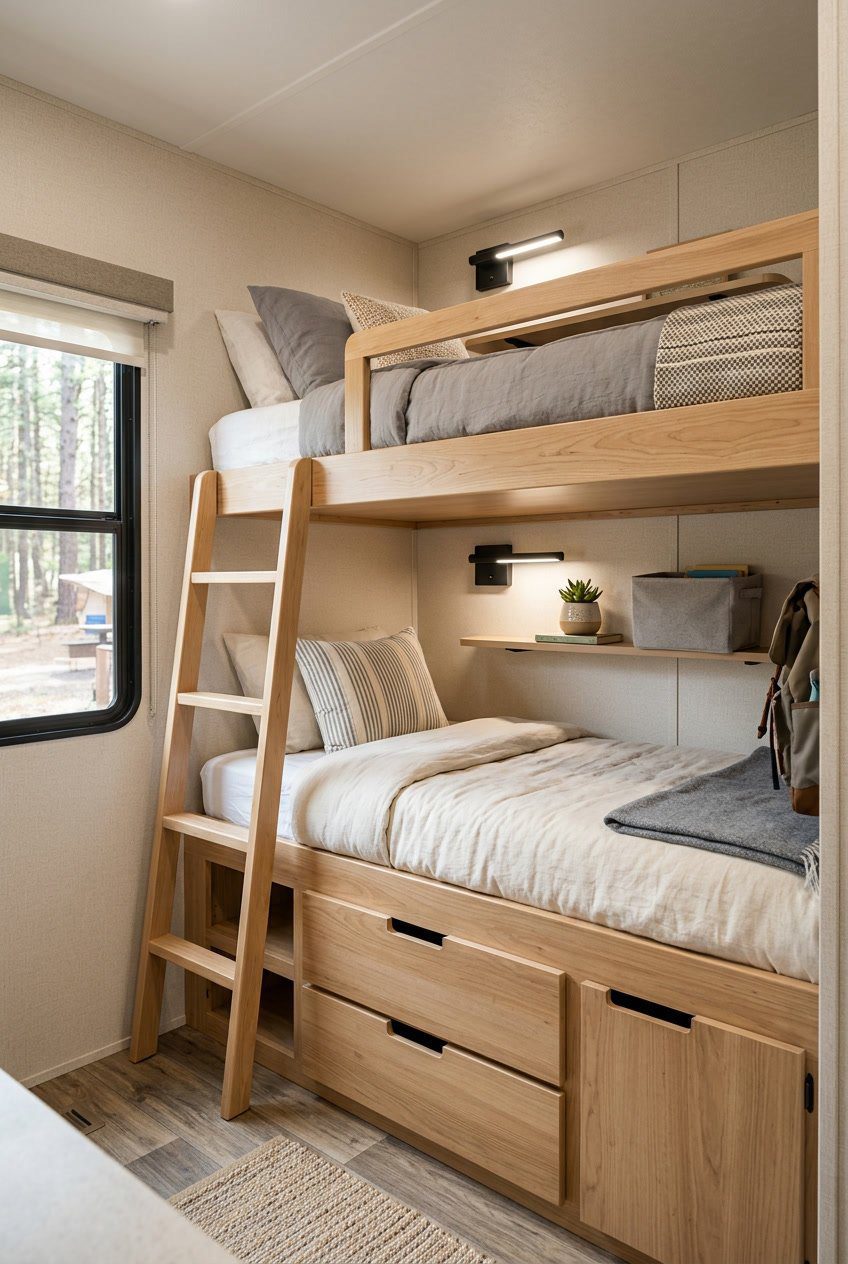
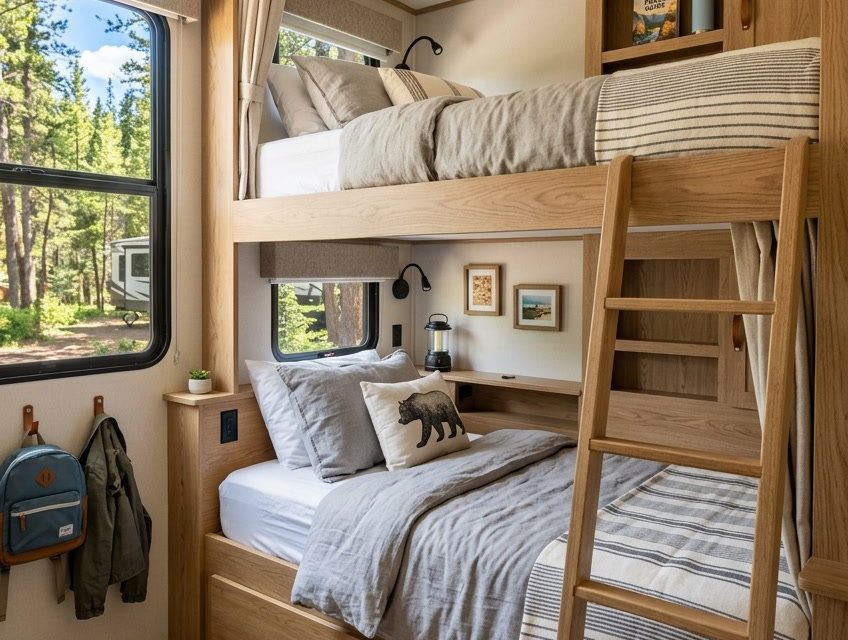
Stacked twin bunks save room while giving each person their own bed. You can fit two sleepers in the same floor space a single bed would take, which is great for kids or guests.
Built-in storage under each bunk keeps clothes, toys, and bedding tidy. Drawers or cubbies make items easy to reach without cluttering the aisle.
Add small shelves or pockets by the head for books, phones, or a water bottle. Good lighting helps reading and makes the space feel cozy.
H3 PRO TIP
Use slim, deep drawers to maximize volume without losing floor access. Measure mattress height first so the storage fits under without squashing comfort.
8) Slide-Out Bunk Extension for Extra Width
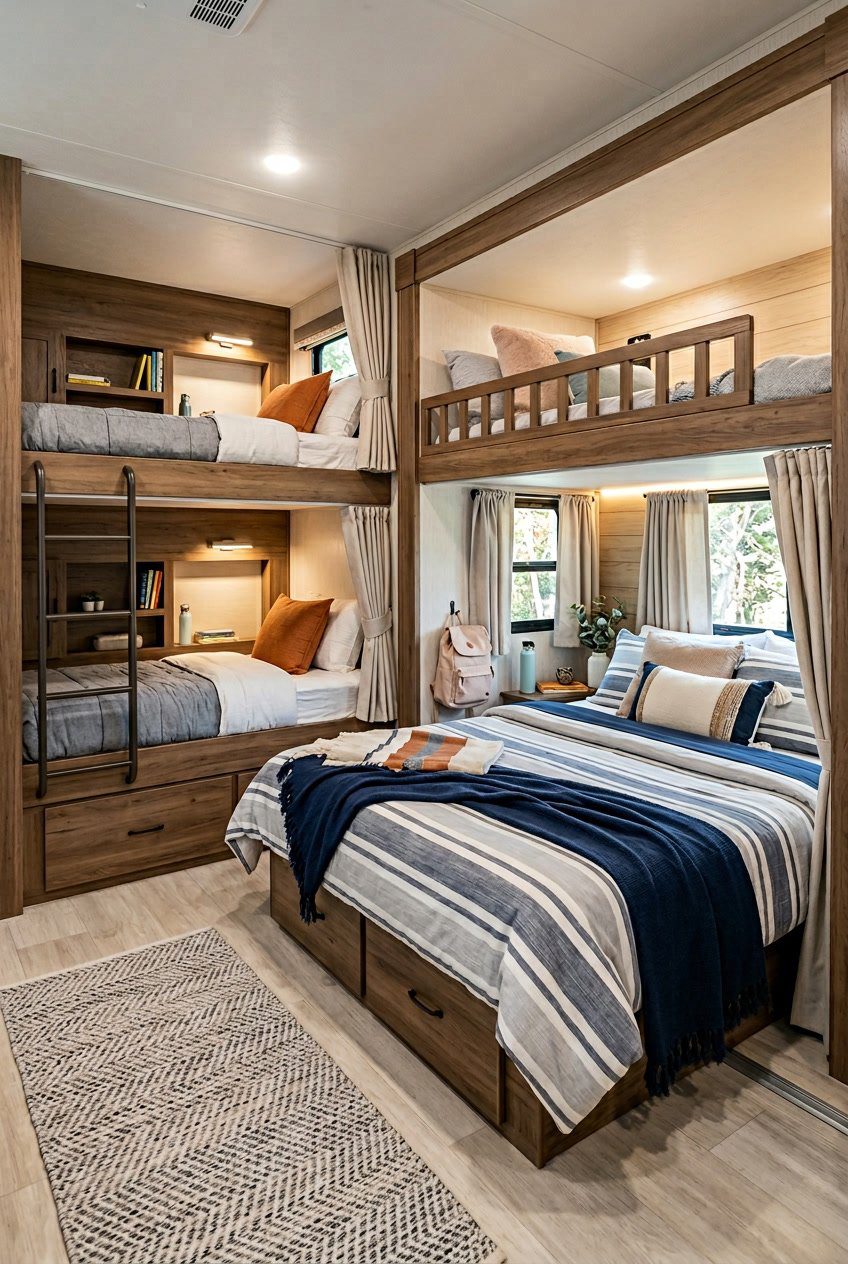
A slide-out bunk extension gives you more shoulder room without changing the RV length. You slide it out when sleeping and tuck it back in for daytime space.
You can use the extra width for a thicker mattress or a small bedside shelf. That makes nights more comfortable and keeps gear close by.
These extensions usually lock in place for safety. Check the slide mechanism often and keep the tracks clean to avoid jams.
PRO TIP
Measure your slide-out fully open and closed before buying bedding. Simple covers that zip or fold work best in tight spaces.
9) Bunkroom Privacy Curtain System
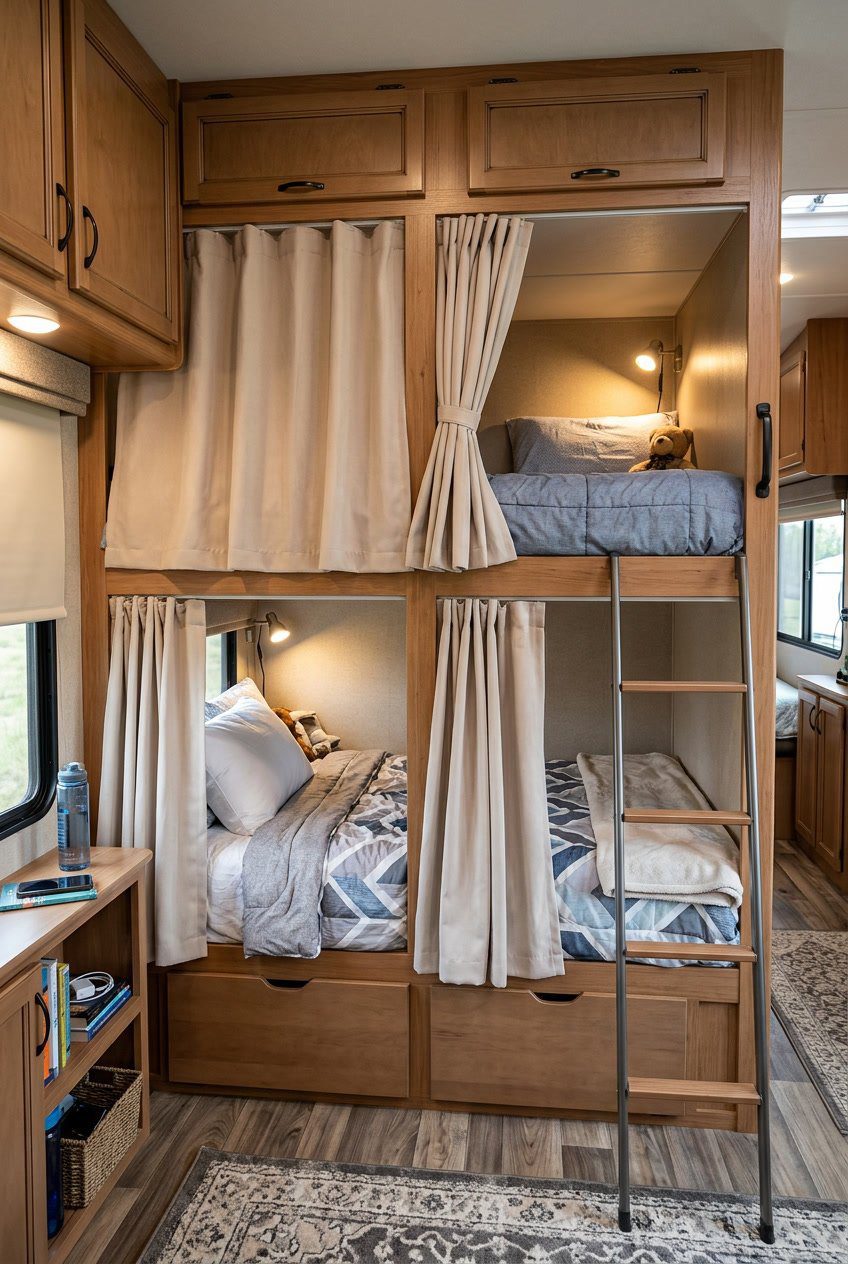
A privacy curtain system gives each sleeper a quiet, personal space. You can hang curtains on tracks or use removable tension rods to save wall damage.
Choose light-blocking fabric if you want darkness for naps and early bedtimes. Thin, breathable materials work well in hot weather and keep air flowing.
Mount the track so curtains glide easily and don’t catch on corners. Add tiebacks or magnetic closures so curtains stay open when not in use.
PRO TIP
Measure carefully before buying fabric or tracks to avoid gaps. Consider machine-washable material for easy cleaning after spills or road dust.
10) Elevated Bunk with Gear Storage Cubby
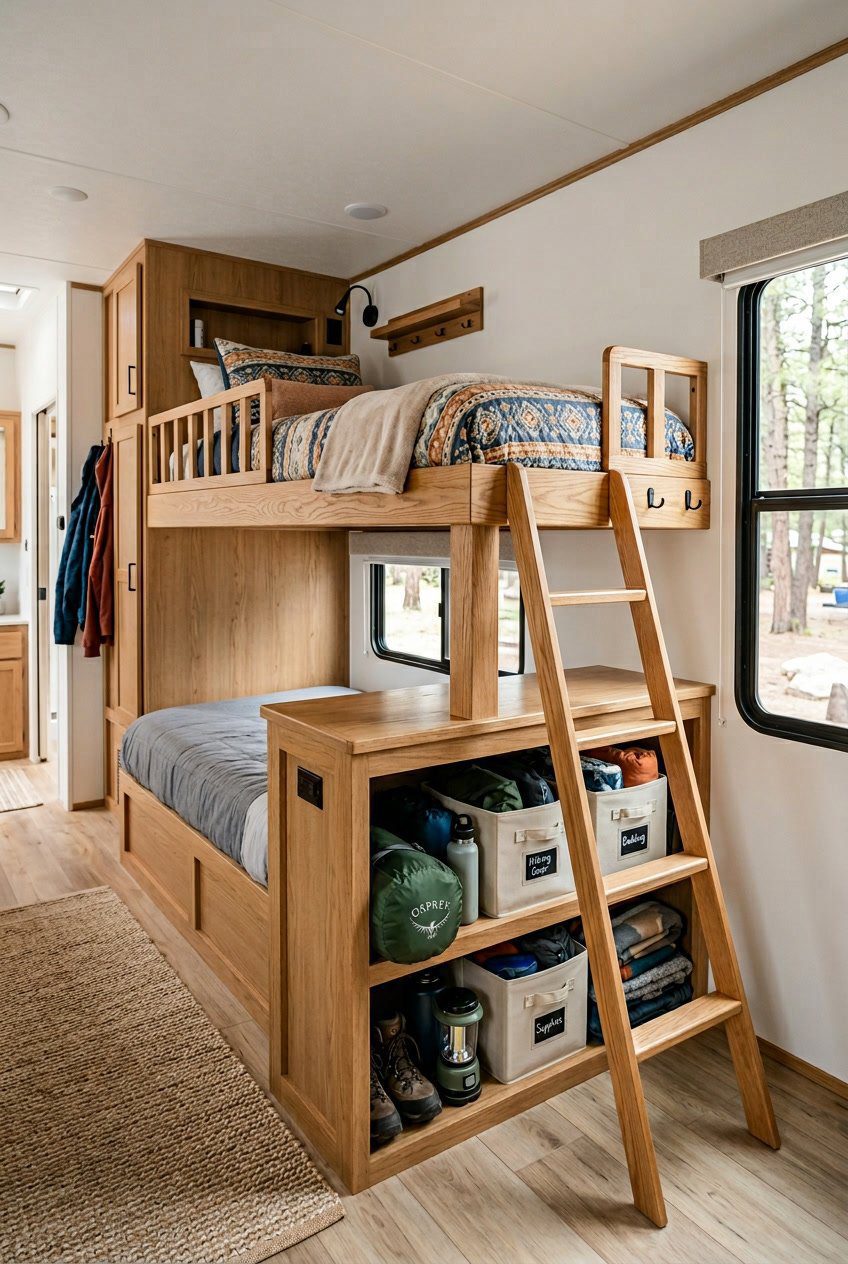
An elevated bunk lifts the mattress off the floor to create useful space beneath. You gain a cozy sleeping spot above and a built-in cubby below for backpacks, shoes, or toys.
This layout keeps the bunkroom tidy and gives kids a private nook. The cubby can have shelves, bins, or a curtain to hide clutter and make the area feel organized.
Use sturdy materials and secure anchors so the bunk stays safe on the road. Add soft lighting under the bunk to help you find gear at night without waking others.
PRO TIP
Line the cubby with non-slip mats or use labeled bins to make items easy to grab. Keep heavier items low to maintain stability while driving.
11) Custom-Fit Bunk Mattress Topper (Memory Foam)
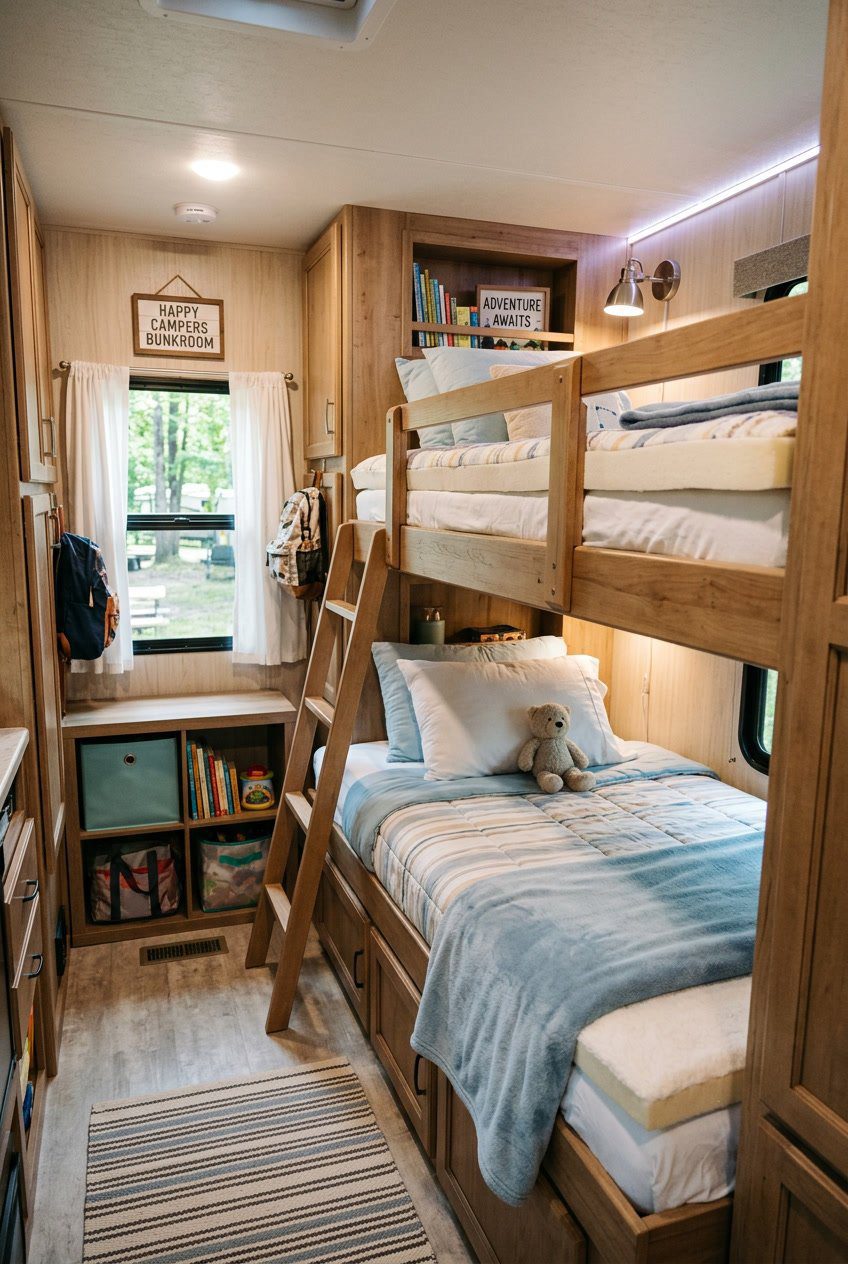
A custom-fit memory foam topper can make narrow RV bunks feel much more comfortable. You sleep better when the topper matches the bunk’s shape and uses soft, pressure-relieving foam.
Measure your bunk carefully before ordering or cutting foam. Trim edges so the topper fits snugly and stays put when you move.
Choose a topper with washable cover for easy cleaning. A thin non-slip pad underneath helps keep the topper from sliding on the bunk frame.
PRO TIP
If you have limited height, pick a low-profile memory foam to save headroom. You can also layer a thin topper over the existing mattress for extra comfort without losing space.
12) LED Reading Lights for Each Bunk
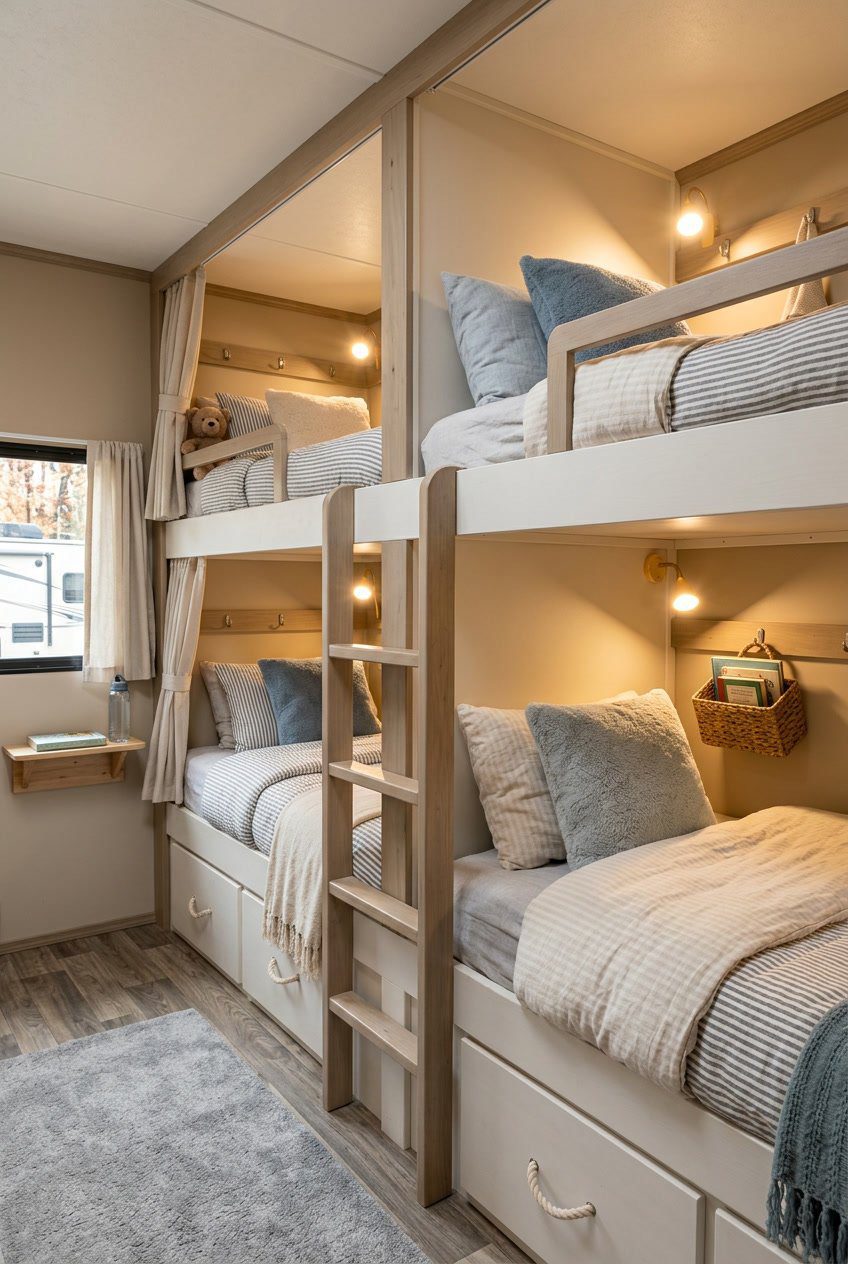
Adding a small LED reading light to every bunk gives each person their own bright, focused light. You get better visibility for books, tablets, or night tasks without lighting the whole RV.
Choose flexible gooseneck or swivel heads so each person can aim the light. Low heat and low power use matter in tight spaces and on limited battery power.
Install dimmable lights so viewers can set a cozy glow or bright light for reading. Place switches within easy reach of each bunk to avoid climbing over someone in the dark.
PRO TIP
Mount lights on a simple panel or above the head so wiring stays tidy and easy to access for future changes.
13) Under-Bunk Drawers on Heavy-Duty Slides
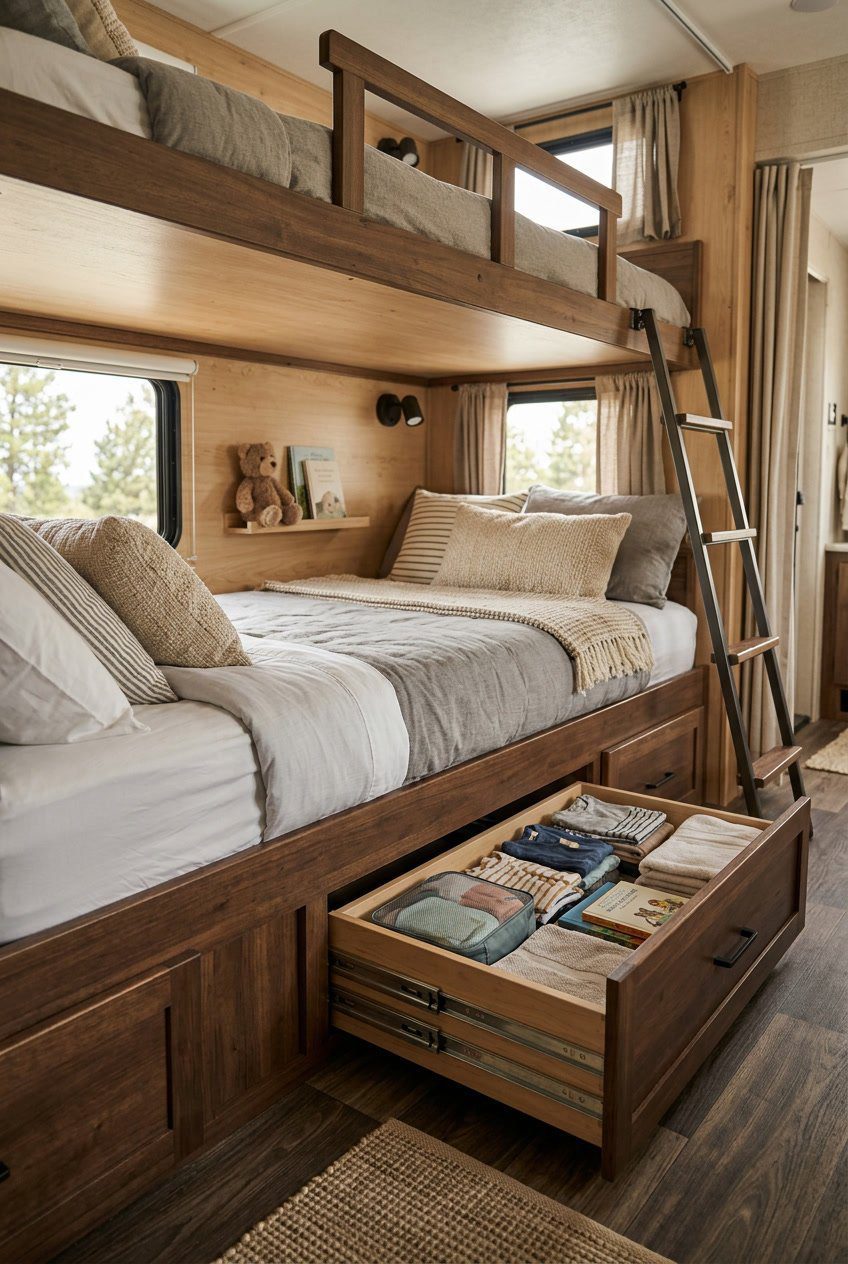
You can add deep drawers under lower bunks to store clothes, shoes, and bedding. Heavy-duty slides let you pull them out smoothly, even when full, so you access items without kneeling or crawling.
Drawers keep the floor clear and make bedtime faster for kids. They also help you organize by person or by type of item, which saves space in closets.
Install locks or latches so drawers stay closed while you drive. Measure the space first to ensure the slides fit and the drawers clear any wiring or supports.
PRO TIP
Use dividers inside the drawers to prevent small items from shifting. Choose materials that resist moisture and are easy to wipe clean.
14) Fold-Up Bunk Ladder with Anti-Slip Treads
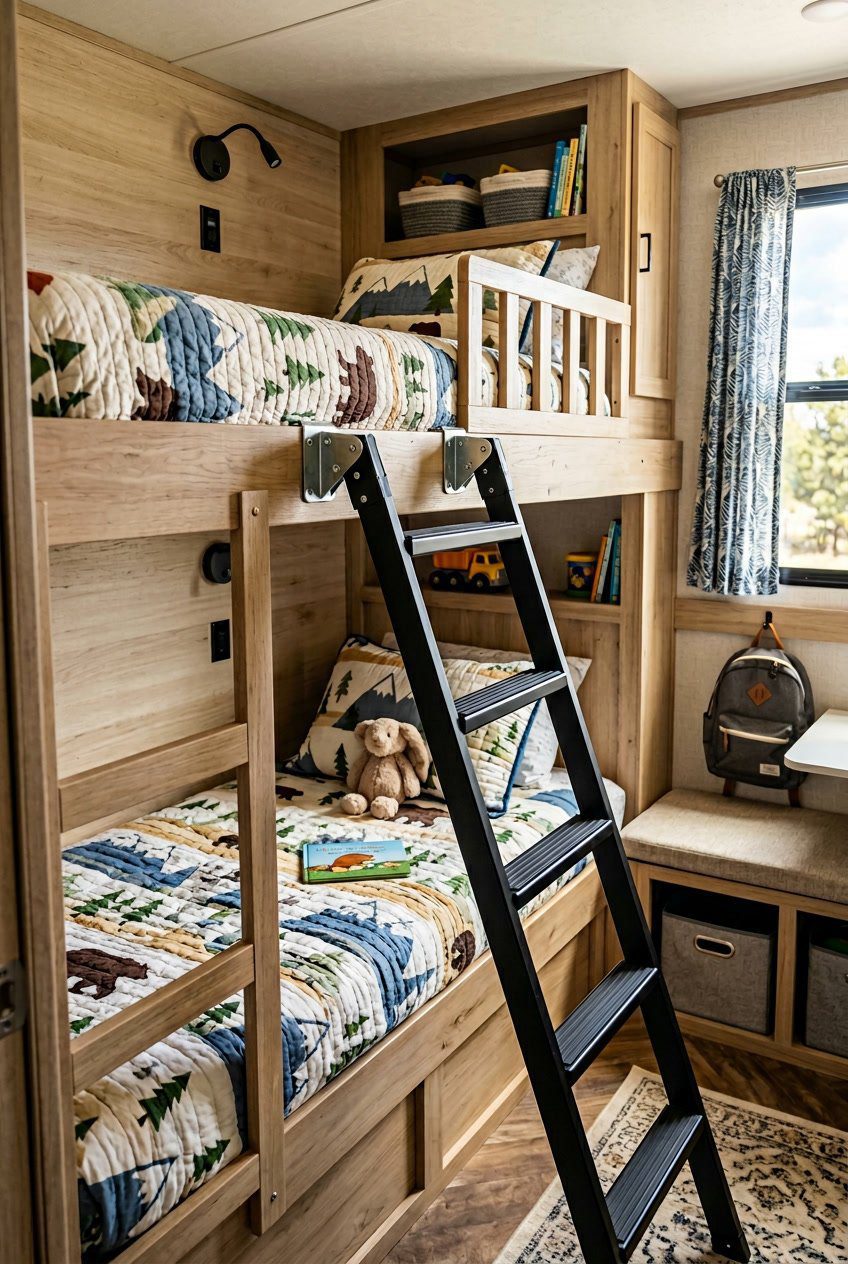
A fold-up ladder saves floor space when the bunks are not in use. You pull it down when someone needs to climb and fold it back up for travel or play.
Anti-slip treads give you extra grip, especially at night or with socks. They reduce slips and make the ladder feel more secure, which helps kids and adults climb with confidence.
Look for a ladder that locks when open and stays tucked away when closed. That keeps the ladder from moving while the RV is in motion and frees up room during the day.
PRO TIP
Mount the ladder so the top rung lines up with the bunk edge for an easy step up. Add soft grip tape to the treads if they feel hard or cold to the touch.
15) Two-Person Bunk Bed with Dividable Curtains
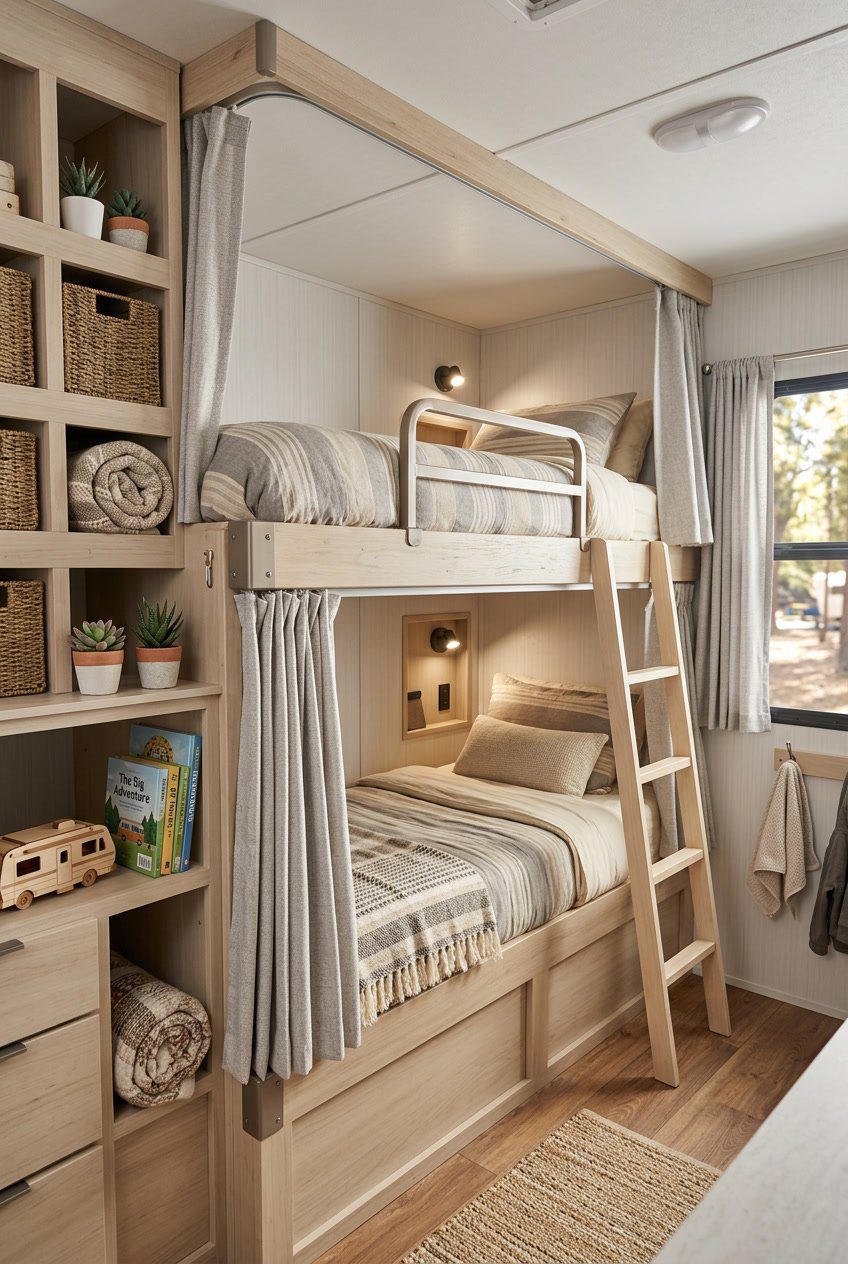
A two-person bunk with dividable curtains gives each sleeper privacy without losing space. You can close a curtain for quiet or open both for family time. This works well in narrow RVs where walls are limited.
Choose light, washable curtains that slide on simple tracks or rings. Velcro or snap ties keep curtains open while driving. Use thin, breathable fabric so the space feels cozy, not stuffy.
Add small pockets or caddies on each side for phones and books. Install soft LED reading lights and an outlet or USB port for charging. These small touches make each bunk feel like a private, useful nook.
PRO TIP
Mount curtain tracks on rounded rods to avoid snagging clothes. Use different curtain colors or patterns so kids can claim a spot quickly.
16) Clip-On USB Charging Stations for Bunks
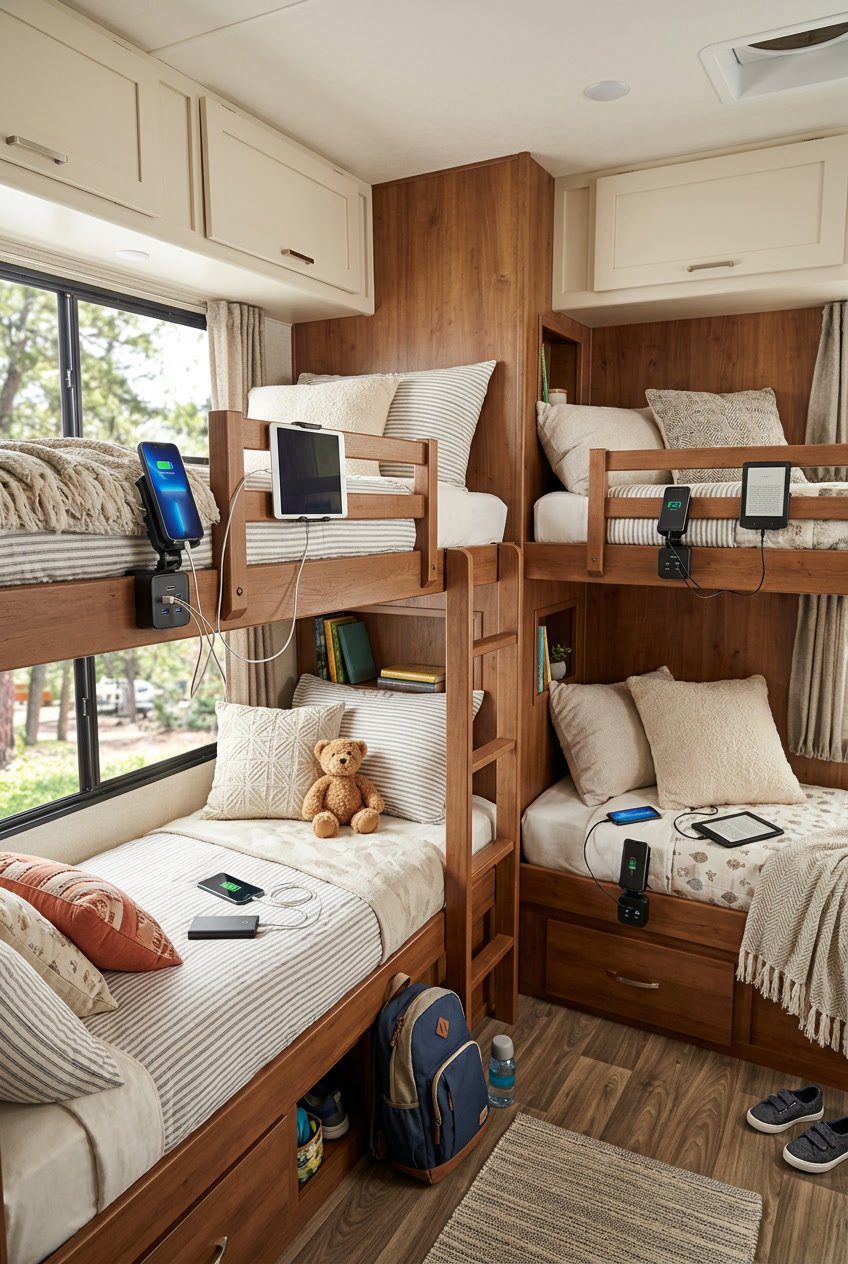
Clip-on USB charging stations free up space and keep cords neat in tight bunk areas. You can attach one to a bunk rail or shelf to give each sleeper a charging port within reach.
Choose a model with multiple ports and a secure clip so it won’t slip during travel. Look for low-profile designs that don’t block movement or hit heads when getting in and out.
Place the station where cords won’t tangle with bedding or block vents. You can run a single power cable to a nearby outlet and keep devices organized with short charging cords.
PRO TIP
Mount the clip on the higher side of the bunk so devices rest on a small ledge or pocket rather than dangling.
17) Thermal Insulated Window Shades for Bunkroom
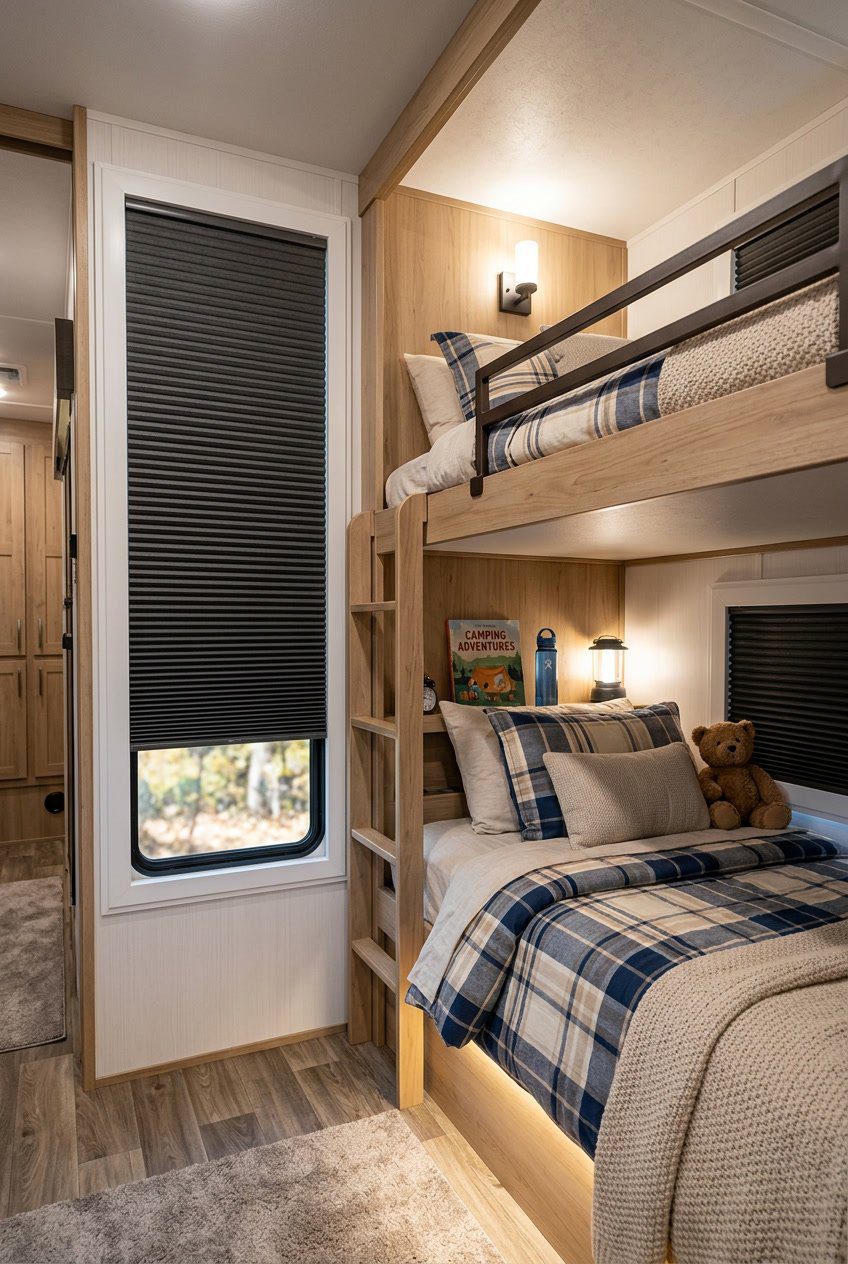
Thermal insulated window shades help keep the bunkroom comfortable day and night. They reduce heat in summer and trap warmth in cooler weather, so your kids sleep better.
These shades also block light for naps and early bedtimes. They are usually thin and easy to store when not in use.
Choose shades that fit each window snugly to avoid gaps. Look for ones with simple mounting so you can remove and clean them quickly.
PRO TIP
Measure twice before buying to get a tight fit. Consider blackout liners if you need total darkness for daytime sleepers.
18) Ventilated Bunk Mattress Covers (Hypoallergenic)
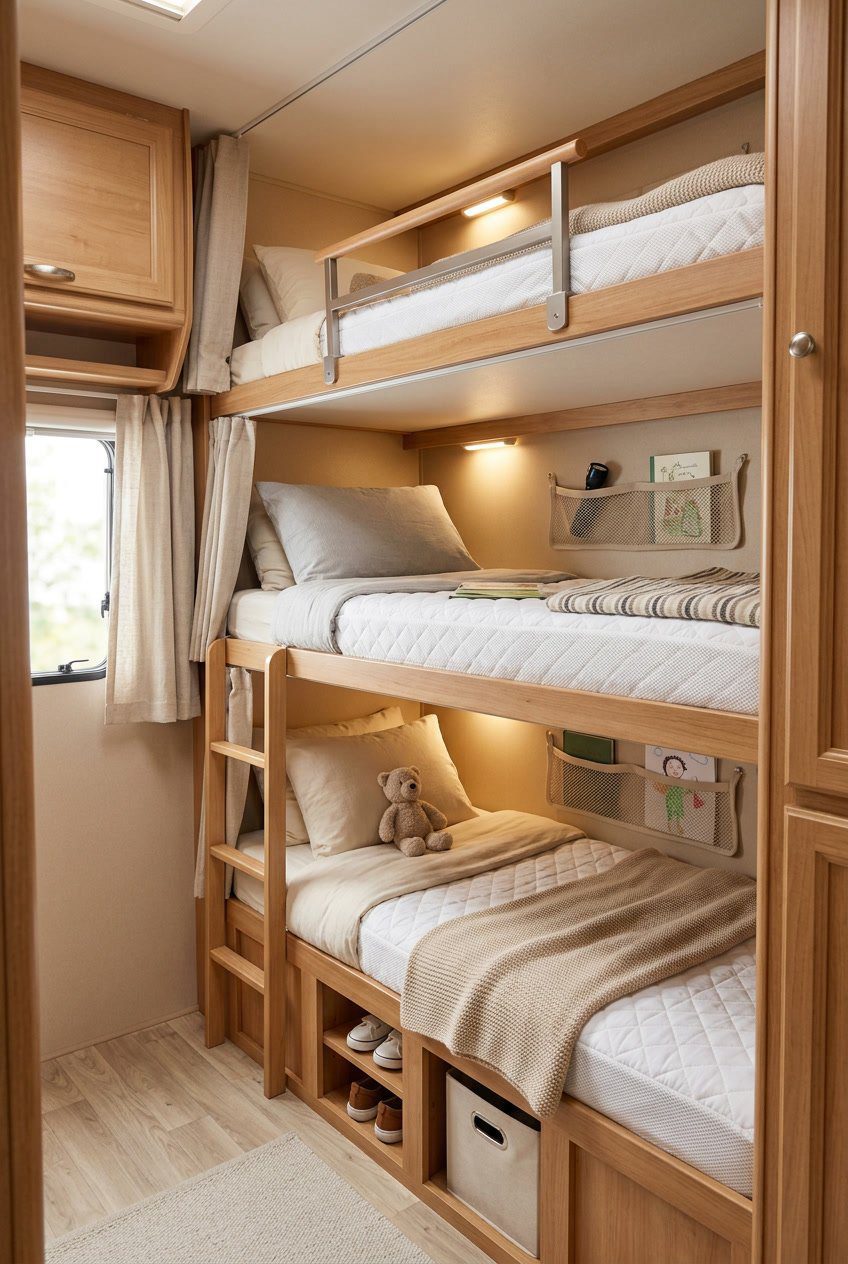
Ventilated mattress covers help keep bunks cool and dry. You sleep better when air moves through the cover and sweat or moisture can escape.
Choose hypoallergenic covers if anyone in your family has allergies. They block dust mites and reduce skin irritation without heavy chemicals.
Look for thin, breathable materials that still protect against spills and stains. Thin covers fit snugly and won’t change how the mattress feels.
PRO TIP
Measure your bunk mattresses before buying covers. A proper fit prevents bunching and makes beds easier to make.