
Nearly 40% of RV owners say a breakdown or equipment failure ruined at least one trip — and most of those problems could have been caught with a simple pre-season checkup. That is why tackling the 20 Spring RV Prep Jobs That Make Summer Travel Easier before you hit the road is one of the smartest moves any RV lover can make. A little work now saves a lot of headaches later. Get these jobs done and your summer adventures will run smoother than ever.
Key Takeaways 🗝️
- Spring prep prevents breakdowns — most summer RV problems start with skipped maintenance.
- Safety checks come first — tires, brakes, and propane systems need attention every single season.
- Systems matter as much as structure — water, electric, and HVAC need seasonal resets.
- Small fixes save big money — catching a $5 seal issue early beats a $500 water damage repair.
- A checklist approach works best — working through all 20 jobs in order keeps nothing overlooked.
Would you like to save this article?
The First 10 of 20 Spring RV Prep Jobs That Make Summer Travel Easier
1. 🔍 Inspect Every Tire — Including the Spare
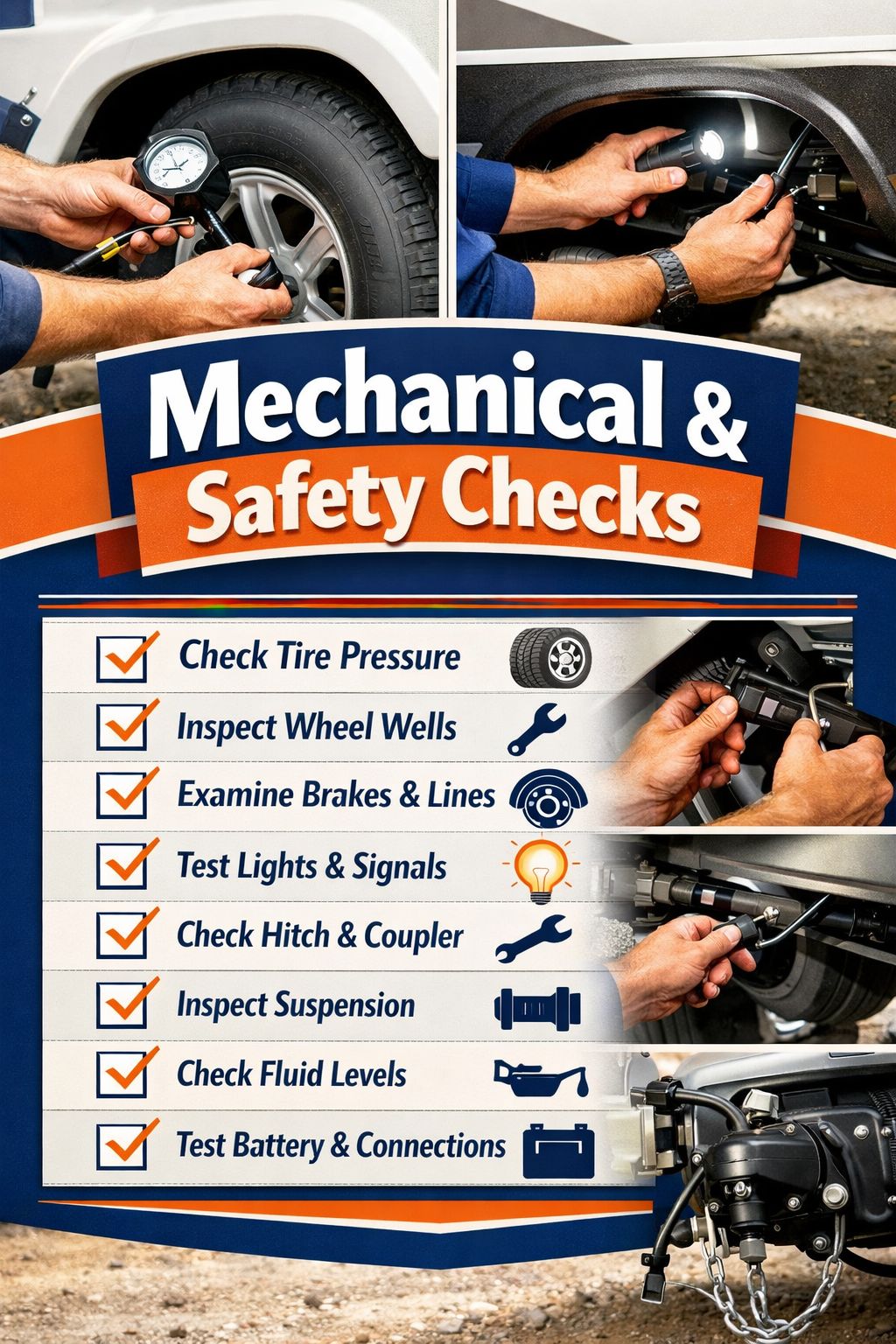
Tires are the most important safety item on any RV. Check the pressure on every tire, including the spare. Look for cracks, bulges, or uneven wear. Tires that sit all winter can develop flat spots or lose air. Use a quality gauge and match the pressure to the number printed on the tire sidewall — not the number on the vehicle door. Replace any tire that is more than six years old, even if it looks fine. A blowout at highway speed is dangerous and expensive. Good tires give peace of mind on every mile of the trip.
Pro tip: Write the tire installation date on the sidewall with a marker so you always know the age.
2. 🔧 Check the Brakes and Wheel Bearings
Brakes and wheel bearings wear out over time and sitting. Have a qualified technician inspect the brake pads, drums, and wheel bearings before the first trip of the season. The RV industry is facing a shortage of qualified service technicians, so book appointments early [3]. Catching worn bearings before a trip is far cheaper than a roadside repair. For towable RVs, also test the brake controller connection between the tow vehicle and the trailer.
3. 🪟 Reseal All Roof and Window Seams
Water is the number one enemy of any RV. Walk the entire roof and look for cracked, peeling, or missing sealant around vents, skylights, and seams. Check around every window frame and door frame too. Use a self-leveling lap sealant for roof repairs and a flexible silicone caulk for vertical seams. A tiny crack can let in gallons of water during a summer rainstorm. Water damage is one of the most expensive RV repairs there is, so this job pays for itself many times over.
4. 💧 Flush and Sanitize the Fresh Water System
After sitting all winter, the fresh water tank and lines need a good clean. Mix a solution of household bleach and water (about one ounce of bleach per eight gallons of tank capacity), fill the tank, run water through every faucet, and let it sit for several hours. Then drain and flush the system completely with clean water. Replace the inline water filter cartridge too. Clean water keeps everyone healthy on the road.
5. ⚡ Test All Electrical Systems and Shore Power
Check every outlet, light switch, and 12-volt connection inside the RV. Test the shore power connection with a surge protector and plug-in outlet tester. Look at the battery bank — clean any corrosion off the terminals and test the battery voltage. A fully charged, healthy battery should read around 12.6 volts or higher. Replace batteries that no longer hold a charge. Also test the generator if the RV has one — run it under load for at least two hours to make sure it is ready for summer use.
6. 🔥 Service the Propane System
Propane powers the stove, oven, water heater, and furnace in most RVs. Check every propane hose and connection for cracks or wear. Use soapy water to test for leaks — bubbles mean gas is escaping. Replace any damaged hoses right away. Have the regulator inspected if it is more than five years old. Test every propane appliance to make sure it lights and runs correctly. Fill the tanks before the first trip so there are no surprises at the campsite.
7. ❄️ Clean and Test the Air Conditioner
The roof air conditioner works hard during summer travel. Remove the inside filter and wash it with warm soapy water. Let it dry completely before putting it back. On the roof, clean the condenser coils gently with a soft brush or low-pressure water. Turn the unit on and check that it blows cold air. If it runs but does not cool well, the refrigerant may be low — that requires a certified technician. A working AC makes summer travel comfortable even in extreme heat.
8. 🚿 Inspect the Water Heater
Drain the water heater tank completely and flush out any sediment. Remove and inspect the anode rod — replace it if it is more than 50% corroded. This small rod protects the tank from rust and extends the life of the heater. Test the unit by filling it and turning it on in both electric and propane modes. Check the pressure relief valve to make sure it opens and closes properly. A working water heater means hot showers at every campsite.
9. 🪣 Check the Holding Tanks and Dump Valves
Open and close every dump valve to make sure it moves freely. Stuck valves are a messy problem at the worst possible time. Inspect the tank sensors — clean them if they are giving false readings. Flush the black tank thoroughly with a tank rinse wand. Add a tank treatment product to break down waste and control odors. Check the sewer hose and fittings for cracks or worn seals. Replace anything that looks questionable before the season starts.
10. 🔋 Test Smoke, CO, and LP Gas Detectors
Safety detectors save lives. Test every smoke alarm, carbon monoxide detector, and propane gas detector in the RV. Replace batteries in all of them, even if they seem to work fine. Most detector manufacturers recommend replacing the units themselves every five to seven years. Check the expiration date printed on each device. This is the most important five-minute job on the entire list — never skip it.
The Final 10 of 20 Spring RV Prep Jobs That Make Summer Travel Easier
11. 🛏️ Deep Clean the Interior
A winter in storage leaves dust, stale air, and sometimes unwanted guests like mice or insects. Remove everything from cabinets and wipe down every surface with a good cleaner. Check for signs of rodent activity — droppings, chewed wires, or nesting material. Wash all soft furnishings like curtains, cushion covers, and mattress pads. Clean the refrigerator inside and out. A fresh, clean interior makes the first night of summer travel feel like a real treat.
12. 🪵 Lubricate All Slide-Outs and Hinges
Slide-out rooms need regular lubrication to move smoothly and seal properly. Use a slide-out lube product on the rubber seals and the slide mechanism. Check the seals for cracks or tears — replace any that are damaged. Lubricate all door hinges, storage compartment latches, and the entry door lock. A small amount of lubrication prevents a lot of wear and keeps everything working like new.
13. 🧰 Inspect the Chassis and Undercarriage
Get under the RV and look at everything. Check the frame for rust or cracks. Inspect the exhaust system on motorhomes. Look at the suspension components and check for any loose bolts or worn bushings. On towable RVs, inspect the hitch, coupler, safety chains, and breakaway cable. Make sure the landing gear or stabilizer jacks move up and down smoothly. Lubricate any moving parts that need it.
14. 🌊 Check the Roof Vents and Fans
Open every roof vent and check the covers for cracks. Many plastic vent covers become brittle after years of sun exposure. A cracked cover can let in rain or break off at highway speed. Replace any damaged covers — they are inexpensive and easy to install. Test powered vent fans to make sure the motor runs and the blades spin freely. Clean the fan blades and screen while the vent is open.
15. 🔦 Replace Burned-Out Lights and Upgrade to LED
Walk around the outside of the RV at night and check every running light, brake light, turn signal, and marker light. Replace any burned-out bulbs. Consider upgrading old incandescent bulbs to LED — they use far less power, last much longer, and are brighter. This is especially helpful for boondocking or dry camping where battery power is limited. Check interior lights too and replace any that are dim or flickering.
16. 🪟 Clean and Treat All Windows and Awnings
Wash all exterior windows with a good RV-safe cleaner. Treat the rubber window seals with a silicone protectant to keep them soft and prevent cracking. Extend the awning fully and inspect the fabric for tears, stains, or mildew. Clean it with a soft brush and awning cleaner. Check the awning arms and hardware for bent parts or loose bolts. A clean, working awning creates valuable shade at every campsite.
17. 🗺️ Update Maps, Apps, and Emergency Contacts
Technology changes fast in the RV world [1]. Update the GPS unit or navigation app on a phone or tablet. Download offline maps for areas where cell service may be spotty. Update the RV-specific apps used for finding campgrounds, dump stations, and fuel stops. Refresh the emergency contact list and make sure everyone traveling knows the roadside assistance number. Being prepared digitally is just as important as being prepared mechanically.
18. 🧯 Check and Replace Fire Extinguishers
Every RV should have at least one working fire extinguisher. Check the pressure gauge — the needle should be in the green zone. Check the expiration date. If the extinguisher is more than 12 years old or shows any damage, replace it. Make sure everyone who travels in the RV knows where it is and how to use it. A fire extinguisher is one of those things that is only needed once — but when it is needed, nothing else will do.
19. 📦 Restock the Emergency and First Aid Kit
Go through the emergency kit and replace anything that is expired, used up, or missing. A good RV emergency kit includes a first aid kit, jumper cables or a jump starter, road flares or LED triangles, a basic tool kit, duct tape, extra fuses, and a flashlight with fresh batteries. Add any medications needed by travelers. A well-stocked kit handles most minor emergencies without needing outside help.
20. 📋 Do a Full Pre-Trip Shakedown Run
After completing all 19 jobs above, take the RV on a short local trip — even just a one-night stay at a nearby campground. This shakedown run reveals any remaining issues in a low-stakes environment. Test every system under real conditions. Run the AC, cook a meal, use the shower, and hook up to shore power. Fix anything that does not work perfectly before the big summer trip begins. This final step is what separates well-prepared RV travelers from those who end up stranded.
Conclusion: Get Ready, Get Rolling 🚐
Working through all 20 Spring RV Prep Jobs That Make Summer Travel Easier is the single best investment any RV owner can make before summer. Each job on this list is manageable on its own, but together they create an RV that is safe, clean, comfortable, and ready for anything the road brings.
Here are the actionable next steps to take right now:
- ✅ Print this list and use it as a physical checklist.
- 🗓️ Schedule any jobs that need a professional technician early — service bays fill up fast [3].
- 🛒 Order any parts or supplies needed before starting the work.
- 🏕️ Book a shakedown campsite nearby so the final test run has a destination.
- 🌞 Hit the road with confidence, knowing the RV is ready for a full summer of adventure.
“The best summer trips start with the best spring prep.”
References
[1] RV Industry Trends 2026 What Show Season New Tech And Market Shifts Mean For Buyers – https://www.bishs.com/blog/rv-industry-trends-2026-what-show-season-new-tech-and-market-shifts-mean-for-buyers/
[3] RV Techs Shifting Gears – https://tradeonlytoday.com/post-type-feature/rv-techs-shifting-gears/
[5] How To Make Money While Traveling In An RV – https://www.extraspace.com/blog/outdoor-recreation/how-to-make-money-while-traveling-in-an-rv/


