Propane tanks run out at the worst possible moment. Usually around 2 a.m., when it’s 15°F outside and the nearest fuel station is 40 miles away. Thousands of RVers face this exact problem every winter, and a growing number of them have simply stopped relying on propane altogether. If you’re wondering how, this guide covers 3 Ways to Heat Your RV This Winter Without Using Propane that real campers use right now, backed by 2026 product testing and safety data.
Heating an RV without propane is not a fringe idea anymore. It’s becoming the smart, modern choice for campers who have shore power, solar setups, or lithium battery banks. Electric and diesel-based heating systems skip the combustion gases and tank explosion risks that come with propane, as long as they’re installed and used the right way.[1]
This article breaks down exactly how to stay warm all winter, no propane bottle required.
Key Takeaways
- 🔌 Electric space heaters are the simplest fix on hookups, using about 10 watts per square foot of RV floor space.[4][5]
- ❄️ RV heat pumps work great down to about 40°F, but colder weather needs backup heat.[10][15]
- 🔥 Hybrid furnaces and diesel/wood heaters fill the gap for off-grid winter camping when electricity alone can’t cut it.[1][12]
- 🧱 Insulation and sealing drafts matter more than the heater itself, it’s the first step for any method to actually work.[1][13]
- ⚠️ Electric heat “wins outright” on shore power because it produces zero carbon monoxide and often costs less than refilling propane.[7][9]
Way #1: Electric Space Heaters, The Easiest Way to Heat Your RV Without Propane
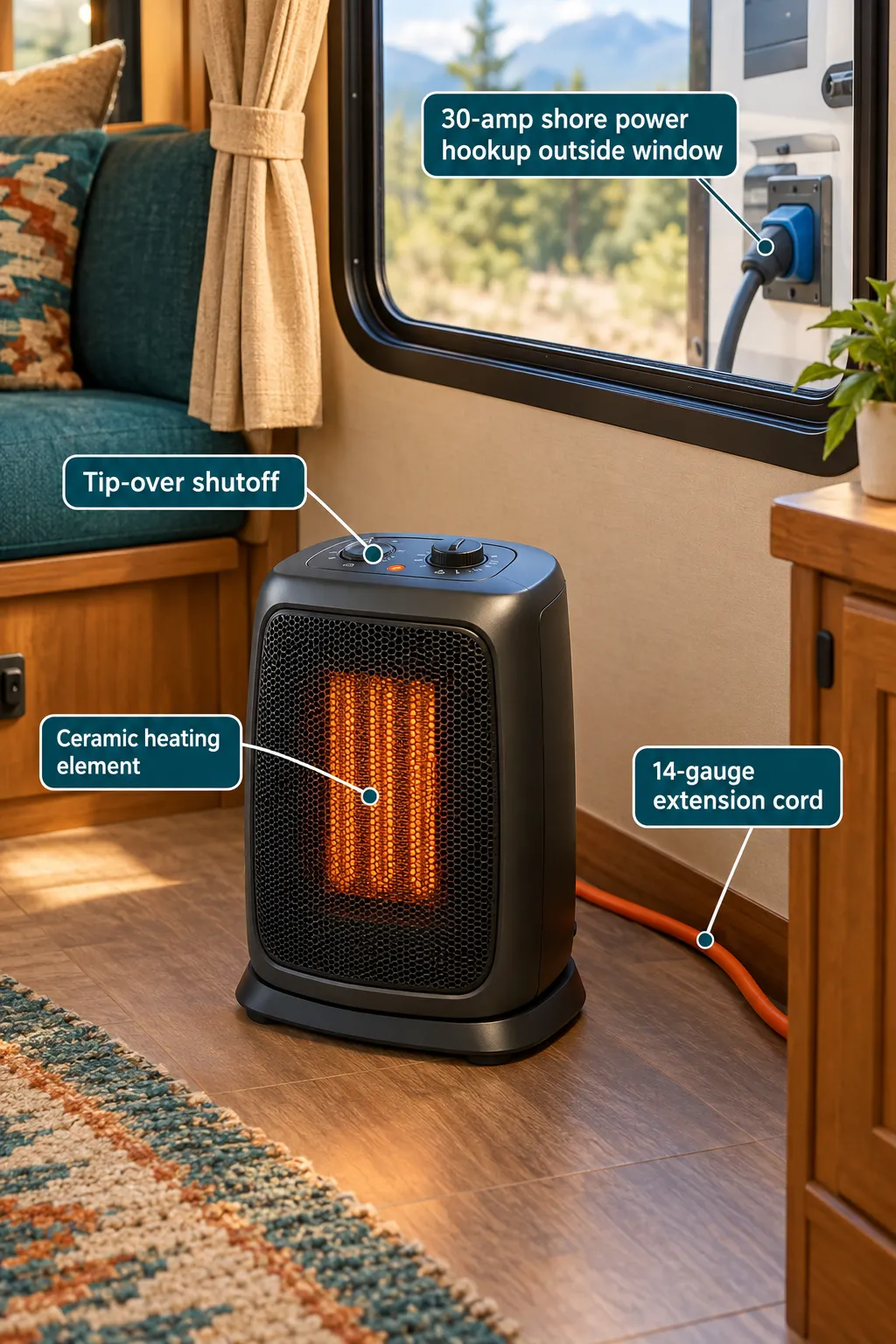
If you’re plugged into shore power at a campground, this is the first thing to try. Electric space heaters are cheap, easy to find, and don’t need any special installation. Just plug one in and turn it on.
Most experts recommend 1500-watt ceramic or infrared heaters for RVs, and there’s a simple rule to follow: use about 10 watts of heat for every square foot of floor space in your rig.[3][4][5] That means:
| RV Size | Recommended Wattage |
|---|---|
| Under 20 ft | 500-750 W |
| 20-30 ft | 1500 W |
| Over 30 ft | Two heaters (1500 W each) |
This little formula takes the guesswork out of shopping for a heater. Just measure your RV’s length times width to get square footage, then match it to the wattage chart above.[11]
Why electric heaters work so well:
- No combustion means no carbon monoxide and no moisture buildup from burning fuel.[7]
- They typically cost less to run than buying propane refills all season.[9]
- Newer models use 30-50% less energy than older ceramic designs while still heating 100-300 square feet.[7]
But here’s the catch, your electrical setup matters a lot. Safety guides are clear: you need at least a 20-amp, 110V supply to run a space heater safely, and a 30-50 amp campground hookup is even better.[8] If you’re stuck on a basic 15-amp circuit, stick to heaters under 1200 watts, and always use a heavy-duty 14-gauge (or thicker) extension cord.[8]
“Electric heating is doable, but only if your wiring and hookup can handle the load.” That’s the consensus among 2026 winter camping safety reviews.[8]
A few more tips for using electric heaters safely inside an RV:
- Never leave a space heater running unattended overnight, especially cheap models without auto shut-off.
- Keep heaters 3 feet away from curtains, bedding, and furniture.
- Use one heater per circuit, don’t overload a single outlet with multiple appliances.
- Check the cord for warmth during use. A hot cord means it’s overloaded.
- Run it in duty cycles (on for a while, off for a while) instead of full blast 24/7 to reduce wear on RV wiring.[8]
The big weakness of electric heaters? They struggle off-grid. If you’re boondocking without shore power, running an electric heater off an inverter and battery bank will drain your power fast.[7][9] This method really shines when you’re plugged into a campground pedestal.
Way #2: RV Heat Pumps, Smart Climate Control for Winter Camping
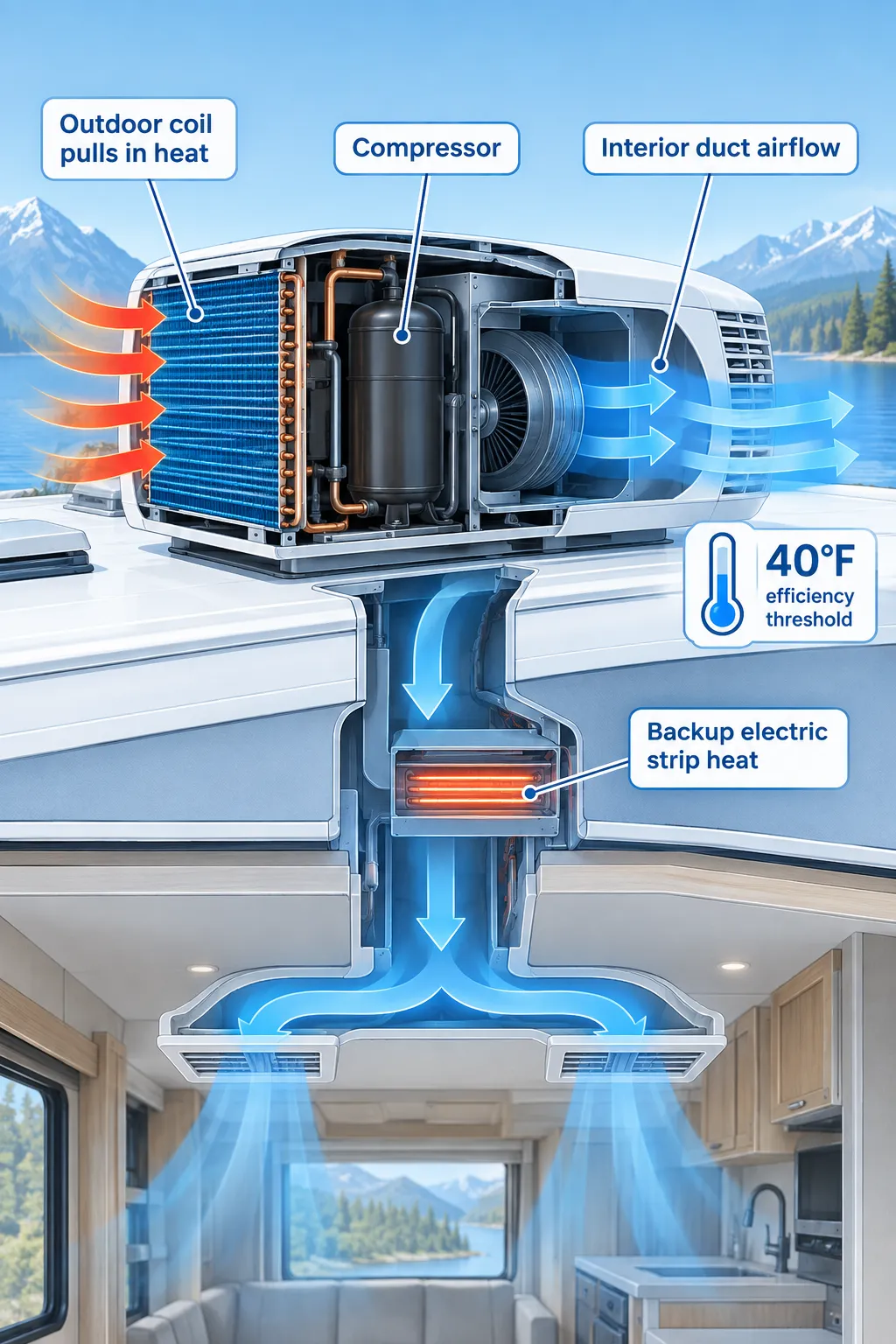
Heat pumps are the “set it and forget it” option for RVers who camp in mild-to-moderate cold. Instead of generating heat with a coil like a space heater, a heat pump pulls warmth from the outside air and pumps it inside, the same tech used in home mini-splits, just built into your RV’s rooftop AC unit.
Here’s the catch every RVer needs to know: standard RV heat pumps only work well down to about 40°F. Below that point, the unit can’t pull enough heat from the outside air, and most manufacturers recommend switching to a backup heat source like electric strip heat or your furnace.[10][15] This 40°F line is now considered the industry standard cutoff.
That said, technology is improving fast. Some newer RV-compatible mini-split style heat pumps can now run efficiently down to 19-23°F, and high-end units like the Senville Aura are rated for use down to a jaw-dropping -22°F.[10][15] These cold-climate heat pumps are impressive, but they come with strings attached:
- They typically require a 230V circuit, which most standard RVs don’t have without upgrades.
- Professional installation is strongly recommended, this isn’t a weekend DIY project.
- Even the best cold-climate models are usually paired with a backup heater for true winter boondocking, since no manufacturer guarantees 100% reliability in extreme cold.[15]
Quick comparison: Standard vs. Cold-Climate Heat Pumps
| Feature | Standard RV Heat Pump | Cold-Climate Heat Pump |
|---|---|---|
| Works well down to | ~40°F | ~19°F to -22°F |
| Power needed | Standard rooftop AC wiring | 230V, often needs upgrade |
| Install difficulty | Usually pre-installed | Professional install recommended |
| Best for | Fall/spring, mild winter | Serious cold-weather camping |
| Backup heat needed? | Yes, below 40°F | Yes, in extreme conditions |
So who should choose a heat pump? Anyone who camps mostly in the shoulder seasons, think October, November, March, and April, will get huge value here. Full-time winter boondockers in genuinely freezing states will need a stronger backup plan too.
Pro tip: Pair a heat pump with good RV skirting and window insulation. Sealing gaps around doors and windows is repeatedly named as the number-one step to make any non-propane heating method actually work, because it stops the warm air you’re paying for from leaking straight back outside.[1][13]
Way #3: Hybrid Furnaces and Non-Propane Combustion Heaters
Not every RVer has a big battery bank or a 230V hookup. That’s where the third option comes in: hybrid electric furnaces and alternative combustion heaters like diesel, wood, or kerosene units.
Hybrid Electric-Gas Furnace Kits
A growing number of 2026 product releases let RVers add electric heating elements directly into their existing floor-duct furnace system.[12] Here’s why this matters: your RV already has ductwork that pushes warm air through the floor. A hybrid kit lets you use electricity to heat that air when you’re plugged into shore power, then automatically switch back to propane or diesel only when you really need the extra punch in deep cold.
This approach is popular because:
- It drastically cuts propane use without removing your safety net.
- You still get heat from the floor ducts you’re used to, no cold spots by your feet.
- It works well for full-time RVers who want flexibility between campgrounds and off-grid stays.
Diesel, Wood, and Kerosene Heaters
For serious off-grid winter camping, diesel heaters (sometimes called “Chinese diesel heaters” or bunk heaters) have become a favorite among van-lifers and overlanders. They burn fuel from a separate tank, run on very little battery power, and put out serious heat even in sub-zero temperatures.
Wood stoves and kerosene heaters are older-school options that still work, especially in larger rigs or converted buses with proper clearance.
Important safety note: none of these combustion heaters should be treated as a standalone fix. Guides consistently stress that they must be:
- Properly vented to the outside (never run unvented indoors)
- Paired with strong insulation and skirting
- Combined with draft sealing around windows, doors, and floor vents[1][13]
Think of insulation as the foundation and the heater as just one piece of the puzzle. A poorly insulated RV will lose heat no matter which of these 3 Ways to Heat Your RV This Winter Without Using Propane you choose.
How Much Power Do You Need? Sizing It Out
Before picking a method, do some quick math. It only takes two steps:
Step 1: Find your floor area.
Multiply your RV’s length by its width. A 24-foot travel trailer that’s 8 feet wide equals 192 square feet.
Step 2: Match wattage to space.
Using the 10-watt-per-square-foot rule, that 192 sq ft RV needs roughly 1,900-2,000 watts of heating power total, which usually means one 1500W heater running most of the time, plus a bit of help from insulation and maybe a second small unit in a far bedroom.[4][11]
For fuel-based heaters, use this formula to estimate runtime:
Total tank BTUs ÷ Heater BTU-per-hour output = Hours of heat per tank
This helps you compare, in real numbers, whether a diesel heater or a propane refill actually saves you money and hassle over a season.[14]
Safety Tips for Heating Your RV Without Propane
No matter which of the 3 Ways to Heat Your RV This Winter Without Using Propane you pick, safety rules stay the same:
- ✅ Always use a carbon monoxide detector, even with “safe” electric options, combustion backups still need monitoring.
- ✅ Never run a generator or fuel heater inside a closed RV.
- ✅ Check your shore power amperage before plugging in a big heater. A 15-amp circuit and a 1500W heater plus a coffee maker is a recipe for a tripped breaker, or worse, a fire.[8]
- ✅ Insulate first, heat second. Draft-proofing windows, doors, and vents multiplies the effectiveness of any heater you choose.[1][13]
- ✅ Treat portable heaters as supplemental, not a full replacement for your built-in furnace, during prolonged sub-freezing stretches.[3][4][10]
Which Method Is Best for You?
Here’s a simple way to decide:
| Your Situation | Best Choice |
|---|---|
| Camping on 30-50 amp shore power, mild winter | Electric space heater |
| Weekend trips in fall/spring, standard AC unit | Standard heat pump |
| Full-time RVing in cold climates, willing to upgrade wiring | Cold-climate heat pump |
| Off-grid boondocking in deep freeze | Diesel or wood heater + insulation |
| Full-timer wanting flexibility on/off grid | Hybrid electric-furnace kit |
Most experienced RVers actually combine two methods. For example, an electric heater for daily comfort on hookups, plus a small diesel heater as backup for off-grid nights. That combo covers almost every winter scenario without ever needing a propane refill.
Conclusion
Ditching propane for winter RV heating isn’t just possible, for a lot of campers, it’s already the smarter, safer, and often cheaper path. Electric space heaters handle shore-power camping with ease. Heat pumps offer efficient, hands-off comfort down to about 40°F, with cold-climate models pushing that limit much further. And hybrid furnaces or diesel/wood heaters fill in the gaps for serious off-grid winter trips.
The real secret isn’t picking just one of these 3 Ways to Heat Your RV This Winter Without Using Propane, it’s matching the method to your setup, sealing up drafts first, and keeping a backup plan ready when temperatures really drop.
Next steps: Measure your RV’s floor space today, check what amperage your usual campsites offer, and pick one method from this list to test on your very next trip. Staying warm this winter might be easier, and less smelly, than you think.
References
[1] Heating Rv Without Propane – https://www.blackseries.net/blog/heating-rv-without-propane.html
[3] Best Space Heaters For Rvs – https://www.rosenberryrooms.com/best-space-heaters-for-rvs/
[4] 5 Best Electric Heaters For Rvs – https://campequipmentplus.com/guide/5-best-electric-heaters-for-rvs/
[5] Best Electric Heater For Rv – https://carcaretotal.com/best-electric-heater-for-rv/
[7] Electric Heater For Camper – https://heaterstoheat.com/electric-heater-for-camper/
[8] Heating Campervan In Winter – https://www.classicvans.com/specialty-van-information-center/travel-and-camper-vans/heating-campervan-in-winter/
[9] Best Portable Rv Heaters – https://rvgear.co/blog/best-portable-rv-heaters.html
[10] Best Rv Heat Pumps – https://www.montereybeachresort.com/best-rv-heat-pumps/
[11] 5 Best Electric Heaters For Rvs – https://campequipmentplus.com/guide/5-best-electric-heaters-for-rvs/
[12] Best Rv Heat Pumps – https://www.montereybeachresort.com/best-rv-heat-pumps/
[13] Heating Rv Without Propane – https://www.blackseries.net/blog/heating-rv-without-propane.html
[14] Electric Heater For Camper – https://heaterstoheat.com/electric-heater-for-camper/
[15] Best Rv Heat Pumps – https://www.montereybeachresort.com/best-rv-heat-pumps/