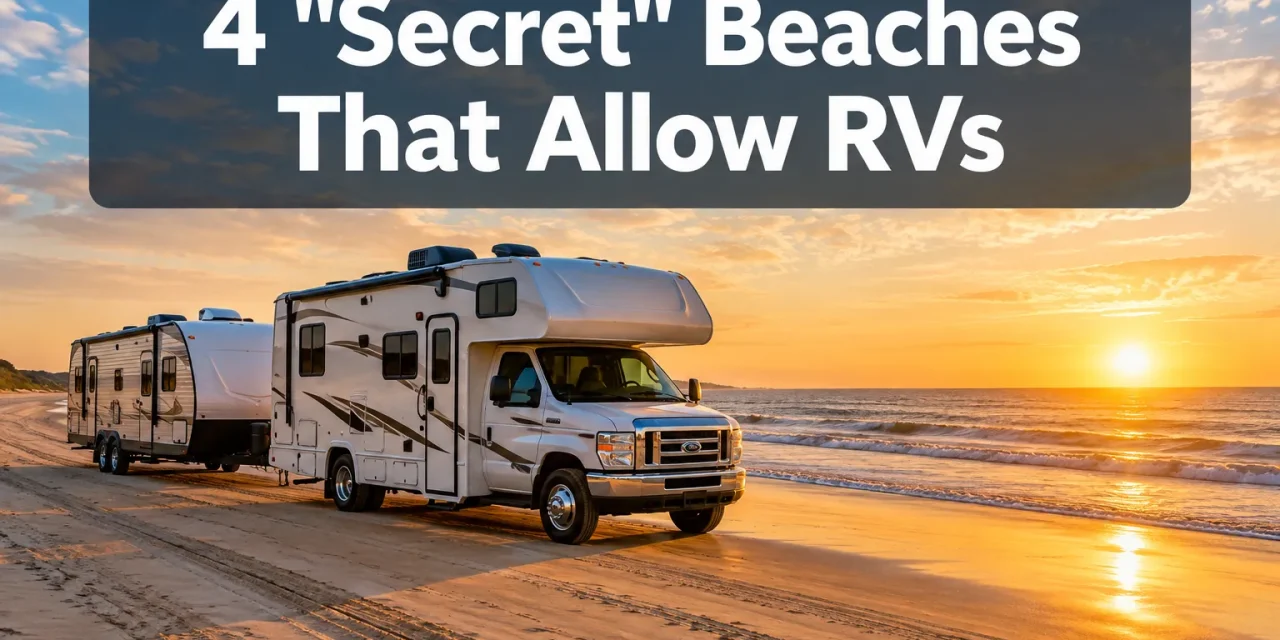
About 95% of RVs on the road today cannot legally or safely drive onto a beach. Soft sand swallows tires. Salt spray eats away at paint and metal. Low clearance means a stuck rig and a very expensive tow bill. So when a viral video shows someone camping right on the sand, there is a good chance that spot is either illegal, unsafe, or completely different from what your RV can handle.[4]
That is the real story behind most “secret beach” RV posts online. But here is the good news: a few real, legal, hard-packed beaches do allow RVs. They are not secret in the mysterious sense. They are just quiet, lesser-known, and often skipped because they do not look flashy on social media.
This guide breaks down the 4 “secret” beaches that allow RVs (and aren’t crowded), plus a few backup options if those fill up. Every spot here has been chosen because it is legal, RV-friendly, and does not require fighting for a parking spot with 200 other rigs.
Key Takeaways
- Only a handful of U.S. beaches have sand firm enough and rules loose enough to allow RVs to drive or camp on them.[4]
- Magnolia Beach, Texas offers free, hard-packed bayside boondocking with no hookups needed.[6]
- Matagorda Beach and Crystal Beach, Texas let self-contained RVs camp on firm sand sections, unlike most Gulf Coast beaches.[4]
- Long Beach Peninsula, Washington allows legal vehicle access on firmer sand, making it rare for a drive-on beach.[4][5]
- Padre Island National Seashore, Texas permits primitive on-sand RV camping but requires a permit and close attention to tides.[6]
- Most “beach” RV campgrounds, like Assateague or Florida’s state parks, are actually set behind dunes, not on the sand itself.[6][10]
Why Most “Secret” RV Beach Camping Isn’t What It Seems
Here is a hard truth: a lot of the “secret RV beach camping” content floating around social media is misleading. Many of those viral clips show lightweight vans, off-road trucks, or beach-permitted locals using special vehicles. A typical 30-foot travel trailer or Class A motorhome is a completely different story.
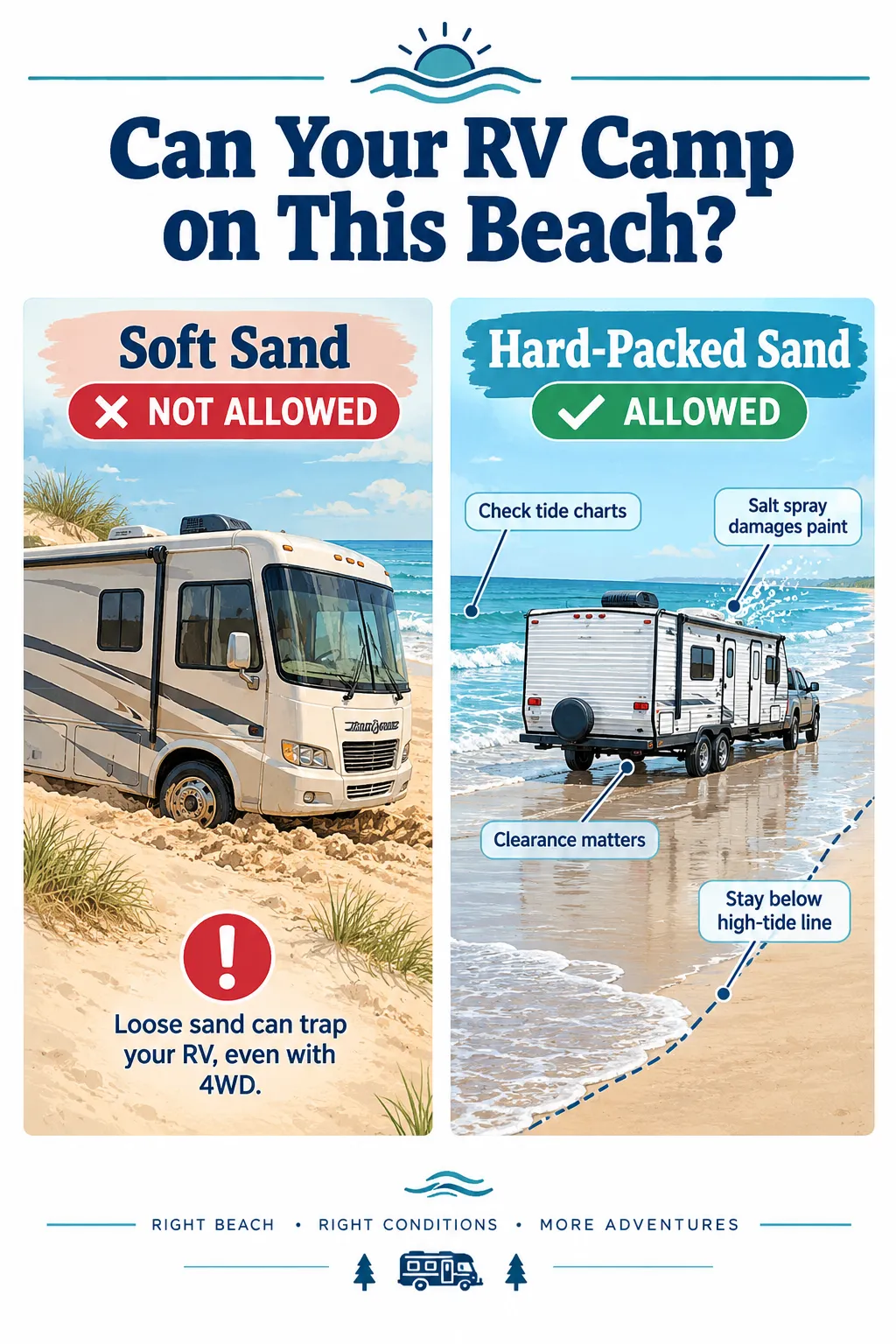
Beach camping guides that actually test these spots in person point out three big problems:
- Soft sand. Most beaches have loose, dry sand near the dunes. RV tires sink fast, even with four-wheel drive trucks pulling them.
- Salt spray. Ocean air is brutal on metal, rubber seals, and awnings. Parking too close to waves speeds up rust and corrosion.
- Clearance and weight. Heavy rigs need firm, compact sand. Most beaches simply do not have that texture everywhere.
Because of these issues, experts estimate that roughly 95% of RVs are ruled out from true on-sand camping.[4] That leaves only a small list of beaches where the sand is naturally hard-packed enough, and where local rules actually allow it.
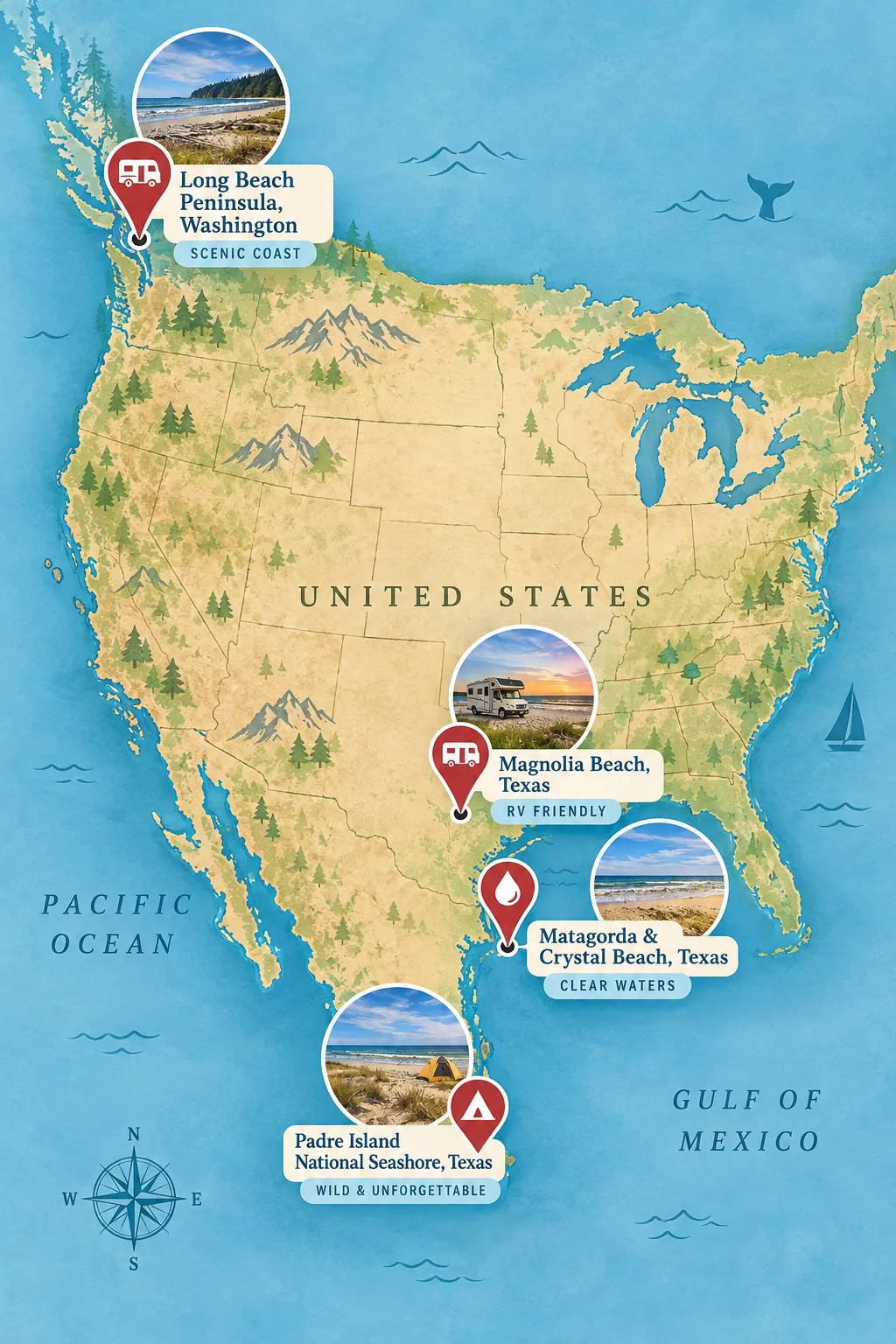
That is exactly why this list focuses on real, verified spots: Magnolia Beach, Matagorda Beach and Crystal Beach, Long Beach Peninsula, and Padre Island National Seashore. These are the genuine 4 “secret” beaches that allow RVs (and aren’t crowded), not just internet hype.
🏖️ “Hard-packed sand and a legal permit beat a pretty video every single time.”
The 4 “Secret” Beaches That Allow RVs (And Aren’t Crowded)
These four spots are the real deal. Each one has firm enough sand, clear rules, and low crowds compared to typical beach resorts and boardwalk towns.
1. Magnolia Beach, Texas
Magnolia Beach sits in Calhoun County, right along the bay. It has become known among boondockers for one simple reason: it is free, and the sand is firm enough for self-contained RVs to park close to the water without getting stuck.[6]
What makes it special:
- No hookups, no fees, and no reservation needed.
- Hard-packed bayside sand supports most RVs, not just trucks and vans.
- Quiet compared to Gulf-facing beaches because it sits on calmer bay water.
What to bring:
- Your own fresh water, since there are no hookups on-site.
- A way to pack out trash (always follow Leave No Trace rules here).
- Tide and weather awareness, since bay conditions can shift quickly.
Because this spot is free and informal, it fills up fastest around holiday weekends. Visiting on a regular weekday is the easiest way to get a front-row water view with almost no neighbors.
2. Matagorda Beach & Crystal Beach, Texas
These two Gulf Coast beaches are grouped together because they share the same winning formula: hard-packed sand sections that make careful RV access possible, something most Texas Gulf beaches cannot offer.[4]
Matagorda Beach sits near the mouth of the Colorado River and has long stretches of firmer sand compared to its soft, shifting neighbors. Crystal Beach, on the Bolivar Peninsula, is popular with locals who know which sections stay compact even after high tide.
A few tips RV owners should keep in mind:
- Stick to areas other vehicles have already driven on, that is usually a sign the sand is compact there.
- Avoid driving at the softest points, usually right where dry sand meets the dune line.
- Time your visit around low tide for the firmest surface and the most space.
Compared to the crowded commercial beaches nearby, both spots stay noticeably quieter, especially midweek and outside of peak summer holidays.[4]
3. Long Beach Peninsula, Washington
Long Beach Peninsula is one of the rare U.S. beaches where legal vehicle access is actually written into local rules, not just tolerated. Some beach parking areas sit on sand firm enough for RVs, which makes this a standout compared to heavily commercialized boardwalk beach towns.[4]
Why RV owners love it:
- Cooler Pacific Northwest weather means less sun damage and fewer peak-season crowds.
- Firmer sand sections make driving safer than on typical soft Gulf Coast beaches.
- Nearby small, quiet RV campgrounds support the area without turning it into a resort town.
For travelers who want beach access without beach camping directly, a small private property near Ocean Shores, Washington offers a nice alternative. It is a bay-front RV property with only five total sites, described by a recent guest as beautiful, quiet, and peaceful, with excellent birdwatching.[3] Five sites means it will never feel packed, which is exactly the point of this whole list.
4. Padre Island National Seashore, Texas
Padre Island is the most “official” entry on this list, and that is a good thing. It is one of the few places in the country where primitive on-sand RV camping is actually permitted, not just technically possible.[6]
RVs can camp directly on North and South Beach, while the Malaquite Campground sits nearby on firmer ground closer to the dunes for those who want a bit more stability.
Before heading out, plan for:
- An entrance fee at the gate.
- A free camping permit, usually picked up onsite.
- Careful tide checks, since soft sand conditions change fast along this stretch.[6]
Because Padre Island is a national seashore, it is managed and patrolled, which naturally keeps crowd levels in check compared to free-for-all beaches. Visitors get real beach camping, real rules, and real peace of mind.
Quick Comparison Table
| Beach | State | Surface Type | Cost | Crowd Level |
|---|---|---|---|---|
| Magnolia Beach | Texas | Hard-packed bay sand | Free | Low, except holidays |
| Matagorda / Crystal Beach | Texas | Firm sand sections | Free to low cost | Low to moderate |
| Long Beach Peninsula | Washington | Firmer coastal sand | Varies by site | Low |
| Padre Island National Seashore | Texas | On-sand, permitted | Entrance fee + permit | Low, well managed |
Other Low-Key Beach RV Spots Worth Checking Out
Not every great beach trip means parking on the sand itself. Plenty of quiet, RV-friendly campgrounds sit just behind the dunes, offering ocean views and breezes without the soft-sand risk.
- Assateague Island National Seashore (Maryland/Virginia): Oceanside camping loops sit just steps from the beach. There are no hookups, and wind-blown sand is common, but the minimalist setup keeps it from ever feeling like a packed resort.[6]
- Florida State Parks: Most Florida beach campsites sit behind the dunes on purpose, to protect nesting sea turtles and shorebirds. One park with 24 miles of undeveloped Atlantic beach has only two designated beach-camping areas, holding just six and fifteen people. Visitors are told plainly: “don’t expect a crowd.”[10]
- Long Key State Park (Florida Keys): Sixty campsites sit right on the Atlantic Ocean and welcome both tents and RVs, a true rarity for Florida.[10]
- Gamble Rogers Memorial State Recreation Area (Flagler Beach, Florida): Thirty-four dune-side sites come with electricity and water, built to handle RVs comfortably.[10]
- Sunset Beach area, North Carolina: Holden Beach RV Campground is known for being less crowded than nearby options, while still offering clean bathrooms and picnic tables.[14]
These spots are not technically “on the beach,” but they are close enough, quiet enough, and legal enough to be worth bookmarking alongside the main four.
Rules to Follow at Every Beach That Allows RVs
Even at legal, RV-friendly beaches, the rules matter. Breaking them can mean fines, a stuck rig, or getting banned from a spot for good. Here is what every RV owner should check before rolling onto any sand:
- Confirm it is actually legal. Some properties, including certain campgrounds marketed as “secret,” explicitly ban sleeping in vehicles in their parking lots and require guests to book a proper site instead.[12] Always check official rules first.
- Check tide schedules. Tides can turn firm sand into a trap within hours. This is especially critical at Padre Island and the Texas Gulf beaches.[6]
- Travel light and self-contained. Many of these spots, like Magnolia Beach, have no hookups. Bring fresh water, a full propane tank, and a plan for trash.[6]
- Follow Leave No Trace rules. Pack out everything, including gray water waste when required. This keeps these quiet beaches open for everyone else.[6]
- Protect local wildlife. Many beach rules exist to protect nesting turtles and birds. Staying off restricted dune areas keeps these spots legal for future RVers.[10]
- Double-check vehicle fit. Soft sand and salt spray are brutal on larger rigs. Smaller trailers and trucks generally have an easier time than big Class A motorhomes.[4]
Frequently Asked Questions
Are these beaches really “secret”?
Not in a mysterious, hidden way. They are legal, lesser-known spots that do not show up on every “top 10 beach RV parks” list, which keeps crowds lower than popular resort beaches.
Can any RV drive on these beaches?
No. Even at these four spots, firm sand sections are limited, and conditions change with weather and tide. Smaller, lighter rigs generally have an easier time than large motorhomes.[4]
Do I need a permit?
Sometimes. Padre Island National Seashore requires an entrance fee and usually a free onsite permit.[6] Magnolia Beach and some Texas beach spots do not require a permit but still expect visitors to follow posted rules.
What if I don’t want to camp directly on sand?
That is a smart choice for many RVers. Near-beach campgrounds like Assateague, Gamble Rogers, and Florida’s dune-side sites offer ocean access with far less risk and still stay relatively uncrowded.[6][10]
Why do so many “secret beach” videos get it wrong?
Many viral posts feature special vehicles, private land, or technically illegal camping. Beach-camping guides warn that most soft-sand beaches are simply not built for typical RVs.[4]
Conclusion
Beach camping does not have to mean fighting for a parking spot next to hundreds of other rigs. The real 4 “secret” beaches that allow RVs (and aren’t crowded), Magnolia Beach, Matagorda and Crystal Beach, Long Beach Peninsula, and Padre Island National Seashore, prove that quiet, legal beach access is still out there for RV owners willing to do a little homework first.
Before heading to any of them, double-check current rules, tide times, and vehicle fit. Pack self-contained supplies, respect wildlife areas, and always have a backup, dune-side campground in mind. Do that, and a peaceful, nearly empty beach view is well within reach.
References
[4] Free Beach Camping – https://camptrailtravel.com/free-beach-camping/
[6] Beach Camping Rv Locations Legal Beaches Booking Tactics Tides And Owner Tested Tips – https://rvreports.ai/beach-camping-rv-locations-legal-beaches-booking-tactics-tides-and-owner-tested-tips/
[3] hipcamp – https://www.hipcamp.com/en-US/d/united-states/washington/ocean-shores/camping/rv
[5] hipcamp – https://www.hipcamp.com/en-US/d/united-states/washington/long-beach/camping/rv
[10] Beach Camping – https://www.visitflorida.com/beaches/beach-camping/
[12] (Secret Beach Campground FAQ) referenced via camping guidance compilation
[14] (Sunset Beach, North Carolina campground review compilation)
RV beach camping, secret beaches for RVs, Magnolia Beach Texas, Padre Island camping, Long Beach Peninsula RV, boondocking beaches, Matagorda Beach Texas, Crystal Beach camping, uncrowded RV spots, hard-packed sand camping, Leave No Trace RV, beach RV travel tips