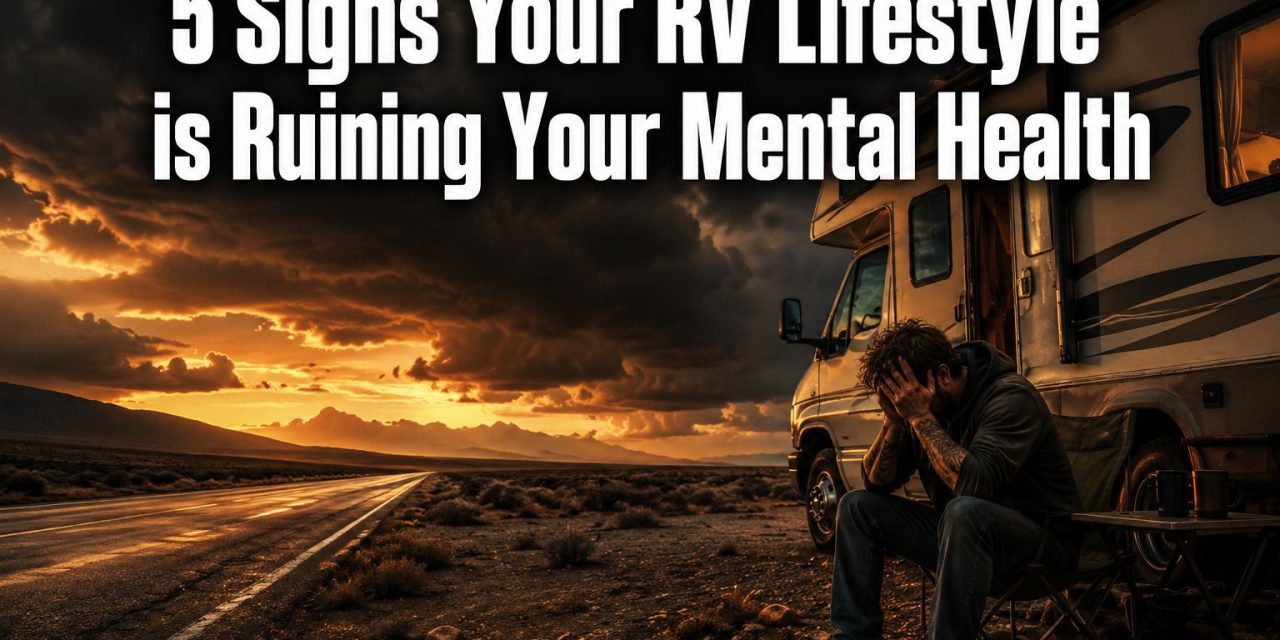
Nearly 40% of full-time RVers report feeling more anxious or emotionally drained after their first year on the road — not less. That number surprises most people who trade their house keys for a set of RV keys dreaming of freedom, sunsets, and zero stress. The truth is, life on wheels can quietly chip away at your mental well-being in ways that are easy to miss until things get really hard. Knowing the 5 signs your RV lifestyle is ruining your mental health could be the most important thing you read this year.
This article is for every RV lover who has ever wondered, “Why don’t I feel as happy as I thought I would?” Whether you full-time RV, weekend camp, or are somewhere in between, these warning signs apply to you.
Key Takeaways
- 🚨 Isolation is a silent threat — RV life can make loneliness worse, not better.
- 😴 Poor sleep and no routine are major mental health red flags on the road.
- 🧠 Constant decision fatigue from planning, driving, and logistics drains your brain.
- 💬 Relationship strain inside a small space is more common than most people admit.
- ✅ Awareness is the first step — recognizing these signs early can help you take action before burnout sets in.
What Makes RV Life So Appealing — and So Risky?
RV life sells a beautiful dream. Open roads. National parks. No mortgage. Total freedom. And for many people, those things are very real and very wonderful.
But there is a flip side that the Instagram photos don’t show.
| The Dream | The Reality |
|---|---|
| Freedom and flexibility | Constant decision-making |
| Connection with nature | Isolation from community |
| Simple living | Logistical stress every day |
| Adventure every day | Exhaustion from constant change |
| No mortgage | Financial uncertainty |
The gap between the dream and the reality is where mental health struggles are born.
RV life removes a lot of the normal anchors that keep people mentally stable — a consistent home base, nearby friends and family, a predictable routine, and a sense of community. When those anchors disappear, the mind can start to drift in unhealthy directions.
💡 Pull Quote: “Freedom without roots can feel exciting at first — but the human brain craves stability, connection, and routine more than most RVers expect.”
Understanding the 5 Signs Your RV Lifestyle is Ruining Your Mental Health
Let’s break down each warning sign in detail. Be honest with yourself as you read through these. There is no shame in recognizing that something isn’t working. That awareness is actually a sign of strength.
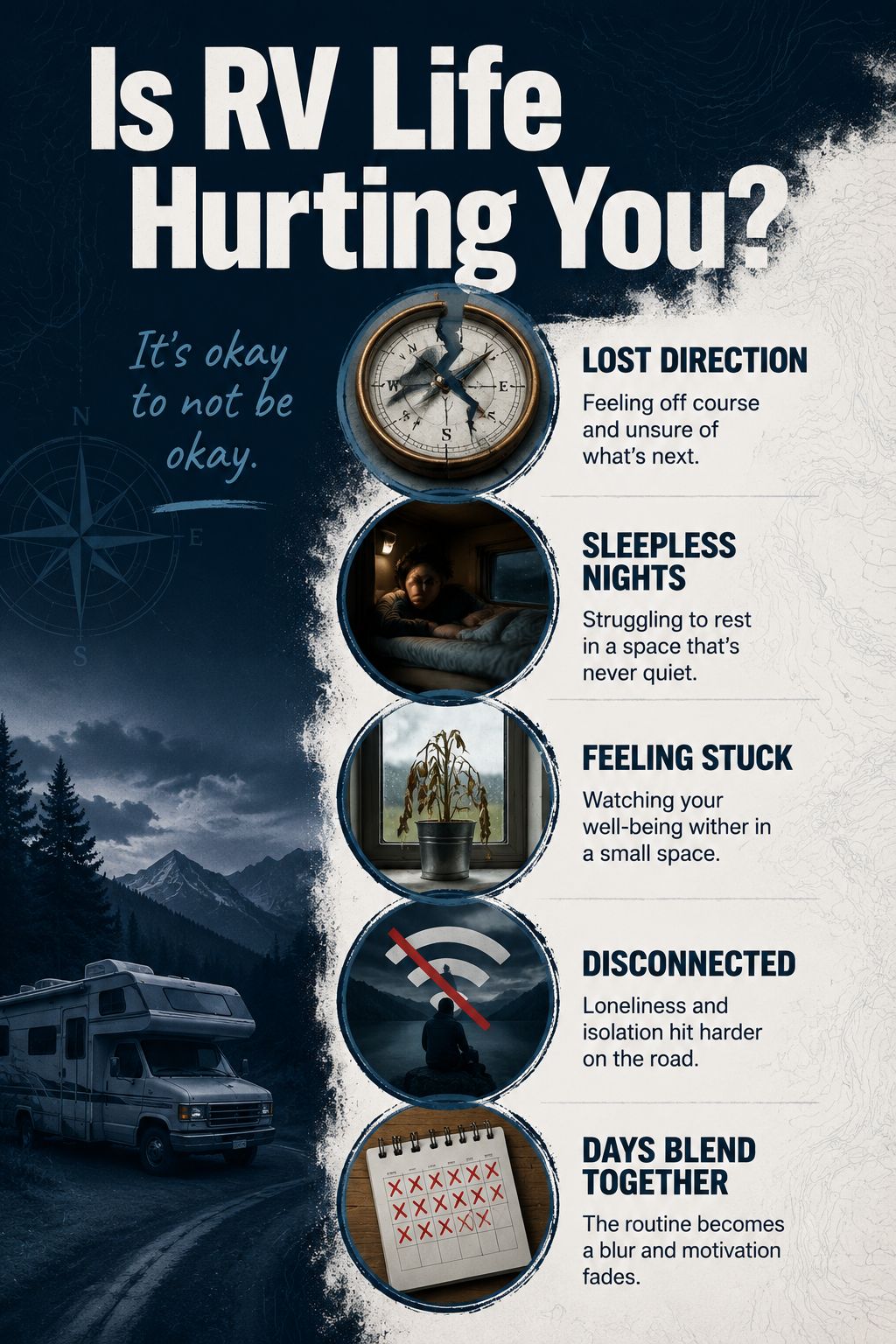
Sign #1: You Feel Lonely Even When You’re Never Alone
This one catches people off guard. Many RVers travel with a partner, a family, or even a pet. So how can loneliness be a problem?
The answer is that social connection is about quality and variety, not just quantity.
When you live in an RV, your social world shrinks dramatically. You leave your neighborhood, your coworkers, your gym friends, your church group, your book club. You might meet new people at campgrounds, but those connections are often surface-level and short-lived. You say goodbye more than you say hello.
Signs loneliness is hitting you:
- You feel a hollow ache even on beautiful days
- You scroll social media for hours just to feel connected
- You get overly excited or clingy when you meet new people
- You feel like nobody truly knows you anymore
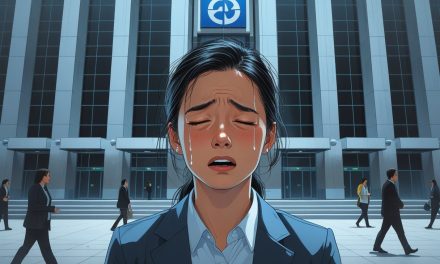
- You cry without knowing exactly why
🧠 Why this matters: Chronic loneliness is linked to depression, anxiety, and even physical health problems. A 2023 study published in Nature Human Behaviour found that social isolation can be as harmful to health as smoking 15 cigarettes a day.
What to do about it:
- Join RV-specific Facebook groups or Discord communities and actually participate
- Plan longer stays (2+ weeks) in one location to build real friendships
- Schedule regular video calls with people from your “before RV” life
- Look for local clubs, classes, or volunteer opportunities wherever you park
Sign #2: Your Sleep Is Consistently Terrible
Sleep is the foundation of mental health. Full stop.
And RV life is absolutely brutal on sleep for many people. Think about everything working against a good night’s rest:
- 🌡️ Temperature swings in the RV
- 🔊 Campground noise (generators, neighbors, wildlife)
- 💡 Unfamiliar lighting in new locations
- 🛏️ Uncomfortable mattresses in many rigs
- 😰 Anxiety about the next day’s drive or destination
- 🌐 Stress from spotty Wi-Fi or work deadlines
When sleep suffers night after night, everything else falls apart. Mood drops. Patience disappears. Small problems feel enormous. Motivation fades.
💡 Pull Quote: “One bad night of sleep is inconvenient. Two weeks of bad sleep is a mental health crisis waiting to happen.”
Quick Sleep Health Check:
| Healthy Sleep | Warning Signs |
|---|---|
| 7-9 hours per night | Fewer than 6 hours regularly |
| Waking up refreshed | Waking up exhausted |
| Falling asleep within 20 minutes | Lying awake for 1+ hours |
| Consistent sleep schedule | Wildly different bedtimes each night |
What to do about it:
- Invest in a quality RV mattress topper — it makes a huge difference
- Use blackout curtains and a white noise machine or app
- Keep a consistent bedtime even when traveling
- Limit screens 60 minutes before bed
- Talk to a doctor if sleep problems persist beyond a few weeks
Sign #3: You’ve Lost Your Sense of Purpose or Identity
Here is something that doesn’t get talked about enough in the RV community.
Many people define themselves by their career, their home, their community role, or their routines. When you hit the road, a lot of that disappears overnight.
Suddenly you’re just… a person in a parking lot. And that can feel deeply disorienting.
This is especially common for:
- Retirees who built their identity around their career
- Parents whose kids have grown up and left
- Remote workers who feel disconnected from their professional purpose
- Solo travelers who struggle to define what they’re actually doing with their life
Signs you’ve lost your sense of purpose:
- You feel bored even in beautiful places
- You can’t answer the question “what are you working toward?”
- You feel envious of people with “normal” lives
- You feel like you’re just killing time, not living with intention
- You’ve stopped making plans or goals
🧠 Why this matters: Purpose is a core human need. Research from the Journal of Clinical Psychology consistently shows that people with a strong sense of purpose have lower rates of depression and anxiety.
What to do about it:
- Start a project — a blog, a YouTube channel, a photography portfolio, a book
- Set short-term and long-term goals that aren’t just about destinations
- Volunteer in communities you pass through
- Consider working with a therapist or life coach — many offer virtual sessions
Sign #4: You and Your Travel Partner Are Constantly Fighting
Small spaces + big stress = relationship explosions.
If you travel with a partner, spouse, friend, or family member, the RV lifestyle puts your relationship under a microscope. There is nowhere to go when you need space. There is no separate room. There is no “I’ll go to my office.” There is just… the two of you, in a box on wheels.
Many couples discover that the problems they thought they left behind at their old house followed them right into the RV.
Common relationship red flags in RV life:
- 🗣️ Arguments about small, petty things (but really about bigger issues)
- 😶 Long stretches of cold silence
- 🧳 One partner wanting to stay longer, the other wanting to move on
- 💸 Constant disagreements about money and spending
- 😤 Feeling like you have zero personal space or alone time
💡 Pull Quote: “An RV doesn’t fix a struggling relationship — it amplifies everything that was already there.”
What to do about it:
- Schedule regular “state of the union” check-ins with your partner
- Create intentional alone time — even a 30-minute solo walk counts
- Agree on a decision-making system for route planning and logistics
- Don’t avoid hard conversations — small issues become huge in tight quarters
- Consider couples therapy — virtual sessions are widely available in 2026
Sign #5: You’re Exhausted by the Constant Planning and Moving
Freedom is supposed to feel light. But for many full-time RVers, it feels like carrying a 50-pound backpack every single day.
The mental load of RV life is enormous and often underestimated:
- Finding and booking campsites (especially in peak season)
- Planning routes, fuel stops, and dump stations
- Managing RV maintenance and repairs
- Budgeting for unpredictable expenses
- Keeping up with work or school on the road
- Navigating weather changes and road closures
- Dealing with technology failures in remote areas
This is called decision fatigue — and it is a very real psychological phenomenon. Every decision you make, no matter how small, drains a little bit of your mental energy. When you’re making dozens of complex decisions every day just to keep the RV lifestyle running, your brain gets exhausted.
Signs decision fatigue is hitting you:
- You feel paralyzed by simple choices
- You snap at people over tiny things
- You feel relief when plans fall through (because it means fewer decisions)
- You daydream about having a permanent address again
- You feel a constant low-level dread about “what’s next”
What to do about it:
- Slow down — plan longer stays in fewer places
- Create systems and routines to automate common decisions
- Use apps like Campendium, The Dyrt, or RV Trip Wizard to reduce planning stress
- Give yourself “no-move” weekends where you stay put and do nothing
- Learn to say no to activities and detours that drain you
How to Tell If These Signs Apply to You
It can be hard to be honest with yourself. Here is a simple self-check tool:
Rate yourself on each sign from 1 (not at all) to 5 (very much):
| Sign | Your Score (1-5) |
|---|---|
| Feeling lonely or disconnected | |
| Consistently poor sleep | |
| Lost sense of purpose or identity | |
| Relationship strain with travel partner | |
| Overwhelmed by planning and logistics |
Scoring:
- 5-10: You’re doing well — keep monitoring
- 11-17: Some warning signs present — take action now
- 18-25: Significant mental health strain — please seek support
When to Seek Professional Help
There is no shame in reaching out for support. In fact, it is one of the smartest things an RVer can do.
Consider talking to a mental health professional if:
- You’ve felt sad, empty, or hopeless for more than two weeks
- You’ve lost interest in things you used to enjoy
- You’re having thoughts of harming yourself
- Your relationships are breaking down
- You’re using alcohol or other substances to cope
Resources that work well for RVers:
- BetterHelp and Talkspace — online therapy accessible anywhere with internet
- Crisis Text Line — text HOME to 741741 (US)
- 988 Suicide & Crisis Lifeline — call or text 988 (US)
- Psychology Today’s therapist finder — filter for telehealth providers
Many therapists in 2026 are very familiar with the unique challenges of nomadic and RV lifestyles. You don’t have to explain yourself from scratch.
Practical Ways to Protect Your Mental Health on the Road
Knowing the 5 signs your RV lifestyle is ruining your mental health is only the first step. Here are some proactive habits that make a real difference:
✅ Build a routine — Wake up, eat, work, and sleep at consistent times.
✅ Move your body daily — Even a 20-minute walk improves mood significantly.
✅ Limit social media comparison — Other RVers only post their highlight reels.
✅ Stay connected intentionally — Schedule calls, not just reactive texts.
✅ Journal regularly — Writing helps process emotions that build up on the road.
✅ Take breaks from traveling — Staying in one place for a month isn’t failure. It’s wisdom.
✅ Celebrate small wins — Not every day needs to be epic. Ordinary days are okay.
✅ Know your “enough” signal — Recognize when the lifestyle needs to change, even temporarily.
Conclusion
The RV lifestyle can be one of the most rewarding ways to live — but it is not immune to mental health challenges. In fact, the very things that make it so appealing (freedom, constant change, minimal commitments) can also be the things that slowly wear you down.
Recognizing the 5 signs your RV lifestyle is ruining your mental health — loneliness, poor sleep, lost purpose, relationship strain, and decision fatigue — is a powerful act of self-awareness. It doesn’t mean RV life has failed you. It means you’re paying attention.
Here are your actionable next steps:
- 📋 Take the self-check quiz above and be honest with your scores.
- 📞 Reach out to someone you trust — a friend, family member, or therapist.
- 🛑 Slow down your travel pace — more time in each place, less rushing.
- 🧘 Start one small daily mental health habit — journaling, walking, or meditating.
- 💬 Join an RV community that talks openly about the hard stuff, not just the pretty sunsets.
The road is long. Take care of the person driving it. 🚐💛
References
- Holt-Lunstad, J., Smith, T. B., Baker, M., Harris, T., & Stephenson, D. (2015). Loneliness and social isolation as risk factors for mortality: A meta-analytic review. Perspectives on Psychological Science, 10(2), 227–237.
- Steptoe, A., Shankar, A., Demakakos, P., & Wardle, J. (2013). Social isolation, loneliness, and all-cause mortality in older men and women. Proceedings of the National Academy of Sciences, 110(15), 5797–5801.
- Walker, M. (2017). Why We Sleep: Unlocking the Power of Sleep and Dreams. Scribner.
- McKnight, P. E., & Kashdan, T. B. (2009). Purpose in life as a system that creates and sustains health and well-being: An integrative, testable theory. Review of General Psychology, 13(3), 242–251.
- Baumeister, R. F., & Tierney, J. (2011). Willpower: Rediscovering the Greatest Human Strength. Penguin Press.
- Murthy, V. H. (2023). Our Epidemic of Loneliness and Isolation: The U.S. Surgeon General’s Advisory on the Healing Effects of Social Connection and Community. U.S. Department of Health and Human Services.