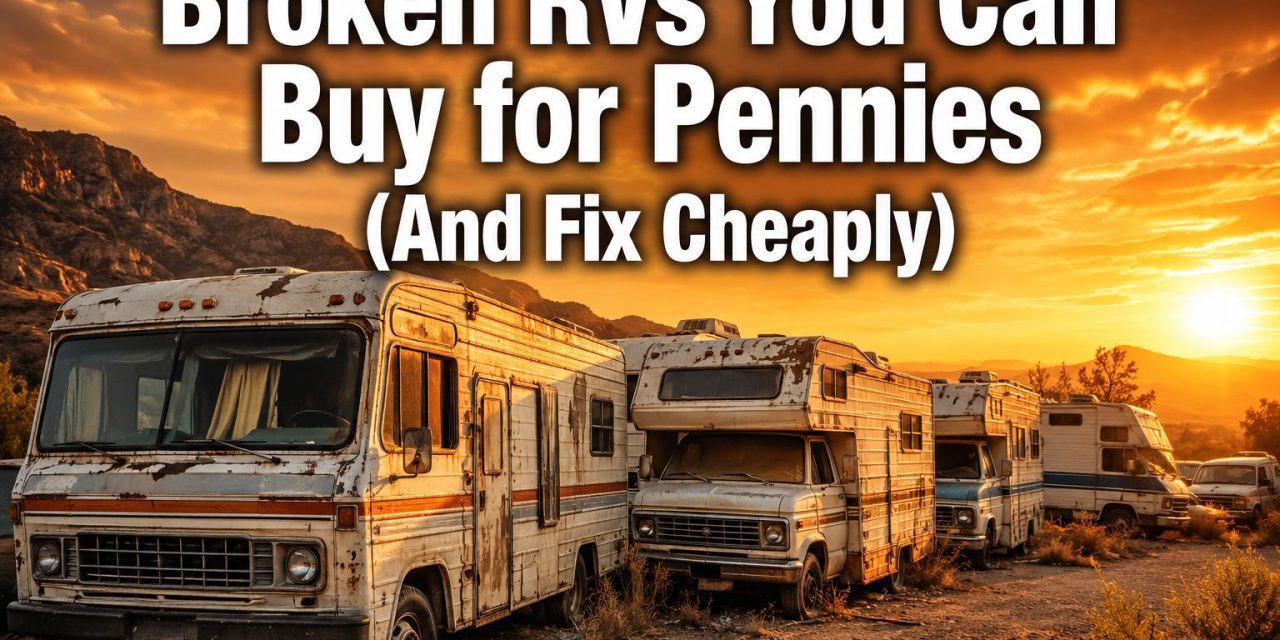
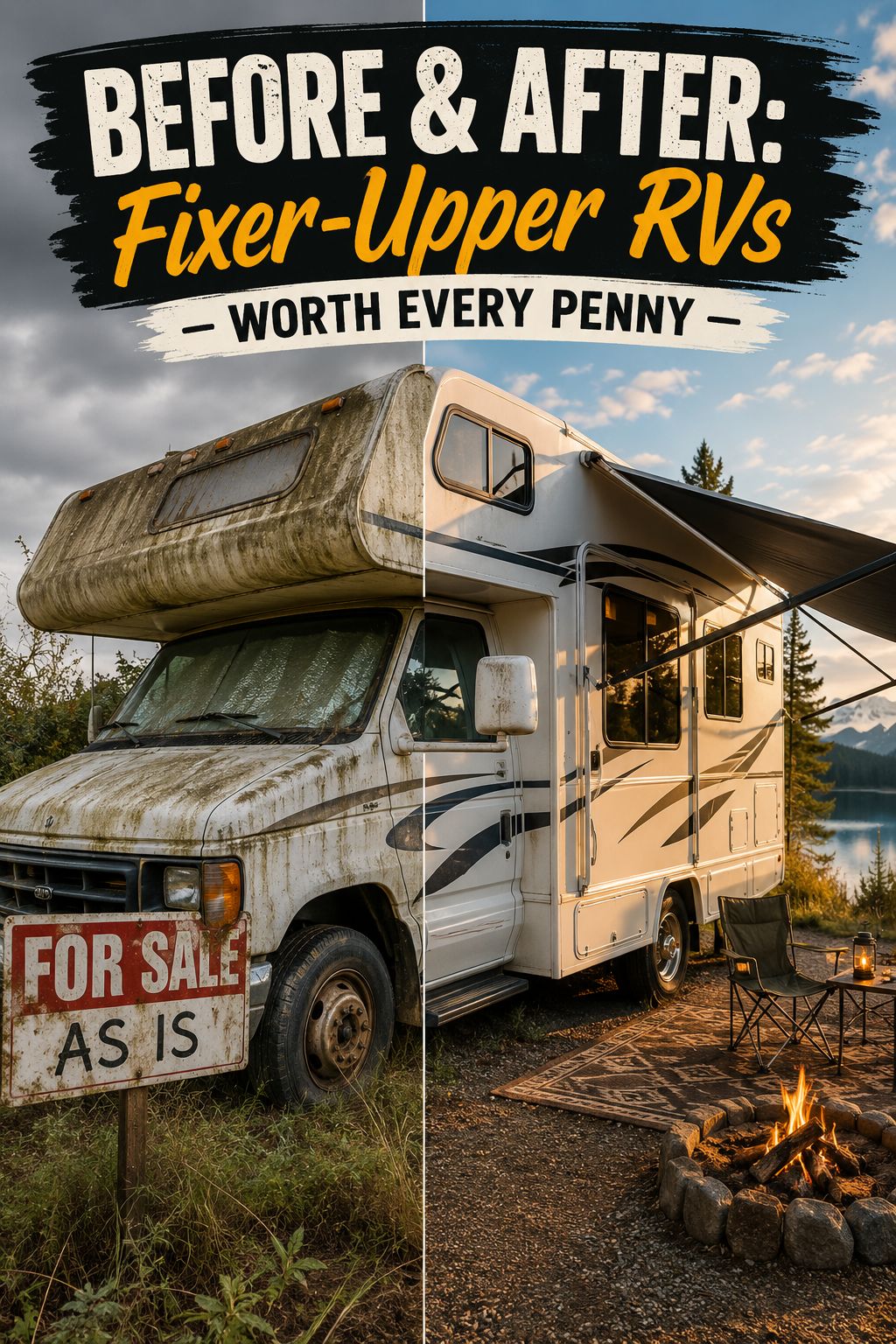
A used RV that runs perfectly can cost $30,000 or more. But a “broken” one? Sometimes less than $2,000 — and many of the most common problems cost under $500 to fix. Smart buyers have been scooping up these deals for years, turning sad, neglected rigs into dream campers without blowing their savings.
This guide covers the 5 “Broken” RVs you can buy for pennies (and fix cheaply) — the specific types of damage that look scary but are actually easy and affordable to repair. Whether someone is a first-time buyer or a seasoned RV enthusiast, knowing which “broken” RVs are worth the gamble can save tens of thousands of dollars.
Key Takeaways
- 🔧 Many “broken” RVs have cosmetic or simple mechanical issues that cost very little to fix
- 💰 Buying a damaged RV can save $10,000–$25,000 compared to buying one in perfect condition
- 🚿 Water damage, bad tires, dead batteries, and broken appliances are among the most fixable problems
- 🛒 The best deals are found on Facebook Marketplace, Craigslist, and RV salvage auctions
- ✅ Always inspect an RV thoroughly before buying — knowing what to look for makes all the difference
Why “Broken” RVs Are a Secret Goldmine
Most people see a cracked seal or a broken awning and walk away. That’s actually great news for savvy buyers. Sellers often drop prices dramatically when something looks wrong — even if the fix is simple and cheap.
“One person’s ‘broken’ RV is another person’s bargain campsite on wheels.”
Here’s a quick look at how much money a buyer can save:
| RV Condition | Average Price | Estimated Fix Cost | Total Investment |
|---|---|---|---|
| Perfect condition | $28,000 | $0 | $28,000 |
| Minor cosmetic damage | $14,000 | $300–$800 | ~$14,800 |
| Water damage (surface) | $5,000 | $500–$2,000 | ~$7,000 |
| Dead systems (appliances) | $4,000 | $400–$1,500 | ~$5,500 |
| Multiple issues | $1,500–$3,000 | $1,000–$3,000 | ~$4,500 |
The savings are real. Now, here are the 5 “Broken” RVs you can buy for pennies (and fix cheaply) — ranked from easiest to most involved.
The 5 “Broken” RVs You Can Buy for Pennies (And Fix Cheaply)
1. 🛻 RVs With Cosmetic Damage (Dents, Faded Paint, Ugly Interiors)
What it looks like: Scratched walls, sun-faded exteriors, stained carpet, broken cabinet doors, cracked plastic trim.
Why sellers drop the price: It looks bad in photos. Most buyers scroll right past it. That’s a huge opportunity.
Why it’s actually easy to fix:
Cosmetic damage almost never affects how an RV works. The engine, plumbing, and electrical systems are fine. It just needs some love on the outside and inside.
Common fixes and costs:
- 🎨 Exterior polish or vinyl wrap: $100–$400 (DIY)
- 🪑 New seat covers and curtains: $50–$200
- 🧹 Deep cleaning and carpet replacement: $100–$300
- 🔩 Replacement cabinet hardware: $20–$80
- 🖌️ Interior paint: $50–$150
Total fix cost: $320–$1,130
Pro tip: Search listings for words like “as-is,” “needs TLC,” or “cosmetic damage.” These are code words for cheap prices on perfectly good RVs.
Best RV types for this deal:
- Class B campervans with faded exteriors
- Older travel trailers with dated interiors
- Pop-up campers with stained canvas
2. 💧 RVs With Old or Surface-Level Water Damage
What it looks like: Soft spots on the floor, stained ceiling panels, musty smell, bubbling wallpaper.
Why sellers drop the price: Water damage sounds terrifying. Many buyers think it means mold, rot, and structural collapse. Sometimes it does — but often, it’s just surface damage that was caught early.
The key difference to know:
| Type of Water Damage | Fix Cost | Worth Buying? |
|---|---|---|
| Stained ceiling panels | $50–$200 | ✅ Yes |
| Soft floor spot (small, dry) | $200–$600 | ✅ Yes |
| Bubbling wallpaper | $100–$300 | ✅ Yes |
| Rotted subfloor (large area) | $1,000–$3,000 | ⚠️ Maybe |
| Black mold throughout | $2,000–$5,000+ | ❌ Walk away |
How to check before buying:
- Press on the floor with a foot. Soft = damage. Hard = good.
- Look at the ceiling seams. Brown rings = old leak. Check if it’s dry now.
- Smell the inside. A musty smell that won’t go away = possible mold problem.
- Bring a moisture meter (they cost $15–$30 on Amazon). Readings over 20% = active moisture.
Common fixes and costs:
- 🪵 Replace small subfloor section: $150–$500 (materials only)
- 🧱 New ceiling panels: $80–$250
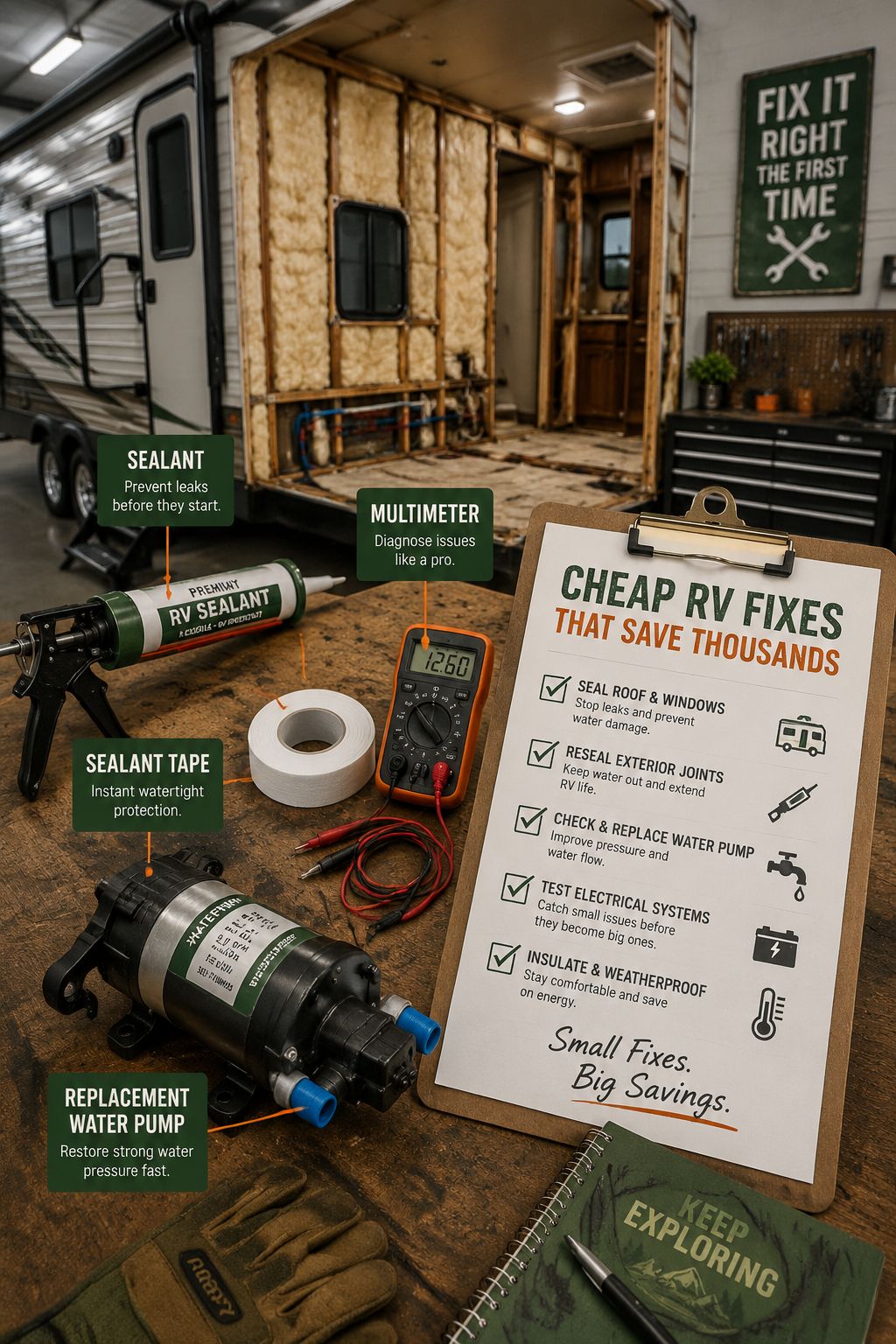
- 🔒 Re-seal roof and windows: $30–$100
- 🌬️ Dehumidifier + ventilation upgrade: $50–$150
Total fix cost: $310–$1,000 for minor cases
Pro tip: Surface water damage that has already dried is often a one-time event. Re-sealing the source (usually a roof seam or window) stops it for good. A tube of Dicor lap sealant costs about $10.
3. ⚡ RVs With Dead or Broken Electrical Systems
What it looks like: Lights don’t work, outlets are dead, the slideout won’t move, the battery is dead, or the solar setup is fried.
Why sellers drop the price: Anything with “electrical problems” scares most buyers. They imagine rewiring the whole RV. In reality, most RV electrical issues are simple and cheap.
Most common electrical problems (and their real cost):
- 🔋 Dead house battery: Replace for $80–$200
- 💡 Blown fuses or tripped breakers: Fix for $5–$20
- 🔌 Faulty shore power connection: Repair for $30–$100
- ☀️ Broken solar controller: Replace for $40–$150
- 🔧 Slideout motor issue: Repair or replace for $150–$400
Total fix cost: $80–$870 depending on the issue
What to check before buying:
- Ask the seller to plug it into shore power. Do the lights work then?
- Check the fuse panel. Are any fuses blown?
- Test the 12V outlets with a phone charger.
- Look at the battery terminals. Green corrosion = neglect, but easy to clean.
Fun fact: The #1 reason RV electrical systems “fail” is simply a dead battery or a blown fuse. These cost almost nothing to fix.
Best RV types for this deal:
- Older Class A motorhomes with simple 12V systems
- Travel trailers where the owner “never used the electric”
- Any RV listed as “needs work — electrical”
4. 🚿 RVs With Broken Appliances (Fridge, Furnace, Water Heater, AC)
What it looks like: The fridge doesn’t cool, the furnace won’t ignite, the water heater is dead, or the AC blows warm air.
Why sellers drop the price: A broken fridge or AC sounds like a dealbreaker. But RV appliances are surprisingly simple — and replacement parts are widely available.
The truth about RV appliances:
Most RV fridges, furnaces, and water heaters use the same basic parts. Many issues are caused by:
- Dirty burner orifices (clean with a toothpick — free!)
- Faulty igniter switches ($15–$40)
- Clogged propane lines ($0 — just blow them out)
- Tripped thermal fuses ($5–$15)
Common appliance fixes and costs:
| Appliance | Common Problem | Fix Cost |
|---|---|---|
| RV Refrigerator | Bad cooling unit | $200–$600 (or replace whole unit for $400–$900) |
| Propane Furnace | Dirty sail switch or igniter | $10–$60 |
| Water Heater | Anode rod or igniter failure | $10–$50 |
| Rooftop AC | Capacitor failure | $15–$40 |
| Stovetop | Clogged burner | $0–$20 |
Total fix cost: $10–$600 for most issues
Pro tip: YouTube is the best friend of any RV appliance fixer. Searching “[appliance model] not working fix” almost always brings up a step-by-step video. Many repairs take under an hour.
When to walk away:
- Absorption fridge with a cracked cooling unit AND a rusted frame = not worth it
- AC unit that’s more than 15 years old and needs a full compressor = replace the whole unit (~$700–$1,200)
5. 🛞 RVs With Tire, Brake, or Basic Mechanical Issues
What it looks like: Flat tires, cracked sidewalls, “drives rough,” “needs brake work,” or “been sitting for 2 years.”
Why sellers drop the price: Mechanical problems sound expensive. And sometimes they are. But many “mechanical” issues on RVs are basic maintenance items — not major repairs.
The difference between a cheap fix and a money pit:
✅ Cheap fixes:
- New tires: $100–$200 per tire (travel trailer) or $150–$300 per tire (motorhome)
- Brake pads and drums: $100–$300 (DIY)
- Wheel bearing repack: $30–$80 per wheel (DIY)
- Fresh oil and filters: $50–$100
- New belts and hoses: $50–$200
❌ Expensive problems to avoid:
- Cracked frame or chassis
- Transmission failure on a motorhome
- Engine with blown head gasket
- Severe rust on the undercarriage
How to spot the difference:
- Crawl under the RV and look at the frame. Surface rust is okay. Holes or cracks are not.
- Start the engine (if motorhome). Listen for knocking sounds.
- Check the tires for dry rot — cracks in the sidewall mean replacement is needed.
- Ask when it last had an oil change. If the seller doesn’t know, that’s a red flag.
Total fix cost for basic mechanical issues: $200–$1,200
Best RV types for this deal:
- Travel trailers that “have been sitting” — these often just need new tires and a bearing repack
- Class C motorhomes with high miles but good engines
- Fifth wheels with worn brake pads
Where to Find These Deals in 2026
Finding the 5 “Broken” RVs you can buy for pennies (and fix cheaply) is easier than ever. Here are the best places to look:
🔍 Top Sources for Cheap Fixer-Upper RVs
- Facebook Marketplace — Search “RV as-is” or “camper needs work.” Filter by price under $5,000.
- Craigslist — Still one of the best places for deeply discounted RVs from private sellers.
- RV Trader — Use the “private seller” filter and sort by lowest price.
- Copart & IAA Auctions — Insurance salvage auctions. Great for flood or hail-damaged RVs that need cosmetic work only.
- Local RV Dealers — Ask about trade-ins they don’t want to fix up. Many will sell cheap.
- Estate Sales — RVs that belonged to elderly owners are often well-maintained but may have sat unused.
- Storage Facility Auctions — Abandoned RVs sold for back-owed storage fees. Prices can be shockingly low.
Search terms that find the best deals:
- “RV as-is”
- “Camper fixer upper”
- “RV project”
- “Needs TLC”
- “Salvage title RV”
- “Non-running motorhome”
Quick Inspection Checklist Before Buying Any Fixer-Upper RV
Before handing over any money, run through this fast checklist:
✅ Exterior Check
- Roof seams sealed (no cracks or gaps)
- No soft spots when pressing on walls
- Tires have good sidewalls (no cracks)
- Slide-outs move smoothly
✅ Interior Check
- Floor is firm everywhere (no soft spots)
- No strong musty or mold smell
- All lights work on 12V
- Appliances turn on (even if they don’t work perfectly)
✅ Mechanical Check (Motorhomes)
- Engine starts and idles smoothly
- No smoke from exhaust
- Brakes feel firm
- No puddles under the vehicle
✅ Paperwork Check
- Clean title (or understand salvage title implications)
- VIN matches title
- No outstanding loans on the vehicle
How Much Can Someone Really Save?
Here’s a real-world example of what a smart fixer-upper purchase can look like:
The Deal:
- 2008 Class C motorhome listed for $4,500
- Problems: dead house battery, broken AC capacitor, faded exterior, stained carpet
The Fix:
- New AGM battery: $180
- New AC capacitor: $22
- Exterior polish and wax: $60
- New carpet tiles: $120
- Total repair cost: $382
Total investment: $4,882
Comparable working RV on the market: $18,000–$22,000
Money saved: $13,000–$17,000 🎉
Common Mistakes to Avoid
Even with the best intentions, fixer-upper RV buyers make mistakes. Here are the big ones to skip:
- ❌ Buying without an inspection — Always check in person. Photos hide a lot.
- ❌ Ignoring the smell — Mold and propane leaks are serious. Trust the nose.
- ❌ Skipping a moisture meter — A $20 tool can save thousands.
- ❌ Falling in love before checking the frame — A rusted frame is a dealbreaker.
- ❌ Overestimating DIY skills — Be honest about what can be done vs. what needs a pro.
- ❌ Forgetting hidden costs — Registration, insurance, campsite fees, and storage add up.
Conclusion: Start Small, Save Big
The 5 “Broken” RVs you can buy for pennies (and fix cheaply) — cosmetic damage, surface water damage, electrical issues, broken appliances, and basic mechanical problems — are all very real opportunities hiding in plain sight. Most sellers don’t know what their RV is actually worth after a simple fix, and that’s where the smart buyer wins.
Here are the actionable next steps to get started:
- Set a budget — Decide on a total number (purchase + repairs) before shopping.
- Pick a category — Choose the type of “broken” RV that matches skill level and comfort.
- Start searching — Open Facebook Marketplace or Craigslist today and search “RV as-is.”
- Download a repair cost list — Know what common fixes cost before making an offer.
- Bring a moisture meter — This $20 tool is the single best investment before buying.
- Negotiate hard — Sellers of fixer-uppers expect low offers. Make one.
- Join an RV repair community — Groups on Facebook and Reddit (r/GoRVing, r/vandwellers) are full of free advice.
The road is waiting. A dream RV doesn’t have to cost a fortune — it just has to be the right kind of “broken.” 🚐✨
References
- Camping World. (2022). RV Maintenance and Repair Guide. https://www.campingworld.com
- RV Industry Association. (2023). Annual RV Industry Report. https://www.rvia.org
- Dometic Group. (2021). RV Appliance Troubleshooting Manual. https://www.dometic.com
- Nada Guides. (2023). Used RV Values and Pricing Data. https://www.nadaguides.com
- Family Motor Coach Association. (2022). Buying a Used Motorhome: What to Know. https://www.fmca.com