Parking your RV for the season sounds simple, but tires don’t take a break just because your rig does. Sitting still for weeks or months puts stress on tires in ways that driving never does, and small mistakes during storage can turn into cracked sidewalls, flat spots, or blowouts the next time you hit the road.
The good news is that most tire damage from storage is completely avoidable once you know what to watch for.
Six storage habits cause most RV tire damage: wrong inflation, sun exposure, constant weight on one spot, bad ground conditions, uneven loading, and the wrong cleaning products. Fix these and your tires will come out of storage ready to roll instead of ready for the scrap pile. Each one is easy to correct once you know what’s going wrong.
1) Parking With Underinflated Tires and Skipping Pressure Checks
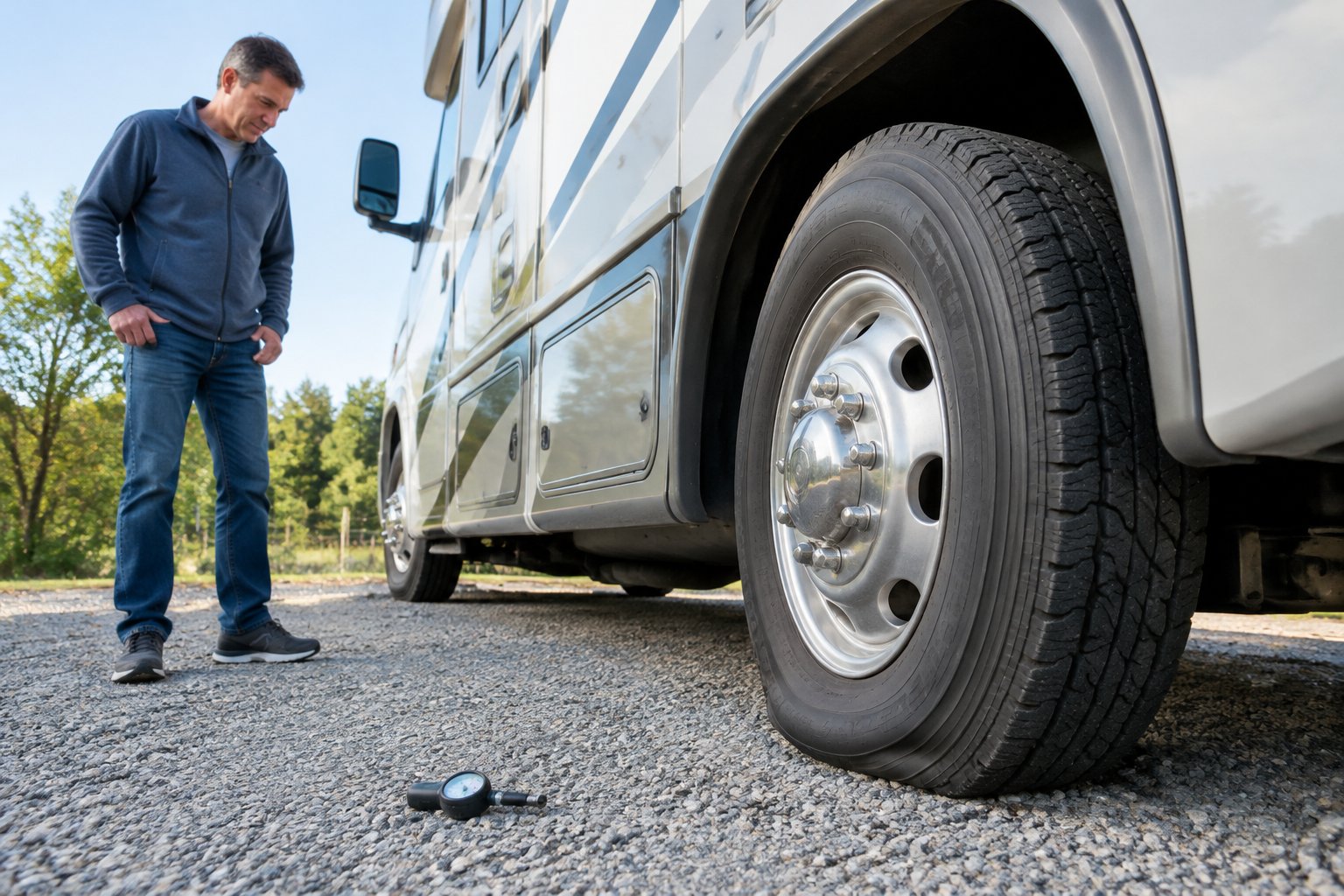
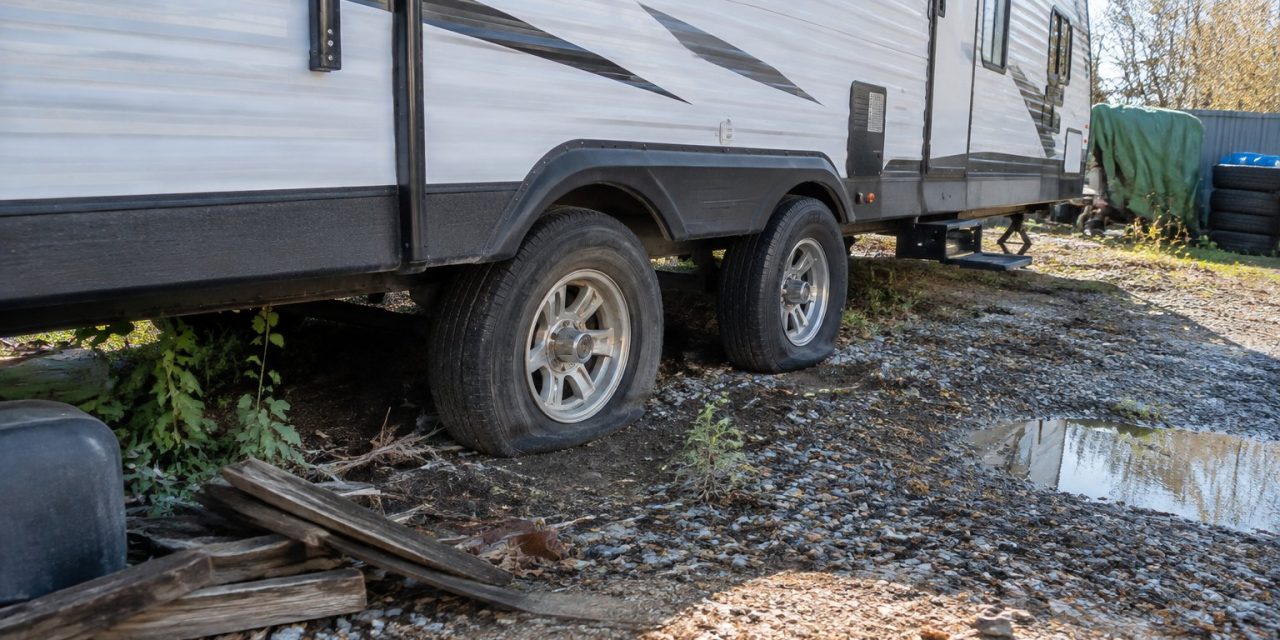
Underinflated tires sitting in storage carry weight they weren’t built to handle at that pressure, and the sidewalls pay the price. When a tire sits low on air for weeks, the sidewall flexes more than it should under the RV’s weight. That constant flex breaks down the rubber and internal cords, even if the RV never moves an inch.
Check your tire pressure right before you park the RV for storage, and set it to the number on the tire’s sidewall or your owner’s manual, not the number on the tire shop’s generic chart. Cold weather drops tire pressure fast, so a tire that read fine in October can be 10 PSI low by December.
Walk out and check pressure once a month during storage, even if the RV isn’t going anywhere. A tire gauge costs less than a fast food meal and takes thirty seconds to use. Skipping that check is one of the easiest ways to turn a good set of tires into an expensive replacement bill.
2) Leaving Tires Exposed to Direct Sunlight Without Covers
UV rays break down the rubber compounds in your tires and speed up dry rot, sometimes in a single storage season. Sunlight doesn’t just fade the rubber’s color. It actually breaks the chemical bonds that keep the rubber flexible, which leads to those small surface cracks you’ve probably seen on older tires.
Tire covers block that UV exposure and make a real difference over a few months of storage. Look for covers made specifically for RV tires, since they’re sized to fit snugly and won’t blow off in the wind.
If you store outdoors without covers, try to park so a building, tree line, or awning shades the tires for at least part of the day. Heat makes the problem worse. Dark pavement can push tire surface temperatures well above the air temperature on a sunny day, so parking on grass or gravel instead of asphalt helps too when covers aren’t an option.
3) Leaving the Same Tire Contact Patches Loaded for Months
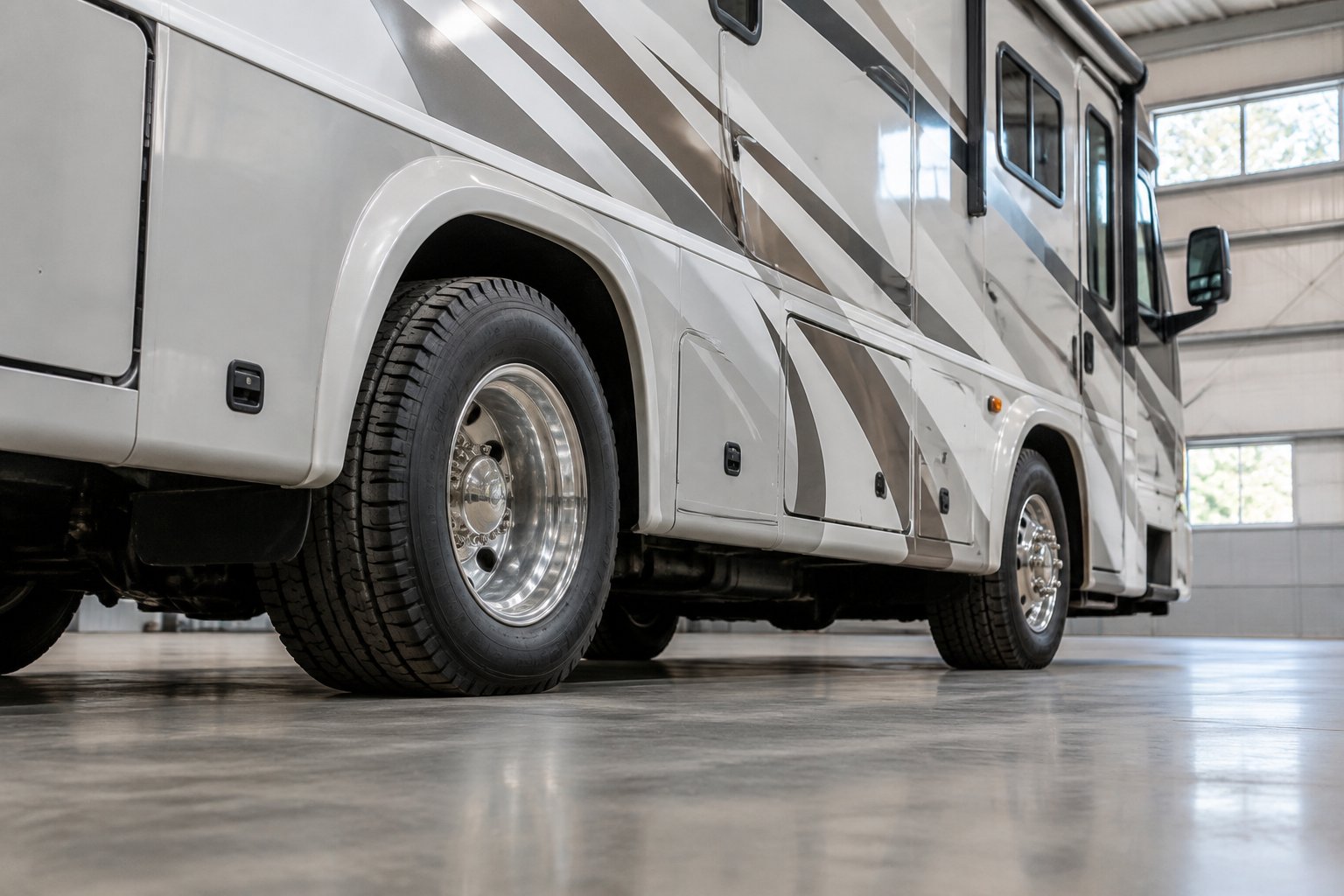
Flat spots form when the same section of rubber supports your RV’s full weight for weeks without moving. Think of it like leaving a heavy book on a cushion. The spot under the weight compresses and loses its shape, and tires behave the same way. The longer they sit, the harder it is for that flat spot to round back out.
Moving the RV a few feet every month shifts the weight onto a new section of each tire and prevents permanent flattening. If you can’t move the rig, tire cradles or leveling blocks distribute the weight across a wider area of rubber and reduce the pressure on any single spot.
Some RV owners jack up the rig slightly to take weight off the tires entirely during long-term storage, though this only works if you have sturdy, rated jack stands built for the job. Short-term flat spots from a few weeks of parking often work themselves out once you’re back on the road. Flat spots from months of sitting in one position can turn into a permanent wobble that no amount of driving will fix.
4) Parking on Soft, Uneven, or Oil-Contaminated Ground
Ground conditions affect your tires just as much as weather does, and soft or uneven surfaces put uneven stress on the rubber. Dirt and grass hold moisture, and that moisture creeps into tiny cracks in the tire surface over time. Gravel lots can shift under the weight of an RV, tilting the rig slightly and loading one side of each tire more than the other.
Concrete and asphalt seem like solid choices, but they come with their own risks. Oil, gas, or antifreeze stains on old pavement can soak into rubber and cause it to swell or soften.
If you’re storing at a shared lot, check the ground for stains before you park. Plywood sheets, tire mats, or leveling pads placed under each tire create a flat, dry barrier between the rubber and the ground. This simple step blocks moisture, spreads weight more evenly, and keeps contaminants away from the tire surface.
5) Storing the RV With Overloaded Axles or Uneven Side-to-Side Weight
Uneven weight distribution forces some tires to carry more load than they’re rated for while others barely work at all. Many RVers leave full water tanks, loaded cargo bays, or heavy gear onboard during storage without thinking about how that weight sits on the axles.
Before you park for the season, empty your fresh water tank and clear out anything you don’t need stored in the rig. Check that gear in basement compartments is balanced from side to side instead of piled on one end.
An RV that leans even slightly to one side puts extra strain on the tires underneath the heavier side, and that strain adds up over months of storage. If your RV has a GVWR sticker or axle weight ratings posted near the frame, use those numbers as your guide. Tires rated for a specific load range start to break down faster when they carry more weight than the manufacturer intended, flat spots and sidewall stress included.
6) Applying Petroleum-Based Dressings or Using Harsh Tire Cleaners
That shiny tire dressing might look great for a weekend, but many petroleum-based formulas actually speed up rubber breakdown during storage. Dressings with alcohol or petroleum distillates strip natural oils out of the rubber compound, which leaves tires more prone to cracking even though they look glossy and new.
Harsh degreasers and some all-purpose cleaners cause similar damage when sprayed directly on tires and left to sit. Look for cleaning products labeled safe for rubber, and stick to a simple soap and water rinse before storage if you’re not sure what’s in a product.
Skip dressing tires right before storage altogether. If you want that fresh look, apply a water-based, non-petroleum protectant a few days before your next trip instead, after the RV has been through a full storage cycle.
How to Check Stored Tires Before Your Next Trip
Give every tire a full visual and pressure check before your first trip out of storage, since problems that start during storage often aren’t visible until you look closely. Walk around the RV and check each tire for cracks, bulges, flat spots, and correct pressure before you tow or drive anywhere.
What Do Tire Date Codes Tell You About Age?
The last four digits of the DOT code on your tire’s sidewall tell you the week and year it was made. A code ending in 2320, for example, means the tire was manufactured in the 23rd week of 2020.
Most tire manufacturers recommend replacing RV tires once they hit 5 to 7 years old, regardless of how much tread is left, since rubber compounds degrade with age even when a tire looks fine on the surface.
Which Cracks, Bulges, or Pressure Losses Need Professional Inspection?
Any bulge in the sidewall means the internal structure of the tire has been compromised and needs a mechanic’s eyes right away. Small surface cracks in the tread grooves are common on older tires and worth monitoring, but deep cracks that run into the sidewall signal advanced dry rot.
A tire that loses more than a few PSI over a week without a clear cause (like cold weather) could have a slow leak that needs a shop to track down.
When Should You Replace Tires Despite Good Tread Depth?
Tread depth doesn’t tell the whole story, and age-related rubber breakdown can make a tire unsafe long before the tread wears down. A tire with plenty of tread but a manufacture date older than 7 years has likely lost much of its original flexibility and strength.
RVs often sit for long stretches between trips, so tires can reach the end of their safe service life based on calendar age well before they rack up the mileage that would wear down the tread on a daily-driven car.