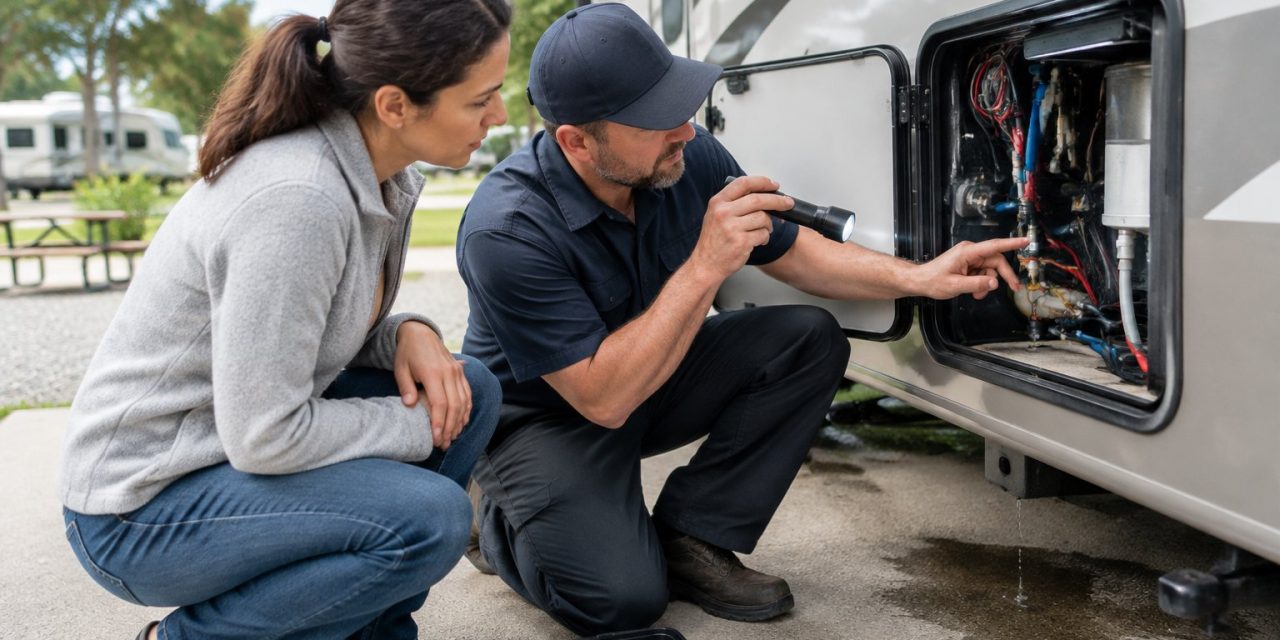
Your RV warranty is only as good as the care you give your rig. Manufacturers write their warranties with specific conditions attached, and skipping routine upkeep or making the wrong change to your RV can give them a clean reason to deny a claim. Most owners do not find out their warranty has a gap until something breaks and the repair bill lands on their desk.
The good news is that most warranty-voiding mistakes are easy to spot once you know what to look for. Sticking to your manufacturer’s maintenance schedule, respecting weight and towing limits, and using only approved parts and chemicals keeps most RV warranties intact.
The mistakes below cover the chassis, the roof, the plumbing, the electrical system, and the small decisions that add up over a camping season. Catching them early saves you money and keeps your coverage working the way it should.
1) Skipping Manufacturer-Required Oil Changes and Scheduled Maintenance
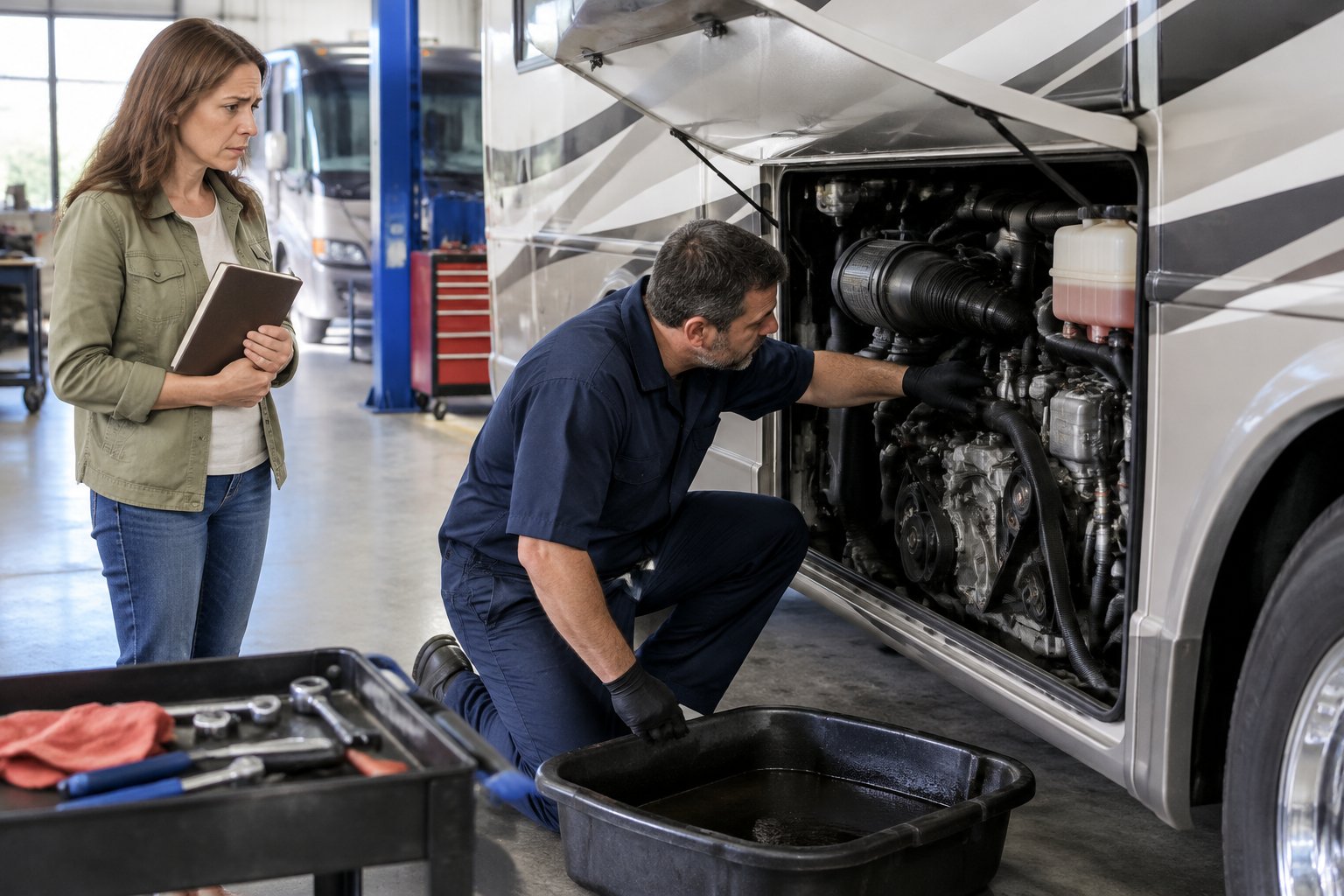
Skipping an oil change or a scheduled service appointment gives a manufacturer grounds to deny a claim tied to engine or drivetrain failure. Every RV with a motor, whether it’s a Class A, Class C, or a towable with onboard systems, comes with a maintenance schedule in the owner’s manual. That schedule spells out when to change the oil, inspect belts, flush coolant, and check the transmission fluid.
Manufacturers do not require you to use their dealership for this work, but they do require proof it happened on schedule. Keep every receipt, even from an independent mechanic or a quick-lube shop, and note the mileage and date on each one. A shoebox full of receipts might look old-fashioned, but it has saved plenty of RV owners from a denied claim.
Set a reminder on your phone tied to mileage, not just the calendar, since RVs often sit unused for months and then rack up miles fast during a road trip.
2) Ignoring Roof Sealant Inspections and Letting Leaks Spread
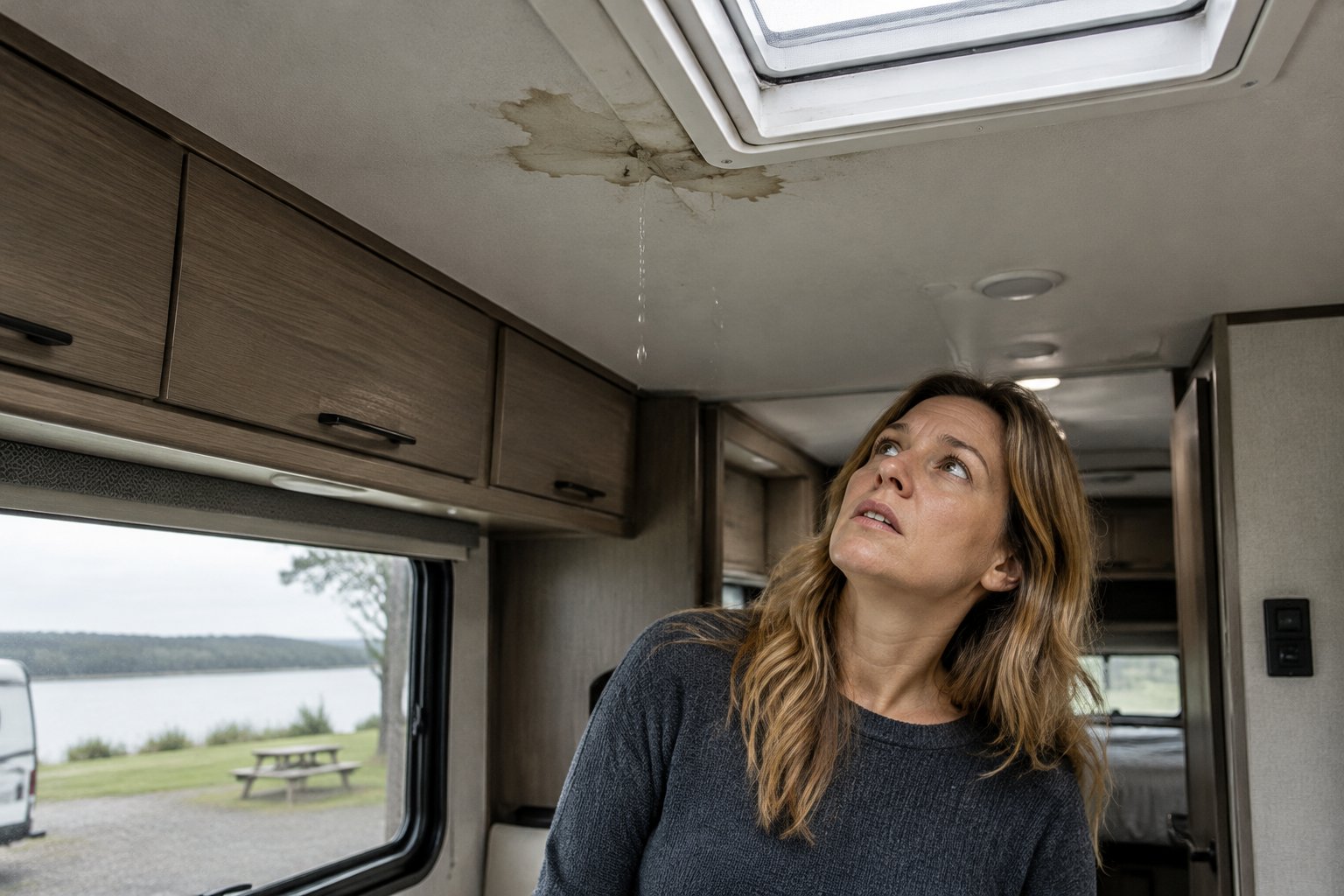
Letting roof sealant crack or wear down without inspection is one of the fastest ways to turn a small warranty claim into a denied one. Water damage spreads quietly behind walls and under flooring, and by the time you spot a stain on the ceiling, the damage has often been building for months. Most manufacturers require seasonal roof inspections, usually twice a year, and they expect you to reseal around vents, skylights, and seams as soon as cracks appear.
Insurance adjusters and warranty reviewers can often tell the difference between sudden storm damage and slow-building neglect. Once a manufacturer determines a leak went unaddressed for an extended period, they can point to delayed maintenance as the cause of interior damage rather than a manufacturing defect.
Walk your roof with a flashlight and a tube of compatible sealant at the start and end of camping season. Check every seam, every screw head, and every spot where an antenna or AC unit pokes through.
3) Installing Solar Panels, Inverters, or Other Upgrades That Damage Covered Components
Adding solar panels, an upgraded inverter, or other aftermarket electrical gear can void coverage on any component the installation touches or damages. Drilling new holes in the roof for solar mounts, rewiring the battery compartment, or tying an inverter into the existing electrical panel are common upgrades among RV owners who want more power off-grid. The problem comes when the installation is not done to the manufacturer’s specifications or by someone unfamiliar with that RV’s wiring layout.
If a poorly sealed roof penetration leads to a leak, or a miswired inverter damages the converter, the manufacturer can deny the claim for that system and sometimes for related components nearby. Before any upgrade, check your warranty booklet for language about aftermarket modifications. Many manufacturers allow upgrades as long as a qualified installer does the work and you keep documentation of exactly what was changed. That paperwork becomes your proof if a question ever comes up about what caused a later problem.
4) Exceeding Your RV’s Weight Ratings or Towing Limits
Loading your RV beyond its rated weight limits puts stress on the frame, suspension, axles, and tires that can trigger a warranty denial. Every RV has a Gross Vehicle Weight Rating (GVWR), a Gross Combination Weight Rating (GCWR), and axle weight ratings posted on a sticker, usually near the driver’s door or inside a cabinet. These numbers account for passengers, water tanks, propane, gear, and everything else you load in before a trip.
Overloading does not always show up right away. A bent frame, a blown axle seal, or premature suspension wear can take weeks or months to surface, and manufacturers can trace those failures back to a weight violation using data from the failure point and your RV’s rated capacity. Full-time RVers and weekend campers both tend to underestimate how fast gear, food, and water add up.
Get your rig weighed at a certified scale (many truck stops offer this) at least once a year, especially after buying new furniture, adding a generator, or changing your packing habits.
5) Failing to Winterize Water Lines, Tanks, and the Water Heater
Leaving water in your lines, tanks, or water heater before freezing temperatures hit is one of the most preventable ways to void a warranty. Water expands when it freezes, and that expansion cracks pipes, splits fittings, and ruins water heater tanks from the inside out. Manufacturers treat freeze damage as an owner responsibility, not a product defect, since the fix is well known and described in every owner’s manual.
Winterizing means draining the freshwater tank, blowing out the lines with compressed air, bypassing the water heater, and adding RV antifreeze to traps and low points. If you store your RV somewhere that dips below freezing, even for a single cold snap in fall, winterize before that first freeze rather than waiting for a hard freeze warning. Plenty of RV owners learn this the hard way after an early cold front catches them off guard before their planned winterizing weekend.
6) Connecting Shore Power to an Incorrectly Wired or Incompatible Supply
Plugging into shore power that is wired incorrectly or does not match your RV’s electrical system can fry your converter, appliances, and electrical panel in seconds. This happens more often at older campgrounds, private properties, or homes with outdated wiring than most owners expect. Reverse polarity, an open ground, or voltage that runs too high or too low can send damaging current through your RV’s entire electrical system.
Manufacturers generally will not cover damage caused by a bad power source, since it falls outside the RV’s own components and workmanship. A simple polarity tester, the kind that plugs into any outlet and lights up to show wiring problems, costs very little and takes seconds to use before you connect your shore power cord. Many experienced RVers test every new site automatically, even ones they have used before, since wiring can change after electrical work or storm repairs.
7) Driving on Underinflated or Overloaded RV Tires
Driving on tires that are underinflated or carrying more weight than they are rated for causes blowouts, and manufacturers routinely deny claims tied to tire-related damage when inflation or load was the cause. Underinflated tires flex more than they should, building up heat that weakens the rubber from the inside. That heat buildup is a leading cause of tread separation and blowouts on RVs, especially during long highway drives in summer.
Check tire pressure cold, before you drive, using the number listed on the tire’s sidecall or your RV’s weight-specific inflation chart rather than a generic guess. A tire pressure monitoring system (TPMS) gives you a real-time read while driving and can catch a slow leak before it becomes a blowout. If a blown tire damages your wheel well, siding, or undercarriage wiring, a manufacturer can trace that damage back to tire condition and deny the related claim.
8) Running the Generator Outside Its Operating and Load Limits
Running your generator above its rated load or ignoring its operating guidelines puts direct stress on the unit and anything connected to it. Every generator has a maximum wattage output, and plugging in too many high-draw appliances at once (an air conditioner, a microwave, and a coffee maker running together, for example) can overload the system and trip or damage internal components.
Altitude and temperature also affect generator performance. Running a generator at high elevation without adjusting for reduced output, or running it in extreme heat without proper airflow around the unit, can cause it to overheat or run less efficiently than it should. Manufacturers typically specify break-in procedures for new generators too, and skipping that process can affect coverage on internal engine components.
Check your generator’s rated wattage against your actual appliance load before a trip, and give it space to vent properly when it is running.
9) Sanitizing the Freshwater System With Chemicals Your Manufacturer Prohibits
Using the wrong chemical to sanitize your freshwater tank can degrade seals, fittings, and tank material in ways your manufacturer won’t cover. Bleach is a common sanitizing method, but not every RV manufacturer approves it. Some tanks and fittings react poorly to bleach over repeated use, leading to cracks, discoloration, or seal failure that shows up months after the sanitizing was done.
Your owner’s manual will tell you exactly which sanitizing method your manufacturer recommends and which ones to avoid. Some brands specify a particular concentration of bleach and a required rinse cycle, while others point you toward a different sanitizing product entirely. Before you sanitize your tank for the season, check that section of your manual rather than relying on general advice from a forum or a fellow camper, since tank materials vary between manufacturers and even between models from the same brand.
What an RV Warranty Denial Actually Means
A warranty denial means the manufacturer has decided a specific repair falls outside what they agreed to cover, not that your entire warranty is gone. Denials usually come with a written explanation citing a specific cause, like deferred maintenance, an unapproved modification, or damage linked to misuse. Reading that explanation carefully tells you exactly what the manufacturer believes went wrong and whether you have grounds to push back.
Does One Mistake Void the Entire Warranty?
One mistake typically affects only the system or component connected to that mistake, not every part of your RV. If a bad shore power connection fries your electrical panel, the manufacturer will likely deny claims tied to electrical components while leaving your plumbing, appliances, and structural warranty intact. Manufacturers have to show a direct link between the mistake and the specific failure, so a skipped oil change usually won’t affect an unrelated roof leak claim.
How Do RV, Chassis, and Appliance Warranties Differ?
Your RV actually comes with several separate warranties, each covering a different part of the rig and often backed by a different company. The RV manufacturer typically covers the structure, interior systems, and workmanship. The chassis (the engine, transmission, and drivetrain on motorized RVs) is usually covered by the chassis manufacturer, like Ford or Freightliner, under its own separate warranty. Appliances such as the refrigerator, water heater, and air conditioner often carry warranties from their original manufacturers, such as Dometic or Suburban, independent of the RV builder.
This matters because a mistake that affects one warranty does not automatically affect the others. A missed appliance maintenance step might only put your appliance warranty at risk, while your chassis warranty through Ford stays fully intact.
How Do Warranty Terms and Consumer Protections Affect Coverage?
Your written warranty document sets the specific terms, conditions, and time limits that apply to your RV, and federal consumer protection law adds a baseline of fairness around how those warranties are enforced. The Magnuson-Moss Warranty Act requires manufacturers to clearly state warranty terms and prevents them from denying a claim without connecting it to an actual cause tied to your conduct or a defect. Review your warranty booklet’s specific exclusions since terms vary by manufacturer and even by model year.
How to Handle a Disputed RV Warranty Claim
What Should You Request in a Written Denial?
Ask the manufacturer or dealer for a written explanation that states the specific reason for the denial and references the exact warranty clause they are relying on. A verbal denial over the phone gives you nothing to work with if you decide to appeal. Once you have it in writing, you can compare their stated reason against your own maintenance records and the warranty’s actual language to see whether the denial holds up.
Which Documents Help Support Your Claim?
Maintenance receipts, service records, photos of your RV’s condition, and any communication with the manufacturer all strengthen a disputed claim. Keep records organized by date and system (engine, roof, plumbing, electrical) so you can quickly pull up proof that you followed the required maintenance schedule for the specific component in question.
If you had a professional perform an upgrade or repair, their invoice showing the work was done to specification can counter a manufacturer’s claim that an unauthorized modification caused the failure.
When Should You Escalate to the Manufacturer or Seek Outside Help?
Escalate past your local dealer to the manufacturer’s customer service or warranty department when the dealer’s answer feels final but your documentation contradicts their reasoning. Many manufacturers have a formal appeals process separate from the dealership level, and a written appeal with your supporting documents attached often gets a second look from someone with more authority to reverse a decision.
If that escalation doesn’t resolve things, your state’s consumer protection office or a consumer arbitration program (some manufacturers participate in programs like BBB AUTO LINE) can review the dispute. Keep copies of everything you send and every response you receive throughout the process.