Shopping for a used RV can feel exciting until you find out the unit you love has a known defect that will drain your wallet. Some models carry recall issues that never got fixed, while others have a history of water damage, electrical glitches, or slide-outs that quit working. Knowing which used RV models to avoid right now can save you thousands of dollars and a lot of headaches on the road.
This guide covers six used RV models that deserve extra scrutiny before you sign any paperwork. Each one has a specific, documented problem tied to it, not just a bad reputation. You’ll also find tips on how to inspect any used RV and where to look for a better buy instead.
Quick picks:
- Worst for safety risk: Monaco Cayman with unreplaced recall-affected trailing arms
- Worst for brake reliability: Fleetwood Southwind with an unresolved Workhorse brake recall
- Worst for livability: Thor Palazzo with recurring slide-out failures
- Worst for electrical trouble: Roadtrek Zion with a malfunctioning EcoTrek system
1) Monaco Cayman With Unreplaced Recall-Affected Trailing Arms
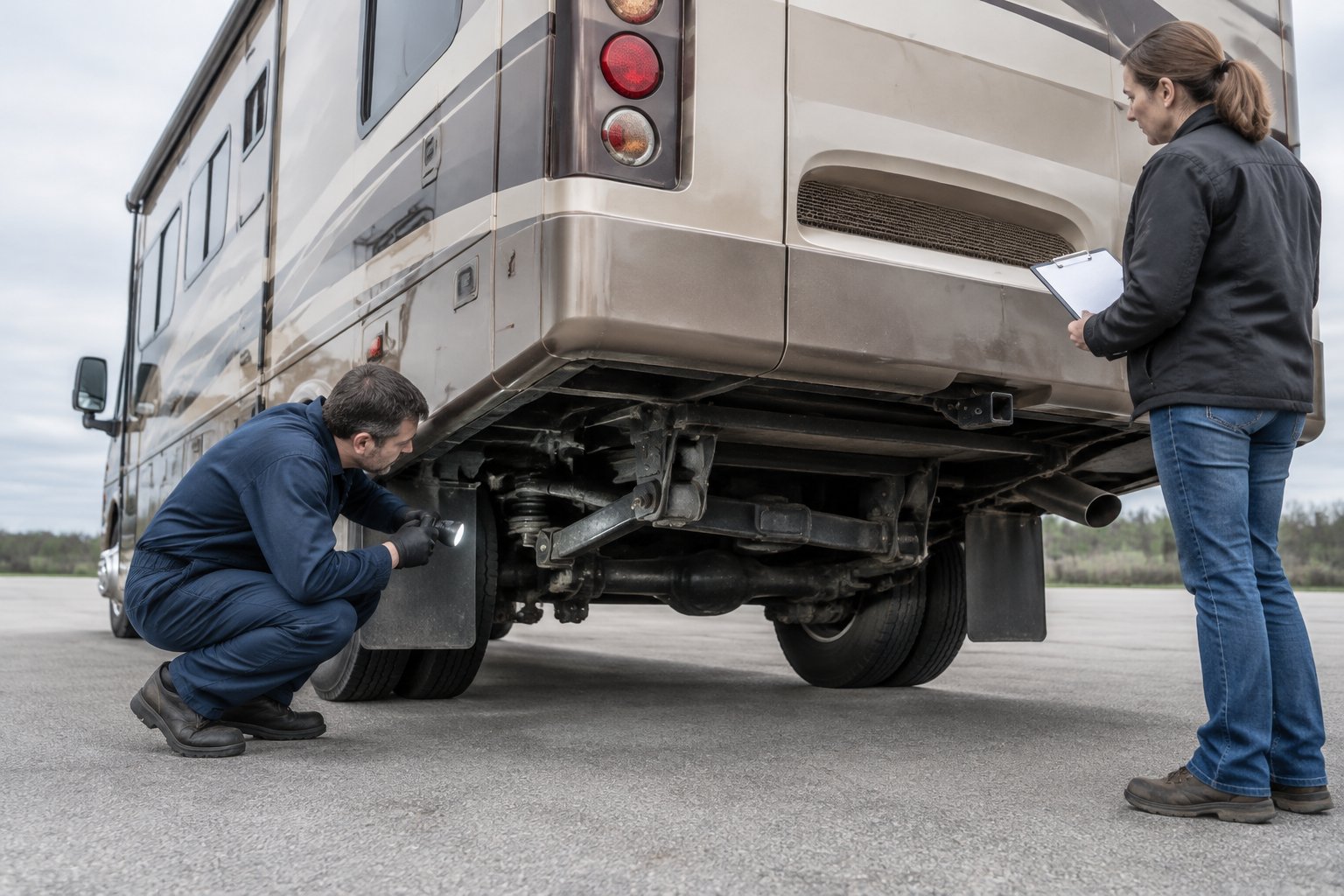
A Monaco Cayman with unreplaced trailing arms is a safety risk you should walk away from. The trailing arms connect the rear suspension to the chassis, and a known recall covers certain Cayman model years where these parts can crack or fail. A failure at highway speed can cause the rear of the coach to sag or lose control.
The tricky part is that many sellers do not know their coach is still under this open recall. A Cayman that looks clean and drives fine on a test lot can still have the original trailing arms installed. Ask the seller for the VIN and run it through the manufacturer’s recall lookup before you get attached to the unit.
If the recall work was done, request the paperwork or invoice showing the replacement parts and date. A coach with no proof of the repair should drop to the bottom of your list, no matter how good the price looks.
2) Fleetwood Southwind With an Unresolved Workhorse Brake Recall
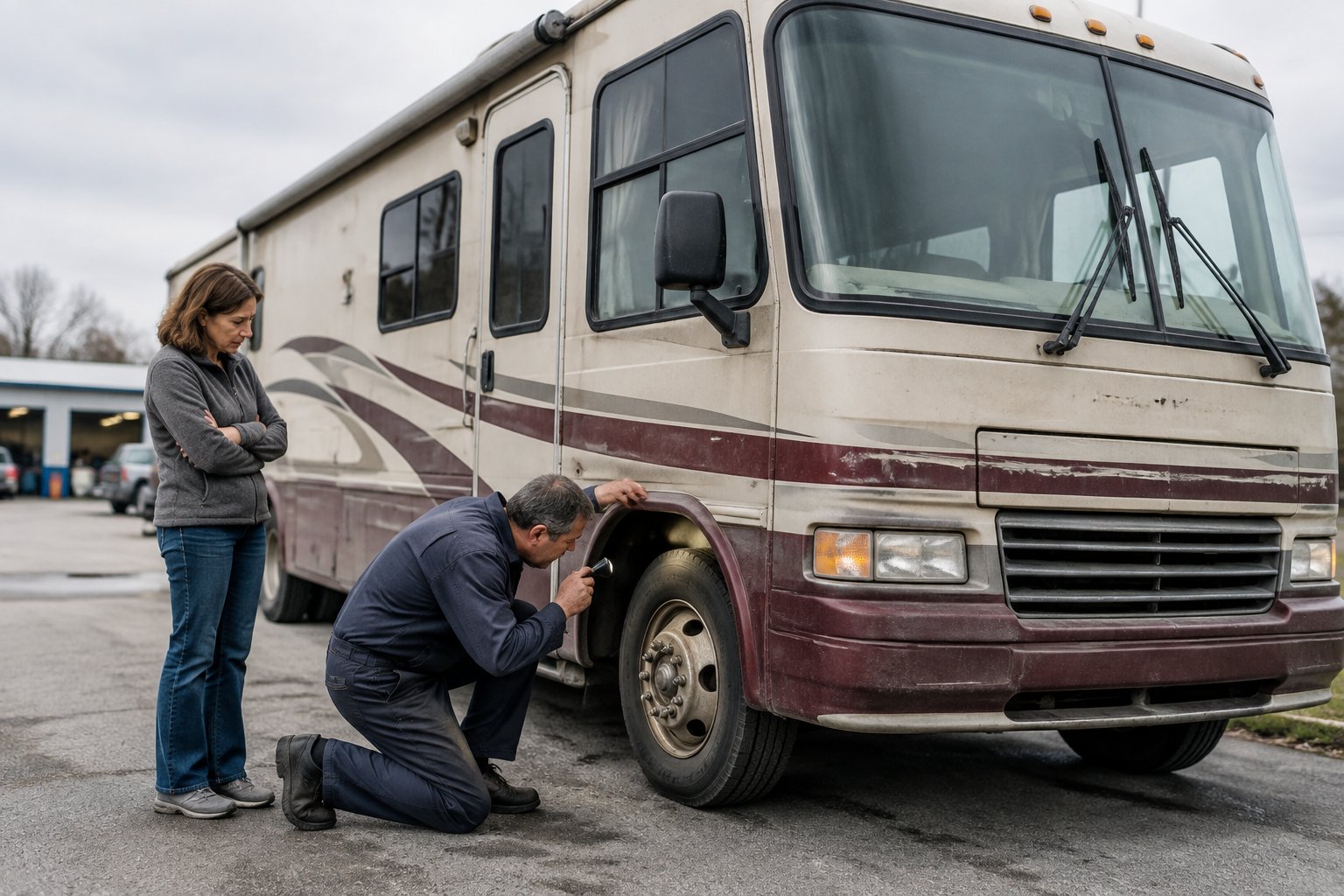
Brake failure on a 30-foot motorhome is not a problem you want to discover at a stoplight. Certain Fleetwood Southwind units built on Workhorse chassis were tied to a recall involving brake components that can wear out faster than expected or fail to provide full stopping power. This is not a minor inconvenience; it’s a safety defect that affects how the coach stops.
Many of these Southwinds are now 15 to 20 years old, which means the original owner may have sold the rig multiple times without ever handling the recall. Each new owner might assume the last one took care of it. Before you buy, pull the chassis VIN (separate from the coach VIN) and check it against Workhorse’s recall records.
If a seller can’t produce a receipt for the brake work, have a mechanic inspect the brake lines and master cylinder before you drive it home, let alone take it on a long trip.
3) Thor Palazzo With Recurring, Unresolved Slide-Out Problems
The Thor Palazzo has a pattern of slide-out failures that keep coming back even after repairs. Owners report slide mechanisms that stick, grind, or stop moving entirely, sometimes stranding the slide in the open position. On a diesel pusher this size, a broken slide is not a cosmetic issue.
It can block exits, let in water, or leave you unable to close up the coach for travel. What makes this one tricky is that the problem often returns after a shop fixes it once. A gear or motor gets replaced, the slide works for a few months, and then the same symptoms show up again.
If you’re looking at a used Palazzo, ask to see the slide extend and retract several times in a row, not just once. Listen for grinding noises and watch for uneven movement on one side. A seller who seems nervous about running the slide more than once is telling you something.
4) Roadtrek Zion With a Malfunctioning EcoTrek Electrical System
The Roadtrek Zion’s EcoTrek electrical system has a history of malfunctions that leave owners without power to lights, outlets, or the water pump. EcoTrek was built to manage battery charging and power distribution in a compact Class B van, but when it glitches, it can shut down systems you need for basic camping, like the fridge or interior lighting.
Diagnosing EcoTrek problems is not simple, either. The system ties into several components at once, so a single fault code can point to a battery, an inverter, or a control board. Repair shops outside the Roadtrek dealer network sometimes struggle to source parts or get accurate diagnostic support.
If you’re set on a Zion, ask the seller to demonstrate the system running on battery power alone for at least 30 minutes, with the engine off and the van unplugged from shore power. Watch for dimming lights, error messages, or the system resetting on its own.
5) Keystone Springdale With Structural Water Damage
Water intrusion is the most common and most expensive problem reported in used Keystone Springdale travel trailers. Roof seams, window seals, and slide-out gaskets on the Springdale can let moisture in over time, and once water gets into the walls or subfloor, it spreads quietly before anyone notices a leak.
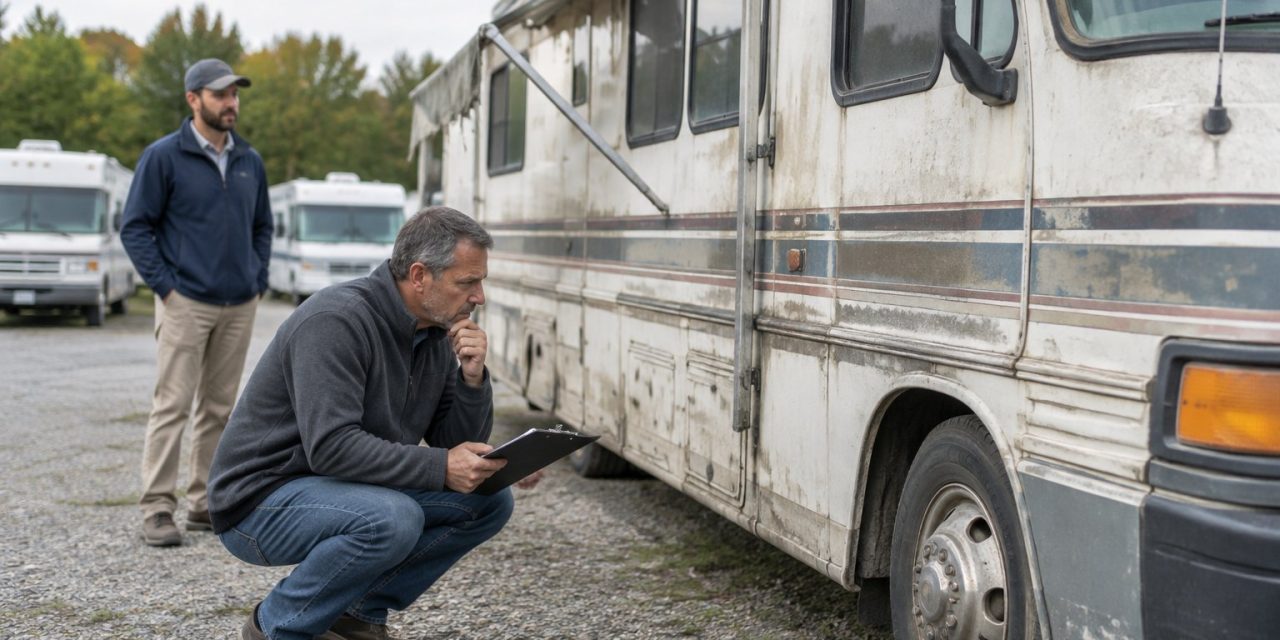
A Springdale with hidden water damage might look fine on a quick walkthrough. Soft spots often hide under carpet or linoleum, and discoloration on ceiling panels can be painted over before a sale. Press firmly on the floor near the entry door, bathroom, and slide-out edges, feeling for any give or sponginess.
Check the ceiling corners and around skylights for staining or bubbled wallpaper. A moisture meter, which many home inspectors and RV techs carry, gives a more exact reading than a visual check alone. Any trailer showing soft flooring or stained panels needs a full inspection before you make an offer, and the repair cost should factor heavily into your negotiation.
6) Jayco Jay Flight With Soft Floors or Wall Delamination
Soft floors and delaminated walls show up often enough in used Jayco Jay Flight trailers that buyers need to check for them every time. Delamination happens when the outer fiberglass skin separates from the wood or foam backing underneath, usually because water got trapped inside the wall. Once it starts, the wall can bow, ripple, or feel soft to the touch.
Older Jay Flight models, especially those from the mid-2000s through the early 2010s, are the ones most frequently flagged for this issue. Walk the exterior of the trailer in direct sunlight and look at the walls from a low angle; rippling or waviness is much easier to spot that way than straight on.
Run your hand along the lower edges near the wheel wells, where road spray and moisture collect over time. Inside, check the floor around the dinette and bathroom for soft spots. A Jay Flight with early signs of delamination is still fixable in many cases, but the repair involves cutting into the wall, which isn’t a cheap or quick job.
What Makes a Used RV Worth Avoiding?
A used RV is worth avoiding when it has unresolved safety recalls, repeated structural failures, or electrical and water damage that has not been properly repaired and documented. These are not matters of taste or brand loyalty; they’re measurable risks that show up in NHTSA recall data, owner complaint patterns, and repair histories. The six models above each have a specific, traceable issue rather than a vague reputation problem.
How Were These Models Selected and Ranked?
Each model on this list was chosen because it has a documented, specific defect tied to recalls, structural failure patterns, or electrical system complaints. The ranking favors safety-related issues first, since a brake or suspension defect poses more immediate risk than a cosmetic or comfort problem like a sticky slide-out. Models with widespread, repeated owner complaints about the same component were prioritized over units with isolated or one-off issues.
Why Do Model Year, Chassis, and Installed Equipment Matter?
The model year and chassis type determine whether a specific recall or defect even applies to the unit you’re looking at. A Fleetwood Southwind built on a Workhorse chassis carries a different risk profile than one built on a Freightliner chassis, even though both wear the Southwind name. The same logic applies to installed equipment: an RV with an aftermarket inverter or upgraded suspension component may have already addressed a factory weakness, while one with all original parts has not.
Always match the VIN, chassis type, and equipment list against the specific recall or issue you’re researching instead of relying on the model name alone.
When Does a Documented Repair Change the Recommendation?
A documented, verified repair can move a flagged model back into consideration. If a seller provides an invoice showing a trailing arm replacement, a brake system overhaul, or a full wall delamination repair with photos and dates, that unit is no longer carrying the same risk as one with no repair history. The key word is documented: a seller’s verbal assurance that “it’s been fixed” does not carry the same weight as a paid invoice, a warranty claim record, or a recall completion notice from the manufacturer.
Ask for paperwork every time, and treat a missing answer as a red flag rather than an oversight.
How to Check a Used RV Before Buying
Checking a used RV before buying starts with a VIN-based recall search, followed by a hands-on inspection and a review of maintenance records. Skipping any one of these three steps leaves you exposed to the exact problems covered in this guide. A thorough check takes a few hours but can prevent a repair bill that costs more than the RV itself.
How Do You Verify Chassis and Coach Recalls?
Verify recalls by running both the chassis VIN and the coach VIN through the manufacturer’s recall lookup tool and the National Highway Traffic Safety Administration’s database. Motorhomes often have two separate VINs: one for the chassis (built by Ford, Freightliner, or Workhorse) and one for the coach itself (built by Fleetwood, Thor, or Monaco). A search using only one VIN can miss an open recall tied to the other.
Write down both numbers from the title or the VIN plate before you search, and keep a screenshot of the results for your records.
What Should an Independent RV Inspection Cover?
An independent RV inspection should cover the roof, slide-out mechanisms, plumbing, electrical system, and structural integrity of the floor and walls. A certified RV inspector, someone trained through a program like the National RV Inspectors Association, knows where water tends to hide and how to test slide motors, battery systems, and propane lines safely.
Expect the inspector to run every slide-out multiple times, check the water heater and furnace for proper operation, and use a moisture meter on the walls and floor. Budget for this inspection before you budget for the RV itself; it typically costs far less than a single major repair.
Which Maintenance Records Should the Seller Provide?
The seller should provide records for oil changes, tire replacements, roof resealing, and any recall or warranty work completed on the unit. Ask specifically for the date and mileage (or engine hours) tied to each service. A seller who has kept a simple binder or digital folder of receipts is usually someone who has taken care of the RV in other ways too.
Gaps of several years with no records, especially on roof maintenance or slide-out servicing, are worth asking about directly.
How Do You Compare Repair Costs With the Asking Price?
Compare repair costs by getting a written estimate for any known issue and subtracting that number from the asking price before you make an offer. If a Springdale needs $4,000 in subfloor repair and the seller wants $12,000, your real offer should reflect an $8,000 value plus a margin for unknowns. Call a local RV repair shop or mobile RV tech for a rough estimate if you’re unsure what a fix costs; most will give you a ballpark over the phone with a description of the damage and a few photos.
How to Find a Better Used RV for Your Travels
Finding a better used RV starts with setting a firm budget, matching payload and towing capacity to your vehicle and travel style, and choosing a floor plan with fewer moving parts to break. These three filters eliminate most of the problem units before you ever step foot on a dealer lot.
What Should Buyers Under $25,000 Prioritize?
Buyers under $25,000 should prioritize mechanical and structural soundness over size or luxury features. At this price point, you’re often choosing between an older, well-maintained smaller trailer and a larger unit with hidden problems.
A compact travel trailer or truck camper with full maintenance records and no water damage is a safer bet than a bigger motorhome with an open recall and a questionable roof. Look for single-slide or no-slide layouts in this range, since fewer mechanical systems mean fewer things that can fail.
How Should You Match Payload and Towing Capacity to Your Plans?
Match payload and towing capacity by checking your tow vehicle’s rated towing capacity against the RV’s fully loaded weight, not just its dry weight. Dry weight numbers never include water, propane, gear, or passengers, so a trailer listed at 5,500 pounds dry can easily weigh 6,800 pounds or more once packed for a trip.
Check the door sticker on your truck or SUV for its exact towing and payload ratings, and leave at least 10 to 15 percent of buffer room below the maximum. Towing at or above the limit strains your transmission, brakes, and tires, even if the RV itself is in perfect shape.
When Is a Simpler Floor Plan the Better Buy?
A simpler floor plan is the better buy when you camp mostly in the same handful of spots or prioritize reliability over space. Fewer slide-outs mean fewer motors, gears, and seals that can fail, and a single-axle or lighter twin-axle trailer is easier to maneuver and store.
If your trips tend to be weekend getaways or short hauls rather than months-long travel, a smaller, simpler unit with a clean maintenance history will likely serve you better than a feature-packed model with a history of complaints.