So you’ve booked what looks like the perfect campground online. The website promised luxury amenities, modern facilities, and an unforgettable outdoor experience.
But when you arrive, you realize those “amazing features” are about as impressive as a participation trophy. From bathrooms that haven’t been updated since the dial-up era to Wi-Fi that only works if you stand on one leg, campgrounds have mastered the art of creative advertising.
Let’s expose the hilarious reality behind these so-called amenities that every camper secretly judges while pretending to enjoy.
Would you like to save this article?
1. “Rustic” Bathrooms (Translation: We Stopped Upgrading in 1999)
When a campground labels something as “rustic,” they’re really just admitting they haven’t touched the place since people were worried about Y2K. These bathrooms are essentially sheds with plumbing. The floor is mysteriously wet, nobody knows why, and nobody dares to investigate.
Every campground has that one cursed stall that everyone avoids like it’s haunted. The door won’t lock, the lights flicker ominously, and you’ll walk in, take one look, and whisper “nope” before backing away slowly.
The sinks are installed at the most bizarre heights too. You’re either standing there like you’re washing dishes at chest level or bending down like you’re watering a houseplant. And when someone fires up that industrial hair dryer? The entire bathroom sounds like a 747 preparing for takeoff, letting every camper within three sites know exactly what’s going down.
The Reality: According to the RV Industry Association’s Campground Market Analysis, clean bathroom facilities consistently rank as one of the top concerns for campers. Survey data shows that only 51% of private campsites offer full-service hookups, meaning you’ll be visiting these “rustic” facilities more often than you’d like.
2. The “Scenic Walking Trail” (AKA The Dumpster Tour)
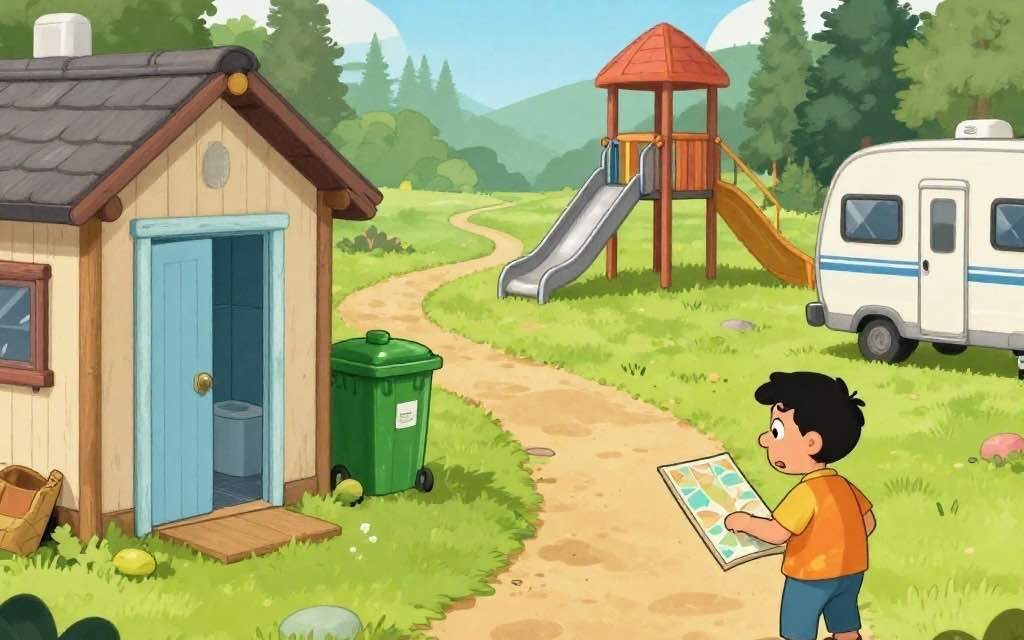
Campground websites love to advertise their scenic walking trails with beautiful photos of nature and happy families. They paint a picture of birds chirping, serene creeks, and peaceful forest vibes. Then you find the actual trailhead and discover it starts directly behind the dumpsters.
This isn’t a nature walk—it’s a muddy infrastructure tour where every step sounds like you’re walking through a swamp. Halfway through, you’ll realize the trail is just taking you around the backside of everyone’s RV hookups. Congratulations! You’ve just spent 20 minutes staring at the business end of campground plumbing.
And somehow, the trail always loops back to those same dumpsters where you started. The campground map made it look so promising with its little dotted lines and pine tree icons. But three-quarters of the hike is just you awkwardly glimpsing into people’s campsites.
The Reality: According to RV Lifestyle’s survey of over 1,000 campers, “more space between campsites” was the #1 most requested amenity. Privacy and natural buffers between sites matter way more than questionable walking trails.
3. Campground Maps That Make No Sense
Finding your campsite shouldn’t feel like solving a treasure hunt, but somehow it always does. The office hands you a map that looks like it was drawn during a minor earthquake, and they casually say, “Yeah, site 42 is super easy to find!”
It’s not easy to find.
You’ll drive around for 20 minutes like you’re stuck in a corn maze. The site numbers jump from 12, 13, 14 straight to 37. Where did sites 15-36 go? Were they evicted? Did they enter the witness protection program?
By your third lap past the same site, the guy sitting outside is now watching you like it’s entertainment. “Oh yeah, they’re lost,” he mutters to his wife while sipping his morning coffee. Eventually, you just have to commit to a random site and hope for the best. If someone shows up later claiming it’s theirs, you just act confused and say the map was unclear—which is 100% true.
The Reality: Clear signage and well-marked sites ranked high on campers’ must-have lists. RV Lifestyle members emphasized that confusing layouts and poorly maintained roads are major deal-breakers.
4. Campground Stores (Three Dusty Shelves and a Dream)
Some campgrounds advertise their on-site convenience stores like they’re fully stocked mini-marts where you can grab anything. In reality, you walk in and find three dusty shelves with random items that have been there since 2009.
The inventory consists of marshmallows from the Bush administration (the first one), a single lighter, and sunscreen that’s separated into three suspicious liquids. There’s always that one “Lake Life” t-shirt hanging on the wall, begging someone—anyone—to take it home.
And the snacks? Forget mainstream brands like Doritos. You’re getting off-brand cheese puffs and candy you’ve never heard of with names like “Choco-Blasts” or “Fruity Zingers.” It’s like walking into a snack dimension from an alternate universe.
The Reality: According to camper surveys, small camp stores with necessities (especially ice cream!) are appreciated, but overpriced or poorly stocked stores quickly become frustrations rather than conveniences.
5. “Free Wi-Fi” (That Only Works During a Full Moon)
This is perhaps the biggest lie in camping history. Every campground proudly advertises free Wi-Fi, and technically, sure, it exists—if you’re willing to stand directly in front of the office window, hold your phone at exactly 47 degrees, and whisper sweet encouragements to it.
On a good day, you might get one bar of signal. But it’ll disconnect the moment someone three sites over makes popcorn. If you’re actually trying to get work done or check the weather, good luck. You’ll be standing there like a statue, phone raised high, muttering “come on, just load the page.”
If you came camping specifically for the Wi-Fi, something went terribly wrong in your vacation planning process long before you arrived.
The Reality: 30% of RV park guests need high-speed Wi-Fi and are willing to pay extra for reliable service, according to Tengointernet. Yet many campgrounds still offer barely functional connections. The RV Industry Association found that Wi-Fi availability remains a major disparity between public and private campgrounds.
6. The “Playground” (Three Ancient Relics from 1974)
Campground websites showcase their playgrounds like they’re theme parks. Parents get excited thinking their kids can burn off energy while they relax. Then you walk over and find a metal slide that’s been baking in the sun since 1974, two swings, and a seesaw that nobody understands how to use anymore.
When you looked at the website photos, it seemed like a full-blown amusement park. But in person? That slide is so hot your kid could literally grill their legs going down it. They’ll slide down once and immediately regret every decision that led to that moment.
The equipment looks like it predates seat belts in cars. You’re half expecting a historical plaque explaining how children from the ’70s survived such dangerous play structures.
The Reality: According to the U.S. Consumer Product Safety Commission, playground surfaces should have at least 12 inches of protective material like wood chips or rubber mats. Many campground playgrounds fall short of modern safety standards.
7. “Lake Access” (A Questionable Dock and Hope)
Lake access sounds incredible when you’re booking. You imagine kayaking, swimming, and relaxing by beautiful water. What it actually means is a steep, aggressive slope that leads down to a dock held together by three screws, one rope, and sheer optimism.
On the campground map, they made it look like you’re arriving at Lake Tahoe. But when you get there, even the ducks are staying out of the water. You’ll stand at the edge, look at the murky surface, and think, “Yeah, maybe not today.”
That dock wobbles so much you’re convinced one strong breeze will send the whole thing floating away. Nobody’s swimming—everyone’s just standing around, silently agreeing that the water looks “a little skeptical.”
The Reality: Water amenities (pools, lakes, lazy rivers) are highly desired features. RV Lifestyle survey respondents specifically requested clean, well-maintained water access with proper facilities.
BONUS: “Hot Showers” (A Push-Button Panic Experience)
Let’s talk about campground showers for a moment. When you see “hot showers” listed as an amenity, it sounds luxurious. After a few days outdoors, you’re not just trying to get clean—you’re trying to rejoin civilization.
But campground showers are a very specific type of psychological torture. The hot water is controlled by a push-button system, and you’ve got about 7 seconds of water before it shuts off. You’re in there shampooing like you’re on a game show: “Go go go go GO!”
The water stops. You’re standing there covered in soap like a contestant who just lost. Now you have to run across the shower (usually naked) to slap that button again, then sprint back under the water before it stops. It’s basically shower whack-a-mole, and you’re losing.
The button is always positioned 6 feet away from the actual water stream, so you’re doing this awkward naked dash repeatedly while soap drips into places soap should never be.
The Reality: Push-button shower systems are designed to conserve water, but they’re universally despised by campers. Clean, functional bathhouses with reasonable shower facilities rank as top-tier must-haves in every camping survey.
The Bottom Line
Here’s the truth: campgrounds don’t need to advertise fake amenities. Nobody’s actually going camping for the scenic dumpster trail or the one-horseshoe pit. We’re going for the campfire, the fresh air, and the simple pleasure of sitting in a folding chair doing absolutely nothing—while secretly judging other people’s campsites from a safe distance.
The best campground amenity? Honest advertising and realistic expectations. When parks deliver what they promise (even if it’s basic), campers leave happy. But when they oversell rustic bathrooms as luxury facilities and call three shelves a convenience store, that’s when the online reviews get spicy.
So next time you’re browsing campground websites, read between the lines. “Rustic charm” means old. “Cozy sites” means cramped. And “scenic trail” probably ends at the dumpsters. But hey, at least you’ll have stories to tell around that campfire—assuming the free firewood ever actually lights.
SOURCES
- RV Industry Association – Campground Industry Market Analysis – https://www.rvia.org/news-insights/campground-industry-market-analysis-shows-need-more-campsites-amenities
- RV Lifestyle – 77 Must-Have RV Resort Amenities & RV Park Deal Breakers – https://rvlifestyle.com/rv-resort-amenities-and-deal-breakers/
- CampLife Software – Internet and Wi-Fi Solutions for RV Parks and Campgrounds – https://software.camplife.com/blog/internet-and-wi-fi-solutions-for-rv-parks-and-campgrounds
- U.S. Consumer Product Safety Commission – Public Playground Safety Handbook – https://www.cpsc.gov/s3fs-public/325.pdf
- KOA North American Camping Report 2026 – https://koa.com/north-american-camping-report/
.