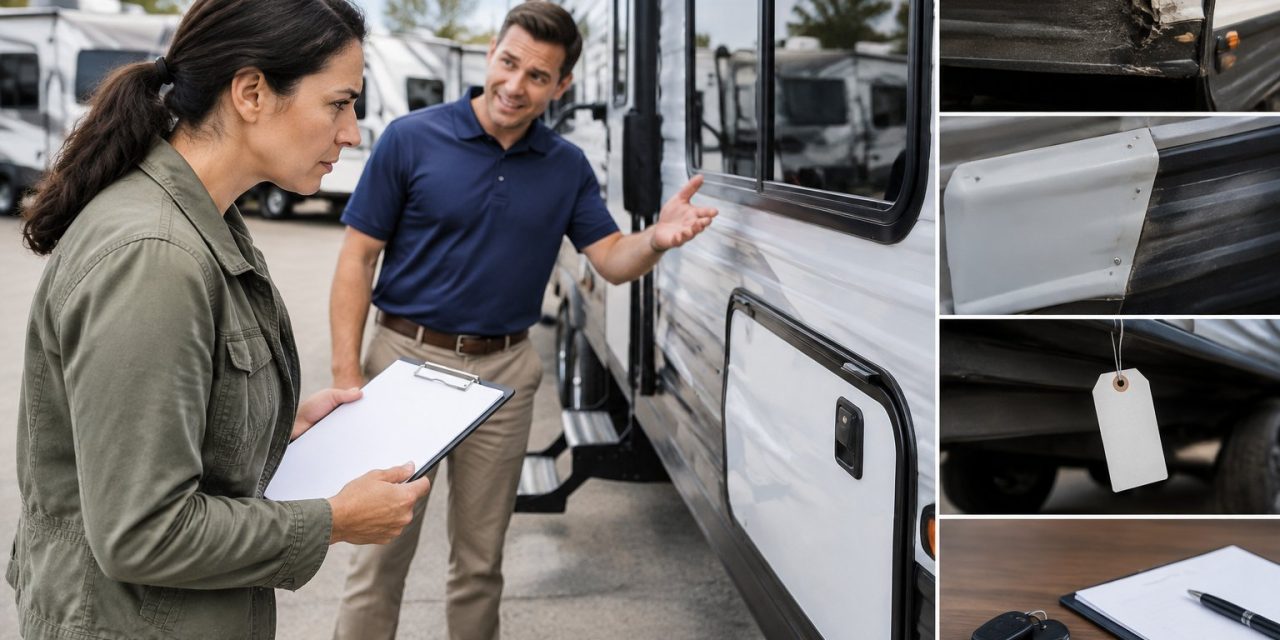
Most RV fraud comes down to one move: getting you to commit before you can verify anything. Dealers and sellers who count on a rushed, excited buyer rely on the same handful of tricks, and each one has a simple counter you can use on the lot.
The seven red flags below cover refused inspections, cosmetic cover-ups, paperwork mismatches, wire demands, hidden add-ons, vanishing promises, and fake urgency. Spot any one of them and you have a reason to slow down or walk away.
Most dealers are honest, and plenty of great RVs are for sale right now. Knowing these patterns just keeps you in charge of the deal, so you can enjoy the open road instead of a repair bill.
1) The Dealer Refuses an Independent RV Inspection
A seller who says no to a third-party inspection is telling you to walk away. An honest dealer has nothing to fear from a second set of eyes, and a certified inspector can come to the RV, so you never have to move it.
Watch for soft excuses: “our techs already checked it,” “there’s another buyer tomorrow,” or “inspectors just nitpick.” Each one is a way to keep you from finding leaks, rotted floors, or failing slideouts before you sign.
Hire an RVIA-certified inspector who works for you, not the lot. If you lose the deal because of the request, you lose one RV out of thousands for sale.
2) Fresh Wall Panels and Rugs Conceal Water Damage
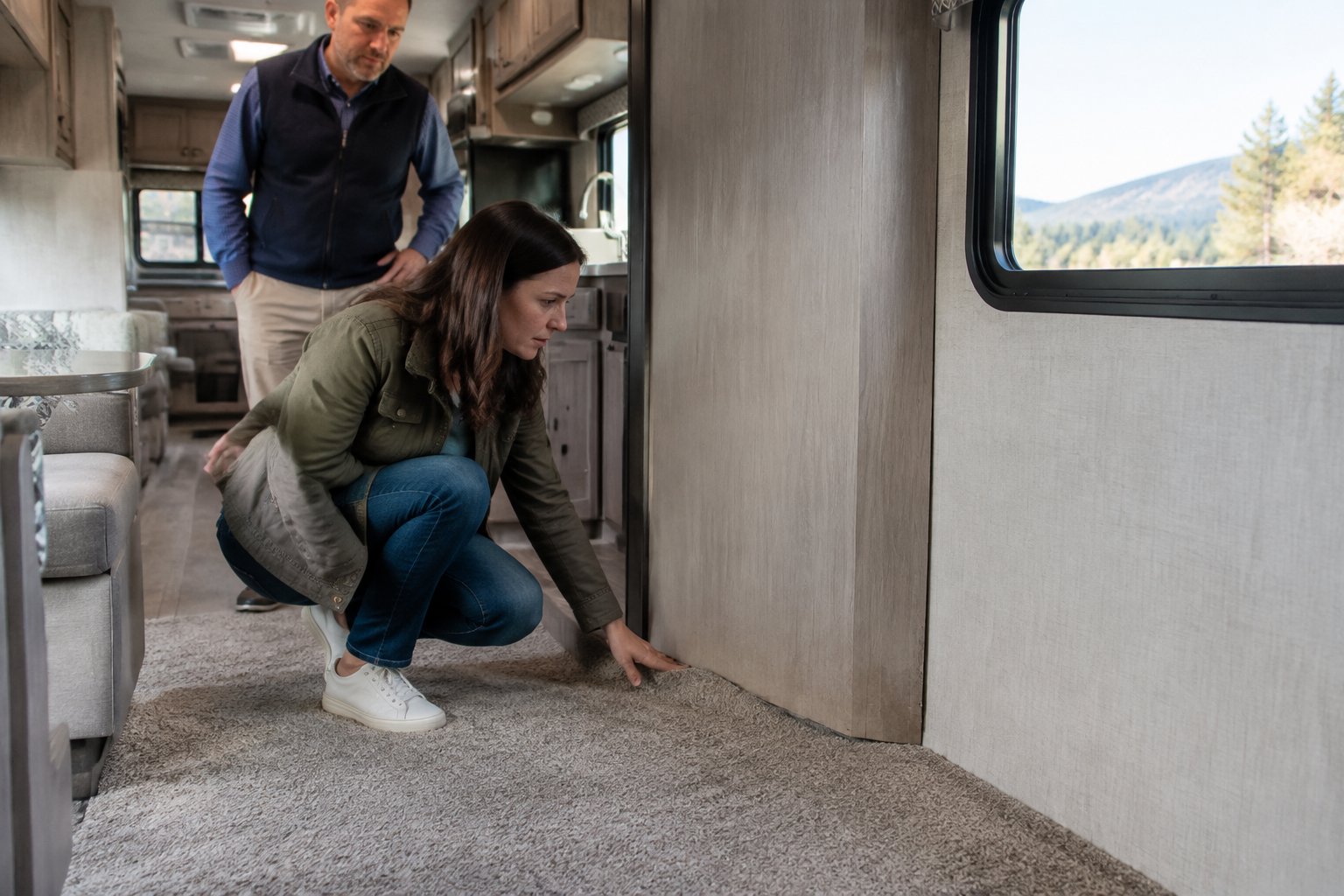
Brand-new paneling, fresh paint, or a strategically placed rug can hide soft spots where water has been rotting the structure. Sellers sometimes use area rugs, furniture, or freshly installed wall panels to cover spongy floors and walls.
Press firmly along floors, around windows, and near roof seams. Lift the rug. Ask why the interior was redone, especially in an older unit where original finishes are normal.
A musty smell, bubbles or waves in the exterior sidewall, or fresh white caulk over every seam all point to a hidden leak. Soft floors can cost more to repair than the RV is worth, so treat multiple soft areas as a dealbreaker.
3) The RV’s VIN, Title, and Ownership Records Don’t Match
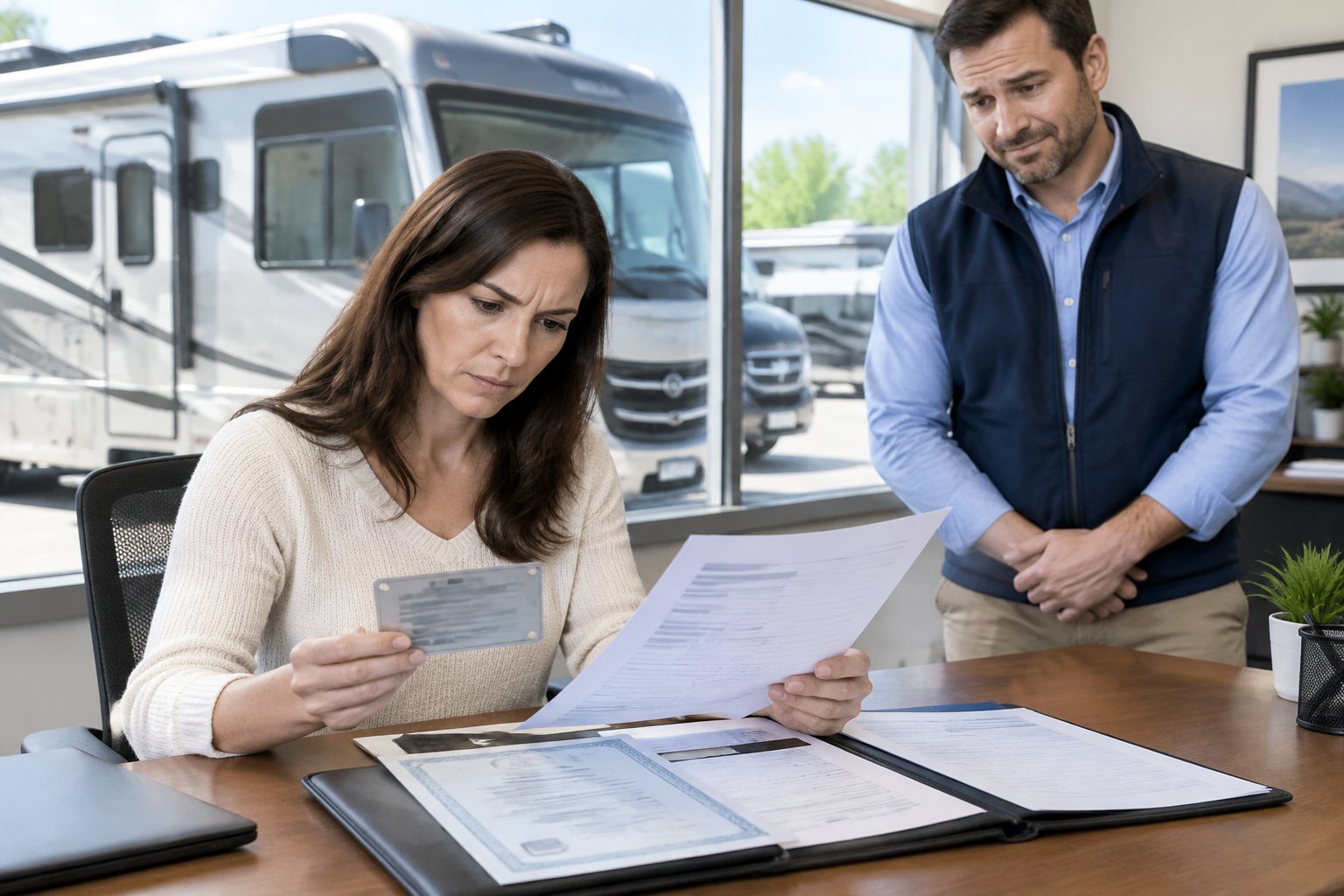
If the VIN on the RV differs from the VIN on the title or registration, stop the sale. Mismatches can signal a cloned listing, a washed title, or a unit the seller has no legal right to sell.
Compare the number on the frame or chassis plate to every document: title, registration, bill of sale, and the listing itself. Check that the seller’s name matches the name on the title, and ask about any liens.
Be wary of anyone who offers to “get the title to you later.” Without a clean title in the seller’s name, you may be unable to register the RV at all.
4) The Dealer Demands a Wire Transfer Before You Can Verify the Business
Insisting on a wire transfer from a business you haven’t verified is a classic setup for losing your money. Wire transfers are instantaneous and irreversible, so once the money leaves, recovering it is very hard.
Verify the dealership first: confirm a physical lot, a state dealer license, a long-standing phone number, and reviews from real customers. Visit in person if you can.
Be extra careful when the dealer refuses financing or other payment methods. Reports of Facebook Marketplace RV scams describe demands for full payment by bank wire and refusals to finance. Also confirm any wire instructions by phone using a number you found independently, since scammers sometimes switch account details at the last minute.
5) Monthly Payment Quotes Hide Add-Ons and Financing Costs
When a salesperson talks only about the monthly payment, the real price is being hidden. Consumer attorneys flag payment packing, undisclosed add-ons, and deceptive financing as common dealer fraud.
Ask for the out-the-door price in writing, itemized: RV price, taxes, fees, extended warranties, service plans, and any protection packages. Then check the loan’s APR, term, and total interest.
Decline add-ons you didn’t request, and get a loan pre-approval from your own bank or credit union to compare against dealer financing. A stretched-out term can make a pricey RV look affordable while costing thousands more.
6) Promised Repairs and Warranty Coverage Disappear From the Contract
A verbal promise is worth nothing if the contract doesn’t include it. “We’ll fix that slideout after you sign” or “it’s covered under warranty” must appear in writing, with dates and details.
Read the purchase agreement line by line before signing, and look for “as-is” language that wipes out spoken assurances. Used RVs in private sales are typically sold as-is, and many dealer contracts carry similar clauses.
Get a “we owe” form listing every promised repair, with a completion date. If the dealer balks at writing it down, assume the promise won’t be kept.
7) An Alleged Cash Buyer Becomes Pressure for an Immediate Deposit
“Another buyer is coming tomorrow with cash” is one of the oldest pressure tactics in the lot. Manufactured urgency exists to stop you from inspecting, reading, and thinking.
Scammers manufacture panic to cloud your judgment so you skip verification. A deposit demanded on the spot, especially a non-refundable one, locks you in before you’ve confirmed the RV’s condition or paperwork.
Offer a refundable deposit in writing, or say you’ll decide after the inspection. If the RV is truly sought after, a reasonable seller will wait a day. If not, the deal wasn’t worth rushing.
What to Do If You Suspect RV Dealer Fraud
Act quickly: gather your records, report the dealer to the right agencies, and look into payment recovery and legal help before deadlines pass.
What Evidence Should You Save?
Keep every document and message: the listing, ads, texts, emails, the purchase contract, title, VIN photos, payment receipts, and financing paperwork. Take dated photos and video of the damage or defects.
Save inspection reports and repair estimates, and write down names, dates, and what each person promised. Don’t delete anything, even messages that seem embarrassing.
Who Handles RV Dealer Fraud Complaints?
Start with your state attorney general’s consumer protection office and your state’s motor vehicle or dealer licensing agency. Reports of wire-payment RV scams have drawn attention from the FTC and FBI, and you can also file with the FBI’s Internet Crime Complaint Center when the fraud happened online. Your local Better Business Bureau can log a complaint too.
What Payment Recovery and Legal Options Can You Explore?
Call your bank or credit card issuer right away. A card payment may be disputed, while a wire is much harder to reverse, so speed matters.
For legal action, a consumer protection attorney can assess claims such as fraud in the inducement, and some states’ lemon laws cover certain RVs. Small claims court handles lower-dollar disputes without needing a lawyer.
Proving the seller knew about concealed damage is the hard part, so the evidence you saved is your strongest asset.