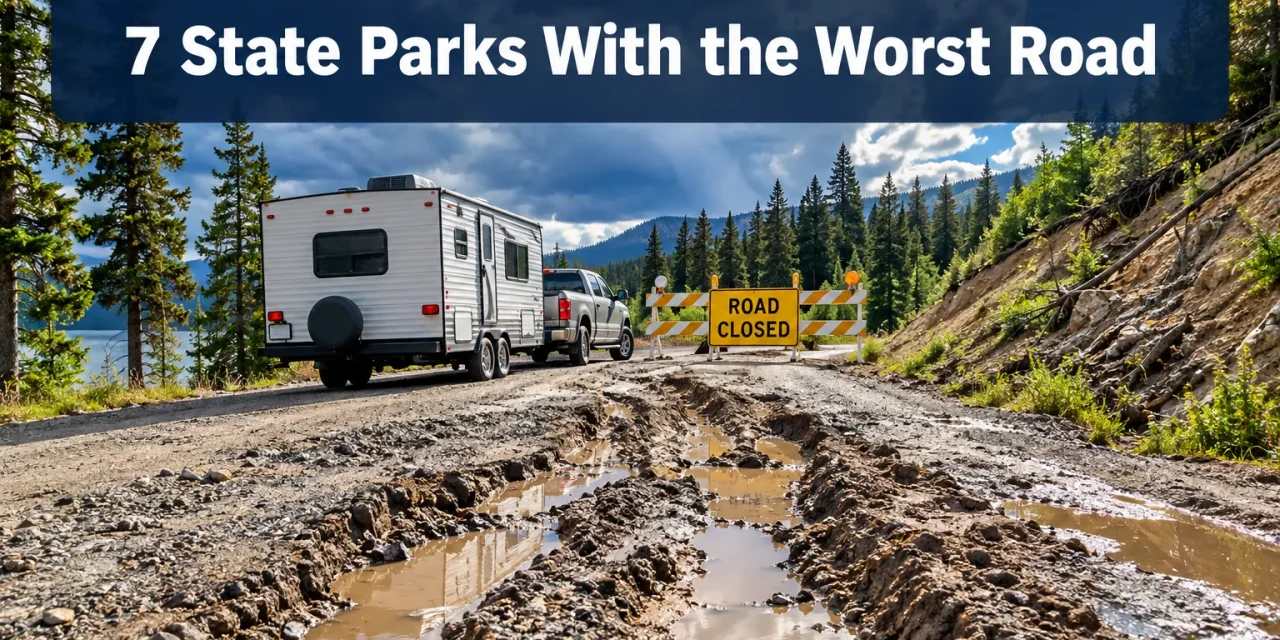
A washed-out culvert can turn a 45-minute drive into a three-hour detour, and a fifth wheel does not forgive a surprise pothole the way a sedan might. In 2026, flooding, wildfire, spring thaw, and overdue repaving projects have combined to create a rough year for park roads across the country. If you are planning a trip, knowing the 7 state parks with the worst road conditions this year could save your rig, your schedule, and your sanity.
This guide breaks down exactly which parks are struggling, why their roads fell apart, and what RV travelers should do before they hitch up and head out.
Key Takeaways
- 🚧 Flooding, wildfire, and seasonal thaw are the top reasons behind the 7 state parks with the worst road conditions in 2026.
- 🗺️ States like Indiana, Iowa, Minnesota, Texas, Illinois, and California all have active park road closures or restrictions right now.
- 🚐 Some parks require 4-wheel drive or high-clearance vehicles, which is a red flag for most RVs and trailers.
- 📞 Calling ahead or checking state DNR alert pages before you leave home is the single best way to avoid a bad surprise.
- 🔁 Road problems change fast, so what is closed today might reopen next month, and vice versa.
Why So Many State Park Roads Are in Bad Shape Right Now
It is not a coincidence that so many parks are dealing with road trouble at the same time. Weather has been rough on infrastructure nationwide in 2026, and park roads are usually the last thing to get fixed when budgets are tight.
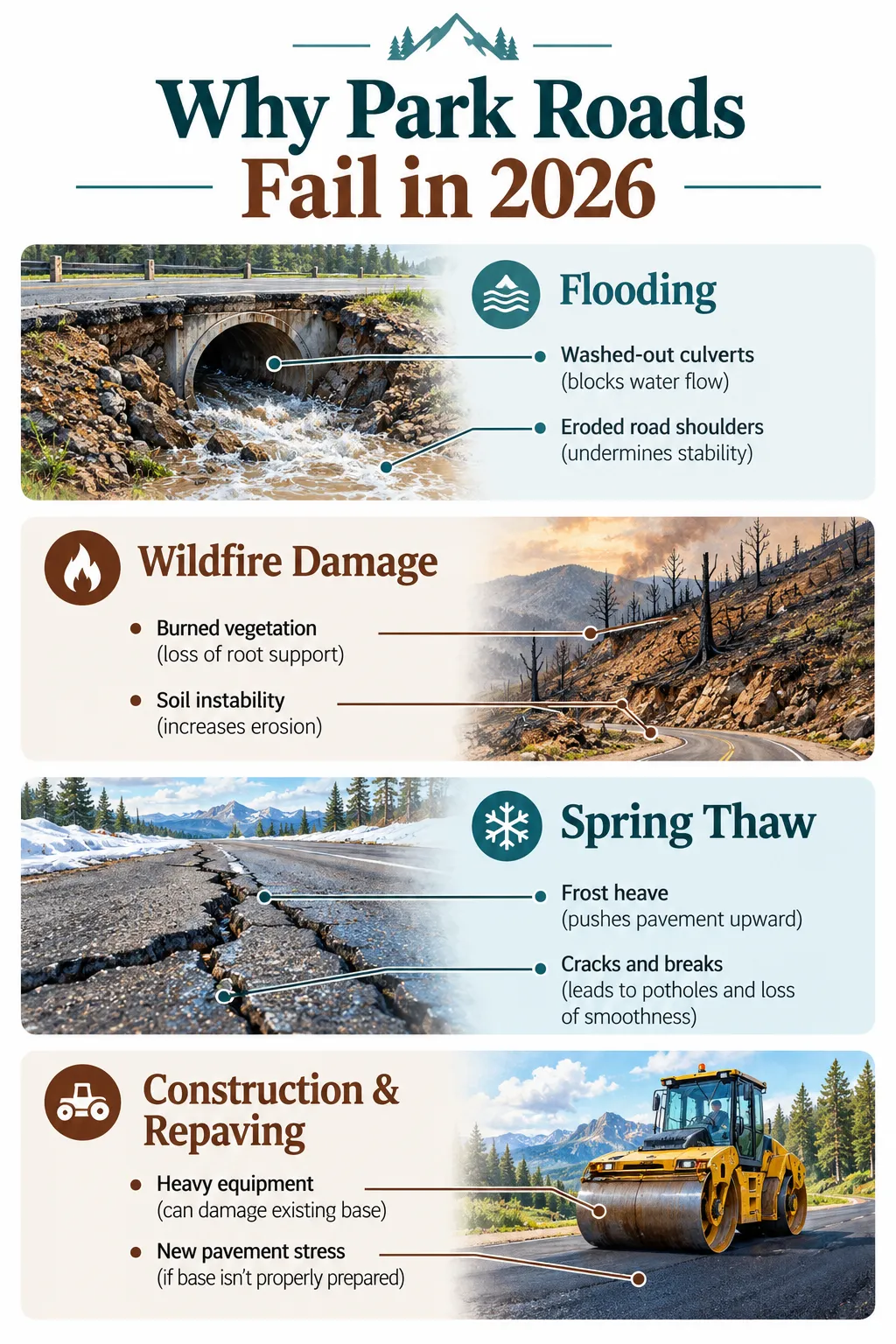
Here are the main culprits behind the 7 state parks with the worst road conditions this year:
- Heavy rainfall and flooding. Water erodes gravel and washes out low-lying roads. This hit parks in Indiana, Iowa, and Texas hard in 2026.
- Wildfire. Fire does not just burn trees. It destroys road shoulders, drainage systems, and guardrails, and it can trigger rockslides for months afterward. This is a big issue in California.
- Spring thaw. When frozen ground melts, dirt and gravel roads turn soft and can collapse under heavy vehicles. Minnesota deals with this every spring.
- Deferred maintenance and repaving. Some roads are simply old and finally getting fixed, which means full closures during construction, like in parts of Illinois.
- Storm damage to connecting highways. Sometimes the park road is fine, but the highway leading to it is wrecked, like in North Carolina.
Knowing the cause helps you predict how long the problem will last. Flood damage might clear in weeks. Fire and storm damage can take a full year or more to repair.
The 7 State Parks With the Worst Road Conditions in 2026
Here is the full list, state by state, with what RV travelers need to know before planning a visit.
1. Mississinewa Lake and Shades/Turkey Run State Parks, Indiana
Late September rain hit Indiana hard, and two popular park areas felt it the most. Mississinewa Lake saw road and trail closures, and Shades and Turkey Run State Parks also had sections shut down because of storm damage [1].
What this means for RVers:
- Some campground access roads were restricted during peak fall color season.
- Trail closures do not always mean road closures, but both were affected here.
- Indiana’s DNR advisory page updates often, so conditions can change week to week [1].
“A closed trail is annoying. A closed road with your camper already hooked up is a real problem.” That is why checking ahead matters more than ever this fall.
2. Canyon Drive and Other Park Roads, Iowa
Iowa had a rough stretch from September into October 2026. Canyon Drive, a well-known park route, was closed along with several other park roads because of heavy rainfall and the repairs that followed [2].
What this means for RVers:
- Repairs were still ongoing into October, which means delays could stretch longer than expected.
- Detours around closed sections may not be RV-friendly, especially for longer rigs.
- Iowa DNR posts a park alert list that is worth bookmarking if you travel through the state often [2].
3. Statewide DNR Road and Trail Closures, Minnesota
Minnesota’s problem is seasonal and predictable, but it still catches travelers off guard. Every spring, warmer weather causes widespread temporary closures of DNR-managed roads and motorized trails in state parks and forests [5]. These closures were issued in March 2026, and similar restrictions tend to repeat each spring as the ground thaws.
What this means for RVers:
- If you are traveling through Minnesota in early spring, assume some gravel and forest roads will be off-limits.
- Thaw-related closures protect the roads from permanent damage, so they actually help keep long-term conditions better.
- Timing your trip for late spring or summer avoids most of this issue entirely.
4. Multiple State Parks Requiring 4WD and High Clearance, Texas
Texas had a brutal flood season in July and August 2026. Several state parks closed roads after flooding, and others now require 4-wheel drive or high-clearance vehicles just to get around safely.
What this means for RVers:
- Most travel trailers and motorhomes are not built for 4WD-only roads. If a park requires it, plan to park at the entrance or skip that section.
- Flood damage in Texas can be unpredictable, with some roads reopening fast and others needing months of repair.
- Always call the specific park office, since restrictions can vary even within the same park.
5. Pekin Lake and Horseshoe Lake State Park, Illinois
Road deterioration became a long-term problem at Pekin Lake and Horseshoe Lake State Park in September 2026. These are not quick weather-related closures. These roads have been breaking down over time, and fixes are not happening overnight.
What this means for RVers:
- Long-term closures mean you should not expect a quick reopening.
- Plan an alternate route or alternate park if your trip depends on access to these areas.
- Check with the park directly, since statewide alert pages do not always catch every local update right away.
6. Lincoln Trail Homestead State Park, Illinois
This one is a planned project, not a surprise disaster. Lincoln Trail Homestead closed temporarily in July and August 2026 for a complete repaving job. The whole park shut down during the project.
What this means for RVers:
- Planned closures are actually the easiest to work around, since the dates are known in advance.
- If your trip lands outside the construction window, the road should be in much better shape afterward.
- This is a good reminder to always check for construction notices, not just storm damage, before you go.
7. Big Sur State Parks and Highway 1, California
California’s entry on this list of the 7 state parks with the worst road conditions involves fire, flooding, and a major highway all at once. Big Sur state parks were fully closed in August and September 2026 because of the Timber Fire and related highway issues [9]. On top of that, the Highway 1 State Park Avenue off-ramp was fully closed for several weeks earlier in the year, from January into February 2026 [8].
What this means for RVers:
- Fire damage in coastal California can close access for a long stretch, since burned slopes are prone to rockslides afterward.
- Highway 1 is narrow and winding even without closures. Add a shut-down ramp, and detour routes get tight fast for larger rigs.
- Always check Caltrans and California State Parks updates together, since one agency handles the highway and the other handles the park itself [8][9].
Other Rough Roads Worth Watching
These spots did not make the main list, but they are worth knowing about if your route takes you nearby.
- Ka’ena Point State Park, Hawai’i. The Keawa’ula section closed for road work, with reopening targeted for September 5, 2026 [10]. Always check current status before driving out, since road projects often run long.
- Mount Mitchell State Park, North Carolina. Major storm damage hit the Blue Ridge Parkway segment that serves this park, and repairs are expected to stretch through late 2026. This affects access, not just the park’s internal roads.
- Sequoia and Kings Canyon, California. This is a national park, not a state park, but it is worth a mention since the Middle Fork Road was severely damaged by 2023 flooding, and restrictions are still documented in the 2026 compendium [6]. If you are routing near this area, double-check current access.
A Quick Comparison Table
| Park / Area | State | Main Cause | RV Impact |
|---|---|---|---|
| Mississinewa Lake, Shades, Turkey Run | Indiana | Heavy rain | Trail and road closures |
| Canyon Drive area | Iowa | Rainfall and repairs | Extended closures into October |
| DNR parks and forests | Minnesota | Spring thaw | Seasonal, temporary restrictions |
| Multiple parks | Texas | Flooding | 4WD/high-clearance required |
| Pekin Lake, Horseshoe Lake | Illinois | Long-term deterioration | Extended closures |
| Lincoln Trail Homestead | Illinois | Repaving project | Full park shutdown (planned) |
| Big Sur parks, Hwy 1 | California | Wildfire and highway closure | Full park closure, detours |
How RVers Can Check Road Conditions Before You Go
The parks on this list of the 7 state parks with the worst road conditions all have one thing in common: the information was public before travelers arrived. The trick is knowing where to look.
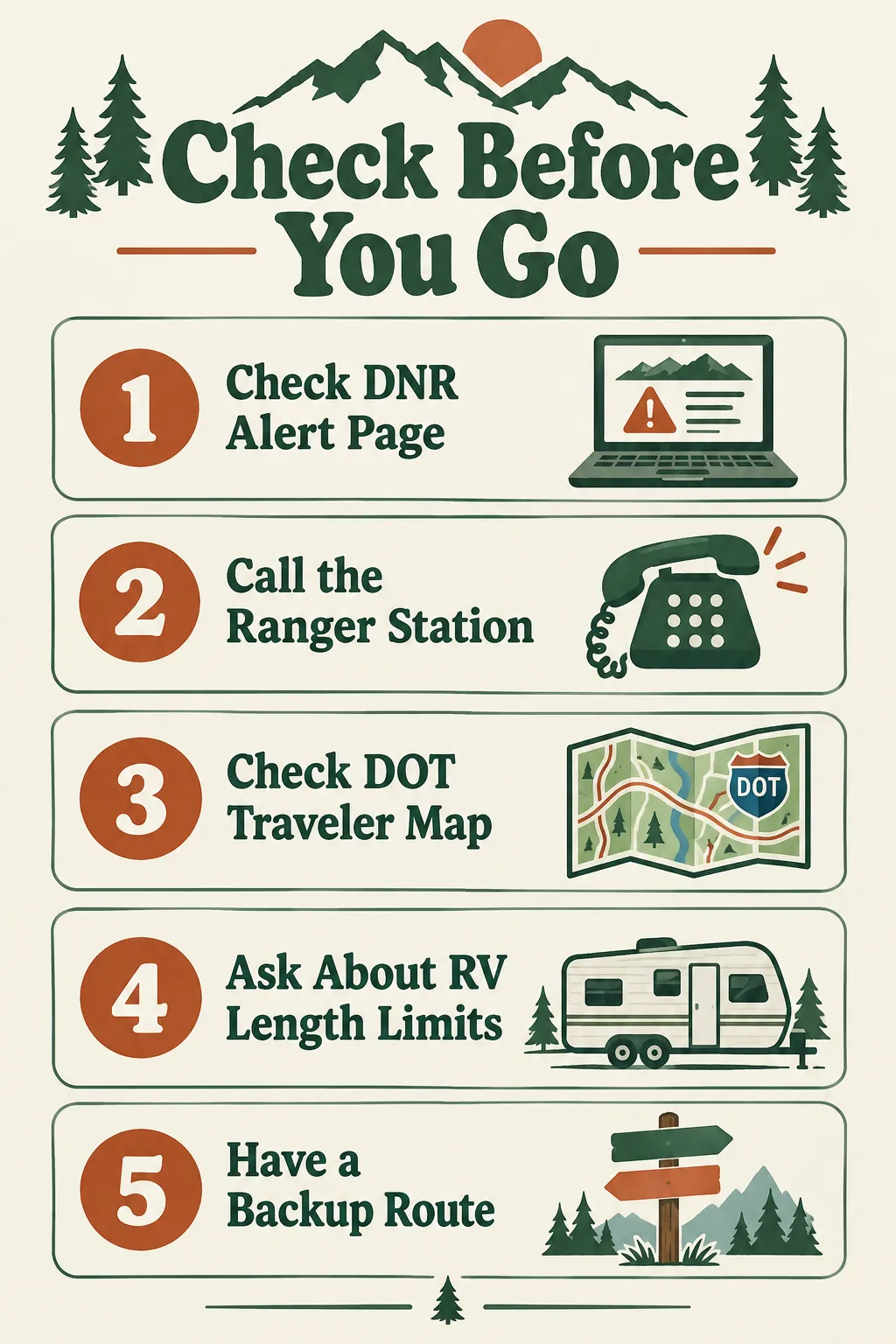
Follow these steps every time you plan a trip near a state park:
- Check the state’s DNR or parks alert page first. Indiana [1], Iowa [2], and Minnesota [5] all post regular updates directly on their websites.
- Check the state DOT traveler advisory tool. Many states, including New York, run live advisory maps that show closures and detours in real time [3][4].
- Call the park office directly. Alert pages are not always updated the same day something changes. A phone call can confirm the latest status.
- Check highway conditions separately from park conditions. California is a good example, since Caltrans and the state parks system post separate updates that both matter [8][9].
- Ask about RV length and clearance limits specifically. A road might be “open” but still unsafe for a 35-foot fifth wheel.
- Have a backup plan. Keep a second route or a nearby park in mind in case your first choice is closed when you arrive.
- Check local park and city trail pages too. Some cities, like Portland, track trail and road closures on their own sites, which can affect connecting routes [7].
Frequently Asked Questions
Are these road closures permanent?
No. Most are temporary, tied to weather events or construction projects. Some, like flood damage, can clear up in weeks. Others, like fire damage or major highway repairs, may take months or longer.
Can I still camp at these parks?
Often, yes. A closed road does not always mean a closed campground. But access routes may be longer or more limited, so always check before you pack up.
Why do state parks seem to have worse roads than national parks?
State parks usually have smaller budgets for road maintenance compared to national parks. That means repairs can take longer, and closures can last longer too.
What should I do if I arrive and the road is closed?
Do not try to push through a barricade or a flooded road, even if it looks passable. Turn around, call the park office, and ask about alternate routes or nearby campgrounds.
Will these 7 parks still have bad roads next year?
Some will. Seasonal issues like Minnesota’s spring thaw repeat every year. Others, like planned repaving projects, should be fully resolved once construction wraps up.
Conclusion: Plan Smart, Drive Safe
The 7 state parks with the worst road conditions in 2026 all share a common thread: flooding, fire, thaw, and overdue repairs are catching up with America’s park roads at the same time. That is not a reason to cancel a trip. It is a reason to plan a little smarter.
Before heading out, check the official alert page for the state you are visiting, call the park directly, and always have a backup route ready. A five-minute phone call beats a three-hour detour with a trailer in tow every single time.
Bookmark the park alert pages for any state on your travel list, and make checking them part of the trip-planning routine, right alongside checking the weather and mapping out campground reservations.
References
[1] Advisories And Closings – https://www.in.gov/dnr/state-parks/parks-lakes/advisories-and-closings/
[2] Viewparkalerts – https://programs.iowadnr.gov/parkforms/pages/ViewParkAlerts
[3] Traveler Advisories – https://www.dot.ny.gov/modal/auto/traveler-advisories
[4] Traveler Advisories – https://www.dot.ny.gov/modal/truck/traveler-advisories
[5] Warmer Weather Prompts Seasonal Road Trail Closures – https://www.dnr.state.mn.us/news/2026/03/16/warmer-weather-prompts-seasonal-road-trail-closures
[6] Superintendent S Compendium – https://www.nps.gov/seki/learn/management/superintendent-s-compendium.htm
[7] Trail Closures And Delays – https://www.portland.gov/parks/nature/trail-closures-and-delays
[8] D5 News 1 20 2026 – https://dot.ca.gov/caltrans-near-me/district-5/d5-news/d5-news-1-20-2026
[9] parks.ca.gov – https://www.parks.ca.gov/post/127
[10] Important Park Notices – https://dlnr.hawaii.gov/dsp/important-park-notices/