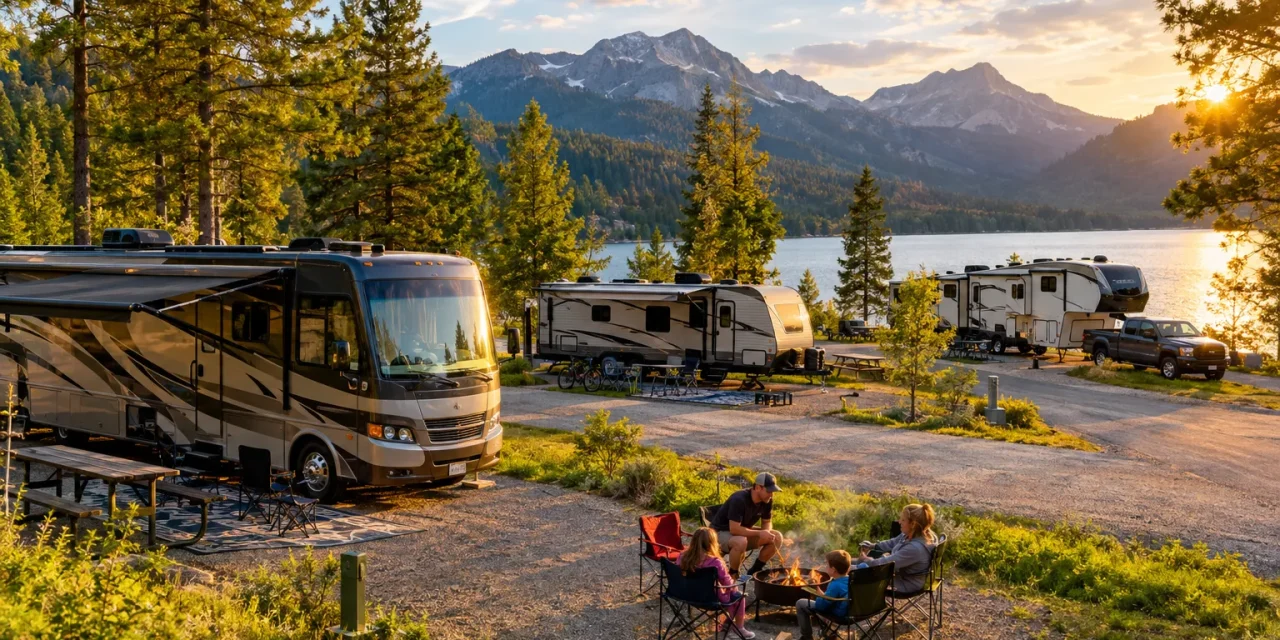
Type “best campground near me” into Google and the results are built for tent campers with a cooler and a two-person dome tent, not a 38-foot fifth wheel that needs 50-amp power, a 75-foot pull-through, and room to swing a slide-out without clipping a tree. That mismatch wastes hours of planning time and sends RVers to sites that were never designed for a rig their size.
This guide to Best RV Parks and Campgrounds by Region: A Complete Guide for Every Type of Camper fixes that problem. Instead of one generic national list, it breaks the country into regions and filters recommendations by rig size, hookup needs, and the activities that actually matter, hiking, fishing, boondocking, or resort-style relaxation. More than 52 million North American households camped last year, and that number keeps climbing past pre-pandemic levels [1]. RV parks and public campgrounds are adapting fast, which means the “best” options change from season to season and region to region.
Key Takeaways
- 🗺️ Region matters more than rankings. A “top 10 in the U.S.” list means little if the park is 1,200 miles away and can’t fit a 40-foot Class A.
- 🔌 Filter by hookups first. Full hookups (water, sewer, 30/50-amp electric) separate resort-style parks from rustic public campgrounds, know which one fits the trip.
- 🚌 Rig size drives site selection. Big rigs need pull-through sites with wide turning radius; smaller trailers and vans can access tighter, scenic spots.
- 🏕️ Camper type shapes the “best” pick. Families, luxury seekers, full-timers, and boondockers each have different definitions of a great campground.
- 📈 Demand is at record highs. Over 34.6 million Americans planned RV travel in spring 2026 alone, a 23% jump from the year before [2].
How to Match Your Rig and Travel Style to the Right Campground
Before scanning any regional list, RVers need to nail down three filters: rig size, hookup requirements, and preferred activities. Skipping this step is the number one reason campers show up to a “highly rated” park and can’t actually park.
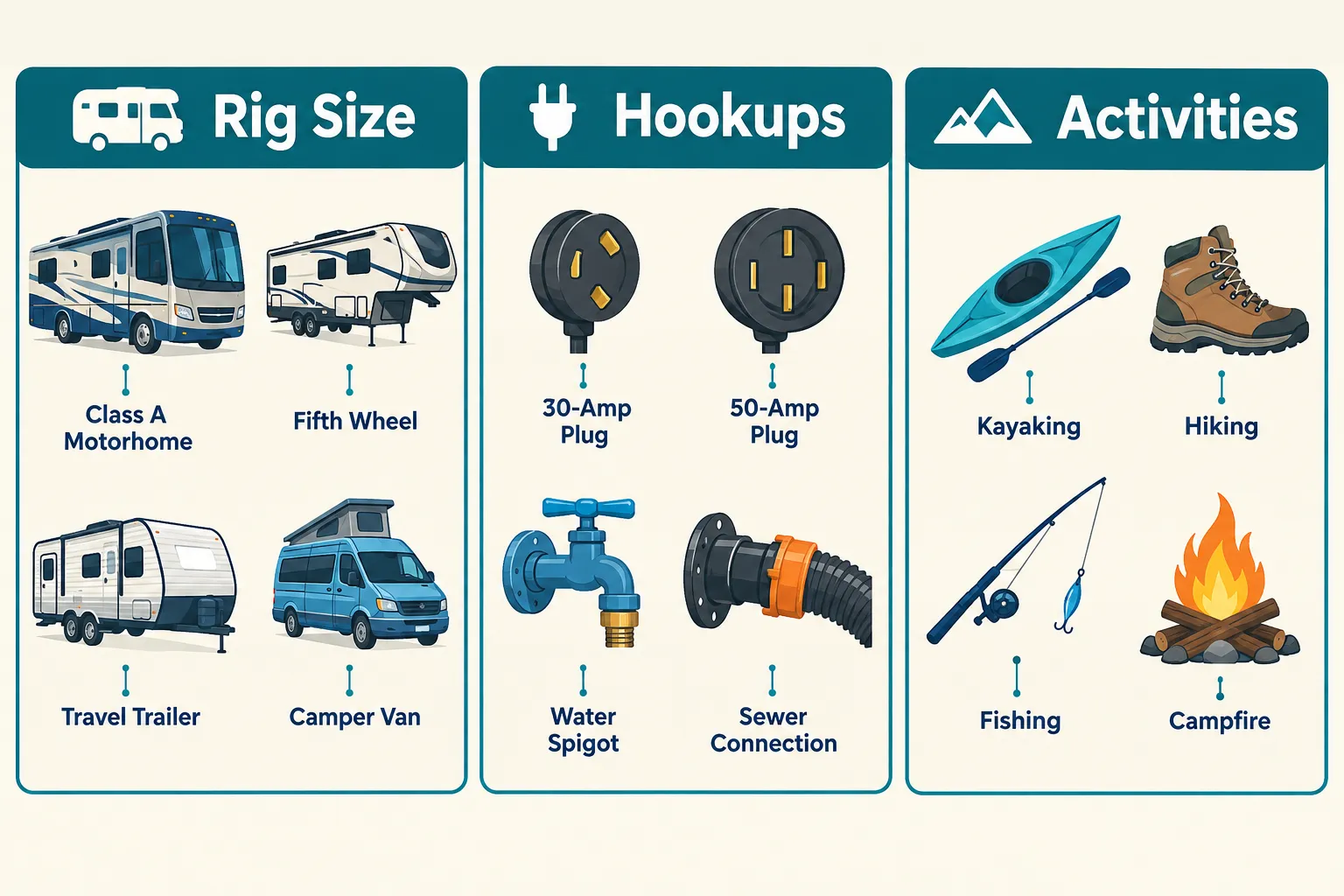
Rig size filters:
- Class A / large fifth wheels (35+ feet): Need pull-through or extra-long back-in sites, wide interior roads, and confirmed turning radius.
- Travel trailers and Class C motorhomes (25-35 feet): Fit most standard RV resort sites; check for slide-out clearance.
- Camper vans and small trailers (under 25 feet): Can access tighter public campgrounds, forest service loops, and boondocking spots larger rigs can’t reach.
Hookup filters:
- Full hookups (water, sewer, 50-amp): Best for resort stays, families, and anyone running AC units or multiple appliances.
- Partial hookups (water/electric only): Common at state parks; budget-friendly with fewer amenities.
- No hookups / dry camping: Includes boondocking on public land, ideal for self-contained rigs with solar and tank capacity.
Activity filters:
- Water access (lakes, rivers, coastline)
- Hiking and national park proximity
- Fishing, ATV trails, or off-roading
- Resort amenities (pools, splash pads, planned activities)
Choosing the right rig also starts before the trip even begins. Anyone still shopping should check out this breakdown of 10 best travel trailer brands with the least amount of issues to understand which trailers handle long-haul travel and frequent campground hookups without constant repairs.
“The best RV park isn’t the one with the most stars online, it’s the one that actually fits your rig, your budget, and your idea of a good time.”
Best RV Parks and Campgrounds by Region: A Complete Guide for Every Type of Camper
National “best of” lists, including USA TODAY’s 10Best Readers’ Choice Awards and Campspot’s annual awards, are useful for spotting standout flagship parks, but most campers need options closer to home or along a specific route. Here’s how the top regions stack up.
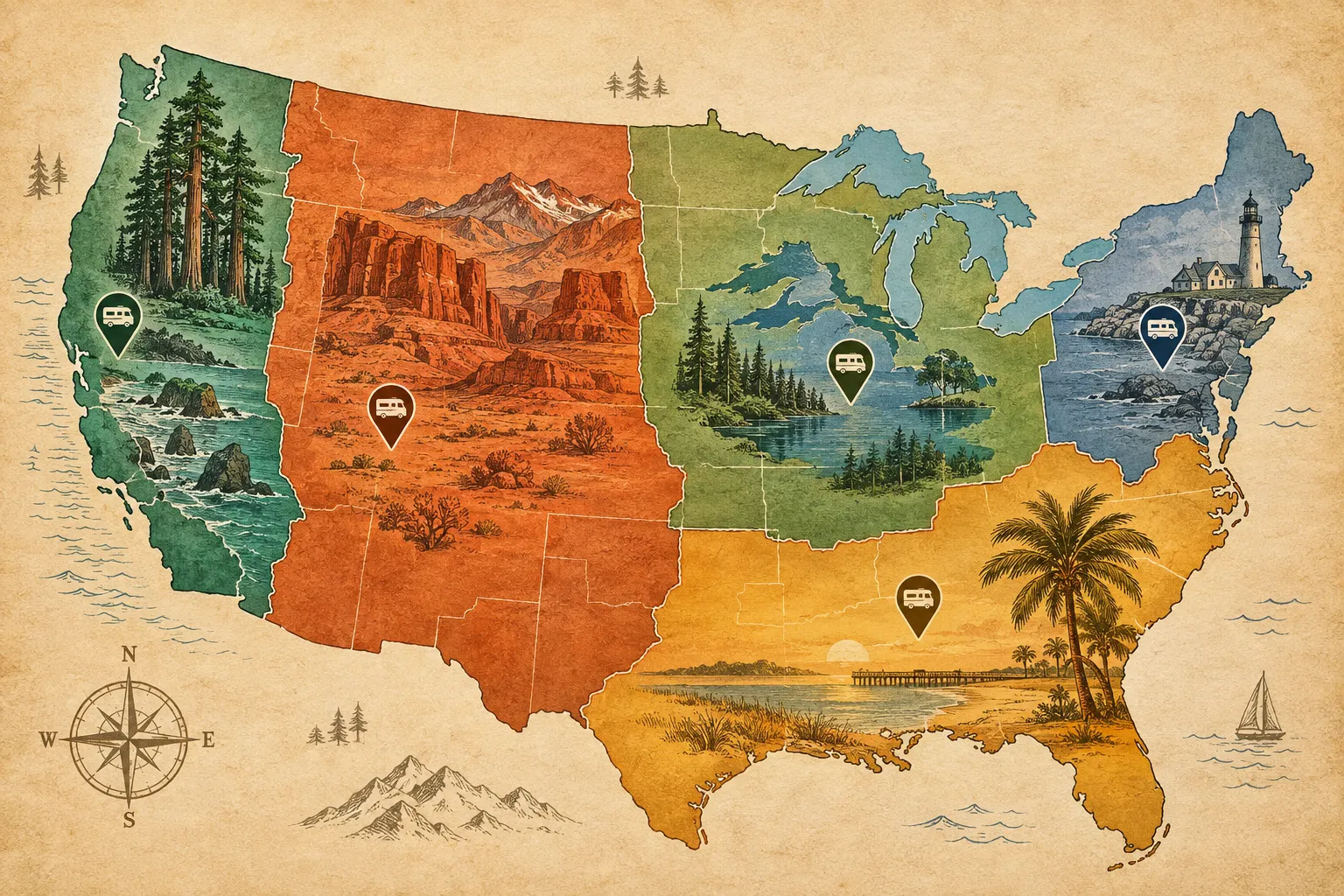
Pacific Coast and West
The West Coast leads in scenic diversity, redwood forests, coastal bluffs, and desert canyons within a few hours of each other. Coastal parks like those near Santa Barbara and Pismo Beach offer walkable beach access and full hookups, making them a favorite for big rigs that still want ocean views. Inland, Jedediah Smith Redwoods State Park anchors the rustic, tent-and-small-rig crowd who prioritize scenery over amenities.
Best for: Coastal big rigs, redwood hikers, scenic drives along Highway 1.
Mountain West and Rockies
This region blends resort-style luxury with rugged public land access. Verde Ranch RV Resort in Camp Verde, Arizona, has emerged as a national benchmark for big-rig resort camping, offering full hookups, cabins, and pool complexes. Colorado’s mountain towns, including parks near Estes Park close to Rocky Mountain National Park, cater to hikers and photographers. Utah’s Dark Sky RV Park and the Valley of the Gods area draw stargazers and desert boondockers alike.
Best for: Big-rig resort stays, national park basecamps, dark-sky camping.
Midwest and Great Lakes
Family-focused parks dominate this region. Jellystone Park locations across Wisconsin and the Midwest consistently rank among the top family campgrounds nationally, thanks to water parks, ropes courses, and organized kids’ activities. South Dakota’s Rafter J Bar Ranch and Badlands-area sites like The Wall appeal to travelers exploring The Wall and Mount Rushmore corridor. Minnesota’s Split Rock Lighthouse State Park adds a rustic lakeside option for smaller rigs.
Best for: Families, lakeside camping, Badlands and Black Hills road trips.
Southeast and Gulf Coast
Warm-weather camping season runs long here, and parks reflect that with resort amenities year-round. Arkansas’s Catherine’s Landing and South Carolina’s James Island County Campground combine waterfront access with full hookups. Texas Hill Country’s Camp Fimfo has become a national standard-bearer, frequently topping U.S. rankings for its combination of size, amenities, and family programming.
Best for: Winter snowbirds, waterfront family stays, big-rig full-hookup resorts.
Northeast
Smaller in scale but high in demand, Northeast parks like Normandy Farms in Massachusetts and Swan Bay Resort in New York attract campers seeking polished amenities close to major cities. Connecticut’s Brialee Family Campground has earned recognition for unique, highly themed experiences. Rig size matters more here, older, tighter road networks mean bigger rigs should double-check site dimensions before booking.
Best for: City-adjacent getaways, themed family campgrounds, shorter big-rig stays.
| Region | Flagship-Style Park | Best For | Rig Notes |
|---|---|---|---|
| Pacific Coast | Coastal resorts near Santa Barbara/Pismo | Ocean views, big rigs | Confirm pull-through length |
| Mountain West | Verde Ranch RV Resort (AZ) | Resort luxury, dark-sky | Full hookups standard |
| Midwest | Jellystone Park locations | Families | Wide pull-through sites |
| Southeast | Camp Fimfo (TX), Catherine’s Landing (AR) | Snowbirds, families | Large full-hookup capacity |
| Northeast | Normandy Farms (MA), Swan Bay (NY) | City-adjacent trips | Check site length limits |
Planning a route that crosses several of these regions? It helps to see how other RVers handled the logistics, this look at taking an RV trip across multiple states covers real scheduling and fuel-stop lessons worth borrowing.
Best RV Parks and Campgrounds by Region: A Complete Guide for Every Type of Camper for Every Camper Type
Region is only half the equation. The other half is who’s doing the camping. A retired couple in a Class A wants something very different from a family of five or a solo boondocker running off solar.
Families
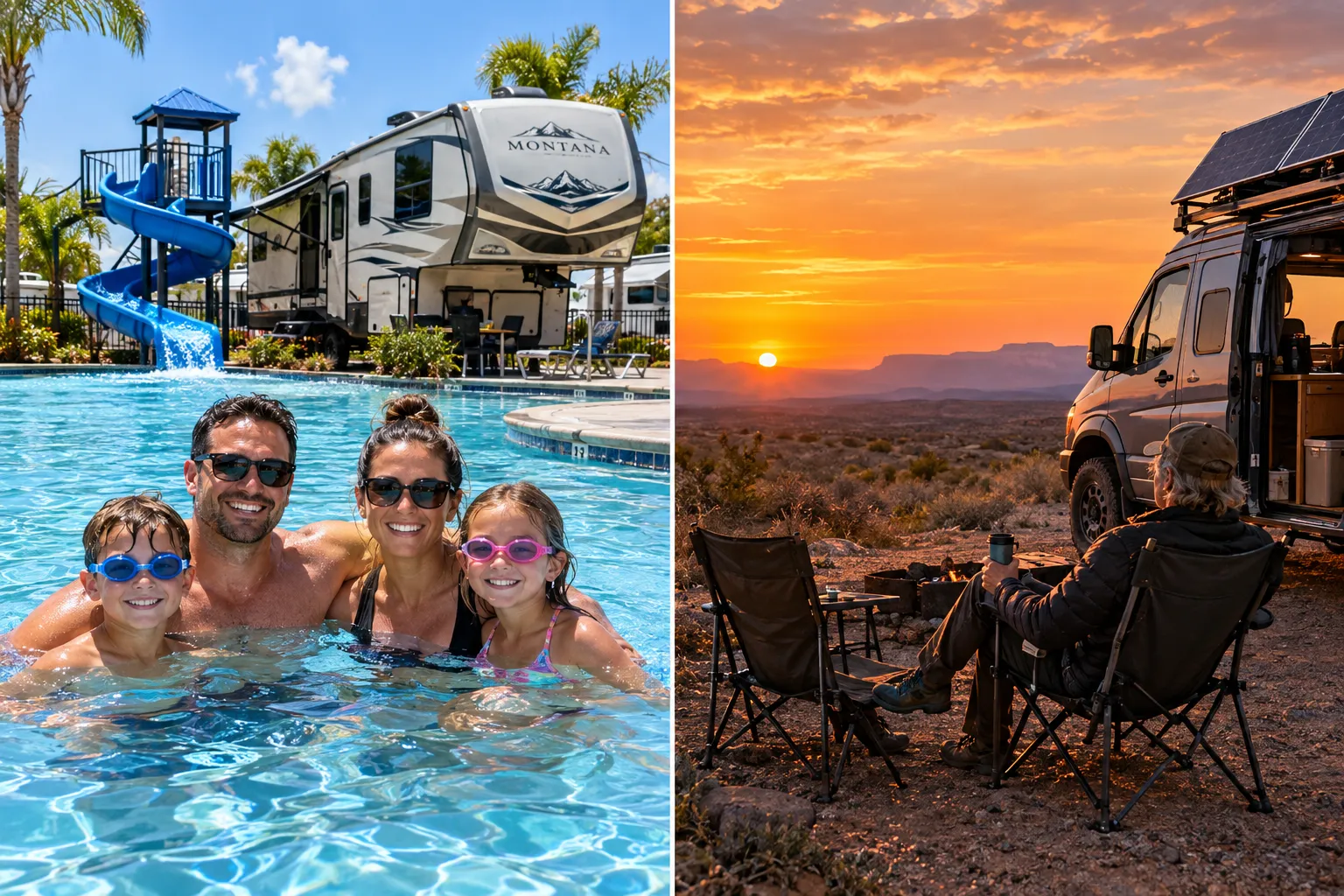
Look for parks with structured activities, splash pads, and playgrounds. Jellystone Park Caledonia in Wisconsin has drawn attention for features like floating obstacle courses and ropes courses, the kind of amenities that turn a campground into a destination on its own. Full hookups matter here since families run more appliances and need reliable power for AC and devices.
Family-friendly must-haves:
- On-site pool or splash pad
- Organized kids’ activities or camp staff
- Playground and open green space
- Laundry facilities
Luxury Seekers and Glampers
Sun Outdoors Rehoboth Bay in Delaware exemplifies the glamping trend, waterfront resort stays with upgraded cabins and premium amenities. Expect nightly rates roughly in the $100,$250 range at top-tier luxury resorts, along with concierge-style service, spa amenities, and curated dining options.
Full-Time RVers
Full-timers prioritize long-stay discounts, strong Wi-Fi, mail services, and community. Monthly and seasonal rate structures matter more than nightly amenities. Parks with dedicated long-term sections tend to offer more privacy and quieter neighbors than short-term vacation loops.
Boondockers and Off-Grid Campers
Public land, BLM areas, national forests, and dispersed camping zones, remains the backbone of free or low-cost camping. Utah’s canyon country and North Dakota’s Scoria Pit area are popular examples where self-contained rigs with solar and larger holding tanks thrive without hookups.
Whichever camper type applies, campground etiquette stays universal. A surprising number of complaints at popular parks come down to avoidable mistakes, generator noise at odd hours, blocking shared roads, or pets off leash. It’s worth reviewing these common bad campground etiquette issues before the next trip to avoid becoming that camper.
Traveling with a group or heading to a rally adds another layer of planning. Those curious about the social side of RVing can check out this recap of attending an RV rally or meetup for a sense of what to expect.
What’s Changing at RV Parks and Campgrounds in 2026
The RV park industry looks different than it did even three years ago, and that shift affects which parks make “best of” lists going forward.
Demand is strong, but spending is more selective. Roughly 90% of travelers plan to travel at least as much as last year, and 64% say they’d consider renting an RV rather than buying one [3]. That trend lines up with broader travel data showing continued growth in RV-based trips [4]. At the same time, RV manufacturing shipments have cooled in 2026, with year-to-date shipments down compared to 2025 [10]. Full-year industry forecasts have been trimmed accordingly [7].
What this means for campers: People aren’t necessarily buying new rigs every few years, they’re investing more in the quality of each trip. That’s pushing demand toward highly rated, amenity-rich parks rather than budget basics, even among cost-conscious travelers.
New parks are opening, and old ones are adapting. Regions like the Midwest, Mountain West, and Southeast continue to add capacity, from new electric-hookup sites to resort-style expansions. Meanwhile, dynamic pricing, clearer utility billing, and app-based reservations are becoming standard at professionally managed parks, a shift documented across recent industry reporting [5][6].
Younger campers are reshaping expectations. Millennial and Gen Z RVers, who surged into camping during the pandemic years, now expect reliable Wi-Fi and digital-first booking as baseline features, not luxury add-ons [9].
Before heading out, it’s smart to have a plan for the unexpected, flat tires, dead batteries, or a blown hose don’t care what region you’re in. This guide on experiencing a breakdown while on the road covers what to do when things go sideways mid-trip. And if the plan includes a holiday getaway, this roundup of best RV holiday destinations for Christmas is worth a look before booking peak-season sites.
For deeper trip planning, some RVers still swear by print resources over apps alone, this piece on reading RV travel books or guides breaks down when a physical guidebook still beats a phone screen.
Conclusion
Finding the right campground isn’t about chasing a single national “best of” list, it’s about matching region, rig size, hookup needs, and travel style to a real place that fits the trip being planned. A retired couple in a 40-foot Class A chasing dark skies in Utah needs a completely different park than a family of five heading to a Midwest water park resort or a solo camper van boondocking on BLM land in Arizona.
Start with the filters: rig size, hookups, and activities. Then narrow down by region using the breakdowns above. From there, match the pick to camper type, family, luxury, full-time, or off-grid, before locking in a reservation. With camping demand at record highs and parks investing heavily in amenities and technology, 2026 is shaping up to be one of the best years yet to explore new regions with confidence.
References
[1] 2026 Camping Hospitality Report – https://www.koapressroom.com/press/2026-camping-hospitality-report/ [2] 346 Million Americans Plan Travel Rv Spring – https://www.rvia.org/news-insights/346-million-americans-plan-travel-rv-spring [3] Trend Report – https://rvshare.com/trend-report [4] Rv Travel Trends 2025 – https://rvshare.com/blog/rv-travel-trends-2025/ [5] Market Pulse Dashboard – https://www.rvia.org/market-pulse-dashboard [6] Press Releases – https://www.koapressroom.com/press-releases/ [7] The Rv Industry In 2026 Whats Actually Happening By The Numbers – https://rvjournal.org/the-rv-industry-in-2026-whats-actually-happening-by-the-numbers/ [8] U S Rv And Boat Storage Market 2026 Outlook And Forecast Through 2031 – https://www.mmcginvest.com/post/u-s-rv-and-boat-storage-market-2026-outlook-and-forecast-through-2031 [9] 2026 Orr National Executive Forum – https://www.koapressroom.com/press/2026-orr-national-executive-forum/ [10] February Rv Shipments Top 29000 Motorhomes 22 – https://www.rvia.org/reports-trends/rv-shipment-reports/2026-02/february-rv-shipments-top-29000-motorhomes-22