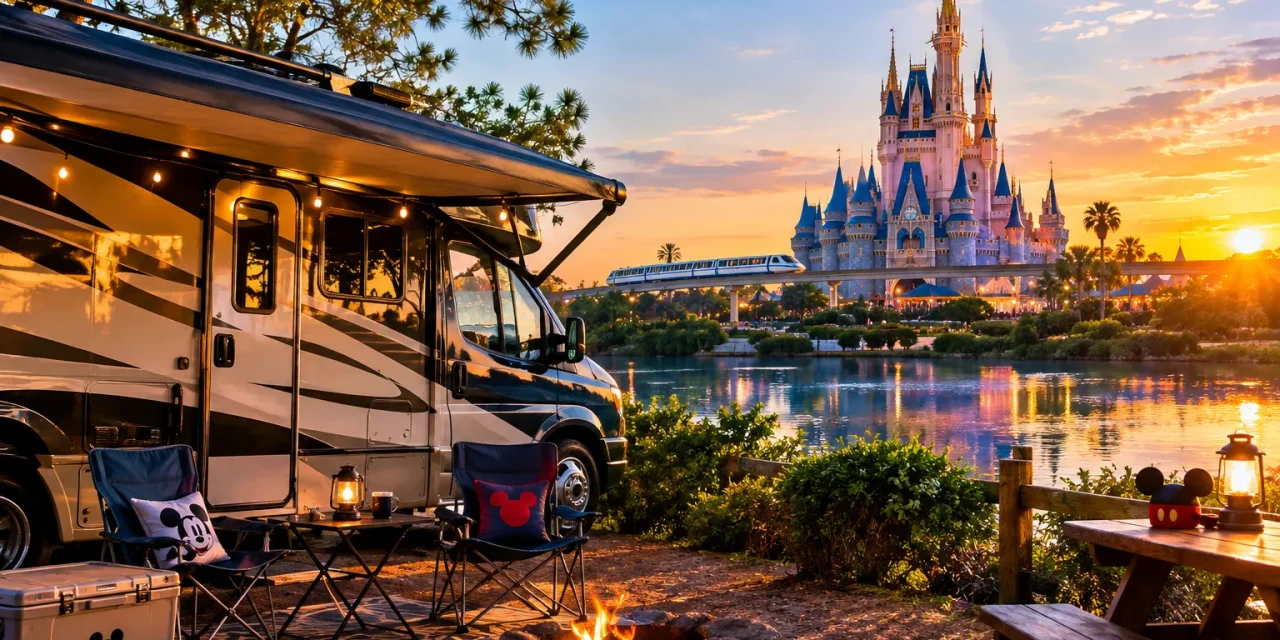
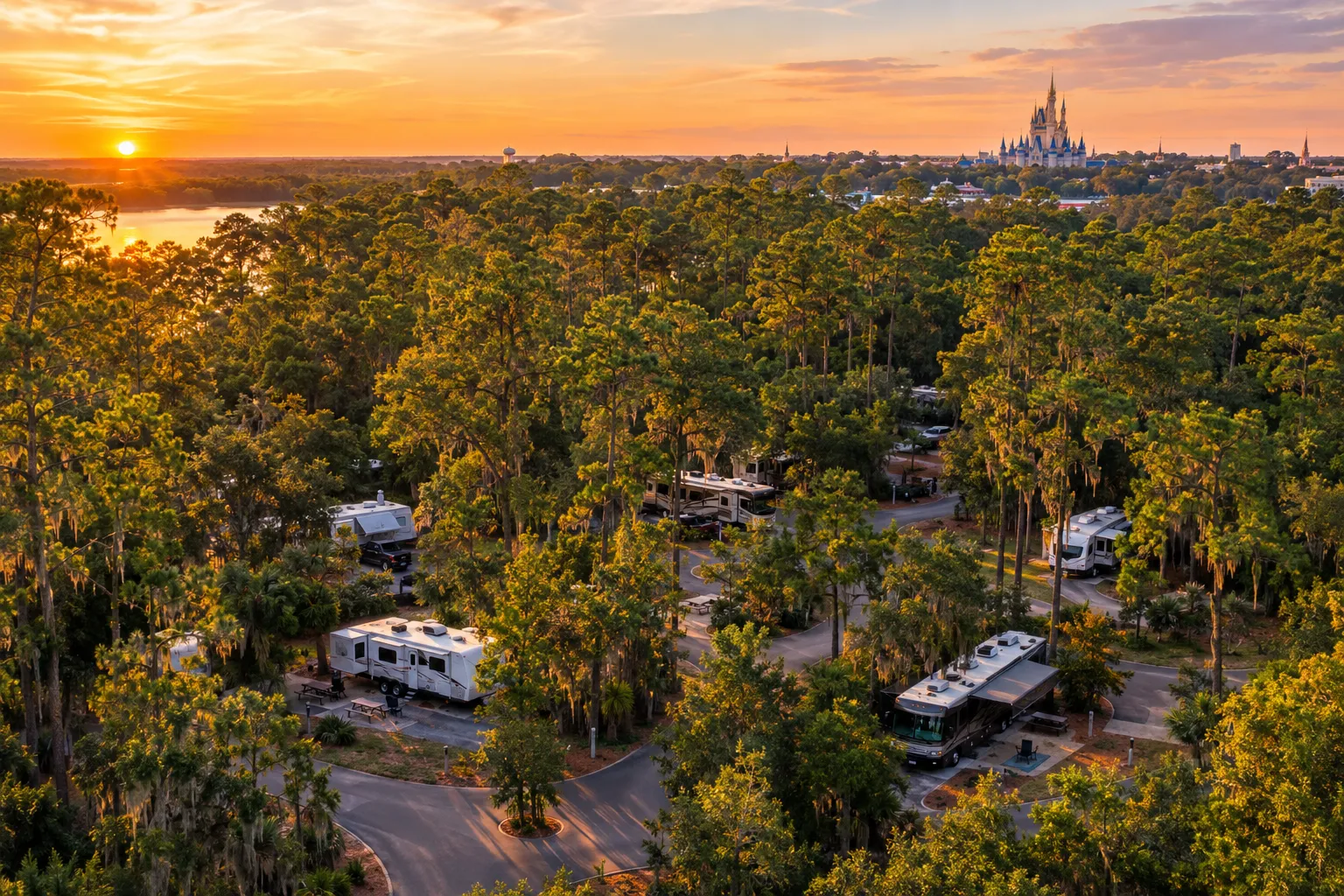
There are more than 750 wooded acres of campground sitting inside Walt Disney World property, yet most theme park visitors have no idea they could skip the hotel entirely and park their rig within walking distance of a lake instead[3][5]. That’s the real story behind RV camping at Disney World: how to turn America’s biggest theme park into your outdoor basecamp, a strategy that blends full-hookup camping comfort with front-row access to Magic Kingdom fireworks.
For RV owners, this isn’t a gimmick. It’s a legitimate way to experience one of the busiest destinations in the country without sacrificing campfire evenings, your own bed, or your travel budget. This guide breaks down exactly how to make it work in 2026, from campsite specs to transportation logistics to budget-friendly alternatives just outside the gates.
Key Takeaways
- Fort Wilderness is the only on-property RV campground at Walt Disney World, and it’s widely considered the top basecamp for park-goers[3][5][7][10].
- New 2026 occupancy cap: campsites now max out at 8 guests, down from the higher limits allowed in previous years[1][3][6][9].
- Site types vary widely, from Tent/Pop-Up to Premium Meadow, with pads accommodating rigs from small trailers up to roughly 45 feet or more[1][3][5].
- Nightly rates typically run $115,$185, with premium sites and peak dates climbing toward $313 depending on demand[5][6].
- Off-property RV parks in Kissimmee and greater Orlando offer budget-friendly or niche alternatives within 10-30 minutes of the parks[4][11][12].
Why Fort Wilderness Is the Only True On-Property RV Camping at Disney World Option
If you’re searching for RV camping at Disney World, the conversation starts and ends with one place: Disney’s Fort Wilderness Resort & Campground. It’s the only campground located directly on Walt Disney World property, and it’s routinely ranked as the best basecamp option for anyone visiting the parks[3][5][7][10][12].
Fort Wilderness sits on the northwest side of Walt Disney World, tucked along Bay Lake near the Magic Kingdom[3][5][7]. That location matters more than it might seem. Instead of fighting traffic on I-4 every morning, campers here can hop a boat straight to Magic Kingdom or catch an internal bus to the other three parks[3][5][7].
The resort covers roughly 750 wooded acres and includes about 799 full- and partial-hookup campsites arranged in themed loops[3][5]. Beyond the campsites, guests get access to trading posts, swimming pools, horseback riding, campfire programs, and other recreation typically found at a full-service resort, not a roadside RV lot[3][5].
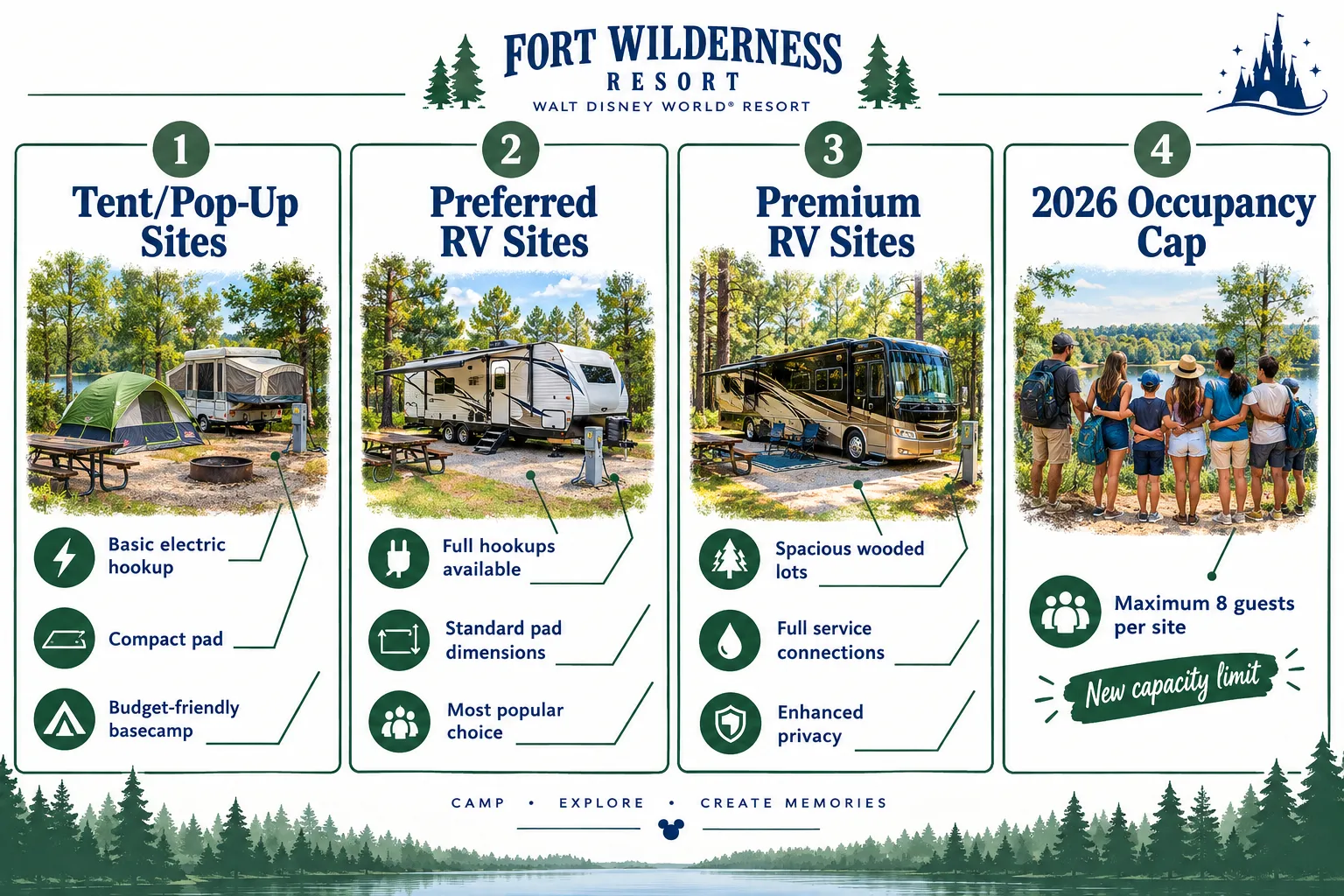
Important update for 2026 bookings: Disney’s official site policy now caps campsite occupancy at 8 guests per site, a reduction from the higher limits some travelers remember from prior years[1][3][6][9]. Families planning larger group trips should factor this into their site count and reservation planning well ahead of arrival.
Campsite Types, Hook-Ups, and Rig Size Limits at Fort Wilderness
Not every campsite at Fort Wilderness looks the same, and matching your rig to the right category is one of the most important planning steps.
Fort Wilderness organizes its sites into four main categories[1][3]:
| Site Type | Best For | Typical Pad Size | Hook-Ups |
|---|---|---|---|
| Tent/Pop-Up | Small trailers, tent campers | Compact pads | Water, electric (some lack sewer) |
| Full Hook-Up | Standard travel trailers, Class C rigs | Mid-range pads | Water, electric, sewer, cable/Wi-Fi |
| Preferred | Larger rigs, families wanting convenience | Larger pads | Full hookups plus better location |
| Premium / Premium Meadow | Big rigs, groups wanting max amenities | Up to roughly 18×60 feet | Full hookups, prime placement |
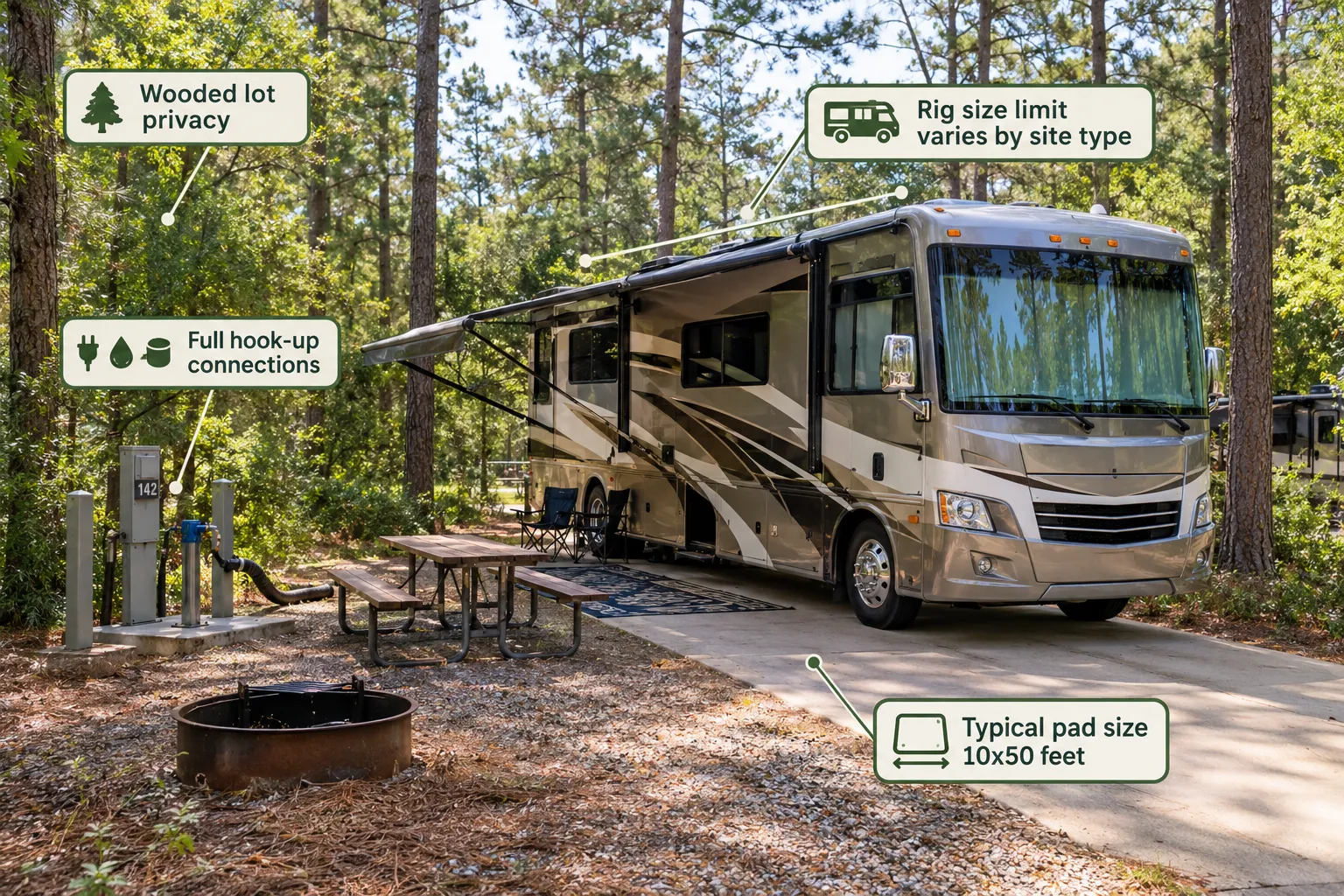
Most sites include water, 20/30/50-amp electric service, cable TV, Wi-Fi, and sewer connections, with the exception of some Tent/Pop-Up sites[1][3][5]. Pad sizes range from around 10×25 feet for smaller setups up to roughly 18×60 feet for large motorhomes and fifth wheels, meaning rigs up to about 45 feet, sometimes more, depending on the loop, can typically be accommodated[1][3][5].
Before booking, double-check your rig’s actual length including any hitch, ladder, or slide overhang. Reservation agents can help match your specs to a compatible loop, but knowing your numbers ahead of time speeds up the process considerably.
Since electric service varies by site and demand on shared power grids can spike during peak season, it’s smart to protect your RV’s electrical system the same way you would at any busy campground. A dedicated surge protector for your RV’s electrical system is cheap insurance against voltage fluctuations that could otherwise damage sensitive appliances.
What RV Camping at Disney World Really Costs in 2026
Disney doesn’t publish one flat nightly rate for Fort Wilderness. Instead, pricing shifts based on the date, site category, and overall demand, which means travelers need to pull a live quote before locking in a trip[3].
That said, current 2026 data gives a useful ballpark. Most standard RV sites run roughly $115 to $185 per night, while premium categories and peak-season dates can climb toward $125 to $313 per night depending on the loop and amenities[5][6]. Holiday weeks, spring break, and major Disney events tend to push rates toward the higher end of that range.
Beyond the nightly site fee, a few recurring add-ons shape the real cost of turning Fort Wilderness into your outdoor basecamp[3][5][7]:
- Golf cart rentals: roughly $75,$100 per day, and honestly, close to a necessity given how spread out the resort is
- Pet fees: around $5 per night plus tax for traveling with dogs
- Transportation savings: relying on Disney’s boats and buses instead of driving to each park daily can offset parking fees and fuel costs
Because pricing swings so much by season, building a real number into your trip plan matters. If tracking travel expenses isn’t already part of your routine, now’s a good time to start. Many RVers keep a dedicated travel budget that separates campground fees, food, and park expenses so nothing sneaks up mid-trip.
It’s also worth checking whether any discount camping memberships for RV parks apply to Fort Wilderness or nearby alternatives, while Disney-owned property rarely accepts third-party discount clubs, off-property parks in the area often do.
No RV? Here’s How to Rent One for Your Disney Basecamp
Here’s something a lot of travelers miss: you don’t need to already own an RV to camp at Fort Wilderness.
Disney’s own campsite information outlines a system of “Featured Providers”, approved rental companies allowed to deliver an RV directly to a reserved Fort Wilderness site without the guest needing to be present for drop-off[1][9]. Named providers in current 2026 materials include Meacham’s RV Rental, Escape RV Rental, Kissimmee Orlando RV Rental, and Ohana Camper Rental[1][9]. If you go with a non-featured rental company instead, the registered guest is responsible for bringing the rig in personally[1][9].
Rental market data from mid-2026 shows travel trailer rentals around the Fort Wilderness area and broader central Florida region ranging from roughly $70 to $300 per night, with weekly averages landing around $887, depending on rig size and included amenities[8]. That price spread makes it entirely realistic for a family with zero RV ownership experience to pair a Fort Wilderness campsite reservation with a rented trailer and get the full basecamp experience without buying a rig.
For travelers testing whether the RV lifestyle is a fit before committing to ownership, this is arguably one of the lowest-risk ways to try it, full hookups, resort amenities, and Disney access all in one trial run.
Off-Property RV Parks: Alternative Basecamps Near Disney World
Fort Wilderness earns its reputation, but it isn’t the only option, and it’s definitely not the cheapest one. A second ring of RV parks sits within roughly 10 to 30 minutes of the Disney World gates, mostly clustered in Kissimmee and the wider Orlando metro[4][11][12].
These off-property parks tend to fall into a few categories[4][11][12][15]:
- Budget-friendly standard RV parks in the Kissimmee corridor, often priced well below Fort Wilderness rates
- Age-restricted 55+ resort communities for retirees who want a quieter park atmosphere between Disney visits
- Upscale resort communities within about a 25-minute drive, marketed as convenient bases for both Disney and other Orlando attractions
- Small private and peer-to-peer RV lots, including newer listings like a “Disney World Corner RV Lot” positioned roughly 13 miles from Animal Kingdom and 15 miles from Magic Kingdom, along with similar small sites scattered across the Orlando, Clermont, Bushnell region[13][14][15]
These private lots are worth a mention because they represent a genuinely different camping style, quiet, low-key, and often just one or two rigs on a rural property rather than a 500-site resort. If solitude sounds appealing after a loud day at the parks, it’s the same philosophy behind finding the secret to having a whole campground to yourself: sometimes the smaller, lesser-known spot beats the crowded big name.
Editorial consensus across 2026 travel guides is consistent: Fort Wilderness remains the top pick for on-property immersion and transportation convenience, while off-property parks earn recommendations mainly for lower prices, retiree-focused communities, or quieter settings rather than superior Disney access[4][11][12][15].
Transportation Logistics: Getting From Campsite to Castle
Once the site is booked, the next big question is how to actually get from the RV to the parks each day, and this is where Fort Wilderness pulls ahead of almost every off-property alternative.
Guests staying at Fort Wilderness can use Disney’s internal transportation network instead of driving to each park[3][5][7]:
- Internal bus loops move guests from campsite loops to the main depot
- Boat service runs directly to Magic Kingdom, skipping the parking lot and monorail transfer entirely
- Bus routes connect to EPCOT, Hollywood Studios, and Animal Kingdom
- Golf carts handle short trips around the resort itself, to the pool, trading post, or dining halls
This system is a major reason golf cart rentals ($75,$100/day) are such a common add-on: the resort’s loops are large enough that walking everywhere gets old fast[3][5][7].
For guests staying off-property, the calculus flips. Daily driving, theme park parking fees, and traffic during peak arrival windows become part of the routine. It’s still workable, especially for travelers prioritizing lower nightly rates, but it changes the rhythm of a Disney trip from “hop on a boat” to “drive, park, walk.”
Whichever option is chosen, a well-organized outdoor living space back at camp makes the long park days easier to recover from. Setting up the right gear for a functional outdoor RV space, shade, seating, a way to rinse off sunscreen and pool chlorine, turns the campsite into an actual retreat rather than just a place to sleep.
Budgeting and Park-Hopping Strategy From Your RV Basecamp
RV camping at Disney World only pays off financially if the trip is planned with intention. A few strategies help keep costs in check without sacrificing the experience:
- Book off-peak dates when possible. Since Fort Wilderness pricing is dynamic, shifting a trip by even a week can meaningfully change the nightly rate[3][5][6].
- Match site type to actual needs. A Full Hook-Up site costs less than Premium Meadow, and many families don’t need the upgraded amenities to have a great trip.
- Skip the daily golf cart if the group is small. Walking or waiting for internal buses can save $75,$100 per day for travelers not in a hurry.
- Cook some meals in the RV. Theme park dining adds up fast; a basecamp with a full kitchen cuts that expense dramatically.
- Track pet fees if traveling with animals. At roughly $5 per night plus tax, it’s minor, but it adds up over a week-long stay[3][5][7].
Park-hopping itself works the same at Fort Wilderness as it does from any Disney resort, the difference is simply how you get back to “home base” at the end of the night. Boats and buses run late into the evening after fireworks, so campers rarely need to rush out early to beat crowds back to the RV.
For anyone road-tripping a long distance to reach Florida, it’s also worth planning fuel and toll costs into the overall travel budget, not just the campground fees. If Florida becomes a repeat destination, it might even shape opinions on which state offers the best RV travel experience overall.
Adding Outdoor Side Trips to Your Disney Itinerary
One underrated advantage of camping instead of staying in a hotel room is how naturally it invites outdoor detours before or after the theme park portion of the trip.
Fort Wilderness itself offers horseback trail rides, campfire programs, and access to Bay Lake for boating and fishing, activities that have nothing to do with theme parks but round out a family trip nicely[3][5]. For travelers with a bit more time, central Florida’s state parks and natural springs sit within a reasonable drive, offering a quieter contrast to the crowds and noise of the parks.
Bringing bikes along is one of the simplest ways to explore Fort Wilderness’s wooded loops or nearby trails without needing the car. A properly mounted bike rack for the RV makes it easy to pack bikes for the trip and use them for both exercise and sightseeing between park days.
Planning even one full “outdoor day”, no theme parks, just the campground, the lake, and the trails, helps prevent the burnout that often hits families midway through a long Disney trip. It’s also a good reminder that the RV itself is part of the vacation, not just the ride there.
Of course, no trip is entirely free of hiccups. Long theme park stays combined with unfamiliar hookups and heavy resort traffic can expose weak points in an RV setup. Reviewing common problems that could derail an RV trip before departure, tire wear, battery health, appliance function, helps catch issues while they’re still minor annoyances instead of trip-ending emergencies.
Conclusion
RV camping at Disney World works because it solves a real problem: hotel rooms don’t feel like home, and driving in from a distant RV park every day gets old fast. Fort Wilderness bridges that gap by putting a genuine campground experience, complete with hookups, wooded loops, and lake views, inside boat-and-bus distance of the Magic Kingdom[3][5][7].
For travelers ready to book, the next steps are straightforward:
- Get a live quote from Disney for the desired dates, since pricing shifts by season and site type[3].
- Match rig length to site category before reserving, especially for larger fifth wheels or Class A motorhomes[1][3].
- Decide on transportation strategy, golf cart rental versus relying on internal buses and boats.
- Compare off-property parks in Kissimmee or greater Orlando if budget or a quieter setting matters more than on-property convenience[4][11][12].
- Build in one outdoor day that has nothing to do with the parks, whether that’s fishing on Bay Lake or biking the resort trails.
Done right, the campsite becomes as memorable as the fireworks, and that’s the whole point of turning America’s biggest theme park into a genuine outdoor basecamp.
References
[1] Campsites At Fort Wilderness Resort – https://disneyworld.disney.go.com/resorts/campsites-at-fort-wilderness-resort/ [3] Disney Fort Wilderness Campground Review – https://rv-parks-guide.com/guides/disney-fort-wilderness-campground-review/ [4] Near Lake Kissimmee State Park – https://www.campspot.com/c/rv-camping-in-florida/near-lake-kissimmee-state-park [5] Orlando Rv Parks – https://rv-parks-guide.com/guides/orlando-rv-parks/ [6] Disney World Fort Wilderness Campground Rv Budget Friendly Accommodation – https://www.explore.com/1920910/disney-world-fort-wilderness-campground-rv-budget-friendly-accommodation/ [7] Best Campgrounds Near Disney World – https://www.roverpass.com/blog/best-campgrounds-near-disney-world/ [8] Fort Wilderness Fl – https://www.bookrvs.com/fort-wilderness-fl [9] Fort Wilderness Resort Campground Review – https://www.disneytouristblog.com/fort-wilderness-resort-campground-review/ [10] Disneyland And Disney World Rv Parks – https://www.cruiseamerica.com/trip-inspiration/disneyland-and-disney-world-rv-parks