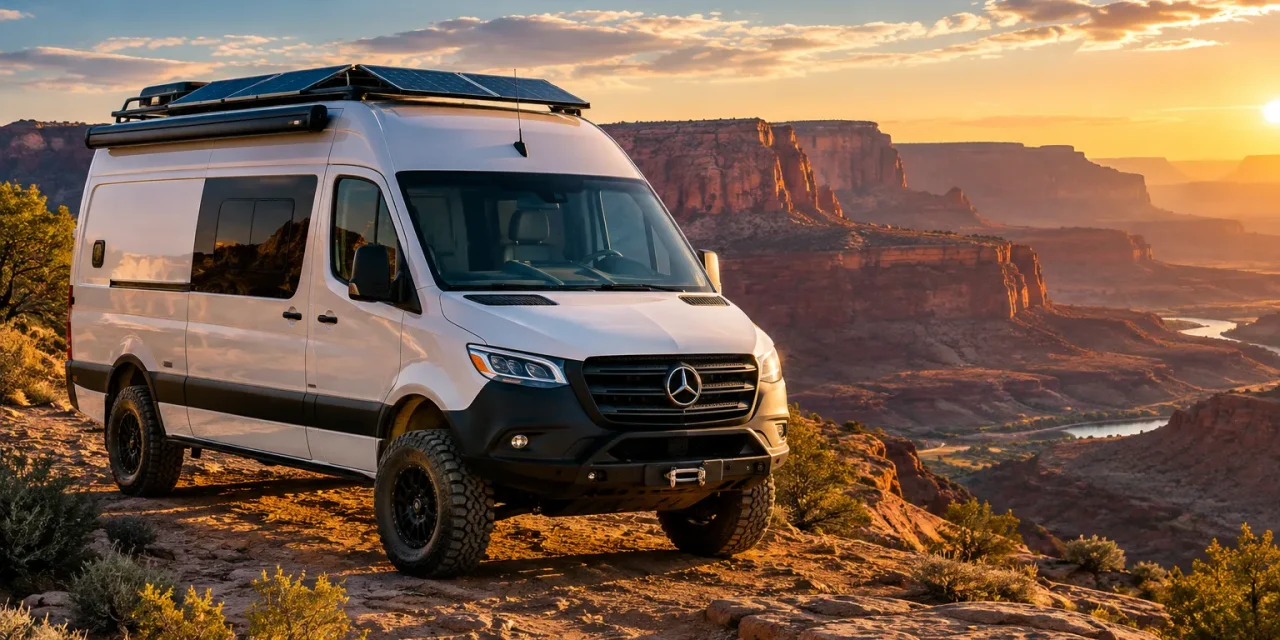
Class B van shipments dipped only slightly from 8,349 units in 2024 to 8,217 in 2025, even as the broader RV market cooled off from its pandemic-era boom.[8] That’s not a crash. That’s a signal. Buyers who once experimented with van life for fun are now committed lifestyle users who want real off-road capability, not just a cute rig for the campground.
Overlanding in a Class B van isn’t the same as parking at a hookup site with a paved pad and a picnic table. It’s about self-sufficiency: enough power, water, and grip to disappear down a forest service road for a week and not think twice. This guide breaks down exactly how to build, equip, and drive a Class B van for serious off-grid adventure, without turning your rig into a science experiment that leaves you stranded.
Key Takeaways
- AWD Sprinter platforms now dominate the Class B overlanding space, powering popular builds like the Winnebago Revel and Storyteller Overland MODE.[7]
- Lithium and 48V electrical systems are replacing generators, letting vans run induction cooktops and A/C units purely off solar and battery storage.[7]
- Garageable 4×4 campers are trending, vans sized to fit a standard 7-foot garage door but capable of expanding into full living space at camp.[7]
- Modular roof racks are replacing heavy permanent systems, cutting weight while still supporting rooftop solar and gear.[7]
- Trail etiquette and route research matter just as much as gear, poor planning is the top reason overlanding trips go sideways.
Overlanding in a Class B Van: Off-Grid Camping Strategies for Serious Adventure Seekers Begins With the Right Build
Not every Class B van is built for the trail. Some are glorified street vans with a bed and a fridge. Others are engineered from the frame up for dirt roads, washboard trails, and multi-day disconnection from civilization. Knowing the difference is the first step toward smarter off-grid camping.
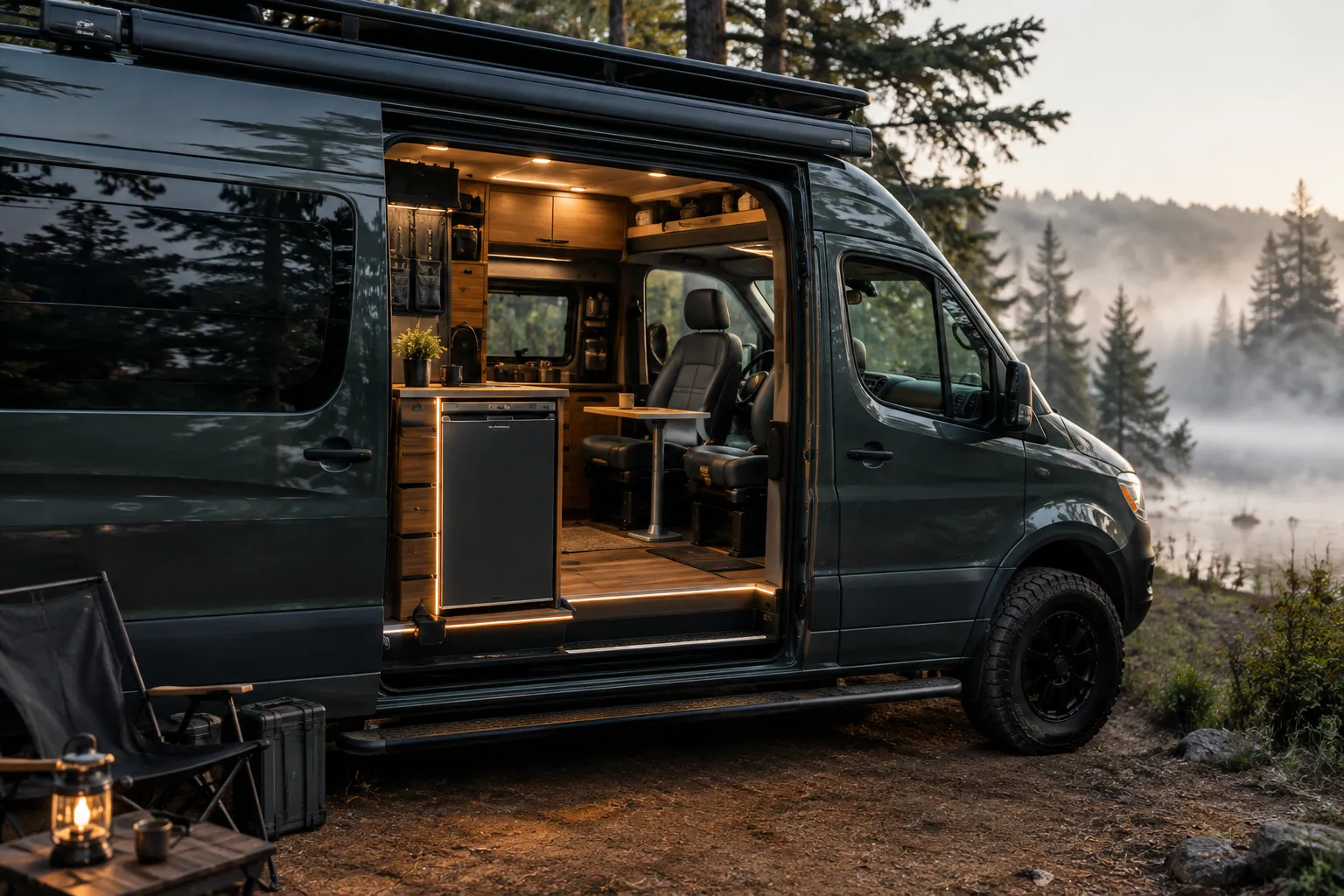
The current generation of overlanding-ready Class B vans leans heavily on AWD Mercedes-Benz Sprinter chassis. That platform underpins mainstream favorites like the Winnebago Revel and Storyteller Overland MODE, plus dozens of custom builds from smaller shops.[7] AWD matters because it gives the van traction on loose gravel, sand, and light mud without the bulk and fuel penalty of a true 4×4 truck-based rig.
A big trend worth watching is the “garageable 4×4 camper”, a van compact enough to fit through a standard 7-foot garage door at home, but designed to unfold into a full living space once you reach camp.[7] That’s a smart compromise for RVers who want daily-driver practicality without sacrificing weekend capability.
Storyteller Overland’s MODE lineup is a good example of this shift. The brand markets its Class Bs as “overland-ready,” specifically engineered for off-road capable, off-grid travel rather than campground-only cruising.[10][4] The 2026 Crew MODE XL, built on a Mercedes-Benz Sprinter 3500XD AWD chassis, comes with a 37-gallon fresh water tank, a 24-gallon grey tank, and a diesel powertrain built for long-range independence, exactly what serious overlanders need when the nearest fill station is two days away.[4]
Premium builders are pushing even further. Outside Van’s new 2026 Syncline Adventure Van is marketed specifically for reaching remote trailheads, pairing a Lithionics lithium battery system with a Garmin Control Center touchscreen and a secondary Garmin tablet for off-road navigation.[2] It’s priced around $235,000, which shows just how far the top end of this market has moved toward dedicated overland capability rather than simple van conversions.[2]
What to look for when shopping or building:
- AWD or 4×4 drivetrain with meaningful ground clearance
- Skid plates or underbody protection for rocker panels and tanks
- All-terrain tires rated for mixed dirt, gravel, and rock
- A wheelbase short enough to clear tight switchbacks and forest roads
If you’re weighing a Class B against bigger options, it helps to understand the tradeoffs of size and capability across the board, our breakdown of Class A motorhome vs. 5th wheel toy hauler options is a useful reference point even though a Class B sits in its own category.
Building the Ultimate Off-Grid Power, Water, and Storage System
Here’s the honest truth: your battery bank decides how long you can stay off-grid, not your fuel tank. Water runs out faster than most people expect too. Get these two systems right and everything else about overlanding in a Class B van gets easier.
Power Systems That Actually Hold Up Off-Grid
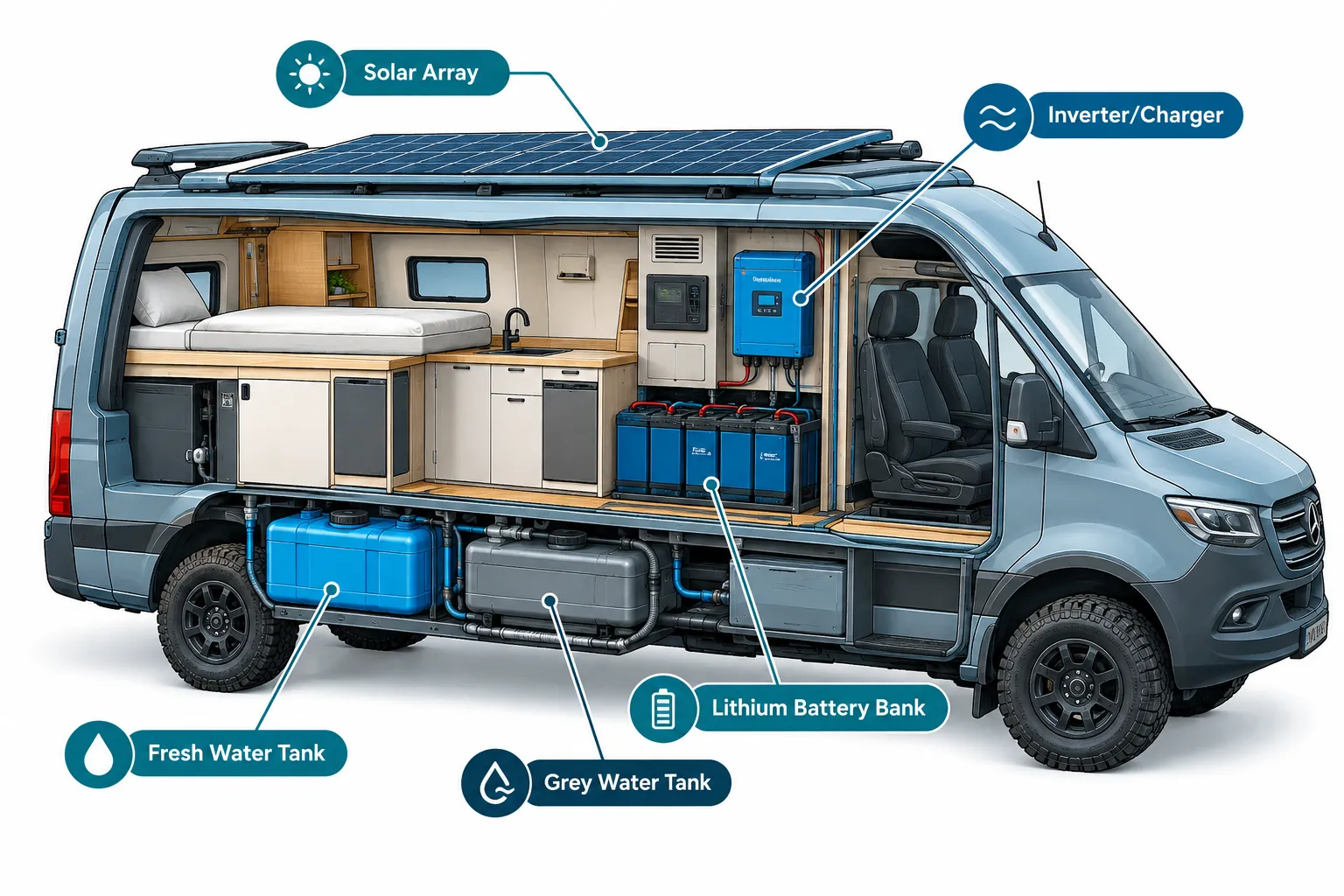
The 2026 electrical trend is clear: high-capacity lithium banks paired with 48V architecture are replacing the old single-battery, generator-dependent setups.[7] Higher voltage systems run demanding loads, induction cooktops, rooftop A/C units, espresso machines, without dragging a noisy generator along.
Real-world examples show how far this has come:
- Geotrek Vans’ Convoy model offers 400W rooftop solar with 5 kWh or 10 kWh onboard lithium systems, purpose-built for off-grid, shared travel.[15]
- A 2023 Ram Promaster build listed on Vanlife Trader runs 800W of solar into a 48V lithium portable power station, a setup once considered overkill that’s now common among serious builders.[9]
- Volkswagen’s Grand California now offers a factory solar-plus-lithium upgrade, swapping a single 92Ah AGM battery for dual 40Ah LiFePO4 batteries fed by a 104W or 174W rooftop panel, a nearly 40% jump in usable capacity, from 46 Ah to 64 Ah.[5]
For DIYers converting their own van, turnkey kits have made this dramatically simpler. The ECO-WORTHY 1.6 kWh kit, for example, bundles 400W of solar, a 200Ah LiFePO4 battery, a 2000W inverter, an MPPT charge controller, and Bluetooth monitoring into one package, no custom engineering degree required.[1]
If you’re still deciding how much solar and battery capacity fits your travel style, it’s worth reviewing reader feedback on how important solar power really is for RV owners before you spend a dime. And before wiring anything yourself, brush up on the basics with these RV electrical questions that may come in handy, a blown fuse three hours from pavement is not the time to learn.
Water and Storage: The Part Nobody Brags About
Fresh water is the quiet limiter of every off-grid trip. A pet-friendly European rental van, for example, carries a 72-liter fresh tank alongside a 160Ah lithium battery and 270W solar, a realistic baseline for multi-day trips in a compact platform.[11] Bigger rigs like the Crew MODE XL scale that up to 37 gallons fresh and 24 gallons grey, buying serious extra time between dumps.[4]
A simple rule of thumb for water planning:
| Trip Length | Minimum Fresh Water Needed (per person) |
|---|---|
| 2 days | 4-6 gallons |
| 4 days | 10-12 gallons |
| 7 days | 18-20 gallons |
Cut usage further with low-flow shower heads, wet wipes for quick cleanups, and cooking methods that don’t require rinsing multiple pots. Roof racks matter here too, 2026 builds are trending away from heavy permanent rack systems toward modular crossbars and low-profile platforms, which cuts weight and drag while still leaving room for solar panels, bikes, or a rooftop cargo box.[7]
Keep your gear organized so nothing shifts loose on washboard roads. A well-planned interior layout makes a bigger difference off-grid than most people expect, check out these genius RV storage hacks for a clutter-free space for ideas that translate directly to van life.
Trail Etiquette, Safety, and Route-Finding for Off-Grid Adventure Seekers
Gear gets you there. Judgment gets you back. This is the part of overlanding in a Class B van that separates confident adventurers from people who end up as a cautionary tale on a forum.
Trail Etiquette That Keeps Public Land Open
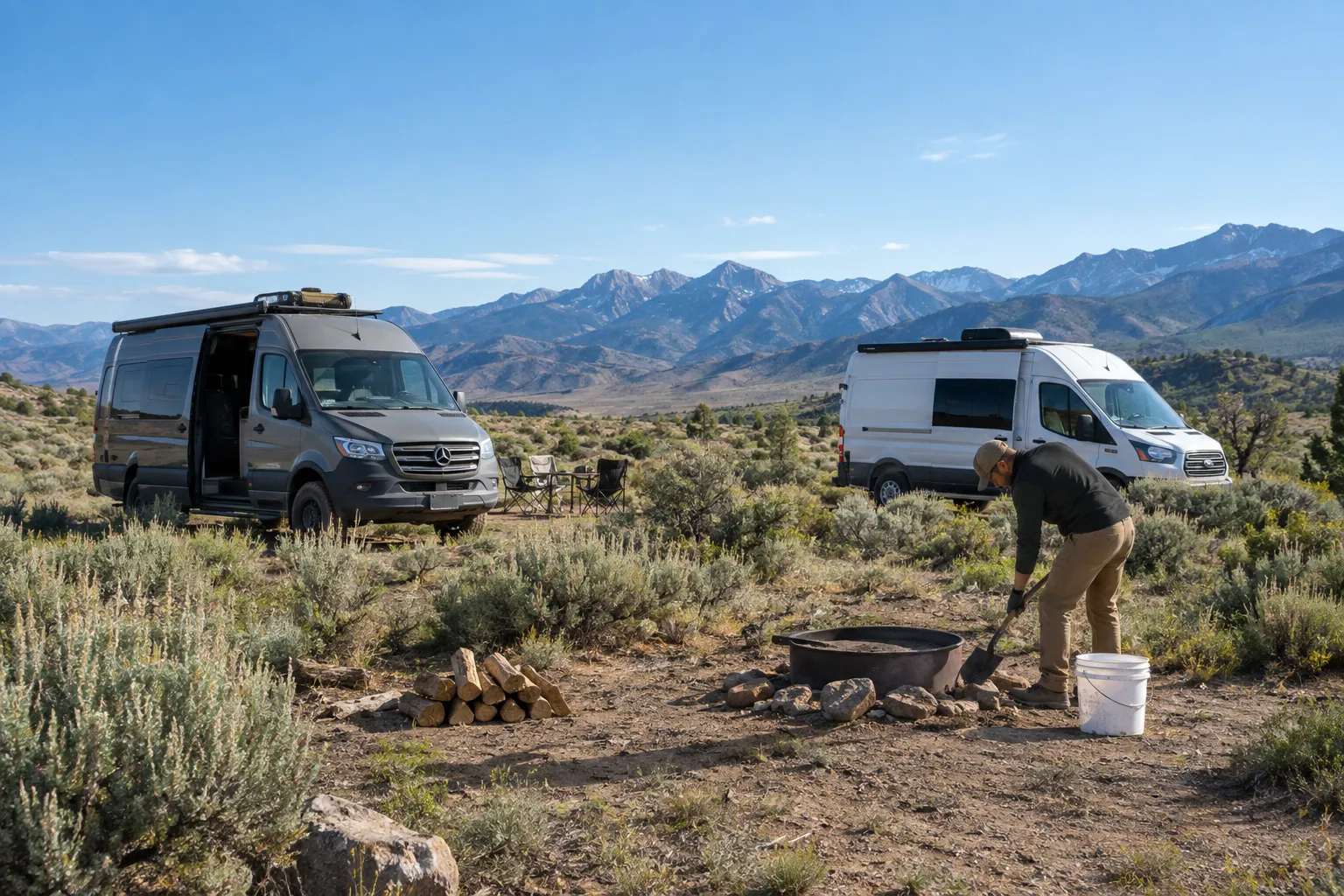
Overlanders share dispersed camping areas, forest roads, and trailheads with hikers, hunters, ranchers, and other campers. A few habits go a long way:
- Stay on established roads. Cutting new tracks damages fragile terrain and can get areas closed to all campers.
- Space out at dispersed sites. Don’t park close enough to hear your neighbor’s generator or conversation.
- Pack out everything, including gray water disposal, dump only at approved stations, never on the ground.
- Yield to uphill traffic on narrow trails and give hikers the right of way at trailheads.
- Keep noise and generator use minimal, especially early morning and after dark.
These aren’t suggestions from a rulebook, they’re the difference between land managers keeping dispersed camping open and shutting it down. Regulations around where you can and can’t camp change more often than most RVers realize, so it pays to stay current on sneaky laws that will ruin your RV trip before you head out.
Safety Strategies for Remote Travel
Off-grid means off-help, at least temporarily. Build your safety net before you need it:
- Carry a satellite communicator for areas with no cell signal.
- Tell someone your route and return date, even a rough plan matters.
- Pack recovery gear: traction boards, a shovel, and a basic tow strap.
- Check tire pressure and tread before every trip, and carry a full-size spare if your van allows it.
- Stock a proper first aid kit stocked for cuts, burns, sprains, and allergic reactions, not just band-aids. Review what belongs in a complete RV first aid kit before you’re miles from the nearest clinic.
- Confirm your coverage for remote breakdowns. Standard roadside plans often don’t reach dirt roads, so verify whether your RV roadside assistance actually covers off-pavement recovery.
Security matters too, even in remote spots. Vans parked overnight at trailheads or rural pull-offs are occasionally targeted, so it’s worth reviewing basic RV theft prevention tips, simple habits like hidden kill switches and secured gear go a long way.
Where to Point the Van: Off-Grid Destinations Worth the Drive
Some regions are practically built for Class B overlanding: wide public land access, mixed terrain, and enough elevation change to keep things interesting.
- Southern Utah’s backcountry byways, slot canyons, red rock mesas, and BLM land with countless dispersed sites off the main highways.
- Central Colorado’s forest service roads, high-alpine access above 9,000 feet, ideal for testing AWD systems on switchbacks.
- Eastern Oregon’s high desert, remote, quiet, and largely overlooked compared to the coastal crowds.
- The Ozark National Forest, dense tree cover, creek crossings, and a completely different overlanding feel than western deserts.
Before committing to a remote route, cross-reference conditions and access points using resources like these strategies for finding the best RV campsites, which apply just as well to dispersed overland spots as they do to established campgrounds. Seasonal closures, wildfire restrictions, and washout roads change fast, so always verify current conditions with the local ranger district before departure.
“The van doesn’t fail you nearly as often as the plan does.”
Common Mistakes Serious Overlanders Should Avoid
Even experienced RVers make these errors when they first push into true off-grid territory:
- Overestimating solar output in shaded canyons or overcast climates, always carry a backup charging plan.
- Underestimating water use during hot-weather trips, especially with pets or multiple travelers.
- Skipping tire pressure checks after switching between highway and dirt terrain.
- Ignoring weight limits by loading too much gear on modular roof racks.
- Assuming cell coverage will return in time to check road conditions ahead.
Planning ahead solves nearly all of these. A little research prevents the kind of trip that turns into one of the classic reasons your RV trip sucked stories everyone swears they’ll avoid, until they don’t plan properly.
Frequently Asked Questions
Do I need a 4×4 van to go overlanding, or is AWD enough? AWD covers most dirt roads, gravel, and light mud that make up the majority of overlanding routes. True rock crawling or deep sand calls for a dedicated 4×4, but most Class B overlanders never need that level of capability.
How much solar power is enough for off-grid Class B camping? Somewhere between 300-800 watts covers most builds, depending on appliance load. Vans running induction cooktops or A/C units lean toward the higher end, paired with a lithium bank of at least 200Ah.[1][9]
Is dispersed camping free? Most BLM and national forest dispersed sites are free, typically with a stay limit of 14 days in one spot. Always check current local rules, since they vary by district.
What’s the biggest overlanding mistake for first-timers? Underestimating water and power needs, then discovering the shortfall three days into a remote trip with no easy way to recharge or refill.
Conclusion
Overlanding in a Class B van rewards preparation more than horsepower. The rigs getting real attention in 2026, AWD Sprinter platforms, lithium-powered electrical systems, and garageable 4×4 designs, all point toward the same goal: staying comfortably self-sufficient farther from pavement, for longer stretches of time.[7]
Start with a rig that matches your terrain goals, build a power and water system sized for your actual trip length rather than a best-case guess, and treat trail etiquette and safety planning as seriously as the gear itself. Do that, and the next dispersed site off a forest road won’t just be a place to park, it’ll be exactly the kind of off-grid adventure that got you into van life in the first place.
References
[1] Best Campervan Conversion Electrical Kits – https://thesweetandsimplekitchen.com/best-campervan-conversion-electrical-kits/ [2] Syncline – https://outsidevan.com/syncline/ [3] Tldr – https://www.newsbytesapp.com/news/auto/dethleffs-unveils-sustainable-ccore-camper-at-dusseldorf-caravan-salon/tldr [4] Product Storyteller Overland – https://www.vancityrv.com/product-storyteller-overland [5] Vw Grand California Off Grid – https://newatlas.com/campervans/vw-grand-california-off-grid/ [6] Storyteller Rebate 2026 – https://www.vancityrv.com/storyteller-rebate-2026 [7] Off Road Camper Overlanding Vans 2026 – https://campexpert.com.tr/en/off-road-camper-overlanding-vans-2026/ [8] The Overland Economy – https://kingmancomms.com/the-overland-economy/ [9] Open Design Well Equipped Thoughtful Storage Negotiable 1f77e6 – https://vanlifetrader.com/listing/open-design-well-equipped-thoughtful-storage-negotiable-1f77e6/ [10] Storyteller Overland – https://www.vancityrv.com/product-storyteller-overland/storyteller-overland