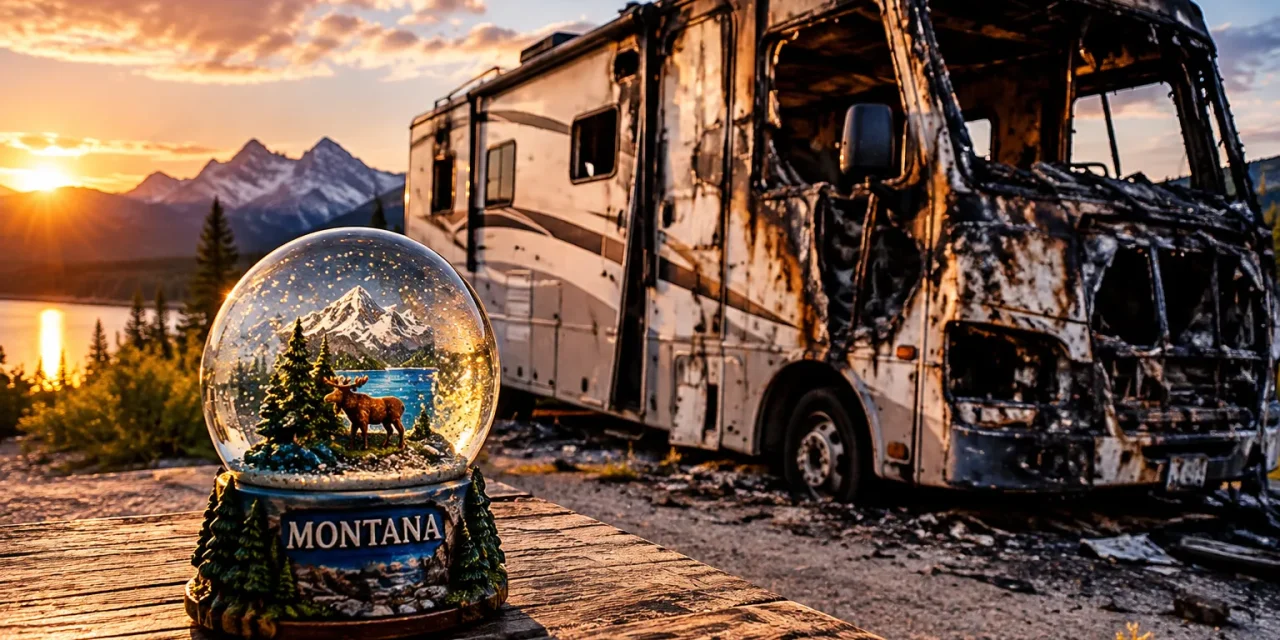
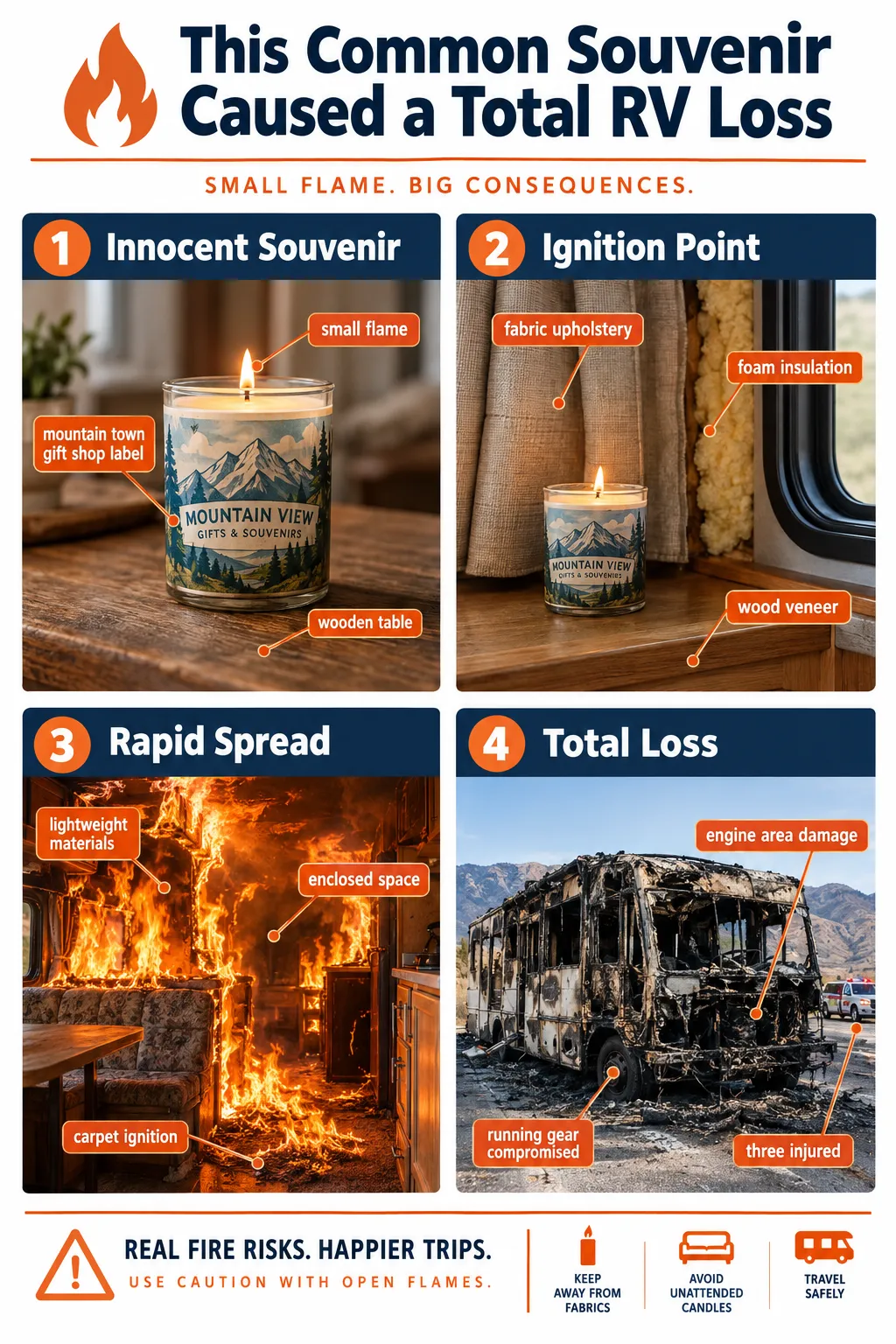
A single candle. That’s all it took. One RV owner brought home a small souvenir candle from a road trip, lit it one night for a little cozy ambiance, and woke up hours later to smoke filling the cabin. By morning, the rig was gone. This Common Souvenir Caused a Total RV Loss for that family, and it can happen to anyone who treats an open flame like a harmless keepsake.
It sounds dramatic. It is dramatic. But it is also completely avoidable once you understand how fast a small fire turns into a six-figure disaster on wheels.
The Souvenir Nobody Suspects: How a Small Flame Led to a Total RV Loss
Souvenirs feel harmless. A little candle from a mountain town gift shop. A woven basket from a roadside market. A string of decorative lights picked up at a festival. These items make an RV feel like home.
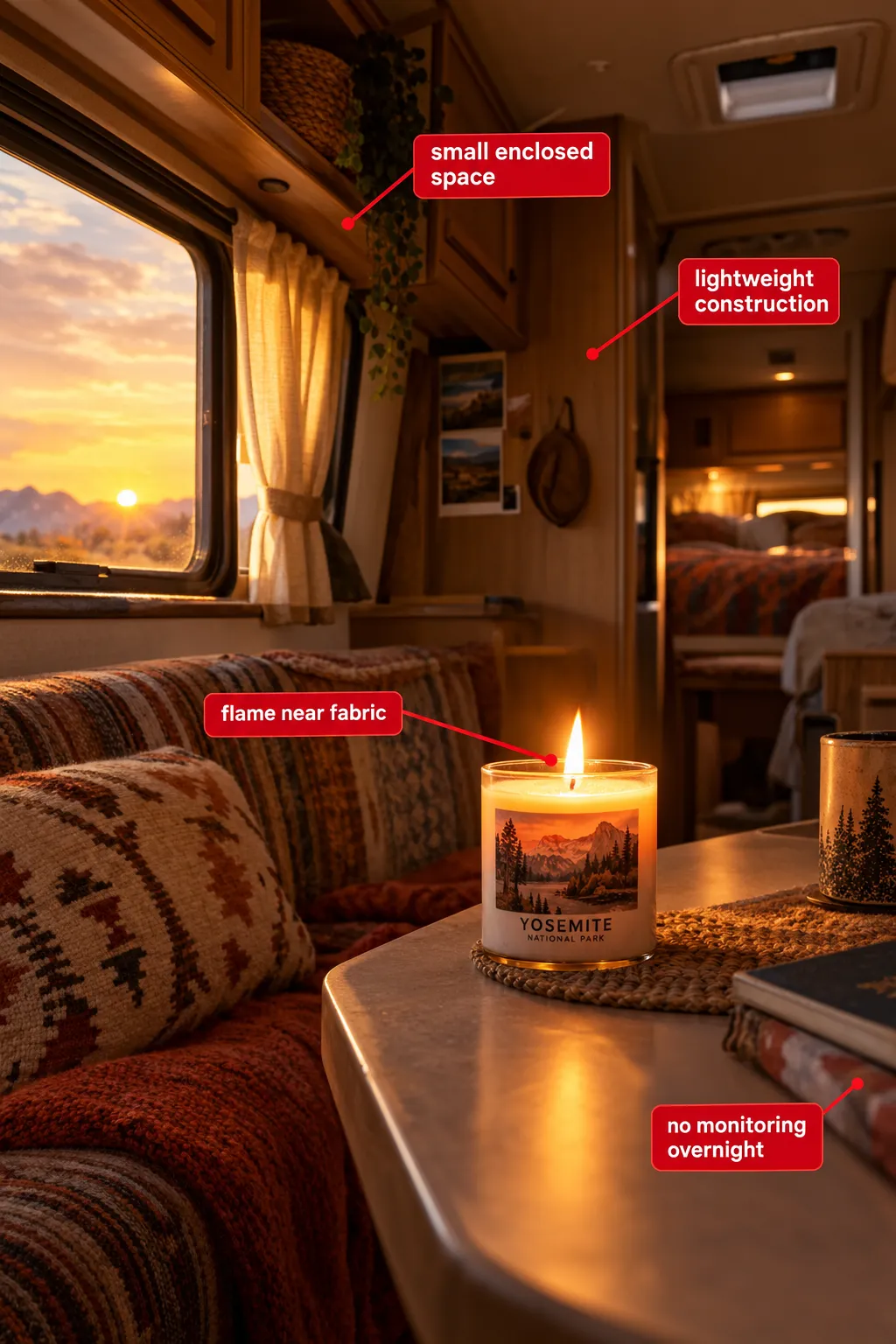
But a lit candle inside a small, enclosed space is a different story than a candle in a big house. RVs are tight. Curtains, cushions, and wood paneling sit just inches from shelves and counters. There’s very little room for error.
In one documented case, a candle left burning overnight inside an RV sparked a fire that injured three people at a Lebanon, Oregon campground [2]. Nobody expected a small decorative flame to escalate that fast. That’s exactly the danger. This Common Souvenir Caused a Total RV Loss because nobody was watching it when it mattered most.
If you enjoy collecting keepsakes for your rig, it’s worth thinking about where and how you display them. Check out this guide on displaying souvenirs and mementos in your RV for safer ways to show off your travels without turning your living space into a fire hazard.
Why This Common Souvenir Caused a Total RV Loss So Fast
RVs are built with lightweight materials to keep them towable and fuel efficient. That same construction makes them burn fast. Wood veneer, foam insulation, carpet, and fabric upholstery can all go up quickly once a flame catches hold.
The National Park Service’s fire safety guidance is blunt about this: if a fire starts, occupants should evacuate immediately, never re-enter to grab belongings, and avoid risky habits like running extension cords inside the RV [4]. Once flames spread past the first minute or two, there is often no saving the unit, let alone the souvenirs sitting near it.
Here’s what makes candles and similar small-flame souvenirs so risky in an RV:
- Tight quarters mean flammable materials are always close by.
- Low ceilings and small rooms let smoke and heat build up fast.
- Limited exits slow down evacuation compared to a house.
- Propane, batteries, and wiring nearby can turn a small fire into a much bigger one.
This isn’t the only common item causing serious damage inside RVs. Some everyday products have sparked fires in similar ways. Take a look at this popular item that started an RV fire to see another example worth watching for.
How Insurance Companies Decide an RV Is a Total Loss
Not every fire or accident ends in a total loss. Insurance companies run the numbers first.
Most insurers use a simple formula: if the cost to repair the RV climbs above roughly 70-80% of its actual cash value, they call it a total loss [1][5][8][12]. At that point, they’d rather pay out the value of the RV than fund an expensive repair.
Here’s a simplified example of how that math plays out:
| RV Value (ACV) | Total Loss Threshold (75%) | Repair Cost | Outcome |
|---|---|---|---|
| $50,000 | $37,500 | $40,000 | Declared total loss [8] |
| $50,000 | $37,500 | $20,000 | Repaired, not totaled |
Once damage crosses that line, the insurer pays the RV’s actual cash value, minus the deductible, and takes ownership of what’s left [1][5][8][12].
This is where coverage type matters a lot. Standard Actual Cash Value policies pay what the RV was worth after depreciation, not what it would cost to replace it. Some policies offer total loss replacement coverage instead, which can cover the cost of a comparable new unit [9]. Owners who only carry ACV coverage may be shocked at how small the payout feels compared to what a new or similar RV actually costs. Given that RV values continue to decline over time, that gap between ACV and replacement cost tends to grow the longer you own the rig.
Other Common Causes of Total RV Losses
Fires from souvenirs and candles aren’t the only path to a totaled RV. Data from the U.S. Fire Administration shows most RV fires actually start in the engine and running gear area, accounting for about 26% of cases, with electrical failures responsible for roughly 15% and cooking areas around 7.7% [3][10]. Mechanical and electrical issues, not decor, cause the majority of RV fires overall.
Other frequent culprits behind total-loss claims include:
- Refrigerator fires from aging cooling units [13]
- Air conditioner failures that overheat wiring [13]
- Faulty electrical systems throughout the coach [13][14]
- Overheating tires or wheel bearings on the road [15]
- Roof damage from low clearance strikes, which often peels back roofing material and typically results in a total insurance loss [7]
- Overloaded or uneven cargo, which can cause blowouts and dangerous sway [7]
It’s a good reminder that total RV losses rarely come from just one obvious source. If you want a broader look at what puts RVs at risk on the road, this breakdown of common causes of RV accidents covers many of the mechanical and driving-related risks alongside fire hazards.
How to Protect Your RV From Souvenir-Related Fires
The good news: most souvenir and candle-related fires are preventable with a few simple habits.
- Skip open flames inside the RV entirely. Battery-powered flameless candles give the same cozy glow without the risk.
- Keep decorative items away from curtains, bedding, and upholstery. Give anything with a heat source at least a few feet of clearance.
- Never leave a candle, incense, or space heater running while you sleep or step outside.
- Store souvenirs away from the stove, heater vents, and electrical panels.
- Install and test smoke detectors in the sleeping area and near the kitchen.
- Keep a fire extinguisher within reach of the main living space, not buried in a closet.
- Avoid extension cords strung across the cabin, since NPS guidance flags this as a common ignition risk alongside heaters placed too close to combustibles [4][14].
Combine these habits with regular maintenance checks on your engine, wiring, and running gear, since those systems cause the largest share of RV fires overall [3][10]. A quick seasonal inspection can catch small problems before they turn into a total-loss event.
What to Do If a Fire Starts in Your RV
Even with every precaution, fires can still happen. Knowing the steps ahead of time can save lives.
- Get everyone out first. Don’t stop to grab belongings, souvenirs included [4][15].
- Move away from the RV in case of explosion risk from propane or the fuel tank.
- Call 911 immediately and give your exact location.
- Warn nearby campers if you’re in a campground setting.
- Never go back inside, even for pets or valuables, once everyone is safely out [4].
If the RV ends up declared a total loss afterward, document everything. Keep records of upgrades, recent maintenance, and receipts, since insurers weigh repair cost against salvage value when making the total-loss determination [1][6][12]. Knowing your RV’s actual cash value ahead of time, and understanding how RV shops handle repair estimates, can help you push back if a payout feels too low.
Conclusion
A candle from a gift shop shouldn’t be able to destroy a $50,000 investment, but it can. This Common Souvenir Caused a Total RV Loss for real families, and the pattern is simple: small flame, tight space, no one watching. The fix is just as simple. Skip the open flame, keep heat sources away from fabric, and treat every souvenir with the same caution you’d give a stove burner.
Before your next trip, walk through your RV and check what’s sitting near heaters, outlets, and vents. Swap real candles for flameless versions. Test your smoke detector. And take a few minutes to review your insurance coverage so you know exactly what happens if the worst-case scenario ever plays out. A little prevention now beats a total loss later.
References
[1] What Happens When Your Rv Is Declared A Total Loss – https://rvrenovators.com/what-happens-when-your-rv-is-declared-a-total-loss/ [2] Burning Candle Causes Lebanon Rv Fire Injures Three – https://ktvl.com/news/local/burning-candle-causes-lebanon-rv-fire-injures-three [3] Snapshot Rv Fires – https://www.usfa.fema.gov/statistics/reports/where-fires-occur/snapshot-rv-fires.html [4] P52 Rv Fire Safety 101 – https://www.nps.gov/articles/p52-rv-fire-safety-101.htm [5] What Happens When An Insurance Company Totals An Rv – https://parkingday.org/what-happens-when-an-insurance-company-totals-an-rv/ [6] When Insurance Totals Your Rv What Happens – https://parkingday.org/when-insurance-totals-your-rv-what-happens/ [7] Rv Accident Statistics – https://www.habitatista.com/548/rv-accident-statistics/ [8] Understanding Rv Total Loss Thresholds – https://www.coachspecialists.com/blog/understanding-rv-total-loss-thresholds/ [9] Rv Total Loss Replacement Vs Depreciation – https://piawv.com/blog/rv-total-loss-replacement-vs-depreciation [10] Anatomy Of An Rv Fire Prevention Checklist – https://rvingwithrex.com/2026/06/27/anatomy-of-an-rv-fire-prevention-checklist/