A four-hour drive can feel like a real vacation. A six-hour drive can feel like a chore. That small window, roughly four to six hours from home, is where most weekend RV trips actually happen, and it’s the sweet spot worth building a search strategy around [1].
If a search for camping sites close to me for RVs keeps turning up either a packed parking-lot-style park or a gorgeous but amenity-free backcountry pullout, the problem isn’t bad luck. It’s that most people search for “close” without defining what they actually need from a short trip. This guide fixes that by giving a real decision framework, not just a list of parks.
Key Takeaways
- The ideal radius for a short RV getaway is usually a 4-6 hour drive, balancing travel fatigue against actual time spent camping [1].
- Amenities now rank as a top deciding factor for many campers choosing between scenic-but-basic sites and amenity-rich parks [2].
- Campgrounds are actively upgrading infrastructure, bigger pads, better hookups, specifically to serve short-trip RV travelers [3].
- Booking early matters more than ever, since reservation and cancellation policies have tightened across many parks [4].
- A simple scoring system (distance, scenery, amenities) beats endless scrolling through map apps.
Why “Close” Isn’t the Only Thing That Matters
Typing camping sites close to me for RVs into a map app gives distance, not quality. Distance tells you how long you’ll drive. It says nothing about whether the site fits your rig, whether there’s cell signal for the kids’ tablets, or whether the “lake view” is actually a drainage pond behind a dumpster.
A smarter approach treats distance as one of three variables, not the only one:
- Distance, drive time, fuel cost, traffic risk
- Scenery, water access, tree cover, mountain or canyon views
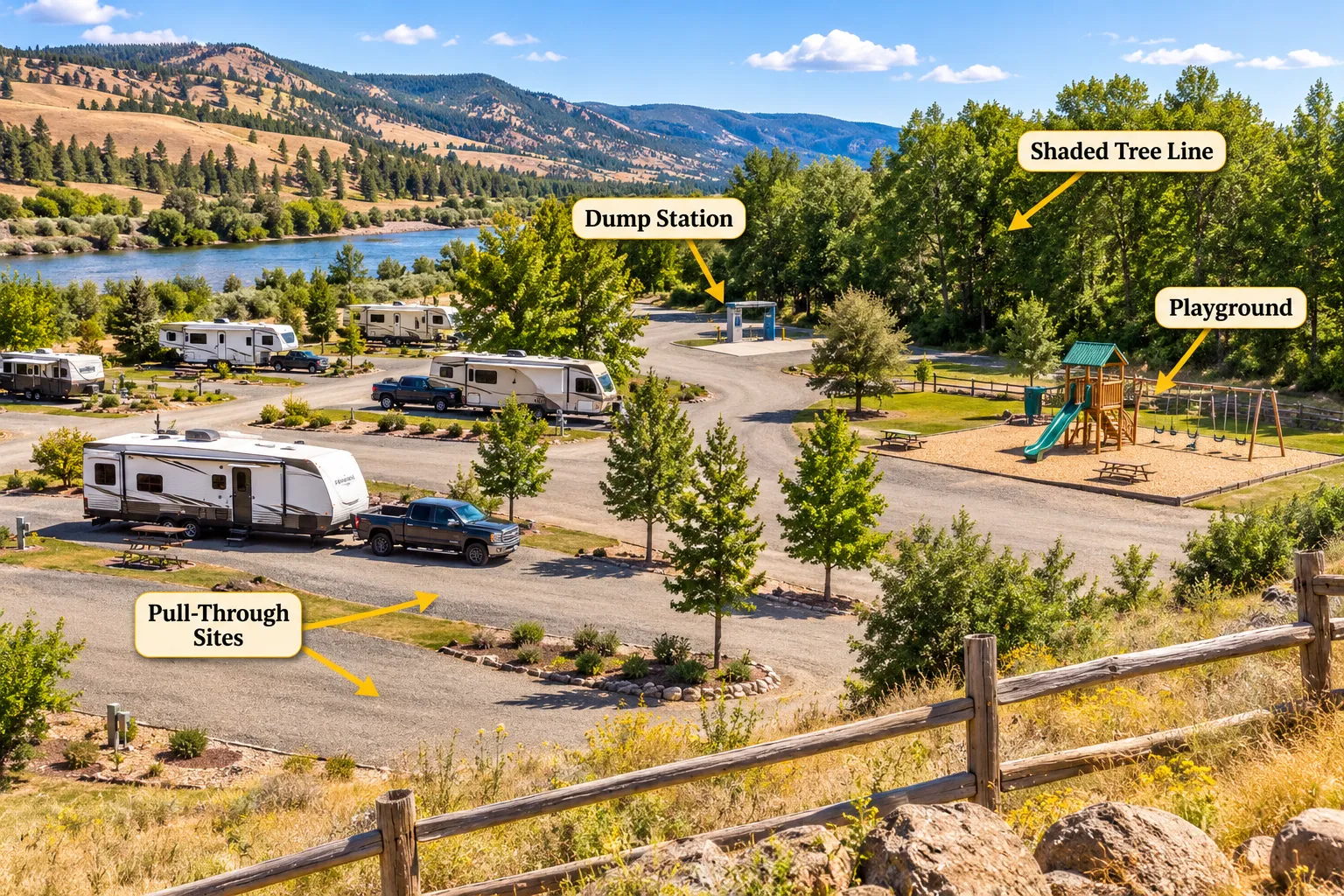
- Amenities, hookups, Wi-Fi, bathhouses, dump stations, pet areas
Short getaways work best when at least two of these three are strong. A site that’s close and scenic but has zero hookups is fine for a boondocker, but it’s a rough surprise for a family expecting air conditioning. For boondocking-friendly options, check out these boondocking tips before committing to a no-hookup site.
The Weekend Warrior’s Decision Framework
Here’s a practical scoring method. Rate each potential site 1-5 on distance, scenery, and amenities, then total the score.
| Factor | What to Check | Weight for 2-Night Trip |
|---|---|---|
| Distance | Drive time under 3 hours = easy; 4-6 hours = still workable [1] | Medium |
| Scenery | Water, trees, elevation, photos from recent visitors | High |
| Amenities | Hookups, pad size, Wi-Fi, laundry, dump station | High |
Rule of thumb: For a 2-night trip, prioritize amenities and scenery over squeezing out the last 30 minutes of drive time. For a 4+ night trip, distance matters less because you’ll have time to settle in.
Quick Scoring Example
- Site A: 45 minutes away, roadside gravel lot, full hookups → Score: 4+1+5 = 10
- Site B: 3 hours away, lakeside with trees, water and electric only → Score: 3+5+3 = 11
- Site C: 5 hours away, canyon rim view, full resort amenities → Score: 1+5+5 = 11
Sites B and C tie, but B wins for a short weekend because the drive eats less of the trip.
Matching Camping Sites Close to Me for RVs to Your Rig and Travel Style
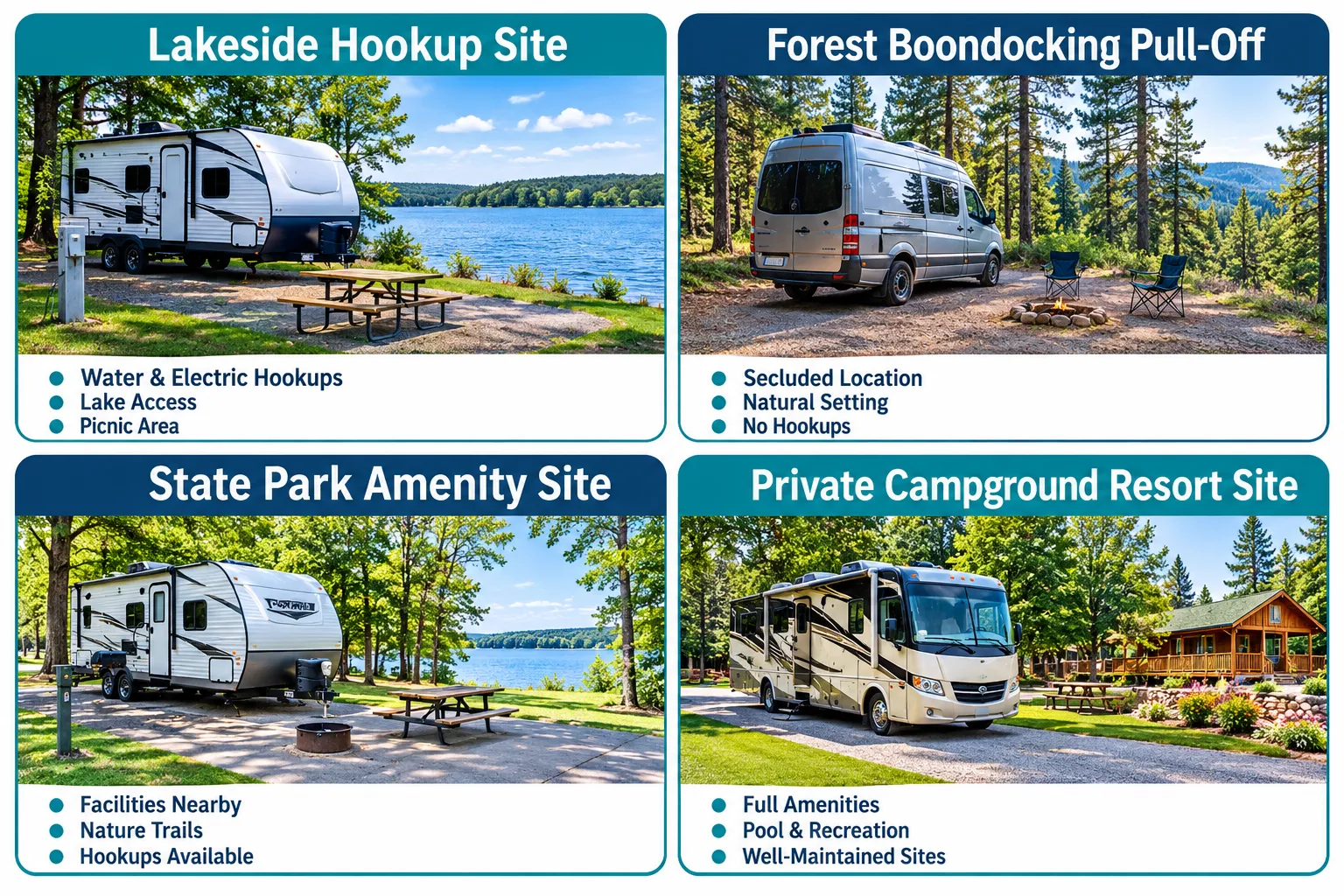
Not every nearby RV park accepts every rig. Older Class A motorhomes often need 50-amp service and long pull-through sites. Smaller camper vans can slip into tighter, more scenic spots that bigger rigs can’t reach. If you’re driving a Class B motorhome, you have more flexibility to chase scenery over amenities, since these rigs can often self-contain for a night or two.
Generational differences play a role here too. Older RVers tend to favor comfortable, amenity-rich parks with full hookups and clubhouse access, while younger campers and newer rig owners are more willing to trade comfort for a prettier, more remote site [5]. Rig ownership patterns by generation also affect how far people are realistically willing to drive for a short trip, younger campers with smaller rigs often go farther for a unique view, while those towing larger fifth wheels stick closer to home [5].
A few questions to ask before booking:
- Does the site list a maximum rig length, and does your RV (plus tow vehicle) fit with room to maneuver?
- Is the pad back-in or pull-through, and does that match your comfort level?
- Are there overhead clearance issues (low branches, old bridges) on the access road?
- Does the park note slide-out room on each side?
For first-time RV travelers still building confidence with site selection and setup, a first RV trip guide and a campsite setup checklist can prevent a lot of avoidable stress.
How Digital Tools Changed the Search for Nearby RV Parks
Ten years ago, finding camping sites close to me for RVs meant calling campgrounds or trusting a paper atlas. Now, digital discovery and booking platforms heavily influence which parks fill up first, and which ones show up at the top of a search [6]. That’s good news for planning, but it also means popular, well-reviewed sites near major cities book out fast, especially on holiday weekends.
Campgrounds have noticed. Many are actively leveling up their infrastructure, adding larger pads, upgraded Wi-Fi, and more full-hookup sites, specifically to compete for short-trip RV travelers who research online before they ever arrive [3][4]. This is part of a broader shift where campground operators are rethinking their entire approach to attracting RVers, pricing sites more dynamically based on demand and season [4][7].
What this means practically:
- Book 2-4 weeks ahead for popular nearby parks during peak season.
- Check cancellation policies carefully, many have tightened recently, which matters if your weekend plans change at the last minute [4].
- Watch for shoulder-season deals. Short drive-to trips during spring and fall are a growing trend, often with lower rates and fewer crowds [1][6].
Scenery vs. Amenities: A Realistic Tradeoff Guide
Here’s the honest truth: you rarely get a pristine mountain view, full hookups, fast Wi-Fi, and a $20/night rate all in one site. Something gives. Use this quick guide to decide what to sacrifice.
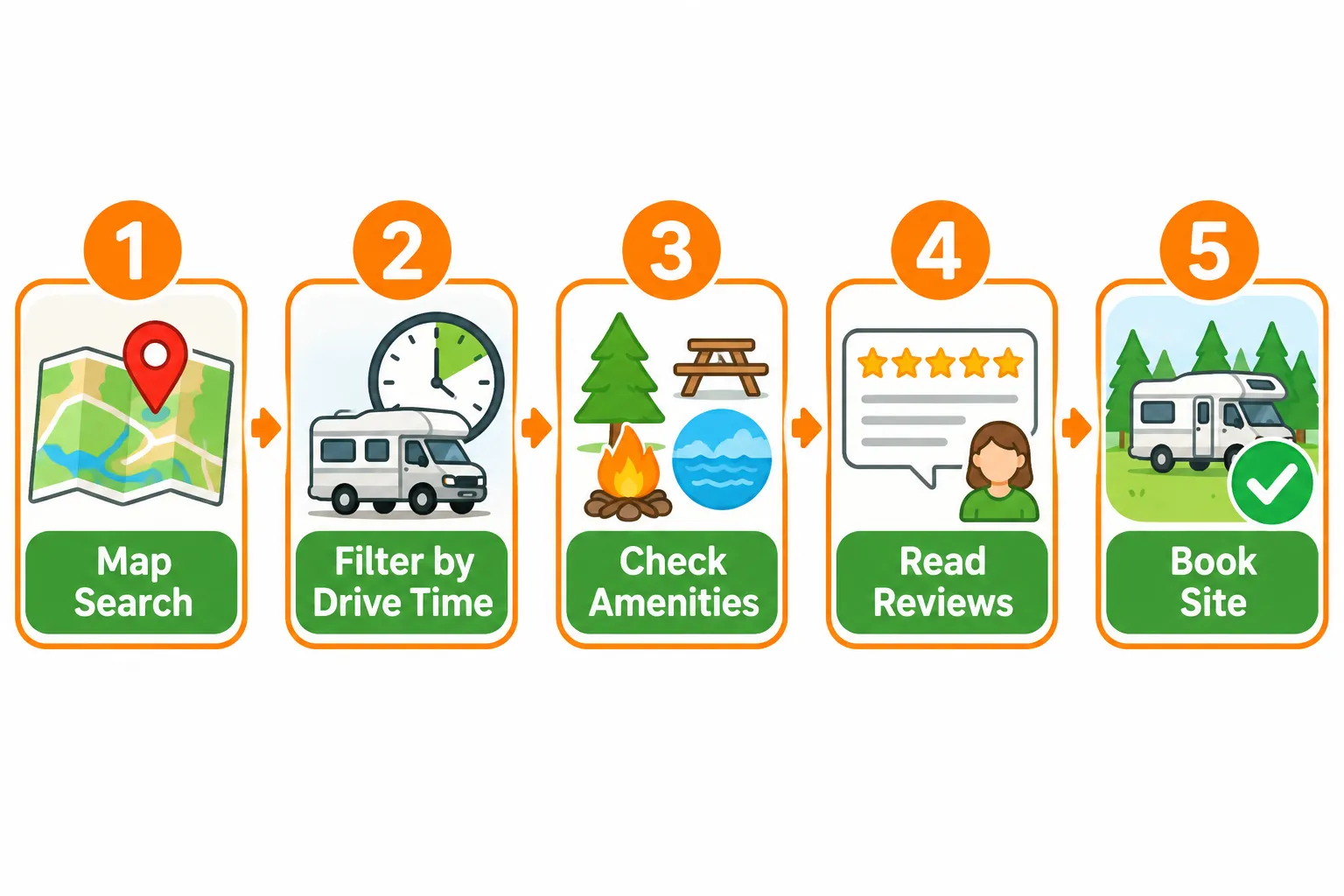
Choose scenery-first sites when:
- You’re staying only 1-2 nights
- Your RV has solar, a generator, or strong battery reserves
- You want a quiet, low-crowd experience
- You’re comfortable with vault toilets or no shore power
Choose amenity-first sites when:
- You’re traveling with kids or pets who need reliable bathrooms
- You rely on A/C or heat for comfort
- You’re working remotely and need stable Wi-Fi
- It’s peak summer heat and you need shore power for climate control
Modern RV design has made this tradeoff easier to manage. Better insulation, larger water tanks, and more efficient appliances mean today’s rigs can lean toward scenic, lower-amenity sites without sacrificing much comfort [2][8]. If you’re shopping for a rig that handles both worlds well, look into Class B motorhome options or read about recent top RV innovations that make self-sufficient camping more comfortable.
Three Mini-Itineraries for Short RV Getaways
1. The Lakeside Reset (2 nights, under 3 hours away)
- Friday evening: Drive 2-3 hours, arrive before dark, set up with water/electric hookup.
- Saturday: Kayak, fish, or swim; evening Dutch oven dinner at the fire pit.
- Sunday: Slow breakfast, pack up by noon, home by early afternoon.
Check out lake camping gear and lakeside RV camping tips before this one, plus some Dutch oven camping recipes for easy one-pot meals.
2. The Coastal Shoulder-Season Escape (3 nights, 4-5 hours away)
- Day 1: Longer drive, arrive late afternoon, simple overnight oats prepped for morning.
- Day 2: Beach walk, local seafood stop, relaxed evening.
- Day 3: Explore nearby town, sample clam chowder or a classic lobster roll.
- Day 4: Pack up, drive home.
This works well for coastal camping fans chasing off-season rates and quieter beaches.
3. The Budget Boondock Loop (2 nights, under 4 hours away)
- Day 1: Drive to a free or low-cost dispersed site.
- Day 2: Hike, stargaze, simple campsite cooking over the fire.
- Day 3: Return home, refill tanks on the way.
Browse free campsites and cheap camping options, plus campsite cooking ideas to keep this trip nearly free beyond fuel.
Common Mistakes When Searching for Camping Sites Close to Me for RVs
- Trusting photos over recent reviews. Scenery photos can be years old; reviews reveal current site conditions.
- Ignoring rig size limits. Always confirm length, width, and height restrictions before booking.
- Skipping the cancellation policy. Tightened policies mean last-minute changes can cost real money [4].
- Overestimating comfortable drive time. Four to six hours is the sweet spot, pushing past that often cancels out the “getaway” feeling [1].
- Forgetting shoulder-season demand shifts. Pricing and availability swing more than people expect, even for nearby parks [7].
Conclusion: Build Your Own Shortlist
Finding the right camping sites close to me for RVs isn’t about finding the single “best” spot, it’s about matching distance, scenery, and amenities to the specific trip in front of you. A two-night family escape has different needs than a solo boondocking weekend.
Next steps:
- Pick your trip length and decide which factor matters most, scenery or amenities.
- Set a realistic drive-time limit (start with 4-6 hours).
- Score 3-5 nearby sites using the framework above.
- Book early, especially for weekends, and double-check the cancellation policy.
- Pack light, prep simple meals, and enjoy the trip without overplanning every hour.
The demand for nearby, drive-to RV getaways isn’t slowing down heading into 2027, campers are simply getting smarter about how they choose where to park [1][9]. Use this framework, and the next short trip will feel like a real adventure, not just a shorter drive.
References
- Outdoor Travel Stays Strong in 2026 Rms Finds. rv-pro.com.
- All the Latest Rv Trends From the 2026 Hershey Rv Supershow. rv.com.
- Campgrounds Level. recmanagement.com.
- Why Campground Operators Are Rethinking the Rv Park Playbook in 2026. moderncampground.com.
- The Biggest Rv Industry Trends Every Buyer Should Know in 2026. bishs.com.
- Camping a Major Summer Travel Trend Pitchup Com Finds. rv-pro.com.
- New Study Maps Effective Revenue Strategies for Campgrounds and Rv Parks. moderncampground.com.
- Top Rv Innovations. campingworld.com.
- Rv Industry Update What to Expect in 2027. bishs.com.
camping sites close to me for rvs, rv camping, short getaways, weekend camping trips, rv parks near me, boondocking tips, lakeside rv camping, campsite setup, rv travel planning, coastal camping, free campsites, rv beginner guide