
RV travel brings the comfort of a full kitchen on the road. Many travelers wonder if they can use it while the vehicle is moving.
Cooking in an RV while driving is technically possible but not recommended due to serious safety risks, including fire hazards from propane use, potential burns from hot liquids and foods shifting during vehicle movement, and driver distraction. Most safety experts and RV manufacturers advise against this practice.
The laws around cooking while driving vary by state, with some prohibiting the use of open flames or certain appliances in moving vehicles. Beyond legal concerns, the practical challenges are significant.
Items can slide off counters, hot pots can spill, and the constant motion makes it difficult to safely handle cooking tasks. Even securing equipment properly does not eliminate all risks.
RV owners still have many options for enjoying meals on the road. Understanding which appliances are safer to use, what types of foods work best for travel cooking, and what alternatives exist can help travelers plan meals effectively.
This guide covers the safety considerations, legal restrictions, and practical solutions for eating well during RV trips.
Key Takeaways
- Cooking while an RV is in motion poses safety and fire risks and is not advisable
- State laws vary on cooking while driving, with some prohibiting open flames or propane use
- Pre-cooked meals, roadside facilities, and stationary cooking at stops offer safer alternatives
Is It Legal and Safe to Cook in an RV While Driving?
The legality of cooking while driving an RV varies by state. Safety concerns make it a risky practice regardless of where you travel.
Most states don’t have specific laws against cooking in a moving RV, but the activity can violate distracted driving laws and create serious hazards.
Legal Restrictions in Different States
Most states don’t have laws that specifically ban cooking in an RV while driving. However, many states prohibit activities that distract the driver or create unsafe conditions.
If cooking causes the driver to lose focus or passengers to move around unsafely, law enforcement can issue citations. Some states restrict propane use while driving through tunnels, over bridges, or on certain roads.
These restrictions apply to all RV types. Drivers need to research local laws before traveling, as regulations change from one state to another.
Key legal considerations include:
- Distracted driving laws that can apply if cooking interferes with safe operation
- Propane restrictions in tunnels and on specific roadways
- Seatbelt laws that require passengers to remain seated
- Local ordinances about vehicle safety equipment
Safety Risks and Accident Hazards
Cooking while driving an RV creates multiple safety hazards. Hot liquids and foods can spill during sudden stops or turns, causing burns to passengers.
Sharp utensils become dangerous projectiles when the vehicle hits bumps or makes quick movements. Propane appliances pose the most serious risk.
RV manufacturers and safety experts agree that drivers should never use propane while the vehicle is moving. Road vibrations can loosen connections and create leaks.
An unattended flame can start a fire if the RV stops suddenly or hits rough road conditions. Standing to cook while the RV moves increases fall risks.
Passengers need to wear seatbelts, but cooking requires standing and moving around the cabin. This creates a dangerous situation during any unexpected maneuver.
Insurance and Liability Considerations
Many RV insurance policies don’t cover accidents or injuries that happen while cooking in motion. Insurance companies view cooking while driving as a preventable risk that policyholders should avoid.
Claims for burns, fires, or injuries from cooking equipment may be denied if the incident occurred while the RV was moving. Drivers should review their insurance policies carefully.
Some policies explicitly exclude coverage for incidents related to cooking while driving. Others may reduce payouts or increase premiums after a cooking-related claim.
Liability extends to injuries that passengers suffer. If someone gets hurt because the driver allowed cooking while moving, the driver may face personal liability beyond what insurance covers.
Types of RVs and Their Cooking Capabilities
Would you like to save this article?
Different RV types offer varying levels of kitchen functionality and space for meal preparation. The type of RV directly impacts what cooking options are available and how safely someone can prepare food while the vehicle is in motion.
Motorhomes vs. Travel Trailers
Motorhomes come in three classes: Class A, B, and C. All motorhomes allow passengers to move around inside while driving, though this doesn’t make cooking safe during travel.
Class A motorhomes typically have the largest kitchens with full-size appliances. Class B vans offer compact kitchens with smaller cooking surfaces.
Class C motorhomes fall between the two with mid-sized kitchen setups. Travel trailers and fifth wheels cannot be occupied while moving.
It’s illegal for anyone to be inside these pull-behind campers during travel. This means cooking while driving is not possible in travel trailers.
The main difference for cooking purposes is that motorhome kitchens remain accessible to belted passengers. However, safety experts recommend against using cooking appliances while any RV is in motion due to fire hazards and the risk of burns from hot liquids or foods shifting unexpectedly.
Built-In RV Kitchen Features
Most RV kitchens include a propane stove with two to four burners. The rv kitchen typically contains an rv refrigerator that runs on propane or electricity.
Many rigs also have a microwave and a small oven. Common features include:
- Propane cooktop or range
- Refrigerator (propane/electric)
- Sink with running water
- Microwave oven
- Storage cabinets
- Small countertop space
Larger motorhomes may have residential-style appliances. Smaller units often use compact versions of standard kitchen equipment.
The rv refrigerator usually stays on during travel to keep food fresh. However, many RV manufacturers recommend turning off propane appliances, including stoves, while driving to prevent gas leaks and fire risks.
Essential Cooking Equipment for RVs on the Move
Cooking equipment for a moving RV needs to be secure, compact, and safe to use during travel. Portable grills offer outdoor cooking flexibility at rest stops, while electric appliances like Instant Pots provide hands-free meal preparation, and propane stoves require specific safety measures to prevent hazards.
Portable Grills and Outdoor Cooking Gear
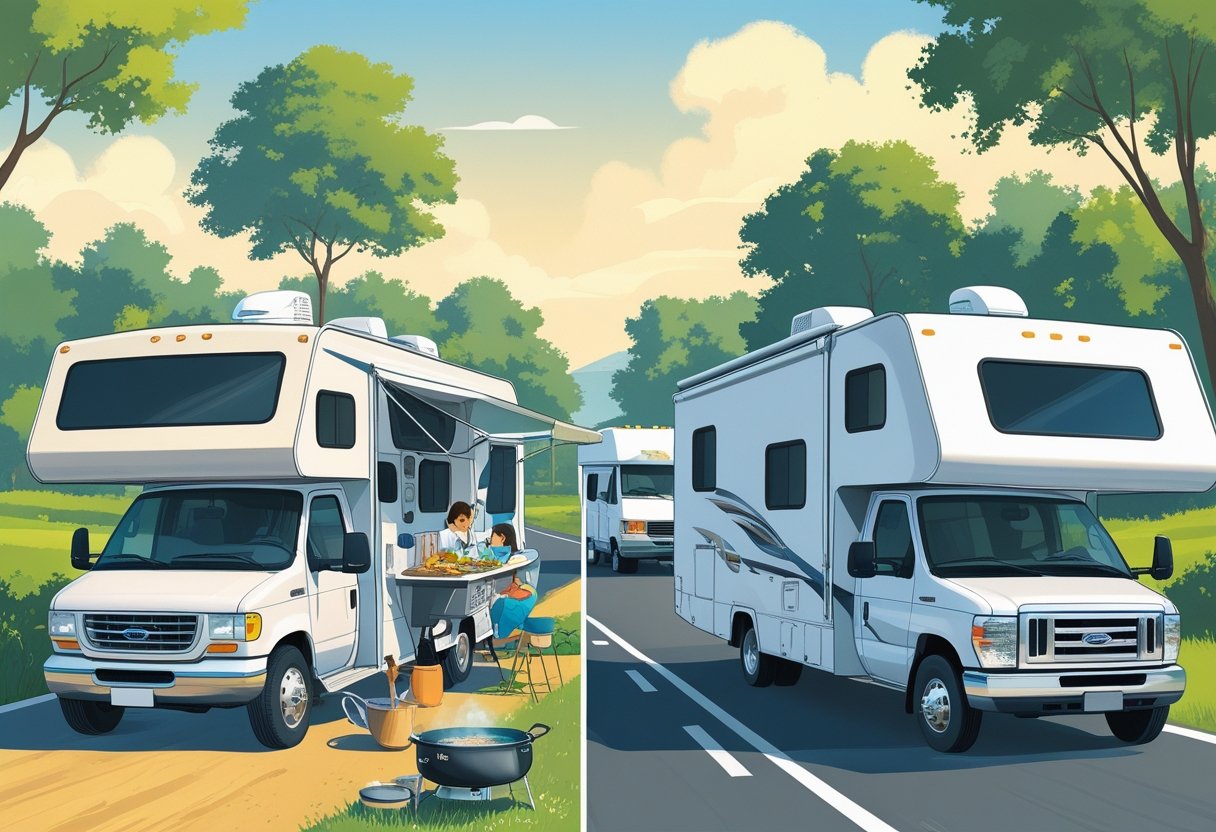
Portable grills are not suitable for use while the RV is moving. They work best at rest stops, campgrounds, and roadside areas where the vehicle is parked.
Electric grills plug into RV power outlets and heat up quickly without open flames. Propane-powered portable grills offer higher heat output but must be used outdoors only.
Compact models that weigh under 20 pounds are easiest to store in RV compartments. Look for grills with secure lids that lock in place during transport.
Folding legs make storage simpler in tight spaces. Outdoor cooking gear should include heat-resistant utensils, portable tables, and grill brushes.
Small charcoal grills work for basic cooking but require proper disposal of hot coals. Many RVers prefer propane models because they light faster and produce consistent heat.
Always place grills on stable, level ground away from the RV’s propane tanks and awnings.
Using an Instant Pot or Slow Cookers
Instant Pots and slow cookers are ideal for cooking while driving because they have sealed lids and automatic shut-off features. These appliances sit securely on countertops when properly wedged between cabinet edges or placed in sinks.
The Instant Pot cooks meals in 20 to 40 minutes using pressure cooking modes. Slow cookers take 4 to 8 hours to prepare meals, making them perfect for all-day drives.
Both appliances require 120-volt AC power from the RV’s electrical system or a generator. They draw between 200 and 1000 watts depending on the model and cooking mode.
Use non-slip mats underneath these appliances to prevent sliding. Choose recipes with less liquid to avoid spills from road vibrations.
Secure the power cord to prevent it from pulling the appliance off the counter. Many RVers prepare ingredients before driving and start the cooking process once the vehicle is in motion on smooth highways.
Propane Stove Safety
Propane stoves in RVs create fire hazards when used while driving. Most manufacturers recommend turning off propane at the tank valve before starting the engine.
Some states prohibit driving with active propane appliances due to fire and explosion risks. If cooking on a propane stove while parked, ensure proper ventilation by opening windows and roof vents.
Install a propane detector near the floor since propane gas is heavier than air and sinks downward. Check all propane connections regularly for leaks using soapy water that bubbles when gas escapes.
Keep a fire extinguisher rated for grease fires within arm’s reach of the stove. Never leave propane burners unattended while lit.
Turn off all burners and the main propane valve after cooking. Secure pots and pans with lid clamps or pot holders designed for RV stoves to prevent tipping during sudden stops or turns.
Best Cooking Methods While Driving an RV
Preparing food ahead of time and choosing the right appliances makes cooking during travel safer and more practical. Most experienced RV travelers focus on cold meals and pre-cooked options rather than active cooking with heat sources while the vehicle is moving.
Prepping Meals Before Your Journey
Pre-made meals offer the safest option for eating during RV travel. Travelers can prepare sandwiches, wraps, and salads before leaving or during scheduled stops.
These foods stay fresh in coolers or RV refrigerators and require no heating. Cold pasta dishes, grain bowls, and veggie platters work well for road trips.
Cut fruits and vegetables ahead of time and store them in containers for easy access. Pre-cooked proteins like grilled chicken, hard-boiled eggs, or deli meats add nutrition without needing heat.
Ready-to-eat options include:
- Sandwiches and wraps
- Fresh fruit and vegetable snacks
- Cheese and crackers
- Trail mix and granola bars
- Pre-made pasta or grain salads
The RV kitchen becomes a prep station at rest stops rather than an active cooking space while driving. This approach eliminates fire risks and allows passengers to focus on road safety.
Using Appliances While in Motion
Most RV experts recommend against using propane appliances while driving due to fire hazards. Electric appliances like slow cookers and electric pressure cookers provide safer alternatives when parked with hookups, but should not run while moving.
A 12-volt lunch warmer or portable food warmer plugs into the vehicle’s power outlet and heats pre-cooked meals without open flames. These devices work at low temperatures and pose minimal risk during travel.
Thermos containers keep soups and stews hot for several hours without requiring power. Small electric kettles can heat water at rest stops for instant meals, coffee, or tea.
An RV kitchen with a microwave should only operate when the vehicle is parked and connected to shore power. Passengers should never stand or move around the RV cooking area while the vehicle is in motion, regardless of the appliance being used.
Safety Precautions and Practical Tips
Cooking in a moving RV requires careful preparation to prevent accidents and injuries. Proper equipment setup and smart kitchen management reduce risks while the vehicle is in motion.
Securing Appliances and Loose Items
All appliances in the RV kitchen must be firmly attached or stored before the vehicle starts moving. Stoves, microwaves, and other cooking equipment should have secure mounting brackets that prevent shifting during travel.
Loose pots, pans, and utensils can become dangerous projectiles when the RV turns or stops suddenly. Drivers should install cabinet locks and latches on all storage areas.
These simple devices keep doors closed and prevent contents from spilling out. Heavy items like cast iron skillets need to stay in lower cabinets where they cannot fall and cause injury.
The RV refrigerator requires special attention during travel. Most models need to be locked or have a travel latch engaged to keep the door sealed.
Items inside should be packed tightly with towels or padding between them to prevent movement and breakage.
Minimizing Mess and Spills
Using non-slip mats under cutting boards and plates prevents items from sliding across counters. These mats work well on most RV kitchen surfaces and provide stability during meal preparation.
Travelers should avoid filling cups and bowls to the brim while the vehicle is moving. Lidded containers are essential for storing ingredients and prepared food.
They prevent spills that can create slippery surfaces or attract pests. Magnetic or suction-cup holders keep paper towels and utensils within reach but secure.
Cold meals and foods that require minimal preparation work best while traveling. Simple options like sandwiches, pre-cut vegetables, and snacks eliminate the need for hot cooking equipment while driving.
Recommendations for Enjoyable RV Cooking Experiences
Planning meals ahead and considering alternatives to cooking while the vehicle is moving can make RV travel more comfortable and safer. These strategies help travelers enjoy good food without the risks that come with preparing meals on the road.
Meal Planning and Organization
Planning meals before leaving home saves space and reduces waste in an RV kitchen. Travelers should make a list of meals for each day and buy ingredients in bulk when possible.
This approach keeps the refrigerator organized and prevents food from going bad. Pre-cutting vegetables and storing them in containers makes cooking faster.
Batch cooking meals at home and freezing them provides ready-to-eat options that only need reheating. Travel trailers often have limited counter space, so using stackable containers and collapsible storage helps maximize room.
Shopping at local farmers markets along the route provides fresh ingredients while supporting communities. Packing versatile tools like cast iron skillets cuts down on the number of items needed.
A well-stocked pantry with pasta, rice, canned goods, and spices ensures basic ingredients are always available.
Alternatives to Cooking While Driving
Preparing meals before the vehicle starts moving eliminates safety risks. Pre-cooked meals stored in the refrigerator can be reheated during stops.
Rest areas and truck stops often have picnic tables and grills available for public use. These facilities let travelers cook outside while enjoying fresh air and scenery.
Many RV parks offer outdoor kitchens and communal cooking spaces where people can prepare food safely. Taking advantage of these roadside options provides a break from the cramped RV kitchen.
It also creates opportunities to meet other travelers and share cooking tips.