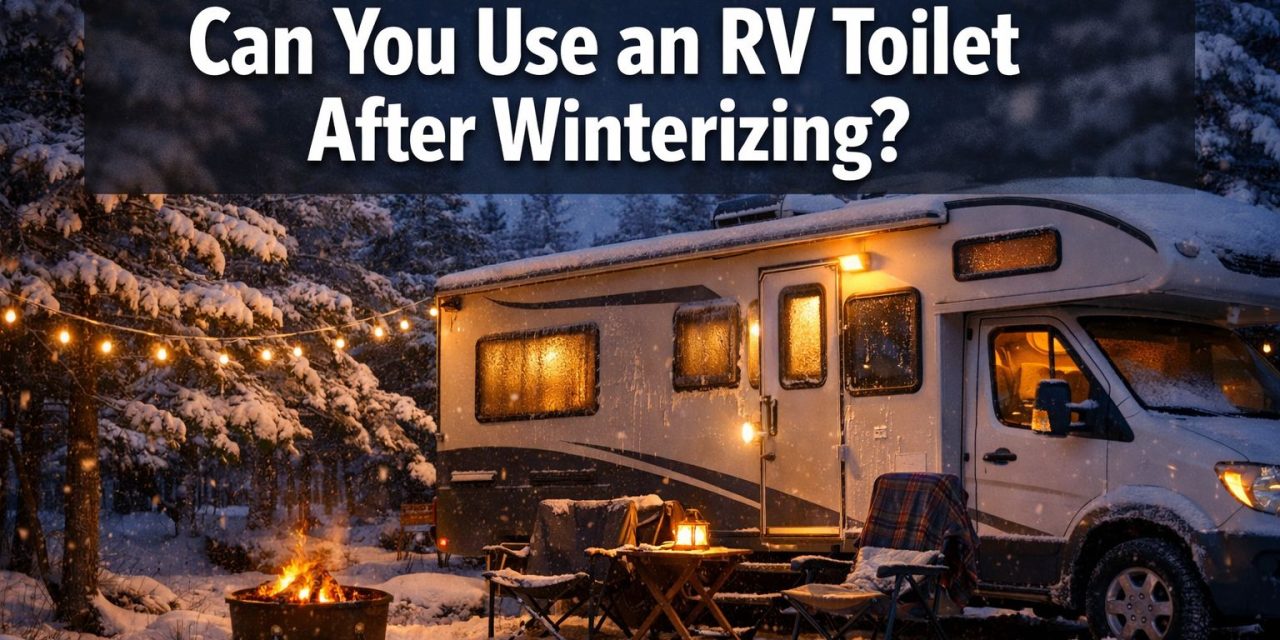
Nearly 40% of RV owners store their rigs during winter without realizing they can still use the toilet — safely and without damaging their plumbing. So, can you use an RV toilet after winterizing? The short answer is yes, but there’s a right way and a wrong way to do it. Whether you’re camping in freezing temperatures or just need to make a quick trip to the RV, understanding how to use your toilet post-winterization can save you from costly repairs and a lot of frustration.
Key Takeaways 🔑
- ✅ Yes, you can use an RV toilet after winterizing — but you must flush with RV antifreeze or bottled water instead of your water system.
- 🧴 Always use RV-specific antifreeze, never automotive antifreeze, which can damage your plumbing.
- 🥶 Leave 1–2 cups of antifreeze in the bowl to protect the seal and keep the black tank from freezing.
- 🔄 De-winterizing requires flushing antifreeze from every line — including the often-forgotten black tank flush line.
- 🚿 Sanitize your fresh water tank during de-winterization before drinking or cooking with the water.
Can You Use an RV Toilet After Winterizing? The Simple Truth
Yes — and many RV enthusiasts do it all the time. The key is understanding that once your RV is winterized, the water lines are empty and protected with antifreeze. That means you can’t simply press the foot pedal and expect water to flow normally. Instead, you’ll need to bring in an external water source to flush the toilet manually. [1]
Here are your two main options:
| Flushing Method | Pros | Cons |
|---|---|---|
| RV Antifreeze | Protects black tank from freezing | Pink tint, slight chemical smell |
| Bottled Water | Clean, no chemicals | Doesn’t protect black tank in extreme cold |
💡 Pro Tip: In freezing temperatures, RV antifreeze is the smarter choice. It keeps waste in the black tank from freezing solid — a messy and expensive problem to fix.
Why RV Antifreeze Is the Go-To Choice
Not all antifreeze is created equal. RV-specific antifreeze (usually pink and non-toxic) is formulated to be safe for your plumbing, seals, and water systems. Automotive antifreeze, on the other hand, contains chemicals that can corrode pipes, damage rubber seals, and contaminate your water supply. [1]
Always check the label before buying. Look for phrases like:
- “Non-toxic”
- “Potable water safe”
- “RV/marine antifreeze”
How Much Antifreeze Should You Leave in the Bowl?
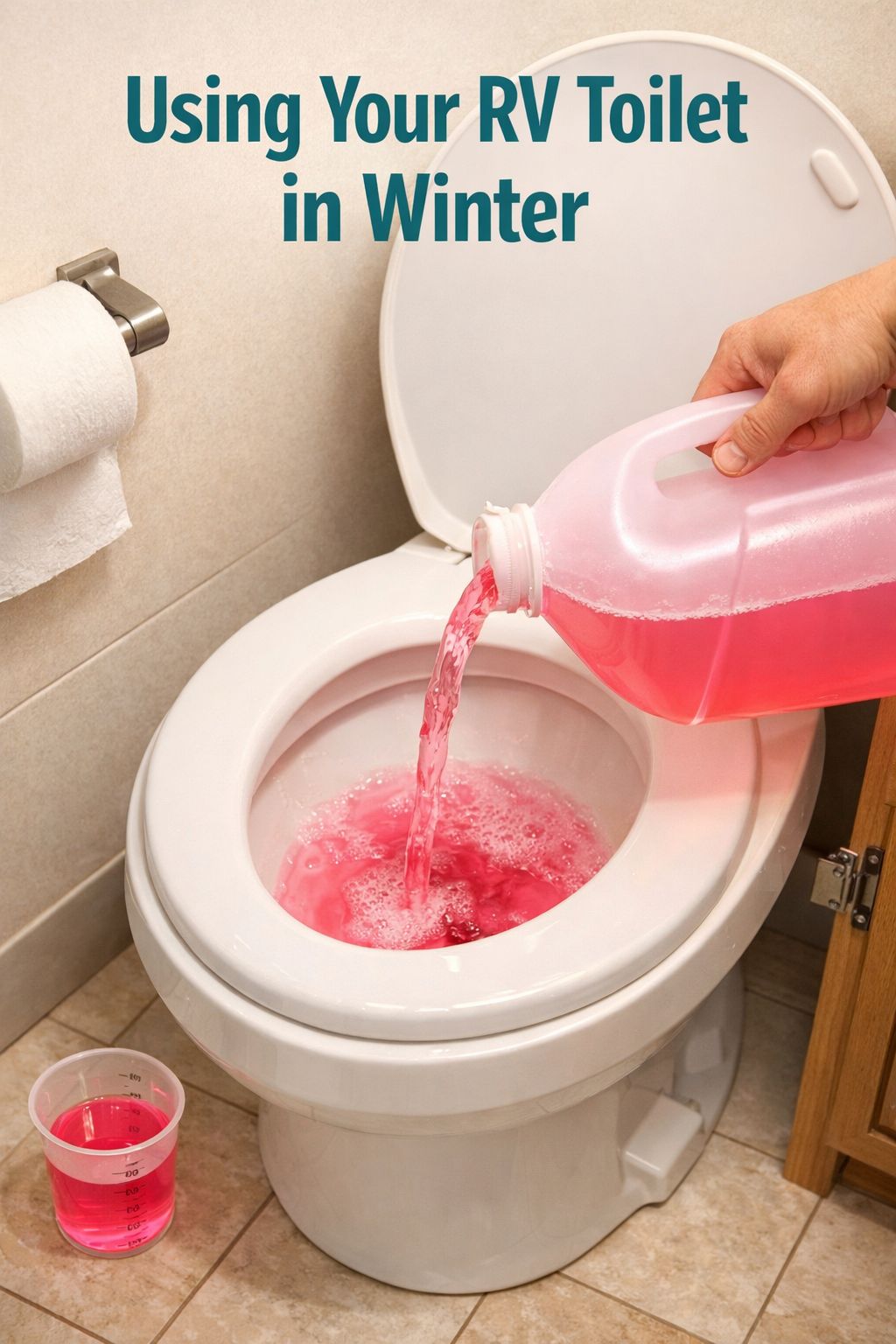
After flushing, leave about 1–2 cups of antifreeze sitting in the toilet bowl. This keeps the bowl’s rubber seal moist and protected, and it ensures that the connection point between the toilet and the black tank doesn’t freeze. [4]
Think of it like the water in a household toilet trap — it’s there for a reason. Without it, cold air can creep up from the black tank, and the seal can dry out and crack.
Step-by-Step: Using Your RV Toilet After Winterizing
Here’s how to do it safely every time:
- Gather supplies — Grab a bottle of RV antifreeze or several bottles of water.
- Pour flushing liquid — Add about 1–2 cups into the bowl before use.
- Use the toilet normally — Do your business as usual.
- Flush manually — Pour another 1–2 cups of antifreeze (or water in mild temps) to flush waste into the black tank.
- Leave antifreeze in the bowl — Don’t flush it all the way. Leave 1–2 cups to protect the seal. [4]
- Monitor the black tank — Don’t let it get too full. Plan to dump when it reaches about two-thirds capacity.
🔑 Key Reminder: Using bottled water works fine in mild weather, but if temperatures drop below freezing, switch to RV antifreeze to prevent the black tank from turning into a solid block of ice. [1]
How to De-Winterize Your RV Toilet (and the Whole System)
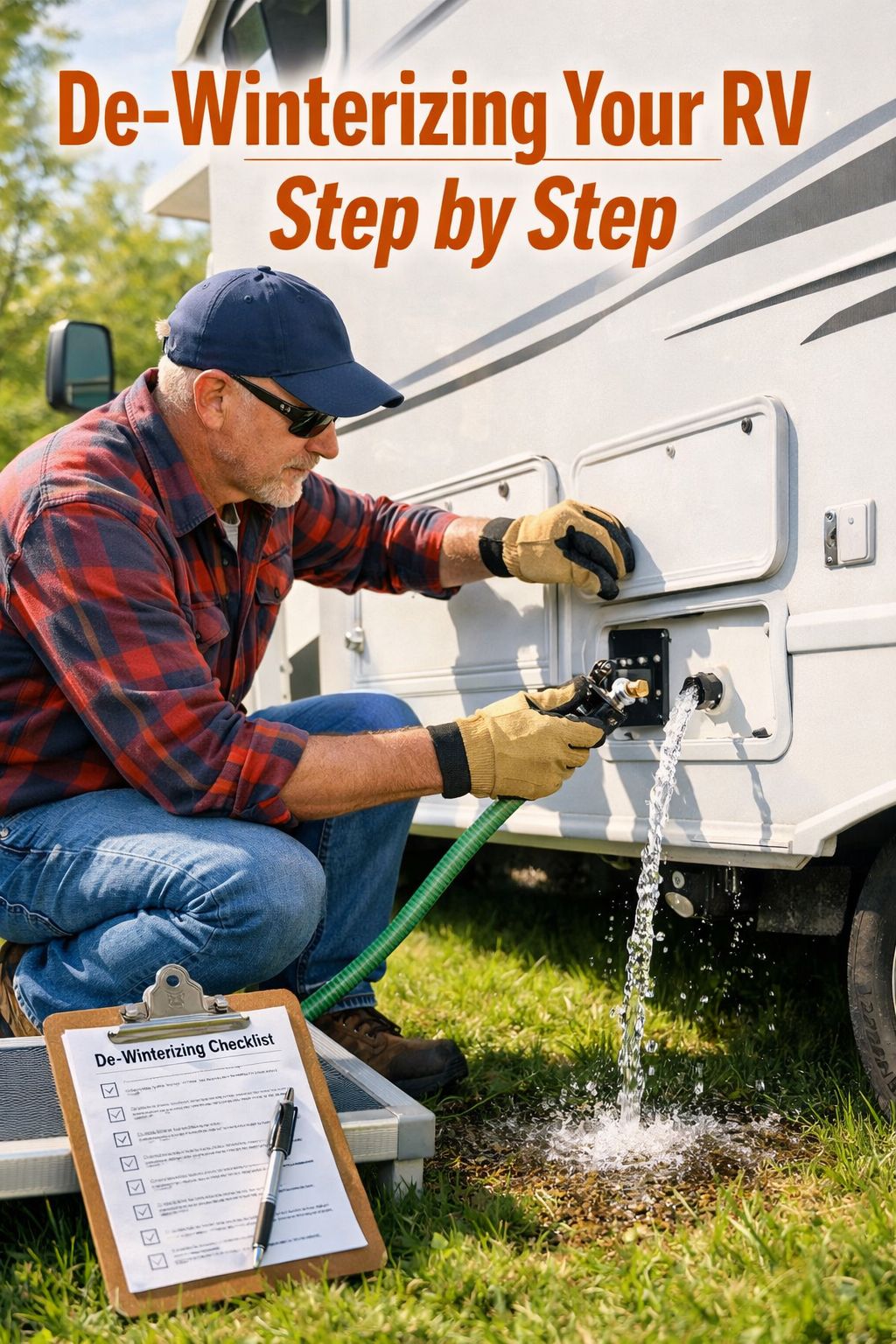
Spring is coming, the campground is calling, and it’s time to get your RV road-ready. De-winterizing your RV toilet — and the rest of your plumbing — takes a bit of patience, but it’s very doable as a DIY project. [2]
Start With the Low-Point Drains
Before anything else, open the low-point drains and let the residual antifreeze run out. Keep flushing until the water runs clear. This clears the lines of pink antifreeze before you reconnect your water supply. [3]
Flush Every Fixture — Don’t Skip Any
This is where many RV owners make a mistake. They flush the kitchen and bathroom faucets but forget others. Here’s the complete checklist:
- ☑️ Kitchen faucet (hot and cold)
- ☑️ Bathroom sink faucet (hot and cold)
- ☑️ Shower faucet
- ☑️ Toilet — flush until water runs clear with no air sputtering
- ☑️ Exterior shower (if equipped)
- ☑️ Black tank flush line — this one is easy to forget! [2]
Run each fixture until the water flows clear and you no longer hear air sputtering through the lines. That sputtering sound means antifreeze and air are still working their way out. [3]
Sanitize the Fresh Water Tank
After flushing out the antifreeze, don’t skip the sanitization step. Even if your water looks clear, bacteria can build up in a tank that’s been sitting all winter.
Here’s a simple sanitization process:
- Use your water management panel’s “Sanitize” setting (if equipped) to siphon a diluted bleach solution through the tank. [2]
- Let it sit for a few hours.
- Drain completely and refill with fresh potable water.
- Run all faucets until you no longer smell bleach.
Refill and Protect the Toilet Seal
Once de-winterization is complete, add water to the toilet bowl to cover the rubber seal at the bottom. This keeps the seal from drying out during the camping season. [3] A dry seal can crack over time, leading to leaks and odors — neither of which you want in your RV bathroom.
Quick De-Winterization Checklist 📋
| Step | Action | Done? |
|---|---|---|
| 1 | Open and flush low-point drains | ☐ |
| 2 | Reconnect water supply or fill tank | ☐ |
| 3 | Run all faucets until water clears | ☐ |
| 4 | Flush toilet until clear, no sputtering | ☐ |
| 5 | Flush exterior shower and black tank line | ☐ |
| 6 | Sanitize fresh water tank | ☐ |
| 7 | Add water to toilet bowl to cover seal | ☐ |
| 8 | Check for leaks at all connections | ☐ |
Common Mistakes to Avoid 🚫
Even experienced RV owners slip up sometimes. Here are the most common errors to watch out for:
- Using automotive antifreeze — It’s toxic and will damage your system. Always use RV/marine-grade antifreeze. [1]
- Forgetting the black tank flush line during de-winterization — antifreeze left here can cause odor issues. [2]
- Skipping the bowl seal water — A dry seal is a cracked seal. Always keep some liquid in the bowl. [4]
- Overfilling the black tank — When using antifreeze for flushing, the tank fills faster than you might expect. Check levels regularly.
- Not sanitizing the fresh water tank — Stale water from winter storage can harbor bacteria. [2]
Conclusion: Keep Rolling, Even in Winter ❄️🚐
So, can you use an RV toilet after winterizing? Absolutely — and now you know exactly how to do it right. The trick is swapping your normal water flush for RV antifreeze or bottled water, leaving a small amount of antifreeze in the bowl to protect the seal, and keeping an eye on your black tank levels.
When spring arrives, follow the full de-winterization checklist: flush every line (including the black tank flush line), sanitize your fresh water tank, and refill the toilet bowl to protect the seal for the season ahead.
Your actionable next steps:
- 🛒 Stock up on RV antifreeze before your next cold-weather trip or winter storage period.
- 📋 Save the de-winterization checklist above for easy reference in spring.
- 🔍 Inspect your toilet seal now — if it looks dry or cracked, replace it before your next trip.
- 💧 Never skip the sanitization step — your gut will thank you.
With the right approach, your RV toilet can serve you reliably year-round, no matter what the thermometer says. Happy camping! 🏕️
References
[1] Watch – https://www.youtube.com/watch?v=JNXPbDUWMx0
[2] Watch – https://www.youtube.com/watch?v=uielbvr9_A4
[3] De Winterize Your Rv – https://www.keystonerv.com/owners/de-winterize-your-rv
[4] Rv Toilet Winterization Seasonal Care Guide – https://rv-toilet.com/rv-toilet-winterization-seasonal-care-guide/
[5] Can You Use A Winterized Toilet – https://www.irv2.com/threads/can-you-use-a-winterized-toilet.1938063/
[6] How To Winterize Your Rvs Toilet – https://www.rvtravel.com/how-to-winterize-your-rvs-toilet/
[7] Using Toilet On Winterized Rv – https://www.forestriverforums.com/threads/using-toilet-on-winterized-rv.310873/