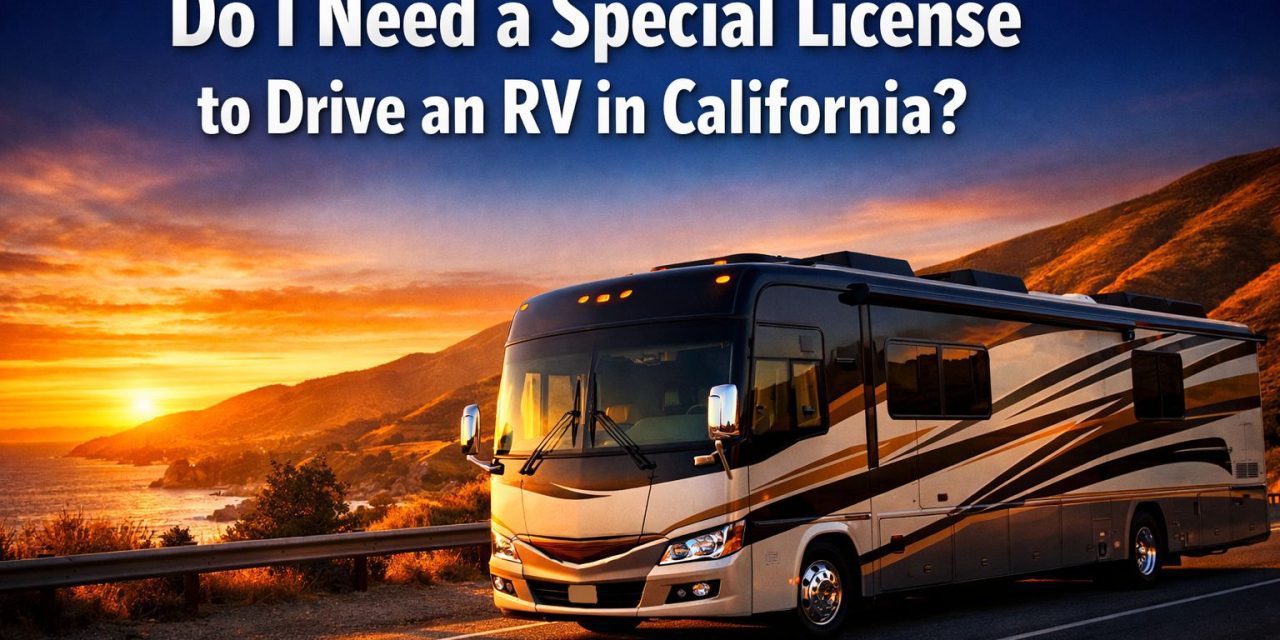
Nearly 11 million households in the United States own an RV — and a growing number of them are hitting California’s iconic highways. But before firing up that diesel engine and heading toward Yosemite or the Pacific Coast Highway, one critical question stops many new RV owners cold: Do I need a special license to drive an RV in California?
The short answer is: it depends on the size and weight of your rig. Many RV enthusiasts are pleasantly surprised to learn their regular driver’s license is enough. Others discover they need to take a few extra steps. Either way, knowing the rules before you roll is the smartest move you can make.
Key Takeaways 🗝️
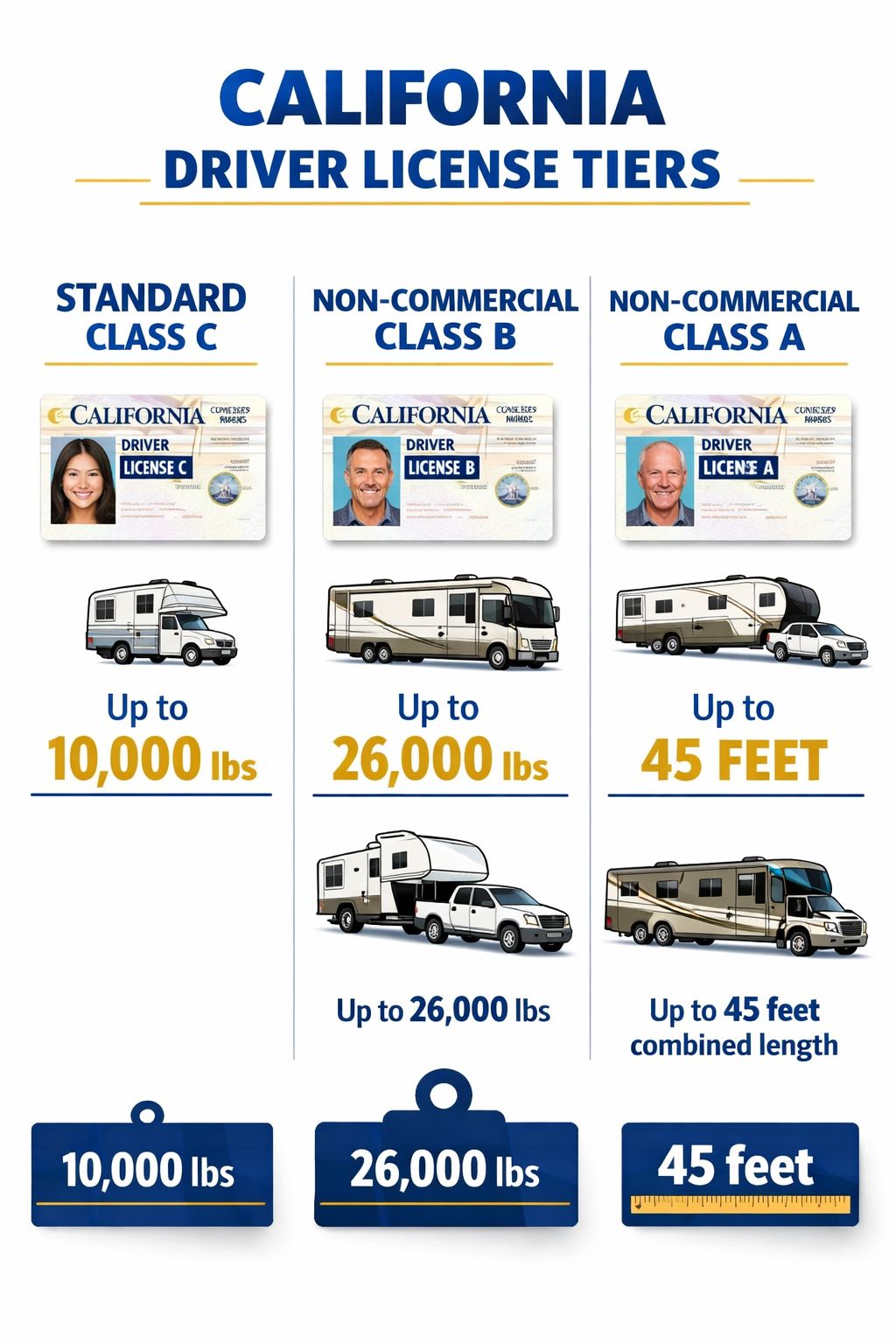
- Most smaller RVs (under 10,000 lbs) can be driven with a standard Class C driver’s license.
- Heavier or longer RVs require a Non-Commercial Class A or Class B license from the California DMV.
- Three-axle RVs require a Non-Commercial Class B license regardless of weight.
- Upgrading your license requires 15 hours of certified behind-the-wheel training and a DMV skills test.
- California does not require an Air Brake Endorsement for recreational vehicle licenses.
Would you like to save this article?
Do I Need a Special License to Drive an RV in California? Breaking Down the Rules
The California DMV uses a tiered license system based on vehicle weight, length, and axle count. [6] Here’s how it breaks down for RV drivers:
Standard Class C License — The Most Common Scenario
Good news for most RV lovers: if your motorhome weighs under 10,000 pounds, your regular Class C driver’s license is all you need. [1] This covers the majority of Class B camper vans and many Class C motorhomes. If you’re renting a compact campervan or driving a mid-size rig, chances are you’re already covered.
💡 Quick Tip: Always check the Gross Vehicle Weight Rating (GVWR) on your RV’s door sticker — not just its curb weight. The GVWR is the number that matters for licensing purposes.
Non-Commercial Class B License — When You Need to Upgrade
A Non-Commercial Class B license is required in the following situations [2][3]:
| Trigger | Requirement |
|---|---|
| Vehicle weighs over 26,000 lbs | Non-Commercial Class B |
| Vehicle is longer than 40 feet | Non-Commercial Class B |
| Vehicle is 45 feet or longer | Non-Commercial Class B |
| Vehicle has three axles (any weight) | Non-Commercial Class B |
This typically applies to larger Class A diesel pushers and some heavy Class C rigs. Three-axle vehicles are a common surprise — even if your RV doesn’t seem massive, three axles automatically trigger the Class B requirement. [3]
Non-Commercial Class A License — For the Biggest Rigs and Towing
A Non-Commercial Class A license is required when [1][5]:
- Your motorhome or vehicle weighs 10,000 pounds or more
- You’re towing a 5th wheel trailer weighing more than 15,000 pounds
- You’re towing a bumper-pull trailer weighing more than 10,000 pounds
Class A motorhomes — those big, bus-style rigs — almost always fall into this category. If you’re dreaming of the full luxury coach experience, plan for the Class A upgrade. [1]
Quick Reference: Which License Do You Need? 🚐
| RV Type | Typical Weight | License Needed |
|---|---|---|
| Class B Camper Van | Under 10,000 lbs | Standard Class C |
| Class C Motorhome (small) | Under 10,000 lbs | Standard Class C |
| Class C Motorhome (large) | 10,000–26,000 lbs | Non-Commercial Class A |
| Class A Motorhome | Often 26,000+ lbs | Non-Commercial Class A or B |
| Three-Axle RV (any size) | Any | Non-Commercial Class B |
| 5th Wheel Trailer (15,000+ lbs) | 15,000+ lbs towed | Non-Commercial Class A |
How to Get a Non-Commercial Class A or B License in California
So you’ve figured out that you do need a special license to drive an RV in California — now what? The process is more straightforward than many people expect.
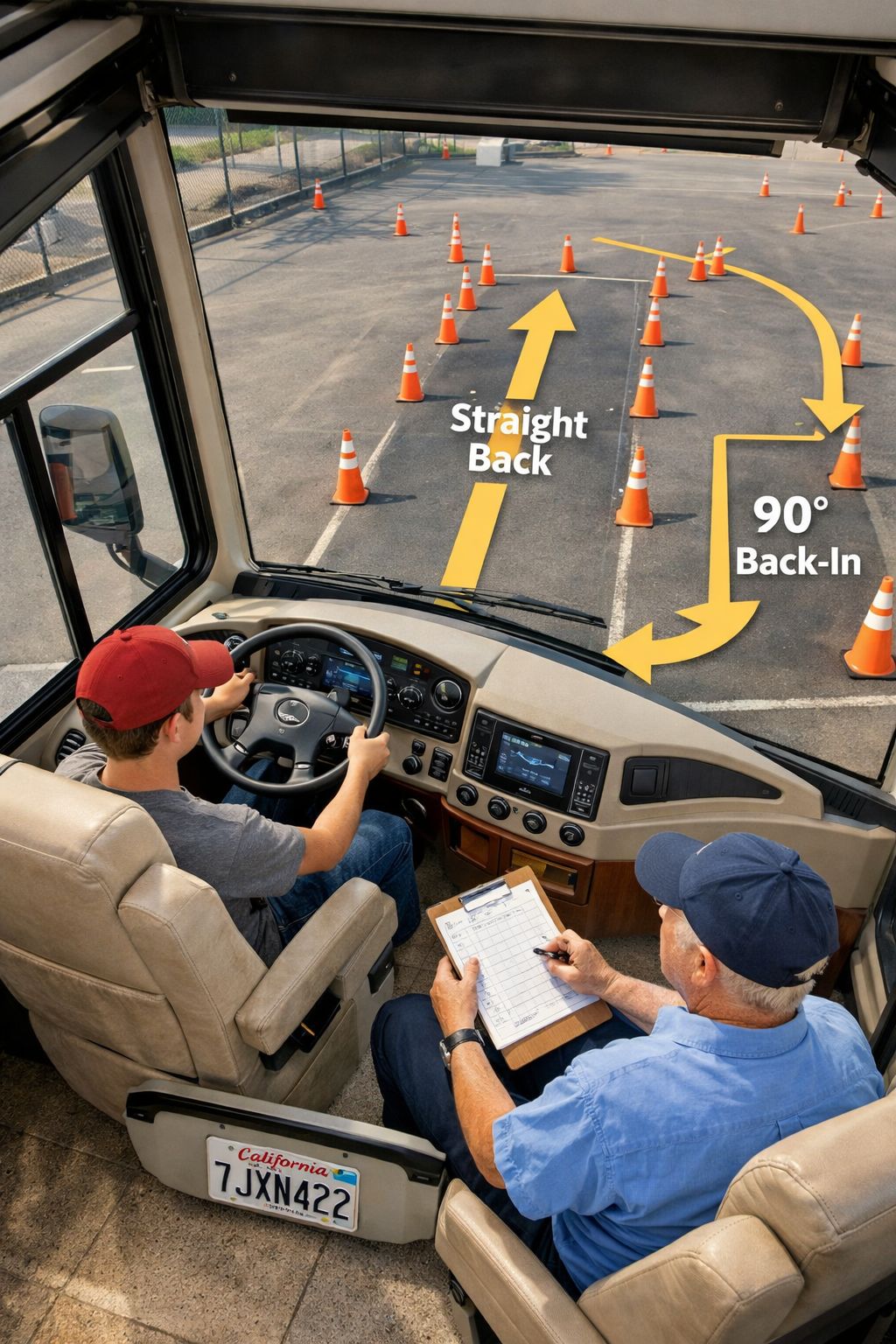
Step 1: Complete Behind-the-Wheel Training
California requires a minimum of 15 hours of behind-the-wheel training with a certified instructor. [1] After completing this training, your instructor will provide a California Commercial Driver Behind The Wheel Training Certification (Form DL 1236), which you’ll submit to the DMV. This isn’t just a formality — it genuinely prepares drivers for the unique challenges of handling a large vehicle.
Step 2: Pass the DMV Skills Test
The DMV skills test for Class A and B licenses includes three of four backing maneuvers [5]:
- ✅ Straight-line backing
- ✅ Offset backing
- ✅ 90-degree dockside backing
- ✅ Parallel parking (one of the four options)
To pass, you must make no more than 12 errors overall. [5] Practice makes a huge difference here — those 15 training hours are your best friend.
Step 3: No Air Brake Endorsement Needed 🎉
Here’s a pleasant surprise: California does not require an Air Brake Endorsement for non-commercial RV licenses. [5] Several other states do, so California RV drivers catch a break on this one.
Special Situations Worth Knowing About
Renting an RV in California
Rental companies typically offer Class B and Class C rigs that fall under the standard Class C license threshold. [1] However, always confirm the GVWR of any rental vehicle before assuming your regular license covers it. Rental agreements may also have their own requirements beyond state law.
Out-of-State RV Drivers
If you hold a valid driver’s license from another state that authorizes you to drive a vehicle of a specific class, California generally honors that license for the equivalent vehicle type. [6] Still, it’s wise to verify with the California DMV if you plan to drive a large rig through the state regularly.
Towing a Trailer Behind Your RV
Towing adds another layer to the licensing question. The weight of what you’re towing — not just what you’re driving — can push you into Class A territory. [5] Anyone towing a heavy 5th wheel or bumper-pull trailer should double-check the combined weight scenario.
🚨 Important: Driving an RV without the correct license class is a traffic violation in California. It can result in fines and could affect your insurance coverage in the event of an accident.
Practical Tips for California RV Drivers in 2026
- Know your GVWR before hitting the road — it’s the single most important number for licensing.
- Enroll in an RV driving course even if you only need a Class C license. Confidence behind the wheel of a large vehicle is priceless.
- Visit the official California DMV website to confirm current requirements, as regulations can be updated. [6]
- Check your trailer weight if you plan to tow — it’s a commonly overlooked licensing trigger. [5]
- Practice backing maneuvers extensively before your skills test. Most test failures come from backing, not forward driving.
Conclusion: Know Before You Go 🏕️
So, do you need a special license to drive an RV in California? For many RV lovers, the answer is no — a standard Class C license covers lighter rigs just fine. But for those stepping into larger motorhomes, three-axle vehicles, or serious towing setups, upgrading to a Non-Commercial Class A or Class B license is both a legal requirement and a genuine safety investment.
Here are your actionable next steps:
- Find your RV’s GVWR on the door jamb sticker or owner’s manual.
- Use the table above to identify which license class applies to your rig.
- Contact a certified RV driving instructor in California to schedule your 15-hour training if needed.
- Visit dmv.ca.gov to review the latest official requirements and schedule your DMV skills test.
- Get on the road — California’s national parks, coastlines, and deserts are waiting! 🌅
References
[1] Do You Need A License To Rent An Rv In California – https://escapecampervans.com/blog/do-you-need-a-license-to-rent-an-rv-in-california/
[2] Rv Special Drivers License Requirements – https://www.campanda.com/magazine/rv-special-drivers-license-requirements/
[3] Non Commercial License – https://spcdl.com/non-commercial-license/
[5] 237 Non Commercial Class A Class B Recreation Vehicle License – https://rvbasictraining.com/rv-driving-tip/237-non-commercial-class-a-class-b-recreation-vehicle-license
[6] License Classes And Requirements – https://www.dmv.ca.gov/portal/handbook/recreational-vehicles-and-trailers-handbook-2011/license-classes-and-requirements/