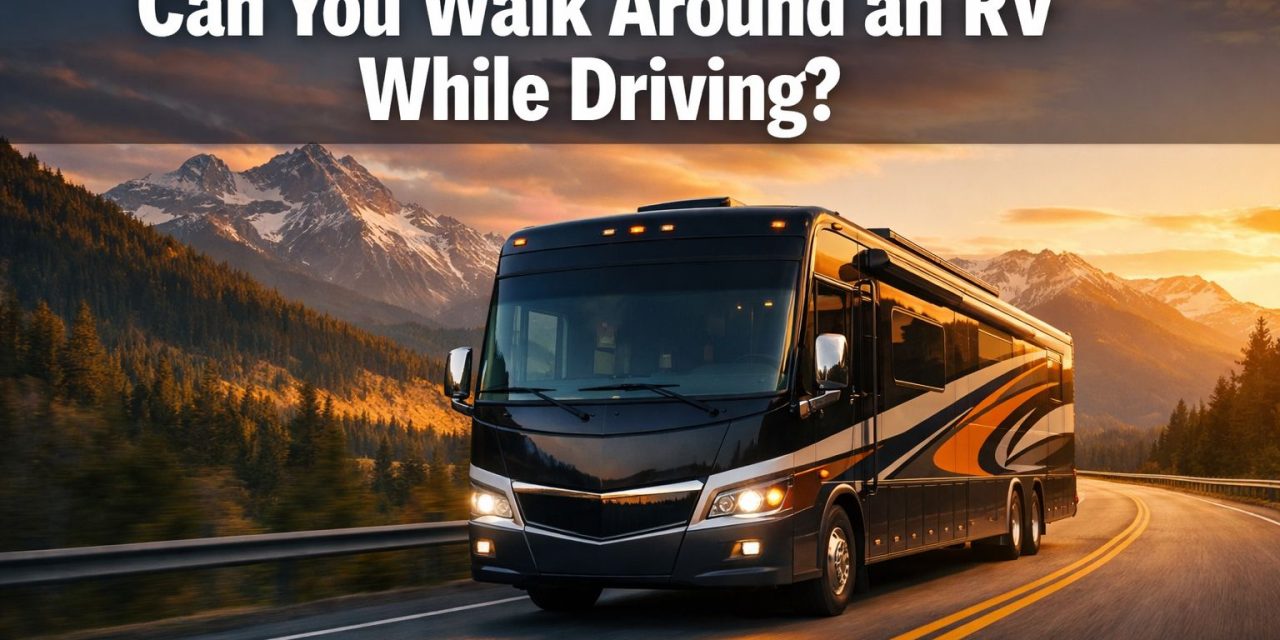
Every year, thousands of RV travelers unknowingly break the law simply by getting up to grab a snack from the kitchen while the rig is rolling down the highway. The question — can you walk around an RV while driving? — seems simple, but the answer involves state laws, vehicle types, and real safety risks that every RV lover needs to understand before hitting the road.
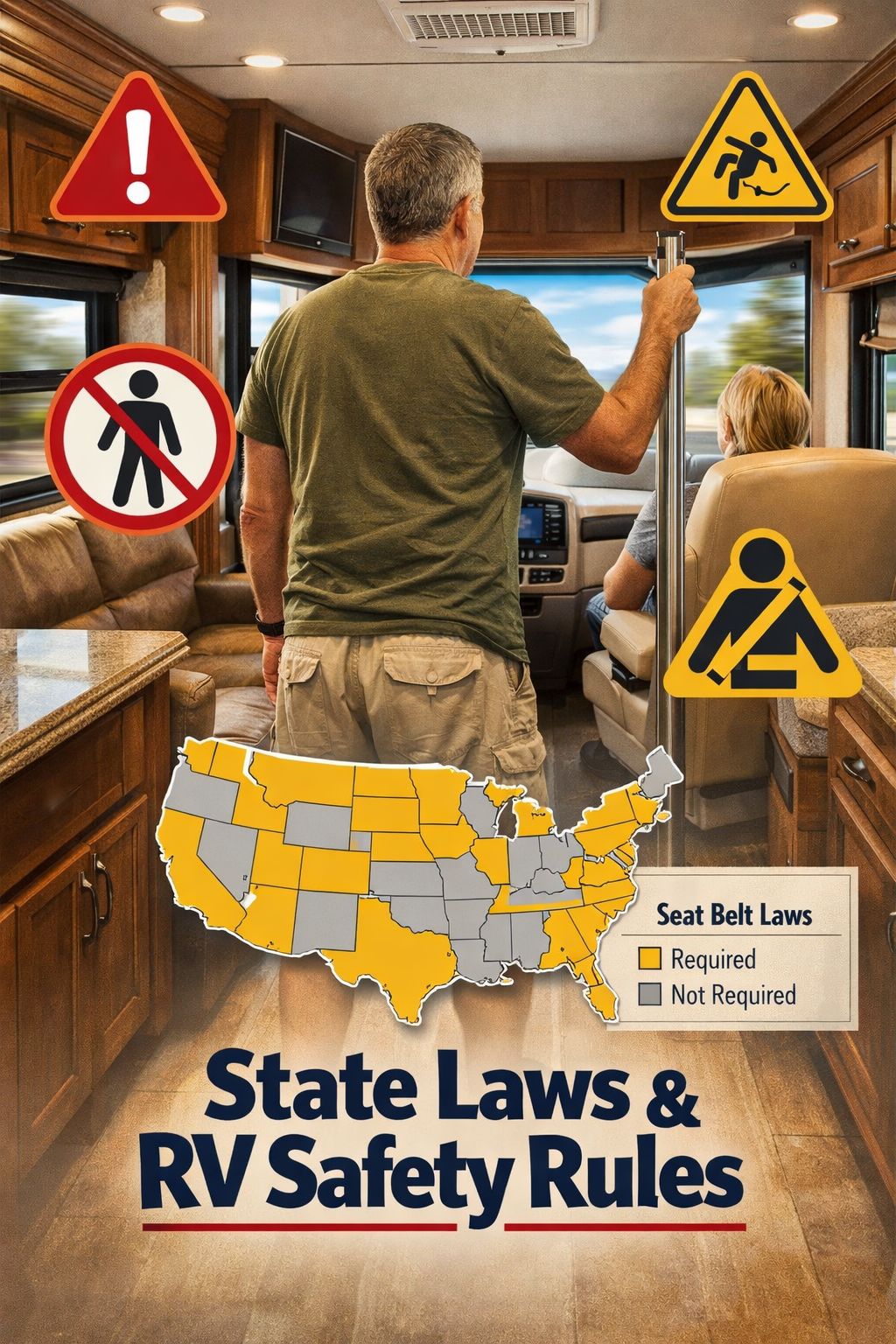
Key Takeaways 📋
- Walking around an RV while driving is restricted or illegal in most U.S. states due to seat belt laws that require passengers to stay buckled.
- State laws vary, but states like Georgia, California, Texas, and Florida all enforce seat belt requirements that make in-motion movement a legal violation.
- RV type matters — Class A, B, and C motorhomes have safety features for passengers, but travel trailers and fifth wheels offer no such protection.
- Safety risks are serious: sudden stops, sharp turns, and vehicle motion can cause dangerous falls inside the cabin.
- If movement is absolutely necessary, using grab bars and taking slow, deliberate steps can reduce (but not eliminate) the risk.
What the Law Says About Walking Around an RV While Driving
Before worrying about how to move around safely, it’s worth understanding whether doing so is even legal. The short answer: in most U.S. states, it’s not — or at least it puts passengers in violation of seat belt laws. [1]
Seat Belt Laws and RV Passengers
Most states require all vehicle occupants — including RV passengers — to remain seated and buckled while the vehicle is in motion. This applies whether someone is sitting in the passenger seat, resting in a rear bunk, or using the bathroom. [2]
Here’s a quick look at how some major states handle this:
| State | Seat Belt Requirement | Penalty for Violation |
|---|---|---|
| Georgia | All passengers must be buckled at all times | Fines apply |
| California | All passengers required to wear seat belts | $20–$50 per violation [2] |
| Texas | Seat belts required for all occupants | ~$25 per violation [2] |
| Florida | Front-seat and under-18 passengers required | ~$30 per violation [2] |
💡 Pull Quote: “Even briefly unbuckling to access the bathroom while an RV is moving can result in a fine in many states.” [2]
Georgia is one of the strictest examples — the state explicitly requires all passengers to wear seat belts whenever the vehicle is in motion, making any movement around the cabin a legal violation. [1] California, Texas, and Florida each enforce their own versions of these rules, with fines that may seem small but can add up quickly on a long road trip. [2]
Does It Matter Which Type of RV You’re In?
Absolutely — RV type plays a major role in both the legality and safety of moving around while driving. [1]
- Class A, B, and C Motorhomes: These are built with passengers in mind. They typically include seat belts at designated seating positions, grab bars, and interior layouts designed for occupancy while moving.
- Travel Trailers & Fifth Wheels: These are towed vehicles and are not designed for passenger occupancy while in motion. There are no seat belts, no crash protection, and no legal way to safely ride in them while being towed. Riding in a towed trailer is illegal in most states. [1]
Safety Risks of Walking Around an RV While Driving
Even setting aside the legal question of whether you can walk around an RV while driving, the physical risks are significant enough to take seriously. RVs are large, heavy vehicles that respond differently to road conditions than a standard car. [1]
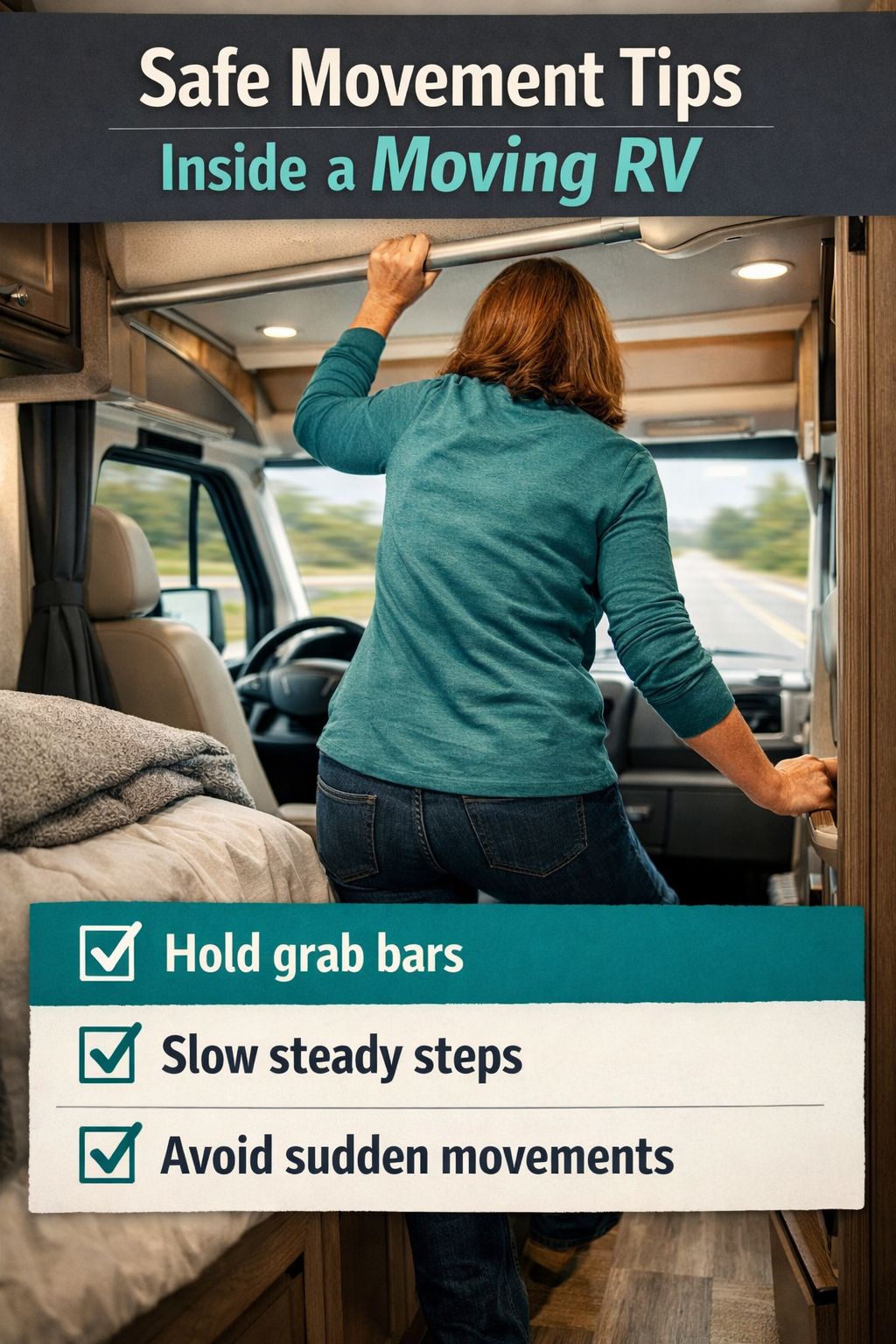
The Real Dangers of Moving Inside a Moving RV
🚨 Here are the most common safety hazards:
- Sudden stops: A quick brake application can send an unbelted passenger flying forward with serious force.
- Sharp turns: Navigating a curve at highway speed shifts the entire cabin, making standing nearly impossible without support.
- Uneven road surfaces: Potholes, rumble strips, and rough pavement create unexpected jolts.
- Driver distraction: A passenger moving around the cabin can catch the driver’s attention and reduce reaction time. [1][2]
- Falling into furniture or appliances: RV interiors are compact. A loss of balance can mean hitting a countertop, stove, or sharp cabinet edge.
⚠️ Important: Sudden stops and sharp turns make standing inside a moving RV particularly dangerous, as the vehicle’s motion can easily cause passengers to lose their balance. [1]
What About Using the Bathroom While Driving?
This is one of the most searched questions among RV travelers, and the answer is nuanced. Technically, many RVs have functional bathrooms while in motion. But using the bathroom requires unbuckling, which violates seat belt laws in most states. [2]
The safest and most legally sound approach? Plan bathroom breaks at rest stops or fuel stations. Most experienced RVers agree that scheduled stops every 2–3 hours make for a more comfortable and safer journey overall.
How to Move Around Safely If Necessary
Sometimes, movement inside a moving RV is unavoidable — a child needs attention, something has fallen, or a passenger feels unwell. If movement becomes necessary, here’s how to minimize risk:
Tips for Safer In-Motion Movement 🛡️
- Communicate with the driver first — make sure they’re aware someone is moving and can avoid sudden maneuvers.
- Use grab bars — most motorhomes have overhead or side-mounted grab bars specifically for this purpose. Always keep at least one hand on a fixed surface. [2]
- Take slow, deliberate steps — rushing increases the chance of losing balance. [2]
- Avoid the kitchen area — open drawers, appliances, and hot surfaces add extra hazards.
- Sit back down as quickly as possible — minimize the time spent standing or walking.
- Never move in a towed trailer — this is both illegal and extremely dangerous. [1]
Laws Vary by Location — Always Check Before You Travel
It’s worth noting that RV movement regulations in Canada and other countries may differ significantly from U.S. rules. [2] Before any cross-border trip, research the specific laws for each region on the route. RVShare’s driving laws resource is a helpful starting point for U.S. state-by-state research. [5] The California DMV’s RV handbook also provides detailed guidance for driving safely in that state. [3]
Conclusion: Stay Safe, Stay Seated 🏕️
The answer to can you walk around an RV while driving? is clear: in most cases, it’s either illegal, unsafe, or both. State seat belt laws in places like Georgia, California, Texas, and Florida require passengers to stay buckled while the vehicle is in motion — and the physical risks of moving around a rolling RV are very real. [1][2]
Here are the actionable next steps every RV traveler should take:
- ✅ Research seat belt laws for every state on your planned route before departure.
- ✅ Plan regular rest stops every 2–3 hours to handle bathroom breaks and stretch.
- ✅ Know your RV type — never ride in a towed trailer, and understand the safety features of your motorhome.
- ✅ Brief all passengers on the rules before hitting the road.
- ✅ Use grab bars if movement inside a motorhome is ever truly unavoidable.
Safe travels start with smart decisions. Keep everyone buckled up, plan those stops, and enjoy the journey — the open road is always better when everyone arrives safely. 🚐
References
[1] Rv Rules While Driving – https://www.cruiseamerica.com/trip-inspiration/rv-rules-while-driving
[2] Can You Use The Bathroom In An Rv While Driving – https://www.recnationstorage.com/blog/can-you-use-the-bathroom-in-an-rv-while-driving/
[3] Driving Your Rv Safely – https://www.dmv.ca.gov/portal/handbook/recreational-vehicles-and-trailers-handbook-2011/driving-your-rv-safely/
[5] Driving Laws – https://rvshare.com/blog/driving-laws/