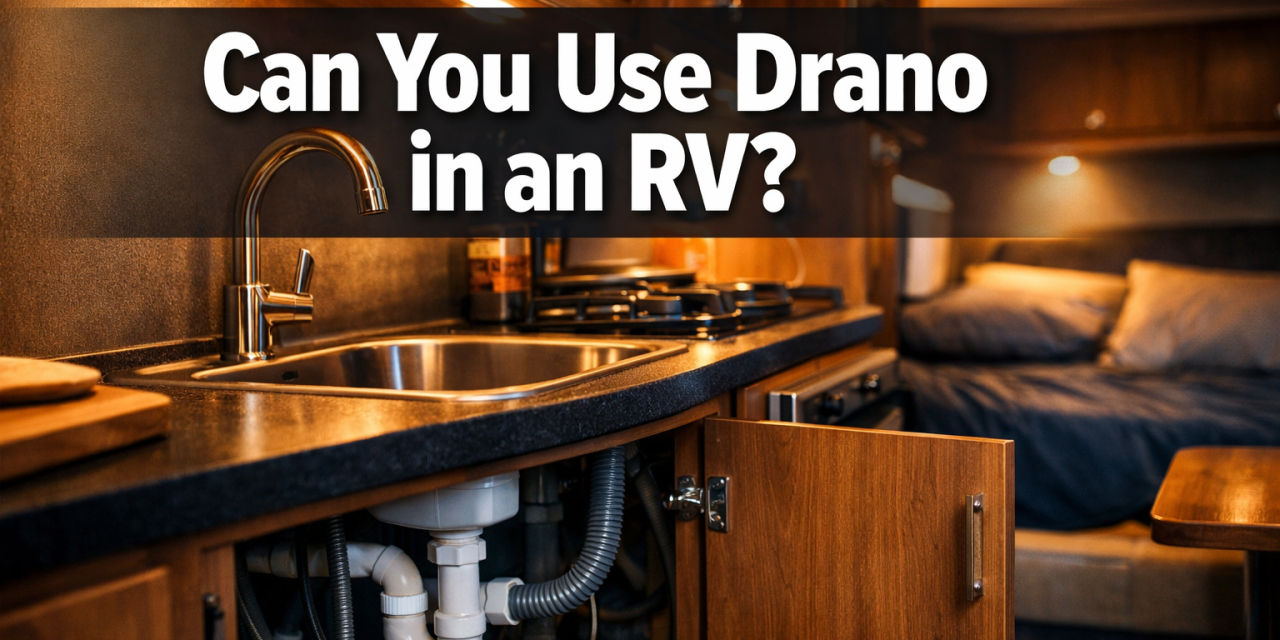
You’re parked at a gorgeous campsite, the coffee is brewing, and then — the shower drain backs up. 😩 Your first instinct might be to grab that familiar orange bottle of Drano. But before you pour anything down that drain, stop! Can you use Drano in an RV? This is one of the most common questions RV owners ask, and the answer could save your rig from some seriously expensive damage.
Key Takeaways
- ❌ Drano is generally not recommended for RV use — its corrosive chemicals can damage PVC pipes, rubber seals, and dump valves.
- 🔧 Mechanical tools like drain snakes are the safest first option for clearing clogs.
- 🌿 Natural remedies like baking soda and vinegar offer a gentler, RV-friendly alternative.
- 🛒 RV-specific drain cleaners exist and are formulated to be safe for RV plumbing systems.
- 🛡️ Prevention is the best cure — using drain strainers and avoiding grease disposal keeps clogs from forming in the first place.
Would you like to save this article?
Can You Use Drano in an RV? Understanding the Risks
Let’s cut straight to it: most RV experts say no, you should not use Drano in an RV. Here’s why this matters so much for your home on wheels.
RV Plumbing Is Not Like Home Plumbing
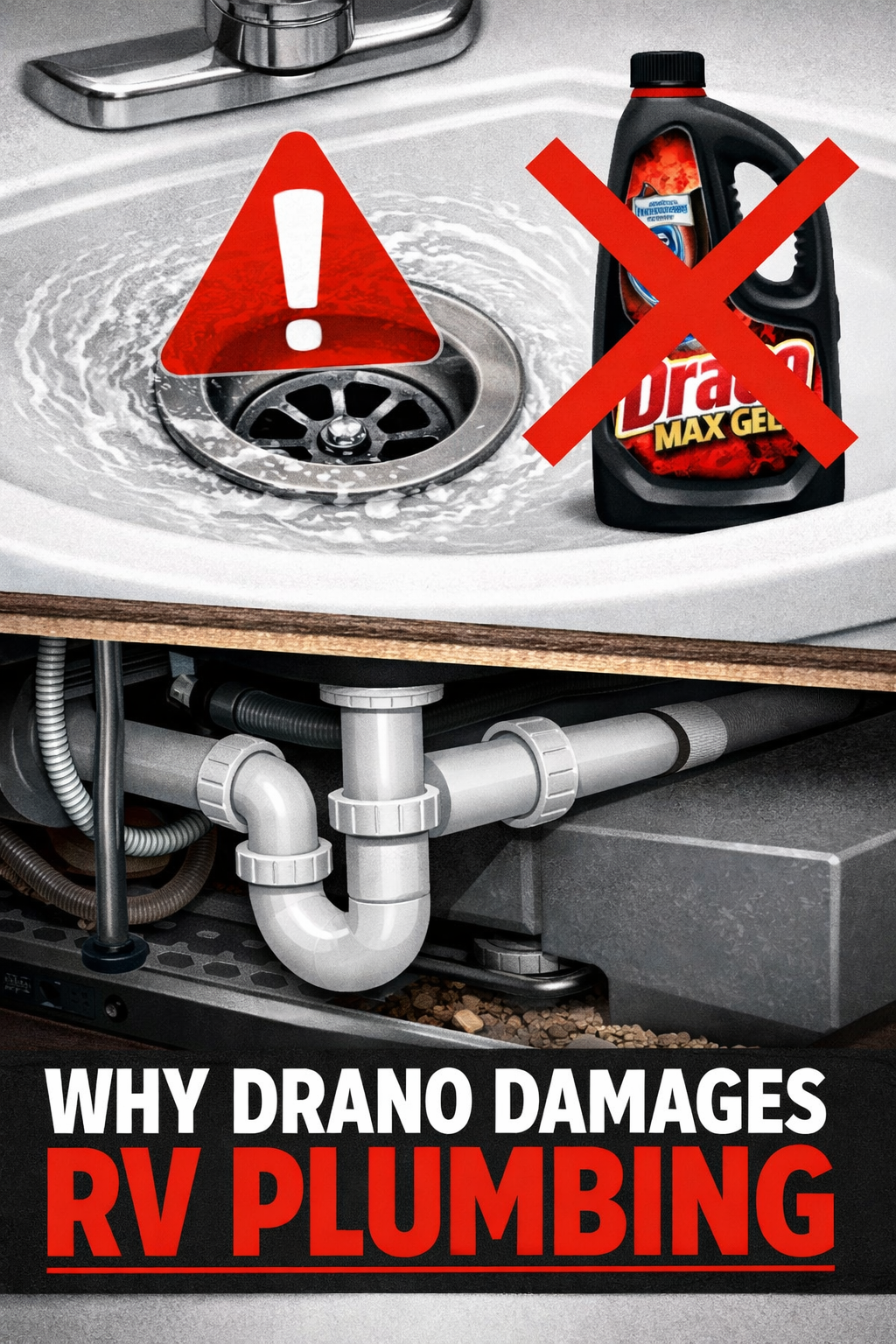
Standard home plumbing is built with heavy-duty metal pipes that can handle harsh chemical drain cleaners. RV plumbing, on the other hand, is a completely different story. Most RVs use lightweight PVC pipes to save weight and reduce costs. These pipes are much more vulnerable to the corrosive chemicals found in products like Drano. [1]
💬 “RV plumbing systems are simply not built to handle the same chemical exposure as residential plumbing.”
Drano works by triggering a powerful chemical reaction that generates heat and dissolves organic material. That same reaction can erode PVC pipes over time, causing micro-cracks and leaks that are both hard to detect and expensive to fix. [1]
What RV Expert Dave Solberg Says
RV expert Dave Solberg is pretty clear on this topic. He advises against using Drano or Liquid-Plumr in RVs, even when some RV manufacturer manuals suggest it might be okay. His reasoning? The long-term risk to your plumbing system simply isn’t worth it. [3]
Some manufacturers may give the green light in their documentation, but experienced RV technicians who have seen the damage firsthand tend to disagree.
The Dump Valve Problem
Here’s something many RV owners don’t think about: Drano can also damage the rubber seals inside your RV’s dump valves. These seals are typically made from a material called santoprene, which reacts poorly to the caustic chemicals in standard drain cleaners. [2]
A damaged dump valve seal can lead to:
- Leaks at the dump station
- Odors seeping back into the RV
- Costly valve replacements
What About “Septic Safe” Drano?
You might be thinking — what if you use the septic-safe version of Drano? Unfortunately, that’s not a great workaround either. Products labeled “septic safe” can still kill the beneficial bacteria in private onsite septic systems connected to RVs. Those bacteria are essential for breaking down waste properly. [2]
Quick Comparison: Home Plumbing vs. RV Plumbing
| Feature | Home Plumbing | RV Plumbing |
|---|---|---|
| Pipe Material | Metal/PVC (heavy duty) | Lightweight PVC |
| Chemical Tolerance | Higher | Lower |
| Dump Valves | N/A | Santoprene seals |
| Septic System | Optional | Often connected |
| Repair Cost | Moderate | High (specialty parts) |
Safe Alternatives: What to Use Instead of Drano in an RV
Now that the risks are clear, here’s the good news — there are plenty of safe and effective ways to clear a clogged RV drain without risking your plumbing. 🎉
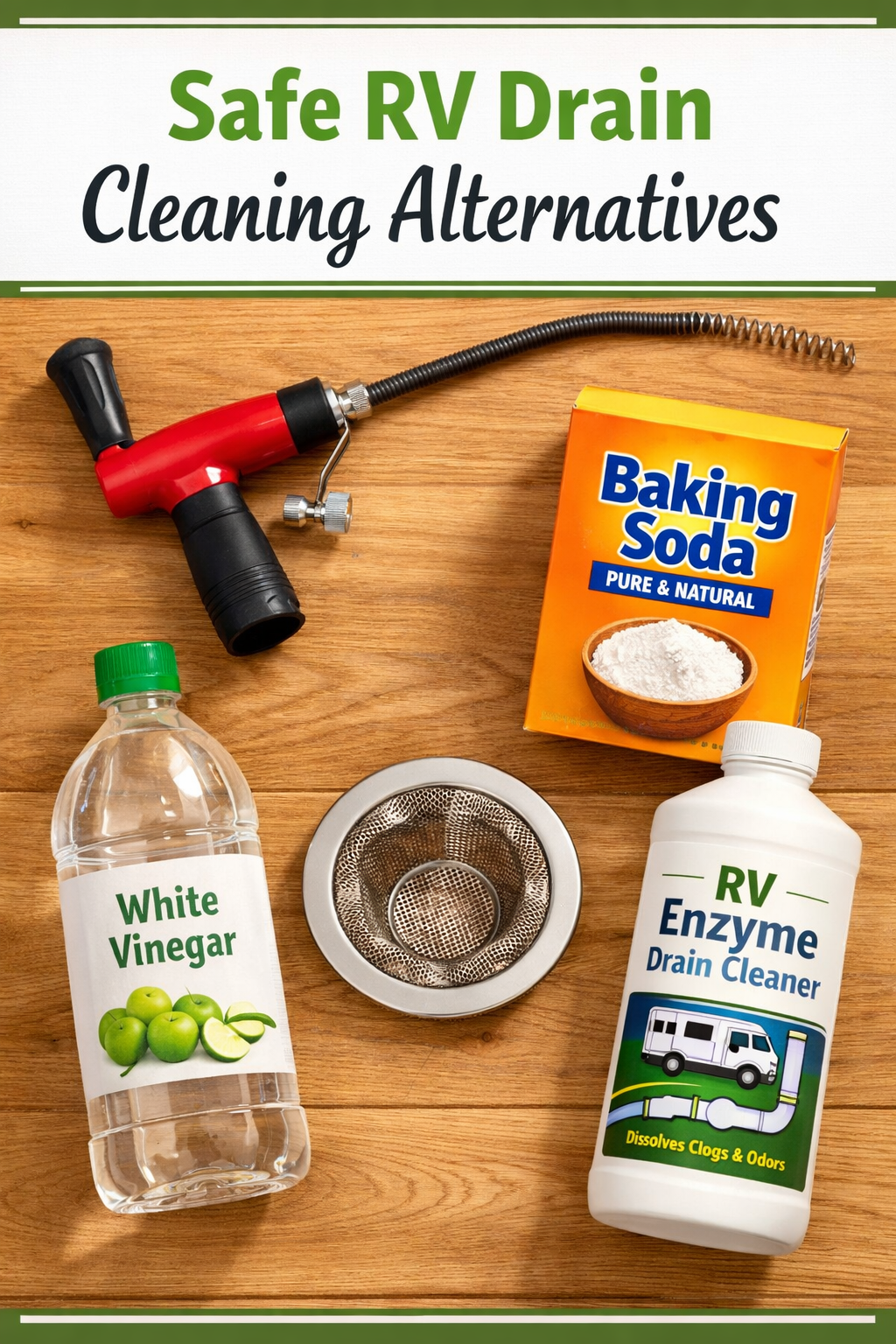
1. 🔧 Mechanical Methods First
The safest approach for any RV clog is to go mechanical before reaching for any liquid. Drain snakes (also called hand crank augers) are highly recommended for clearing RV drains without any chemical risk. [1]
These tools physically break up or pull out the clog — hair, soap scum, food debris — without introducing anything harmful to your pipes or seals.
Tools to keep in your RV toolkit:
- Drain snake / hand auger
- Zip-It drain cleaning tool
- Wet/dry mini vacuum (for surface clogs)
2. 🌿 Baking Soda and Vinegar
This classic combo is a favorite among RV owners for good reason. While it may not be as powerful as chemical cleaners, baking soda and vinegar can dissolve mild to moderate clogs without any risk to your plumbing. [1]
How to use it:
- Pour ½ cup of baking soda down the drain
- Follow with ½ cup of white vinegar
- Let it fizz for 15–30 minutes
- Flush with hot (not boiling) water
This method works best for clogs caused by soap buildup and light debris. For tougher clogs, you may need to repeat the process or combine it with a mechanical method.
3. 🧴 RV-Specific Enzyme Drain Cleaners
There are drain cleaning products specifically formulated for RV plumbing systems. These enzyme-based cleaners break down organic material safely and won’t harm PVC pipes or rubber seals. [1]
They may be harder to find at a general hardware store, but most RV supply shops and online retailers carry them. Look for labels that specifically say “safe for RV use” or “enzyme-based formula.”
Popular RV-safe options to look for:
- Enzyme-based black tank treatments
- RV-specific gray tank cleaners
- Bio-enzyme drain maintenance products
4. 🚿 Hot Water Flush
For minor slowdowns (not full blockages), a regular hot water flush can help keep drains clear. Pour a kettle of hot (not boiling) water slowly down the drain to melt soap scum and light grease buildup.
⚠️ Tip: Avoid boiling water — it can warp or loosen PVC fittings in some RV plumbing systems.
5. 👨🔧 Call an RV Plumbing Professional
For severe or persistent clogs that don’t respond to mechanical or natural methods, it’s time to call in a professional plumber with RV experience. They have the right tools and knowledge to fix the problem without causing additional damage. [1]
Prevention: The Best Drain Strategy of All 🛡️
The smartest move is to prevent clogs before they happen. Here are the top prevention tips:
| Prevention Method | How It Helps |
|---|---|
| Drain strainers | Catches hair and debris before it enters the drain |
| No grease disposal | Prevents grease buildup in pipes |
| Hot water rinse after dishes | Flushes soap and food particles |
| Regular enzyme treatments | Maintains healthy drain flow |
| Limit paper products | Reduces risk of toilet clogs |
Using a mesh drain strainer in your shower and kitchen sink is one of the easiest and cheapest ways to avoid clogs entirely. [1]
Conclusion: Keep Your RV Plumbing Happy and Healthy
So, can you use Drano in an RV? The short answer is: it’s best to avoid it. The corrosive chemicals in Drano can damage your lightweight PVC pipes, destroy the santoprene seals in your dump valves, and even harm septic systems. RV experts like Dave Solberg strongly advise against it, and for good reason.
Here’s your action plan for 2026 and beyond:
- ✅ Keep a drain snake in your RV toolkit at all times
- ✅ Stock up on baking soda and vinegar for mild clogs
- ✅ Buy an RV-specific enzyme cleaner for regular maintenance
- ✅ Install drain strainers in every drain
- ✅ Call an RV plumbing professional for serious issues
Your RV is a significant investment — protect it by treating its plumbing with the care it deserves. A little prevention and the right tools go a long way toward keeping every adventure clog-free! 🚐✨
References
[1] Rv Drain Cleaning Can You Safely Use Drano – https://www.campgroundviews.com/rv-drain-cleaning-can-you-safely-use-drano/
[2] community.goodsam – https://community.goodsam.com/discussions/rvtipstricks/can-we-use-draino-in-shower/2534923
[3] Ask Dave Can I Use Drano In My Rv – https://www.rvtravel.com/ask-dave-can-i-use-drano-in-my-rv/