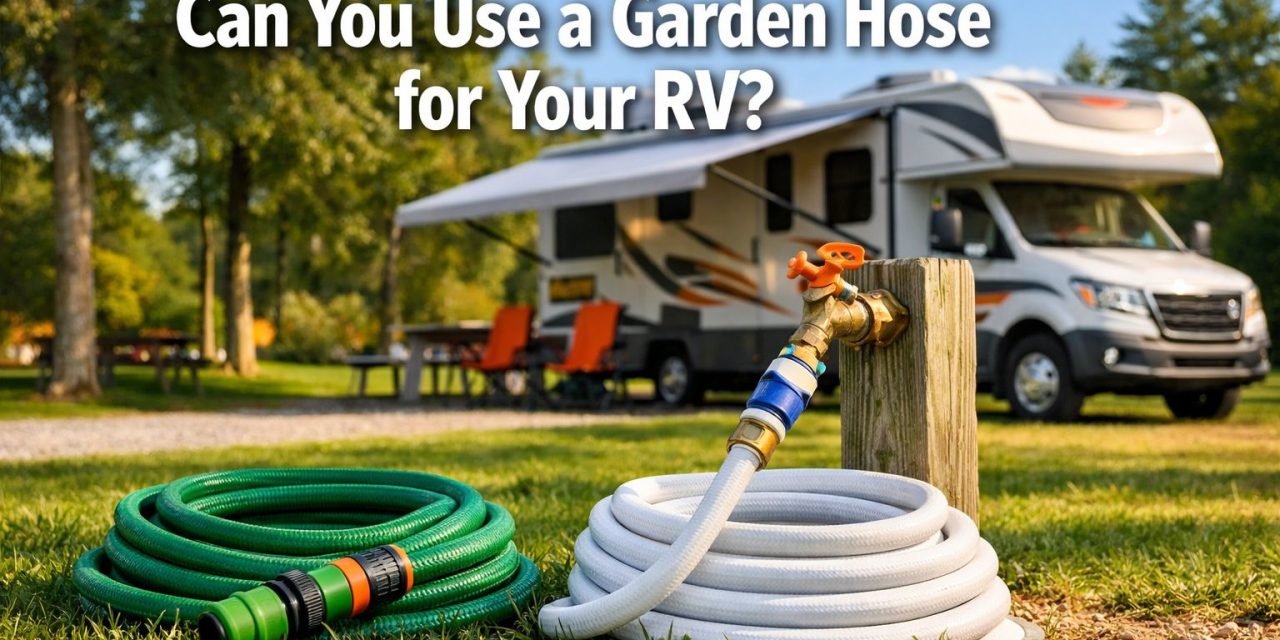
You’ve just pulled into a beautiful campsite, the weather is perfect, and you’re ready to hook up your RV — only to realize you forgot your water hose. The green garden hose in the back of your truck is right there. It’s tempting, right? But can you use a garden hose for RV water connections safely? The short answer is no — and the reasons why matter a lot for your health and your rig. Read on to find out exactly what’s at stake and what to use instead.
Key Takeaways
- 🚫 Standard garden hoses are NOT safe for RV drinking water — they can leach toxic chemicals and heavy metals into your water supply.
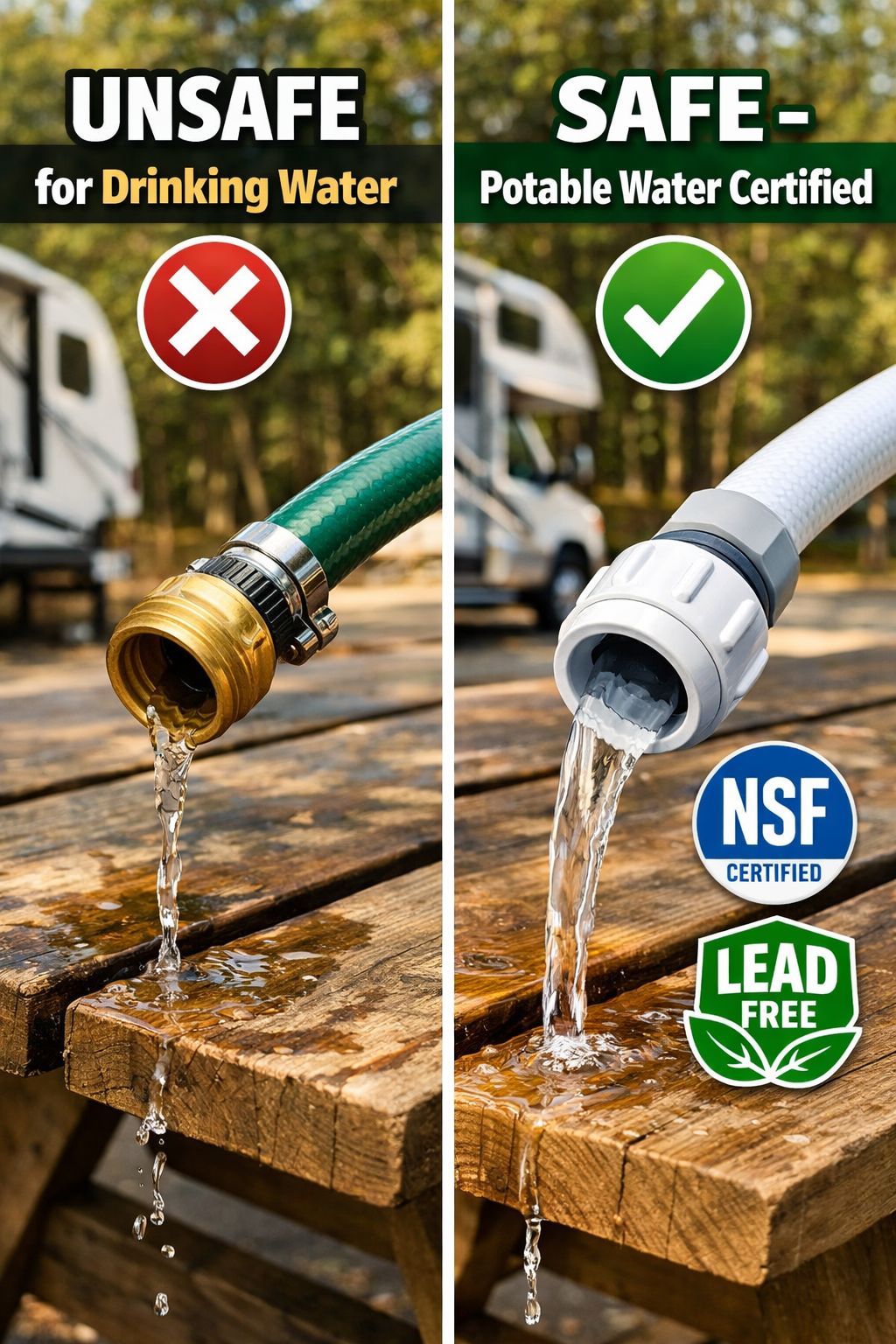
- ✅ Always use a certified potable water hose — look for white or blue hoses labeled “drinking water safe,” lead-free, and BPA-free.
- 🏷️ NSF and FDA certification on a hose means it meets government safety standards for drinking water.
- 📏 A 25-foot hose is the recommended length for most RV park hookups.
- 🌡️ Cold-weather campers should invest in a heated water hose to prevent freezing and maintain safe water flow.
Can You Use a Garden Hose for RV Hookups? Why It’s a Bad Idea
It might seem like a hose is just a hose, but there’s a big difference between a standard garden hose and one designed for potable water. Standard green garden hoses are not built to safely deliver drinking water. They are manufactured with materials that work fine for watering plants or washing cars — but not for water you’re going to drink, cook with, or bathe in. [1]
The Hidden Health Risks
Generic garden hoses are known to release metals and toxins into the water that flows through them. These substances can include lead, BPA, phthalates, and other harmful chemicals. [2] If you’re filling your RV’s freshwater tank or connecting directly to a campground spigot with a garden hose, those contaminants go straight into your water system.
💬 “Generic hoses often release metals and toxins into the water flowing through them, which if consumed can cause illness.” — Cinders Travels [2]
The health risks are especially serious for:
- Children and elderly travelers who are more vulnerable to toxins
- Long-term RVers who rely on their water system daily
- Anyone with immune system sensitivities
What Makes a Hose Safe for RV Use?
True RV water hoses are made from government-approved materials that are certified safe for human consumption. Here’s what to look for on the label: [1]
| Feature | Garden Hose | RV Drinking Water Hose |
|---|---|---|
| Potable water safe | ❌ No | ✅ Yes |
| Lead-free | ❌ Usually not | ✅ Required |
| BPA-free | ❌ Often not | ✅ Recommended |
| NSF certified | ❌ No | ✅ Premium models |
| FDA compliant | ❌ No | ✅ Premium models |
| Color | 🟢 Green/black | ⚪ White or blue |
Premium drinking water hoses meet both FDA and NSF (National Sanitation Foundation) standards, making them completely toxin-free. [4] These certifications aren’t just marketing — they confirm the hose has been independently tested for safety.
Color Matters More Than You Think
One of the easiest ways to identify a safe hose is by its color. White or blue hoses are specifically designed for potable water use and should be used exclusively for RV freshwater connections. [3] If you see a green or black hose, assume it’s not rated for drinking water unless the label clearly states otherwise.
Choosing the Right RV Water Hose: What You Need to Know
Now that it’s clear why you can’t use a garden hose for RV drinking water, let’s talk about picking the right hose for your setup. The good news? The right hose isn’t hard to find — you just need to know what to look for.
Recommended Length and Pressure Ratings
A 25-foot drinking water-safe hose is generally sufficient for most RV park hookups, since water spigots are typically located closer to RV sites than electrical connections. [2] However, carrying a second 25-foot hose as backup is always a smart move for those longer stretches.
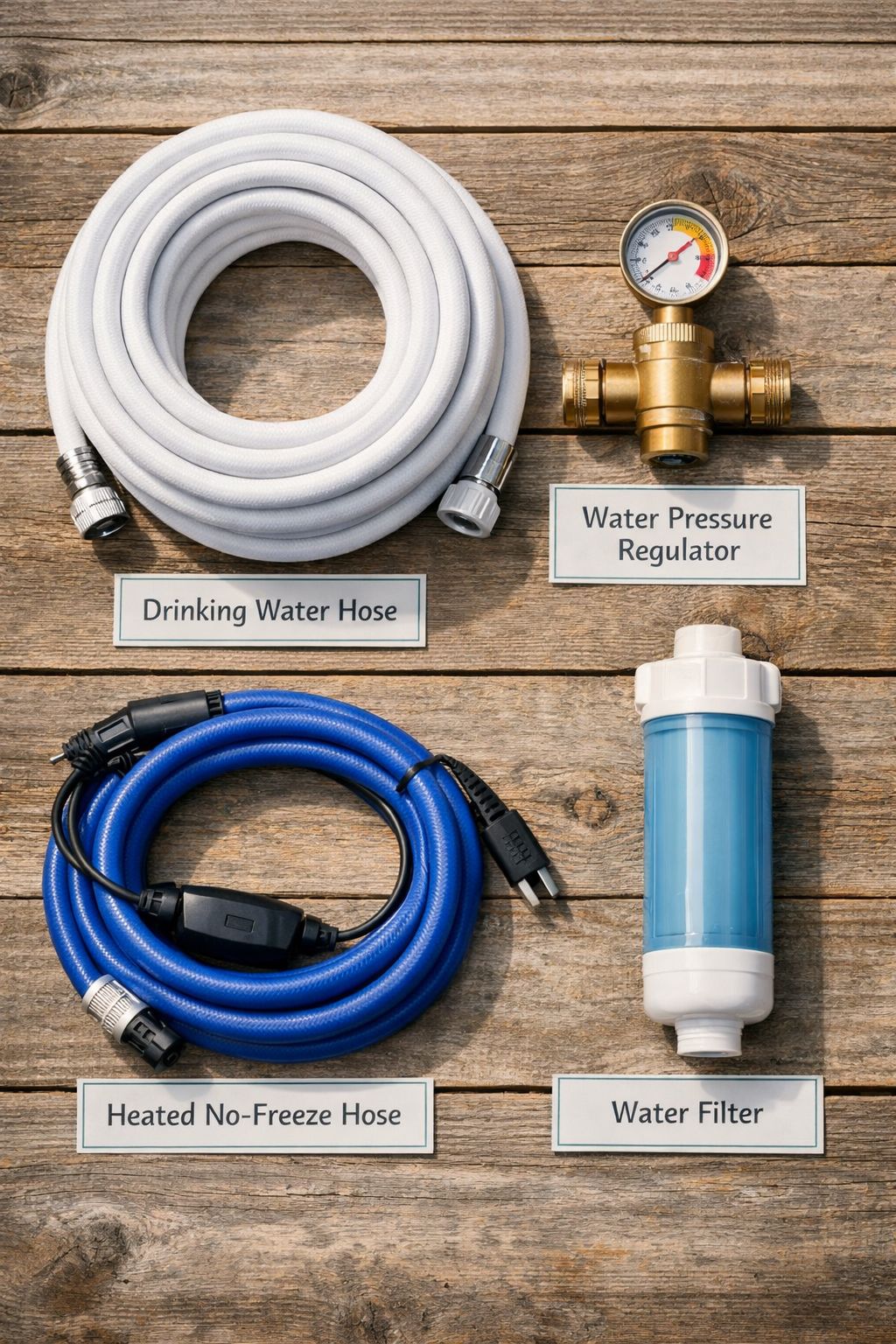
When it comes to pressure, RV water hoses are typically rated for 40 to 70 PSI, which matches typical campground water pressure. [1] That said, always pair your hose with a water pressure regulator — campground water pressure can spike unexpectedly and damage your RV’s plumbing.
Essential RV Water Accessories Checklist 🛒
- ✅ Certified potable water hose (white or blue, 25 ft minimum)
- ✅ Water pressure regulator (protects against high PSI)
- ✅ Inline water filter (extra layer of protection)
- ✅ Hose storage bag (keeps it clean and separate)
- ✅ Hose washers (prevents leaks at connections)
💡 Pro Tip: The water supply hose is listed as the number one priority among essential RV accessories — even before upgrading sewer components. [1] Don’t skip this investment!
Can You Use a Garden Hose for RV Needs in Reverse?
Here’s an interesting flip side: while a drinking water-safe hose can technically be used as a garden hose, this is generally not recommended because drinking water hoses are significantly more expensive than garden hoses. [1] Keep your potable water hose dedicated to its purpose — it’ll last longer and stay cleaner.
Keeping Your Hose Clean and Safe
Contamination doesn’t only come from the hose material itself. Keeping your water hose away from your sewer hose and any other contaminated areas is absolutely essential to protecting your health. [1] Here are a few best practices:
- 🎨 Color-code your hoses — white/blue for water, black for sewer
- 🧼 Flush your hose before each use
- 🗄️ Store it in a dedicated bag away from dirty gear
- ☀️ Avoid leaving it in direct sunlight for extended periods — UV rays degrade hose materials over time
Cold-Weather Camping? You Need a Heated Hose
For those who RV in winter or cold climates, a standard drinking water hose can freeze solid — leaving you without water when you need it most. Heated (or “no-freeze”) water hoses are available and are also rated for drinking water. These clever hoses include electric heat strips powered by 110-volt electrical connections to prevent freezing. [1] They’re a game-changer for four-season RVers.
Conclusion: Don’t Risk It — Use the Right Hose Every Time
So, can you use a garden hose for RV water hookups? Technically, yes — but it’s a risk that simply isn’t worth taking. Standard garden hoses can introduce harmful chemicals, heavy metals, and toxins directly into your RV’s water supply, putting everyone on board at risk. [1][2]
The solution is straightforward and affordable: invest in a certified potable water hose — white or blue, lead-free, BPA-free, and ideally NSF/FDA certified. Pair it with a pressure regulator and an inline filter, and your water system will be safe, clean, and reliable for every adventure in 2026 and beyond.
Your Action Steps 🚀
- Check your current hose — is it white/blue and labeled “drinking water safe”?
- Replace any green or unmarked hoses before your next trip
- Add a water pressure regulator to your hookup kit
- Store your water hose separately from sewer equipment
- Consider a heated hose if you camp in cold weather
Safe travels, and drink clean! 🏕️💧
References
[1] Rv Hose – https://rvshare.com/blog/rv_hose/ [2] Rv Must Haves – https://www.cinderstravels.com/rv-must-haves/ [3] Rv Hookup Beginners Guide – https://pismosandsrv.com/rv-hookup-beginners-guide/ [4] What Sets Us Apart – https://waterrightinc.com/pages/what-sets-us-apart