

Over 11 million American households now own an RV — and one of the most common questions new and seasoned owners alike ask is: can you use an RV generator while driving? The short answer is yes, in most cases — but the full answer involves safety protocols, legal considerations, and best practices that every RV enthusiast needs to understand before hitting the road with the generator running.
This guide breaks down everything from carbon monoxide risks to fuel management, so RV travelers can make informed decisions on every journey.
Key Takeaways 📋
- ✅ Running an RV generator while driving is generally legal and technically possible for most motorhomes
- ⚠️ Carbon monoxide poisoning is the #1 safety risk — proper ventilation and CO detectors are non-negotiable
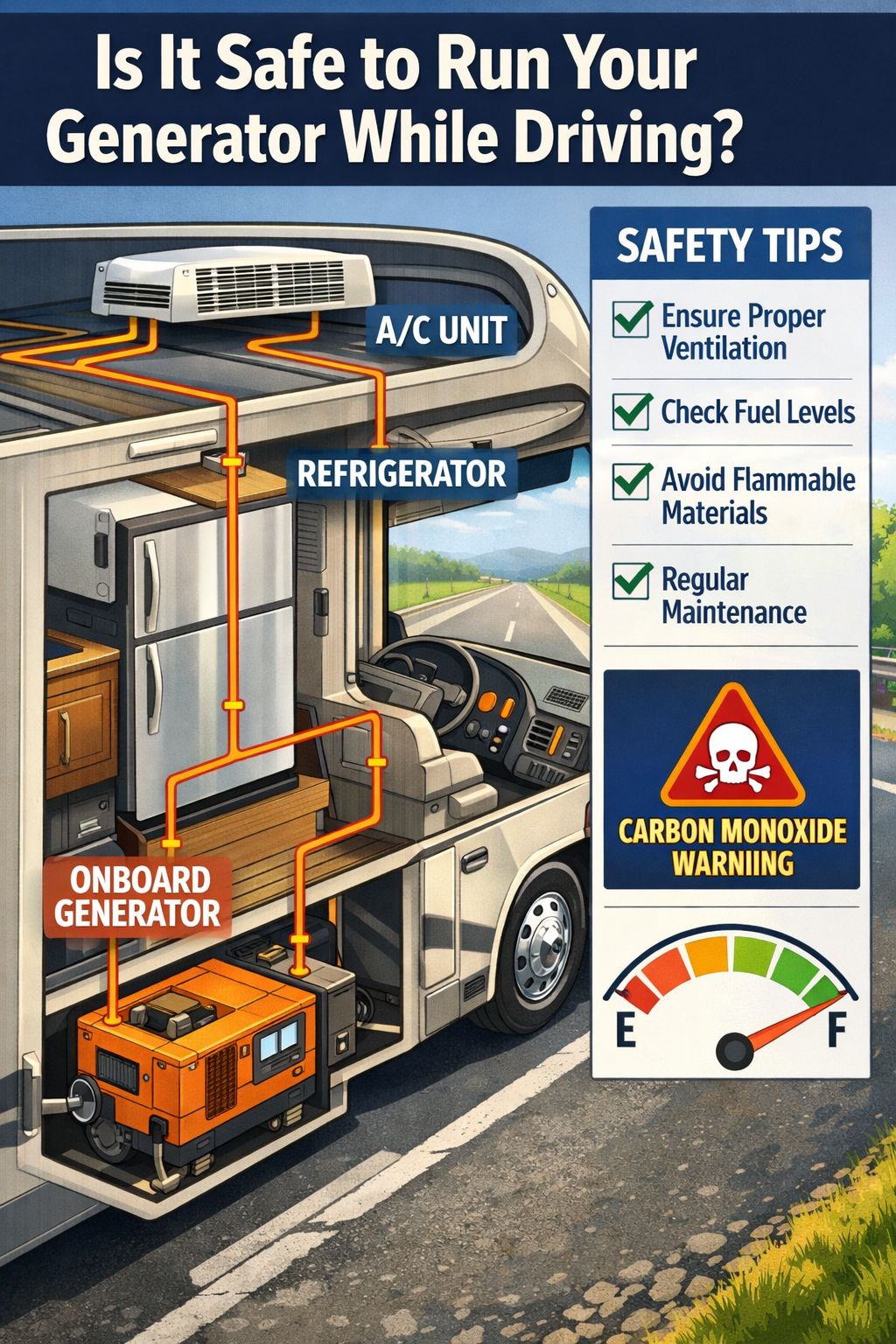
- 🔌 Common uses include powering AC, refrigerators, and electronics for passengers during travel
- ⛽ Generator fuel consumption adds to overall trip fuel costs — plan accordingly
- 📋 Some campgrounds and states have specific rules about generator use that may extend to travel
Understanding How RV Generators Work While the Vehicle Is Moving
Would you like to save this article?
Before diving into safety, it helps to understand the mechanics. Most Class A, Class B+, and Class C motorhomes come equipped with built-in (onboard) generators that operate independently from the engine. These units run on the RV’s main fuel tank — typically gasoline, diesel, or propane — and generate AC power just as they would at a campsite.
Types of RV Generators
| Generator Type | Common In | Can Run While Driving? |
|---|---|---|
| Built-in/Onboard | Class A, C motorhomes | ✅ Yes |
| Portable Generator | Fifth wheels, travel trailers | ⚠️ Not recommended |
| Inverter Generator | Any RV | ✅ If properly secured |
| Propane Generator | Various | ✅ With precautions |
Towable RVs (travel trailers, fifth wheels) present a different situation. Running a portable generator in a towed unit while driving is strongly discouraged due to ventilation issues, fire risk, and the inability to monitor the unit safely.
What Can You Power While Driving?
Running the generator on the road opens up several comfort options:
- 🌬️ Air conditioning — critical in hot climates for pets and passengers
- 🧊 Residential refrigerator — maintains food safety on long hauls
- 📺 TVs and entertainment systems — keeps passengers comfortable
- 💻 Charging stations and laptops — ideal for remote workers
- 🍳 Microwave — for quick meal prep during rest stops
Can You Use an RV Generator While Driving Safely? Key Risks to Know
The question of can you use an RV generator while driving safely comes down to managing a handful of well-documented risks. None of these risks are insurmountable — but ignoring them can be deadly.
⚠️ Risk #1: Carbon Monoxide Poisoning
Carbon monoxide (CO) is the most serious hazard associated with running a generator while driving. Generators produce CO as a byproduct of combustion. If exhaust fumes enter the living area — through gaps in the floor, open windows, or poor ventilation — occupants can be overcome within minutes.
💬 “Carbon monoxide is colorless and odorless. By the time passengers feel symptoms, it may already be too late to react safely.” — National Fire Protection Association
Mitigation steps:
- Install UL-listed CO detectors in the sleeping and living areas
- Never open rear windows or roof vents that face the exhaust direction while the generator runs
- Have the generator exhaust system inspected annually
- Keep the generator compartment sealed from the living space
⚠️ Risk #2: Fuel Management
Most onboard generators pull from the same fuel tank as the engine. Many RV manufacturers program a low-fuel cutoff that shuts the generator down when the tank reaches 1/4 full — this prevents the engine from running dry. However, drivers must still monitor fuel levels carefully on long trips.
Fuel consumption estimates:
| Generator Size | Approximate Fuel Use Per Hour |
|---|---|
| 2,500W | 0.25 – 0.35 gallons |
| 4,000W | 0.4 – 0.6 gallons |
| 6,500W | 0.6 – 1.0 gallons |
⚠️ Risk #3: Mechanical Wear and Maintenance
Running a generator continuously for 6–10 hours on a long driving day adds operational hours quickly. Most generators require an oil change every 100–150 hours of use. Ignoring this shortens the unit’s lifespan significantly.
Maintenance checklist for road use:
- Check oil level before every long trip
- Inspect air filter monthly
- Test CO detector batteries
- Verify exhaust port is clear of debris
- Confirm fuel shutoff valve is operational
⚠️ Risk #4: Propane Concerns in Tunnels and Ferries
For RVs using propane-powered generators or propane appliances, many tunnels and ferry services prohibit propane use while in transit. Always check regulations before entering tunnels like those in the Appalachians or boarding a ferry service.
Can You Use an RV Generator While Driving? Legal Considerations
The legality of running an RV generator while driving is not uniformly regulated across the United States. There is no single federal law prohibiting it for motorhomes, but several layers of rules apply.
State-Level Regulations
Most states do not explicitly ban running an onboard generator while driving. However:
- California has strict Air Resources Board (CARB) emissions standards that affect which generators can legally operate
- Some states restrict generator use in state parks and rest areas, which may include idling in parking lots
- Noise ordinances in certain jurisdictions may apply even to moving vehicles in residential zones
Campground and HOA Rules
While not applicable to driving, it’s worth noting that many campgrounds have quiet hours restricting generator use. Some RV parks ban generator use entirely. These rules don’t apply on the open road but matter for trip planning.
Insurance Implications
Running a generator while driving typically falls within standard RV insurance coverage, but owners should verify their policy covers generator-related incidents (fire, CO damage, mechanical failure) during transit. Contact the insurer directly if uncertain.
Best Practices for Running a Generator on the Road in 2026
Following these best practices makes generator use while driving both safe and efficient:
🛡️ Safety First
- Test CO detectors before every trip — replace batteries twice a year
- Brief all passengers on CO symptoms: headache, dizziness, nausea
- Designate a fuel monitor — check levels every 100 miles on long drives
- Keep windows closed on the sides near the exhaust outlet
⚡ Efficiency Tips
- Run the AC on “economy” or “auto” mode to reduce generator load
- Use a programmable thermostat to cycle cooling rather than running constantly
- Charge devices and batteries during driving to reduce campsite generator reliance
- Consider a lithium battery bank as a supplement to reduce generator hours
🔧 Pre-Trip Generator Checklist
- Start and run generator for 10 minutes before departure
- Verify all electrical connections are secure
- Confirm exhaust is unobstructed
- Check oil and coolant levels
- Ensure CO detectors are functioning
Special Considerations: Pets and Passengers
Traveling with pets is one of the most compelling reasons to run the generator while driving. Dogs and cats are highly vulnerable to heat in a parked or moving RV without climate control. Running the AC via the generator can be a lifesaving decision during summer travel.
For passengers riding in the living area of a motorhome (which is legal in most states), a running generator provides comfort and safety. However, the CO risk is elevated compared to an empty coach — making detector placement and ventilation even more critical.
Conclusion: Make the Generator Work for You — Safely
Running an RV generator while driving is a practical, widely used strategy that enhances comfort and safety for passengers and pets alike. The technology is reliable, the benefits are real, and the risks are manageable with the right precautions.
Actionable next steps for RV travelers in 2026:
- Install dual CO detectors — one near the sleeping area, one in the main living space
- Schedule a generator service before any road trip exceeding 500 miles
- Review your RV insurance policy to confirm generator-related coverage
- Check state and tunnel regulations for your planned route
- Create a pre-trip checklist and make it a non-negotiable habit
The road is more enjoyable when the AC is running, the fridge is cold, and everyone on board is comfortable. With the right knowledge and safety measures in place, the generator becomes one of the most valuable tools in any RV owner’s arsenal. 🚐⚡
References
- National Fire Protection Association. (2021). Carbon Monoxide: The Invisible Killer. NFPA.org.
- U.S. Consumer Product Safety Commission. (2022). Generator Safety. CPSC.gov.
- California Air Resources Board. (2023). Small Off-Road Engine Regulations. CARB.ca.gov.
- RV Industry Association. (2023). RV Ownership Report. RVIA.org.
- Onan/Cummins Generator Division. (2022). Operator’s Manual: RV Generator Series. Cummins Inc.


