
Nearly one in three RV travelers admits they’ve debated whether it’s safe — or even legal — to use the bathroom while the rig is rolling down the highway. It’s one of those questions that feels awkward to ask but matters enormously for safety, comfort, and compliance. So, can you use an RV toilet while driving? The short answer is: technically yes, but with serious caveats. This guide breaks down everything RV lovers need to know before anyone unbuckles on the interstate.
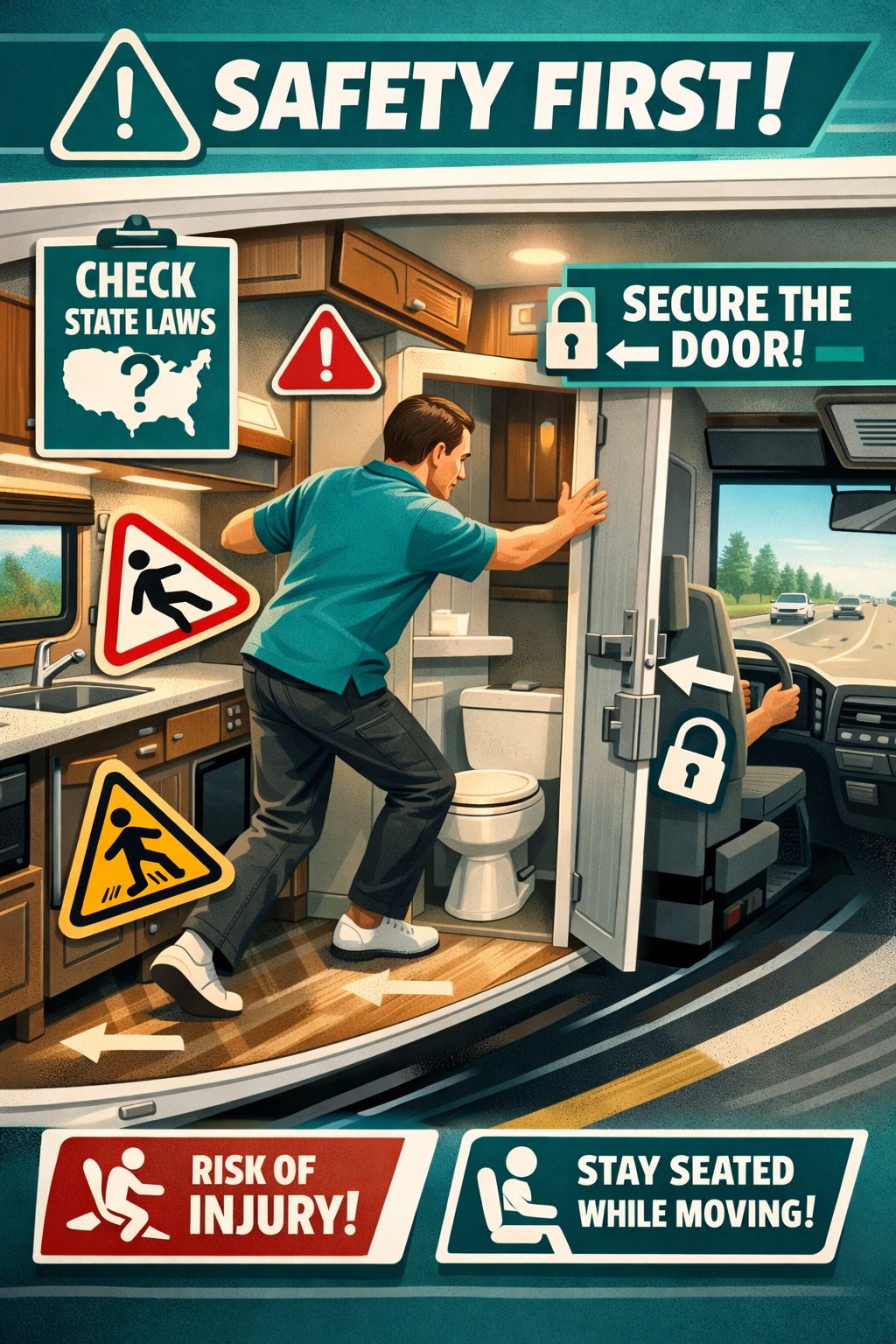
Key Takeaways
- ✅ It is physically possible to use an RV toilet while the vehicle is moving, but it carries real safety risks.
- ⚠️ Seat belt laws in many U.S. states require all passengers to remain buckled while the vehicle is in motion.
- 🚽 RV toilets function differently from home toilets — understanding your holding tank system matters.
- 🗺️ State laws vary significantly, so always research regulations before your trip.
- 🛑 Best practice is to stop the vehicle at a rest area or campground before using the bathroom whenever possible.
The Safety Reality: Can You Use an RV Toilet While Driving?
Before diving into legality, let’s talk physics and safety. A moving motorhome is not a stable environment. Even at highway speeds, sudden braking, lane changes, or road debris can cause anyone not seated and buckled to be thrown violently.
Physical Risks of Moving Through an RV in Motion
| Risk Factor | Potential Consequence |
|---|---|
| Sudden braking | Falls, head injuries, broken bones |
| Sharp turns | Loss of balance, striking fixtures |
| Road vibration | Difficulty walking, slipping |
| Blowouts or swerves | Ejection from standing position |
| Narrow hallways | Limited ability to brace safely |
“The interior of a moving RV is one of the most underestimated hazard zones in recreational travel.” — RV Safety & Education Foundation
The bathroom in most motorhomes is located at the rear or mid-section of the vehicle. Getting there requires walking through a moving cabin, navigating tight spaces, and potentially crossing over slide-out areas — all while the coach is in motion.
What About Passengers in Travel Trailers?
Here’s an important distinction: you cannot physically be inside a travel trailer, fifth wheel, or towed RV while it is moving. These units are not designed for occupancy during travel. The question of can you use an RV toilet while driving only applies to self-propelled motorhomes (Class A, B, or C).
Legal Considerations: State Laws and Seat Belt Requirements
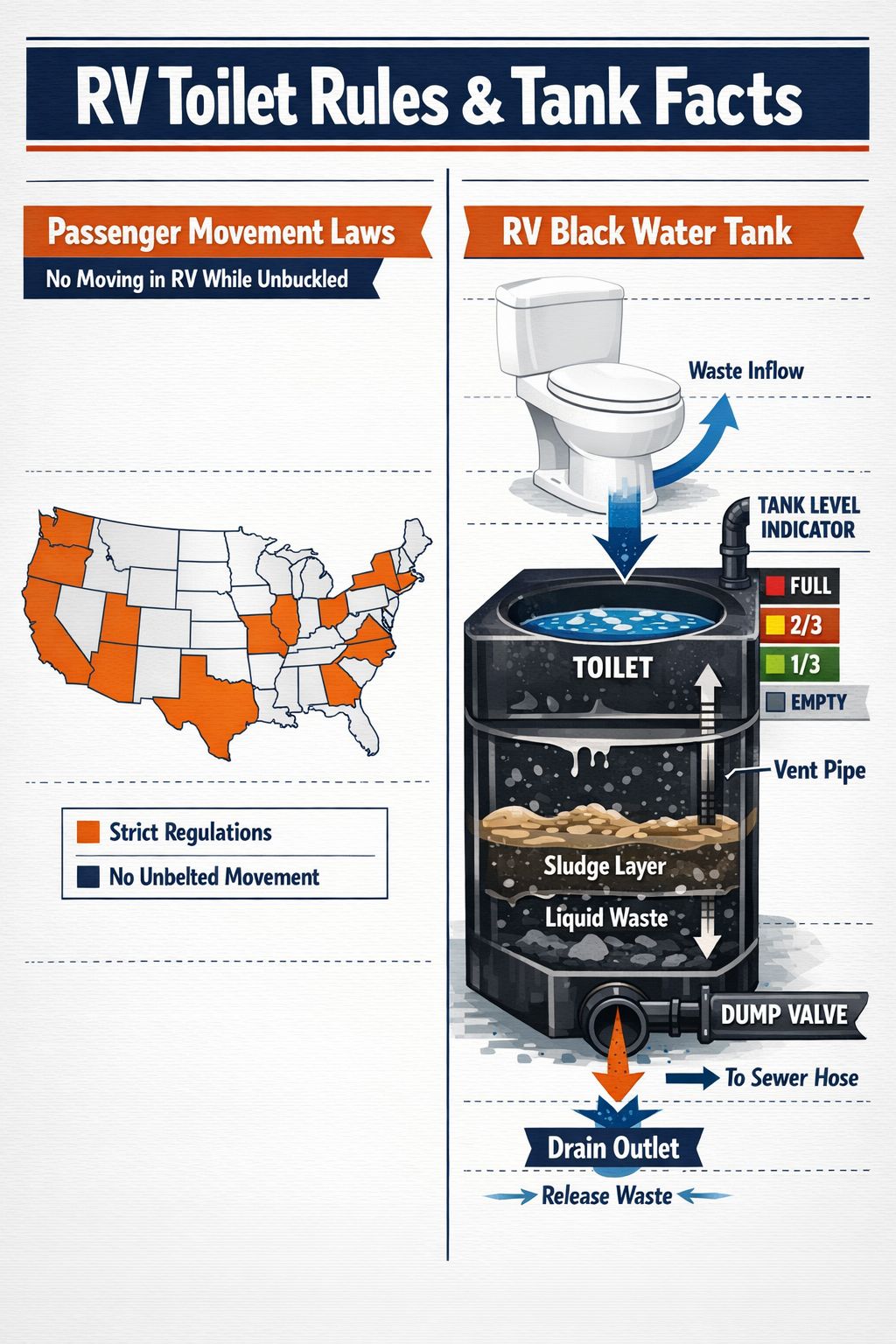
This is where things get complicated. The United States does not have a single federal law governing passenger movement inside motorhomes while driving. Instead, each state sets its own rules, and they vary widely.
Seat Belt Laws by Passenger Type
Most states require all occupants in a moving vehicle to wear seat belts. However, some states have exemptions for passengers in vehicles manufactured before certain years, or for those traveling in the “living quarters” of an RV.
Key points to know in 2026:
- California, New York, and Florida have strict seat belt laws that apply to all passengers regardless of where they sit in the vehicle.
- Some states allow passengers in the rear living area of a motorhome to move freely, but this is becoming increasingly rare as safety legislation tightens.
- No state explicitly permits unbuckling and walking to the bathroom while the vehicle is at highway speed without liability risk.
What the Law Actually Says
Most state seat belt statutes define “occupant” broadly. If a passenger is injured while walking to the RV bathroom during travel, insurance claims can be denied and the driver may face liability. Always check the specific laws for every state on your route.
💡 Pro Tip: Visit the Insurance Institute for Highway Safety (IIHS) website or your state’s DMV page for up-to-date seat belt regulations before each trip.
How RV Toilets Actually Work While Moving
Understanding your RV’s plumbing system helps clarify what happens when the toilet is used in motion.
The RV Toilet and Holding Tank System
RV toilets do not connect to a municipal sewer system. Instead, w