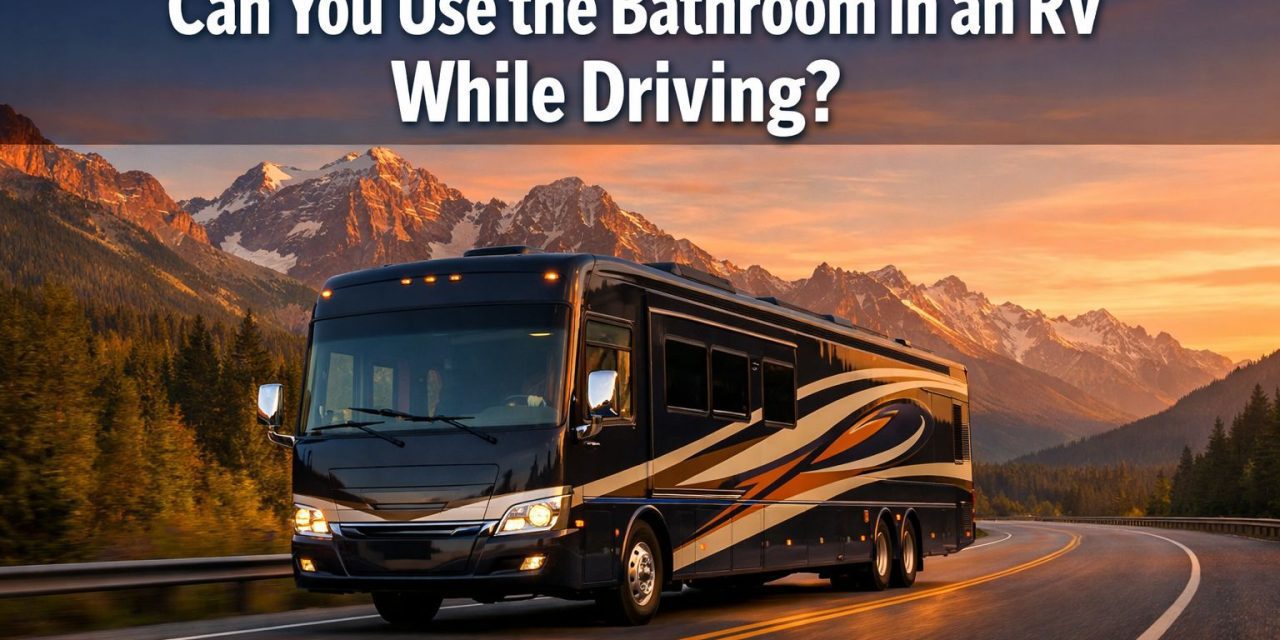
Only about half of all RV travelers know that the legality of using the bathroom while rolling down the highway depends entirely on what type of RV they’re in — and getting it wrong could mean a traffic citation or, worse, a serious injury. So, can you use the bathroom in an RV while driving? The short answer is: it depends — on your RV type, your state’s laws, and some important safety realities every road tripper should understand.
Key Takeaways 🗝️
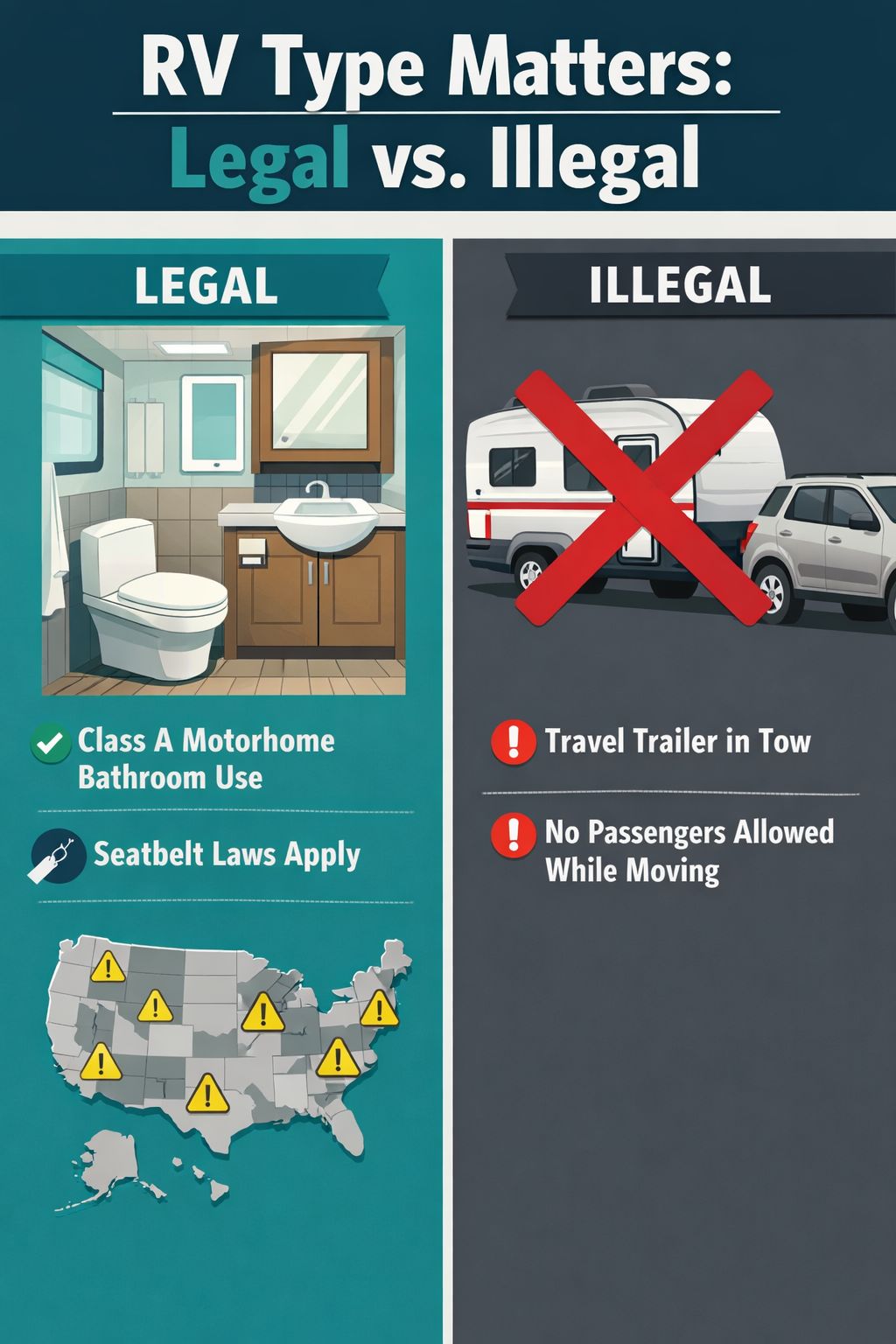
- ✅ Using the bathroom while driving is generally legal in Class A, B, and C motorhomes — but illegal in towed trailers (travel trailers and fifth-wheels).
- 🚨 State seatbelt laws are the biggest legal hurdle, since bathroom use requires unbuckling.
- 🚿 Showering while the RV is moving is not recommended due to serious slip and flood risks.
- 🛑 Pulling over is always the safest — and smartest — option.
- 📋 No federal law directly bans bathroom use in a moving RV; rules are state-specific.
Would you like to save this article?
Can You Use the Bathroom in an RV While Driving? Understanding the Legal Landscape
Let’s cut straight to the legal side of things, because this is where most RV travelers get confused.
Motorhomes vs. Towed Trailers: A Critical Difference
The type of RV you’re traveling in makes all the difference. Here’s the breakdown:
| RV Type | Can You Use the Bathroom While Driving? | Why? |
|---|---|---|
| Class A Motorhome | Generally yes (with caveats) | Passengers can move inside; seatbelt laws apply |
| Class B Camper Van | Generally yes (with caveats) | Compact but functional; seatbelt laws apply |
| Class C Motorhome | Generally yes (with caveats) | Mid-range layout; seatbelt laws apply |
| Travel Trailer | ❌ No | No seatbelts; not designed for occupied travel |
| Fifth-Wheel Trailer | ❌ No | Same as above — illegal and dangerous |
Travel trailers and fifth-wheels are not designed to be occupied while being towed. They lack seatbelts and proper safety systems, making it both illegal and extremely dangerous for anyone to be inside while the vehicle is moving [1][4].
Seatbelt Laws Are the Real Game-Changer
Here’s the twist most people miss: there is no federal law that directly bans bathroom use in a moving RV [2]. However, state-specific seatbelt laws become the primary legal concern the moment a passenger unbuckles to walk to the bathroom [2][5].
💬 “The moment you unbuckle your seatbelt in a moving RV, you may be breaking your state’s passenger restraint laws — regardless of your reason for doing so.”
Most U.S. states require all passengers to remain seated and buckled while the vehicle is in motion [3][4]. This means that even in a Class A motorhome where bathroom use is technically possible, unbuckling to use the facilities could put you in legal gray territory depending on which state you’re driving through [5].
Bottom line: Always check the seatbelt and passenger laws for every state on your route. What’s acceptable in one state may earn you a fine in another.
Does the RV’s Layout Matter?
Absolutely — and this is where things get practical. Not all RV bathrooms are created equal [2]:
- 🏠 Class A motorhomes typically have rear or mid-coach bathrooms with a hallway to navigate. More space, but more distance to travel while the coach is moving.
- 🚐 Class B camper vans feature compact “wet baths” where the toilet, sink, and shower share one small space. Tight quarters make access tricky.
- 🚌 Class C motorhomes offer a middle-ground setup — usually a dedicated bathroom that’s more accessible than a Class B but smaller than a Class A.
Safety Concerns: Why Pulling Over Is Always the Best Answer
Even when it’s technically legal, using the bathroom in a moving RV carries real physical risks that no traveler should ignore.
The Hidden Dangers of a Moving RV Bathroom
A sudden brake, a sharp curve, or an unexpected pothole can turn a routine bathroom trip into a painful accident. Here’s what can go wrong [2][3]:
- 🤕 Falls and injuries from losing balance on a moving floor
- 💧 Water spills and flooding if the sink or toilet is used while the RV sways
- 🔒 Unsecured doors swinging open unexpectedly
- 🚿 Slip hazards in wet bathroom areas — especially dangerous in a moving vehicle
Showering while driving deserves a special warning. While it may be technically legal in some motorhomes, showering in a moving RV is strongly discouraged by safety experts. The combination of wet surfaces, unpredictable vehicle movement, and potential water overflow creates a genuinely hazardous situation [1][2].
Can You Use the Bathroom in an RV While Driving Safely? Practical Tips
If a bathroom stop truly can’t wait, here are some ways to reduce risk:
- Communicate with the driver before getting up — they can slow down or find a smoother stretch of road.
- Hold onto grab bars and stable surfaces the entire time.
- Keep the trip short — quick use only, no showering or extended time inside.
- Secure all loose items in the bathroom before travel to prevent projectiles.
- Wear non-slip footwear at all times inside the RV.
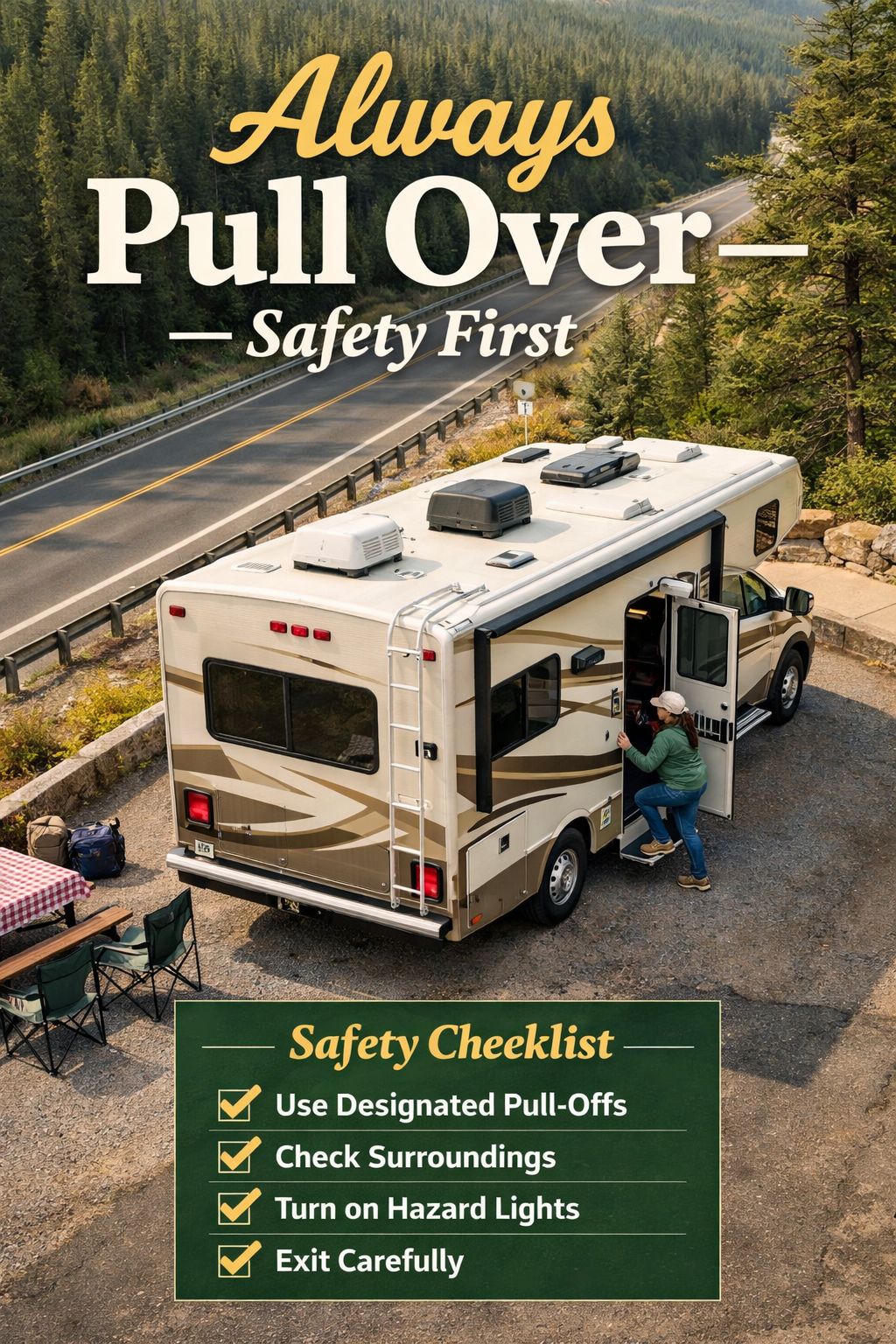
That said, the safest and most consistently recommended approach across all expert sources is simple: pull over [1][3].
The Pull-Over Rule: Make It a Habit 🛑
Pulling over at a rest stop, gas station, or safe roadside area takes just a few minutes and eliminates virtually all of the legal and safety risks associated with bathroom use while driving. Here’s a quick comparison:
| Scenario | Legal Risk | Safety Risk | Recommended? |
|---|---|---|---|
| Using bathroom while driving (motorhome) | Medium (varies by state) | High | ⚠️ Use caution |
| Using bathroom while driving (trailer) | High (illegal) | Extreme | ❌ Never |
| Pulling over to use bathroom | None | Very Low | ✅ Always |
💬 “No destination is worth risking an injury. A two-minute stop can save a trip — or a life.”
What About Rented RVs?
If traveling in a rented rig, the rental company’s policies may add another layer of rules on top of state laws. Some rental companies include specific guidelines about passenger behavior while the vehicle is in motion [3]. Always read the rental agreement carefully and ask the company directly if anything is unclear. Manufacturer manuals for specific RV models can also provide guidance tailored to that vehicle’s design [3].
Quick Reference: State-by-State Considerations
While a full state-by-state breakdown would require its own article, here are the key principles to keep in mind:
- Most states have laws requiring passengers to wear seatbelts, which indirectly restricts bathroom use while moving [3][4].
- Some states have specific laws about passengers in certain vehicle types — always verify locally.
- No state has a federal override — regulations are entirely at the state level [2].
- When in doubt, pull over. It’s always the legally safe choice.
Conclusion: The Smart RV Traveler’s Approach
So, can you use the bathroom in an RV while driving? Technically, yes — if traveling in a Class A, B, or C motorhome and state laws permit it. But “technically possible” and “a good idea” are two very different things.
Here are the actionable next steps for every RV traveler:
- ✅ Know your RV type — never occupy a towed trailer while it’s moving.
- 📍 Research seatbelt laws for every state on your planned route before departure.
- 🛑 Default to pulling over — it’s the safest, simplest solution every time.
- 📖 Check your rental agreement or owner’s manual for model-specific guidance.
- 🚿 Never shower while driving — the safety risks simply aren’t worth it.
- 🗣️ Talk to your travel companions before the trip so everyone knows the rules.
The open road is meant to be enjoyed — and the best way to keep the adventure going is to make smart, safe decisions at every mile marker. Happy travels! 🏕️🚐
References
[1] Can You Use The Bathroom In An Rv While Driving – https://www.neighbor.com/storage-blog/can-you-use-the-bathroom-in-an-rv-while-driving/ [2] Can You Use The Bathroom In An Rv While Driving – https://www.recnationstorage.com/blog/can-you-use-the-bathroom-in-an-rv-while-driving/ [3] Use Bathroom Rv Driving Legal Complicated – https://www.islands.com/1963856/use-bathroom-rv-driving-legal-complicated/ [4] Rv Laws And Rules – https://blog.classicvans.com/camper-vans/rv-laws-and-rules.html [5] Rv Passenger Laws – https://www.progressive.com/answers/rv-passenger-laws/