
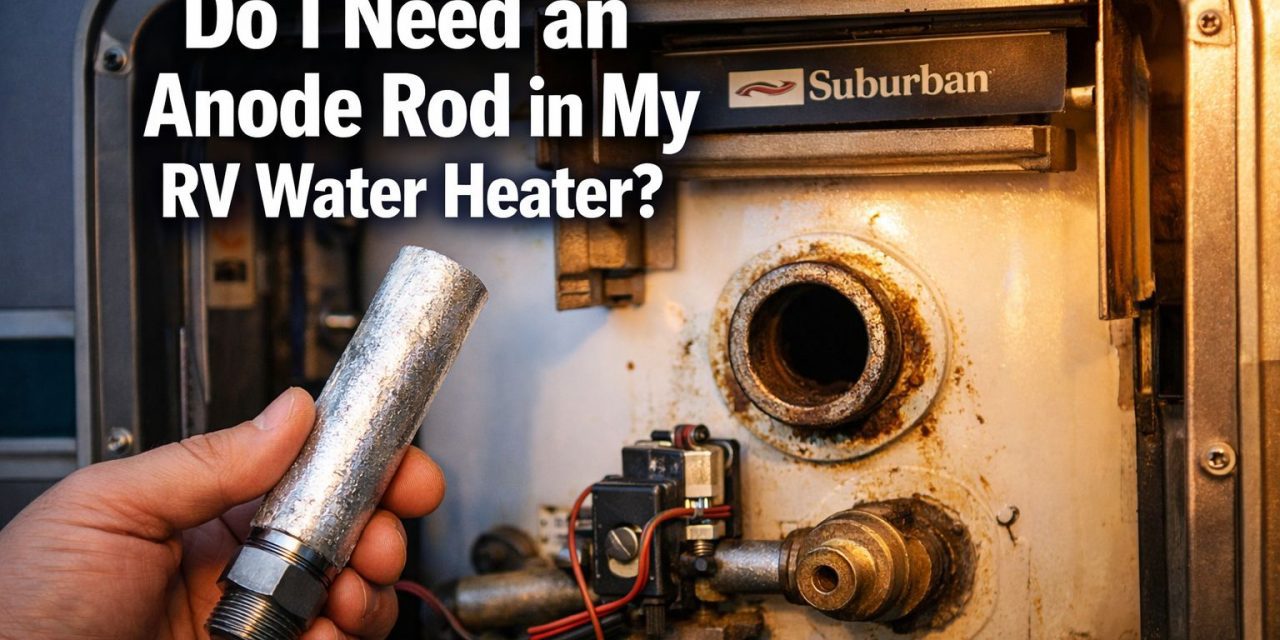
A corroded RV water heater tank can fail in as little as two to three years — yet a simple $10 anode rod can extend its life by a decade or more. So the question “do I need an anode rod in my RV water heater?” is one every RV owner should be asking before they end up with a rusty, leaking mess on the road.
The honest answer? It depends entirely on the brand of water heater in your RV. This guide breaks down exactly what you need to know, how to check your heater, and how to keep it running strong for years to come.
Key Takeaways 🔑
- Not all RV water heaters need an anode rod — it depends on whether your tank is steel or aluminum.
- Suburban water heaters use steel tanks and require an anode rod for corrosion protection.
- Atwood and Dometic water heaters use aluminum tanks and do not use anode rods — installing one can cause damage.
- Anode rods should be inspected at least once a year and replaced when 50–75% worn.
- Magnesium rods work best for soft water; zinc rods are better for hard water or sulfur-heavy water.
Would you like to save this article?
Do I Need an Anode Rod in My RV Water Heater? It Starts With Your Brand
Before buying anything, the most important step is identifying your water heater brand. Open the exterior access panel on your RV and look for the manufacturer’s label. The two most common brands are Suburban and Atwood (now owned by Dometic), and they work very differently. [1]
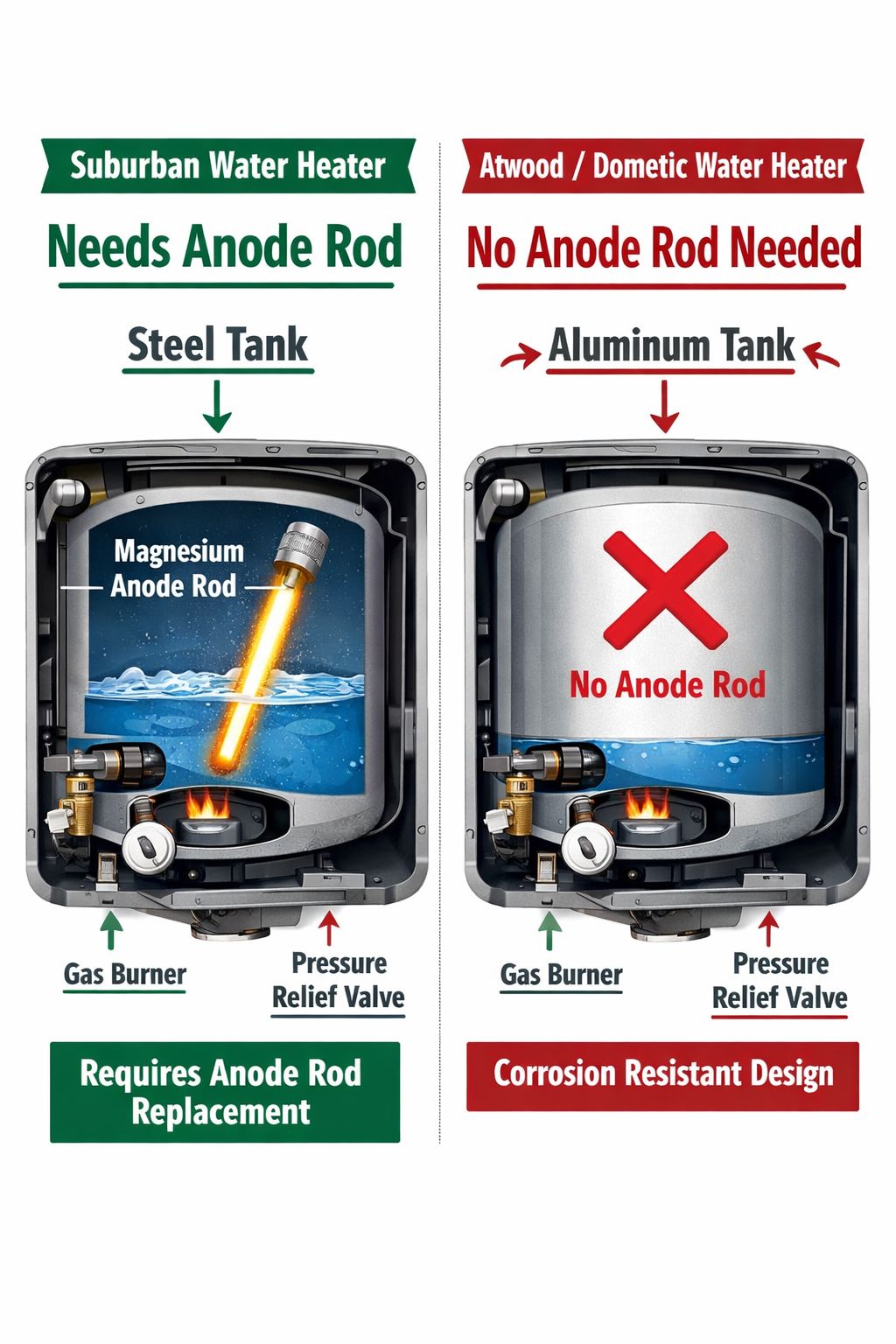
Suburban Water Heaters: Yes, You Need One
Suburban water heaters use a glass-lined steel tank. Steel is strong, but it’s also vulnerable to corrosion — especially when it sits in contact with water day after day. The glass lining helps, but it can develop tiny cracks over time, exposing the steel underneath. [1]
That’s where the anode rod comes in. It acts as a sacrificial element, meaning it attracts the corrosive minerals and electrochemical reactions in the water and corrodes instead of the tank. Think of it as a bodyguard for your water heater. [1][2]
On a Suburban model, you’ll spot the anode rod location easily: look for a hexagon-shaped plug at the bottom center of the tank. That’s your anode rod — and it’s doing a critical job every time water sits in that tank. [2]
Atwood and Dometic Water Heaters: No Anode Rod Needed
Atwood and Dometic water heaters are built differently. Their tanks are made from aluminum, which is naturally corrosion-resistant. These tanks don’t need a sacrificial rod to protect them. [1]
⚠️ Important: Installing an anode rod in an aluminum-tank water heater can actually cause galvanic corrosion — the opposite of what you want. If you have an Atwood or Dometic unit, skip the anode rod entirely. [1]
Quick Brand Check Table
| Brand | Tank Material | Anode Rod Required? |
|---|---|---|
| Suburban | Steel (glass-lined) | ✅ Yes |
| Atwood | Aluminum | ❌ No |
| Dometic | Aluminum | ❌ No |
What Does an Anode Rod Actually Do?
An anode rod is typically made from magnesium or zinc and screws into the water heater tank. Once submerged in water, it creates an electrochemical reaction. Because the rod is made of a more reactive metal than the steel tank, it corrodes first — protecting the tank in the process. [1][2]
Without it, the steel tank absorbs all that corrosive energy and deteriorates from the inside out. By the time you notice a problem, the damage is often already severe.
Magnesium vs. Zinc: Which Rod Is Right for You?
Not all anode rods are the same. The type of water in your area matters a lot. [1][2]
- 🟢 Magnesium rods — Best for soft water, well water, or municipal water with low mineral content. They offer the strongest electrochemical protection and are the most common choice.
- 🔵 Zinc or aluminum/zinc rods — Better for hard water or water with high sulfur content. They last longer in mineral-heavy water and help reduce that unpleasant rotten egg smell that sometimes comes from water heaters.
If your water smells sulfuric, switching to a zinc rod is often the first fix to try before anything else.
How Often Should You Inspect and Replace Your Anode Rod?
Annual Inspection Is the Minimum
For most RV owners, inspecting the anode rod at least once per year is the standard recommendation. However, if you’re a full-time RVer or frequently camp in areas with hard water, bumping that up to every six months is a smart move. [2]
Signs It’s Time to Replace
Look for these warning signs during inspection: [2]
- The rod is 50–75% worn down
- The steel core wire is visible through the remaining material
- Water from the tap has a rotten egg odor
- The rod is less than half its original length
Standard Suburban anode rods measure approximately 9 to 9.25 inches in length and use 3/4″ NPT threads, making them interchangeable across most Suburban models. [2]
How to Replace an Anode Rod in Your RV Water Heater
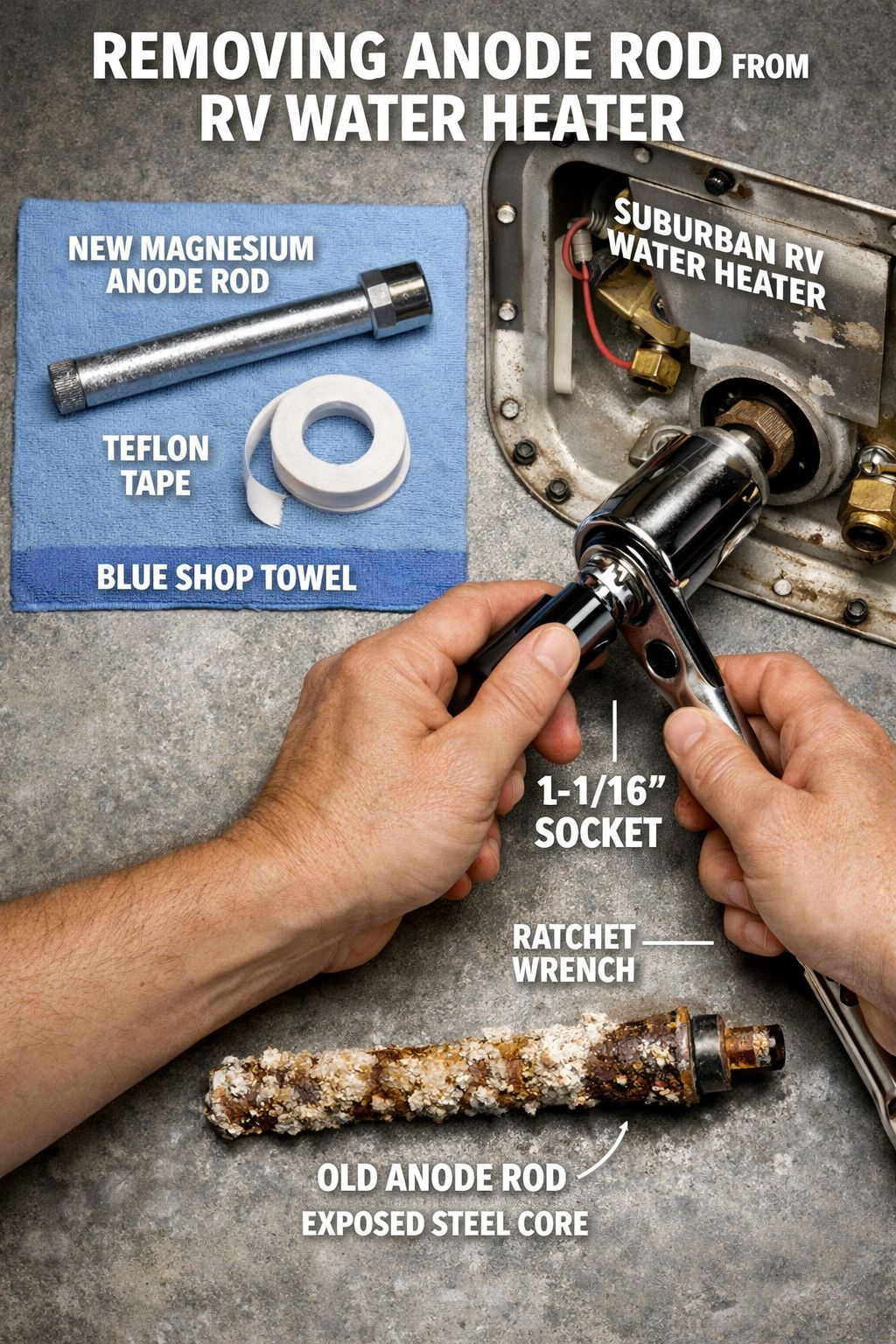
Replacing an anode rod is a straightforward DIY task that most RV owners can handle in under 30 minutes. Here’s what you’ll need and how to do it. [1][2]
Tools and Supplies
- 🔧 1-1/16″ socket wrench (specific size for Suburban water heaters)
- 🧵 Teflon tape (plumber’s tape)
- A bucket or towels for water drainage
- Replacement anode rod (magnesium or zinc, depending on your water type)
Step-by-Step Process
- Turn off the water heater and let it cool completely — never work on a hot tank.
- Turn off the water supply and open a hot water faucet inside the RV to release pressure.
- Locate the anode rod at the bottom center of the Suburban tank exterior.
- Use the 1-1/16″ socket to loosen and remove the old rod counterclockwise. Water will drain out — have a bucket ready.
- Inspect the old rod. If it’s heavily corroded or the steel core is showing, it’s overdue for replacement.
- Wrap Teflon tape around the threads of the new rod (3–4 wraps, clockwise).
- Thread in the new rod by hand first, then tighten with the socket wrench. Don’t overtighten.
- Restore water supply, check for leaks, and relight the water heater.
💡 Pro Tip: Always flush the tank with a tank rinse wand while the anode rod is out. It’s the perfect time to clear out sediment buildup.
Common Questions About RV Water Heater Anode Rods
Can a bad anode rod make water smell bad?
Yes! A depleted or failing magnesium rod can react with sulfur bacteria in the water, producing a rotten egg odor. Switching to a zinc rod often solves this problem. [2]
What happens if I skip the anode rod entirely?
In a Suburban steel-tank heater, skipping the anode rod means the tank itself corrodes. This leads to rust-colored water, leaks, and eventually full tank failure — a much more expensive fix than a $10–$15 rod.
Can I use any anode rod brand?
Most 3/4″ NPT magnesium or zinc rods that measure around 9 inches will fit Suburban models. Always double-check thread size and length before purchasing. [2]
Conclusion: Protect Your Investment With the Right Anode Rod
The answer to “do I need an anode rod in my RV water heater?” is clear: if you have a Suburban water heater, absolutely yes. If you have an Atwood or Dometic, skip it — your aluminum tank doesn’t need one and could be harmed by one.
Here are your actionable next steps:
- ✅ Identify your water heater brand by checking the label on the unit.
- ✅ Inspect your anode rod if you have a Suburban heater — especially if it’s been more than a year.
- ✅ Choose the right rod material based on your water type (magnesium for soft water, zinc for hard water or sulfur odors).
- ✅ Replace it yourself with a 1-1/16″ socket and Teflon tape — it’s a quick, affordable task.
- ✅ Set a reminder to inspect again in 6–12 months.
A small amount of maintenance now saves a very large repair bill later. Keep that anode rod fresh, and your RV water heater will keep delivering hot showers for many adventures to come. 🚐🔥
References
[1] Rv Water Heater Anode Rods What You Need To Know – https://myrvworks.com/rv-water-heater-anode-rods-what-you-need-to-know/
[2] Rv Water Heater Anode Rod – https://rvhelp.com/blog/rv-water-heater-anode-rod