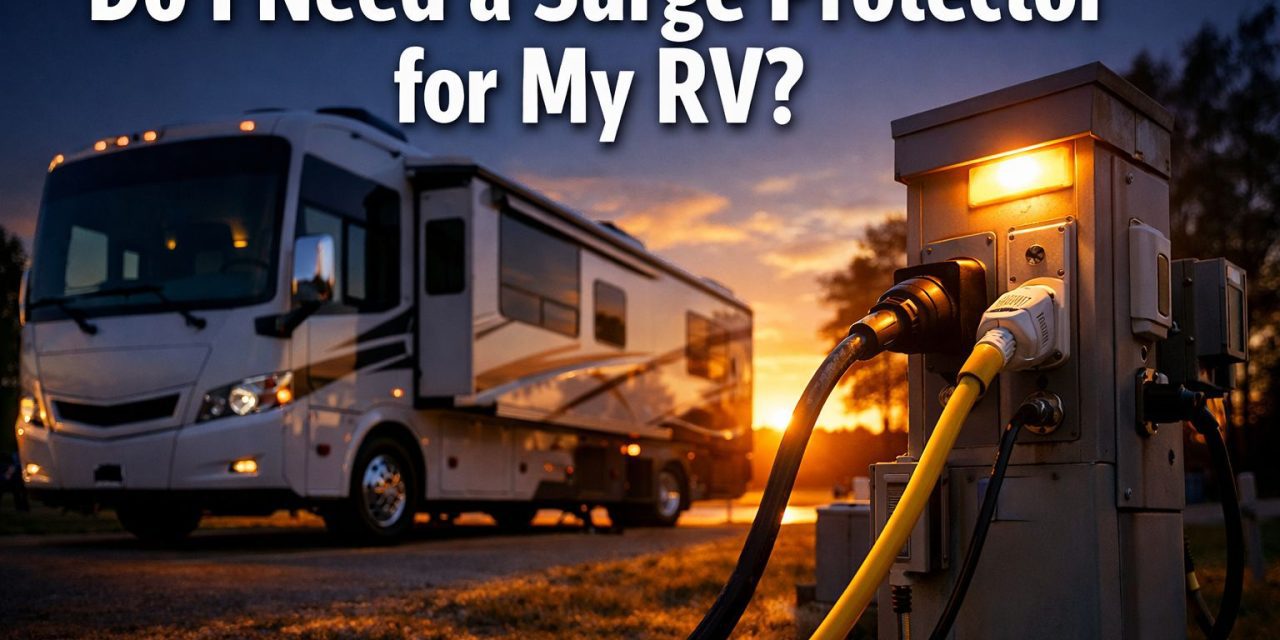
A single bad power connection at a campground can fry thousands of dollars worth of electronics, appliances, and electrical systems in seconds — and it happens to RV owners every camping season. So, do I need a surge protector for my RV? The short answer is a resounding yes, and this guide explains exactly why, what to look for, and how to choose the right protection for your rig. 🔌⚡
Key Takeaways
- Campground power is unpredictable — voltage spikes, surges, and wiring faults are real and common risks.
- Surge protectors and EMS (Electrical Management Systems) devices protect your RV’s sensitive electronics and appliances.
- Two main types exist: portable plug-in units and hardwired inline units — each with pros and cons.
- 30-amp and 50-amp options are available depending on your RV’s electrical system.
- The cost of a quality surge protector is a fraction of what it would cost to replace damaged appliances or wiring.
Why Do I Need a Surge Protector for My RV? Understanding the Risk
Campground Power Is Not Always Reliable
Most RVers assume that plugging into a campground pedestal is just like plugging into a wall at home. Unfortunately, that assumption can be expensive. Campground electrical pedestals vary widely in quality, age, and maintenance. Older parks may have outdated wiring, loose connections, or pedestals that have been exposed to weather and wear for decades. [6]
These issues can cause:
- ⚡ Voltage spikes — sudden jumps in voltage that can overwhelm sensitive electronics
- 📉 Low voltage (brownouts) — sustained low voltage that forces motors (like your AC compressor) to work harder and overheat
- 🔄 Reverse polarity — wiring mistakes where hot and neutral wires are swapped
- ⚠️ Open ground faults — missing ground connections that create shock hazards
“Your RV’s electrical system is only as safe as the power source it’s connected to.”
Modern RVs are packed with sensitive electronics — inverters, smart TVs, microwaves, refrigerators, and HVAC systems. All of these components are vulnerable to the kinds of electrical gremlins that campground power can deliver. [4]
What Exactly Does a Surge Protector Do?
A surge protector monitors the incoming power supply and blocks or absorbs dangerous voltage spikes before they reach your RV’s wiring and appliances. A step up from a basic surge protector is an EMS (Electrical Management System), which also monitors for:
- Over-voltage and under-voltage conditions
- Open ground and open neutral faults
- Reverse polarity
- Frequency irregularities
Think of a basic surge protector as a seatbelt, and an EMS as a full airbag system. Both help — but the EMS offers significantly broader protection. [9]
The Real Cost of Skipping Protection
Here’s a quick comparison to put things in perspective:
| Item | Approximate Cost |
|---|---|
| Quality portable surge protector | $50 – $150 |
| Hardwired EMS unit | $200 – $400 |
| Replacing an RV air conditioner | $800 – $1,500+ |
| Replacing a residential-style fridge | $1,000 – $2,500+ |
| Full electrical system repair | $2,000 – $5,000+ |
The math is straightforward. Spending a few hundred dollars on protection can save thousands in repairs. [3]
Choosing the Right RV Surge Protector: Types, Features & Top Brands
Do I Need a Surge Protector for My RV — 30-Amp or 50-Amp?
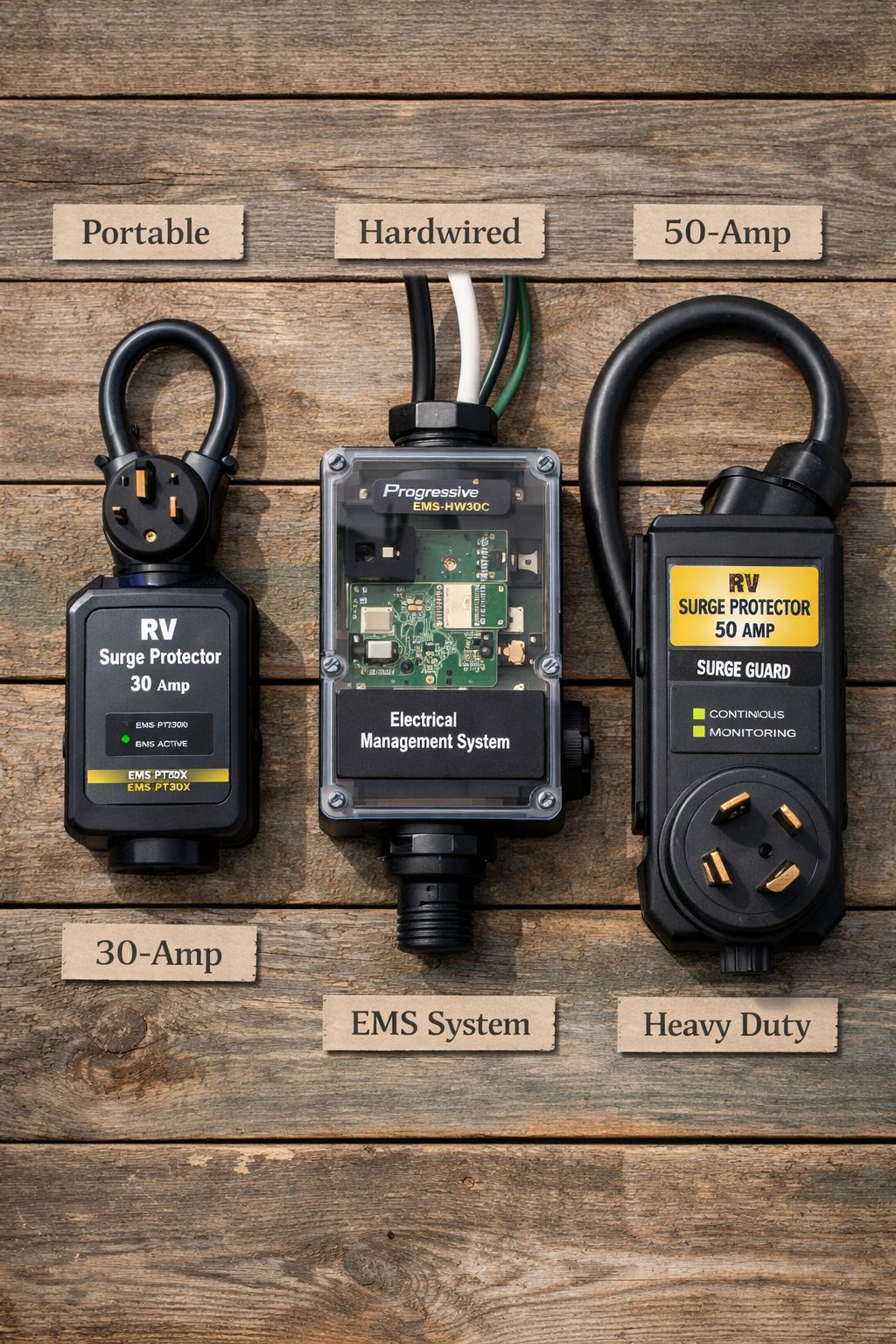
The first step is matching the protector to your RV’s electrical service:
- 30-amp RVs — typically smaller travel trailers, pop-ups, and older motorhomes
- 50-amp RVs — larger Class A, Class C, and fifth-wheel rigs with more appliances and dual air conditioners
Using the wrong amperage protector won’t work properly and can even cause problems, so always match the rating to your RV’s shore power connection. [5]
Portable vs. Hardwired: Which Is Right for You?
Portable Surge Protectors 🔌
- Plug directly into the campground pedestal
- Easy to use — no installation required
- Can be removed and stored (reducing theft risk somewhat)
- Great for occasional campers or those on a budget
Hardwired / Inline EMS Units 🔧
- Installed inside the RV’s electrical panel
- Always active — no chance of forgetting to plug it in
- Typically offer more comprehensive protection
- Cannot be stolen from the pedestal
- Better long-term investment for full-time or frequent RVers
Pro tip: If you go with a portable unit, consider using a locking cable to secure it to the pedestal. Theft of surge protectors is a real issue at busy campgrounds! 🔒
Key Features to Look For
When shopping for RV surge protection, prioritize these features:
- ✅ Joule rating — higher is better (look for 2,000+ joules for solid protection)
- ✅ EMS capability — monitors voltage, polarity, and ground faults, not just surges
- ✅ LED indicator lights — shows power status at a glance
- ✅ Automatic shutoff — disconnects power when unsafe conditions are detected
- ✅ Weatherproof housing — important for portable units left outdoors
- ✅ Warranty and replaceable components — some brands, like Hughes Autoformers with their Watchdog Power Center, offer replaceable surge modules, which is a unique advantage [1]
Trusted Brands in the RV Surge Protection Space
Several reputable brands consistently appear in RV community recommendations: [4][3]
- Progressive Industries — known for robust EMS units with excellent diagnostics
- Southwire / TRC — popular portable options at accessible price points
- Hughes Autoformers — notable for the Watchdog Power Center with replaceable surge modules [1]
- Camco — budget-friendly entry-level options for occasional campers
Each brand offers both 30-amp and 50-amp versions across their product lines. [5][2]
Would you like to save this article?
What About Whole-Coach Protection?
For RVers who want maximum peace of mind, a hardwired EMS installed at the main electrical panel provides whole-coach protection. Every circuit in the RV benefits from the filtering and monitoring, not just the appliances closest to the shore power connection. This is the preferred setup for full-time RVers and those with high-end coaches. [9][6]
Frequently Asked Questions
Q: Can a surge protector damage my RV?
No. A properly rated surge protector or EMS device is designed to be transparent to normal power flow. It only acts when something goes wrong.
Q: Do I need one if I only camp at newer, well-maintained parks?
Even modern campgrounds can have wiring issues. Electrical faults can happen anywhere, and a surge can come from external sources like lightning strikes on the grid — not just bad wiring. Protection is always worth it.
Q: Is a basic surge protector enough, or do I need an EMS?
A basic surge protector handles voltage spikes. An EMS handles a much wider range of electrical problems. For most RVers, an EMS is the smarter investment. [9]
Q: What if I’m boondocking or using a generator?
Surge protectors are primarily for shore power connections. When running on a quality generator or battery/inverter system, the risk profile is different — but using a protector with a generator is still possible and sometimes recommended.
Conclusion: Protect Your Investment Before You Pull Into That Next Campsite
So, do I need a surge protector for my RV? Absolutely — and the sooner, the better. Every time an RV is plugged into shore power without protection, it’s a gamble with potentially thousands of dollars on the line.
Here are the actionable next steps:
- Identify your RV’s amperage (30-amp or 50-amp) before shopping.
- Decide between portable and hardwired based on how often you camp and your budget.
- Prioritize an EMS over a basic surge protector for the broadest protection.
- Research trusted brands like Progressive Industries, Hughes Autoformers, and Southwire.
- Purchase before your next trip — don’t wait until after something goes wrong.
An RV is one of the biggest investments a person can make. A quality surge protector or EMS device is one of the simplest, most affordable ways to keep that investment safe for years of adventures ahead. 🏕️⚡🛡️
References
[1] Watch – https://www.youtube.com/watch?v=2xN81Tsh3vc
[2] Surge Protectors – https://www.powerwatchdog.com/surge-protectors
[3] rvupgradestore – https://www.rvupgradestore.com/rv-surge-protection-comparison-guide-a/279.htm
[4] Best Rv Surge Protection Brands For Defending Your Motorhomes Sensitive Electrical System And Equipment – https://technorv.com/blogs/news/best-rv-surge-protection-brands-for-defending-your-motorhomes-sensitive-electrical-system-and-equipment
[5] Surge Protectors – https://www.campingworld.com/c/rv-power-electrical/power-surge-protection/surge-protectors
[6] Info – https://www.etrailer.com/info.aspx?productgroup=RV+Surge+Protectors
[7] Watch – https://www.youtube.com/watch?v=Fg69s21MReI
[8] Surge Protector For Rv – https://www.gearit.com/collections/surge-protector-for-rv
[9] Rv Surge Protectors Ems – https://weretherussos.com/rv-surge-protectors-ems/
Tags: RV surge protector, RV electrical safety, EMS for RV, campground power protection, 30-amp RV, 50-amp RV, RV appliance protection, portable surge protector, hardwired EMS, RV power management, RV camping tips, RV maintenance