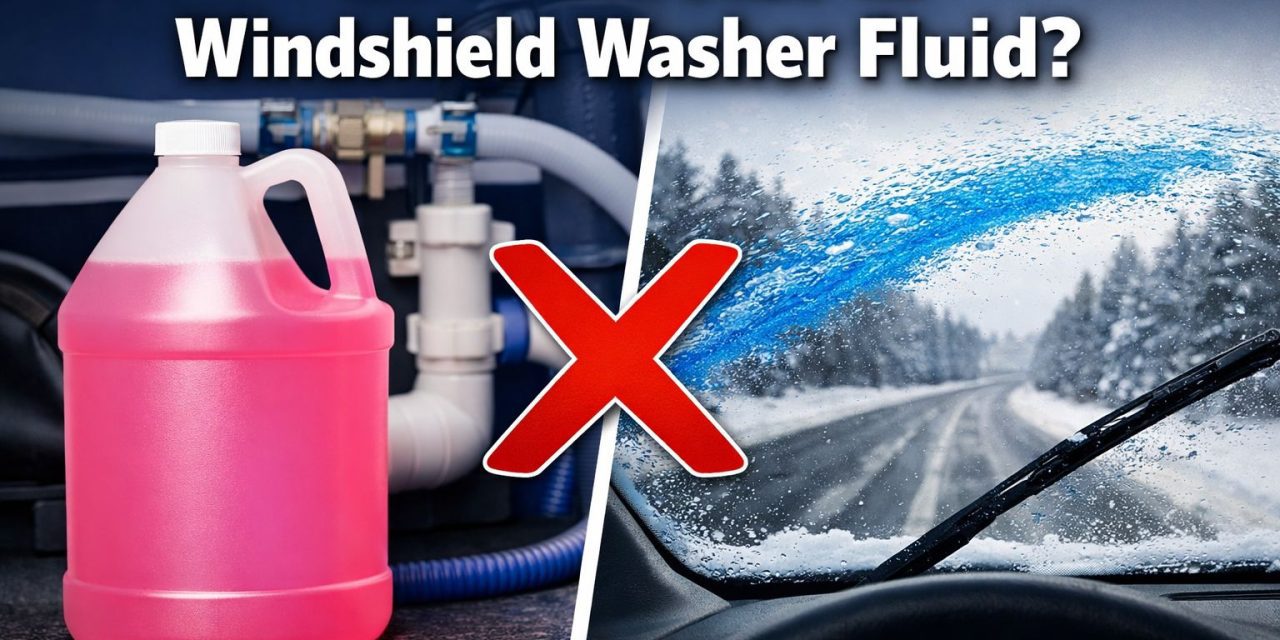
Every winter, thousands of RV owners stare at a pink bottle of RV antifreeze and a nearly empty windshield washer reservoir — and wonder if the two could work together. The short answer is a firm no, and the reasons go deeper than most people expect. Understanding can you use RV antifreeze as windshield washer fluid? could save your windshield, your washer system, and your safety on the road.
Key Takeaways 🔑
- RV antifreeze and windshield washer fluid are chemically different and are NOT interchangeable.
- RV antifreeze uses propylene glycol, while washer fluid uses ethanol or methanol — each designed for a specific job.
- Using RV antifreeze in a washer reservoir will smear your windshield and block your visibility.
- RV antifreeze can corrode metal parts when exposed to heat — a serious risk in washer systems.
- If you accidentally add RV antifreeze to your washer reservoir, drain it immediately and flush the system.
Can You Use RV Antifreeze as Windshield Washer Fluid? The Chemical Truth
To understand why this swap is a bad idea, it helps to look at what each product is actually made of.
What’s Inside RV Antifreeze?
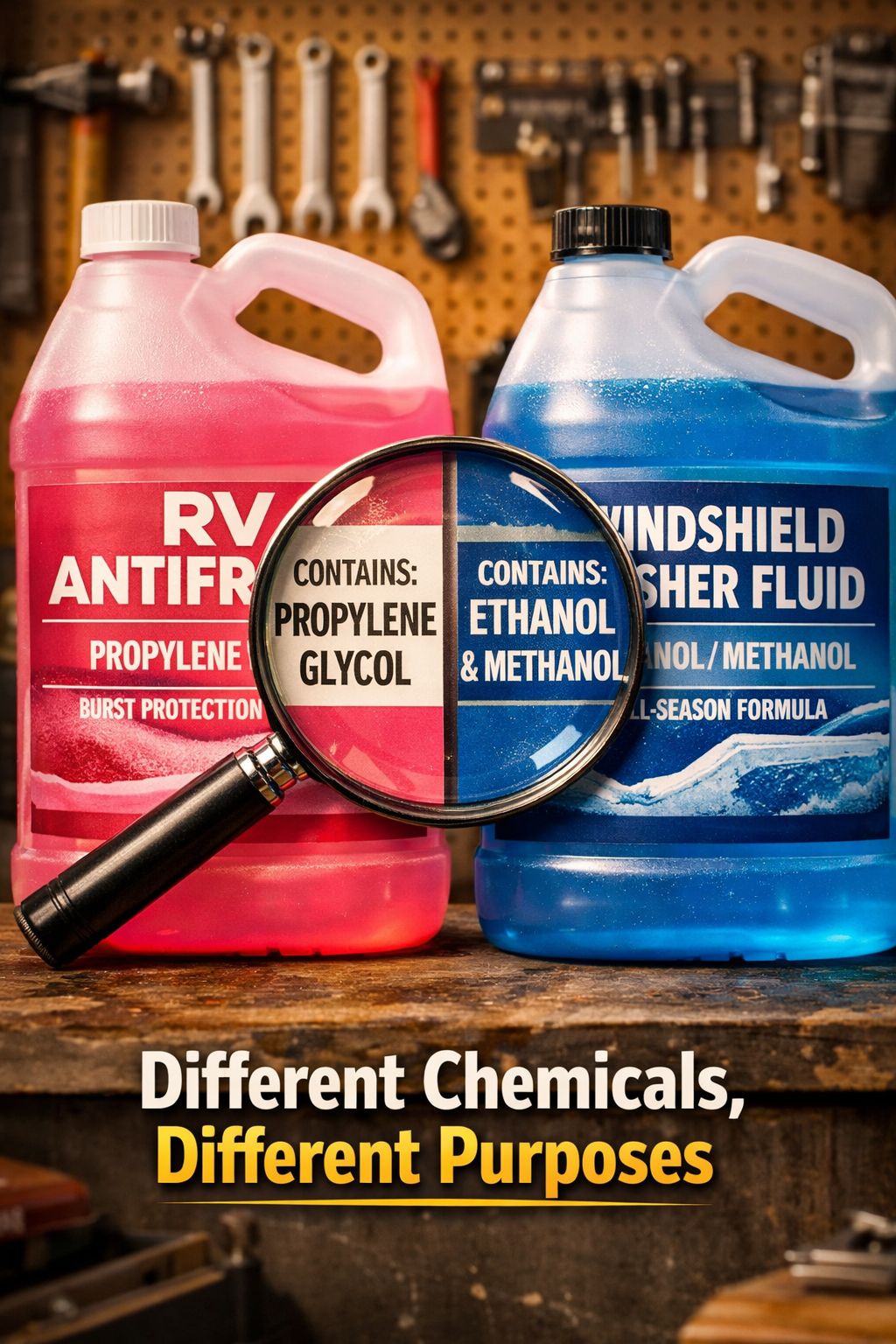
RV antifreeze is typically made with propylene glycol — a food-safe, non-toxic compound used to winterize the freshwater plumbing systems in RVs, boats, and campers. It’s designed to protect pipes, tanks, and water lines from freezing damage [1]. Because it’s safe for human contact, it works perfectly in systems that touch your drinking water.
But here’s the catch: propylene glycol is not a cleaner. It’s a thick, slippery liquid that coats surfaces rather than cleaning them.
What’s Inside Windshield Washer Fluid?
Windshield washer fluid is a completely different product. It’s typically formulated with ethanol or methanol (ethyl or methyl alcohol), which is actually toxic and poisonous — but highly effective at cutting through road grime, bug splatter, and ice on glass [2]. It also evaporates quickly and cleanly, leaving your windshield clear.
| Feature | RV Antifreeze | Windshield Washer Fluid |
|---|---|---|
| Main Ingredient | Propylene glycol | Ethanol / Methanol |
| Toxicity | Non-toxic (food-grade) | Toxic / Poisonous |
| Designed For | Plumbing systems | Glass cleaning |
| Evaporates Cleanly? | ❌ No | ✅ Yes |
| Freezing Protection | ✅ Yes | ✅ Yes |
| Safe for Metal Parts? | ❌ Can corrode with heat | ✅ Yes |
💡 Pull Quote: “Just because two products prevent freezing doesn’t mean they do the same job. RV antifreeze and windshield washer fluid are built for completely different worlds.”
Why the Chemistry Matters
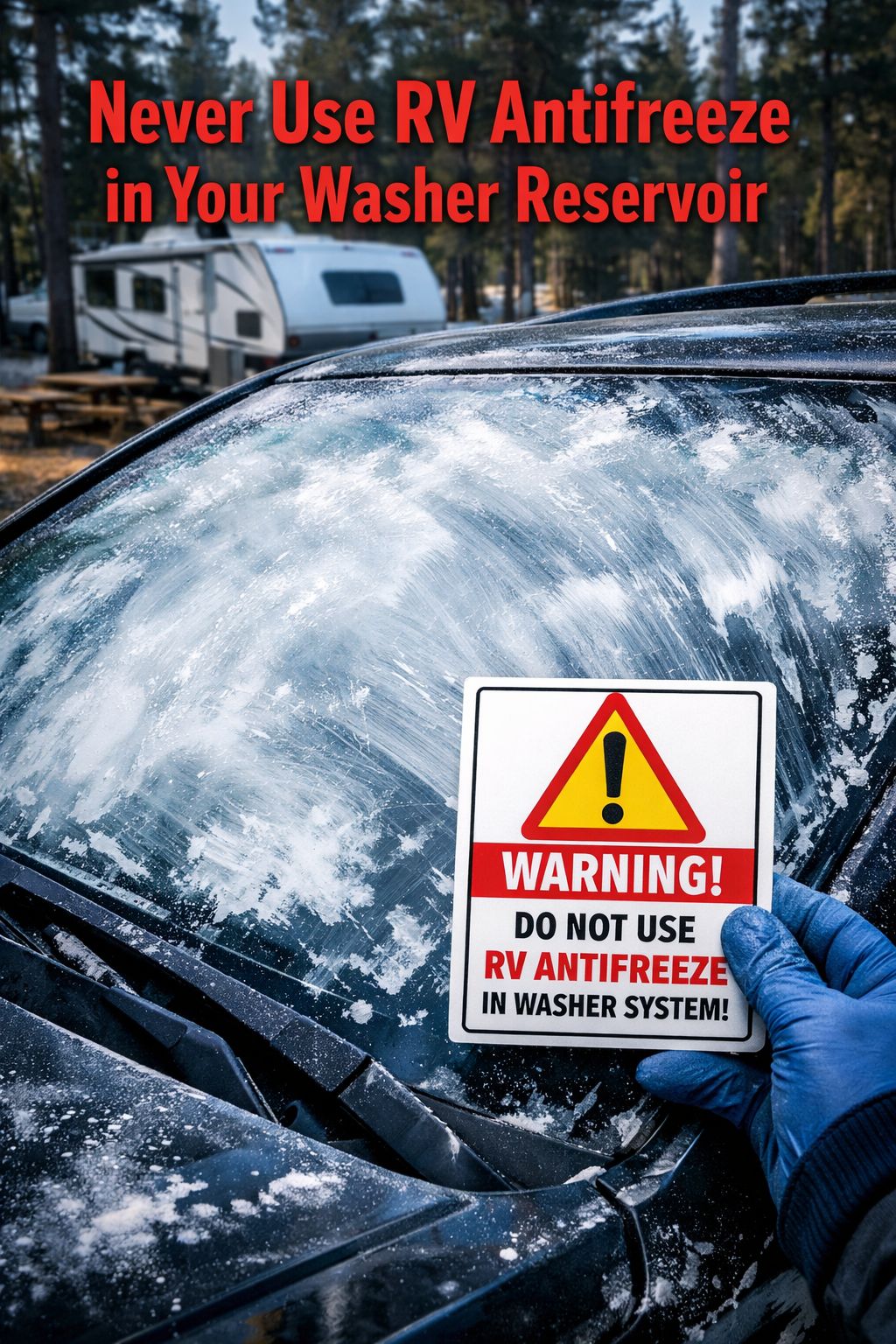
When propylene glycol hits your warm windshield glass and gets spread by your wipers, it doesn’t evaporate — it smears. The result is an opaque, milky film that makes it nearly impossible to see clearly [1]. At highway speeds, that’s not just an inconvenience — it’s a genuine safety hazard.
On top of that, RV antifreeze becomes acidic when exposed to heat. Your washer system may seem simple, but it involves pumps, hoses, and nozzles that can be damaged by acidic compounds over time [1]. The damage may not be immediate, but it adds up.
What Happens If You Accidentally Use RV Antifreeze in Your Washer Reservoir?
Mistakes happen — especially when you’re packing up camp in the cold and grabbing whatever bottle is nearby. Here’s what to do if RV antifreeze ends up in the wrong reservoir.
Immediate Steps to Take 🚨
- Stop using the washer system right away. Spraying more will only spread the problem.
- Drain the reservoir completely. Most washer reservoirs have a drain plug, or you can use a turkey baster or hand pump to remove the fluid.
- Flush the system with clean water to remove any remaining residue.
- Refill with proper windshield washer fluid rated for your climate.
- Consult your vehicle manufacturer’s recommendations for any additional steps specific to your model [1].
If the RV antifreeze has already been sprayed on your windshield, clean the glass thoroughly with a proper glass cleaner before driving. Don’t rely on the wipers alone — the smear can be stubborn.
Can It Damage Your Car Long-Term?
A one-time accidental use is unlikely to cause serious lasting damage if you act quickly. However, repeated use or leaving the antifreeze in the system for extended periods can lead to:
- Clogged washer nozzles from the thick, sticky residue
- Pump wear from the wrong viscosity fluid
- Corrosion in metal components due to the acidic nature of heated propylene glycol [1]
Can You Use RV Antifreeze as Windshield Washer Fluid in Winter? What About Freezing?
This is where the confusion really kicks in. Both products offer freeze protection, so why not use RV antifreeze when temperatures drop? 🌨️
The Freeze Protection Myth
Yes, RV antifreeze can prevent liquids from freezing. But freeze protection is only one feature of windshield washer fluid. The other essential feature is clean, streak-free visibility — and that’s where RV antifreeze completely fails [3].
Winter windshield washer fluid is specially formulated to:
- ✅ Melt ice and frost on contact
- ✅ Cut through road salt and grime
- ✅ Evaporate cleanly without streaking
- ✅ Work effectively at temperatures as low as -20°F or lower
RV antifreeze can do none of those cleaning tasks. It will simply coat your windshield with a slippery, vision-blocking film [4].
What About Using It in Tractor or Equipment Washers?
Some forum discussions among tractor and equipment owners have explored similar questions [5][7]. The consensus is the same: RV antifreeze is not a substitute for washer fluid in any vehicle system. The chemical properties just don’t support it.
The Right Products for the Right Jobs 🛠️
Here’s a simple guide to make sure you’re always reaching for the right bottle:
| Situation | Correct Product |
|---|---|
| Winterizing RV water lines | ✅ RV Antifreeze (propylene glycol) |
| Filling windshield washer reservoir | ✅ Windshield Washer Fluid |
| Protecting engine coolant | ✅ Engine Antifreeze (ethylene glycol) |
| De-icing windshield | ✅ De-icer spray or winter washer fluid |
⚠️ Important: Engine antifreeze (ethylene glycol) is also NOT the same as RV antifreeze. Never use engine antifreeze in RV plumbing — it’s highly toxic [2].
Tips for RV Owners on the Road 🚐
- Label your bottles clearly when storing multiple fluids in your RV storage bays.
- Keep a dedicated bottle of winter washer fluid in your tow vehicle at all times.
- Never mix fluids in the same container, even temporarily.
- Stock up on the right RV antifreeze before winterizing season — and store it separately from vehicle fluids.
Conclusion: Keep Each Fluid in Its Lane
The question can you use RV antifreeze as windshield washer fluid? has a clear, definitive answer: no, and here’s why it matters. These two products may both fight freezing temperatures, but they’re chemically built for completely different jobs. RV antifreeze protects your plumbing; windshield washer fluid protects your visibility. Mixing them up puts your safety — and your vehicle — at risk.
Actionable Next Steps ✅
- Check your washer reservoir today — make sure it’s filled with proper windshield washer fluid.
- Store RV antifreeze separately from vehicle fluids to avoid future mix-ups.
- Label everything clearly in your RV storage compartments.
- If you’ve already made the swap by accident, drain and flush the system right away.
- Stock the right products for each season — winter washer fluid for your vehicle, RV antifreeze for your plumbing.
Stay safe out there, and keep those windshields crystal clear! 🚐💨
References
[1] Faqs – https://www.splashwash.com/faqs
[2] Watch – https://www.youtube.com/watch?v=qEXTQxY87O4
[3] In Winter Rv Antifreeze For Windshield Washer Fluid Go Bad 54185 – https://www.southavenrv.com/blog/in-winter-rv-antifreeze-for-windshield-washer-fluid-go-bad–54185
[4] Rv Antifreeze Vs Windshield Washer Fluid – https://mikeysboard.com/threads/rv-antifreeze-vs-windshield-washer-fluid.291566/
[5] Rv Anti Freeze As Windshield Washer Fluid – https://www.orangetractortalks.com/forums/threads/rv-anti-freeze-as-windshield-washer-fluid.66406/
[7] Rv Antifreeze Or Windshield Washer For Tire Loading – https://www.tractorbynet.com/forums/threads/rv-antifreeze-or-windshield-washer-for-tire-loading.345203/
Tags: RV antifreeze, windshield washer fluid, RV winterizing, propylene glycol, washer reservoir, winter RV tips, vehicle fluid safety, RV maintenance, antifreeze comparison, winter driving safety, RV plumbing, freeze protection