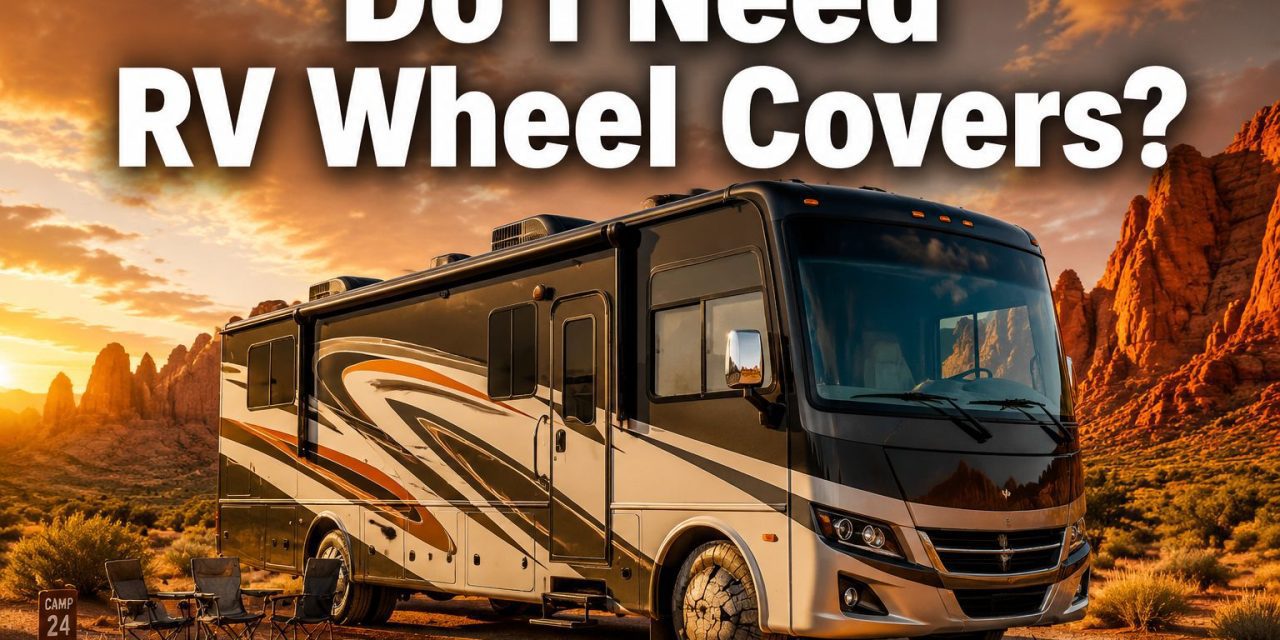
UV radiation destroys an unprotected RV tire’s sidewall up to five times faster than normal road wear — and most RV owners never see the damage coming until it’s too late. So when the question arises, do I need RV wheel covers, the short answer is almost always yes. But the full answer depends on how you store your rig, where you live, and how long your tires sit between trips.
This guide breaks down exactly why wheel covers matter, when they’re essential, and how to choose the right ones for your setup.
Key Takeaways 🔑
- UV exposure is the #1 enemy of parked RV tires, causing dry rot and sidewall cracking even on relatively new tires.
- RV wheel covers are inexpensive insurance compared to the cost of tire blowouts or full tire replacements.
- Covers are most critical for long-term storage and sunny or hot climates.
- Not all covers are equal — material, fit, and reflectivity all affect performance.
- Even short-term parking benefits from wheel covers when temperatures are extreme.
Why Do I Need RV Wheel Covers? The Science Behind Tire Damage
The Real Culprit: Ozone and UV Rays
Tires are made from rubber compounds that contain antiozonants — chemicals designed to fight degradation. Here’s the catch: those chemicals only activate when the tire is in motion. A parked RV tire is essentially defenseless.
When tires sit still under direct sunlight:
- UV rays break down the rubber’s polymer chains
- Ozone in the air accelerates oxidation
- Heat causes the rubber to expand and contract repeatedly, creating micro-cracks
Over time, those micro-cracks grow into visible sidewall cracking — also called dry rot. A tire with dry rot is a blowout waiting to happen, even if it still holds air pressure.
💡 Pull Quote: “A tire blowout on a Class A motorhome at highway speed can cause catastrophic damage. The cost of four wheel covers is nothing compared to that risk.”
How Fast Does UV Damage Happen?
The timeline depends on your climate:
| Climate Type | Risk Level | Estimated Damage Timeline (Without Covers) |
|---|---|---|
| Desert / Southwest | 🔴 Extreme | 6–12 months of storage |
| Southern / Humid | 🟠 High | 12–18 months |
| Temperate / Midwest | 🟡 Moderate | 2–3 years |
| Northern / Cloudy | 🟢 Lower | 3–5 years |
Even in moderate climates, the damage is cumulative. Each sunny season chips away at tire integrity.
Signs Your Tires Are Already Suffering
Check for these warning signs regularly:
- Visible cracks along the sidewall or tread grooves
- A chalky or faded appearance on the rubber surface
- Stiff, brittle texture when you press the sidewall
- Flat spots from sitting in one position too long
If any of these are present, inspect your tires with a professional before your next trip — and start using wheel covers immediately.
Do I Need RV Wheel Covers Even for Short-Term Parking?
This is where many RV owners get confused. The common assumption is that wheel covers only matter for long winter storage. That’s not entirely true.
Short-Term Parking: Still Worth It
Even a few weeks of parking in direct sun can accelerate tire aging, especially in:
- Arizona, Nevada, Texas, Florida, or any high-UV state
- Summer months when UV index regularly hits 8–11
- Paved or concrete surfaces that radiate additional heat upward
Reflective wheel covers are especially helpful here. They bounce solar energy away rather than just blocking it, keeping tire surface temperatures significantly lower.
Long-Term Storage: Absolutely Essential ✅
If the RV sits for more than 30 days, wheel covers move from “nice to have” to “non-negotiable.” During long storage periods:
- Tires lose their antiozonant protection completely
- Flat spotting becomes a real concern
- Moisture can seep into micro-cracks and worsen damage
Pair wheel covers with tire cradles or pads to distribute weight evenly and reduce flat spotting during extended storage.
When Wheel Covers Might Be Less Critical
There are a few scenarios where the urgency is lower:
- The RV is stored indoors in a garage or covered facility
- The rig is used every week or two with minimal stationary time
- The climate is consistently overcast with low UV exposure
Even then, covers add a layer of protection that costs very little relative to the peace of mind they provide.
Choosing the Right RV Wheel Covers
Not every cover on the market delivers the same protection. Here’s what to look for:
Material Matters
| Material | UV Protection | Durability | Best For |
|---|---|---|---|
| Reflective Silver Fabric | ⭐⭐⭐⭐⭐ | ⭐⭐⭐⭐ | Hot, sunny climates |
| Black Vinyl | ⭐⭐⭐ | ⭐⭐⭐⭐⭐ | All-weather use |
| Breathable Fabric | ⭐⭐⭐⭐ | ⭐⭐⭐ | Humid climates |
| Hard Plastic | ⭐⭐⭐ | ⭐⭐⭐⭐⭐ | Vandalism-prone areas |
Sizing: Fit Is Everything
A loose cover flaps in the wind and can actually cause abrasion damage. Measure the tire diameter and width carefully before buying. Most manufacturers provide sizing charts based on tire codes like ST225/75R15 or 295/80R22.5.
Key Features to Look For 🔍
- Elastic or strap-based fastening for a snug, wind-resistant fit
- Waterproof or water-resistant outer layer
- UV-stabilized materials so the cover itself doesn’t degrade
- Ventilation panels in humid environments to prevent moisture buildup
How Many Do You Need?
Cover all tires that are exposed to sunlight. For a typical motorhome or fifth wheel, that means:
- Class A/B/C Motorhomes: 4–6 covers depending on dual rear wheels
- Fifth Wheels & Travel Trailers: 4 covers standard
- Toy Haulers: 4–6 depending on axle configuration
Don’t forget the spare tire if it’s mounted externally!
The Cost-Benefit Case for RV Wheel Covers
Let’s put the numbers in perspective:
- Average RV tire cost: $150–$400 per tire
- Full tire replacement (6 tires): $900–$2,400+
- Cost of a quality wheel cover set (4-pack): $40–$120
A set of covers pays for itself the moment it prevents even minor premature tire wear. Factor in the potential cost of a blowout-related accident — repairs, towing, campsite damage — and the math becomes even clearer.
🛡️ Bottom line: RV wheel covers are one of the highest-ROI maintenance purchases an RV owner can make.
Conclusion: Protect Your Tires, Protect Your Adventures
The question of do I need RV wheel covers really comes down to one thing: how much do those tires matter to you? Given that tires are the only thing between a multi-ton vehicle and the road, the answer should be obvious.
Here are your actionable next steps:
- ✅ Inspect your current tires for signs of UV damage or dry rot before your next trip
- ✅ Measure your tire size using the code printed on the sidewall
- ✅ Choose reflective covers if you’re in a sunny, hot climate
- ✅ Cover all exposed tires — including the spare — whenever the RV is parked for more than a few days
- ✅ Combine covers with tire cradles for long-term storage to prevent flat spotting
Small habits like this extend tire life, improve safety, and ultimately keep more money in your pocket for the adventures that matter most. Happy camping! 🚐☀️
References
- Michelin North America. (2019). Tire Care and Safety Guide. Michelin.
- RV Industry Association. (2021). RV Owner’s Manual Best Practices. RVIA.
- Bridgestone Americas. (2020). Understanding Tire Aging and UV Degradation. Bridgestone.
- National Highway Traffic Safety Administration. (2017). Tire Safety: Everything Rides on It. NHTSA. https://www.nhtsa.gov