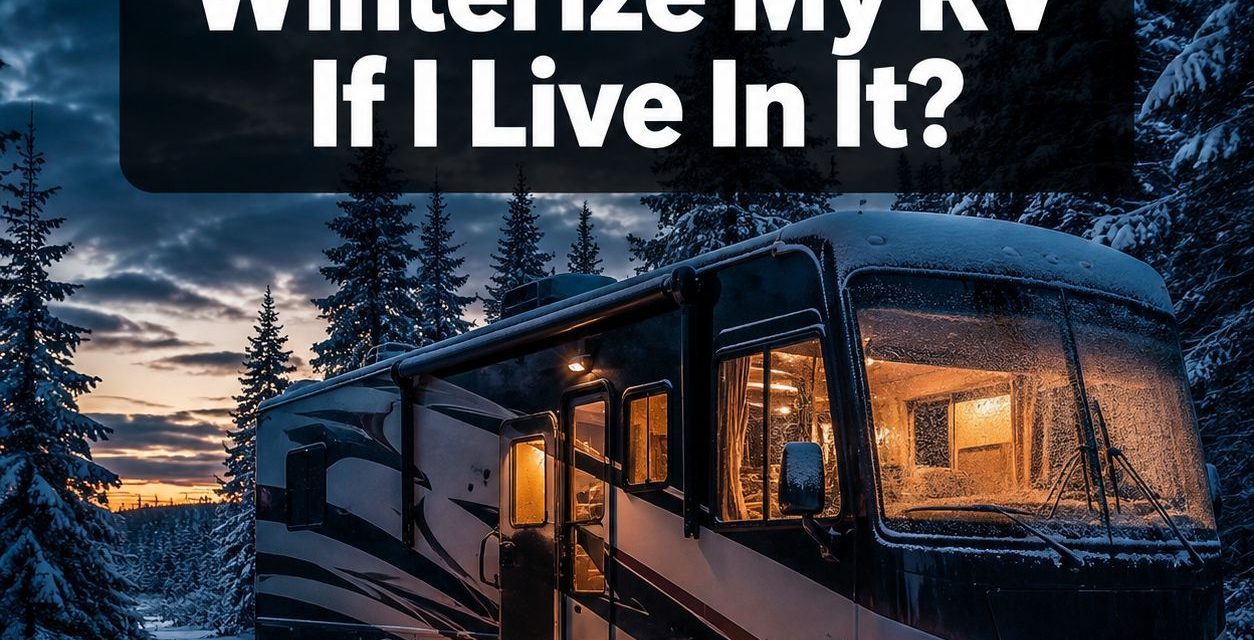
Nearly 1 million Americans now live in their RVs full-time — and every single one of them faces the same urgent question when temperatures start dropping: do I need to winterize my RV if I live in it? The short answer might surprise you: it depends — and doing it wrong either way can cost you thousands of dollars in burst pipes and freeze damage. Here’s everything a full-time RV dweller needs to know to stay warm, safe, and damage-free all winter long.
Key Takeaways 🏕️
- Full winterization (blowing out pipes, adding antifreeze) is typically for RVs that sit unused in cold weather — not for people actively living in them.
- Full-time RV livers need cold-weather insulation strategies instead of traditional winterization.
- Frozen pipes, burst tanks, and condensation damage are the biggest risks for winter RV living.
- The right approach depends on how cold your climate gets and how long you stay in one spot.
- Heated water hoses, skirting, and consistent interior heat are your best friends in winter.
What Does “Winterizing” Actually Mean?
Before answering do I need to winterize my RV if I live in it, it helps to get clear on what winterization actually involves.
Traditional RV winterization means:
- Draining all fresh water, gray water, and black water tanks
- Blowing compressed air through every water line
- Adding RV-safe antifreeze (pink stuff 🩷) to traps and drains
- Disconnecting the battery or using a trickle charger
- Covering vents, sealing windows, and storing the RV
💡 Pull Quote: “Winterization is designed for an RV that won’t be used for months — not one that’s someone’s home.”
This process makes total sense for a seasonal camper. But if you’re cooking dinner, showering, and sleeping in your RV every night, you cannot drain your water system and fill it with antifreeze. You need a different strategy entirely.
Do I Need to Winterize My RV If I Live In It? Understanding the Real Risk
The real danger in winter RV living isn’t the same as the danger for a stored RV. Here’s what you’re actually protecting against:
🌡️ The Freeze Line: Know Your Threshold
Water freezes at 32°F (0°C). But your RV’s plumbing can start to freeze before outdoor temps hit that mark, especially in:
- Exposed underbelly pipes (no insulation below)
- Holding tanks mounted outside the frame
- Water hoses connecting to campground pedestals
| Temperature Range | Risk Level | Action Needed |
|---|---|---|
| Above 40°F | Low | Standard monitoring |
| 32°F – 40°F | Moderate | Heat tape, insulated hose |
| 20°F – 32°F | High | Skirting + heat pads on tanks |
| Below 20°F | Severe | All protections + trickle water |
🚿 Why You Can’t Fully Winterize While Living In It
If you winterize completely, you lose access to:
- Running water
- Flushing toilets
- Showering
- Cooking with water
That’s not a home — that’s a very expensive tent. So the answer to do I need to winterize my RV if I live in it is: no, not in the traditional sense. Instead, you need a cold-weather living strategy.
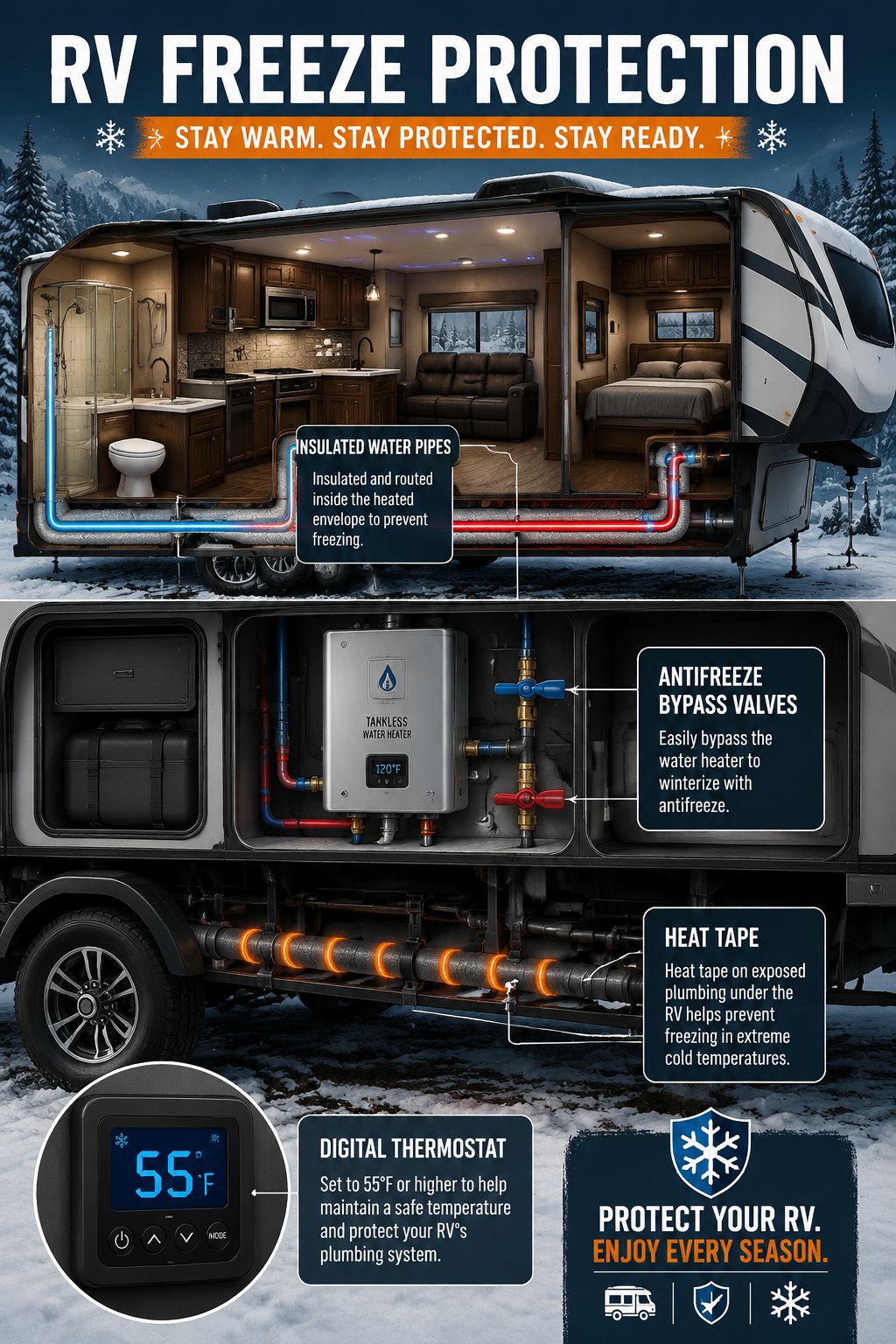
Cold-Weather Living Strategies: What to Do Instead of Winterizing
Here’s the practical playbook for full-time RV livers heading into cold weather. 🧰
1. Insulate Your Underbelly
The underbelly of most RVs is the most vulnerable spot. Options include:
- Foam board insulation attached to the underside
- Spray foam around pipe entry points
- Enclosed underbelly — some RVs come with this factory-installed (a huge plus in winter)
2. Install RV Skirting
Skirting wraps around the base of your RV, trapping heat underneath and blocking wind. It can raise underbelly temperatures by 10–20°F on a cold night.
- DIY options: Foam board, plywood, hay bales (yes, really!)
- Commercial options: EZ Snap, AirSkirts, custom vinyl skirting
3. Use a Heated Water Hose 🌊
A standard garden hose will freeze solid overnight in cold temps. A heated drinking water hose has a built-in heating element and stays liquid down to -20°F in most cases. This is non-negotiable for winter hookup living.
4. Apply Heat Tape to Exposed Pipes
Wrap self-regulating heat tape around any exposed pipes under the RV. Self-regulating types are safer than constant-wattage tape because they adjust output based on temperature.
5. Keep Interior Heat Consistent
Never let your RV interior drop below 55°F, even when you’re away. Use:
- Propane furnace (fast heat but uses more propane)
- Electric space heater (cost-effective at hookup sites)
- Combination of both for efficiency
⚠️ Warning: Never use a non-vented propane heater indoors. Carbon monoxide poisoning is a serious risk in enclosed RV spaces.
6. Add Tank Heater Pads
Stick-on electric tank heater pads attach directly to your gray, black, and fresh water tanks. They draw minimal power and can make a huge difference when temps plummet.
7. Let Water Trickle Overnight
On extremely cold nights (below 20°F), let a thin trickle of water run from one faucet. Moving water is much harder to freeze than standing water in pipes.
Do I Need to Winterize My RV If I Live In It in Mild Climates?
If you’re a full-timer in the Sun Belt — think Arizona, Florida, Texas, or Southern California — your situation is very different. Overnight lows rarely threaten your plumbing, and traditional winterization is almost certainly unnecessary.
Still, even mild-climate RV livers should:
- ✅ Check pipe insulation annually
- ✅ Know the forecast and be ready for rare cold snaps
- ✅ Keep a bottle of RV antifreeze on hand for emergencies
- ✅ Insulate any exposed pipes in the underbelly
A single unexpected freeze can crack PVC pipes and split tank seams. Being prepared costs almost nothing compared to repair bills.
When Should a Full-Timer Consider Partial Winterization?
There are a few scenarios where even a full-time liver might do partial winterization:
- Leaving the RV unoccupied for 2+ weeks in freezing temps (visiting family, travel, etc.)
- Moving to a storage facility temporarily
- Taking the RV off-grid with no power for heat
In these cases, drain your tanks, blow out the lines, and add antifreeze to the traps — just like a seasonal camper would.
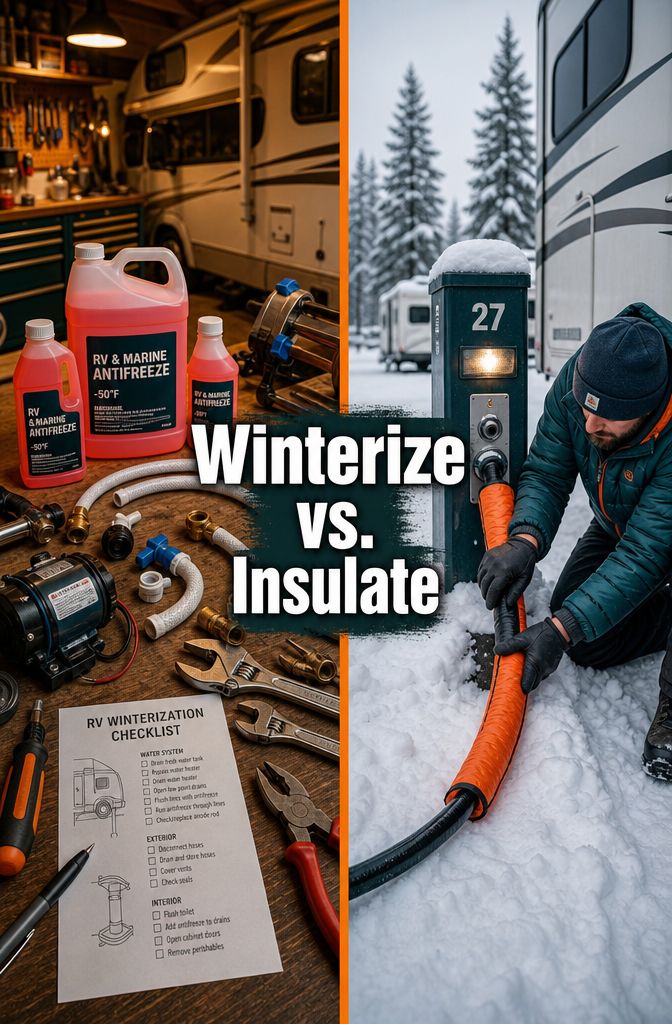
Quick Winter RV Living Checklist ✅
Use this checklist before your first cold night of the season:
- Skirting installed around RV base
- Heated water hose connected
- Heat tape on exposed pipes
- Tank heater pads activated
- Interior thermostat set to minimum 55°F
- CO and propane detectors tested
- Antifreeze bottle stored for emergencies
- Weather forecast app on phone for freeze alerts
Conclusion: Stay Warm, Stay Smart
So, do I need to winterize my RV if I live in it? Not in the traditional sense — but you absolutely need to prepare it for winter. The goal shifts from “drain and store” to “insulate and protect.” Full-time RV living in cold weather is completely doable with the right setup, and thousands of RVers do it comfortably every year.
Your actionable next steps:
- Assess your climate — know your average winter lows and plan accordingly.
- Invest in the basics — heated hose, skirting, and heat tape are the top three priorities.
- Create a cold-weather checklist and run through it before the first freeze.
- Know your escape plan — if temps get extreme, have a backup location or partial winterization plan ready.
Winter RV living isn’t just survivable — it can be downright cozy. 🔥 The key is preparation, not panic.
References
- Escapees RV Club. (2021). Full-Time RV Living in Winter: Tips and Tricks. Escapees.com
- RV Industry Association. (2022). Annual RV Industry Report. RVIA.org
- Go RVing. (2020). Cold Weather RV Camping Guide. GoRVing.com
- Family Motor Coach Association. (2019). Winterizing vs. Cold Weather Living. FMCA.org
Tags: RV winterization, full-time RV living, winter RV tips, RV cold weather, RV pipe freeze protection, RV skirting, heated water hose, RV living, RV maintenance, winter camping, RV lifestyle, freeze protection