The CDC estimates that contaminated drinking water causes roughly 7.2 million illnesses in the U.S. every year — and your RV’s water tank can be a silent contributor if it’s never cleaned. So, do you need to sanitize your RV water system? The short answer is yes, absolutely — and more often than most RVers realize. Whether you’re a weekend warrior or a full-time road dweller, keeping your fresh water system clean is one of the most important maintenance tasks you can do for your health and your rig.
Key Takeaways 🚐💧
- Sanitizing your RV water system is essential for safe drinking water and overall health.
- Most experts recommend sanitizing at least twice a year — before and after storage season.
- The process uses a simple diluted bleach solution and takes just a few hours.
- Signs like bad taste, odors, or visible slime mean it’s time to sanitize immediately.
- Regular sanitization also extends the life of your water pump, lines, and tank.
Why Do I Need to Sanitize My RV Water System?
Your RV’s fresh water system is a warm, dark, moist environment — basically a five-star hotel for bacteria, algae, and mold. Unlike a home’s plumbing, which is flushed constantly with municipal water, your RV tank can sit stagnant for weeks or months at a time. That standing water becomes a breeding ground for harmful microorganisms.
What Can Grow in an Unsanitized RV Water Tank?
Here’s what can develop inside a neglected water system:
| Contaminant | Risk Level | Common Symptoms |
|---|---|---|
| Bacteria (e.g., E. coli) | High | Nausea, diarrhea, cramps |
| Algae | Moderate | Green tint, bad taste |
| Mold/Mildew | Moderate | Musty smell, respiratory issues |
| Biofilm | High | Slimy coating, odor |
| Legionella | High | Flu-like symptoms, pneumonia |
💬 “The biggest mistake RVers make is assuming that because they’re using ‘clean’ campground water, their tank is automatically safe. Biofilm builds up regardless of the water source.” — RV maintenance expert consensus
How Often Should You Sanitize?
The general rule of thumb recommended by RV manufacturers and experienced campers:
- ✅ Before your first trip of the season
- ✅ After long-term storage (any period over 30 days)
- ✅ After using questionable water sources
- ✅ At least every 6 months for full-time RVers
- ✅ Any time you notice odor, taste changes, or discoloration
How to Sanitize Your RV Water System Step by Step
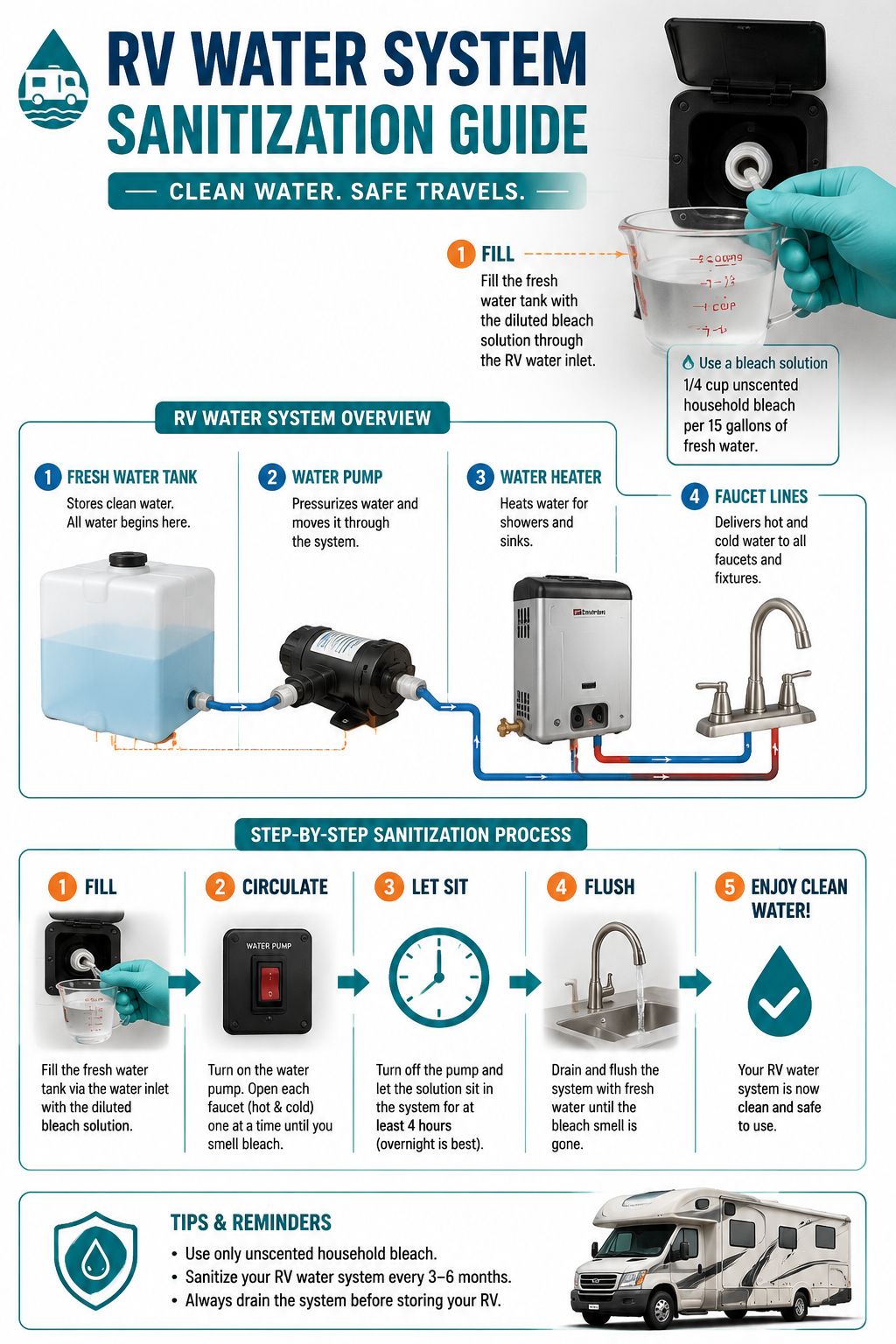
Knowing that you need to sanitize is one thing — actually doing it is another. The good news? It’s a straightforward process that costs almost nothing and takes about 4–6 hours (most of which is wait time).
What You’ll Need
- Unscented household bleach (5.25–8.25% sodium hypochlorite)
- Measuring cup
- Funnel
- Fresh water source
- RV water pump
The Bleach Ratio Formula
Use ¼ cup of bleach per 15 gallons of tank capacity. Here’s a quick reference:
| Tank Size | Bleach Amount |
|---|---|
| 30 gallons | ½ cup |
| 45 gallons | ¾ cup |
| 60 gallons | 1 cup |
| 75 gallons | 1¼ cups |
Step-by-Step Sanitization Process
Step 1: Drain the system completely
Empty your fresh water tank, water heater, and all lines. Open every faucet (hot and cold) until water stops flowing.
Step 2: Bypass the water heater
Use the bypass valve on your water heater to protect it from concentrated bleach damage.
Step 3: Mix and add the bleach solution
Mix the correct amount of bleach with a gallon of water first, then pour it into the fresh water tank using a funnel at the city water inlet or tank fill port.
Step 4: Fill the tank completely
Fill the tank to capacity with fresh water to dilute the bleach to the proper concentration.
Step 5: Run the solution through all lines
Turn on the water pump and open each faucet — hot and cold — until you smell bleach. Don’t forget the outdoor shower, toilet, and any other water outlets.
Step 6: Let it sit
Allow the bleach solution to sit in the system for at least 4 hours (overnight is even better for heavily used systems).
Step 7: Flush thoroughly
Drain the entire system and refill with fresh water. Run all faucets until the bleach smell is completely gone. You may need to flush 2–3 times to fully remove the bleach taste.
Step 8: Re-engage the water heater bypass
Once flushing is complete, restore the water heater to normal operation and refill it.
⚠️ Pro Tip: Never use scented bleach or bleach with added cleaners — these can leave harmful residues in your water lines.
Do I Need to Sanitize My RV Water System After Storage?
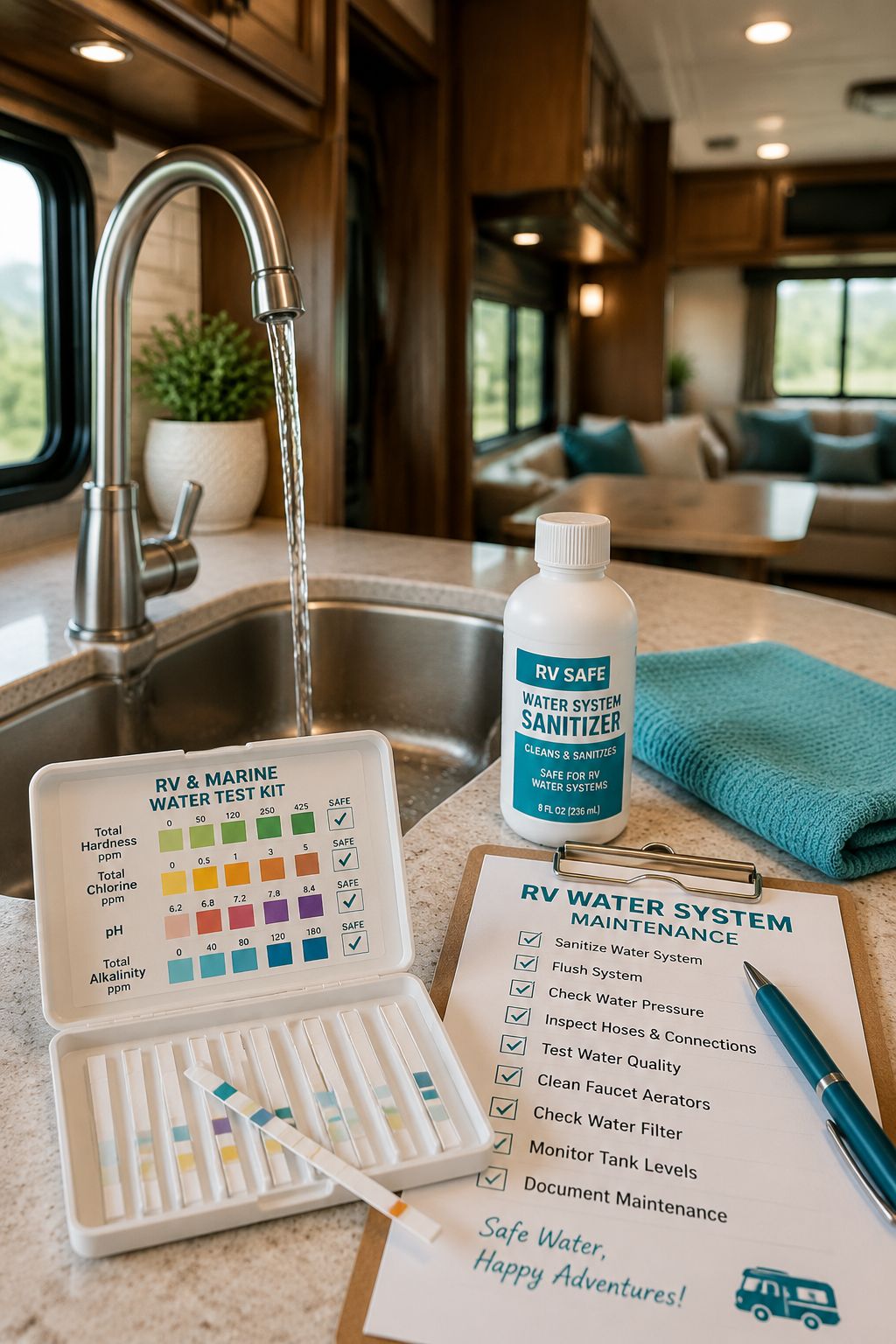
Absolutely — post-storage sanitization is arguably the most critical time to clean your system. When an RV sits unused, especially in varying temperatures, the conditions inside the water tank and lines become ideal for microbial growth.
Special Situations That Always Require Sanitization
- 🏕️ After winterization — antifreeze residue and stagnant water need to be cleared
- 🌊 After flooding or water intrusion — contamination risk is extremely high
- 🔧 After any plumbing repairs — new components may introduce contaminants
- 💧 After using well water or unknown water sources — these carry higher bacterial loads
- 🛒 When buying a used RV — you have no idea what’s been in that tank
Signs Your RV Water System Needs Immediate Sanitization
Don’t wait for the calendar if you notice any of these red flags:
- 🚨 Rotten egg or sulfur smell from faucets
- 🚨 Cloudy or discolored water
- 🚨 Slimy feeling on faucet handles or tank walls
- 🚨 Upset stomach after drinking the water
- 🚨 Visible black or green growth anywhere in the system
Additional Tips for Keeping Your RV Water System Clean
Sanitization is the foundation, but these habits keep your system healthier between deep cleans:
Use a Quality Water Filter
Install an inline water filter at the city water connection. A carbon block filter removes chlorine, sediment, and some bacteria. For extra protection, consider an RV-specific filter system with a KDF stage for heavy metal removal.
Choose Your Water Sources Wisely
- ✅ Municipal campground water connections
- ✅ Certified potable water stations
- ⚠️ Well water (test first)
- ❌ Unknown or untested sources
Don’t Let Water Sit Too Long
If your tank has been sitting for more than 2 weeks without use, drain and refill with fresh water before drinking. Stagnant water is the enemy.
Use Food-Grade Hoses Only
Always use a white or blue food-grade drinking water hose — never a standard green garden hose, which can leach chemicals and harbor bacteria.
Consider RV Water Sanitization Tablets
For quick trips or as a supplement between full sanitizations, RV water purification tablets (like those using chlorine dioxide) are a convenient option. They’re not a replacement for a full bleach sanitization, but they help maintain water quality on the road.
Conclusion: Keep It Clean, Keep It Safe 🏆
The question “do I need to sanitize my RV water system?” has one clear answer: yes, and regularly. A clean water system protects your health, extends the life of your plumbing components, and simply makes every cup of coffee taste better out on the road.
Your Action Plan:
- Schedule a sanitization before your next trip if it’s been more than 6 months.
- Gather your supplies — bleach, measuring cup, and fresh water.
- Follow the step-by-step process outlined above.
- Install a quality inline water filter for ongoing protection.
- Set a reminder to sanitize at the start and end of every camping season.
Your RV is your home away from home — treat its water system with the same care you’d give your kitchen tap. Safe travels! 🚐✨
References
- Centers for Disease Control and Prevention. (2021). Waterborne disease in the United States. CDC.gov.
- Recreational Vehicle Industry Association. (2020). RV owner’s manual water system maintenance guidelines. RVIA.
- NSF International. (2019). Standards for drinking water treatment units. NSF.org.
- Water Quality Association. (2022). Biofilm in drinking water systems: risks and prevention. WQA.org.