Temperatures below freezing can crack RV water lines in as little as a few hours — and the repair bill can easily top $1,000. That single fact is why so many full-timers and winter campers ask, “do I need RV skirting?” before their first cold-weather trip. Whether you’re a weekend warrior or a full-time road warrior, understanding what RV skirting does (and doesn’t do) can save you serious money, stress, and frozen pipes. 🚐❄️
Would you like to save this article?
Key Takeaways
- RV skirting insulates the underbelly, protecting pipes, tanks, and heating systems from freezing temperatures.
- You likely do need RV skirting if you camp in temperatures below 32°F (0°C) or park long-term in cold climates.
- Skirting also reduces heating costs by keeping cold wind from circulating under your rig.
- There are multiple types of skirting — foam board, vinyl, inflatable, and custom-fit — each with different price points.
- In mild climates, skirting is optional but still beneficial for energy efficiency and pest control.
What Is RV Skirting and How Does It Work?
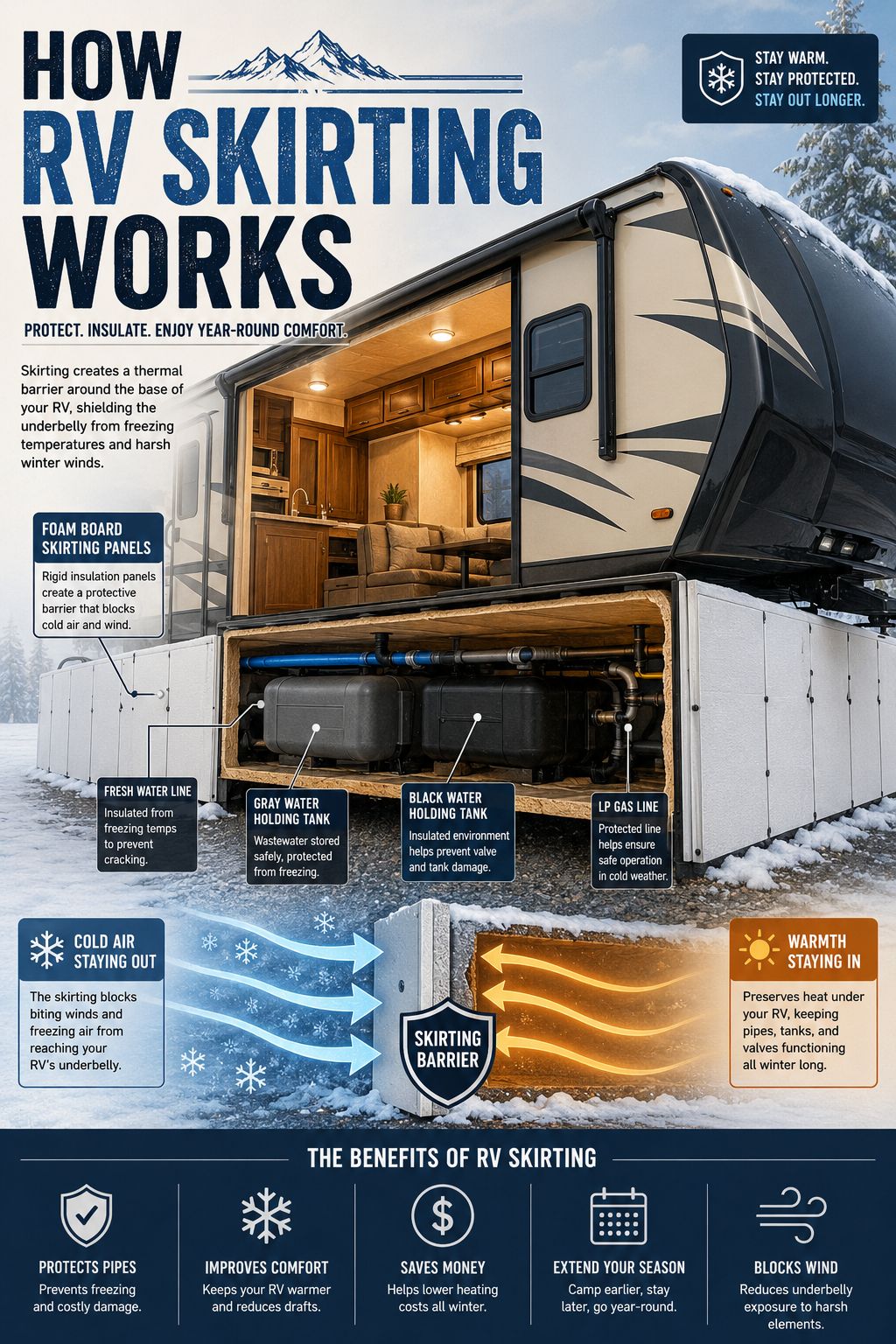
RV skirting is a barrier that wraps around the base of your RV, filling the gap between the bottom of the coach and the ground. Think of it as a windbreaker for your rig’s underbelly.
Without skirting, cold air circulates freely underneath your RV. This chills the exposed pipes, holding tanks, and underbelly insulation. With skirting in place, that space becomes a semi-enclosed buffer zone that holds heat — either from the ground itself or from a small heat source placed underneath.
What Does RV Skirting Protect?
| Component | Risk Without Skirting | Benefit With Skirting |
|---|---|---|
| Fresh water lines | Freezing and bursting | Stays insulated and flowing |
| Holding tanks | Freezing solid | Remains functional |
| Underbelly insulation | Wind-stripped heat loss | Retains warmth |
| Slide-out mechanisms | Frost damage | Protected from ice buildup |
| Heating system efficiency | Works overtime | Runs less frequently |
💡 Pull Quote: “A well-skirted RV can reduce underbelly heat loss by up to 50%, meaning your furnace runs less and your propane lasts longer.”
Do I Need RV Skirting? The Honest Answer
So, do I need RV skirting? The honest answer depends on three key factors: your climate, your camping style, and how long you stay in one place.
When You Absolutely Need RV Skirting
✅ Temperatures drop below 32°F (0°C): This is the non-negotiable threshold. Water freezes at 32°F, and your pipes don’t care how good your RV’s factory insulation is.
✅ You’re a full-timer or long-term camper: Staying in one spot for weeks or months in fall or winter? Skirting is practically essential.
✅ You camp in high-wind areas: Wind chill dramatically accelerates heat loss under your RV. Even at 40°F, strong winds can create freezing conditions underneath.
✅ You have an older RV: Older rigs often have less underbelly insulation from the factory. Skirting compensates for that gap.
✅ You’re in a campground or RV park without hookups: Without electric heat tape or heated water hose options, skirting becomes your first line of defense.
When RV Skirting Is Optional (But Still Useful)
🔶 Mild climates (above 40°F consistently): Freezing isn’t a risk, but skirting still improves energy efficiency and keeps critters out.
🔶 Short weekend trips: If you’re only out for two days and temps are mild, skirting may not be worth the setup time.
🔶 Summer camping: In warm weather, skirting can actually trap heat underneath — which is not ideal. Most RVers skip it in summer entirely.
Types of RV Skirting: Which One Is Right for You?
Not all skirting is created equal. Here’s a breakdown of the most popular options:
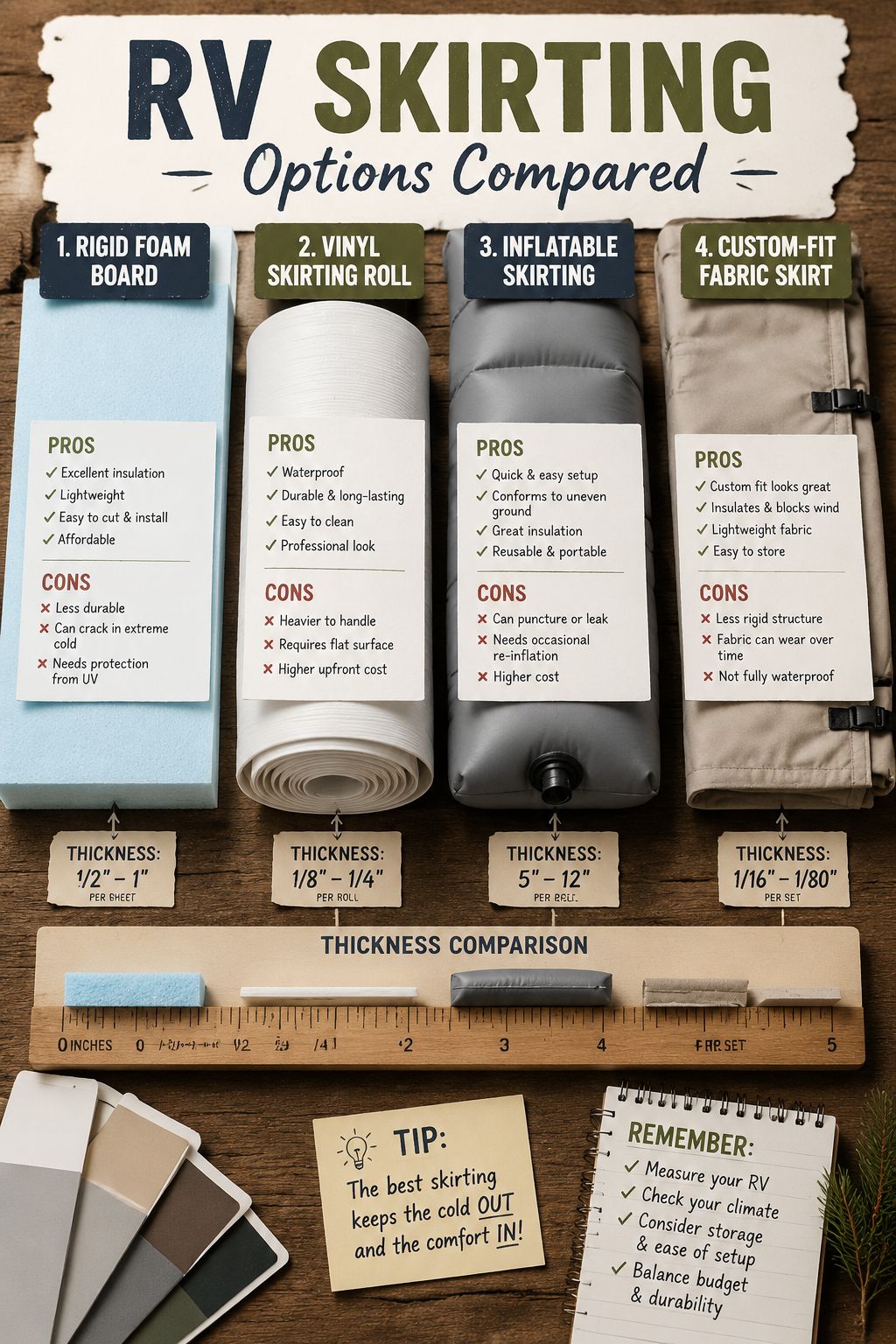
1. 🟦 Foam Board Skirting (DIY Favorite)
- Cost: $50–$200
- Best for: Budget-conscious campers, short-term use
- Pros: Cheap, easy to cut and customize, decent insulation value
- Cons: Fragile, not reusable long-term, looks basic
2. 🟩 Vinyl Skirting
- Cost: $300–$800+
- Best for: Full-timers and RV park residents
- Pros: Durable, weather-resistant, looks clean and professional
- Cons: Requires custom measuring, higher upfront cost
3. 🟨 Inflatable Skirting
- Cost: $500–$1,200+
- Best for: Frequent movers who want easy setup
- Pros: Inflates in minutes, stores compactly, reusable
- Cons: Expensive, can puncture
4. 🟧 Custom-Fit Fabric Skirting
- Cost: $400–$1,000+
- Best for: Aesthetics-focused RVers
- Pros: Tailored fit, attractive appearance, breathable options available
- Cons: Pricier, may need professional installation
Do I Need RV Skirting for Energy Efficiency?
Even if freezing temperatures aren’t your concern, the energy efficiency argument for RV skirting is surprisingly strong.
Cold air pooling under your RV acts like a giant heat sink. Your furnace or electric heater works harder to compensate, burning through propane or electricity faster than necessary. Skirting reduces this effect significantly.
Here’s what that can look like in real terms:
- A typical RV furnace uses roughly 1/3 gallon of propane per hour
- If skirting reduces furnace run time by even 20%, that adds up to real savings over a cold season
- Electric campers can see reduced kilowatt-hour usage, which matters if you’re paying for electricity at an RV park
🔥 Pro Tip: Pair skirting with a small electric space heater placed under the RV (with proper ventilation) for maximum freeze protection on the coldest nights.
Other Benefits of RV Skirting You Might Not Expect
Beyond warmth and pipe protection, skirting offers a few bonus perks:
- 🐭 Pest control: Mice, squirrels, and other critters love the warm underbelly of an RV. Skirting makes it much harder for them to get in.
- 🌬️ Reduced drafts inside: A well-sealed skirt noticeably reduces cold drafts felt through your floor.
- 🏕️ Campsite aesthetics: A clean vinyl or fabric skirt makes your setup look polished and intentional — especially in RV communities where appearances matter.
- 💧 Reduced condensation: Stabilizing underbelly temperature reduces moisture buildup, which can prevent mold and corrosion over time.
How to Install RV Skirting: A Quick Overview
Installation difficulty varies by type, but here’s a general approach for foam board — the most beginner-friendly option:
- Measure your RV’s perimeter at ground level, accounting for slide-outs and uneven terrain.
- Cut foam boards to fit each section using a utility knife or saw.
- Lean or prop panels against the RV base, filling gaps with additional pieces.
- Seal corners and gaps with foam tape or weatherstripping.
- Weigh down the base with rocks, sandbags, or stakes to prevent wind from lifting panels.
For vinyl or custom-fit options, most manufacturers provide detailed guides or professional installation services.
Conclusion: Should You Get RV Skirting?
The answer to “do I need RV skirting?” comes down to this: if you camp in cold weather, yes — it’s not optional, it’s essential. The cost of skirting is a fraction of what a single burst pipe repair would run you, and the comfort improvement is immediate and noticeable.
Even in milder climates, skirting pays dividends in energy savings, pest prevention, and overall RV longevity.
Here are your actionable next steps:
- ✅ Check the forecast for your next camping destination — if temps dip below 40°F, start researching skirting options.
- ✅ Measure your RV’s perimeter and decide between DIY foam board (budget) or vinyl/custom-fit (long-term value).
- ✅ Join RV forums and Facebook groups to see what fellow campers in your region recommend for local conditions.
- ✅ If you’re a full-timer, invest in quality skirting now — it pays for itself quickly.
Your pipes, your wallet, and your comfort will thank you. 🚐💪
References
- Morley, C. (2019). The Complete Guide to Full-Time RVing. Skyhorse Publishing.
- RV Industry Association. (2022). RV Consumer Trends and Usage Report. RVIA.
- U.S. Department of Energy. (2021). Insulation and Air Sealing for Mobile Homes. energy.gov.
- Woodall’s Campground Directory. (2020). Winter RVing Tips and Cold Weather Preparation Guide. TL Enterprises.