The average RV repair bill runs between $500 and $3,000 per incident — and some major repairs, like slide-out motor replacements or engine overhauls, can easily top $10,000. That single fact is what makes the question “do I need RV extended warranty coverage?” one of the most important financial decisions an RV owner can face.
Whether you’re rolling in a brand-new Class A diesel pusher or a well-loved travel trailer, understanding what an RV extended warranty is — and whether it makes sense for your situation — can save you thousands of dollars and a whole lot of roadside stress. 🚐💨
Key Takeaways
- 🛡️ RV extended warranties (also called service contracts) cover mechanical breakdowns beyond the manufacturer’s warranty period.
- 💰 Repair costs for RVs are significantly higher than for regular vehicles, making coverage worth serious consideration.
- 📋 Not all warranties are equal — coverage, exclusions, and deductibles vary widely between providers.
- 🔍 Your RV’s age, mileage, and how often you use it are the biggest factors in deciding if a plan is worth it.
- ✅ Shopping around and reading the fine print is essential before signing any service contract.
What Does an RV Extended Warranty Actually Cover?
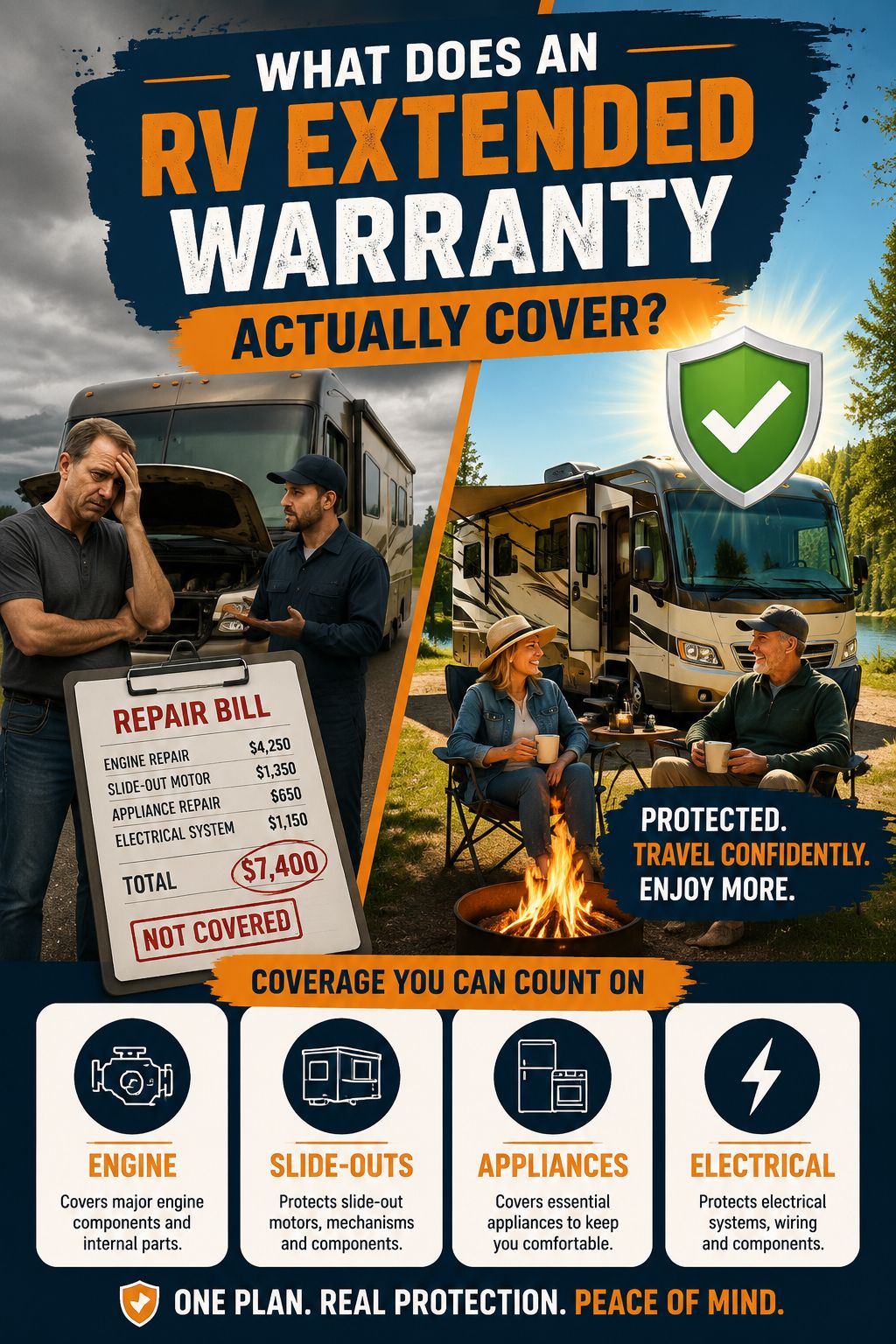
Before answering “do I need RV extended warranty protection,” it helps to know exactly what these plans do. An RV extended warranty — more accurately called a vehicle service contract (VSC) — kicks in after your manufacturer’s warranty expires. It pays for covered mechanical and electrical failures so you’re not footing the entire bill out of pocket.
Common Coverage Categories
Most plans fall into two broad types:
| Coverage Type | What It Includes | Best For |
|---|---|---|
| Exclusionary (Bumper-to-Bumper) | Covers everything except a listed exclusion list | Newer RVs, full-timers |
| Inclusionary (Named Component) | Only covers specifically listed parts | Older RVs, budget shoppers |
Typical components covered include:
- 🔧 Engine and transmission
- ❄️ Air conditioning and heating systems
- 🔌 Electrical systems and inverters
- 🛋️ Slide-out mechanisms
- 🚿 Plumbing and water systems
- 🍳 Built-in appliances (refrigerator, stove, microwave)
- 🔋 Generator systems
What’s Usually NOT Covered
Just as important as what’s included is what’s excluded. Most plans will not cover:
- Normal wear and tear (tires, brakes, brake pads)
- Cosmetic damage or rust
- Damage from accidents or collisions (that’s what RV insurance is for)
- Pre-existing conditions at the time of purchase
- Maintenance items like oil changes or fluid flushes
💡 Pro Tip: Always ask for the full exclusion list before buying. A plan that looks affordable may have a long list of “not covered” items buried in the fine print.
Do I Need an RV Extended Warranty? Key Factors to Consider
This is the heart of the matter. The honest answer is: it depends on your specific situation. Here are the most important factors to weigh.
1. Age and Mileage of Your RV
Newer RVs (under 2–3 years old) typically come with a manufacturer’s warranty that already covers major defects. Once that expires, mechanical failures become your financial responsibility.
- Under 2 years old: Manufacturer coverage likely still active — extended warranty less urgent
- 2–5 years old: Sweet spot for purchasing extended coverage before problems emerge
- Over 5 years or 50,000+ miles: Higher risk of breakdowns — coverage becomes more valuable, but premiums rise
2. How Often You Use Your RV
| Usage Pattern | Extended Warranty Value |
|---|---|
| Full-timer (live in RV year-round) | ⭐⭐⭐⭐⭐ Very High |
| Frequent weekender (20+ trips/year) | ⭐⭐⭐⭐ High |
| Occasional camper (5–10 trips/year) | ⭐⭐⭐ Moderate |
| Rare use (1–2 trips/year) | ⭐⭐ Lower |
Full-timers and frequent travelers put the most stress on their rigs. More miles and more systems in use means a higher probability of something breaking down.
3. Your Emergency Fund and Risk Tolerance
Some RVers are financially comfortable setting aside a self-insurance fund — essentially saving the monthly premium cost into a dedicated repair account. If a $5,000 repair wouldn’t derail your finances, self-insuring might make sense.
But if a surprise $3,000 bill would cause serious financial stress, a service contract offers genuine peace of mind. 🧘
4. The Complexity of Your RV
A basic pop-up camper has far fewer systems to fail than a 40-foot luxury motorhome with:
- Multiple slide-outs
- Residential refrigerator
- Washer/dryer combo
- Full entertainment systems
- Diesel engine with DEF system
The more complex the RV, the more there is to break — and the more an extended warranty can protect you.
5. Are You Buying New or Used?
Used RVs carry unknown histories. A pre-purchase inspection is always recommended, but even a clean inspection doesn’t guarantee future reliability. Extended warranties on used RVs can be especially valuable because:
- Previous owners may not have maintained systems properly
- Older components are closer to end-of-life
- Repair history may be incomplete
How to Shop for an RV Extended Warranty (Without Getting Burned)
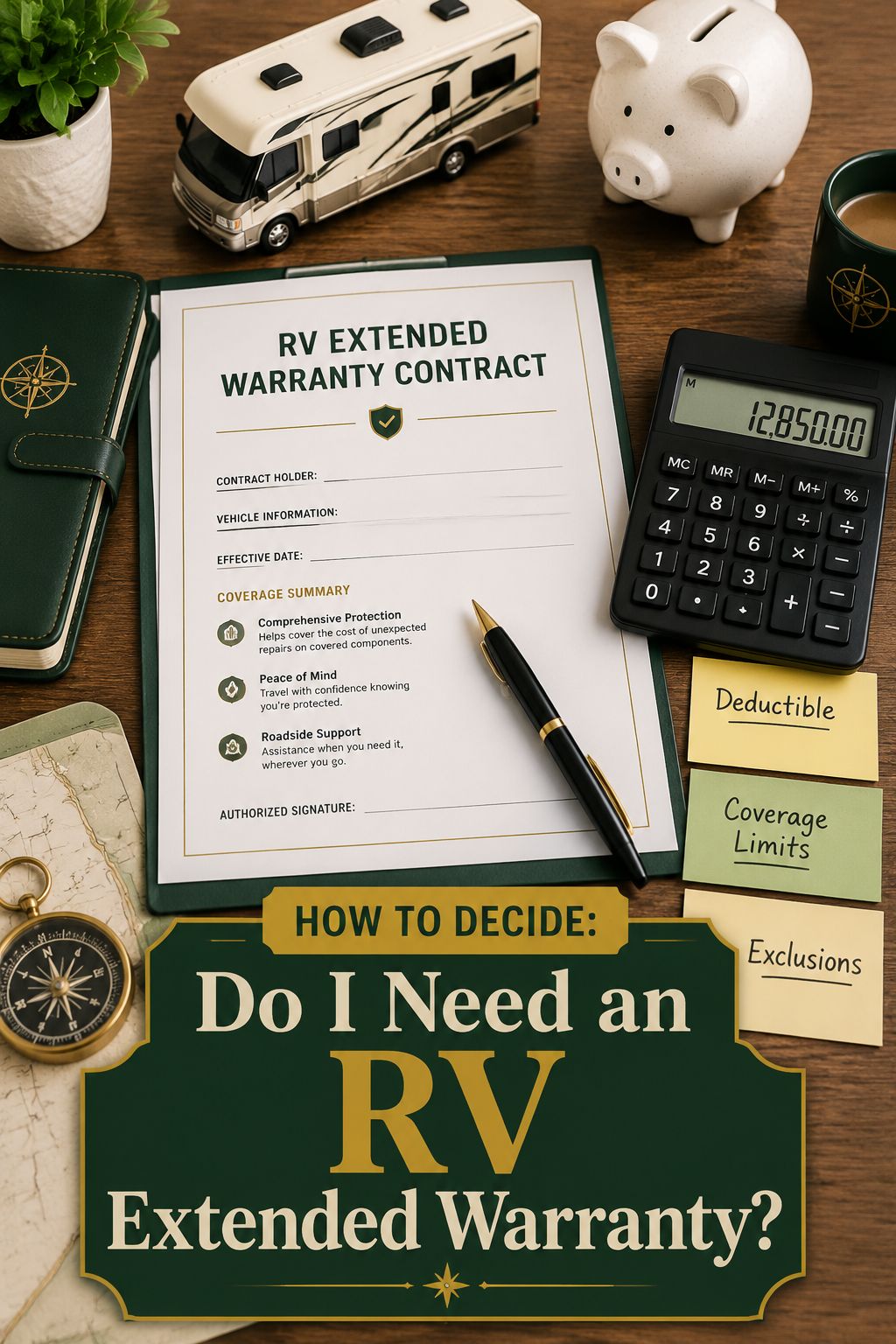
Knowing whether “do I need RV extended warranty coverage” is answered with a “yes” is only half the battle. Finding a good plan is equally important.
Questions to Ask Every Provider
- ✅ Is this an exclusionary or inclusionary plan?
- ✅ What is the deductible per repair visit?
- ✅ Are repairs done at any licensed RV repair shop, or only specific dealers?
- ✅ Does the plan include 24/7 roadside assistance?
- ✅ Is there a waiting period before coverage begins?
- ✅ What happens if the warranty company goes out of business?
Red Flags to Watch Out For 🚩
- Extremely low premiums with vague coverage language
- No physical address or hard-to-reach customer service
- Pressure to sign immediately without reading the contract
- No cancellation or refund policy
Top Reputable Providers to Research
Several well-known providers in the RV extended warranty space include Good Sam Extended Service Plan, Wholesale Warranties, National Vehicle Protection Services, and Protect My RV. Always check reviews on the Better Business Bureau (BBB) and RV forums like iRV2 or RV.net before committing.
The Real Cost: Is an RV Extended Warranty Worth It?
Let’s look at a simple cost-benefit breakdown:
| Scenario | Annual Premium | Covered Repair | Net Savings |
|---|---|---|---|
| Slide-out motor failure | $1,200/year | $2,800 repair | $1,600 saved |
| AC unit replacement | $1,200/year | $1,500 repair | $300 saved |
| No major repairs | $1,200/year | $0 | -$1,200 (cost) |
Over a 3-year plan, paying roughly $3,600 in premiums could be offset by just one or two significant repairs. For complex motorhomes, that’s not an unlikely scenario.
🔑 Key Insight: Extended warranties aren’t about expecting the worst — they’re about protecting your adventure fund from being wiped out by one bad mechanical day.
Conclusion: Should You Get an RV Extended Warranty?
The answer to “do I need RV extended warranty coverage?” comes down to your RV’s age, complexity, how often you use it, and your financial cushion. For full-timers, frequent travelers, and owners of complex motorhomes past their manufacturer’s warranty, a quality service contract is often well worth the investment.
Here are your actionable next steps:
- 📋 Check your current manufacturer’s warranty — know exactly when it expires
- 🔍 Get quotes from at least 3 reputable providers and compare coverage details
- 📖 Read the exclusion list carefully before signing anything
- 💰 Calculate your risk — could you comfortably handle a $5,000 repair out of pocket?
- 🌐 Read community reviews on RV forums to find plans other RVers trust
Your RV is your home on wheels and your ticket to freedom. Protecting it with the right coverage means more time enjoying the open road — and less time worrying about what might break next. 🏕️