Nearly 1 in 3 RV owners are underinsured or carry the wrong type of coverage for their trailer — a costly mistake that can turn a dream road trip into a financial nightmare. So, do I need insurance for an RV trailer? The short answer is: it depends on your state, your lender, and your personal risk tolerance. But the longer answer is far more important — and this guide breaks it all down in plain, friendly language. 🚐
Key Takeaways 📌
- Most states do NOT legally require separate insurance for a towed RV trailer, but exceptions exist.
- Your auto insurance may offer limited coverage, but it’s rarely enough to protect a full-size trailer.
- Lenders almost always require comprehensive and collision coverage if your trailer is financed.
- Liability from a trailer accident can fall back on your tow vehicle’s policy — but limits are often too low.
- Dedicated RV trailer insurance is affordable and provides far better protection than relying on auto coverage alone.
What Does “RV Trailer Insurance” Actually Mean?
Before diving into whether you need it, it helps to understand what RV trailer insurance actually covers. Unlike motorhomes — which are self-propelled and treated more like vehicles — travel trailers, fifth wheels, and pop-up campers are towed units. That changes how insurance works.
RV trailer insurance typically includes:
| Coverage Type | What It Protects |
|---|---|
| Liability | Injuries or property damage you cause to others |
| Collision | Damage to your trailer from an accident |
| Comprehensive | Theft, fire, weather, and non-collision damage |
| Personal Property | Gear, electronics, and belongings inside |
| Total Loss Replacement | Replaces trailer at full value, not depreciated cost |
| Emergency Expense | Hotel or travel costs if trailer becomes uninhabitable |
💬 “Many RV owners assume their car insurance covers everything. It often doesn’t — especially when the trailer is detached and parked at a campsite.”
Do I Need Insurance for an RV Trailer? State Laws Explained
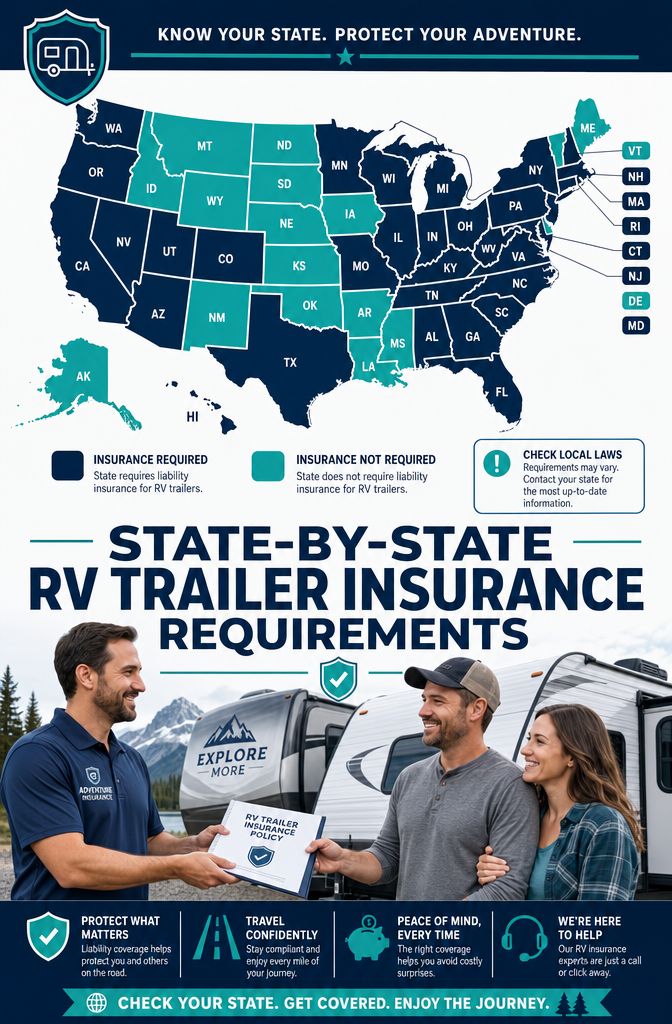
This is the big question. Here’s the honest truth: most U.S. states do not mandate separate insurance for a towed trailer. However, that doesn’t mean you’re automatically covered — or that going without insurance is a smart move.
States That May Require Trailer Insurance
A handful of states have specific rules around trailer registration and insurance. Requirements can vary based on:
- Trailer weight and length
- Whether it’s used as a primary residence
- Whether it’s a motorized or non-motorized unit
🔍 Always check with your state’s DMV or a licensed insurance agent for the most current local rules. Laws change, and what applies in Texas may be completely different in California or Florida.
When Your Auto Policy Steps In (And When It Doesn’t)
Your tow vehicle’s liability insurance typically extends to a trailer while it’s being towed. This means if you cause an accident while pulling your travel trailer, your auto policy’s liability coverage may help pay for damages to others.
But here’s the catch — your auto policy usually does NOT cover:
- ❌ Physical damage to the trailer itself
- ❌ Theft of the trailer when it’s parked
- ❌ Personal belongings stored inside
- ❌ Damage while the trailer is detached
So while you may not be breaking the law without separate trailer insurance, you could be leaving yourself exposed to thousands of dollars in out-of-pocket costs.
Do I Need Insurance for an RV Trailer If It’s Financed?
Short answer: Yes, almost certainly. 💯
If a bank or lender financed your RV trailer, they have a financial stake in that asset. To protect their investment, lenders almost universally require borrowers to carry comprehensive and collision coverage for the full loan term.
Skipping this coverage doesn’t just put you at risk — it can also:
- Violate your loan agreement
- Trigger forced-place insurance (which is far more expensive and only protects the lender, not you)
- Potentially result in loan default
💬 “Forced-place insurance is the insurance world’s version of a penalty fee — you pay more and get less protection.”
Types of RV Trailer Coverage Worth Knowing
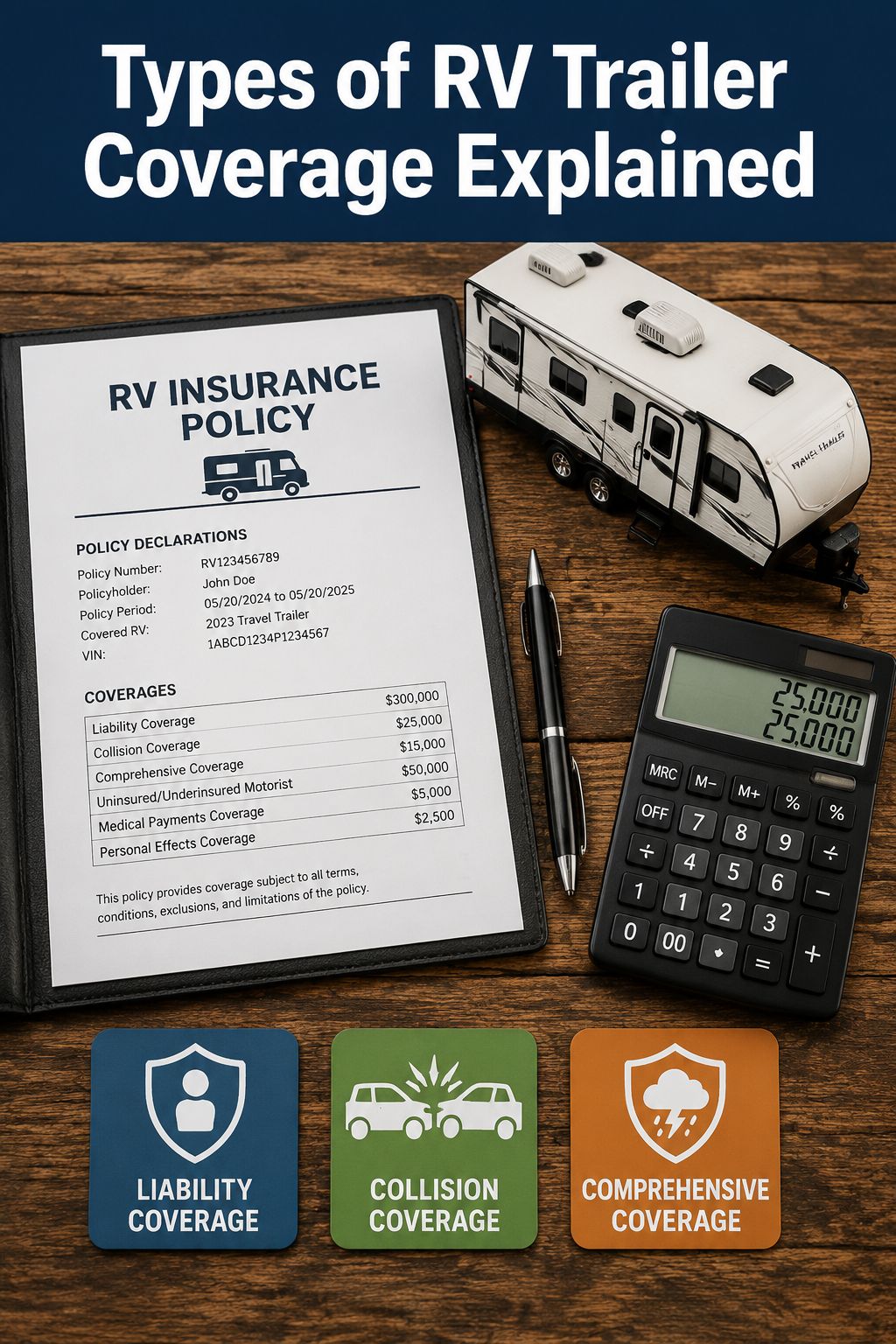
Even if your state doesn’t require it, understanding your coverage options helps you make smarter decisions. Here’s a breakdown of the most useful add-ons for RV trailer owners:
🛡️ Full-Timer Coverage
If the RV trailer is your primary residence, standard auto or homeowner policies won’t cut it. Full-timer RV insurance works more like a homeowner’s policy and covers liability while parked, personal property, and more.
🔧 Roadside Assistance
Flat tires, dead batteries, and tow needs are common on long hauls. Roadside assistance for RV trailers is often different from standard auto roadside plans — make sure yours covers the size and weight of your rig.
🌊 Vacation Liability
This covers you if someone is injured at your campsite — a guest trips over a stake, for example. Many standard policies don’t include this without a specific rider.
💰 Agreed Value vs. Actual Cash Value
- Agreed Value: You and the insurer agree on the trailer’s value upfront. If it’s totaled, you get that full amount.
- Actual Cash Value: The insurer pays the depreciated value — which can be significantly less than what you paid.
For newer or high-value trailers, agreed value coverage is usually worth the slightly higher premium.
How Much Does RV Trailer Insurance Cost?
Cost varies widely based on:
- Trailer type and value (pop-up vs. luxury fifth wheel)
- How often you use it (seasonal vs. full-time)
- Your driving record
- Coverage limits and deductibles
- Location and storage
As a rough guide, basic RV trailer insurance can start as low as $100–$300 per year for a simple travel trailer, while comprehensive coverage for a high-end fifth wheel can run $500–$1,500+ annually. Getting multiple quotes is always the best move. 🎯
Common Myths About RV Trailer Insurance
Let’s bust a few myths that trip up even experienced RV enthusiasts:
❌ Myth: “My homeowner’s insurance covers my trailer.”
✅ Reality: Homeowner’s policies may cover a small amount of personal property, but they rarely cover the trailer itself or liability while traveling.
❌ Myth: “If I only use it a few times a year, I don’t need coverage.”
✅ Reality: Accidents and theft don’t follow a schedule. Seasonal use policies exist and are affordable — there’s no good reason to go unprotected.
❌ Myth: “My trailer is old and not worth insuring.”
✅ Reality: Even older trailers carry liability risk. If your trailer causes an accident, you could be held responsible for significant damages regardless of the trailer’s value.
Conclusion: Don’t Hit the Road Without the Right Coverage
So, do I need insurance for an RV trailer? Legally, it may not always be required — but practically and financially, the answer is almost always yes. The risks of going uninsured far outweigh the modest cost of a good policy.
✅ Actionable Next Steps:
- Check your state’s requirements through your DMV or a licensed agent.
- Review your existing auto policy to understand what (if anything) it covers for your trailer.
- Contact your lender if the trailer is financed — confirm what coverage is required.
- Get at least 3 quotes from RV-specialized insurers like Progressive, Good Sam, or National General.
- Consider your lifestyle — full-timers, seasonal campers, and weekend warriors all have different coverage needs.
- Ask about discounts — bundling, safety courses, and RV club memberships often reduce premiums.
The open road is calling. Make sure the right coverage is riding along with you. 🏕️🚐
References
- Insurance Information Institute. (2021). Auto insurance basics. https://www.iii.org/article/auto-insurance-basics
- National Association of Insurance Commissioners. (2022). A consumer’s guide to auto insurance. https://content.naic.org/sites/default/files/publication-aut-pb-consumer-guide.pdf
- Progressive Insurance. (2023). RV and trailer insurance coverage options. https://www.progressive.com/answers/rv-trailer-insurance/
- Good Sam Insurance Agency. (2022). Do you need insurance for a travel trailer? https://www.goodsaminsuranceagency.com/rv-insurance/travel-trailer-insurance/