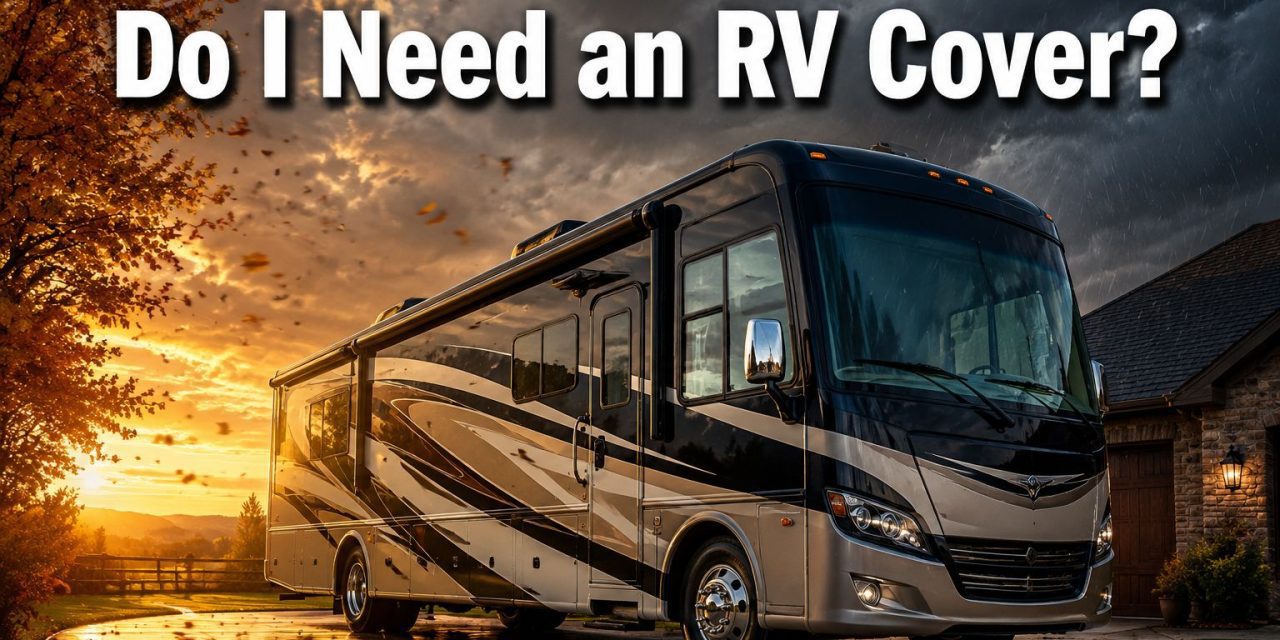
UV radiation degrades unprotected RV roofs and sidewalls at a rate that can slash resale value by thousands of dollars — yet a quality cover costs a fraction of that loss. So, do I need an RV cover? The short answer is: almost certainly yes, but the full answer depends on where you store your rig, how long it sits idle, and what climate you live in. This guide breaks down everything RV lovers need to know to make a smart, money-saving decision.
Key Takeaways 📌
- Sun, rain, and debris are the top enemies of an unprotected RV — a cover blocks all three.
- Storage duration matters — the longer your RV sits idle, the more a cover pays for itself.
- RV covers are not one-size-fits-all — choosing the wrong type can actually cause damage.
- Climate and storage location are the two biggest factors in deciding whether you need a cover.
- A good cover typically costs $100–$600, far less than the repairs it prevents.
Do I Need an RV Cover? Understanding the Real Risks of Going Uncovered
Before spending money on a cover, it helps to understand exactly what an unprotected RV faces every season it sits outside.
☀️ Sun and UV Damage
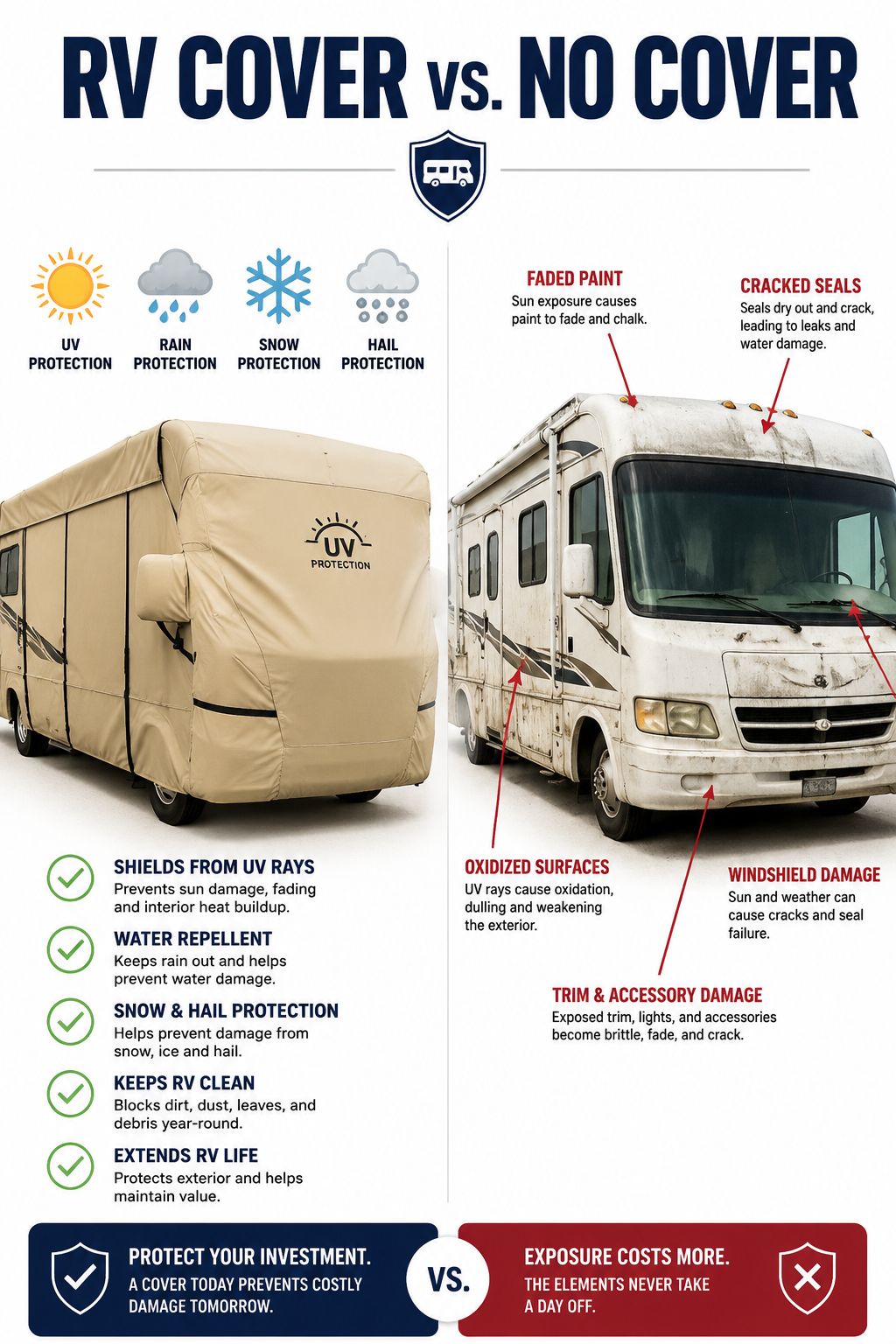
The sun is relentless. Ultraviolet rays break down the gel coat on fiberglass sidewalls, fade decals, crack rubber roofing membranes, and degrade caulking and seals. Once those seals fail, water finds a way in — and water damage is one of the most expensive repairs an RV owner can face.
Pull Quote: “Water intrusion through a failed roof seal can cost $3,000–$10,000+ to repair — a cover costing $200 could have prevented all of it.”
🌧️ Rain, Moisture, and Mold
Standing water on a flat or low-slope roof accelerates seal deterioration. In humid climates, moisture can sneak into tiny gaps and breed mold inside walls and cabinetry. A breathable RV cover sheds rain while still allowing moisture vapor to escape — preventing the trapped-moisture problem that non-breathable tarps create.
❄️ Snow and Ice
Heavy snow loads stress slide-out mechanisms and roof structures. Ice forming in seams expands and widens gaps. In snowy regions, a cover does double duty: it sheds snow before it accumulates and insulates seals from freeze-thaw cycling.
🍂 Tree Sap, Bird Droppings, and Debris
These might sound minor, but tree sap is acidic and bonds to paint and fiberglass. Bird droppings etch surfaces within days. Falling branches and windblown debris scratch and dent unprotected panels. A cover acts as a physical shield against all of these.
When You Might NOT Need a Cover
Honesty matters here. A cover may be unnecessary if:
- The RV is stored indoors in a climate-controlled or enclosed building.
- The RV is used year-round with very short gaps between trips (under 2–3 weeks).
- The storage location is covered by a carport or RV canopy structure.
Even in these cases, a partial cover (like a roof-only cover or windshield cover) can still protect vulnerable areas.
Quick Risk Assessment Table
| Storage Situation | Cover Needed? | Priority Level |
|---|---|---|
| Outdoor, full sun, 3+ months | ✅ Yes | 🔴 High |
| Outdoor, shaded, year-round | ✅ Yes | 🟡 Medium |
| Covered carport, outdoor | ⚠️ Maybe | 🟡 Medium |
| Indoor, climate-controlled | ❌ Probably not | 🟢 Low |
| Outdoor, snowy climate | ✅ Yes | 🔴 High |
| Short-term (under 2 weeks) | ❌ Probably not | 🟢 Low |
Choosing the Right RV Cover: Types, Materials, and What to Avoid
Not all RV covers are created equal. Picking the wrong one can trap moisture, scratch your finish, or blow off in the first windstorm. Here’s how to choose wisely.
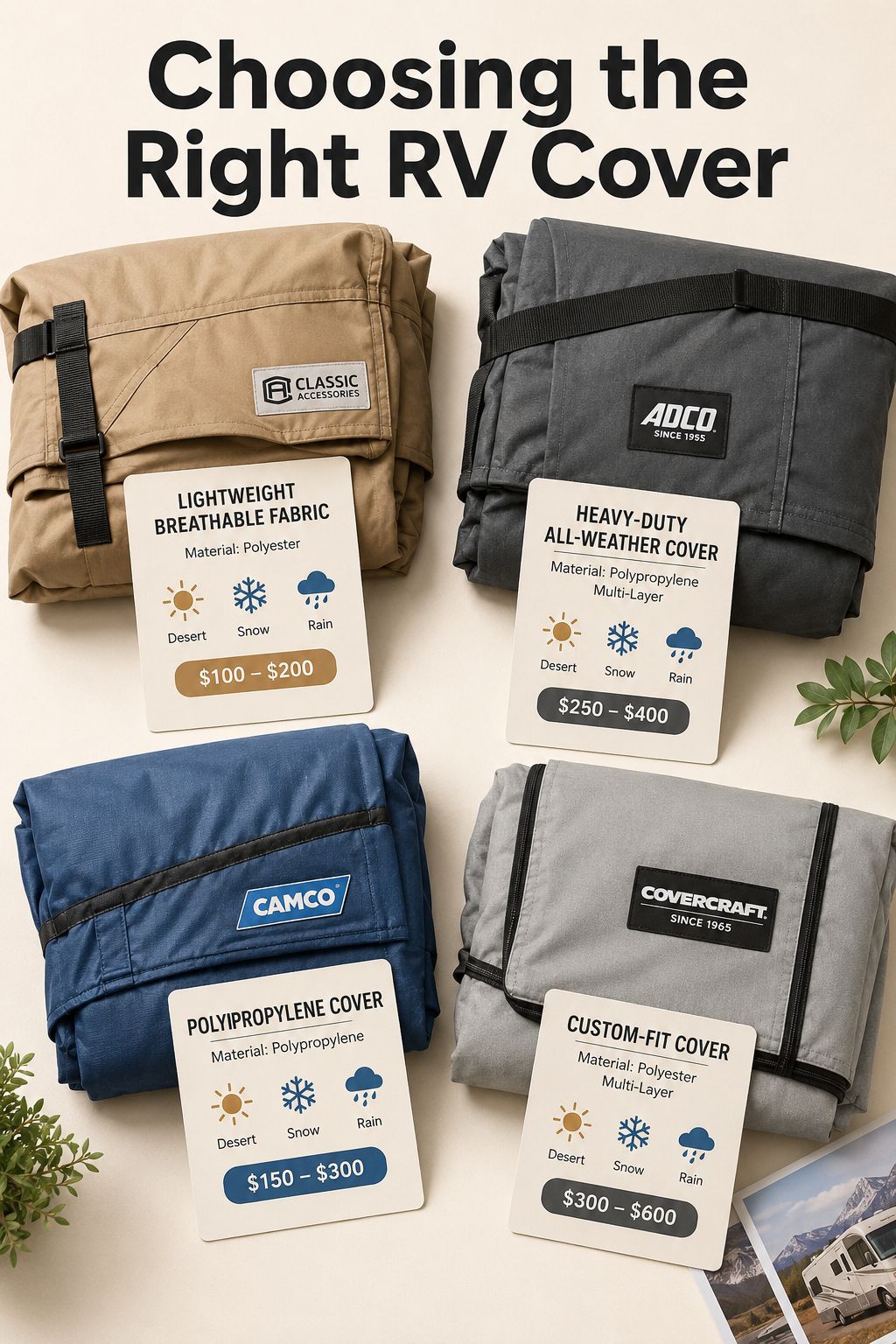
Types of RV Covers
1. All-Weather Covers
These are the most popular choice. Made from multi-layer polypropylene or composite fabrics, they resist UV rays, repel rain, and allow moisture vapor to breathe out. They work in most climates and are the best all-around option.
2. Lightweight/Travel Covers
Thinner and easier to put on and take off, these are ideal for short storage periods or mild climates. They offer less protection against heavy snow or hail.
3. Heavy-Duty Winter Covers
Thicker, reinforced covers designed for harsh winters. They handle snow loads better and provide extra insulation for seals and rubber roofing.
4. Roof-Only Covers
A budget-friendly option that protects the most vulnerable area — the roof — without covering the entire RV. Great for covered storage where sidewalls are already shielded.
5. Custom-Fit vs. Universal Covers
- Custom-fit covers are tailored to a specific RV model. They fit snugly, stay secure in wind, and minimize abrasion. They cost more but perform better.
- Universal covers are sized by RV length category. They’re more affordable but may flap in wind and cause friction damage if not secured properly.
Key Features to Look For 🔍
- Breathability — Look for “breathable” or “vented” fabric. Non-breathable tarps trap moisture and accelerate mold.
- UV inhibitors — The cover itself should resist UV degradation, not just protect the RV from it.
- Reinforced corners and straps — Flapping covers scratch paint. Secure tie-down straps and corner reinforcements are essential.
- Soft inner lining — A fleece or soft-touch interior prevents micro-scratches on painted surfaces.
- Zippered access panels — These let you open doors or access storage without removing the entire cover.
⚠️ Common Mistakes to Avoid
- Using a blue poly tarp — Tarps trap moisture, scratch surfaces, and deteriorate quickly. They cause more harm than good.
- Buying by price alone — A $40 cover will likely fail within one season and may damage the RV in the process.
- Skipping the prep step — Always wash and dry the RV before covering it. Covering a dirty RV traps grit that scratches the finish.
- Ignoring fit — A loose cover that flaps in the wind creates constant abrasion. Measure carefully and choose the right size.
RV Cover Price Guide 💰
| Cover Type | Typical Price Range | Best For |
|---|---|---|
| Universal all-weather | $100–$250 | Most climates, budget buyers |
| Heavy-duty winter | $200–$400 | Snow-heavy regions |
| Custom-fit | $300–$600+ | Long-term storage, high-end RVs |
| Roof-only cover | $50–$150 | Covered storage, mild climates |
| Lightweight/travel | $80–$180 | Short-term, mild weather |
Conclusion: Make the Smart Call for Your RV 🚐
So, do I need an RV cover? For the vast majority of RV owners who store their rig outside for weeks or months at a time, the answer is a clear yes. The math is simple: a quality cover costs a few hundred dollars and can prevent thousands in UV damage, water intrusion, and cosmetic repairs.
Here are the actionable next steps to take right now:
- Assess your storage situation — Is the RV outside? For how long? What’s the climate like?
- Measure your RV accurately — Length, height, and width matter for a proper fit.
- Choose the right cover type — Match the cover to your climate and storage duration using the tables above.
- Prep before covering — Wash, dry, and inspect the RV before putting the cover on.
- Check the cover seasonally — Inspect for tears, loose straps, or pooling water every few weeks during long storage.
Protecting an RV is part of loving it. A good cover is one of the simplest, most cost-effective investments any RV owner can make — and the peace of mind it brings is worth every penny. 🏕️
References
- RV Industry Association. (2022). Annual RV industry statistics and market data. https://www.rvia.org
- Camping World. (2021). How to choose the right RV cover. https://www.campingworld.com
- Dometic Group. (2020). RV roof maintenance and protection guide. https://www.dometic.com
- Good Sam Club. (2023). RV storage tips and cover recommendations. https://www.goodsam.com
- RVIA. (2019). UV degradation and RV exterior materials research summary. https://www.rvia.org