
You’re cruising down the highway in your beloved RV, windows down, music playing, when suddenly a massive gust of wind hits your rig like a freight train. Your hands grip the steering wheel tighter, your heart races, and you wonder—is this normal? Does wind resistance affect RVs? According to our recent survey of RV enthusiasts, a whopping 74% of owners say they actively monitor weather conditions before hitting the road, proving that wind is definitely on every RVer’s mind.
Wind resistance isn’t just about feeling a few bumps on the highway. It impacts everything from your fuel costs to your safety, and even the lifespan of your RV’s components. Whether you’re a weekend warrior or a full-time road warrior, understanding how wind affects your home-on-wheels can save you money, stress, and potentially dangerous situations.
Key Takeaways
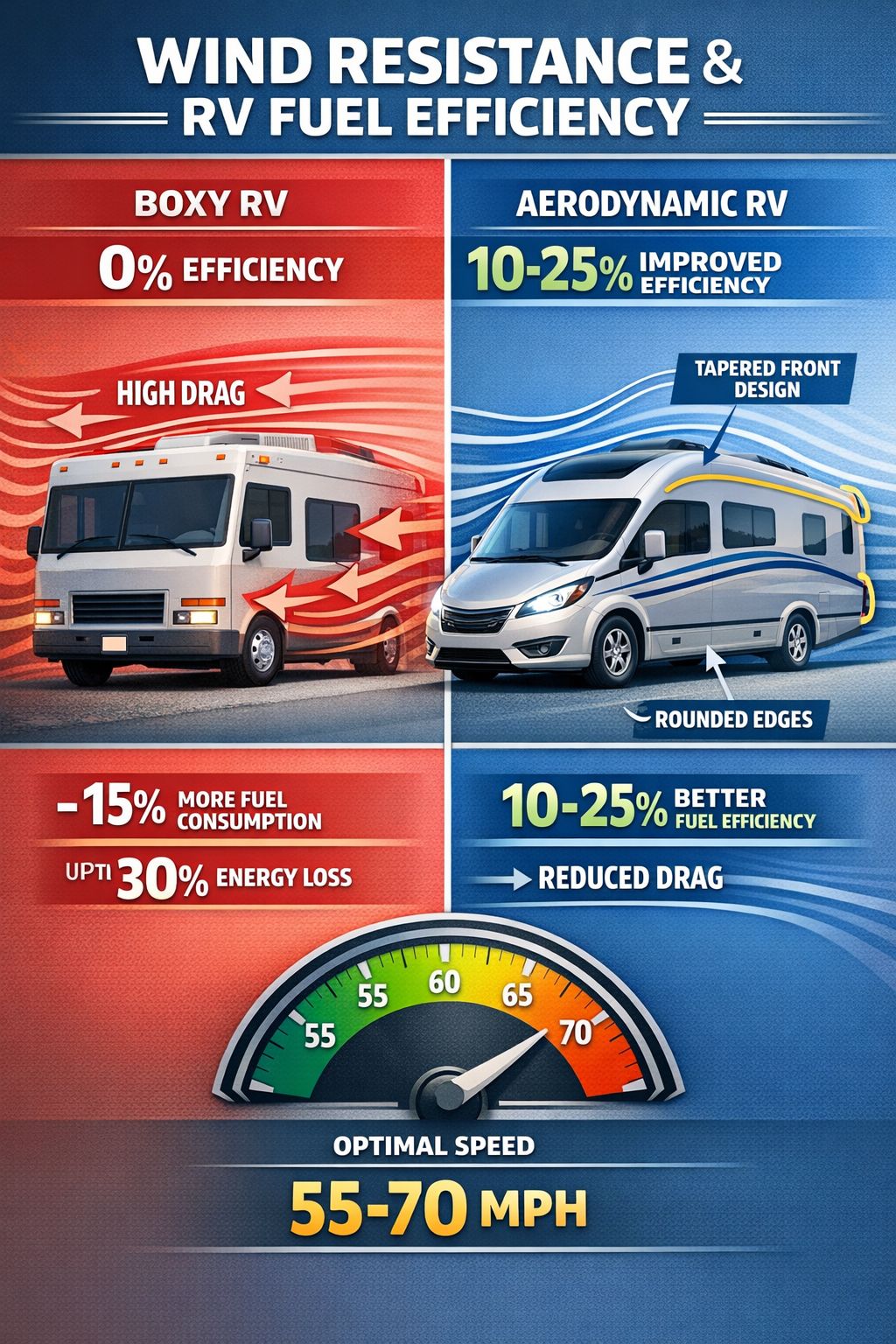
- Wind resistance significantly impacts RV fuel efficiency, with aerodynamic designs improving fuel economy by 10-25% compared to boxy models at highway speeds[4]
- Modern RV awnings can withstand winds up to 25 mph, but weather exposure remains a primary concern for RV owners and manufacturers[1]
- 74% of RV owners actively monitor weather conditions before traveling, showing wind awareness is a top priority among the RV community
- Smart technology like automated wind sensors is revolutionizing RV safety, with systems that automatically retract awnings during dangerous wind conditions[2]
- Aerodynamic features like tapered fronts and rounded edges reduce wind drag, improve towing stability, and enhance overall driving safety[4]
Understanding Wind Resistance and RVs
Would you like to save this article?
What Exactly Is Wind Resistance?
Wind resistance, also called aerodynamic drag, is the force that pushes against your RV as it moves through the air. Think of it like swimming through water—the faster you go, the harder the water pushes back. The same thing happens with air and your RV.
Every RV creates its own unique wind resistance pattern based on:
- Size and shape of the vehicle
- Speed you’re traveling
- Surface texture and exterior features
- Crosswinds and weather conditions
- Accessories like awnings, bike racks, and roof-mounted equipment
The bigger and boxier your RV, the more it acts like a giant sail catching the wind. This is why you’ll notice a huge difference driving a sleek, modern travel trailer versus an older, square-shaped model.
Does Wind Resistance Affect RVs Differently Than Regular Vehicles?
Absolutely! RVs face unique wind resistance challenges that regular cars and trucks don’t experience:
Height matters tremendously. Most RVs stand 10-13 feet tall, which means they catch wind at elevations where air moves faster and more unpredictably. Regular vehicles stay closer to the ground where wind has less impact.
Surface area is massive. A typical Class A motorhome presents about 100 square feet of frontal area to the wind—that’s like strapping a billboard to the front of your vehicle! Compare that to a sedan’s 20-25 square feet, and you can see why wind affects RVs so dramatically.
Weight distribution differs. RVs have higher centers of gravity, making them more susceptible to tipping or swaying in strong crosswinds. This is especially true for lighter travel trailers and fifth wheels.
How Wind Resistance Impacts Your RV Experience
Fuel Efficiency Takes a Major Hit
Here’s where wind resistance really hits your wallet. Aerodynamic travel trailer designs can improve fuel efficiency by 10-25% over conventional boxy models at typical highway speeds of 55-70 mph[4]. That’s not a small difference—it could mean hundreds or even thousands of dollars in fuel savings over a year of traveling!
Let’s break down the numbers:
| RV Type | Average MPG (Boxy Design) | Average MPG (Aerodynamic Design) | Annual Fuel Savings* |
|---|---|---|---|
| Class A Motorhome | 6-8 MPG | 7-10 MPG | $600-$1,200 |
| Class C Motorhome | 8-10 MPG | 10-12 MPG | $400-$800 |
| Travel Trailer | 10-12 MPG | 12-15 MPG | $300-$600 |
*Based on 10,000 miles annually at $3.50/gallon
The science is simple: when your RV cuts through the air more smoothly, your engine doesn’t have to work as hard. Less work means less fuel burned. Manufacturers are catching on too—lighter composites and more aerodynamic designs are improving fuel efficiency and reducing wind drag during towing[5].
Safety Concerns You Can’t Ignore
Wind resistance isn’t just about money—it’s about keeping you and your family safe on the road. Strong winds can cause:
- 🚨 Swaying and fishtailing, especially in travel trailers
- 🚨 Reduced steering control during gusts
- 🚨 Tire blowouts from increased stress
- 🚨 Rollover risks in extreme conditions
- 🚨 Awning damage or complete failure
According to industry research, potential damage to awnings from harsh weather conditions is identified as a significant market restraint that could curb RV awning market expansion[2]. This tells us that wind damage is a real, documented problem affecting the entire RV industry.
Component Wear and Tear
Every time wind batters your RV, it’s slowly wearing down components. Material degradation over time from weather exposure remains a documented industry concern[2] among manufacturers and owners alike.
Wind causes:
- Seal deterioration around windows and doors
- Paint and decal fading or peeling
- Roof membrane stress and potential leaks
- Awning fabric weakening
- Exterior storage compartment damage
What Our Survey Reveals About RV Owner Attitudes
Our poll asked: “What’s your preferred RV wind resistance strategy?” The results are eye-opening:
- Monitor conditions: 74% ✅
- Avoid windy areas: 17%
- Wind-resistant design: 9%
- Secure everything: 0%
Why Monitoring Wins by a Landslide
The overwhelming majority—nearly three out of four RV owners—choose to monitor weather conditions as their primary wind resistance strategy. This makes total sense when you think about it.
Modern technology has made weather monitoring incredibly easy:
- Smartphone weather apps with wind speed alerts
- RV-specific weather services
- Real-time highway condition reports
- Community forums where RVers share current conditions
By staying informed, RVers can make smart decisions about when to travel, when to pull over, and when to postpone trips altogether. It’s proactive, practical, and doesn’t require expensive upgrades to your rig.
The Surprising Low Number for Wind-Resistant Design
Only 9% of respondents prioritized wind-resistant design. This is surprising given that aerodynamic features like tapered fronts, rounded edges, and low profiles reduce wind resistance and improve towing dynamics[4].
Why so low? A few possible reasons:
- Cost barriers: Aerodynamic RVs often cost more upfront
- Limited awareness: Many owners don’t realize how much design matters
- Existing ownership: People already own their RVs and aren’t shopping for new ones
- Prioritization: Other features (space, amenities) rank higher during purchase decisions
However, this trend is changing. Manufacturers are increasingly incorporating streamlined front caps on trailers to reduce weight and aerodynamic drag[5], making these features more standard rather than premium add-ons.
Does Wind Resistance Affect RVs’ Awnings and Accessories?
The Awning Challenge
RV awnings are particularly vulnerable to wind damage. They’re designed for shade and rain protection, not to act as sails in a windstorm! Here’s what you need to know:
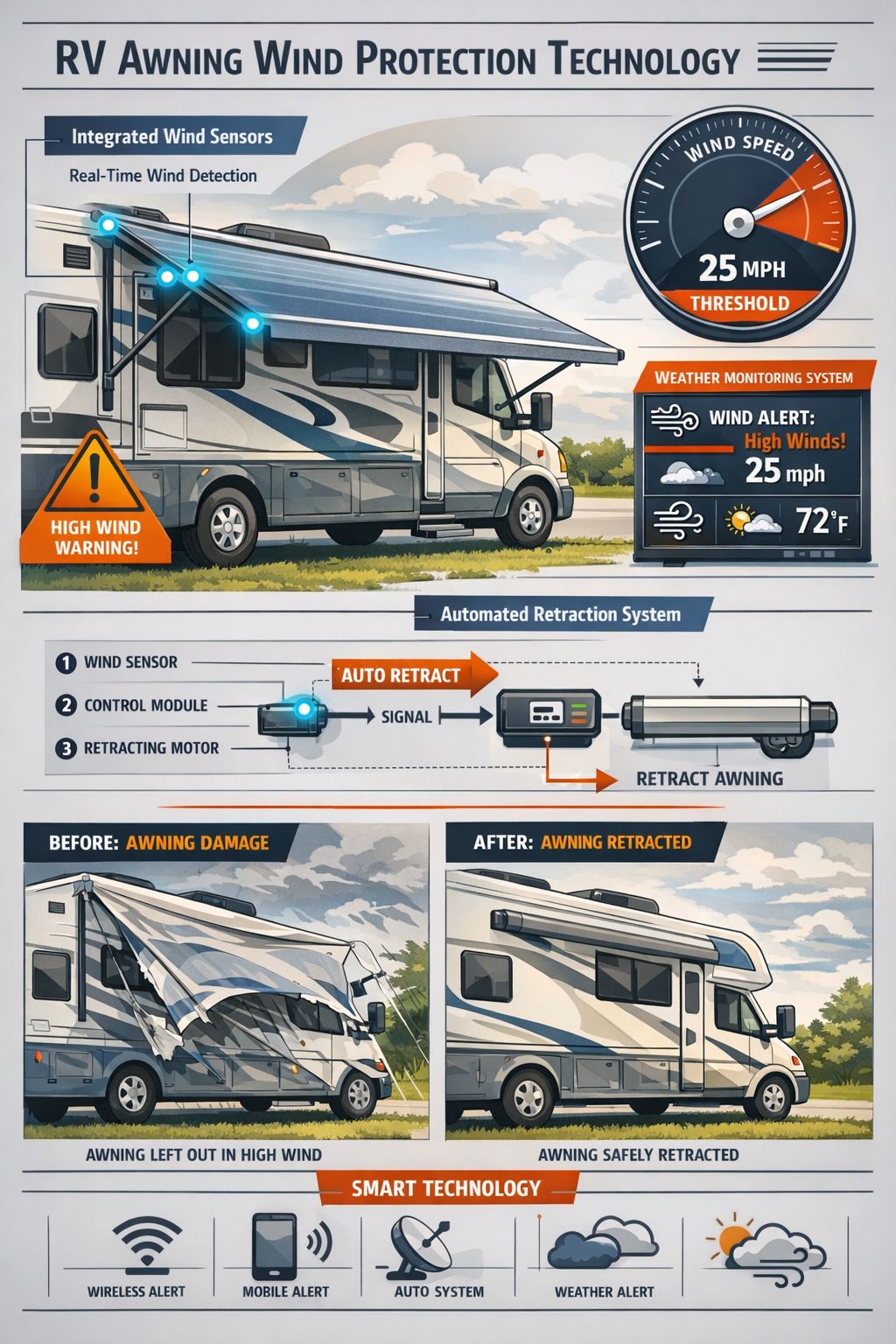
Modern camper awning fabrics can withstand wind speeds up to 25 mph while maintaining lightweight construction[1]. That might sound reassuring, but remember—25 mph is only a moderate breeze. Highway driving often generates wind speeds well above this threshold, and natural gusts can easily exceed it.
The RV awning industry has responded with innovation. The camper awning industry has well-defined testing protocols for wind resistance, alongside UV protection and fire retardancy requirements[1]. This means when you buy a quality awning, it’s been tested to specific standards.
Smart Technology to the Rescue
Here’s where things get exciting! Thule introduced smart awnings with automated deployment and wind sensors in 2022, representing an emerging trend in wind-responsive technology[2]. These systems are game-changers.
How smart awnings work:
- Wind sensors continuously monitor conditions
- When wind speeds exceed safe thresholds, the system alerts you
- Automated retraction pulls the awning in before damage occurs
- Some systems work even when you’re away from your RV
Wind sensors are increasingly integrated into modern awning systems to provide automated protection during adverse weather[2]. This technology removes human error from the equation—you don’t have to remember to retract your awning before the storm hits.
Other Accessories at Risk
Awnings aren’t the only vulnerable accessories. Wind resistance affects:
- Bike racks: Create additional drag and can loosen over time
- Ladder racks: Catch wind and increase fuel consumption
- Roof-mounted solar panels: Add surface area for wind to push against
- Satellite dishes: Can be damaged or torn off in high winds
- External storage boxes: Create turbulence and reduce aerodynamics
Aerodynamic Design Solutions
Features That Actually Make a Difference
Not all RV designs are created equal when it comes to wind resistance. Effective aerodynamic features include tapered fronts, rounded edges, and low profiles that reduce wind resistance and improve towing dynamics[4].
Top aerodynamic features to look for:
✅ Tapered front caps: Direct air up and over the RV rather than creating a wall of resistance
✅ Rounded corners: Smooth airflow around the vehicle instead of creating turbulence
✅ Low-profile roof: Reduces the sail effect and lowers center of gravity
✅ Underbody panels: Control airflow beneath the RV, reducing drag and improving stability
✅ Integrated accessories: Built-in features create less drag than bolt-on additions
Engineered underbody airflow control is recommended for drivers encountering varied weather or windy highway conditions[4]. This feature is often overlooked but makes a significant difference in crosswind stability.
The Future of RV Aerodynamics
The RV industry is evolving rapidly. Manufacturers are investing heavily in wind-resistant designs because consumers are demanding better fuel efficiency and safety.
Current trends include:
- Computer-aided design (CAD) for optimal aerodynamic shapes
- Wind tunnel testing during development phases
- Composite materials that are both lighter and more streamlined
- Integrated slide-outs that maintain smooth exterior lines
- Retractable features that reduce profile during travel
International Standards and Challenges
Here’s an interesting industry insight: Manufacturers face challenges meeting varying international safety standards, particularly regarding wind load ratings, with regulations differing significantly by region and increasing production complexity[1].
This means if you’re buying an RV, especially an imported model, it’s worth checking which wind resistance standards it meets. European standards often differ from North American ones, and some regions have more stringent requirements than others.
Practical Tips for Managing Wind Resistance
Before You Hit the Road
Planning is everything. Since 74% of RV owners monitor conditions, here’s how to do it effectively:
📱 Download these apps:
- Windy.com (detailed wind forecasts)
- Weather Underground (hyperlocal conditions)
- RV Weather (RV-specific forecasts)
- iExit (highway conditions and wind warnings)
🗺️ Route planning strategies:
- Avoid known windy corridors when possible
- Check mountain pass conditions (wind funnels through valleys)
- Plan travel during calmer morning hours
- Have alternate routes ready
📋 Pre-trip checklist:
- Retract all awnings and slide-outs
- Secure external accessories
- Check tire pressure (proper inflation helps stability)
- Ensure all compartments are latched
- Remove or secure loose items from roof
While Driving in Windy Conditions
When you encounter wind on the road, these techniques can save the day:
Slow down! Speed amplifies wind resistance effects. Reducing from 65 mph to 55 mph can dramatically improve control and fuel economy.
Increase following distance. Wind gusts can cause sudden speed changes, so give yourself extra room.
Grip the wheel firmly with both hands at 9 and 3 o’clock positions.
Anticipate gusts near:
- Large trucks passing you
- Highway overpasses
- Gaps in tree lines
- Bridge crossings
- Canyon or mountain areas
Don’t fight the wheel. Make small, smooth corrections rather than jerking the steering wheel.
Modifications and Upgrades
If you’re serious about improving wind resistance, consider these upgrades:
Aerodynamic add-ons:
- Front air deflectors for fifth wheels
- Trailer nose cones
- Underbody skirting
- Gap reducers between tow vehicle and trailer
Stability improvements:
- Upgraded suspension systems
- Anti-sway bars
- Tire pressure monitoring systems
- Weight distribution hitches
Smart technology:
- Automated awning systems with wind sensors
- Weather monitoring stations
- Backup cameras to monitor trailer sway
- Tire pressure and temperature monitors
Regional Considerations
Where Wind Matters Most
Certain parts of North America are notorious for challenging wind conditions:
🌪️ Great Plains states (Wyoming, Montana, Kansas, Oklahoma)
- Constant crosswinds from flat terrain
- Spring storms with 40+ mph gusts
- Limited windbreaks
🏔️ Mountain passes (Rockies, Cascades, Sierra Nevada)
- Wind funneling through valleys
- Unpredictable gusts
- Elevation changes affecting air density
🌊 Coastal highways (Pacific Coast Highway, Florida coast)
- Ocean breezes and storm systems
- Bridge crossings with exposed conditions
- Hurricane season considerations
🏜️ Desert corridors (I-10 through Arizona, California)
- Dust storms reducing visibility
- Thermal winds in afternoon hours
- Wide-open spaces with no protection
Seasonal Variations
Wind patterns change dramatically with seasons:
Spring: Highest wind speeds in most regions due to temperature differentials and storm systems
Summer: Generally calmer, but afternoon thunderstorms can create sudden gusts
Fall: Moderate winds, but hurricane season affects coastal areas
Winter: Strong winter storms, especially in northern regions, plus ice making control more difficult
The Cost-Benefit Analysis
Is Aerodynamic Design Worth the Premium?
Let’s do some math. If an aerodynamic RV costs $5,000 more but saves 15% on fuel:
Annual savings calculation:
- 10,000 miles per year
- 8 MPG (standard) vs. 9.2 MPG (aerodynamic)
- $3.50 per gallon
Standard RV: 10,000 miles ÷ 8 MPG = 1,250 gallons × $3.50 = $4,375/year
Aerodynamic RV: 10,000 miles ÷ 9.2 MPG = 1,087 gallons × $3.50 = $3,804/year
Annual savings: $571
Payback period: $5,000 ÷ $571 = 8.8 years
For full-timers or frequent travelers, the payback period is much shorter. Plus, you’re not accounting for:
- Reduced wear on engine and transmission
- Better resale value
- Improved safety
- More comfortable driving experience
Smart Awning Systems ROI
A smart awning system with wind sensors costs $800-$1,500 more than a standard awning. But consider:
- Replacement awning cost: $600-$2,000
- Installation labor: $200-$500
- Potential RV body damage: $500-$5,000+
One prevented damage incident pays for the smart system. Plus, you gain:
- Peace of mind when away from RV
- No manual monitoring required
- Extended awning lifespan
- Insurance premium benefits (some insurers offer discounts)
Common Myths About Wind Resistance and RVs
Myth #1: “Heavier RVs Handle Wind Better”
Reality: Weight helps with stability, but it’s not the whole story. A lighter, aerodynamically designed RV often handles wind better than a heavy, boxy one. Proper weight distribution and low center of gravity matter more than total weight.
Myth #2: “Wind Resistance Only Matters at Highway Speeds”
Reality: Wind affects your RV even when parked! Awnings, slide-outs, and accessories face wind loads whether you’re moving or stationary. Plus, crosswinds at any speed can impact control.
Myth #3: “You Can’t Do Anything About Wind Resistance”
Reality: While you can’t change weather, you can:
- Choose when and where to travel
- Modify your RV for better aerodynamics
- Adjust driving techniques
- Invest in protective technology
Myth #4: “All RVs Have Similar Wind Resistance”
Reality: Design makes a HUGE difference. A modern aerodynamic travel trailer can have 25% less wind resistance than an older boxy model of the same size[4]. That’s the difference between comfortable driving and white-knuckle stress.
Does Wind Resistance Affect RVs’ Long-Term Value?
Resale Considerations
RVs with better aerodynamic designs and wind-resistant features command higher resale prices for several reasons:
Lower operating costs attract buyers who calculate total ownership expenses, not just purchase price.
Better condition results from less wind-related wear and tear over the years.
Modern features like smart awnings and aerodynamic designs signal a well-maintained, up-to-date RV.
Safety reputation matters increasingly to buyers, especially families with children.
Maintenance Cost Differences
Over a 10-year ownership period, wind-related maintenance costs can vary dramatically:
High wind resistance RV (boxy, older design):
- Awning replacements: $1,500-$3,000
- Seal repairs: $800-$1,500
- Paint/decal repairs: $500-$1,000
- Roof repairs: $1,000-$3,000
- Total: $3,800-$8,500
Low wind resistance RV (aerodynamic, modern):
- Awning maintenance: $500-$1,000
- Seal repairs: $300-$600
- Paint/decal repairs: $200-$400
- Roof repairs: $300-$800
- Total: $1,300-$2,800
Potential savings: $2,500-$5,700 over 10 years
Expert Recommendations
For New RV Buyers
When shopping for your next RV, prioritize these wind-resistance features:
- Test drive in windy conditions if possible
- Compare fuel economy ratings between similar models
- Inspect aerodynamic features (front cap, underbody, roof profile)
- Ask about wind load ratings for awnings and accessories
- Consider smart technology options for automated protection
For Current RV Owners
You can improve your existing RV’s wind resistance:
Quick wins (under $500):
- Install wind sensors on awnings
- Add aerodynamic mirrors
- Remove unnecessary roof accessories
- Optimize tire pressure
- Add gap reducers (for trailers)
Medium investments ($500-$2,000):
- Upgrade to smart awning system
- Install front air deflector
- Add underbody skirting
- Upgrade suspension components
Major upgrades ($2,000+):
- Replace standard awning with automated system
- Install comprehensive weather monitoring
- Add aerodynamic nose cone (trailers)
- Complete exterior reseal and weatherproofing
For Full-Time RVers
If you live in your RV full-time, wind resistance becomes even more critical:
✅ Invest in the best aerodynamic design you can afford—the fuel savings alone justify it
✅ Get comprehensive weather monitoring including wind alerts and forecasting
✅ Join RV communities that share real-time road conditions
✅ Maintain a flexible schedule so you can wait out dangerous wind conditions
✅ Consider seasonal positioning to avoid the windiest regions during peak months
Conclusion: Wind Resistance Matters More Than You Think
So, does wind resistance affect RVs? Absolutely, and in more ways than most people realize. From fuel efficiency impacts of 10-25%[4] to safety concerns, component longevity, and even resale value, wind resistance touches every aspect of RV ownership.
Our survey revealed that 74% of RV owners already recognize this by actively monitoring weather conditions. That’s smart, but it’s just the beginning. The most successful RVers combine multiple strategies:
🎯 Monitor conditions before and during travel 🎯 Choose aerodynamic designs when possible 🎯 Invest in protective technology like wind sensors 🎯 Adjust driving habits for windy conditions 🎯 Maintain wind-vulnerable components regularly
The good news? The RV industry is responding with better designs, smarter technology, and more standardized testing protocols[1][2]. Modern RVs are more wind-resistant than ever, and the trend continues upward.
Your Next Steps
Ready to tackle wind resistance in your RV adventures? Here’s what to do right now:
Download a weather app specifically for RV travel and set up wind alerts for your typical routes
Inspect your RV for wind-vulnerable components—check awning condition, seal integrity, and loose accessories
Calculate your potential savings from aerodynamic improvements using the formulas in this article
Join an RV community (online or local) to learn from experienced RVers about wind conditions in your favorite destinations
Consider one upgrade from the recommendations above that fits your budget and travel style
Remember, wind resistance isn’t something to fear—it’s something to understand and manage. With the right knowledge, equipment, and planning, you can confidently handle whatever Mother Nature throws at you while enjoying better fuel economy, safer travels, and a longer-lasting RV.
The open road is calling, and now you’re equipped to answer—wind or no wind! 🚐💨
References
[1] Global Camper Awning Forecast Market 27078 – https://www.intelmarketresearch.com/global-camper-awning-forecast-market-27078
[2] Rv Awnings 1325337 – https://www.datainsightsmarket.com/reports/rv-awnings-1325337
[3] Watch – https://www.youtube.com/watch?v=V01z-F9G73A
[4] Best Aerodynamic Travel Trailers 2026 Ultimate Guide – https://www.marsrvs.com/best-aerodynamic-travel-trailers-2026-ultimate-guide.html
[5] Recreational Vehicle Manufacturing In The Us 2025 2029 Outlook And Forecast – https://www.mmcginvest.com/post/recreational-vehicle-manufacturing-in-the-us-2025-2029-outlook-and-forecast
[6] Rv Market Expected Trend Upward 2026 – https://www.rvia.org/news-insights/rv-market-expected-trend-upward-2026
[7] Rvt 1247b – https://www.rvtravel.com/rvt-1247b/