
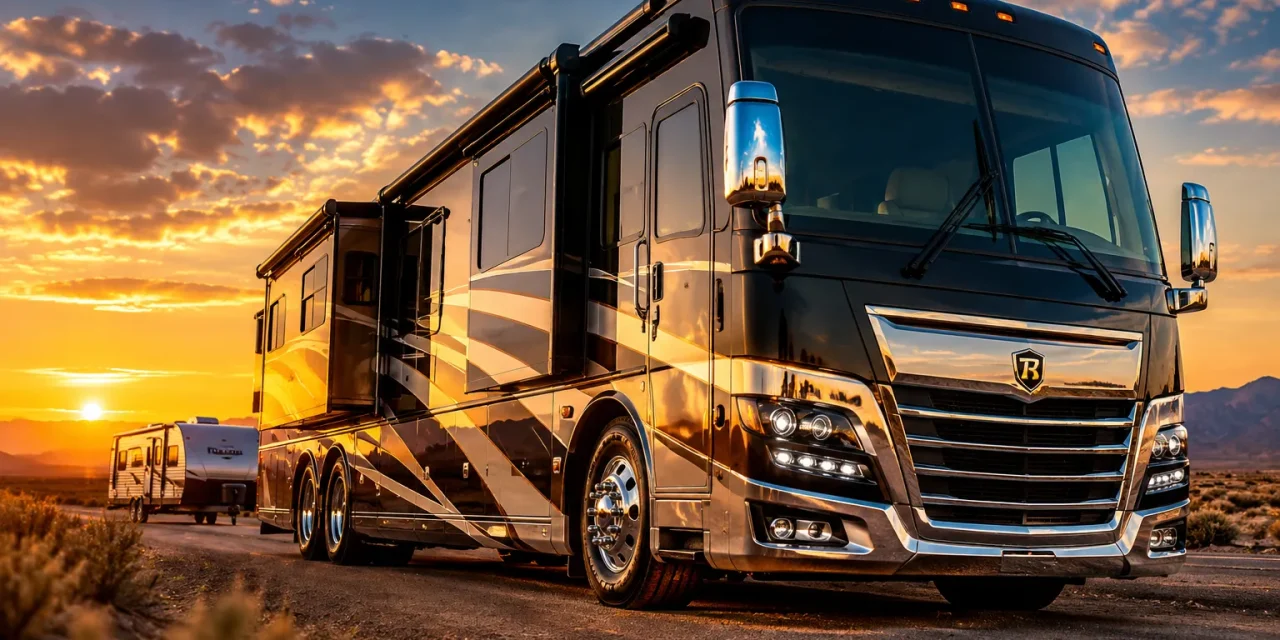
Some RVs on the road today stretch 45 feet long, stand more than 13 feet tall, and weigh as much as a loaded school bus. That is not a typo. These are rolling homes with marble countertops, stacked washers and dryers, and diesel engines strong enough to pull a boat up a mountain pass.
This guide breaks down 10 Of The Largest RVs On The Road right now, in 2026. Whether you are shopping for your next rig or just love drooling over big rolling houses, you are in the right place. These giants show just how far RV engineering has come, and where the size limits finally stop.
Key Takeaways
- The largest RVs on the road today max out around 45 feet long and 13 feet 6 inches tall because of federal and state size laws.
- Diesel pushers, Super C motorhomes, and Prevost bus conversions make up almost every entry on this list.
- Newmar and Foretravel remain the top names for size, weight, and luxury in 2026.
- Bus conversions like the Liberty Coach Elegant Lady sit at the very top of the size and price pyramid.
- Bigger is not always better. A giant RV brings real trade-offs in parking, fuel costs, and driving comfort.
What Makes an RV One of the Largest RVs on the Road
Not every big motorhome earns a spot on a “biggest RV” list. Size in the RV world comes down to three numbers: length, height, and weight. The largest RVs on the road usually hit close to the legal ceiling on all three.
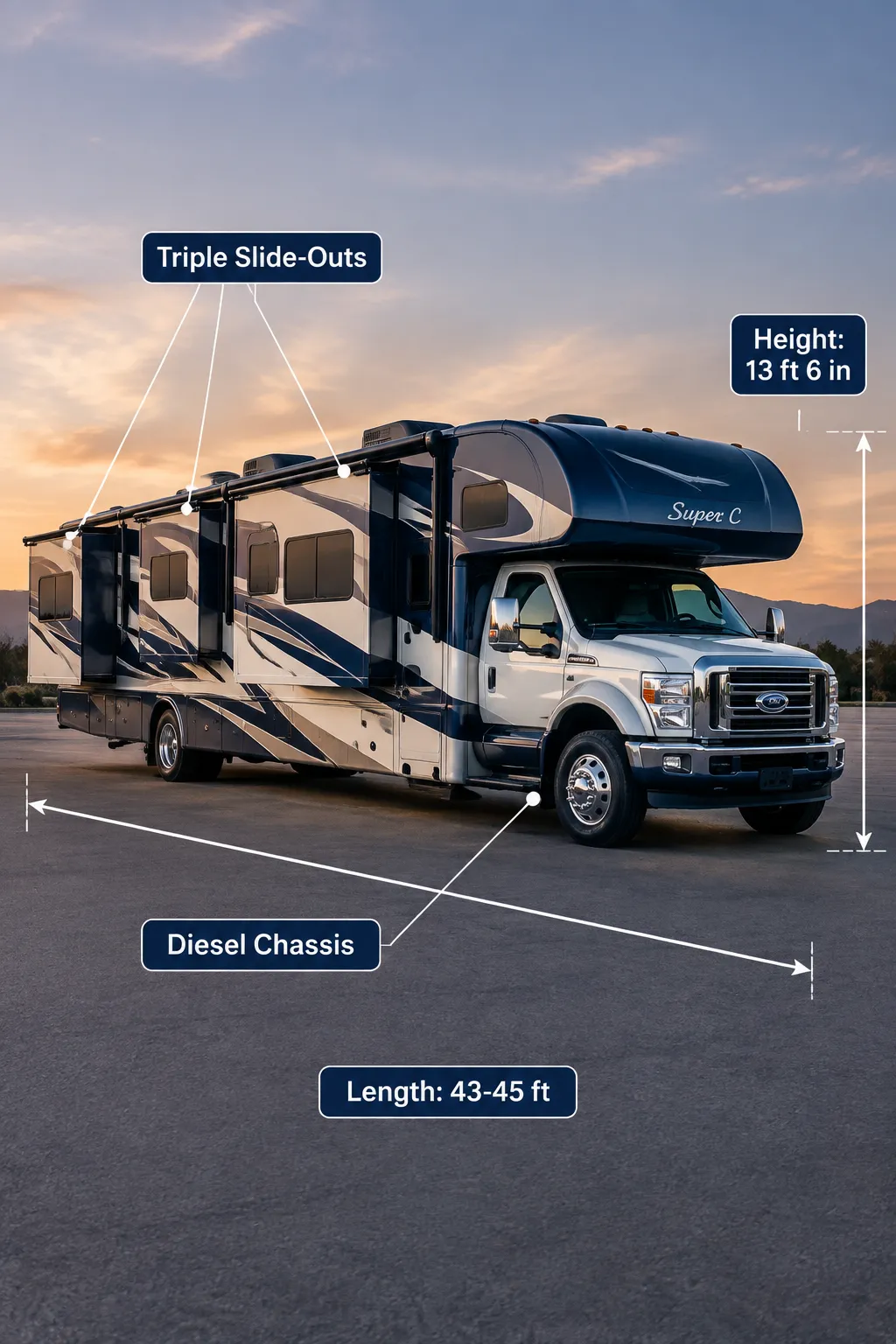
Most U.S. states cap RV length at 45 feet. Height limits sit around 13 feet 6 inches, which matches highway bridge clearances. Weight limits depend on the chassis, but many of these rigs tip the scales at 50,000 pounds or more once loaded with water, fuel, and gear.
Three chassis types dominate the “largest RV” category:
- Diesel Pushers, The engine sits in the back, giving a smooth, quiet ride and room for big living spaces up front.
- Super C Motorhomes, Built on heavy-duty truck chassis with the engine up front, these offer serious towing muscle.
- Bus Conversions, Built from real commercial Prevost or MCI bus shells, then gutted and rebuilt into luxury homes.
Manufacturers have known for years that they cannot keep making RVs longer forever. Roads, campground sites, and bridge clearances simply will not allow it. That is why the size race in 2026 has mostly leveled off near that 45-foot mark, with brands instead focusing on smart storage, better suspension, and upgraded tech inside the same footprint.
The 10 Of The Largest RVs On The Road Right Now
Here is the current lineup of the biggest, heaviest, and most impressive RVs you can find in 2026. These rigs are ranked by a mix of length, weight, and overall footprint on the road.
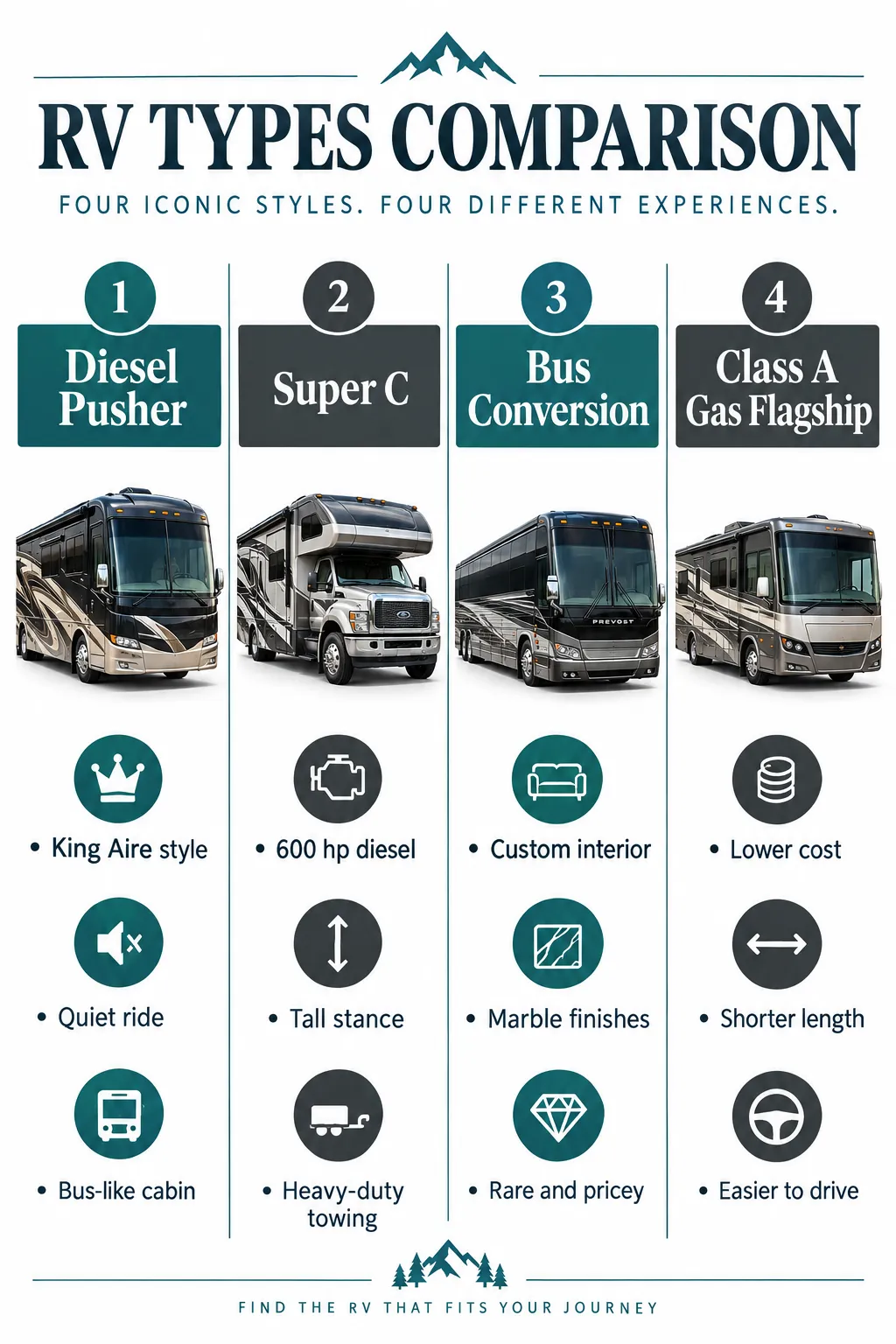
Below is a quick snapshot before the full breakdown.
1. Newmar King Aire
The Newmar King Aire remains the benchmark luxury diesel pusher in 2026, and for good reason. This 45-foot coach rides on a heavy-duty chassis with a smooth, air-ride suspension that feels more like a private jet than a motorhome. Inside, you will find full residential kitchens, stacked washer-dryer units, and king-size bedrooms that rival a hotel suite.
- Length: Up to 45 feet
- Chassis: Diesel pusher, Freightliner or Spartan
- Standout Feature: Full paint customization and residential-grade finishes
2. Foretravel Realm FL605
The Foretravel Realm FL605 is one of the heaviest and tallest legal RVs allowed on U.S. roads. Foretravel builds its own chassis in-house, which lets the brand pack in extra structural steel and independent suspension for a ride quality that few competitors can match.
- Length: Around 45 feet
- Weight: Among the heaviest legal RVs sold
- Standout Feature: In-house chassis engineering for a rock-solid ride
3. Newmar Summit Aire
The Newmar Summit Aire pushes the truck-based Super C category to its outer limits, stretching between 43 and 45 feet with a 600-horsepower diesel engine under the hood. It blends the towing power of a Super C with the polish of a diesel pusher, making it a favorite for owners who tow a car or trailer behind their rig.
- Length: 43 to 45 feet
- Horsepower: Up to 600 hp
- Standout Feature: Super C towing muscle with diesel pusher comfort
4. Newmar Supreme Aire Super C
Sitting alongside the Summit Aire, the Newmar Supreme Aire is another Super C flagship that maxes out size and power. This model shares the same 600-horsepower engine platform but offers different floorplans and finish packages for buyers who want a slightly different layout.
- Length: Up to 45 feet
- Horsepower: Up to 600 hp
- Standout Feature: Multiple floorplan options at flagship size
5. ShowHauler Super C
The ShowHauler Super C is built for owners who want serious hauling capacity in a massive package. Built on a 600-horsepower truck chassis, these rigs are popular with car collectors and racing teams who need to move a rig and cargo in one trip.
- Length: Approaching 45 feet
- Horsepower: Up to 600 hp
- Standout Feature: Huge garage space for toys and equipment
6. Liberty Coach Elegant Lady
Bus conversions sit at the very top of the “largest RV” world, and the Liberty Coach Elegant Lady (unit #922) is a perfect example. Built from a real Prevost commercial motorcoach shell, these conversions are gutted down to the frame and rebuilt with custom interiors that often cost more than a house.
- Length: 45 feet
- Base: Commercial Prevost bus chassis
- Standout Feature: One-of-a-kind custom interior craftsmanship
7. Newell Coach Custom Conversions
Newell Coach has built custom motorcoaches on commercial bus platforms for decades. These rigs blend the size and stability of a full-size Prevost chassis with fully custom cabinetry, stone countertops, and hand-built furniture inside.
- Length: Up to 45 feet
- Base: Commercial bus chassis
- Standout Feature: Fully custom builds, no two exactly alike
8. Millennium Luxury Coaches
Another major name in the bus conversion space, Millennium builds out Prevost shells with the same commercial bus underpinnings that Metro Magazine and other industry outlets highlight as the backbone of the “largest RV” category. These coaches are rolling penthouses on wheels.
- Length: Up to 45 feet
- Base: Commercial motorcoach shell
- Standout Feature: Bus-grade durability with hotel-level luxury
9. Thor Motor Coach Diesel Super C
Thor Motor Coach’s 2026 diesel Super C lineup shows that size has hit a plateau, but the technology inside keeps improving. Expect the same familiar 43 to 45-foot range, paired with updated infotainment, safety cameras, and smarter suspension tuning for 2026 models.
- Length: Up to 45 feet
- Chassis: Heavy-duty diesel truck platform
- Standout Feature: Modern tech upgrades in a proven size class
10. Thor Motor Coach Class A Gas Flagship
Rounding out the list, Thor’s 2026 Class A gas flagship models show just how close gas-powered coaches can get to their diesel cousins in size. These units approach the practical limits for non-diesel motorhomes, offering big living space without the diesel price tag.
- Length: Approaching 40 feet
- Chassis: Heavy-duty gas platform
- Standout Feature: Big-rig space at a friendlier price point
How These Giants Compare
| RV Model | Chassis Type | Approx. Length |
|---|---|---|
| Newmar King Aire | Diesel Pusher | 45 ft |
| Foretravel Realm FL605 | Diesel Pusher | ~45 ft |
| Newmar Summit Aire | Super C | 43-45 ft |
| Newmar Supreme Aire | Super C | Up to 45 ft |
| ShowHauler Super C | Super C | ~45 ft |
| Liberty Coach Elegant Lady | Bus Conversion | 45 ft |
| Newell Coach Conversion | Bus Conversion | Up to 45 ft |
| Millennium Luxury Coach | Bus Conversion | Up to 45 ft |
| Thor Diesel Super C | Super C | Up to 45 ft |
| Thor Class A Gas Flagship | Class A Gas | ~40 ft |
Worth noting: European motorhomes rarely come close to these numbers. Narrow roads and tighter parking across the continent keep most European rigs well under 30 feet. North America’s wide highways and massive campgrounds are the real reason these American giants can exist at all.
Is a Giant RV Right for You?
A 45-foot diesel pusher looks amazing in photos. Living with one is a different story. Before falling in love with the size, think through these real-world trade-offs.
The Pros:
- More living space, storage, and full-size appliances
- Smoother ride quality on long highway stretches
- Room for a washer and dryer instead of relying on laundromats while on the road
- Better resale value on premium diesel pusher and bus conversion models
The Cons:
- Limited campground and state park access due to length restrictions
- Higher fuel costs and more expensive tires and maintenance
- Trickier navigation through cities, mountain roads, and toll roads
- Bigger repair bills if something goes wrong far from home
Bigger rigs also mean bigger consequences when something breaks down. A blown tire or engine issue on a 45-foot coach is not a quick roadside fix. It helps to review safety tips for RV road trips before a long haul, and to know exactly what to do if trouble strikes. Many giant RV owners say having reliable roadside assistance is non-negotiable once you own a rig this size.
It also helps to have a plan ready before you ever need it. Check out this guide on what to do when your RV breaks down on the road, and read through real stories of owners who have experienced a breakdown on the road. Knowing what other owners went through can save serious stress later.
Owning one of the largest RVs on the road also comes with lifestyle adjustments that surprise a lot of new owners. Things like finding fuel stations that can fit a 45-foot rig, or backing into a tight site, are real challenges. Many full-timers talk openly about the unexpected struggles of life on the road once the size sets in.
Common Questions About the Largest RVs on the Road
Why do most of the largest RVs stop around 45 feet? Federal and state laws cap total vehicle length at 45 feet in most places. Going bigger would make the RV illegal to drive on public roads in many states.
Are bus conversions really bigger than factory motorhomes? Not always in raw length, but they often win in weight, structural strength, and interior ceiling height because they start from real commercial bus shells.
Do these giant RVs get good gas mileage? No. Most diesel pushers and Super C models average between 7 and 10 miles per gallon. Fuel budgeting is a must for any owner considering one of these rigs.
Can a beginner drive one of these RVs? It is possible, but not recommended without practice. Many new owners start smaller and work their way up to a 40-plus-foot coach after gaining confidence.
Will these RVs get bigger in the future? Probably not by much. Regulatory limits and practical road conditions have basically capped size near 45 feet. Expect manufacturers to keep improving technology and comfort instead of chasing more length.
Conclusion
The 10 Of The Largest RVs On The Road in 2026 prove one thing: size and luxury go hand in hand once you push past the 40-foot mark. From the Newmar King Aire’s residential-style interiors to the jaw-dropping Prevost bus conversions like the Liberty Coach Elegant Lady, these rigs represent the top of what the RV industry can build within legal limits.
Before jumping on the biggest rig you can find, take time to weigh the trade-offs. Bigger means more comfort, but it also means tighter campground options, higher fuel costs, and more planning for every trip. Start by test-driving a few large coaches in person, talk to current owners about their real-world experience, and build a roadside safety plan before you ever hit the highway in one of these giants.
Whichever size you choose, the goal stays the same: more comfortable, confident, and enjoyable time on the road.