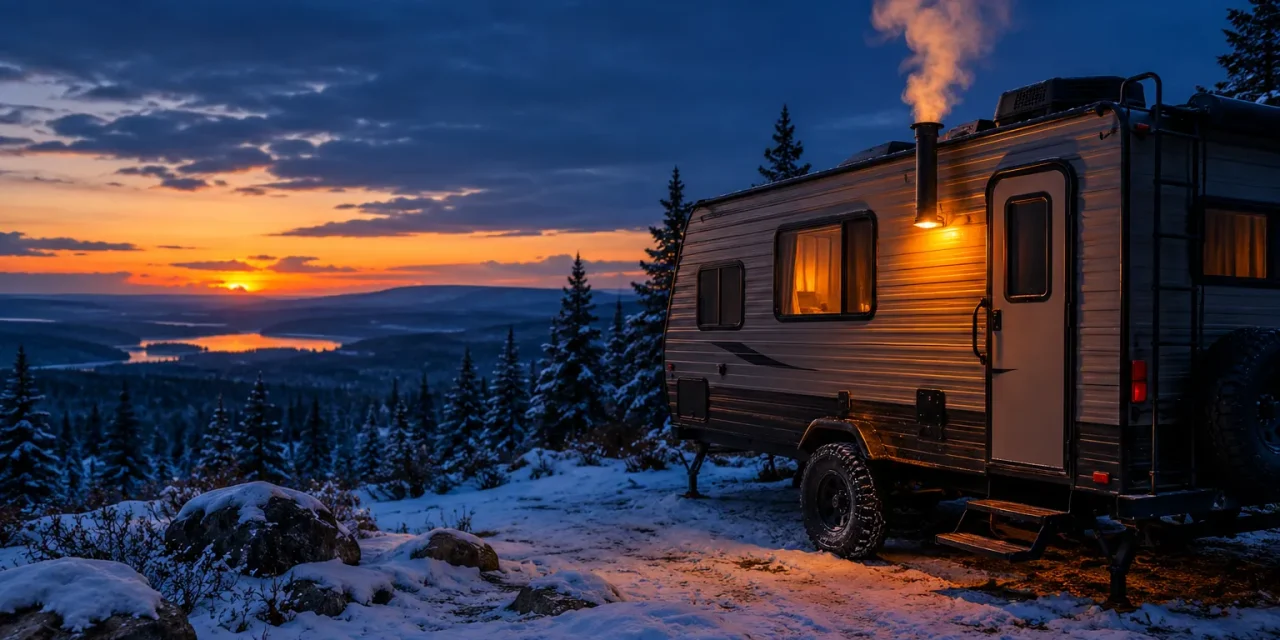
A pellet stove that makes its own electricity sounds like a rumor swapped around a campfire. It isn’t. Magenic LLC is bringing a heater called CAMPel9 to Kickstarter, and it’s built to burn wood pellets while generating just enough of its own power to run its auger and fan, no shore power, no generator, and barely any drain on your battery bank[3][6][14]. For anyone who’s shivered through a January boondocking trip while babysitting a battery monitor, this is a genuinely big deal.
Off-grid and cold-weather RV camping with new self-powered pellet heaters is quickly becoming one of the most talked-about topics in the boondocking community, and for good reason. Winter camping has always meant a trade-off between warmth and power management. This new generation of heaters is trying to erase that trade-off entirely.
This guide breaks down how CAMPel9 works, what it means for your rig’s power budget, how it stacks up against other pellet-heating options, and how to plan a safe, comfortable cold-weather trip around one.
Key Takeaways
- CAMPel9 is a self-powered pellet heater that uses thermoelectric technology to generate its own electricity from the heat it produces, reducing reliance on RV batteries or shore power[3][6][14].
- The unit’s roughly 6 kg pellet hopper delivers about 10 hours of runtime per fill, making it suitable for overnight heating in RVs, vans, or tents[3][10].
- Conventional pellet stoves typically need 80-120 watts of continuous electrical draw for their auger and fan, which usually requires a dedicated battery and inverter setup[1].
- CAMPel9’s Kickstarter campaign launched on September 22, 2026, positioning it as one of the first commercialized self-generating pellet heaters built specifically for camping and RV use[3][6][14].
- Experts recommend pairing pellet heat with a backup propane heater and 1-2 pallets of dry, sealed pellets for resilient multi-day winter boondocking[1].
How CAMPel9 Is Changing Off-Grid and Cold-Weather RV Camping With New Self-Powered Pellet Heaters
Here’s the honest problem with pellet stoves in an RV: they’re efficient, but they’re not free to run. Most pellet units rely on an electric auger to feed fuel and a fan to push warm air where you need it. That means a constant electrical draw all night long, even when your solar panels are covered in snow and doing absolutely nothing.
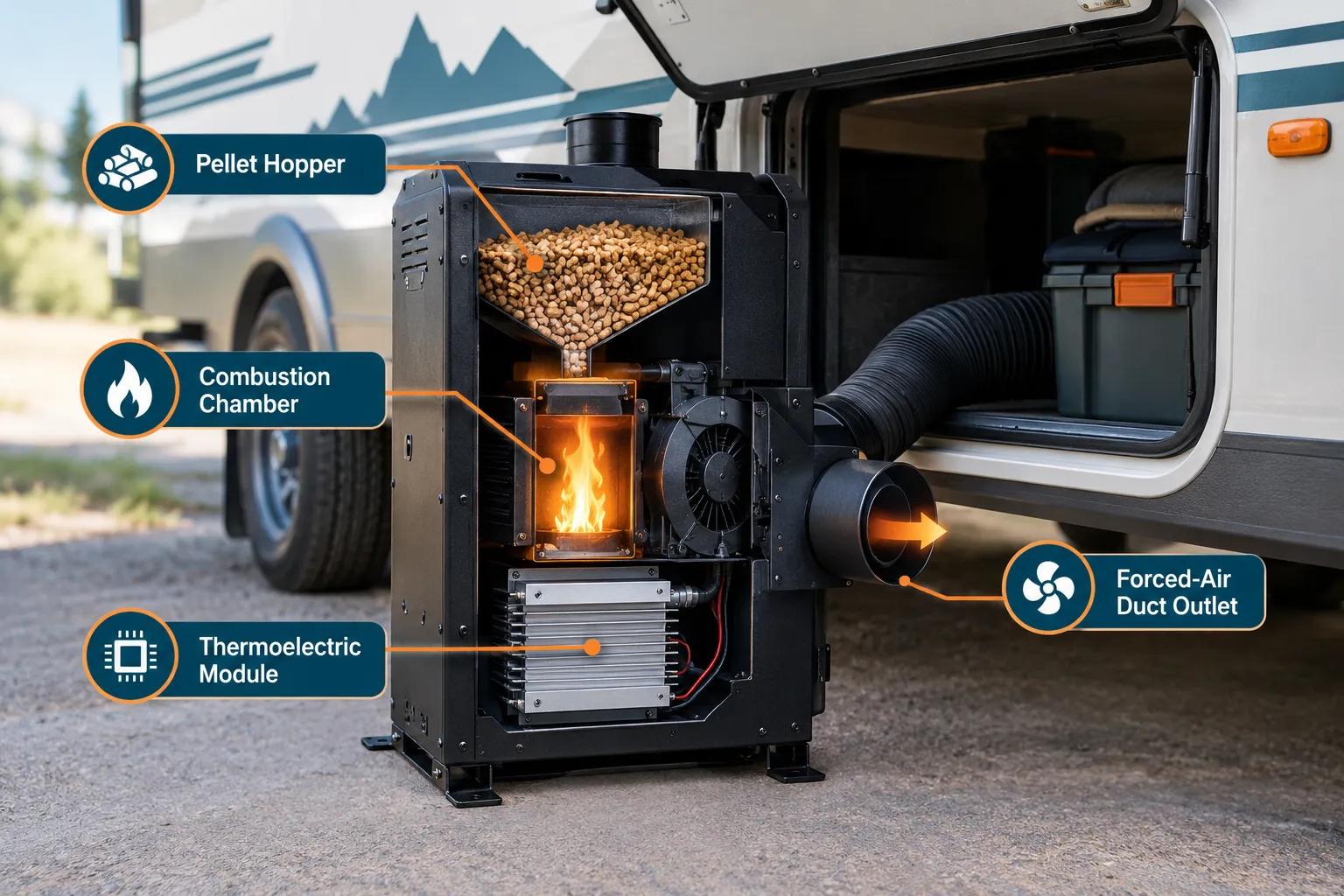
CAMPel9 tackles that head-on. It pairs a pellet combustion chamber and automatic pellet-feeding system with thermoelectric modules that convert a portion of the heat it’s already producing into electricity[3][6][14]. That electricity powers the unit’s own controls and internal fan, which means the heater is largely self-sustaining once it’s lit. Press materials describe it as a compact, portable forced-air pellet heater designed to push warm air into RVs, camper vans, travel trailers, and even cabins with limited or no outside power source[3][6][10].
Practically speaking, that’s a meaningful shift for anyone chasing off-grid and cold-weather RV camping with new self-powered pellet heaters as their primary heat strategy. You’re not choosing between a warm night and a dead battery in the morning. The heater essentially pays its own electrical bill.
A few specs worth knowing before you get excited and start clearing calendar space for a winter trip:
- Hopper capacity: approximately 6 kg of pellets per fill[3]
- Estimated runtime: around 10 hours under typical conditions, which lines up with the 5-10 hour burn times common across other portable pellet stoves[3][8][10]
- Launch timing: Kickstarter campaign began September 22, 2026, at 2:00 PM Eastern, with early-bird pricing tiers for initial backers[3][6][10][15]
- Positioning: marketed specifically toward campers and RV users seeking off-grid heat, rather than traditional home heating buyers[6][14]
Industry watchers have already flagged CAMPel9 as one of the first commercialized compact mechanical/self-generating pellet heaters aimed squarely at camping and RV audiences[14]. If it performs the way the launch materials describe, it could nudge other manufacturers to follow with similar low-power designs over the next couple of years[3][14].
Power Needs for Off-Grid and Cold-Weather RV Camping With New Self-Powered Pellet Heaters
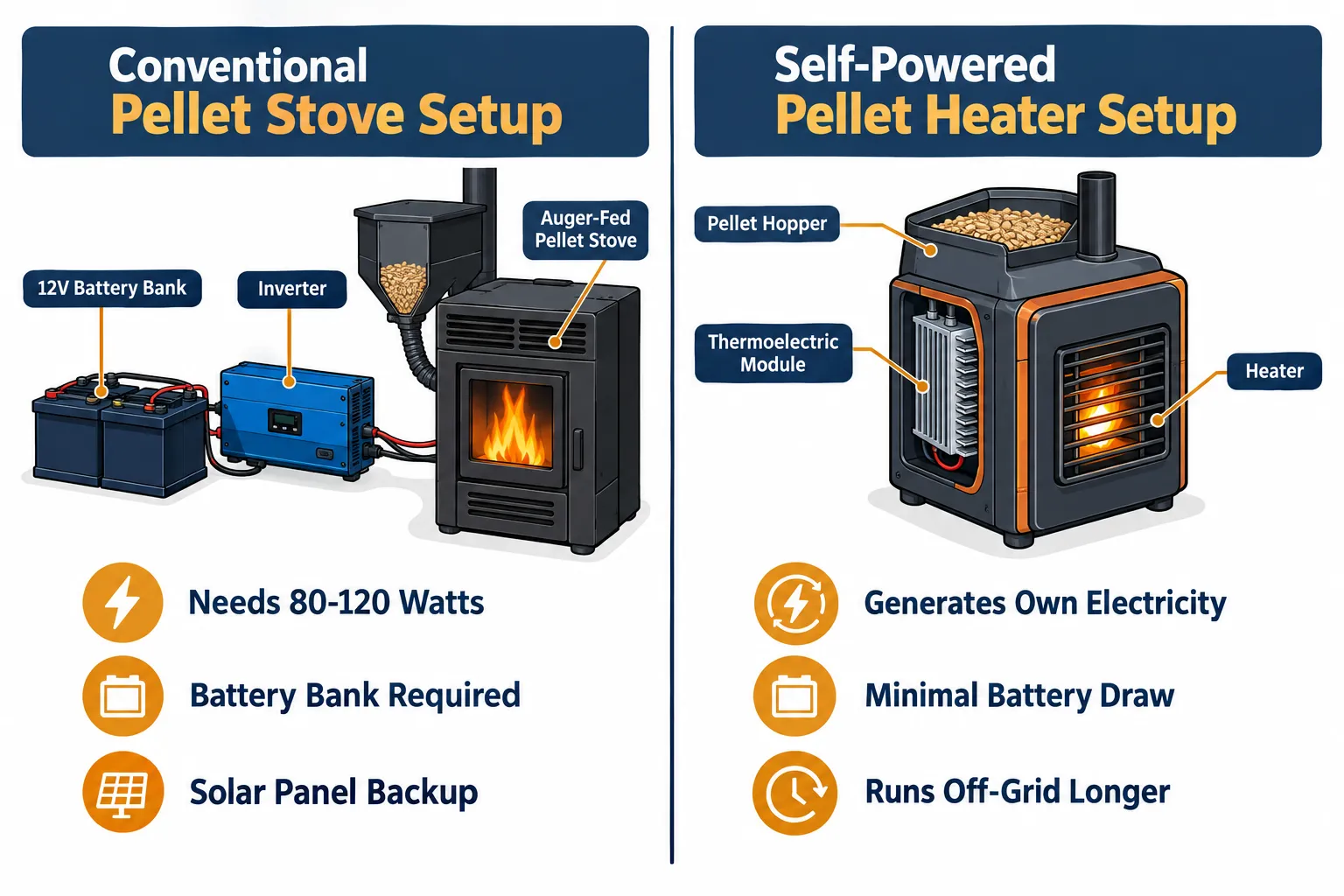
Before assuming a self-powered heater means zero electrical planning, it helps to understand what conventional pellet stoves actually cost you in watts. Most pellet stoves used off-grid draw somewhere in the 80-120 watt range just to keep the auger turning and the fan pushing air[1]. That’s usually handled with a small 12V battery bank and a compact inverter, but it’s still a draw you have to plan around, especially on cloudy days when solar recovery is slow[1].
Off-grid heating guidance often points to systems rated between 40,000 and 50,000 BTU, capable of heating spaces up to roughly 2,800 square feet and running anywhere from 24 to 96 hours depending on hopper size and burn rate[1]. That’s plenty for a house or cabin, but it’s overkill, and overly power-hungry, for a travel trailer or camper van with a modest battery bank.
This is exactly why self-powered designs are generating so much buzz among RVers thinking seriously about off-grid and cold-weather RV camping with new self-powered pellet heaters. If a heater can offset most of its own electrical needs, it frees up your limited battery capacity for lights, water pumps, phone charging, and the furnace fan if you’re running a hybrid setup.
If you’re still mapping out your rig’s electrical strategy, it’s worth checking out real-world reader input from our off-grid power strategy poll results, which shows how other RVers are balancing solar, battery banks, and generators for exactly this kind of situation.
Quick math for planning purposes:
| Setup Type | Typical Power Draw | Backup Needed |
|---|---|---|
| Conventional pellet stove | 80-120 watts continuous[1] | 12V battery + inverter |
| Self-powered pellet heater (CAMPel9-style) | Minimal external draw[3][6] | Small backup battery, if any |
| Propane heater (backup) | Little to no electrical draw | Propane tank supply |
“The heater essentially pays its own electrical bill”, a mindset shift that matters most when you’re three days deep into a snowy boondocking stay with no hookups in sight.
Comparing Pellet Heaters for Off-Grid and Cold-Weather RV Camping
CAMPel9 isn’t the only pellet-fueled option worth knowing about, and it’s smart to understand the broader landscape before you commit to any single heating strategy for winter camping.
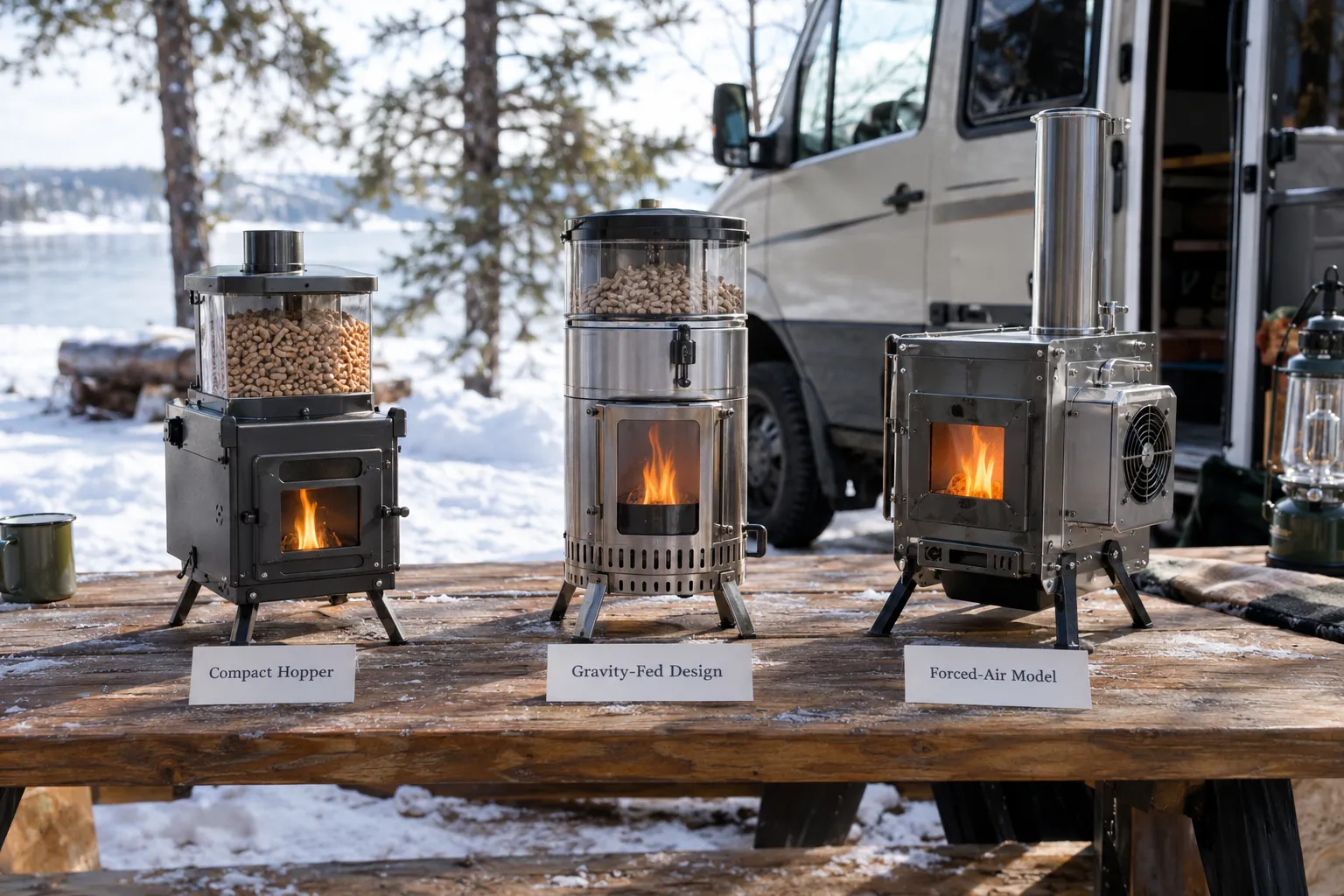
Gravity-fed pellet stoves. The GREEN STOVE Hori 5 All-In-One Gravity-Fed Pellet Wood Burning Hot Tent Stove, updated in late September 2026, uses mechanical gravity feed instead of an electric auger[13]. That design naturally reduces or eliminates the need for outside power while still delivering up to 10 hours of continuous heat per load, along with oven functionality, stainless-steel construction, and spark arrestors[9][13]. It’s a strong option for tent or small-cabin setups adjacent to your RV.
Add-on pellet burners for wood stoves. Companies like Pomoly offer accessories such as the Turbocharger Pellet Burner, which converts compatible wood stoves, including models in their Dweller Max lineup, into pellet-burning units using a detachable pellet box and feed system[2][7]. This is a good middle-ground if you already own a wood stove and want longer, steadier burns without buying an entirely new unit.
Standard portable pellet stoves. RV-focused guides highlight compact models like the GREEN STOVE Hori 5 Pellet Stove with Oven, which offer 5-10 hours of burn time per load, dual-fuel flexibility, and small footprints suited to exterior cooking setups or semi-permanent placement near an RV[8]. These require electrical input but remain popular for their efficiency and consistent heat output.
Ambiance and patio-style pellet heaters. Retailers now carry smokeless wood pellet fire torches and patio heaters marketed for glamping and outdoor hospitality use[5][12]. These aren’t built for interior RV heating, but their growing popularity shows just how comfortable campers have become with pellet fuel in outdoor settings, which is helping build demand for more functional, RV-ready pellet heating gear[5][11][12].
Here’s a simple way to think about which category fits your trip:
- Need zero-power, self-sustaining heat inside your RV or van? Look toward self-powered units like CAMPel9[3][6][14].
- Camping in a hot tent alongside your rig? A gravity-fed stove like the Hori 5 is a strong fit[9][13].
- Already own a wood stove and want longer burns? A pellet burner accessory may be the cheaper upgrade[2][7].
- Have reliable battery capacity and want maximum heat output? A standard electric-fed pellet stove still performs well[8].
If you’re gearing up for any of these setups, browsing current RV camping gear roundups is a solid way to see what other RVers are packing alongside their heat sources this season.
Cold-Weather Safety and Fuel Planning Tips
Pellet heat is convenient, but cold-weather camping still demands respect for the basics. A few practices go a long way toward keeping your trip safe and comfortable.
Stock more fuel than you think you’ll need. Off-grid heating experts recommend storing 1-2 pallets of pellets in dry, sealed containers when planning extended winter stays[1]. A typical 40 lb hopper provides roughly 24 hours of medium heat, while larger hoppers can stretch runtime to 48-72 hours[1]. Running out of pellets on night three of a snowstorm is not the kind of surprise anyone wants.
Always keep a backup heat source. Pairing pellet heat with a propane heater gives you fast start-up and a reliable fallback if pellets run low or a unit needs maintenance mid-trip[1][8]. This combo, automated, long-duration pellet heat plus quick-response propane backup, is considered one of the more resilient setups for sub-freezing RV camping[1][8].
Prioritize ventilation and carbon monoxide safety. RV-focused reviews consistently stress proper venting and CO monitoring when adapting pellet units to RV life, especially in tighter enclosed spaces[8]. Install a working CO detector, crack a vent when running any combustion heater overnight, and never rely solely on a unit that hasn’t been evaluated for RV installation.
Check your RV’s overall condition before winter trips. Cold weather has a way of exposing weak spots in batteries, seals, and slide mechanisms. It’s worth reviewing common problems other owners have run into by checking reader-submitted RV issue poll results before you head out somewhere remote.
Plan your destination around services and terrain. Not every campground stays open, or accessible, in winter. Many RVers ask whether RV camping is possible at national parks during colder months, and the answer varies a lot by park and elevation. Broader RV camping destination guides can help narrow down cold-weather-friendly spots.
Keep meals simple when you’re managing a heater overnight. Cold-weather camping already demands extra attention to fuel, batteries, and temperature checks. Simplify dinner with one-pot camping meal ideas so you’re not juggling a complicated cooking setup on top of everything else.
Frequently Asked Questions
Does a self-powered pellet heater eliminate the need for a battery entirely? Not necessarily. CAMPel9 is designed to generate a large share of its own electricity through thermoelectric modules, but most RVers still keep a small backup battery on hand for ignition or control systems[3][6].
How long does a single pellet fill last? CAMPel9’s roughly 6 kg hopper is expected to deliver around 10 hours of heat per fill under typical conditions, which is comparable to other portable pellet stoves offering 5-10 hours per load[3][8][10].
Can I use a pellet heater as my only heat source in freezing temperatures? It’s possible, but experts recommend pairing pellet heat with a propane backup for fast start-up and redundancy during extreme cold snaps[1].
Is CAMPel9 available to buy right now? As of its Kickstarter launch on September 22, 2026, it’s available to early backers through crowdfunding tiers rather than traditional retail[3][6][10][15].
Are pellet heaters safe to run inside an enclosed RV overnight? They can be, but only with proper ventilation, a working carbon monoxide detector, and a unit that’s been evaluated for RV-safe operation[8].
Conclusion
Off-grid and cold-weather RV camping with new self-powered pellet heaters isn’t a far-off concept anymore, it’s arriving on Kickstarter with real specs, real runtime numbers, and a genuinely different approach to heat and power. Whether CAMPel9 becomes your next big gear investment or simply the reason you finally rethink your winter power budget, the bigger takeaway is this: pellet heat is getting smarter, and it’s getting less dependent on your battery bank.
Before your next cold-weather trip, take stock of your current setup. Compare your battery capacity against a conventional pellet stove’s power draw, decide whether a self-powered or gravity-fed unit fits your rig better, and stock enough fuel and backup propane to ride out a rough stretch of weather. Winter boondocking has never been more approachable, as long as you plan the heat, the power, and the fuel together.
References
[1] Off Grid Heating Systems – https://offgridatlas.com/food-shelter/off-grid-heating-systems/ [2] Pellet Stoves C124236 – https://www.pomoly.com/Pellet-Stoves-c124236.html [3] Campel9 Self Generating Pellet Heater Launches On Kickstarter For Camping And Rv Use – https://www.einpresswire.com/article/945383536/campel9-self-generating-pellet-heater-launches-on-kickstarter-for-camping-and-rv-use [5] 3664421 4515501 9798909 6342285 – https://business.walmart.com/browse/Outdoor-Heaters/3664421_4515501_9798909_6342285 [6] Magenic Llc To Launch Campel9 A Self Powered Pellet Heater For Camping And Rvs On Kickstarter – https://www.azcentral.com/press-release/story/125359/magenic-llc-to-launch-campel9-a-self-powered-pellet-heater-for-camping-and-rvs-on-kickstarter/ [7] Turbocharger Series C131865 – https://www.pomoly.com/Turbocharger-Series-c131865.html [8] Pellet Stove For Rv – https://hvaccompass.org/pellet-stove-for-rv/ [9] Best Wooden Stoves For Under 400 2025 Guide – https://readyoffgrid.com/best-wooden-stoves-for-under-400-2025-guide/ [10] Campel9 Self Powered Pellet Heater Is Now Live On Kickstarter – https://www.einpresswire.com/article/943874490/campel9-self-powered-pellet-heater-is-now-live-on-kickstarter