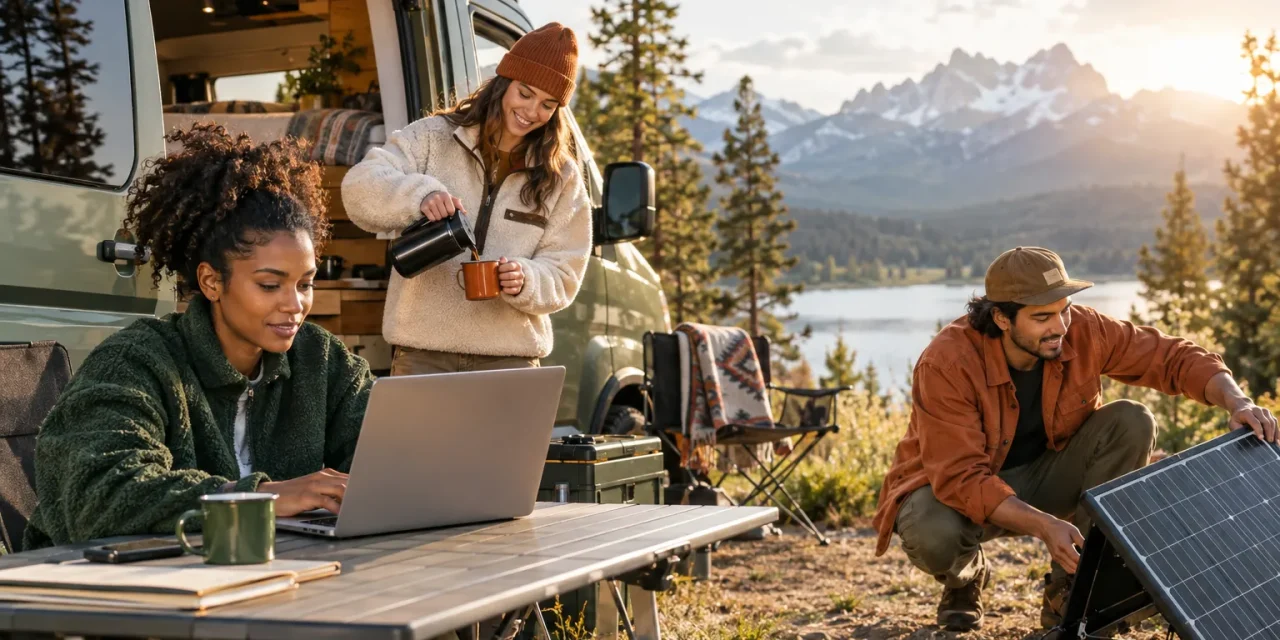
The median RV owner just got four years younger in four years flat. In 2021, the typical RV owner was 53 years old. By the time the 2025 Go RVing RV Owner Demographic Profile came out, that number had dropped to 49, and it’s still the benchmark figure cited across the industry in 2026[3][4]. That’s not a rounding error. That’s a generational handoff happening in real time, and it’s showing up at campgrounds, boondocking sites, and national park overlooks across the country.
This shift isn’t just about age. Younger, more diverse RV owners using rigs for remote work and frequent outdoor getaways are changing what camping even looks like, who’s doing it, why they bought their rig, and how often they hit the road. If the stereotype of an RV owner used to be a retired couple with a fifth wheel and a lifetime of vacation days saved up, that picture is quickly becoming outdated.
This article breaks down what’s actually driving this change, what the data says, and what it means for anyone thinking about buying, or already living, the RV lifestyle.
Key Takeaways
- 🎯 The median RV owner age dropped from 53 (2021) to 49 (2025), and Millennials and Gen Z now make up a growing, measurable share of the ownership base[3][4].
- 💻 Remote work from an RV is now mainstream, not a niche side hustle, with more households planning work-while-traveling summer trips every year[8].
- 🌲 New buyers increasingly name “outdoor exploration plus the ability to work” as a top reason for purchasing an RV, blending adventure and income in one decision.
- 🔁 Younger owners use their RVs more days per year on average and show strong brand and lifestyle loyalty, fueling more frequent outdoor getaways.
- 📈 Industry analysts directly tie current RV market growth to younger, remote-capable buyers who are more diverse than past generations of owners[7][10].
The New Face of RV Ownership: Why Younger, More Diverse RV Owners Using Rigs for Remote Work and Frequent Outdoor Getaways Is the Industry’s Biggest Shift
For decades, the RV industry built its marketing, floorplans, and dealer experience around one buyer type: the retiree with time, equity, and a paid-off house. That buyer still exists and still matters. But the fastest-growing segment of the market looks very different.
According to the 2025 Go RVing RV Owner Demographic Profile, the median age of RV owners fell to 49, down from 53 just a few years earlier[3][4]. Other industry data backs this up, showing that Millennials and Gen Z now account for a substantial and growing portion of total RV ownership[1][2]. These generations aren’t just buying more RVs, they’re buying them for different reasons than their parents did.
Just as important: this younger wave of owners is measurably more diverse than the legacy RV ownership base. That diversity shows up in household makeup, racial and ethnic background, and lifestyle priorities. It’s a meaningful departure from the “classic” RV owner image that dominated campground culture for generations.
This generational and cultural shift matters because it’s reshaping everything from rig design to campground amenities. Resorts and outdoor hospitality developers are already responding, with more properties investing in flexible stay options and tech-friendly infrastructure, a trend covered in depth in discussions around outdoor hospitality real estate.
It’s also worth noting that this isn’t happening in a vacuum. Broader cultural and political shifts are influencing how people travel and work, and some RVers have felt those ripple effects directly, a topic explored in how RV life is changing under current policy shifts.
What’s Driving Younger Buyers to the RV Lifestyle
A few forces are converging at once:
- Remote work normalization. Once companies accepted that employees didn’t need to be chained to an office, the question became: why not work from a national forest instead of a cubicle?
- Housing affordability pressure. For some younger buyers, an RV isn’t just a vacation vehicle, it’s a cost-conscious housing alternative while they build savings.
- Experience over accumulation. Younger generations consistently report valuing travel and experiences over material possessions, and an RV lets them have both at once.
- Pandemic-era habits that stuck. The surge in outdoor, low-contact travel during 2020-2021 introduced a huge wave of first-time campers who never went back to all-inclusive resort vacations.
“The RV lifestyle used to be something you earned after retirement. Now it’s something people are building their whole working life around.”
How Younger, More Diverse RV Owners Using Rigs for Remote Work Are Redefining the Mobile Office
Remote work from an RV used to sound like a fringe lifestyle reserved for a handful of digital nomads with a YouTube channel. That’s no longer true. Remote work from RVs and campsites is now mainstream behavior among RV-owning households, not a niche behavior limited to influencers and freelancers.
Industry trend coverage points to remote-work-oriented travel increasing year over year, with a noticeable spike around summer trip planning[8]. People aren’t just squeezing in a workday between hikes, they’re structuring entire multi-week trips around the ability to stay connected and productive while on the move.
New RV buyers are saying this out loud, too. Surveys and buyer intent data show that “outdoor exploration plus the ability to work” has become one of the most commonly cited reasons for purchasing an RV in the first place. That’s a meaningful change from the traditional buyer motivations of retirement travel or weekend family camping.
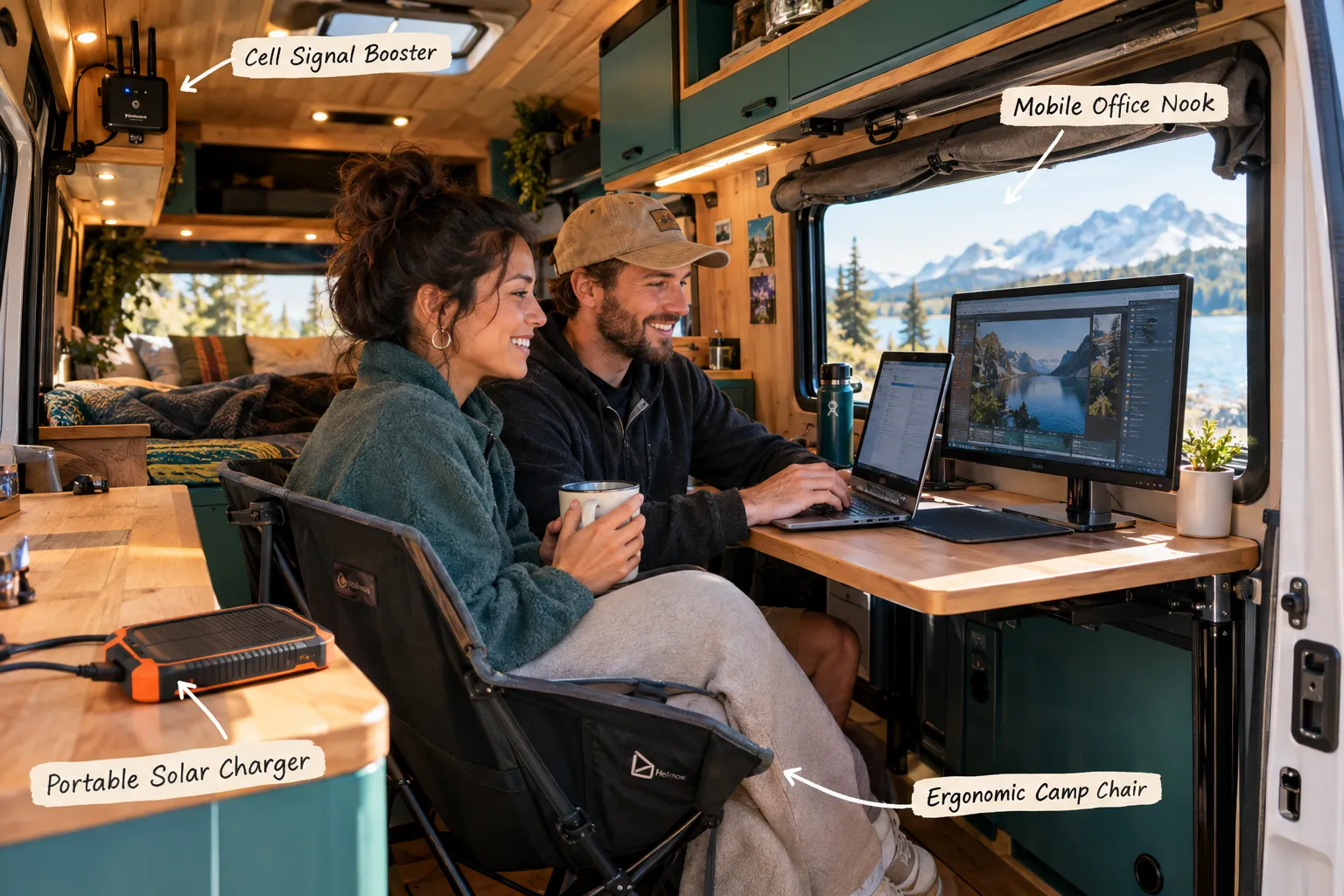
What a Functional RV Mobile Office Actually Needs
If remote work is a core reason for buying the rig, the setup has to support it. Here’s what tends to separate a workable mobile office from a frustrating one:
| Component | Why It Matters | Common Mistake |
|---|---|---|
| Reliable internet (cellular booster or satellite) | No connection means no income | Relying only on campground Wi-Fi |
| Dedicated power source (solar + battery bank) | Laptops and monitors drain power fast | Underestimating daily power needs |
| Ergonomic workspace | Prevents neck and back strain during long calls | Working from the dinette for hours |
| Noise and privacy management | Video calls need a quiet background | No plan for roommates or kids during meetings |
| Backup power plan | Outages happen off-grid | No generator or backup battery |
Many RVers get serious about building out a real workspace rather than just working from the kitchen table, something covered in detail in guides to outdoor office setup. Power reliability is usually the first thing that makes or breaks the experience, which is why so many remote-working RVers end up researching solar panels for RVs before their first big work trip.
Full-time RVers working remotely also run into logistics that casual travelers never think about, mail forwarding, time zone juggling, and finding campgrounds with dependable signal. Some find the lifestyle sustainable long-term, while others discover the cracks over time, a tension explored honestly in why full-time RV life isn’t working for some people anymore.
Signs Remote Work From an RV Is Working (vs. Not)
Working well:
- ✅ You can consistently get through a full workday without connectivity gaps
- ✅ You have a predictable power source that doesn’t require constant monitoring
- ✅ Your schedule still leaves room for the outdoor time that motivated the trip
Not working:
- ❌ You’re spending more time troubleshooting internet than doing actual work
- ❌ You’re parked near outlets and towers instead of near trailheads and lakes
- ❌ The “remote work RV dream” has quietly become “working from a parking lot with better views”
Frequent Outdoor Getaways: Why Younger RV Owners Travel More Often Than Previous Generations
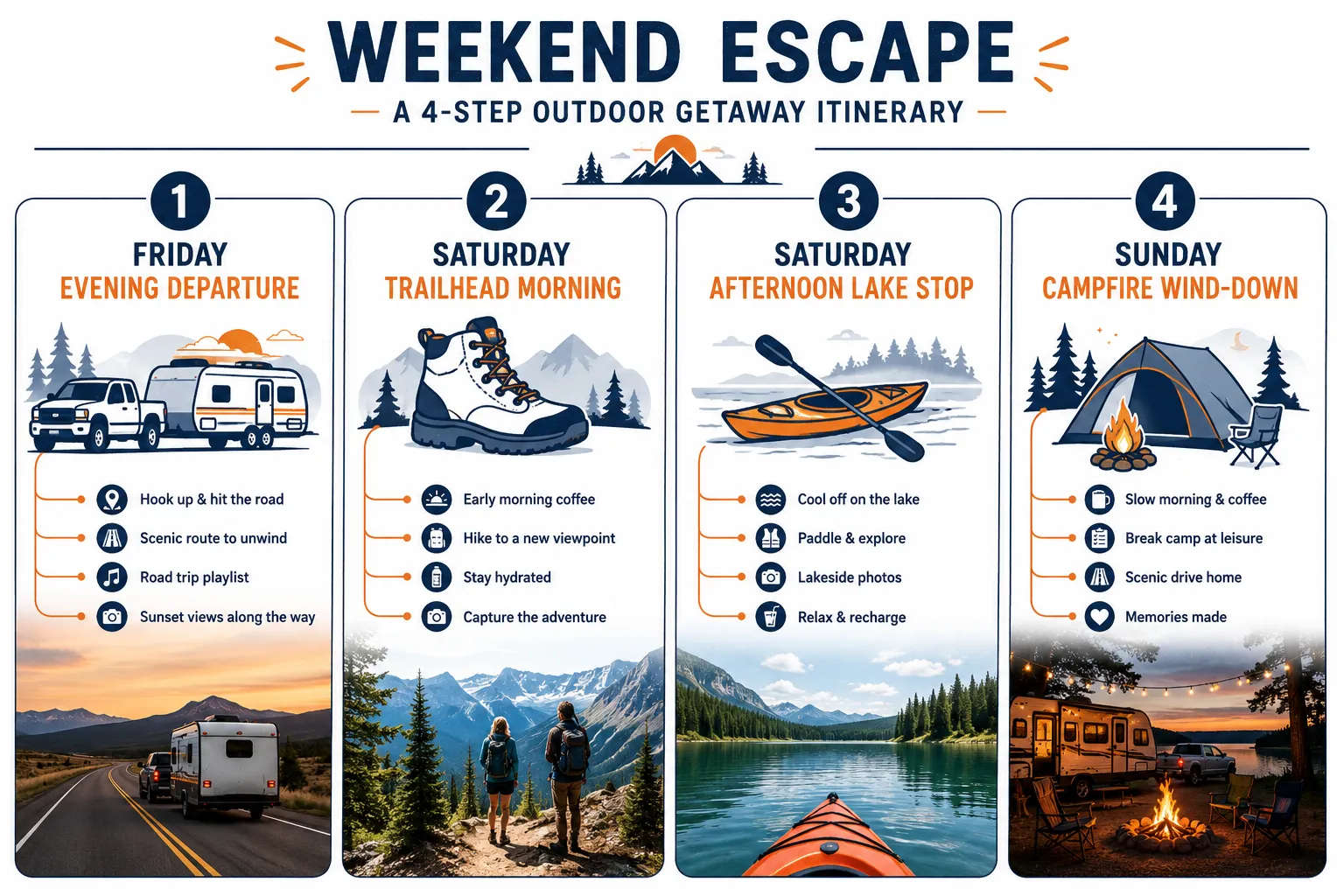
Here’s where the data gets especially interesting. Younger RV owners aren’t just buying rigs for the occasional big summer trip, they’re using them more often, for shorter, more frequent outdoor getaways. Research shows younger owners log slightly more days of RV use per year on average compared to older cohorts, and they report very strong loyalty to the lifestyle once they start[3][4].
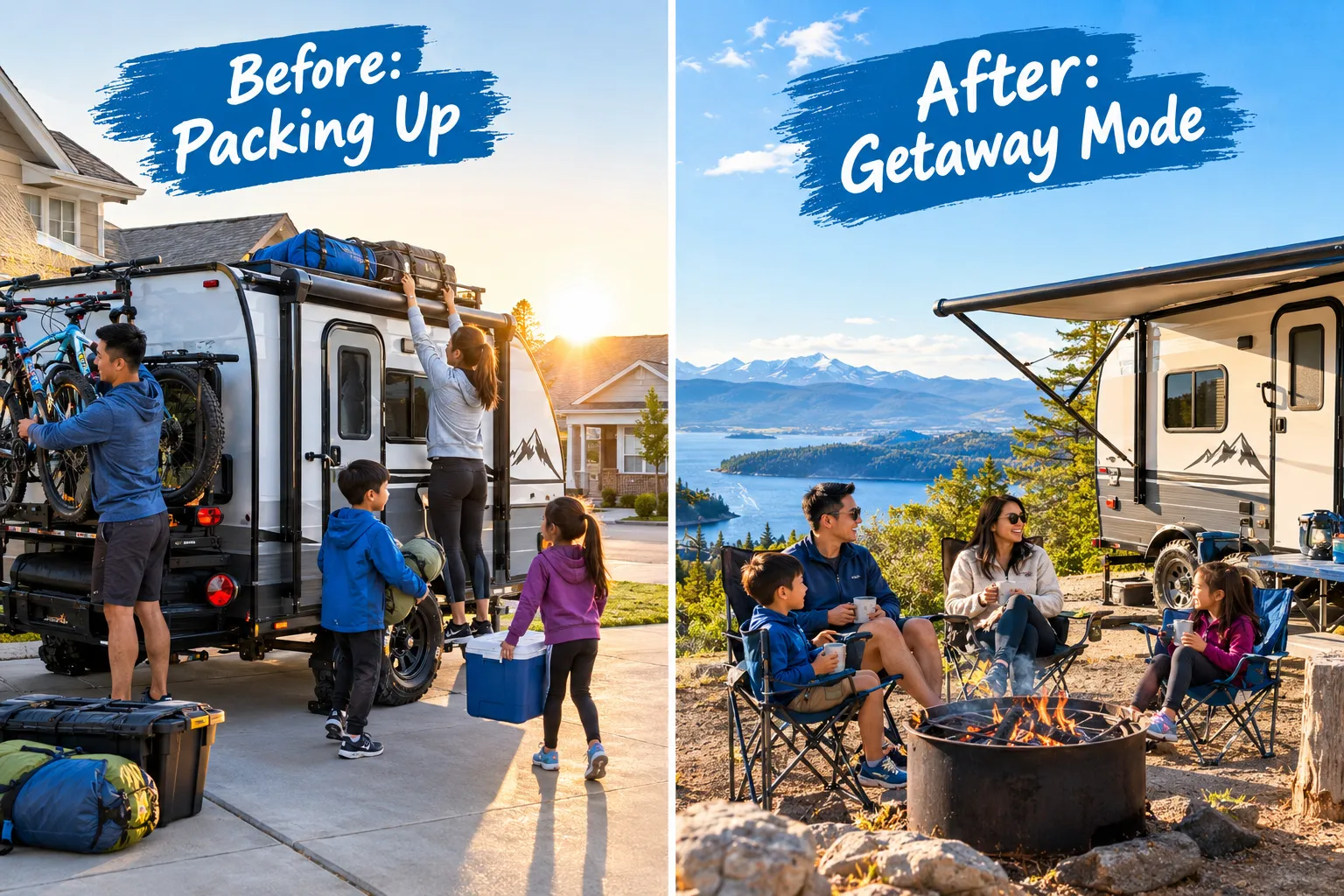
That loyalty matters. It suggests this isn’t a passing trend tied to one unusual season of remote work flexibility. It’s becoming a lasting travel pattern, weekend trips to a nearby state park, a long weekend boondocking in the desert, a quick getaway timed around a three-day work break.
Why Shorter, More Frequent Trips Appeal to Younger RV Owners
- Flexible work schedules make quick trips easier. A three-day weekend getaway doesn’t require burning a full week of vacation time.
- Smaller, more towable rigs lower the barrier to frequent use. Many younger buyers choose compact travel trailers or camper vans specifically because they’re easier to hitch up on a Friday afternoon.
- Social media and community normalize spontaneous trips. Seeing peers post weekend getaways creates a cultural nudge to do the same.
- Mental health benefits reinforce the habit. Many RVers report using short outdoor trips specifically to decompress from work stress, a pattern discussed in coverage of RV mental health and the growing use of outdoor time as a reset tool, including practices like yoga and meditation in an RV.
This frequency also changes how people think about destinations. Instead of one epic cross-country trip per year, many younger owners are building a rotating list of go-to regional spots they can reach in a few hours. Route and destination planning resources, like guides to North American RV travel routes and destinations and standout regional spots such as must-visit RV destinations in Nevada, have become essential tools for planning these quick-turnaround trips efficiently.
The Diversity Factor in Who’s Taking These Trips
It’s not just age changing, it’s who’s represented on the road. More diverse households, including more women-led trips, more multicultural families, and more LGBTQ+ travelers, are visibly part of today’s RV community. That visibility hasn’t always come without friction; some RVers have publicly faced criticism or scrutiny simply for choosing this lifestyle, as seen in the story of a Latina mom criticized for living full-time in an RV. Despite that pushback, the broader trend toward a more diverse RV community continues to grow, not shrink.
What This Shift Means for the RV Industry and Future Buyers
Market analysts aren’t treating this as a side story, they’re naming it as a primary growth driver for the entire industry. Reports tied to the latest RVIA data explicitly connect current and projected RV market growth to younger, remote-capable buyers entering the market[7][10]. That’s a notable change in framing. For years, industry growth forecasts leaned heavily on retiree demand. Now, younger buyers and their travel habits are treated as a central part of future demand projections.
This has real consequences for manufacturers, dealers, and campground operators:
- Floorplans are shifting. Expect more workspace-friendly layouts, better insulation for year-round use, and power systems designed around daily laptop and device use rather than occasional weekend charging.
- Campgrounds are adapting amenities. Reliable Wi-Fi and cell coverage are becoming selling points, not afterthoughts, similar to how properties like the reopened Lazy Days RV Resort and West Valley Phoenix RV Resort emphasize modern amenities to attract this crowd.
- Technology investment is accelerating. Smart systems, app-based monitoring, and connectivity tools are becoming standard expectations rather than premium add-ons, a trend covered in depth in pieces about AI and RV tech shaping the future of smart camping.
- First-time buyer education matters more. With so many new, younger, first-time owners entering the market, resources built for first-time RV buyers are more important than ever.
A Quick Snapshot: Then vs. Now
| Factor | Traditional RV Owner Profile | Younger, More Diverse RV Owner Profile |
|---|---|---|
| Median Age | 53 (2021) | 49 and trending younger[3][4] |
| Primary Motivation | Retirement travel, family vacations | Remote work + frequent outdoor getaways |
| Trip Pattern | Fewer, longer annual trips | More frequent, shorter getaways |
| Household Makeup | Largely homogeneous legacy demographic | Measurably more diverse ownership base[1][2] |
Tips for Younger RV Owners Setting Up for Remote Work and Frequent Outdoor Getaways
Whether buying a first rig or upgrading for a more work-friendly setup, a few practical steps make a huge difference.
- Budget for the real cost of the lifestyle, not just the sticker price. Fuel, maintenance, campground fees, and connectivity gear all add up. Many new owners underestimate this, which is why it’s worth reviewing the hidden costs of RVing before buying.
- Avoid common first-time buyer regrets. Floorplan mistakes and impulse upgrades are common. It helps to study RVers’ biggest purchase regrets before signing anything.
- Watch for dealership pressure tactics. Younger, first-time buyers are especially targeted by upsells. Knowing common RV dealer tricks in advance protects both budget and sanity.
- Prioritize power independence early. A dependable off-grid power setup is the single biggest unlock for both remote work and frequent boondocking-style getaways.
- Build a short-trip routine, not just a bucket-list itinerary. Identify three to five regional spots within a few hours’ drive to make spontaneous getaways realistic and repeatable.
- Don’t skip the safety basics. Remote work and frequent travel mean more time alone on the road, which makes it worth reviewing safety items most RV owners get wrong before a trip, not after a problem.
Common Questions From Younger RV Owners
Does remote work from an RV actually save money? It can, especially compared to traditional rent plus daily commuting costs, but only if the full cost picture is accounted for, including maintenance, fuel, and connectivity tools.
Do I need a huge rig to work remotely on the road? No. Many remote workers use smaller camper vans or compact travel trailers specifically because they’re easier to move frequently for short getaways.
Is internet reliability really that big of a deal? Yes. Connectivity is consistently cited as the top challenge for RV-based remote workers, more than power or space limitations.
Are younger RV owners mostly solo travelers? No, younger ownership spans solo remote workers, couples, and young families alike, which is part of why the demographic has become so diverse.
Conclusion: The Road Ahead for Younger, More Diverse RV Owners
The RV lifestyle isn’t fading into a niche retirement hobby, it’s expanding outward to a younger, more diverse, more work-flexible generation that’s rewriting the rules of who camps, how often, and why. The data is clear: median ownership age is dropping, remote work from the road is mainstream, and frequent outdoor getaways are becoming the norm rather than the exception[3][4][7][8][10].
For anyone considering this path, the smartest move is to plan deliberately. Build a realistic budget, invest in dependable power and connectivity, and pick a rig suited to frequent short trips rather than just one big annual adventure. The RV industry is clearly betting on this younger, more diverse wave of owners, and with the right setup, there’s no reason not to make the most of it.
References
[1] What Are The Demographics Of Rvers – https://rvbrands.org/what-are-the-demographics-of-rvers/ [2] Rv Ownership Statistics – https://www.consumeraffairs.com/automotive/rv-ownership-statistics.html [3] 2025 Go Rving Rv Owner Demographic Profile – https://www.rvia.org/2025-go-rving-rv-owner-demographic-profile [4] 2025 Go Rving Owners Demographic Profile – https://www.rvda.org/RVDAOLD/RVDA/Media/News_Releases/NewsReleases25/February/2025_Go_RVing_Owners_Demographic_Profile.aspx [5] Rv Industry Statistics – https://www.consumeraffairs.com/automotive/rv-industry-statistics.html [6] Motorhome Industry Statistics – https://wifitalents.com/motorhome-industry-statistics/ [7] Annual Rvia Report Points To Younger Buyers Service Growth And More Rv Interest In 2026 – https://camperreport.com/annual-rvia-report-points-to-younger-buyers-service-growth-and-more-rv-interest-in-2026/ [8] Rvia Rving Continues To Offer Flexibility Value This Summer – https://rvbusiness.com/rvia-rving-continues-to-offer-flexibility-value-this-summer/ [9] rvia – https://www.rvia.org/ [10] The Rving Boom 4 Key Drivers And What They Mean For Todays Agents – https://www.iamagazine.com/2026/03/24/the-rving-boom-4-key-drivers-and-what-they-mean-for-todays-agents/
younger RV owners, remote work RVing, outdoor getaways, RV demographics, diverse RV community, mobile office setup, RV lifestyle trends, boondocking, camper van living, RV industry growth, Millennial RV buyers, Gen Z camping