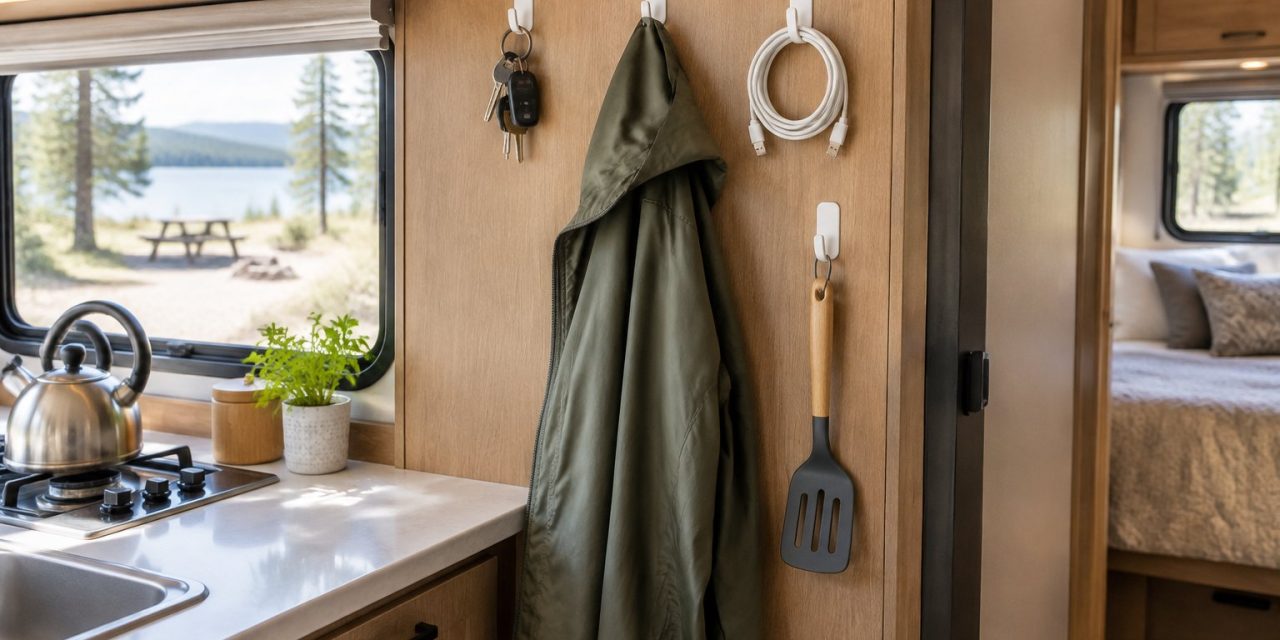
Command hooks earn their keep in an RV the same way they do in a rental apartment: no drilling, no wall repair, and easy to move when your setup needs a change. But a bouncing, moving home puts these little adhesive hooks to a tougher test than any stationary house wall ever will.
Most RVers stick to the basics: a hook for keys, maybe one for a jacket by the door. That’s fine, but it barely scratches the surface of what these hooks can do in a rig where every inch of counter and cabinet space counts. The four ideas below solve specific headaches that come up again and again in a camper: trash bags that slide into the cabinet, charging cords draped across the dinette table, toothbrushes rolling around a tiny bathroom counter, and pantry scoops that vanish into a bag of flour every single time.
Command hooks work best in an RV for spots where you need a light-duty, removable hold that won’t damage cabinet finishes or thin wall panels, and the four uses below cover situations most RVers overlook.
1) Keep an RV Trash Bag from Slipping with Upside-Down Hooks
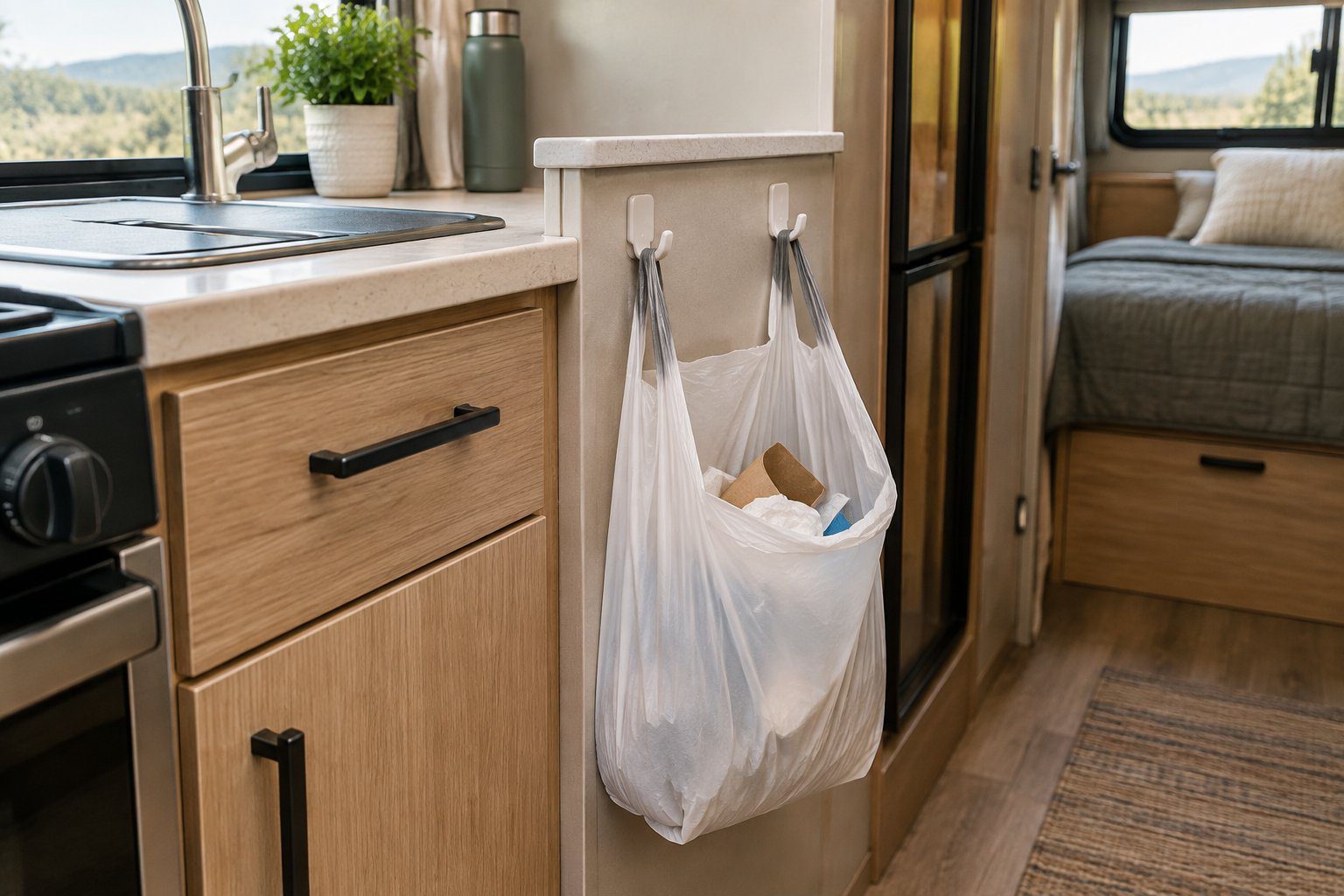
Flip two small hooks upside down and mount them across from each other inside your cabinet door or on the wall beside your trash spot, and you’ve solved one of the most annoying parts of RV kitchen life. Loop the drawstring handles of your trash bag over the hooks, and the bag stays open and in place instead of collapsing into a shapeless heap every time you toss something in.
This works best with a drawstring bag. If your bags don’t have handles, poke a small hole near the top edge on each side and hook through those instead. Mount the hooks low enough that the bag doesn’t drag on the floor of your cabinet, but high enough that it still has room to fill without touching the bottom.
For travel days, this is a stationary setup, not a driving one. Pull the bag off the hooks before you hit the road, tie it off, and stash it somewhere secure. A half-full trash bag swinging from two adhesive hooks while your RV rolls down the highway is asking for a mess.
2) Guide Charging Cables Behind the Dinette
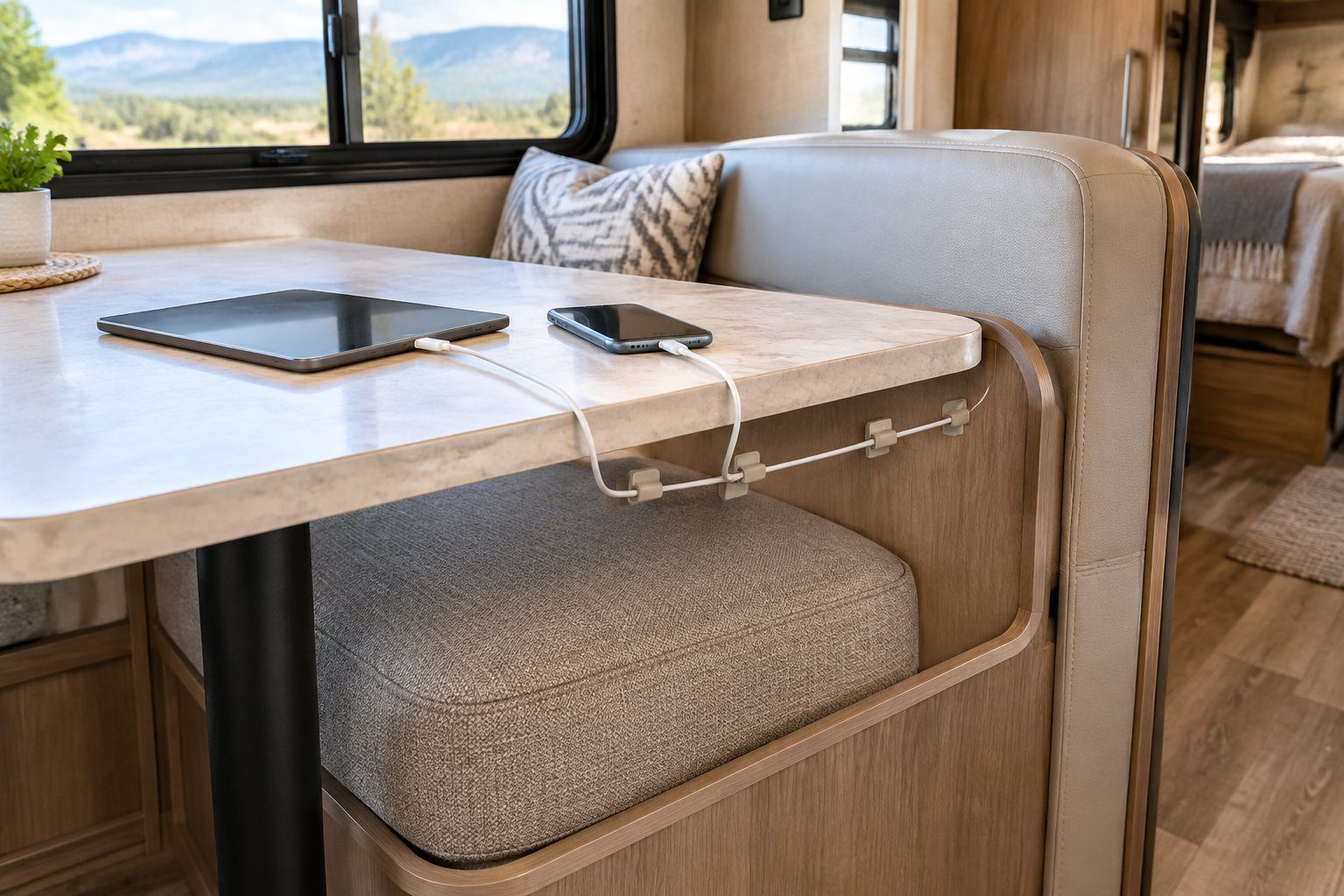
Small hooks mounted along the underside or back edge of your dinette bench turn a tangle of charging cords into a tidy, hidden path. Run the cable from your outlet, loop it through one hook, then another, and let it end near where you actually sit to charge your phone or tablet. The cord stays off the bench seat and off the floor where it’s easy to trip over or snag with your foot.
This trick works just as well behind a couch or under a fixed table, anywhere you have a cord running from an outlet to a spot where you sit. Use the smallest hooks that will hold the cable’s weight since you don’t need much grip strength for a lightweight charging cord.
Because these hooks sit low and out of the way, they can usually stay put while you’re driving. The cable itself is light enough that it won’t swing around or come loose from normal road vibration, but it’s worth a quick check after your first few trips to make sure the hooks haven’t shifted.
3) Hang Toothbrushes Inside a Latched Medicine Cabinet
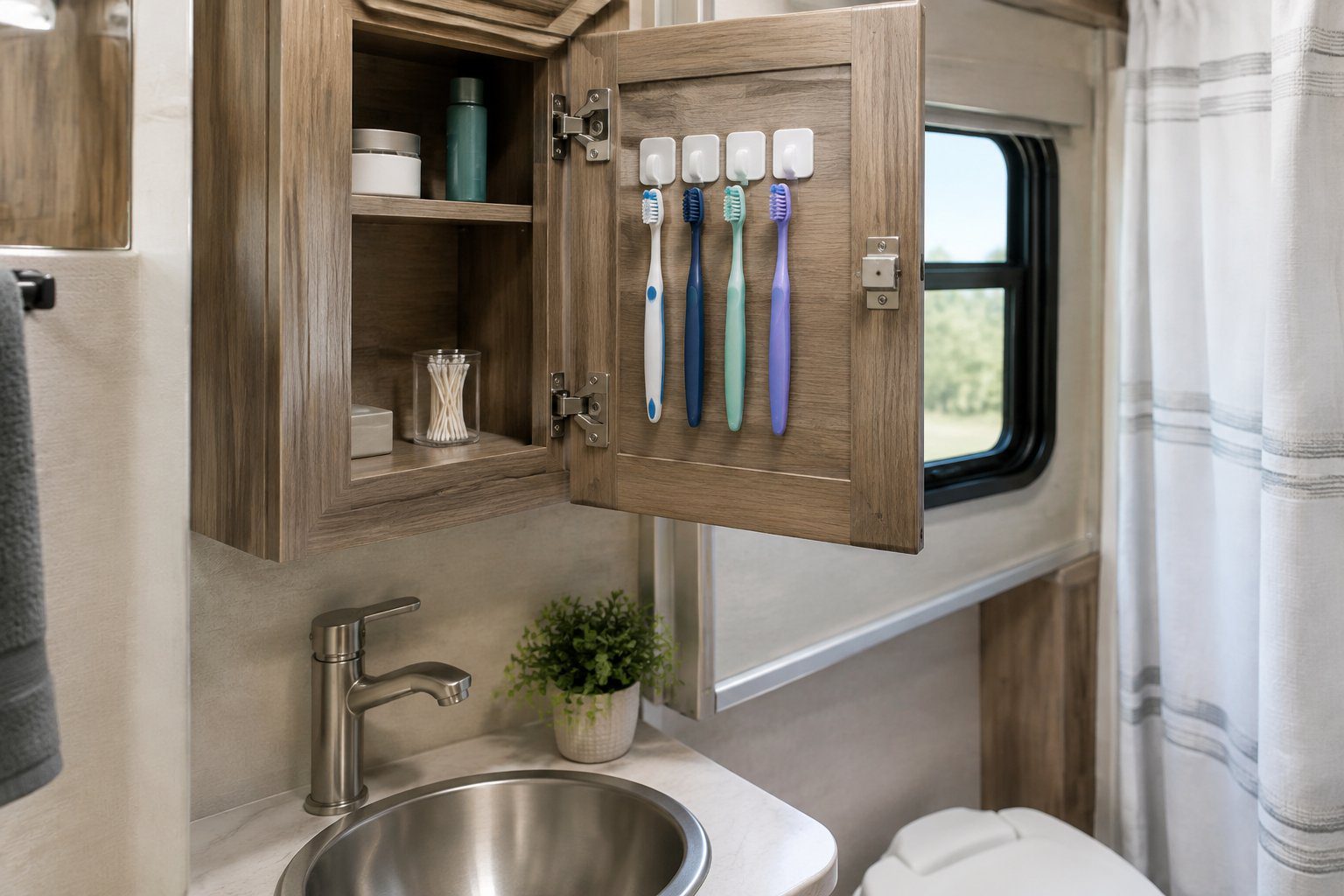
A small hook mounted on its side inside your RV’s medicine cabinet gives every toothbrush its own spot, off the counter and away from splashes. RV bathrooms rarely have room for a countertop toothbrush holder, and loose brushes tend to end up in the sink or rolling off the edge with every bump in the road. Hooking them inside the cabinet door solves both problems at once.
Space the hooks far enough apart that bristles don’t touch, and pick a spot low enough on the door that the cabinet still closes and latches without the brush handles catching on shelves inside.
This is one of the few hook uses on this list that travels well without extra prep, as long as your medicine cabinet has a working latch. The closed, latched door keeps everything contained while you drive, no need to pull the toothbrushes down first. If your cabinet door doesn’t latch securely, treat this one like the trash bag hack and remove items before towing.
4) Keep a Measuring Scoop on an RV Pantry Container
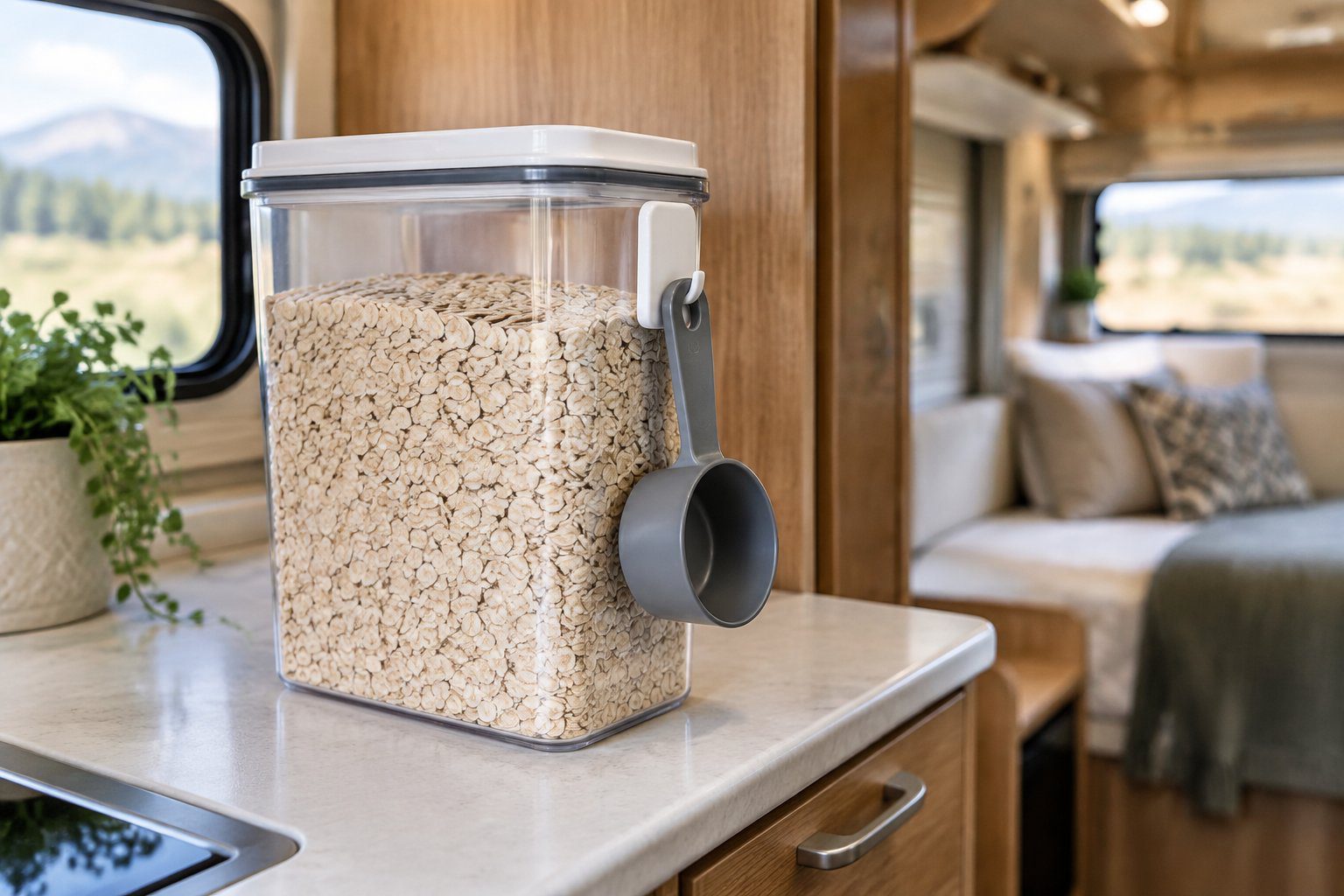
A tiny hook stuck to the side of your flour, coffee, or pancake mix container keeps the scoop attached to the exact food it measures, so you’re not digging through a cramped pantry cabinet looking for it. RV pantries are usually small, stacked, and shifting, which makes it easy to lose a loose scoop between containers or have it slide to the back where you can’t reach it.
Pick a hook sized for the scoop’s weight, usually one of the smallest hooks in a standard variety pack. Stick it low enough on the container that the scoop hangs without touching the counter or shelf below it.
Since these containers usually live inside a latched or fitted pantry cabinet, the hooks and scoops typically stay put while driving. Give your containers a shake test after the first few trips over rough roads to confirm the hook hasn’t loosened, and if your pantry cabinet doesn’t close securely, pack the containers with something to keep them from sliding around.
How to Make Adhesive Hooks Work in an RV
Adhesive hooks hold up well in an RV when you match the hook to the surface and never guess at the weight limit. RVs bring three challenges that a house doesn’t: textured wall panels, cabinet finishes that react differently to adhesive than drywall does, and constant motion that stresses every stuck-on hook far more than a stationary wall ever would.
Which RV Surfaces Are Suitable for Adhesive Hooks?
Smooth, painted, or laminate surfaces give adhesive hooks the best grip, which makes flat cabinet doors, smooth fiberglass, and finished wood trim good candidates. Textured wall panels, vinyl wallpaper, and unfinished or rough wood don’t give the adhesive enough contact area to hold reliably, especially once your rig starts bouncing down the highway.
Before sticking a hook anywhere permanent-feeling, test a small spot in a hidden area first. Some RV interior finishes react to adhesive differently than a typical house wall, and a test patch tells you whether the surface holds or whether the finish lifts when you peel the hook away.
How Should You Prepare the Surface and Check the Weight Limit?
Clean the surface with rubbing alcohol and let it dry fully before pressing on any hook, since dust, grease, or cleaning residue is the top reason adhesive fails in a kitchen or bathroom. Press the hook firmly for the full time listed on the package, usually around 30 seconds, then leave it alone for at least an hour before hanging anything, and ideally overnight for a full bond.
Check the weight rating printed on the hook packaging and stay under it. A hook rated for one pound won’t hold a heavy mug or a loaded shower caddy, and overloading it is the most common reason hooks let go, whether you’re parked or driving.
What Should You Secure Before Driving?
Anything with real weight or swing potential needs to come down or get backed up with a second point of support before you pull out of the campground. A trash bag, a shower caddy, or anything holding liquid puts more sideways stress on a hook than the same item does sitting still in a house, and road vibration works adhesive loose over time even when the hook held fine while parked.
Lightweight items tucked inside a cabinet or drawer that stays latched during travel, like the toothbrushes and pantry scoop above, generally ride out a drive without extra prep. Heavier or exposed items, especially ones hanging in open air like on a wall or door front, are worth removing or securing with a strap until you’re parked again.
Frequently Asked Questions
Do Command hooks stick to RV walls?
Command hooks stick well to smooth, painted, or laminate RV wall surfaces, but they grip poorly on textured wall panels or vinyl-coated walls common in many campers. Test a hook on a hidden section of your specific wall material before committing to a spot you’ll rely on.
Will upside-down hooks hold a trash bag in place while driving?
Upside-down hooks hold a trash bag steady while your RV is parked, but they’re not meant to secure a bag during travel. Remove or tie off the bag before driving, since road vibration and turns can pull it loose or spill contents inside your cabinet.
Can Command hooks damage an RV’s wall covering or cabinet finish?
Removed carefully, Command hooks rarely damage smooth painted or laminate surfaces, since the adhesive strips are designed to release cleanly when pulled straight down and away. Textured finishes, vinyl wall coverings, and some cabinet laminates are more likely to show marks or peeling if you don’t test a hidden spot first.
Should I remove items from hooks before towing or driving?
Heavier items, anything holding liquid, or anything hanging in open air should come down before you tow or drive. Lightweight items stored inside a latched cabinet or medicine chest, like toothbrushes or a pantry scoop, generally stay secure without extra effort.
What can I use instead of Command hooks on an unsuitable RV surface?
For textured walls or surfaces where adhesive won’t hold, look for hooks designed with stronger mounting gel pads made for rough surfaces, or use a small magnetic hook if your RV has a metal surface nearby. Suction hooks also work on smooth glass or tile surfaces like a shower wall where adhesive hooks tend to fail from moisture.