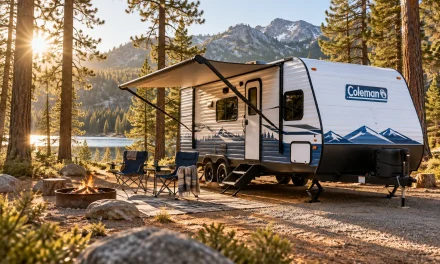
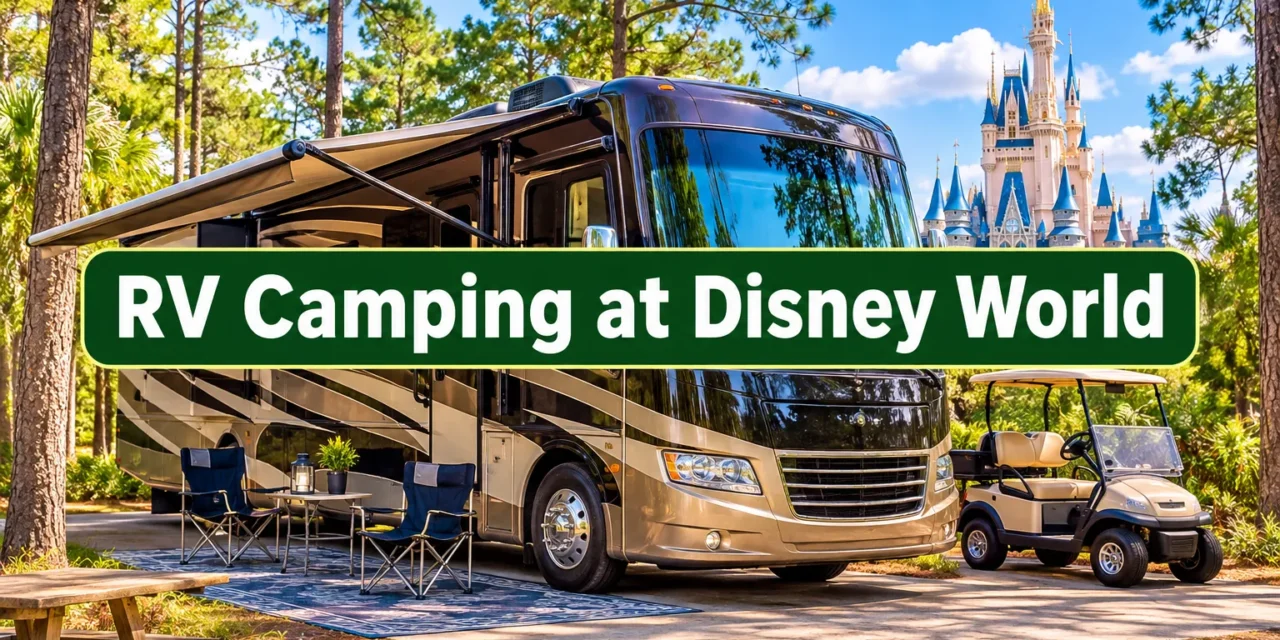
A surprising number of Disney World guests never set foot in a parking garage. They sleep 200 yards from a white sand beach, ride an internal bus system to the gates, and never touch their steering wheel again until checkout day. That’s the real story of RV camping at Disney World: parking rules, resort options, and a stress-free park-day plan, and it’s a lot more doable than most generic travel guides let on.
This guide skips the fluff and answers the questions RVers actually ask: Where can a big rig legally park overnight? What does Fort Wilderness really offer? And how does a family get from campsite to castle without ever moving the RV again?
Key Takeaways
- Fort Wilderness Resort is the only on-property campground, and it’s built to handle Class A motorhomes, fifth wheels, and travel trailers with full hookups [1][2].
- Disney’s day-guest parking lots are not designed for overnight RV stays, oversized vehicles pay a premium fee and still can’t camp there [3][4].
- Once parked at Fort Wilderness, an internal bus and boat network gets guests to every park and Disney Springs without driving [1].
- Booking early matters, Fort Wilderness sites fill fast, especially during holidays and peak season [2][5].
- A smart park-day plan means parking the RV once on arrival and not touching it again until departure.
Where RVs Can Actually Park Overnight at Disney World
This is the question that trips up first-time Disney RVers the most: parking lots at the theme parks are for day visits only. Guests cannot sleep in an RV, car, or tent in any theme park parking lot, no matter how big the rig is [3][6].
Disney’s official parking policy spells out tiered pricing based on vehicle length, and oversized vehicles, including most motorhomes and trucks towing trailers, pay a higher daily parking rate than standard cars [3][7][8]. That fee covers a single day of parking at one theme park. It does not include an overnight stay, and security does regular checks.
So where does a legally parked, fully hooked-up RV go at Disney World? There’s exactly one answer: Disney’s Fort Wilderness Resort, the official campground tucked along Bay Lake [1][2].
Day-guest resort parking lots at other Disney hotels are limited too. Some RVers try to park at a resort lot for free theme park access, but Disney has tightened enforcement, and length restrictions often block larger RVs from those lots entirely [3][4]. Relying on that as a “hack” is risky and not a dependable strategy for a dedicated RV trip.
Fort Wilderness Resort: The Real Hub for RV Camping at Disney World
Fort Wilderness is a sprawling, wooded campground with roughly 800 campsites spread across loops named for the resort’s pioneer theme [1][2]. It’s built for real RVs, not just tents, with full hookup sites offering electric, water, sewer, and cable connections designed to fit Class A motorhomes, fifth wheels, and larger travel trailers [1][2].
Key facts RVers should know before booking:
- Site types range from partial-hookup to full-hookup “premium” loops closer to the marina and main areas [1].
- Length limits exist on specific loops, so check current specs against the rig’s actual length, including tow vehicle, before reserving [2][9].
- Amenities include two pools, a marina, horseback riding, bike rentals, a nightly campfire program, and laundry facilities [1].
- Reservation timing matters, availability tightens dramatically around holidays, so booking months ahead is smart [2][5].
Guests staying at Fort Wilderness also get the same resort perks as hotel guests: Extra Magic Hours-style early entry, package delivery to the campsite, and access to Disney’s internal transportation network [1]. That transportation piece is the real magic for anyone trying to avoid driving a motorhome through Orlando traffic.
For families mapping out which rig fits this kind of trip best, it helps to review family RV floorplans before booking a site, since length and layout both affect what’s realistic at Fort Wilderness.
Building a Stress-Free Park-Day Plan Without Moving the RV
The whole point of RV camping at Disney World is to park once and relax. Fort Wilderness runs its own internal bus loop connecting campsites to a central depot, where guests transfer to buses or boats heading to Magic Kingdom, Disney Springs, and other resorts [1]. Guests never need to drive to a park gate.
Here’s a simple park-day rhythm that works well for most families:
- Set up camp on arrival day. Hook up utilities, level the rig, and treat day one as a rest day, no park plans.
- Ride the internal loop to the depot each morning. Buses run frequently, especially during early-entry hours.
- Use the boat to Magic Kingdom if staying near the marina, it’s often faster and far more scenic than the bus.
- Build in one no-park “campground day” midweek to use the pools, rent bikes, or just relax at the site. This single habit prevents the burnout that ruins most multi-day Disney trips.
- Head back before park closing rather than staying for the very last fireworks crowd surge, especially with young kids.
“The best Disney RV trips are the ones where the motorhome becomes basecamp, not a daily obstacle.”
A rest day matters more than most guides admit. Disney Springs makes a great low-key outing on a day off from the parks, it’s reachable by the same internal transportation, with no driving required.
Budgeting and Booking: What RVers Should Expect
Nightly rates at Fort Wilderness vary by loop and hookup type, and costs have been climbing in recent seasons, so it pays to compare the total trip cost against nearby off-property RV parks and factor in the value of on-site transportation and theme park perks [5]. A bargain-priced site 30 minutes away that requires daily driving and parking fees may end up costing more in time and stress than a pricier on-property stay.
A few budget-smart habits:
- Book refundable reservations when rates fluctuate seasonally.
- Compare the oversized vehicle parking fee at the parks against the convenience of simply staying on-property and skipping it [3][7].
- Cook some meals at the campsite instead of eating every meal in the parks, a well-stocked boondocking-style kitchen setup helps here, and reviewing boondocking kitchen tips can streamline the packing list.
- Pack quick grab-and-go camping snacks for early morning park departures when the campground store line is long.
Rules, Deliveries, and Third-Party Rentals Worth Knowing
Fort Wilderness has its own rulebook covering everything from quiet hours to what recreational devices, golf carts, bikes, scooters, are allowed on-site, and these rules get periodic updates, so it’s worth checking the latest official regulations before arrival [9][10].
A few practical notes:
- Golf cart rentals are extremely popular at Fort Wilderness and make getting around the sprawling property much easier.
- Amazon and grocery deliveries can typically be routed to the campground, a handy perk for stocking up without leaving the resort.
- Third-party RV rentals delivered and set up at the campsite are allowed under specific guidelines, which matters for guests who don’t own a rig but want the full RV camping experience [9].
- Always confirm current rig length and slide-out clearance specs directly with official sources before finalizing a site reservation [2][9].
For anyone towing or driving a larger unit, it’s worth double-checking motorhome buying guide resources ahead of a Disney trip to make sure the rig’s dimensions, turning radius, and setup process match what a tight-but-manageable campground loop can handle.
What the Experts and Media Consistently Recommend
Travel writers and RV veterans who’ve covered Fort Wilderness tend to agree on one point: the on-property stay-and-ride strategy beats driving in and out every day, both for sanity and for cost predictability [2][5]. The consensus holds that policies around parking tiers and oversized vehicle fees have stayed fairly stable in recent years, and that trend is expected to continue into 2026, though that’s a reasonable expectation based on current patterns, not a guarantee, so checking official sources before a trip is still the smart move [3][6].
For families comparing this approach to other campground choices nationwide, general guidance on how to choose a campground still applies, proximity, hookup type, and transportation access are the same three pillars that make or break any RV trip, Disney included.
Conclusion
RV camping at Disney World works best when the rig is treated as a basecamp, not a daily shuttle. Fort Wilderness Resort is the only legitimate overnight RV option on property, and its internal transportation network is the real payoff, it turns a potentially stressful theme park trip into a relaxed, walk-to-the-bus-stop vacation.
Before booking, confirm current site length limits, hookup types, and oversized parking fees directly through official channels, since these details shift from season to season. Then build the trip around a simple rhythm: park once, ride the buses and boats, and schedule at least one lazy day back at the campground. That’s the difference between an exhausting Disney trip and one worth repeating.
References
- Amenities. disneyworld.disney.go.com.
- Disneys Fort Wilderness Resort. maps.campendium.com.
- Parking. disneyworld.disney.go.com.
- Parking. disneyworld.disney.go.com.
- Disney World Fort Wilderness Camping Budget. cincinnati.com.
- Parking. disneyworld.disney.go.com.
- Parking. disneyworld.disney.go.com.
- Parking. disneyworld.disney.go.com.
- Fw Rules Regulations 2026. cdn1.parksmedia.wdprapps.disney.com.
- Fw Recreation Device Rules Refresh Digital. cdn1.parksmedia.wdprapps.disney.com.