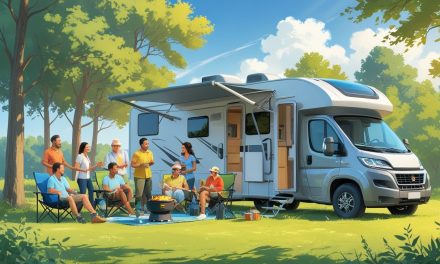
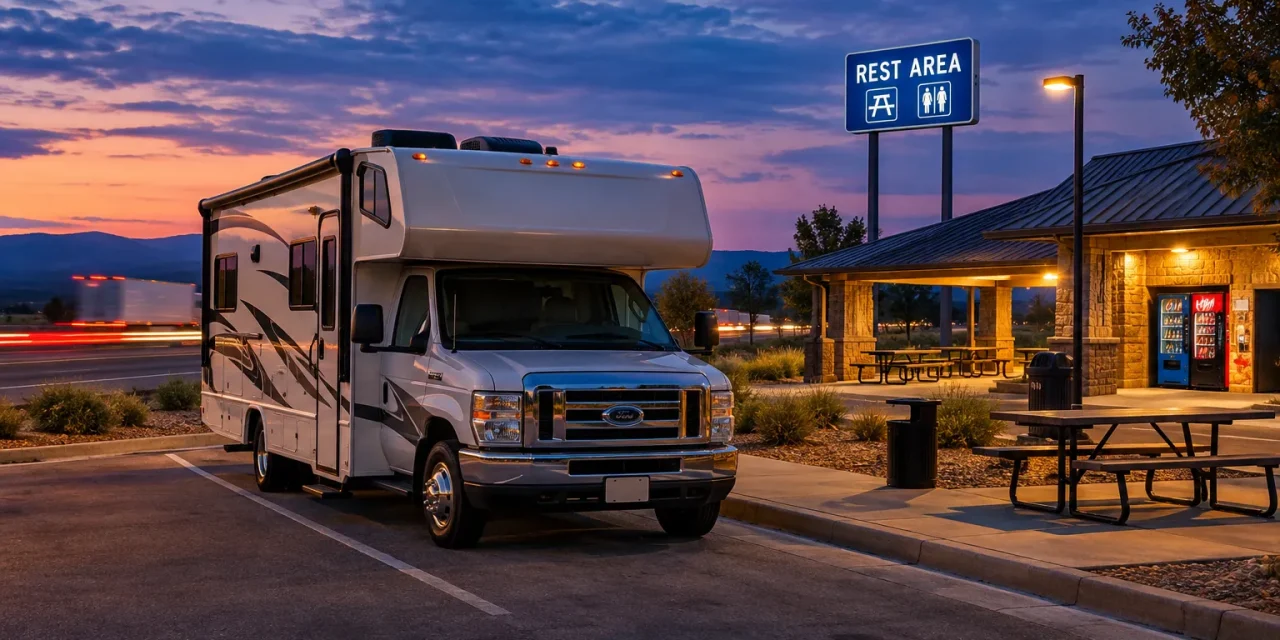
A single night at a full-service RV park can run $40 to $80. Multiply that by a two-week cross-country trip, and lodging alone can eat a huge chunk of the travel budget. That’s exactly why RV rest areas and free overnight parking have become budget-friendly camping options for long haul trips for thousands of RVers who’d rather spend that cash on fuel, food, and fun instead of a patch of gravel.
But here’s the catch: the rules around where you can legally park for the night are getting more complicated, not less. What worked five years ago might get a knock on the door tonight. This guide breaks down exactly when, where, and how to use rest areas and other free overnight spots without getting an unwanted 2 a.m. wake-up call.
Key Takeaways
- Rest area overnight rules vary wildly by state, some allow short rest stops only, others permit up to 24 hours, and a few ban overnight parking outright [1][4].
- Walmart is still the biggest free overnight network, but it’s shrinking fast, and every store can say no at any time [2][3][6][9].
- “The sign wins” everywhere. Posted signage always overrides general reputation or what a forum said three years ago [4].
- Good Neighbor etiquette (one night, no setup, buy something, stay tucked away) keeps free parking options open for everyone [2][5][9].
- Apps and community databases have replaced guesswork as the go-to tool for planning safe, legal overnight stops.
What Counts as RV Rest Areas and Free Overnight Parking on a Long Haul Trip
Not every free spot is created equal. When RVers talk about RV rest areas and free overnight parking as budget-friendly camping options for long haul trips, they’re usually referring to a mix of:
- Highway rest areas run by state departments of transportation
- Retail parking lots like Walmart, Cracker Barrel, and Cabela’s
- Truck stops and travel centers such as Pilot, Flying J, and Love’s
- Casino parking lots, many of which welcome RVs to encourage foot traffic
- Municipal or county parking areas, though these are becoming more restricted
The common thread is that none of these are true campgrounds. There are no hookups, no fire pits, and usually no picnic tables meant for camping. They’re meant to solve one problem: giving a tired driver a safe place to stop before continuing the next leg of a long haul trip.
That distinction matters more than most new RVers realize. The moment a free parking spot starts looking like a campsite, awnings out, chairs on the pavement, grills firing up, it stops looking like an emergency stop and starts looking like camping. And camping is exactly what most of these locations prohibit.
Why This Distinction Is Getting Stricter
Rest areas in particular are increasingly framed as short safety stops, not camping locations, even in states where overnight parking is technically allowed [1][4]. The idea is simple: a rest area exists so a driver can nap for a few hours, use the restroom, and get back on the road safely. It was never designed to be a free KOA.
This shift is part of a bigger trend. Municipal and residential-street parking restrictions are expanding too, which means the “informal” free overnight spots RVers used to rely on, a quiet street, an empty lot, a church parking area, are disappearing in a lot of towns and cities. Combine that with tightening retail policies, and the free overnight parking map looks a lot different than it did a decade ago.
State-by-State Rest Area Rules Every RV Driver Should Know
This is where things get genuinely confusing, because rest area rules aren’t federal, they’re set state by state, and sometimes even county by county. Here’s a snapshot of how different states approach overnight RV parking at rest areas as of late 2026 [4]:
| State | General Rest Area Policy |
|---|---|
| California | Limited overnight stays; many rest areas restrict parking to a few hours [4] |
| Texas | Time limits typically enforced, often around a set number of hours per stop [4] |
| Washington | Restrictions in place limiting how long vehicles can stay overnight [4] |
| Virginia | More permissive; overnight stays generally tolerated at many rest areas [4] |
| Maryland | Rest areas generally allow short-term overnight stops [4] |
| Tennessee | Overnight parking commonly permitted for rest purposes [4] |
| Colorado | Rules vary by location; some rest areas post specific overnight limits [4] |
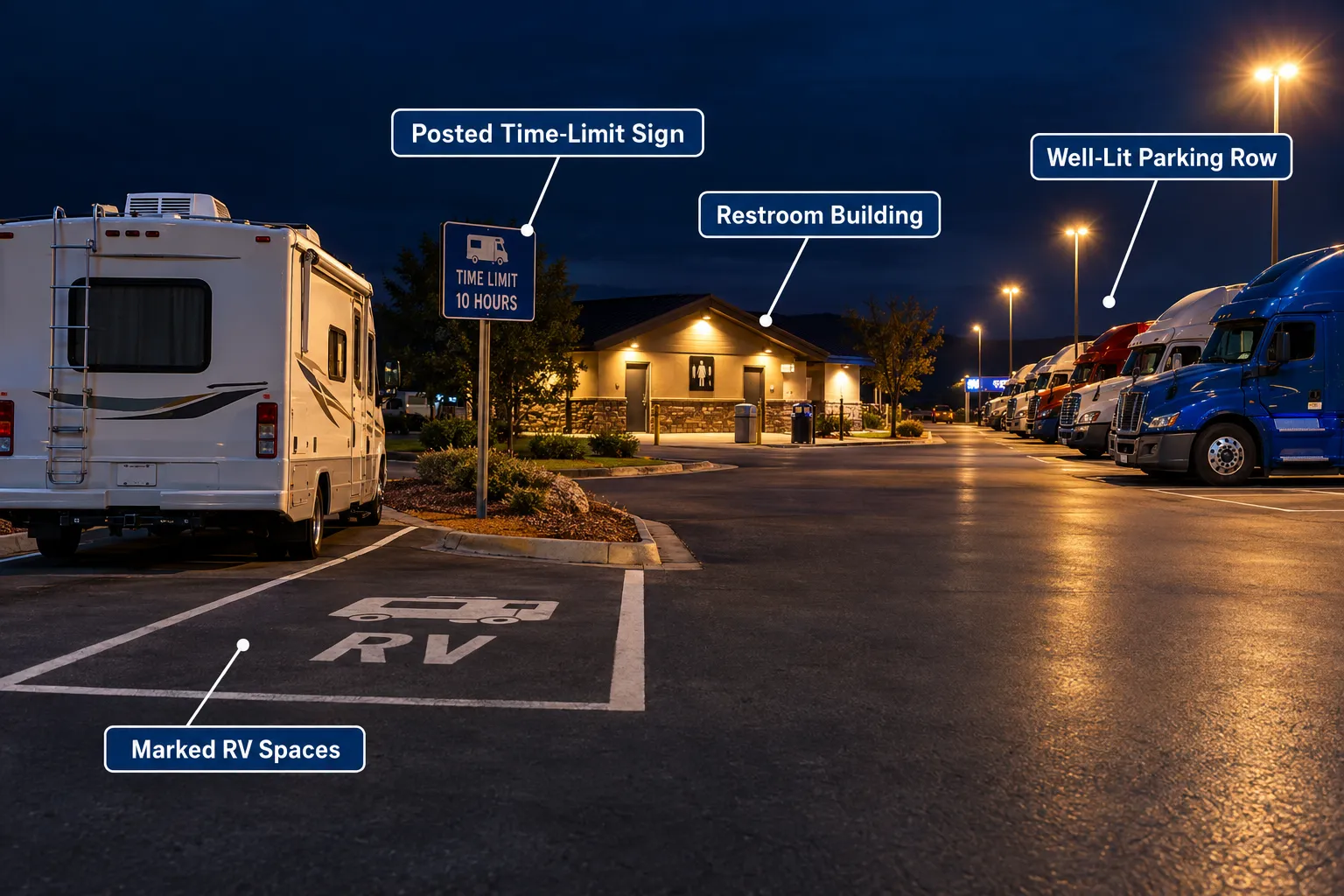
Notice a pattern? States with heavy commercial trucking corridors (Virginia, Maryland, Tennessee) tend to be more permissive, since truckers legally need rest stops for federal hours-of-service compliance. States with high tourism traffic or urban congestion (California, Washington) tend to enforce tighter limits.
The One Rule That Never Changes
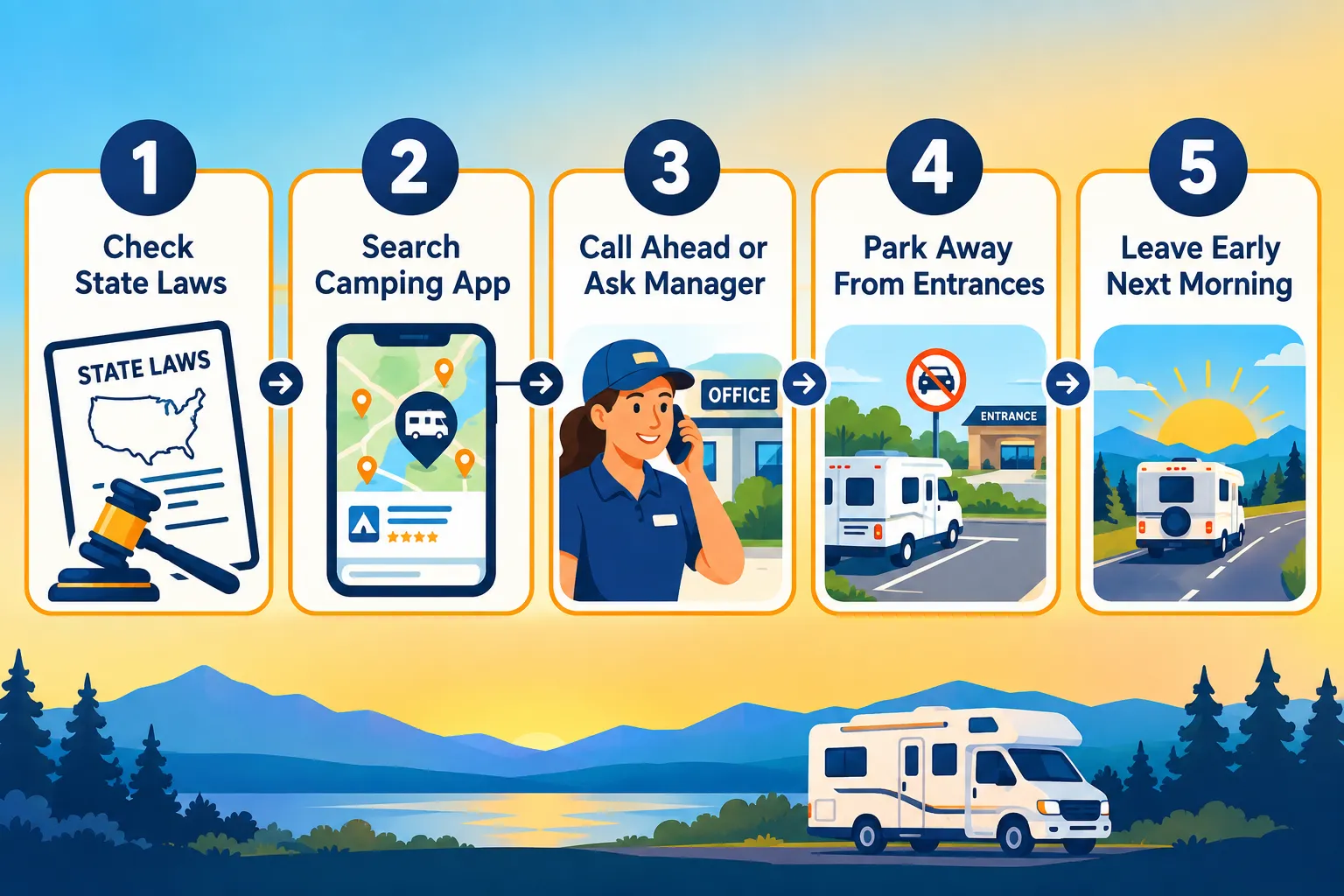
No matter which state a rest area is in, one rule overrides everything else: the posted sign wins [4]. A rest area might have a great reputation on an RV forum, but if there’s a sign that says “No Overnight Parking” or “4-Hour Limit,” that sign is the law for that specific location, not the forum post, not last year’s road trip, not what a friend said.
Before pulling in for the night, always:
- Look for posted time limits at the entrance
- Check for any state highway patrol notices about enforcement
- Confirm the rest area isn’t seasonal or under construction
- Have a backup plan in case the spot is full or restricted
This kind of quick due diligence takes two minutes and can save a lot of stress later. It’s a small part of planning stress-free RV trips, especially when covering multiple states on a single haul.
“Free parking isn’t free if it costs you a ticket, a tow, or a bad night’s sleep.”, a reminder every long-haul RVer should keep in mind.
Beyond Rest Areas: More Budget-Friendly Camping Options for Long Haul Trips
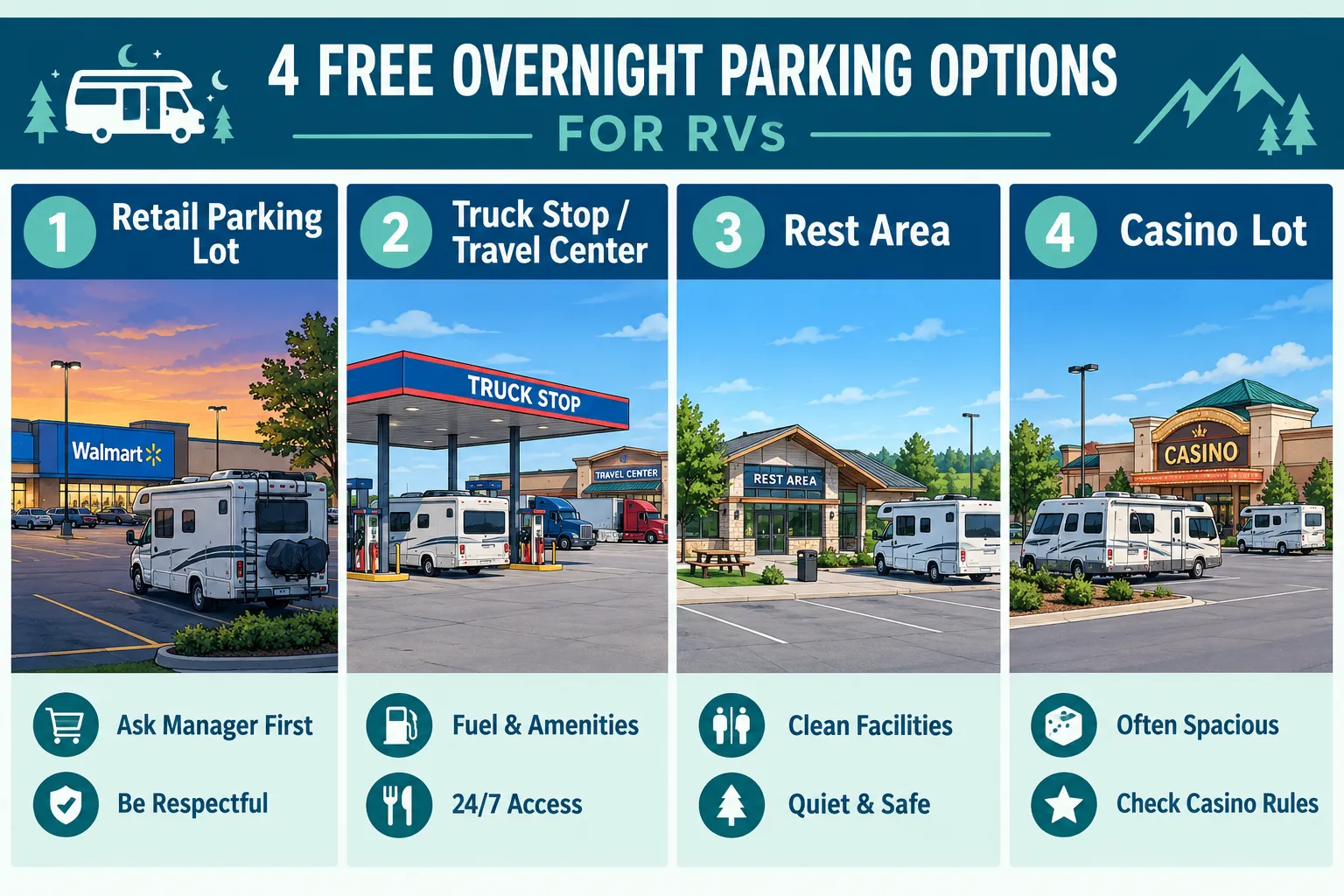
Rest areas are just one piece of the puzzle. For RVers stitching together a multi-day drive, retail lots, travel centers, and a handful of restaurant chains round out the free overnight parking landscape.
Walmart: Still the Biggest Network, But Shrinking
Walmart remains the largest free RV overnight network in the country, and that reputation didn’t happen by accident. For years, Walmart’s open-door policy toward RV travelers made it the default stop for anyone driving cross-country [2][3][7]. But access has been shrinking, and it’s now fully manager-discretionary, meaning the store’s regional or local management makes the final call, not corporate policy [6][9][10].
A few important facts about Walmart overnight parking in 2026:
- There’s no blanket corporate policy guaranteeing overnight parking [6][9]. It’s store by store.
- More locations, especially in cities, now post “No Overnight Parking” signs, a trend that’s accelerated since 2020 [3][6].
- Calling ahead is the smartest move. A quick call to the store or a check of the parking lot signage avoids a wasted stop [5][7].
- Truck traffic and delivery schedules matter. Busy stores with heavy overnight freight deliveries are less likely to welcome RVs [8].
Cracker Barrel and Truck Stops
Cracker Barrel has long had a soft reputation for welcoming RVers in its parking lots, particularly along interstate corridors, though it’s always subject to individual store discretion [2]. Truck stops and travel centers, think Pilot, Flying J, Love’s, and TA, also offer limited free or low-cost overnight parking, especially for RVers who buy fuel or grab a meal inside [1][2].
These spots come with trade-offs. Truck stops are loud, brightly lit, and busy around the clock. They’re not the place for a peaceful night’s sleep, but they’re incredibly convenient for a quick overnight stop between long driving stretches.
Casinos and Other Options
Many casinos, especially in rural areas or along major highways, allow RVs to park overnight for free, hoping travelers will wander in and spend some money. Policies vary by property and sometimes by state gaming regulations, so it’s worth a quick call before arriving.
For RVers piecing together a route across several states, mixing rest areas with retail lots and truck stops gives more flexibility than relying on any single option. Anyone who’s taken an RV trip across multiple states knows that having three or four backup plans for the night is far less stressful than betting everything on one spot.
Good Neighbor Rules for Free Overnight RV Parking
Free overnight parking is a privilege, not a right, and it survives only as long as RVers respect the space they’re borrowing. The unofficial “Good Neighbor” rules have become the standard etiquette across retail lots, truck stops, and even some rest areas [2][5][9]:
- Stay one night only. These are stopovers, not weekend campsites.
- Skip the camping setup. No awnings, no chairs, no grills, no leveling jacks extended into walkways.
- Buy something if you’re on private property. A meal, some groceries, or fuel is a small thank-you that keeps the door open for the next RVer.
- Park at the edge of the lot, away from the main entrance, cart corrals, and delivery zones.
- Keep noise and lights down. Generators, especially, should stay off unless explicitly permitted.
- Leave early. Plan to be gone before the morning rush, not lingering into the next business day.
These rules exist for a good reason. Every RVer who ignores them, setting up a full camp, running a generator all night, or overstaying, makes it more likely the next property posts a “No Overnight Parking” sign. Safety and liability concerns are actually one of the biggest drivers behind tighter rules at retail locations and rest areas alike [1][8]. Property owners worry about crime, break-ins, and accidents in poorly monitored lots, and a few bad experiences can shut down access for everyone.
This is also where a little trip discipline pays off. Sticking to a realistic RV travel budget means treating free parking as a genuine cost-saving strategy, not an excuse to skip planning altogether.
How to Find Free Overnight Parking for Long Haul Trips
Guesswork isn’t a strategy anymore. Data-driven planning, using community-sourced databases, state law summaries, and dedicated apps, is now the standard way experienced RVers find legal, safe overnight spots [4].
Here’s a practical approach for planning a long haul route:
- Map the day’s driving distance first, then look for rest areas, Walmarts, or travel centers within a reasonable window of the planned stopping point.
- Cross-reference with an app or community database that tracks recent reports on whether a location still allows overnight RVs.
- Call ahead when possible, especially for retail locations, since store-level policy can change without notice.
- Have two backup options for every planned overnight stop, since a “No Overnight Parking” sign can appear overnight, literally.
- Note the state line. Since rules change at borders, know the policy of the state where the night’s stop will actually happen.
Plenty of RVers now rely on apps specifically built for this purpose, and it’s worth checking out how other travelers approach the same challenge in this breakdown of apps used to find free or low-cost camping spots. These tools pull from real-time community reports, which matters far more than an old blog post claiming a spot is “always fine.”
It’s also smart to understand the legal side before hitting the road. A quick read through sneaky laws that can ruin an RV trip covers some of the lesser-known regulations that catch travelers off guard, well beyond just overnight parking.
Safety Tips for Overnight Stops on Long Haul Trips
Saving money is great, but it shouldn’t come at the expense of safety. A few habits make a big difference when relying on RV rest areas and free overnight parking as budget-friendly camping options for long haul trips:
- Park under lights whenever possible, even if it means being a little closer to noise.
- Keep valuables out of sight and doors locked immediately after parking.
- Trust the gut check. If a lot feels unsafe or empty in a way that seems off, move on to the next option.
- Avoid isolated rest areas late at night, especially ones without other vehicles present.
- Keep an emergency kit accessible, including a flashlight, phone charger, and basic first-aid supplies.
Many of these same safety habits apply at traditional campgrounds too. It’s worth reviewing the common dangers to watch for at RV campgrounds since several of those same risks, theft, poor lighting, isolated locations, apply just as much to free overnight parking spots.
The Future of Free Overnight RV Parking
The honest trend line is clear: free overnight parking is shifting from “available almost everywhere” to “selective, rural-leaning, and regulated” [1][4][6]. Cities are tightening restrictions on municipal and residential streets. Big-box retailers are posting more “No Overnight Parking” signs, particularly in urban and suburban stores where complaints and liability concerns run higher [3][6][8].
Looking ahead to 2027 and beyond, expect that tightening trend to continue in cities and along busy urban corridors. At the same time, rural stretches, the long, quiet highway miles between towns, are likely to see stable or even modestly improving access, since these areas depend more on traveler traffic and have fewer of the density-related complaints driving urban restrictions. This is a forward-looking expectation based on current patterns, not a guarantee, but it lines up with how rural communities and travel corridors have historically treated overnight RV travelers.
For RVers planning multi-state hauls, this means leaning more heavily on rural rest areas, truck stops along interstate corridors, and small-town travel centers rather than assuming a city Walmart will work. It also means treating apps and community databases as essential trip-planning tools rather than optional extras.
Frequently Asked Questions
Is it legal to sleep overnight at a rest area? It depends entirely on the state and the specific rest area. Some states allow overnight stays up to a set time limit, while others restrict rest areas to short breaks only. Always check posted signage on-site [4].
Does Walmart still allow free overnight RV parking? Some stores do, but there’s no corporate guarantee. It’s manager-discretionary and store-specific, with many urban locations now posting “No Overnight Parking” signs [6][9][10].
What’s the safest way to find free overnight parking on a long trip? Combine a dedicated RV parking app or community database with a quick phone call to the location. Always have a backup plan in case the first choice doesn’t pan out.
Can I set up camping gear at a free overnight parking spot? No. Chairs, awnings, and grills signal camping, which is against the spirit, and often the rule, of these free stopover locations. Keep it to parking only.
Conclusion
Long haul RV trips don’t have to drain the travel budget one overnight stay at a time. RV rest areas and free overnight parking remain genuinely budget-friendly camping options for long haul trips, as long as travelers stay informed, flexible, and respectful of the rules.
The playbook is simple: check state-specific rest area laws before relying on them, treat retail parking as a courtesy rather than an entitlement, follow Good Neighbor etiquette everywhere, and use apps or community databases instead of outdated assumptions. Rural corridors are likely to stay more welcoming than cities, so building routes that lean on smaller towns and interstate travel centers is a smart long-term strategy.
Before the next cross-country haul, take twenty minutes to map out a few backup overnight spots along the route. That small bit of prep is the difference between a stressful scramble at midnight and a smooth, budget-friendly night’s rest before the next leg of the adventure.
References
[1] New Rv Regulations – https://rvshare.com/blog/new-rv-regulations/ [2] Can You Sleep At Walmart And Cracker Barrel – https://www.thewaywardhome.com/can-you-sleep-at-walmart-and-cracker-barrel/ [3] Camping At Walmart – https://letsrv.com/camping-at-walmart/ [4] Rv Overnight Parking Laws By State – https://rvrove.com/blog/rv-overnight-parking-laws-by-state/ [5] Overnight Rv Parking At Walmart – https://roadtrippers.com/magazine/overnight-rv-parking-at-walmart/ [6] Walmart Overnight Rv Parking Policy By State 2026 – https://boondockorbust.com/resources/walmart-overnight-rv-parking-policy-by-state-2026/ [7] Rv Parking At Walmart – https://www.walmartlocator.com/rv-parking-at-walmart/ [8] Walmart Parking Policies – https://www.dat.com/resources/walmart-parking-policies [9] Overnighting At Walmart – https://www.outdoorsy.com/blog/overnighting-at-walmart [10] Does Walmart Still Allow People To Park Overnight – https://us.ok.com/ask/does-walmart-still-allow-people-to-park-overnight/