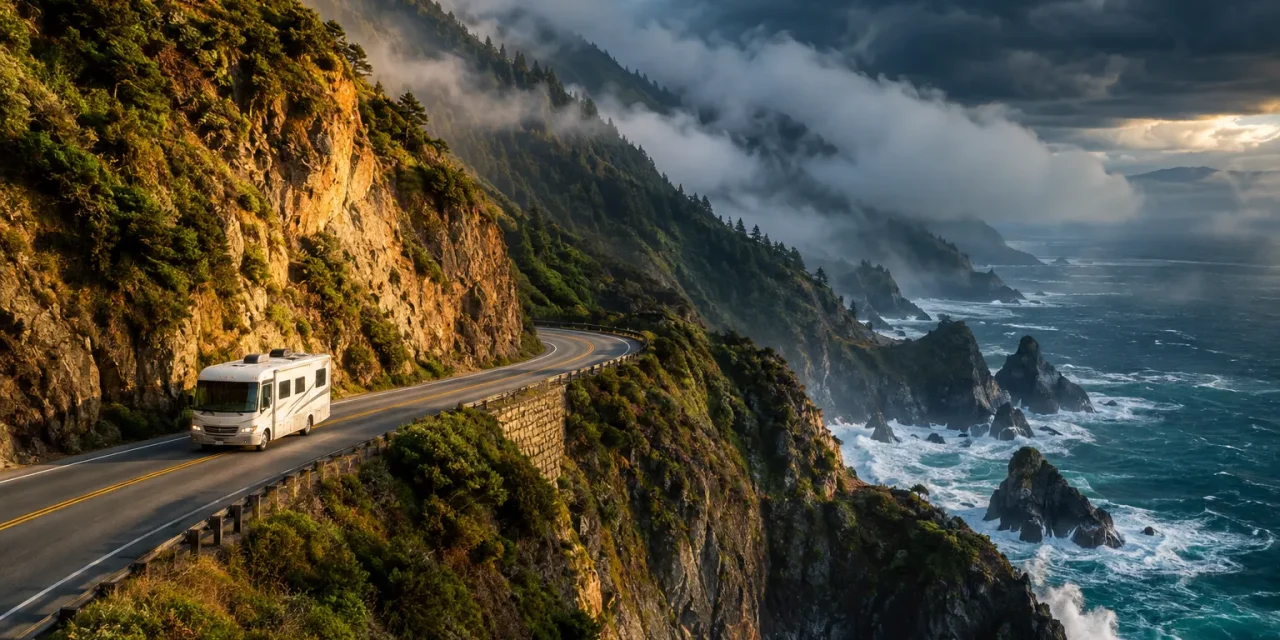
Ninety miles. That’s all it takes to turn a dream RV trip into the scariest drive of your life. Along one famous stretch of California coastline, the road narrows to barely two lanes, drops off into 400-foot cliffs, and bends into curves so tight that some maps warn big rigs to simply stay away. This is the coastal highway that is terrifying to drive in a motorhome, and thousands of RVers learn about it the hard way every single year.
If you’re planning a coastal road trip in your Class A, Class C, or even a mid-size camper van, you need to know about this road before you plan your route. This guide breaks down exactly why it’s so dangerous, which sections to avoid, and what smart RVers do instead.
Key Takeaways
- 🚨 California State Route 1 through Big Sur is widely considered the coastal highway that is terrifying to drive in a motorhome, thanks to narrow lanes, sharp switchbacks, and sheer cliff drops.
- 📏 Many sections of Highway 1 ban vehicles over 40 feet, and experts recommend avoiding it entirely if your rig is longer than about 22 feet.
- 🌧️ Landslides, fog, and coastal winds over 40 mph can make an already tight road even more dangerous, sometimes with little warning.
- 🗺️ Not every stretch of Highway 1 is bad news. Some sections, like the area near San Francisco, have been fixed with tunnels and are now safe for RVs.
- ✅ Smart RVers check road signs, size limits, and weather before ever pointing their rig toward the coast.
What Makes This the Coastal Highway That is Terrifying to Drive in a Motorhome
Not all scenic roads are RV-friendly. Some are built for sports cars and small SUVs, not 30-foot motorhomes pulling a car behind them.
California’s State Route 1, especially the Big Sur section between Carmel and San Simeon, is the road that keeps coming up again and again in RV safety guides. It’s roughly 90 miles of postcard-perfect ocean views paired with some of the most dangerous driving conditions in the country.
Here’s what makes it so tough:
- Tight curves. Some turns have a radius as small as 15 feet. That’s barely enough room for a car, let alone a 35-foot Class A.
- Cliff-edge drops. In some spots, one wrong move puts you 400 feet above the Pacific Ocean with no guardrail.
- Narrow lanes. Many stretches don’t leave much room for a motorhome and an oncoming truck to pass safely.
- Unstable ground. Landslides and road subsidence can shrink the highway to a single lane with almost no warning.
- Wind and fog. Coastal gusts can hit 40+ mph, which is more than enough to push a tall RV toward the edge. Add in fog that drops visibility to near zero, and you’ve got a recipe for disaster.
One 2026 RV safety report went as far as calling this stretch “virtually impossible” to navigate safely in a large RV, even though it isn’t technically illegal to drive there.
“What looks like a dream coastal drive can quickly become a nightmare for large RVs.” That’s the blunt warning travel experts give anyone eyeing this route in a big rig.
Why Big Sur Breaks Motorhomes and Drivers Alike
Big Sur wasn’t designed with motorhomes in mind. The road was carved into the mountainside decades ago, long before Class A rigs and 40-foot fifth wheels became common on American highways.
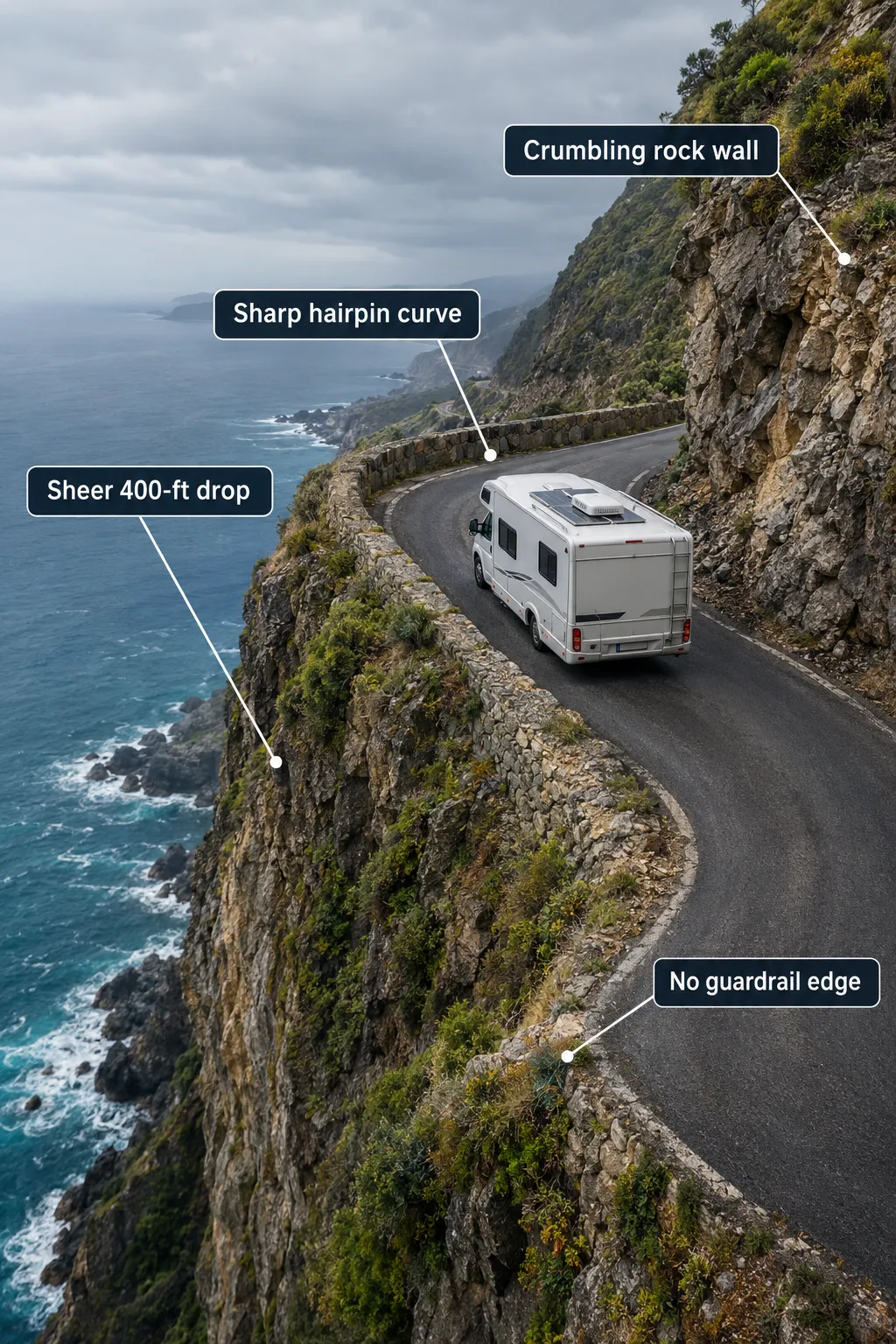
That mismatch shows up in real, posted rules. Along the section between Leggett and Fort Bragg, signs flat-out prohibit motorhomes and motorcoaches over 40 feet. Why? Because the roadway is narrow, packed with sharp curves, and includes a brutal four-mile stretch with a 7% grade in both directions. Even smaller motorhomes that are technically allowed should expect a slow, nerve-wracking crawl rather than a relaxing drive.
A January 2026 update from Good Sam’s “Worst Roads for RVing” list didn’t hold back either. It called the scenic Route 1/101 corridor “unquestionably one of the most scenic drives in the country” while also naming it “one of the worst roads to cruise on with your RV.” The guide specifically flags rigs over about 22 feet as being at high risk on the narrowest sections, along with an elevated danger of landslides, especially after heavy rain.
And rain is a real problem here. As of mid-2026, RV community reports describe a large section of Highway 1 near Big Sur as buried and structurally unstable, with experts estimating it could take about a year before a full repair or rebuild decision is finalized. That’s not a minor pothole. That’s a highway that can disappear on you.
Other Coastal Roads That Give RVers Nightmares
Big Sur gets most of the attention, but it’s not the only coastal route that makes RVers grip the wheel a little tighter. Here’s a quick comparison of some other roads that show up again and again in RV danger lists.
| Road | Location | Main Hazard | RV Size Concern |
|---|---|---|---|
| Highway 1 (Big Sur) | California | Cliffs, hairpins, landslides | Not recommended over 22-40 ft |
| Highway 1 (Leggett to Fort Bragg) | California | Narrow curves, steep grade | Banned over 40 ft |
| US 101 Pacific Coast | Oregon/Washington/California | Steep grades, sharp curves | Requires careful gear/speed control |
| Highway 17 | Beaufort County, SC | Heavy traffic, narrow shoulders | Stressful for any large rig |
| “The Coastal Highway” (flat coastal route) | Various flat coastal regions | Traffic mix, road design, exposure | Dangerous despite no cliffs |
That last entry is a good reminder: coastal roads don’t need mountains or cliffs to be dangerous. Some RV safety writing points out that even flat coastal highways can end up on “most dangerous roads” lists simply because of heavy traffic, tight lane design, and constant exposure to wind and weather. It’s not just about elevation. It’s about how the road was built and how much room it leaves for error.
Meanwhile, Highway 17 in Beaufort County, South Carolina, regularly tops lists of “scary RV road trips to avoid,” not because of cliffs, but because of busy traffic and stressful driving conditions in an area many drivers don’t expect to be difficult.
The lesson? Always research your route before you go, no matter how flat or “easy” it looks on a map. This ties into a bigger truth about RV travel: small planning mistakes can snowball into big problems that could ruin your rv trip if you don’t catch them ahead of time.
Signs You’re About to Drive the Coastal Highway That is Terrifying to Drive in a Motorhome
Before you find yourself stuck on a cliffside curve with nowhere to turn around, watch for these warning signs:
- Posted length restrictions. Signs banning vehicles over 40 feet (or smaller) are a hard stop, not a suggestion.
- Hairpin turn symbols on the map. Multiple tight zig-zag icons close together usually mean switchbacks ahead.
- “Steep grade” warnings. A 7% grade sign means your engine, brakes, and transmission are about to work overtime.
- Narrow bridge or one-lane road icons. These often show up right where cliffs get closest to the road.
- Recent landslide reports. A quick search or call to local ranger stations can reveal if a stretch has active ground movement.
- Fog advisory zones. Coastal fog can appear fast and cut visibility to almost nothing within minutes.
If you see two or more of these warning signs stacked on the same stretch of road, it’s time to seriously reconsider your route.
How to Survive This Coastal Highway in a Motorhome (or Avoid It)
Some RVers still want to see this coastline, even knowing the risks. If that’s you, here’s how to make the smartest choice for your rig and your family.
Know Your Rig’s Real Limits
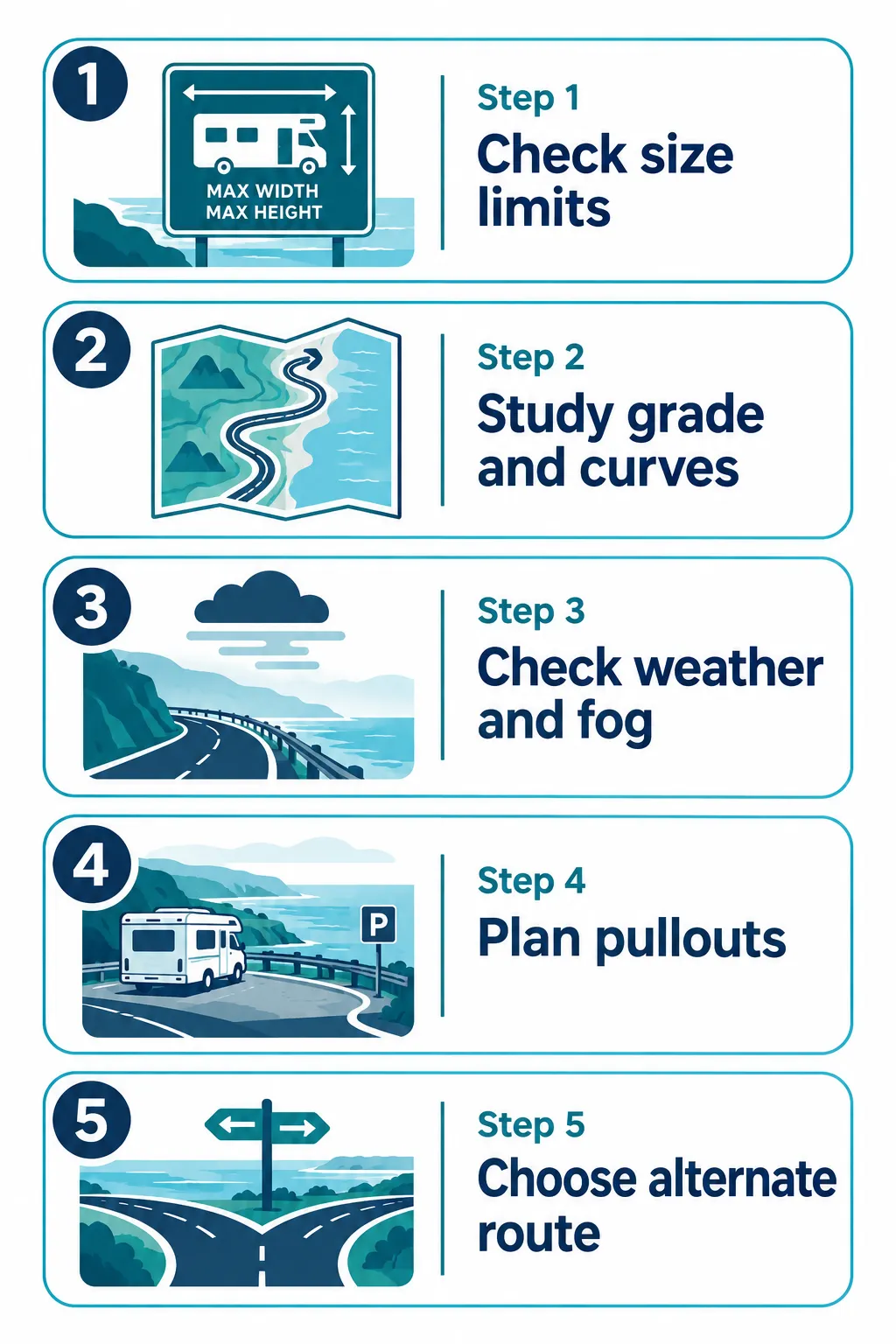
Before anything else, check your motorhome’s exact length, width, and height. Then compare it directly against posted restrictions for the section you’re planning to drive. Don’t round down. If a sign says “no vehicles over 40 feet” and your rig with the bumper-mounted bike rack is 40 feet 2 inches, that sign applies to you.
Choose the Right Rig for the Road
This is where a smaller, more nimble RV really shines. Multiple 2026 RV guides recommend Class B camper vans or small Class C motorhomes for tight coastal routes like Big Sur, while flat-out steering larger Class A motorhomes away from the area entirely. If you’re still deciding what kind of rig fits your travel style, it’s worth comparing options like a Class A motorhome vs 5th wheel toy hauler before committing to a route that demands serious maneuverability.
Time Your Drive Carefully
- Avoid driving at dawn or dusk, when fog is most common along the coast.
- Check weather forecasts for wind speeds. Anything approaching 40 mph should be a red flag for tall vehicles.
- Skip driving right after heavy rain, since that’s when landslide risk climbs fastest.
- Drive on weekdays, when traffic (and stress) tends to be lighter than weekend crowds.
Plan Pullouts and Turnarounds in Advance
Look at satellite maps ahead of time and mark wide pullout areas. On roads this narrow, you may not get a second chance to safely stop or turn around once you’re committed to a section.
Have a Backup Route Ready
Sometimes the smartest move is simply not driving the scary road at all. US 101 often runs parallel to Highway 1 and offers a gentler, wider alternative with far less cliff exposure. It’s still a demanding route with hills and curves, but it’s a much safer choice for larger rigs.
Double-Check Your Rig Before You Go
A tough mountain road puts extra stress on brakes, tires, and your electrical system. Before tackling any high-risk route, it pays to run through basic maintenance checks and confirm your RV electrical questions that may come in handy are already answered, so you’re not troubleshooting a wiring issue while parked on a cliffside shoulder.
Pull Quote: “A scenic coastal drive is only fun if you make it to the other side in one piece.”
Is There a Safer Way to See the Coast?
Good news: not every part of this coastal highway deserves its scary reputation anymore.
The old cliff-hugging, hairpin-filled section of Highway 1 known as “Devil’s Slide,” located between San Francisco and Santa Cruz, used to be one of the most feared parts of the entire route. But since 2013, that dangerous stretch has been replaced by the Tom Lantos Tunnels. These tunnels offer about 22 feet of clearance and completely bypass the old cliff-edge road. That means this particular section is now comparatively easy and safe for most RVs.
This is proof that not every mile of “the coastal highway that is terrifying to drive in a motorhome” stays terrifying forever. Road improvements happen. Tunnels get built. Some sections genuinely get safer over time, even while others (like Big Sur) remain just as risky as ever.
The takeaway here is simple: don’t judge an entire highway by its worst mile. Do your homework on the specific section you’re planning to drive, not just the highway’s overall reputation.
Quick Reference: Should You Drive It?
| Your Rig | Big Sur (Hwy 1) | Devil’s Slide (Hwy 1 near SF) |
|---|---|---|
| Camper van / Class B | Possible, drive slowly | Safe |
| Small Class C under 22 ft | Risky, proceed with caution | Safe |
| Class A over 30 ft | Not recommended | Safe |
| Towing a 5th wheel | Avoid entirely | Safe |
Frequently Asked Questions
Is it illegal to drive a motorhome on Highway 1 through Big Sur?
Generally, no, unless you’re on a specific stretch with posted length restrictions, such as the Leggett to Fort Bragg section, which bans vehicles over 40 feet. Even where it’s technically legal, safety experts strongly discourage large rigs from attempting the full Big Sur stretch.
How long is the dangerous section of the coastal highway?
The most talked-about stretch runs roughly 90 miles between Carmel and San Simeon, California.
What size RV is too big for this road?
Most guides suggest anything over 22 to 30 feet starts running into serious trouble on the tightest curves, with 40 feet being a hard legal limit in some zones.
Are there RV-friendly alternatives to Highway 1?
Yes. US 101 runs parallel in many areas and offers a wider, gentler alternative, though it still has hills and curves that require attentive driving.
Does bad weather make this road worse?
Absolutely. Rain increases landslide risk, wind can push tall RVs toward cliff edges, and fog can drop visibility to nearly zero without warning.
Conclusion
The coastal highway that is terrifying to drive in a motorhome earns its scary reputation for good reason. Between hairpin turns tighter than most driveways, cliff drops taller than a football field is long, and weather that can turn dangerous in minutes, this isn’t a road to wing it on.
The good news is that you’re not stuck choosing between “risk it” or “skip the coast entirely.” Check your rig’s exact size against posted limits. Watch the weather. Plan your pullouts. And when a section looks too risky, take the safer parallel route instead. Smart RVers don’t avoid adventure, they just avoid unnecessary danger.
Before your next coastal trip, take time to research your exact route mile by mile, not just the highway’s general reputation. And if you’re still shopping for the right rig for tighter, twistier roads, browsing guides like the comparison of Class A motorhome vs 5th wheel toy hauler options can help you pick a setup built for the kind of driving you actually plan to do. Safe travels out there.
coastal highway driving, RV safety tips, Big Sur RV travel, motorhome road hazards, California Highway 1, dangerous RV roads, Class A motorhome, RV travel planning, scenic coastal drives, RV size restrictions, cliffside roads, RV trip preparation