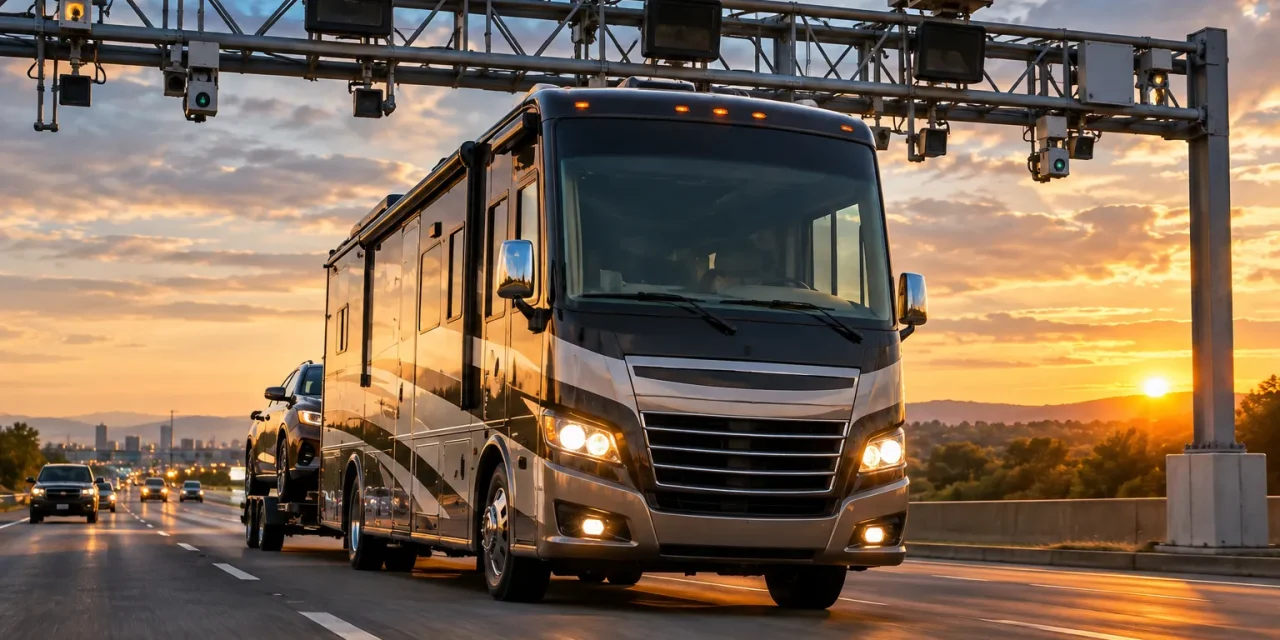
A single wrong turn onto an express lane. A missed sign. A toll tag that didn’t beep. That’s all it can take.
The Toll Road Nightmare That Cost This RVer $1,000 is not a made-up scare story. It is a real pattern happening across the country right now, and it can happen to almost any RV owner who is not paying close attention. One RVer’s family trip turned into a stack of angry letters, a growing bill, and a final number that made their stomach drop. What started as a normal road trip ended with a bill that felt more like a car payment than a toll charge.
This article breaks down exactly how tolls can spiral out of control for RV owners, why big rigs get charged so much more than regular cars, and the simple steps that can keep you from becoming the next toll road horror story.
What Really Happened: The Toll Road Nightmare That Cost This RVer $1,000
Picture a family heading out for a fun weekend trip. They hop on an express lane in their motorhome, thinking it will save time. It does. But it also comes with a price tag they never saw coming.
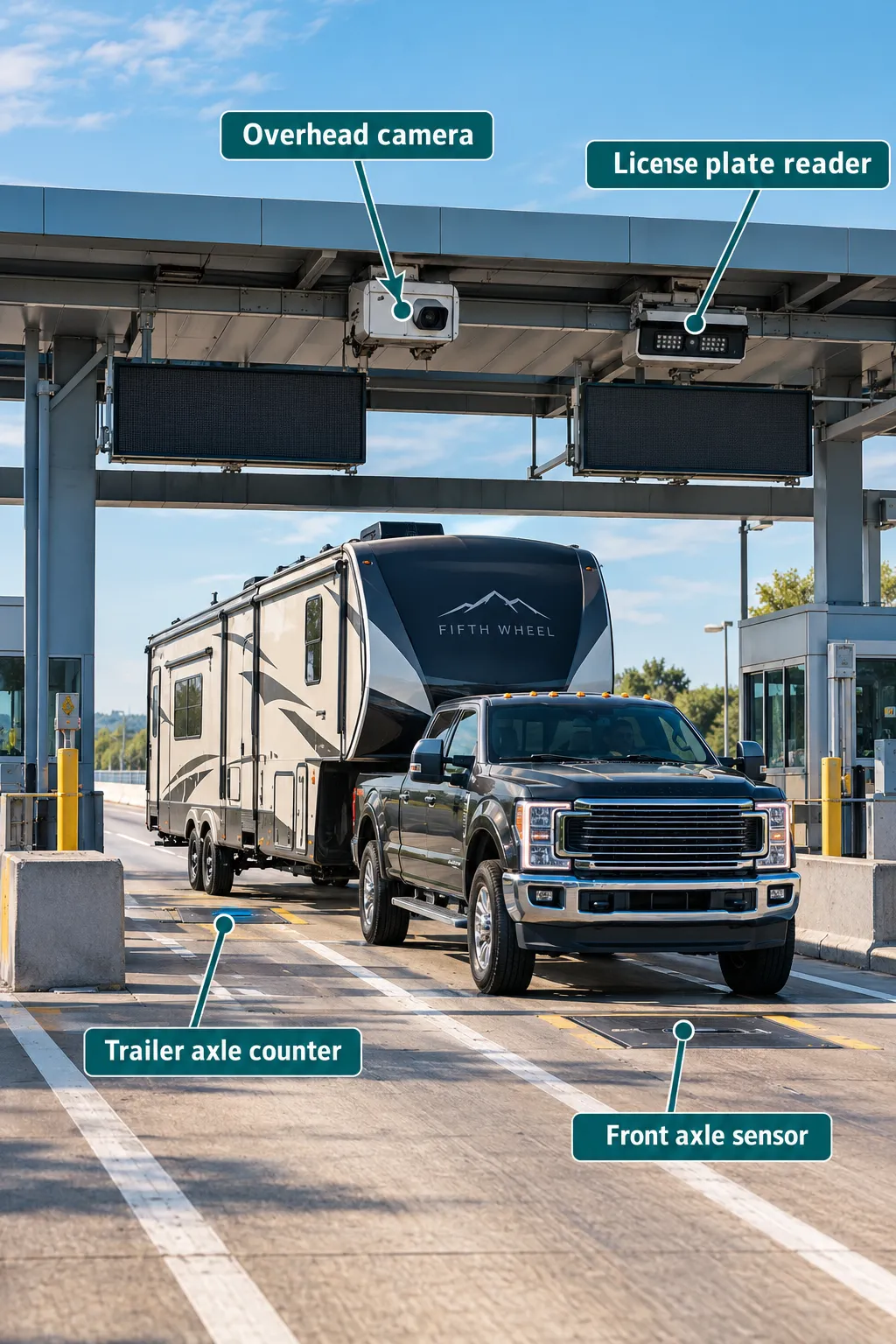
One Virginia family drove their RV on the I-66 Express Lanes for a simple round trip to Luray Caverns. Their toll bill for that one trip landed close to $550. That’s not a typo. That’s one trip, on one set of lanes, in one weekend.
Now stretch that same math across a longer road trip with multiple toll roads, a few bridges, and maybe a missed notice or two. Suddenly, The Toll Road Nightmare That Cost This RVer $1,000 stops sounding like an exaggeration and starts sounding like simple addition.
Toll operators do not treat RVs the same way they treat sedans and hatchbacks. Big rigs pay big rig prices. And when a toll goes unpaid, even by accident, the fees can pile up fast enough to turn a coffee-shop-sized bill into a used-car-down-payment-sized bill.
This is exactly why so many RVers get blindsided. They plan their fuel budget. They plan their campground fees. But tolls? Those often get forgotten until the bill shows up in the mailbox.
Why RV Tolls Cost So Much More Than Car Tolls
Here is the part that surprises a lot of new RV owners: tolls are not one-price-fits-all. Most toll roads charge based on how many axles your vehicle has. That means every axle on your RV, and every axle on anything you’re towing, gets counted.
A simple two-axle car might pay one price. A motorhome towing a car can have four or five axles total, and each one adds to the bill.
Here’s a quick look at how this plays out on real roads today:
| Toll Location | Passenger Car | RV / Multi-Axle Vehicle |
|---|---|---|
| George Washington Bridge (peak) | Around $17 | $45,$113 depending on axle count |
| Governor Mario M. Cuomo Bridge | $5.75,$7.48 | Over $27 towing a large trailer |
| Lincoln Tunnel | $16 | Up to $88 for a motorhome towing a camper |
| Sam Houston Ship Channel Bridge | $1.50,$2.00 | $5.25 for a four-axle rig |
| Full Pennsylvania Turnpike run | Lower rate | $100,$130 for an RV |
Look at that George Washington Bridge line again. A 2-axle campervan can pay around $45 with E-ZPass at peak times. A 3-axle Class A motorhome jumps to $68. A 4-axle RV pulling a tow vehicle can hit $90 or more. And a large motorhome towing a car, with five total axles, can be charged over $113 in a single crossing during peak hours.
That’s one bridge. One crossing. Before any late fees.
🚗💨 “We thought the toll tag would just handle it. We had no idea the price jumps that much once you’re towing something.”
This axle-based pricing is exactly why route planning matters so much for RV owners. Learning what to keep in mind when navigating toll roads with an RV before a trip can save real money, especially on corridors packed with bridges and express lanes.
How Toll Debt Snowballs Into a $1,000 Nightmare
Here’s where things get scary. A missed toll notice does not just sit there quietly. It grows.
A January 2026 investigative report looked closely at this exact problem. It found that small unpaid tolls, sometimes just a few dollars, can balloon into hundreds or even thousands of dollars once toll agencies pile on civil penalties and hand the debt off to collection companies. In some cases, the effective interest rate on that unpaid toll topped 100%.
In one extreme example out of Virginia involving the toll operator Transurban, drivers were sued for civil penalties of $1,000 for each unpaid toll. Read that again. One missed toll. One thousand dollars in penalties.
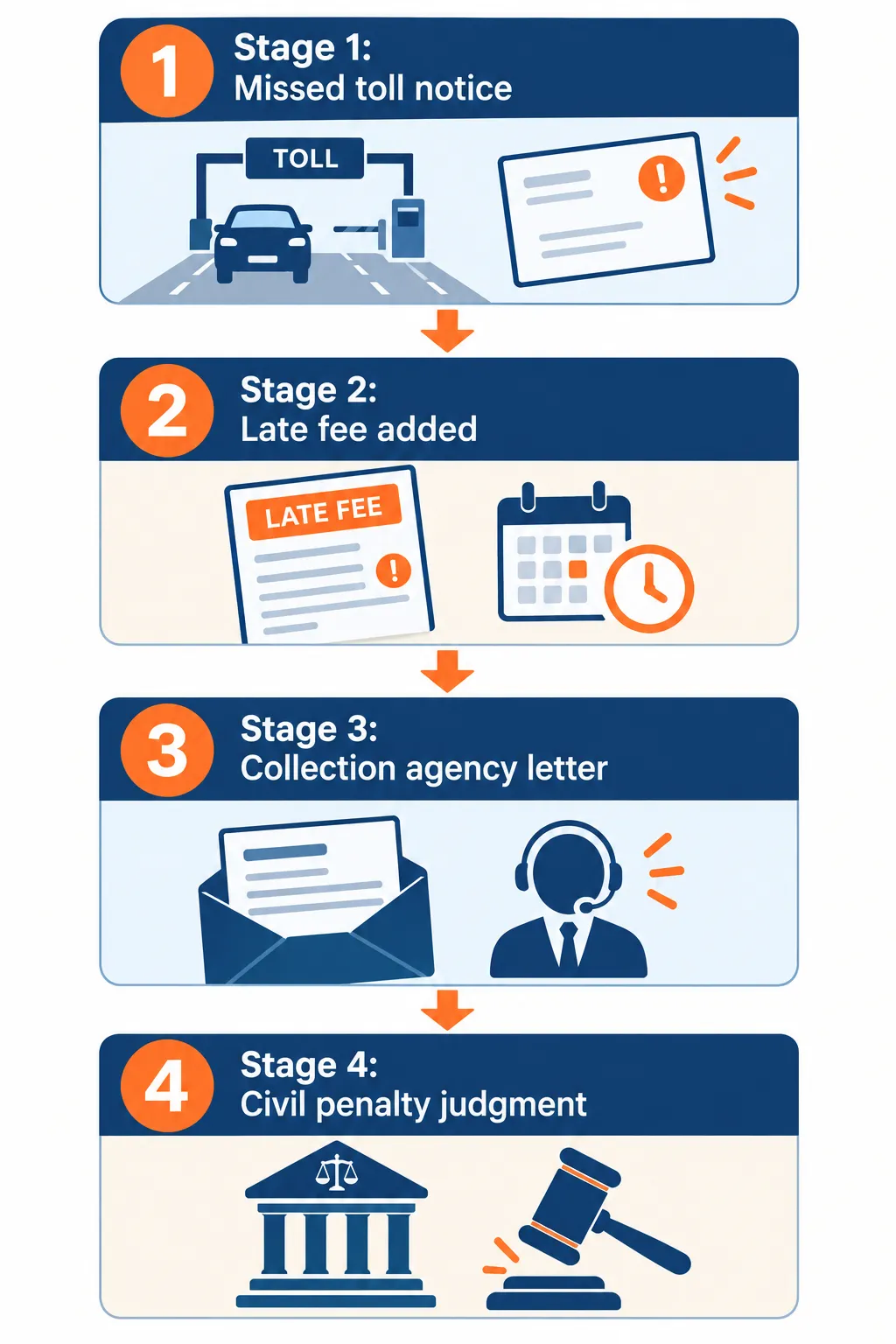
Here is how the snowball usually rolls:
- The toll goes unpaid. Maybe the transponder didn’t read. Maybe the RVer didn’t know a road was tolled at all.
- A notice gets mailed. Often to an old address, or it gets buried under other mail.
- Late fees get added. The original $4 or $6 toll can double or triple.
- The account goes to collections. Now there are collection fees stacked on top of the toll and the late fee.
- A civil penalty gets filed. This is where bills can reach that jaw-dropping $1,000 mark.
This pattern is not limited to one state or one toll company. It’s a nationwide risk that grows worse the longer a notice sits unopened. It’s one of several sneaky laws that will ruin your RV trip if you’re not paying attention.
It also connects to a bigger truth about RV life: small mistakes on the road can turn into big problems that could ruin your RV trip if they’re ignored instead of handled right away.
Real Toll Costs RVers Should Expect on the Road
Even when everything goes right, and every toll gets paid on time, RV toll costs can still add up to a lot more than most drivers expect. This is not about penalties. This is just the sticker price of driving a big rig on toll roads.
Some real examples worth knowing before your next trip:
- New York to Boston corridor: roughly $50,$100+ in tolls for an RV
- Full Pennsylvania Turnpike run: around $100,$130
- George Washington Bridge: $95,$125 depending on axle setup and time of day
- Ontario’s Highway 407 ETR: roughly $70,$90 for a 2 to 3 axle RV
- Full New Jersey Turnpike: about $60,$80
- Full New York Thruway: about $50,$70
Add up just three or four of these on one long trip, and you’re already brushing up against that $1,000 figure without a single late fee or penalty involved. This is why so many full-time and part-time RVers now treat toll planning the same way they treat fuel budgeting.
It’s also a big reason why the hidden costs of RVing and the hidden costs of RV ownership keep showing up as top complaints among RV owners. Tolls rarely make the initial budget, yet they quietly eat into travel funds trip after trip.
How to Avoid Your Own Toll Road Nightmare
Good news: this whole mess is avoidable. Most RVers who get hit with huge toll bills didn’t do anything reckless. They just didn’t plan ahead. A few simple habits can keep tolls from ever becoming a nightmare.
1. Use a Toll Calculator Before You Drive
Free tools now let RV owners plug in their exact vehicle setup, including axle count and tow vehicle, and see estimated toll costs for an entire route. Some calculators cover routes across 37 US states and let drivers pick their payment method, like E-ZPass or SunPass, to get an accurate estimate. Others focus just on RVs and show toll plazas along the way, plus which toll tags are accepted.
Running your route through one of these tools before leaving the driveway takes five minutes and can save hundreds of dollars in surprises.
2. Turn On “Avoid Tolls” in Your GPS
Most navigation apps have a simple toggle to avoid toll roads. It won’t always be the fastest route, but it’s often the safest one for your wallet. This is especially smart advice for drivers heading through busy toll corridors in Texas, where toll pricing can shift higher during peak traffic hours.
3. Get a Toll Tag Before You Need One
A toll tag (like E-ZPass, SunPass, or a regional equivalent) almost always costs less than getting billed “by mail” after the fact. Pay-by-mail rates are often padded with extra processing fees. Setting up a toll tag ahead of time, and making sure it’s registered to the right vehicle, closes one of the most common gaps that leads to surprise bills.
4. Know Your Axle Count
Before a big trip, count the axles on your rig, including anything you’re towing. This number directly decides your toll price at most facilities. Knowing it ahead of time helps you use toll calculators correctly and avoid guessing at the booth.
5. Check Your Mail (and Junk Folder) Often
A shocking number of $1,000 toll nightmares start with a notice that simply never got opened. If you’re a full-time RVer without a fixed address, set up mail forwarding or a virtual mailbox so toll notices don’t sit unread for months.
6. Watch for Alternate Free Routes
Apps that help drivers find free or low-cost camping spots often pair well with route-planning tools that show toll-free alternatives too. A little extra drive time can sometimes save a lot of money.
Planning routes carefully is part of a bigger pattern among smart RVers who avoid the unexpected struggles of life on the road by simply doing their homework before they leave.
What To Do If You Already Owe Toll Fines
If a toll notice has already landed in your mailbox, don’t panic, and definitely don’t ignore it. Ignoring it is exactly how a $6 toll becomes a $1,000 problem.
Here’s what to do instead:
- Open the notice right away. The clock on late fees usually starts the moment the toll happens, not when you finally read the letter.
- Call the toll operator directly. Many agencies offer payment plans, extensions, or fee reductions if you reach out before the account goes to collections.
- Ask about a dispute or hardship process. Some toll authorities have customer advocate channels built specifically for resolving confusing or disputed charges.
- Get everything in writing. Save emails, confirmation numbers, and payment receipts in case the bill resurfaces later.
- Pay what you can now. Even a partial payment can sometimes stop penalties from climbing further while you sort out the rest.
Legal aid resources consistently point to the same lesson: toll fines that get ignored are the ones that spiral. Toll fines that get addressed quickly, even messy ones, usually get resolved for far less money and far less stress.
This same “deal with it early” mindset applies across RV ownership in general. Whether it’s a mechanical issue or a breakdown while on the road, waiting rarely makes things cheaper. It’s also worth double-checking that you have reliable roadside assistance for your RV, since toll troubles often show up on the same kinds of unfamiliar routes where breakdowns happen too.
Conclusion
The Toll Road Nightmare That Cost This RVer $1,000 is a real warning sign for every RV owner planning a road trip. Big rigs get billed differently than cars. A single express lane trip can cost hundreds of dollars. And an unpaid toll left to sit can multiply into a bill that feels impossible to believe.
The fix isn’t complicated. Check axle-based pricing before a trip. Run routes through a toll calculator. Grab a toll tag ahead of time. Open every piece of mail, even the boring-looking envelopes. And if a fine does show up, deal with it fast instead of letting it sit.
A few minutes of planning can be the difference between a smooth trip and a $1,000 surprise. Do the homework before hitting the road, and toll roads become just another manageable part of the RV lifestyle instead of a nightmare waiting to happen.