Would you like to save this article?
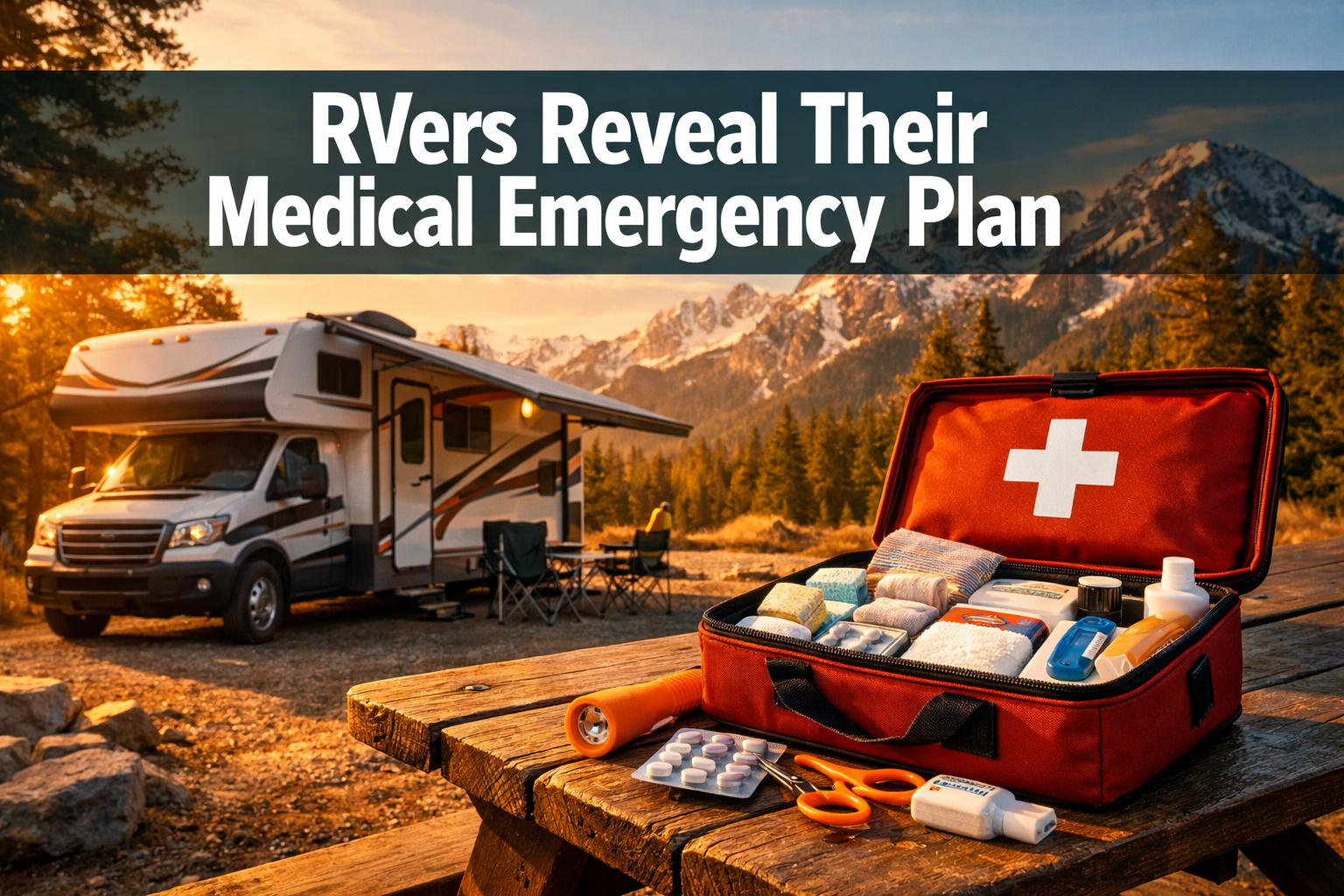
You’re parked at a gorgeous campsite, miles from the nearest town, and someone in your group gets hurt. What do you do? 🚨 This is a question every RVer needs to answer before hitting the road. In a recent survey, RVers Reveal Their Medical Emergency Plan (Survey) data shows some eye-opening results about how the RV community prepares for health emergencies on the road. The findings are both encouraging and a little surprising — and they might just inspire you to upgrade your own plan today.
Key Takeaways 📋
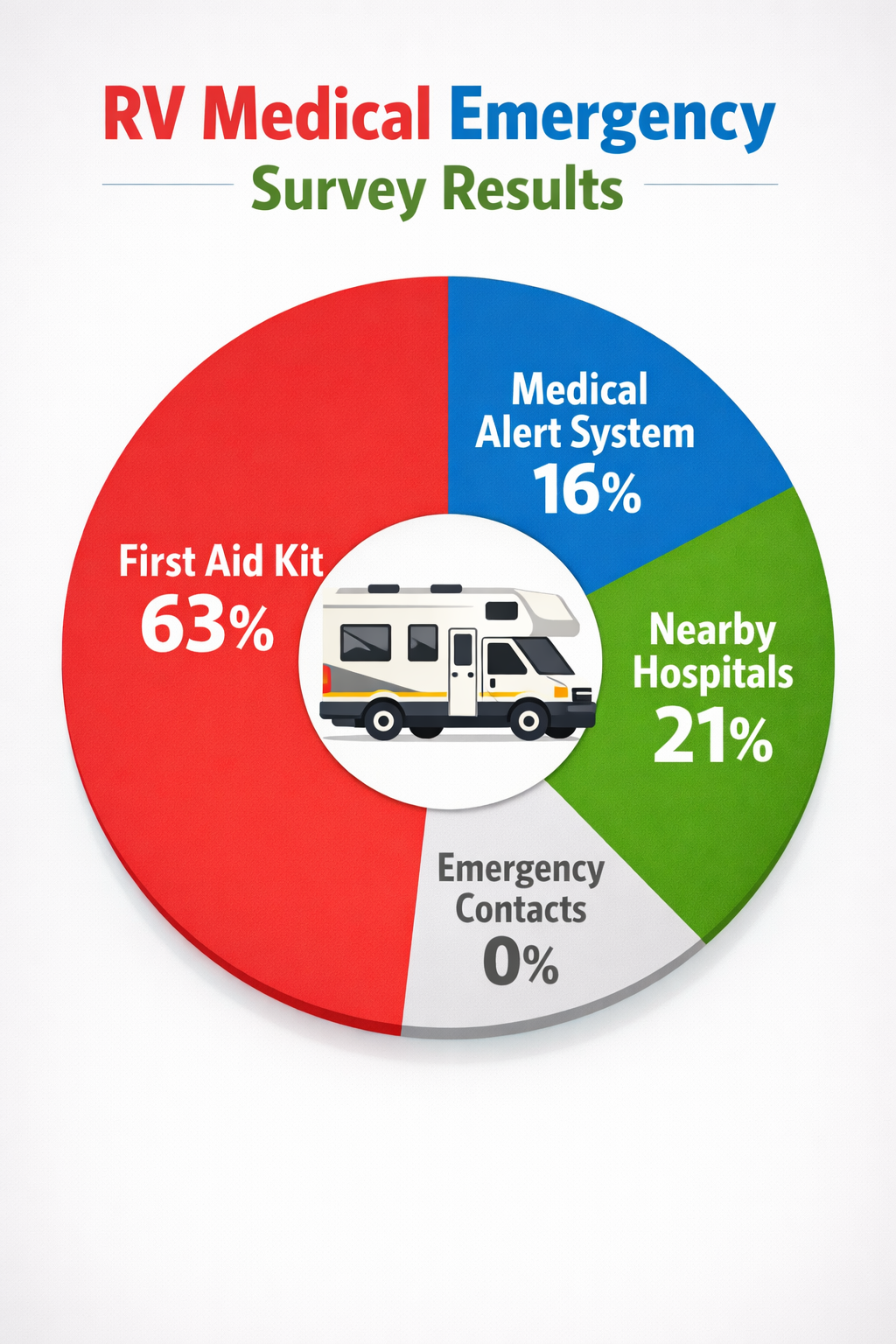
- 63% of RVers rely on a first aid kit as their primary emergency plan — a great start, but not a complete solution.
- 21% focus on knowing nearby hospitals, which is a smart layer of preparedness.
- 16% use a medical alert system, a growing trend especially among older RVers.
- 0% listed emergency contacts alone as their plan — meaning most RVers know contacts aren’t enough on their own.
- A layered approach combining all four strategies gives the best protection on the road.
Breaking Down the Survey: What RVers Actually Do
The survey asked one simple question: What’s your RV medical emergency plan? Here’s what RVers said:
| Plan Type | Percentage |
|---|---|
| 🩹 First Aid Kit | 63% |
| 🏥 Nearby Hospitals | 21% |
| 🚨 Medical Alert System | 16% |
| 📞 Emergency Contacts | 0% |
First Aid Kits Lead the Pack at 63%
It’s no surprise that first aid kits top the list. They’re affordable, easy to pack, and cover a wide range of minor injuries. But a basic kit has limits. It can help with cuts, burns, and sprains — but it won’t handle a heart attack or a serious allergic reaction.
💬 “A first aid kit is your first line of defense — but it should never be your only line.”
A well-stocked RV first aid kit should include:
- Bandages of different sizes
- Antiseptic wipes and antibiotic ointment
- Pain relievers like ibuprofen or acetaminophen
- Tweezers for splinters or ticks
- A CPR face shield
- Any personal prescription medications
- An EpiPen if anyone in the group has severe allergies
Think of the kit as your safety net for everyday bumps and scrapes. It’s a must-have, but it works best when paired with other strategies.
Knowing Nearby Hospitals: 21% Are Thinking Ahead 🏥
One in five RVers makes it a point to research hospitals near their route. This is a smart habit. When a real emergency strikes, the last thing you want to do is Google “ER near me” while panicking.
Before each trip, take 10 minutes to:
- Map out hospitals along your planned route
- Note urgent care centers for non-life-threatening issues
- Save addresses in your GPS or phone
- Check if hospitals accept your insurance
This simple step can save precious minutes in a crisis. Emergency care quality matters too — organizations like the Leapfrog Group track hospital safety standards and publish ratings that help patients find high-quality care [2].
Medical Alert Systems: 16% Use Smart Technology 📡
Medical alert systems are growing in popularity, especially among RVers who travel solo or are over 60. These devices can call for help even when you can’t speak or reach your phone.
Modern systems offer:
- GPS tracking so rescuers can find you anywhere
- Fall detection that triggers an alert automatically
- Two-way communication with emergency operators
- Cellular connectivity that works far from Wi-Fi
Emergency preparedness experts note that technology-driven alert systems are becoming a key part of modern safety planning, much like the updated frameworks being adopted in senior care settings across the country [4]. For RVers — especially those with chronic health conditions — a medical alert device can be a literal lifesaver.
Emergency Contacts: 0% Rely on Them Alone 📞
Here’s the most interesting finding: not a single respondent said emergency contacts were their primary plan. And honestly? That makes sense. Contacts are important, but they’re reactive — they help after an emergency, not during one.
That said, emergency contacts should still be part of every RVer’s plan. Make sure to:
- Share your travel itinerary with someone at home
- List contacts in your phone under “ICE” (In Case of Emergency)
- Carry a paper card with contact info in your wallet or glove box
- Include your doctor’s number and insurance information
Building a Smarter RV Medical Emergency Plan in 2026
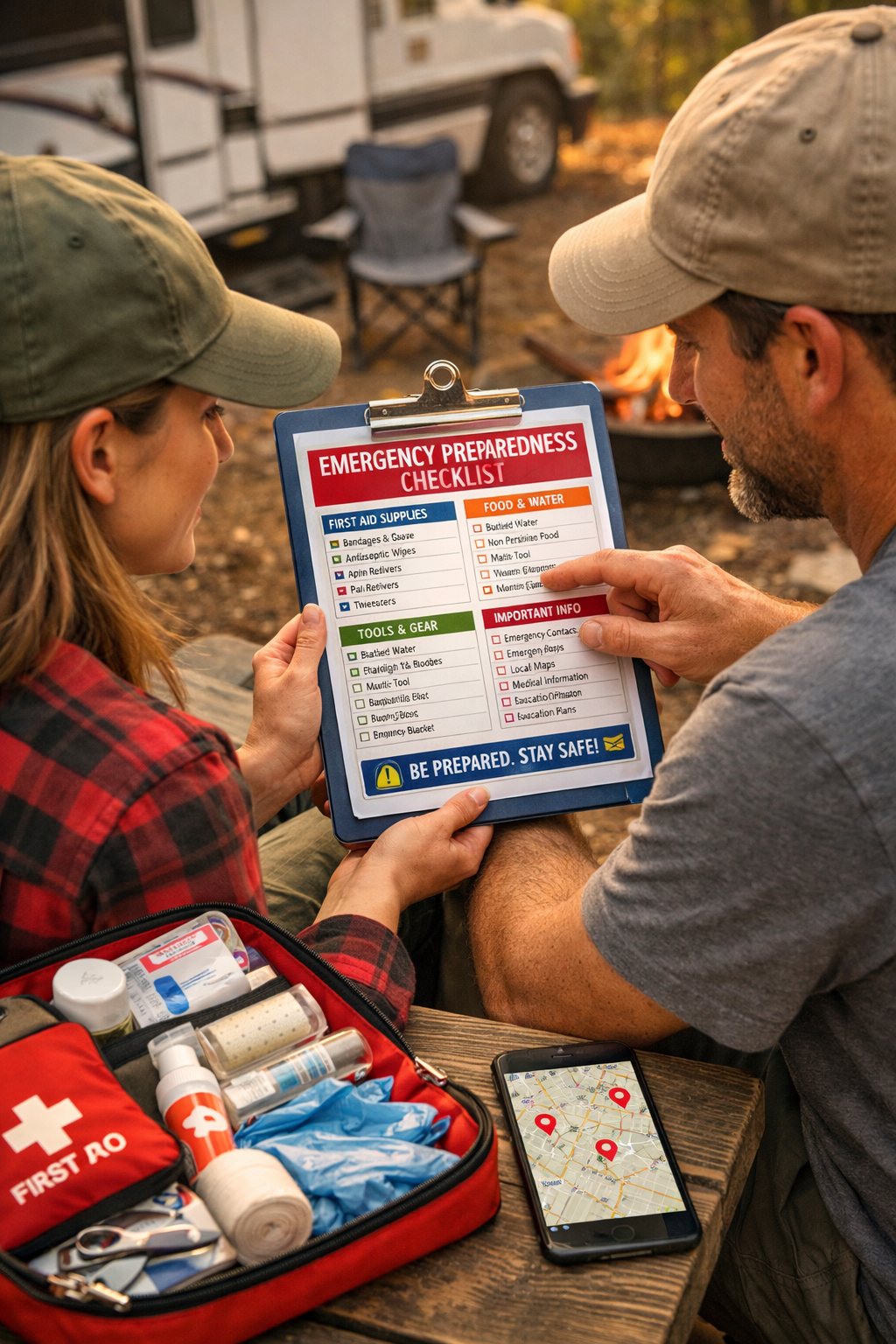
Now that the survey data is clear, the big question is: how do you build a plan that actually works? The best approach layers all four strategies together. Think of it like a safety net with multiple layers — if one fails, another catches you.
Step 1: Stock a Serious First Aid Kit
Go beyond the basic drugstore kit. Add items specific to your travel style. Hiking in remote areas? Add a tourniquet and blister care supplies. Traveling with pets? Include pet first aid items too.
Step 2: Map Your Medical Route Before You Leave
Use apps like iOverlander, Google Maps, or RVillage to find hospitals and urgent care centers near your destinations. Save them offline in case you lose cell service.
Step 3: Consider a Medical Alert Device
If you travel solo, have a chronic condition, or are over 55, a personal emergency response system (PERS) is worth every penny. Look for one with GPS and cellular coverage.
Step 4: Build Your Emergency Contact System
Create a simple one-page emergency card and keep copies in your RV, your wallet, and your phone. Include:
- Full name and date of birth
- Blood type
- Allergies and current medications
- Doctor’s name and number
- Insurance provider and policy number
- Two emergency contacts
Step 5: Take a First Aid or CPR Course 🎓
Knowing what to do is just as important as having the right supplies. The American Red Cross and American Heart Association both offer affordable, short courses. Many RV clubs and rallies even host them on-site.
Step 6: Know Your Health Insurance Coverage
Standard health insurance may not cover you well when you’re far from home. Look into:
- Travel health insurance for extended trips
- Telehealth services that let you see a doctor by video
- Medicare coverage rules if you’re on Medicare — coverage can vary by location [1]
💬 “The best emergency plan is the one you actually have ready before you need it.”
A Quick Comparison: Plan Levels
| Plan Level | What’s Included | Best For |
|---|---|---|
| 🟡 Basic | First aid kit only | Short day trips |
| 🟠 Intermediate | Kit + hospital map + contacts | Weekend getaways |
| 🟢 Advanced | All four strategies + CPR training | Full-time RVers |
Emergency preparedness is not just for hospitals and care facilities anymore. Updated guidance from health regulators shows that proactive, layered planning is now the gold standard for anyone who wants to stay safe away from home [3].
Conclusion: Your Road, Your Responsibility ✅
The RVers Reveal Their Medical Emergency Plan (Survey) results show that most RVers are thinking about safety — and that’s great news! But having just a first aid kit isn’t enough for life on the open road. The smartest RVers build a layered plan that combines supplies, technology, local knowledge, and communication.
Here are your actionable next steps before your next trip:
- ✅ Upgrade your first aid kit with trip-specific supplies
- ✅ Map hospitals and urgent care centers along your route
- ✅ Research medical alert systems if you travel solo or have health concerns
- ✅ Create an emergency contact card and share your itinerary
- ✅ Sign up for a CPR or first aid course this month
- ✅ Review your health insurance for travel coverage gaps
The road is calling — and now you can answer it with confidence. Stay safe, stay prepared, and keep on rolling! 🚐💨
References
[1] Compliance Monitor 1 13 26 – https://chapinc.org/blog-news/compliance-monitor-1-13-26/
[2] Leapfroghospitalsurvey Proposedchanges 2026 Final Updated – https://www.leapfroggroup.org/sites/default/files/Files/LeapfrogHospitalSurvey_ProposedChanges_2026_Final_Updated.pdf
[3] Cms Releases Updated Emergency Preparedness Provider Information What Providers Need To Know – https://www.ahcancal.org/News-and-Communications/Blog/Pages/CMS-Releases-Updated-Emergency-Preparedness-Provider-Information-What-Providers-Need-to-Know-.aspx
[4] Emergency Readiness In 2026 What Has Changed And How Senior Care Facilities Can Adapt – https://peak10emergency.com/blog/emergency-readiness-in-2026-what-has-changed-and-how-senior-care-facilities-can-adapt